Ixelles is one of Brussels's most layered municipalities, stretching south from the city centre through Art Nouveau residential streets, the lively Flagey square, the African quarter of Matongé, and toward the leafy Abbaye de la Cambre. It rewards slow exploration on foot and has some of the best café terraces and independent restaurants in the Belgian capital.
Ixelles (Elsene in Dutch) sits just southeast of Brussels city centre and packs an unusual variety into a relatively compact area: grand Art Nouveau architecture on quiet residential streets, the cultural anchor of Place Flagey and its twin ponds, a West African street market culture in Matongé, and the high-end corridor of Avenue Louise. It is one of the few parts of Brussels where you can move from a neighbourhood bakery to a design gallery to an open-air fish market in the space of ten minutes' walking.
Orientation
Ixelles is a municipality of the Brussels-Capital Region, not simply a district of the City of Brussels. It sits immediately south of the Pentagon (the historic core) and east of Saint-Gilles, forming a broad wedge that runs from the inner ring road down toward Forest and Uccle. Its northern border roughly follows the line of the Porte de Namur metro station, where the city centre bleeds into the Ixelles shopping corridor. The eastern boundary touches Etterbeek and the edge of the European Quarter, while Avenue Louise, the broad tree-lined boulevard connecting the upper city to the Bois de la Cambre, acts as a kind of internal spine dividing Ixelles into two distinct halves.
The western half of Ixelles, running from Porte de Namur down through Matongé and toward Place du Châtelain, is the denser, more commercial side. The eastern half, centred on Place Flagey and the Ixelles ponds (Etangs d'Ixelles), feels quieter and more residential, with wide streets of late-19th and early-20th century townhouses. Further south, the neighbourhood transitions into the green sanctuary of the Abbaye de la Cambre and, beyond that, the Bois de la Cambre park. Understanding this east-west split is useful for deciding where to base yourself and how to plan a walking route.
Ixelles borders Saint-Gilles to the west, Etterbeek and the European Quarter to the east, and connects northward toward the Sablon and the upper city. For travellers staying in the centre, Ixelles is typically 15 to 25 minutes on foot from the Grand-Place, depending on the starting point, or a single metro ride from Porte de Namur.
Character & Atmosphere
Ixelles has no single mood. It is one of the most ethnically and socially mixed municipalities in Brussels, and that mix plays out visibly on the street. On a weekday morning, the Chaussée d'Ixelles near Porte de Namur is a dense pedestrian shopping corridor: discount fashion shops, African grocery stalls, phone repair booths, and patisseries all competing for space on the same block. The light is flat in the mornings here, filtered through the canyon of mid-rise buildings, and the soundscape is a mix of French, Lingala, Arabic, and English.
Walk ten minutes southeast toward Place Flagey and the atmosphere shifts noticeably. The streets widen, the architecture becomes grander, and by mid-morning the café terraces around the ponds are already filling with a mixture of students from the nearby ULB campus, journalists, and the freelance laptop crowd. In spring and early summer, when the horse chestnut trees are in leaf and the light comes across the ponds in long afternoon angles, the Flagey area has a quality that is genuinely hard to find elsewhere in the Belgian capital.
After dark, Ixelles splits again. The Châtelain and Flagey areas are consistently lively until late, with restaurant terraces, wine bars, and a jazz or concert programme at the Flagey cultural centre keeping the neighbourhood animated on weekends. The Matongé strip along Chaussée de Wavre picks up later in the evening, with Afro-Caribbean music spilling from certain bars. The Avenue Louise corridor, by contrast, quiets down early once the shops close, its broad pavements mostly empty by 9pm.
💡 Local tip
Wednesday and Saturday mornings bring a street market to Place du Châtelain. It is primarily a food market, strong on cheese, charcuterie, and seasonal produce, and it draws a noticeably local crowd. Arrive before 11am for the best selection.
What to See & Do
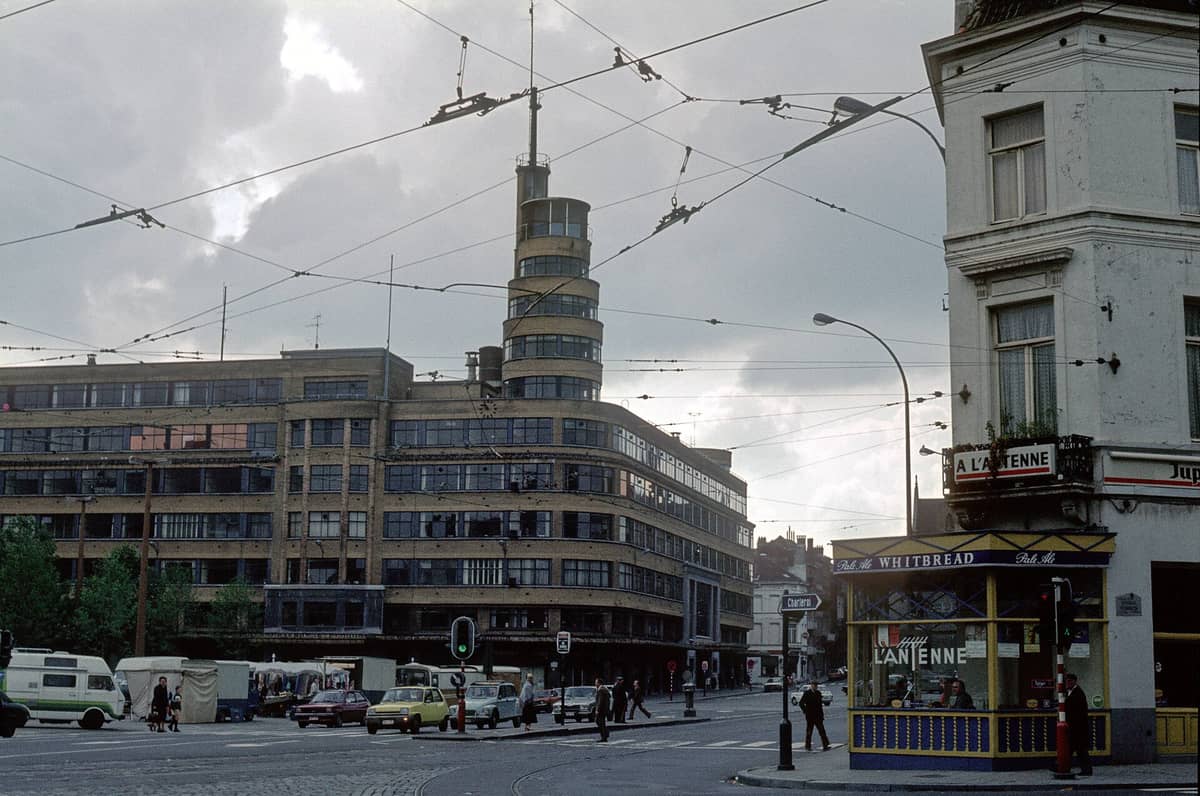
The Flagey building itself is worth a look before you even check the programme. The 1930s Flemish Art Deco structure, built as a radio broadcasting centre and now a major cultural venue, sits at the northern end of the ponds like the prow of a ship. Its renovation preserved the original curved forms and much of the interior, and it hosts classical concerts, film screenings, and contemporary performances throughout the year. The square around it, Place Flagey, is the social centre of this part of Ixelles.
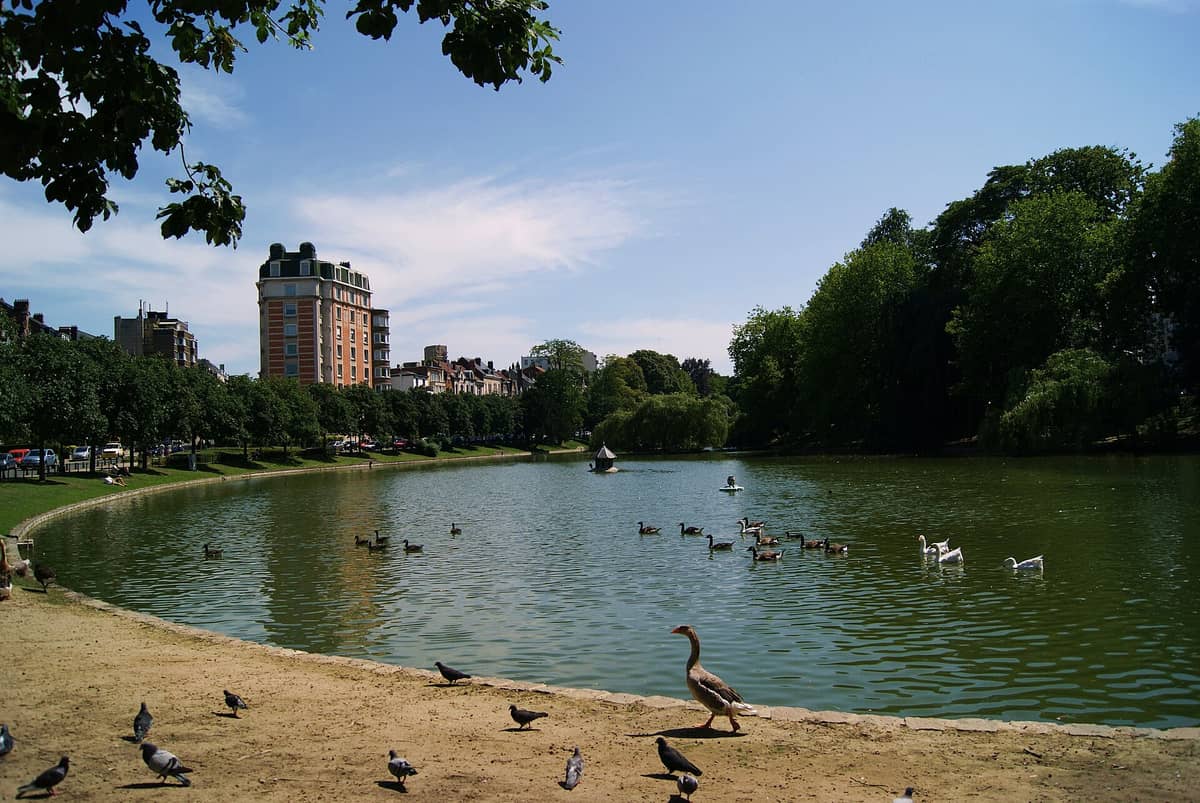
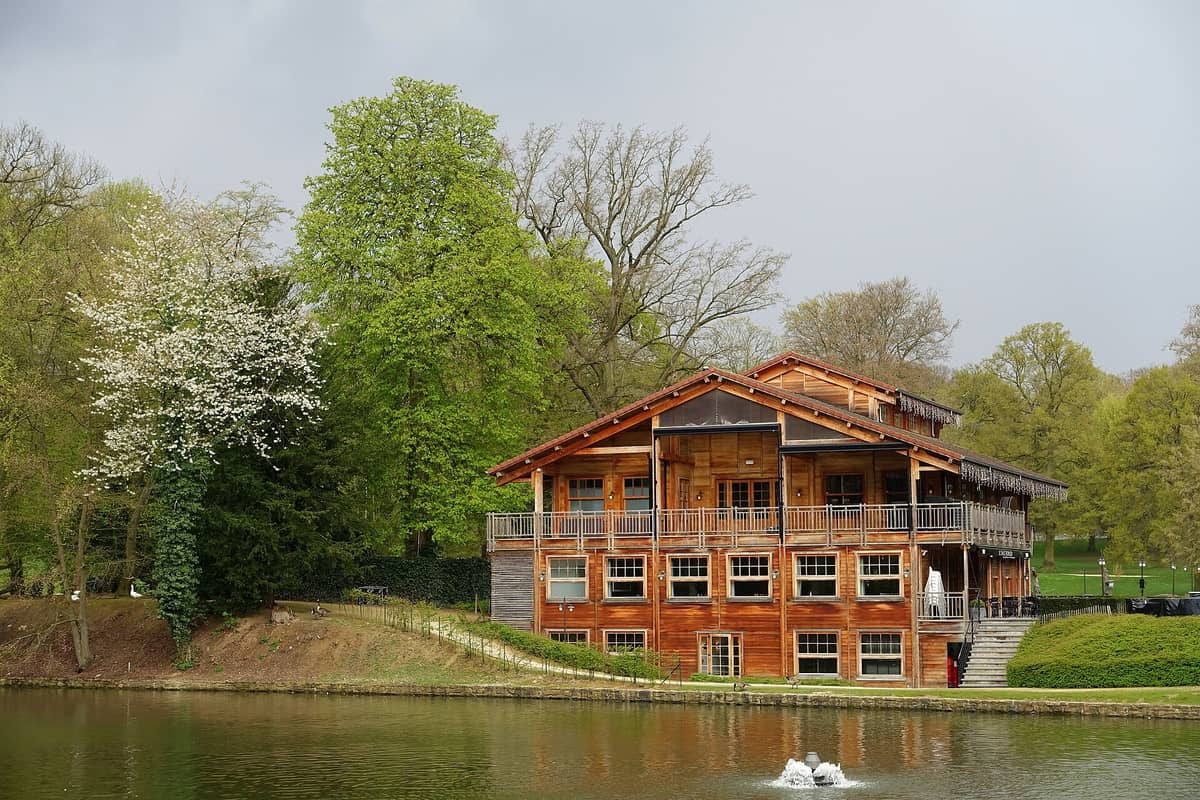
The Ixelles ponds (Etangs d'Ixelles) are two long, narrow artificial lakes running southeast from Flagey. The path along their western bank, past the Abbaye de la Cambre, is one of the better urban walks in Brussels: free, uncrowded outside weekends, and genuinely attractive at most times of year. The abbey itself, a former Cistercian foundation, has a Gothic church and a formal garden that are open to visitors. From the abbey, it is a short walk south to the Bois de la Cambre, the large public park at the edge of the Forêt de Soignes.
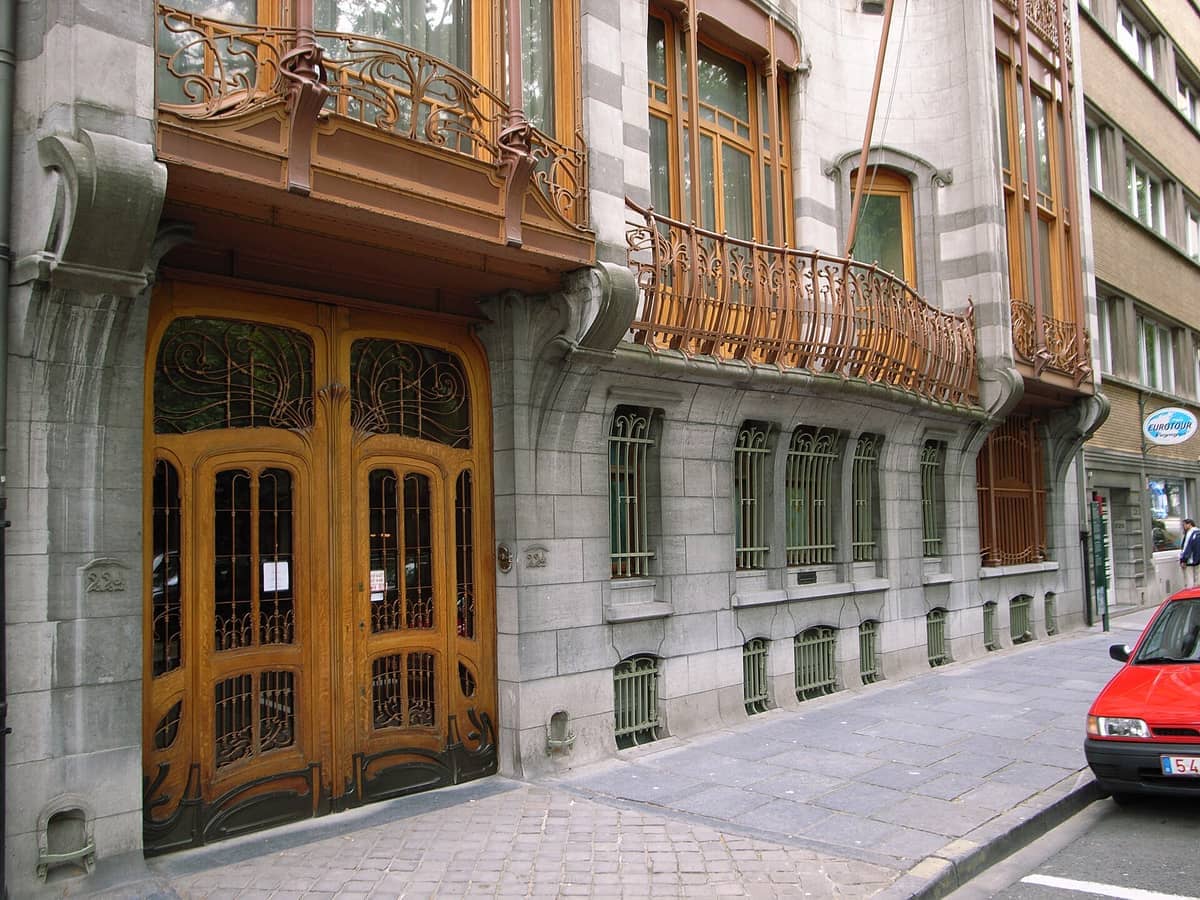
Ixelles is one of Brussels's most important areas for Art Nouveau architecture. The Rue Defacqz and Rue Paul Émile Janson, running between Avenue Louise and Chaussée de Charleroi, contain a concentration of houses designed in the late 1890s and 1900s, including several by major architects of the period. These are private homes, so exploration means walking the pavement and looking up at facades rather than entering, but the density of ornamentation is remarkable. The best time to see them is on a dry morning in good light, when the ironwork and ceramic details are most visible.
The Musée d'Ixelles, housed in a former slaughterhouse on Rue Jean van Volsem, holds a collection of 19th and 20th century Belgian art, including Symbolist works and an important group of Toulouse-Lautrec posters. Nearby, the WIELS Contemporary Art Centre on Avenue Van Volxem (technically in Forest, just over the Ixelles border) is among the most respected contemporary art spaces in Belgium and is easily combined with a visit to the southern end of Ixelles.
Place Flagey and the Flagey cultural centre for concerts, cinema, and architecture
Etangs d'Ixelles and the Abbaye de la Cambre walk for greenery and quiet
Rue Defacqz and Rue Paul Émile Janson for Art Nouveau facades
Musée d'Ixelles (currently closed for renovation until its planned reopening in March 2027) for Belgian Symbolist and modern art
Matongé around Chaussée de Wavre for market culture and West African food shops
Place du Châtelain and its twice-weekly food market
ℹ️ Good to know
If Art Nouveau architecture is a priority, Ixelles and adjacent Saint-Gilles together form the densest concentration of surviving Art Nouveau buildings in Brussels. A combined half-day walk through both municipalities covers far more than either alone.
Eating & Drinking
Ixelles has one of the most varied food scenes in Brussels, largely because of its demographic mix and the presence of a large student population from the Université Libre de Bruxelles. The range runs from very cheap Central African and South Asian canteens along Chaussée de Wavre to high-end French bistros and wine bars around Place du Châtelain, with almost everything in between.
Around Matongé, the stretch of Chaussée de Wavre running east from Porte de Namur toward Place Fernand Cocq, look for Congolese and Cameroonian restaurants serving dishes like poulet moamba, grilled plantain, and ndolé. Many are small, unlicensed-looking storefronts with handwritten menus, and prices are among the lowest in Brussels. The African grocery stores here also stock ingredients almost impossible to find elsewhere in the city.
The Flagey and Châtelain areas have a higher density of wine bars and gastropubs per square metre than almost anywhere else in Brussels. The streets around Place du Châtelain, particularly Rue de l'Aqueduc and the surrounding blocks, are worth exploring on a Friday or Saturday evening when the terraces are at their liveliest. Most restaurants here fall into the mid-range bracket, with a main course typically between €15 and €28, and wine lists that take their sourcing seriously.
Avenue Louise itself is more of a coffee-and-lunch corridor than a dining destination, with the usual mix of chain cafés and the occasional good independent. For Belgian beer in Ixelles specifically, the neighbourhood has several classic estaminets (traditional Belgian cafés) where the focus is on a long tap list and unhurried conversation rather than food. For broader context on navigating the beer culture in Brussels, the Belgian beer guide for Brussels covers the fundamentals.
💡 Local tip
For the best crêpes and galettes in the area, the streets immediately around Place Flagey have several Breton-style creperies that attract a loyal local following. These tend to be cash-only or card-optional, so carry some euros.
Getting There & Around
The most useful metro station for northern Ixelles is Porte de Namur, on metro lines 2 and 6, which connects directly to the city centre at Arts-Loi and onward to Gare du Midi in one direction and to Montgomery in the other. From Porte de Namur, you are already at the entrance to the Chaussée d'Ixelles shopping corridor and within 10 to 15 minutes' walking of both Matongé and Place du Châtelain.
Trams are the more useful way to move through the interior of Ixelles without walking. Tram 81 connects Flagey with other central districts via Châtelain and runs frequently throughout the day and evening. Trams 94 and others serve the Vleurgat stop near the upper part of the neighbourhood, and several bus lines (38, 60, 71) converge at Flagey itself. The STIB/MIVB network covers the area well, and single-journey and day tickets are available via the STIB app or at machines near major stops.
Walking is genuinely practical within Ixelles. The municipality is compact enough that most points of interest between Porte de Namur and the Abbaye de la Cambre can be covered in a 45-minute to one-hour walk. For those using Ixelles as a base to access the broader city, the metro at Porte de Namur puts you about 8 minutes from the Grand-Place area (via a short walk from Gare Centrale or De Brouckère). A guide to getting around Brussels covers the full STIB/MIVB network in more detail.
Where to Stay
Ixelles is an excellent base for travellers who want to be close to the city centre without being in the most touristed or noisiest part of it. The Avenue Louise corridor has the highest concentration of hotels, ranging from boutique design properties to mid-range international chains. These suit business travellers well given the easy tram connection to the European Quarter and the Sablon, but they can feel isolated in the evenings when the boulevard empties.
For travellers who want to feel more embedded in Ixelles's residential life, the Flagey and Châtelain areas offer a number of apartment rentals and smaller hotels on quieter streets. This part of the neighbourhood is noticeably better for restaurants and cafés within walking distance, and it is substantially less noisy than the Avenue Louise or Chaussée d'Ixelles main roads. The trade-off is that it sits slightly further from the metro, making transit to the city centre a matter of tram rather than underground.
Ixelles is not the right base for everyone. Travellers whose primary focus is the Grand-Place, the museums of the Royal Quarter, or the historic centre may find it adds unnecessary transit time. But for those spending several days in Brussels and wanting a neighbourhood with its own identity, good food, and a local rather than tourist atmosphere, Ixelles is one of the strongest options in the city. See the full where to stay in Brussels guide for a comparison with other neighbourhoods.
⚠️ What to skip
Rooms facing the main roads in Ixelles, particularly Avenue Louise, Chaussée d'Ixelles, and Chaussée de Wavre, can be significantly noisier than the side streets. Tram lines run through the night with reduced frequency, and some bars around Matongé and Châtelain stay open late on weekends. Ask specifically for a courtyard-facing or rear room if noise is a concern.
Honest Assessment: Who Ixelles Is For
Ixelles rewards curiosity and independent movement. It does not have a single headline attraction that draws crowds in the way the Grand-Place or the Atomium do, and that is largely to its advantage. The neighbourhood is best approached as a place to inhabit for half a day or more rather than to tick off a list. If your trip to Brussels is primarily monument-focused, Ixelles functions better as a dinner destination than a base.
It is worth being honest about Matongé. The area around Chaussée de Wavre and Rue Longue Vie has genuine commercial energy and some excellent food, but it is also one of the areas in Brussels where standard urban caution applies, particularly around late-night tram stops. There is no reason to avoid it, but it does not have the polished, visitor-curated feel of, say, the Sablon. That is precisely what makes it interesting, and also what makes it unsuitable for travellers looking for an entirely frictionless experience.
TL;DR
Ixelles is one of Brussels's most diverse municipalities, southeast of the city centre, split between the commercial Chaussée d'Ixelles and Matongé on the west and the quieter Flagey ponds and Châtelain area on the east.
Best for: travellers who want good restaurants, Art Nouveau architecture, and a local atmosphere away from the main tourist circuit.
Key transit: Porte de Namur metro (lines 2 and 6), trams 81 and 94, and buses 38, 60, and 71 at Flagey.
Not ideal for: travellers whose entire focus is the city-centre monuments and who want to minimise transit time.
Watch out for: road and tram noise on main arteries; late-night activity around Matongé and Châtelain on weekends; the Avenue Louise hotel corridor feels quiet and disconnected in the evenings.
Two days is enough time to cover Brussels' historic core, world-class museums, and legendary food scene — if you plan it right. This itinerary cuts through the noise to give you a practical, hour-by-hour plan that works around real opening hours, Monday closures, and the best use of the Brussels Card.
Brussels holds one of the greatest concentrations of Art Nouveau architecture on the planet. This guide covers the essential buildings, the best museums, how to use the Art Nouveau Pass, and when to visit for the BANAD Festival — with a frank note on what's actually open and what requires booking ahead.
Brussels sits at the heart of one of the world's great beer cultures. This guide covers every major brewery, museum, and tasting experience in the city, with clear pricing, practical logistics, and the context to understand what makes Belgian beer genuinely different.
Brussels is the undisputed capital of Belgian chocolate, with heritage praline houses, boundary-pushing artisan makers, and chocolate museums all within walking distance of each other. This guide covers the best chocolate shops, realistic prices, seasonal considerations, and exactly what to skip.
Brussels has an unusually dense museum scene for its size. From a world-class Surrealism collection to a living lambic brewery, a spectacular natural history hall, and a free EU history centre, the Belgian capital offers remarkable depth across every genre. This guide covers the best of them.
Brussels rewards visitors in every season, but the timing of your trip shapes everything from hotel rates to crowd levels to which festivals you can catch. This guide breaks down exactly what to expect each month, with the real trade-offs for every type of traveller.
Brussels rewards those who seek elevation. This guide covers the city's best viewpoints, from iconic hilltop terraces and Art Deco rooftops to medieval towers and futuristic observation spheres. Whether you want free skyline vistas or ticketed platforms, here's exactly where to go and when.
Brussels Airport (BRU) in Zaventem is 12 km from the city centre, with a direct train station beneath the terminal. This guide covers every transport option, realistic fares, terminal layout basics, and the common mistakes that cost travellers time and money.
Brussels transforms each winter into one of Europe's most atmospheric seasonal destinations. This guide covers every aspect of Winter Wonders (Plaisirs d'Hiver): where the markets actually are, what things cost, when to visit to avoid the worst crowds, and the practical details that most guides overlook.
Brussels takes comic art more seriously than almost any city on earth. This guide covers the official mural route with 60+ painted walls, the Belgian Comic Strip Center housed in a Victor Horta building, and everything you need to navigate the city's Franco-Belgian comic heritage without wasting a step.
Brussels is the de facto capital of the European Union, and its EU quarter is one of the few places on earth where you can step inside a functioning democratic institution for free. This guide covers every visitor attraction in the European Quarter, with opening hours, booking tips, and a frank take on what's worth your time.
The Brussels Flower Carpet is one of Europe's most spectacular temporary installations, covering the Grand-Place in nearly one million flowers for just four days every two years. This guide covers dates, viewing options, crowd strategy, and practical tips to help you plan a visit worth the trip.
Brussels rewards couples who look beyond the obvious. This guide covers the city's most romantic squares, gardens, museums, and neighborhoods, with practical details on timing, cost, and what to skip, so you can plan a genuinely memorable trip together.
Brussels rewards curious travellers who look beyond the Grand-Place. From buried medieval palaces and spontaneous-fermentation breweries to Art Nouveau masterpieces and canal-side art museums, the city's best experiences are often the least obvious ones.
Brussels has a deeper luxury scene than many visitors expect. From a dense cluster of Michelin-starred restaurants across the Brussels-Capital Region to a cluster of exceptional five-star hotels along Avenue Louise, this guide covers exactly where to stay, eat, and spend your time when budget is not the constraint.
Brussels nightlife is not one scene but many, spread across distinct neighborhoods from the beer bars of Saint-Géry to the techno clubs of Ixelles. This guide breaks down the best districts, key venues, realistic costs, and the practical logistics every visitor needs to know.
Brussels has a reputation as an expensive EU capital, but the reality is more nuanced. Between free museum Sundays, affordable public transport, and some of the best street food in Europe, a trip to Brussels can cost surprisingly little. This guide breaks down exactly where your money goes and where you can save it.
Brussels gets rain year-round, but a wet day here is far from a wasted one. The city packs in some of Europe's finest museums, covered galleries, breweries, and atmospheric indoor spaces that reward slow exploration whatever the weather.
Brussels is the capital of Belgium and the de facto capital of the European Union, drawing millions of visitors each year. Most trips are trouble-free, but understanding where the real risks lie, and which fears are overblown, makes a significant difference. This guide covers crime patterns, safe neighborhoods, transport safety, emergency contacts, and practical tips for navigating the city with confidence.
Brussels rewards shoppers at every budget level, from designer boutiques on Avenue Louise to the chaotic pleasures of the Marché du Midi. This guide breaks down every major shopping district, market, and seasonal event with plain assessments, opening hours, and local context.
The Brussels to Amsterdam corridor is one of Europe's most well-connected intercity routes, with high-speed trains completing the journey in under two hours and budget buses offering a cheaper alternative. This guide breaks down every option, what it actually costs, and how to book smart.
Bruges is Belgium's most visited city for good reason, and from Brussels it takes under 70 minutes by direct train. This guide covers every transport option, what to expect on arrival, the best way to structure your day, and the honest truth about crowds, costs, and whether one day is actually enough.
Brussels takes its waffles seriously, and visitors who don't know the difference between a Brussels waffle and a Liège waffle often end up disappointed. This guide explains exactly what to order, where to find the best versions across the city, what you should expect to pay, and which spots are overpriced tourist traps.
Brussels rewards walkers more than almost any other European capital. This guide covers the best walking tours and self-guided routes in the city — from the medieval Grand-Place loop to Art Nouveau trails in Saint-Gilles — with honest breakdowns of costs, crowd patterns, and what to skip.
Brussels rewards families with an unusually rich mix of hands-on museums, outdoor parks, and genuinely weird landmarks that kids actually remember. This guide covers the best family activities in Brussels, from the Atomium to Train World, with practical advice on what to prioritise.
Brussels sits at the centre of one of Europe's most rewarding day-trip networks. Within 90 minutes by train or car, you can reach medieval cities, ancient forests, living brewery museums, and one of history's most significant battlefields. This guide covers the best excursions, organised by type.
Brussels offers an unusually rich set of free experiences. From its UNESCO-listed Grand-Place and world-class museums with free admission days to self-guided comic mural trails and sweeping city panoramas, you can fill several days in Brussels without opening your wallet.
Brussels has one of Western Europe's most comprehensive urban transport networks, but navigating two airports, four metro lines, and a tangle of tram routes takes some preparation. This guide covers every practical option — from the STIB/MIVB metro to airport trains, taxis, and cycling — with current fares, route logic, and the mistakes most visitors make.
Brussels divides opinion like few European capitals. This guide gives you a clear-eyed look at what the city genuinely offers, what it gets wrong, and exactly who will love it, so you can decide before you book.
The Paris to Brussels train is one of Europe's most efficient city-to-city rail connections: under 1h30, departures nearly every hour, and advance fares starting around €29. This guide covers everything from booking strategy and station logistics to what awaits you in Brussels.
Brussels rewards visitors who look past the postcard images. This guide covers the essential things to do in Brussels, from UNESCO-listed squares and world-class museums to flea markets, beer culture, and EU institutions, with practical notes on timing, costs, and what to skip.
Brussels is a serious food city for its size. This guide covers every dish worth knowing, from the classics served in century-old brasseries to street food you should seek out, with clear price guidance and tips on what to skip.
Brussels offers far more than one good neighborhood for visitors. This guide breaks down the best areas to stay by location, budget, and travel style, with a clear read on each district, current price benchmarks, and practical advice on taxes, timing, and transport.