WIELS Contemporary Art Centre: Brussels' Boldest Space for Contemporary Art
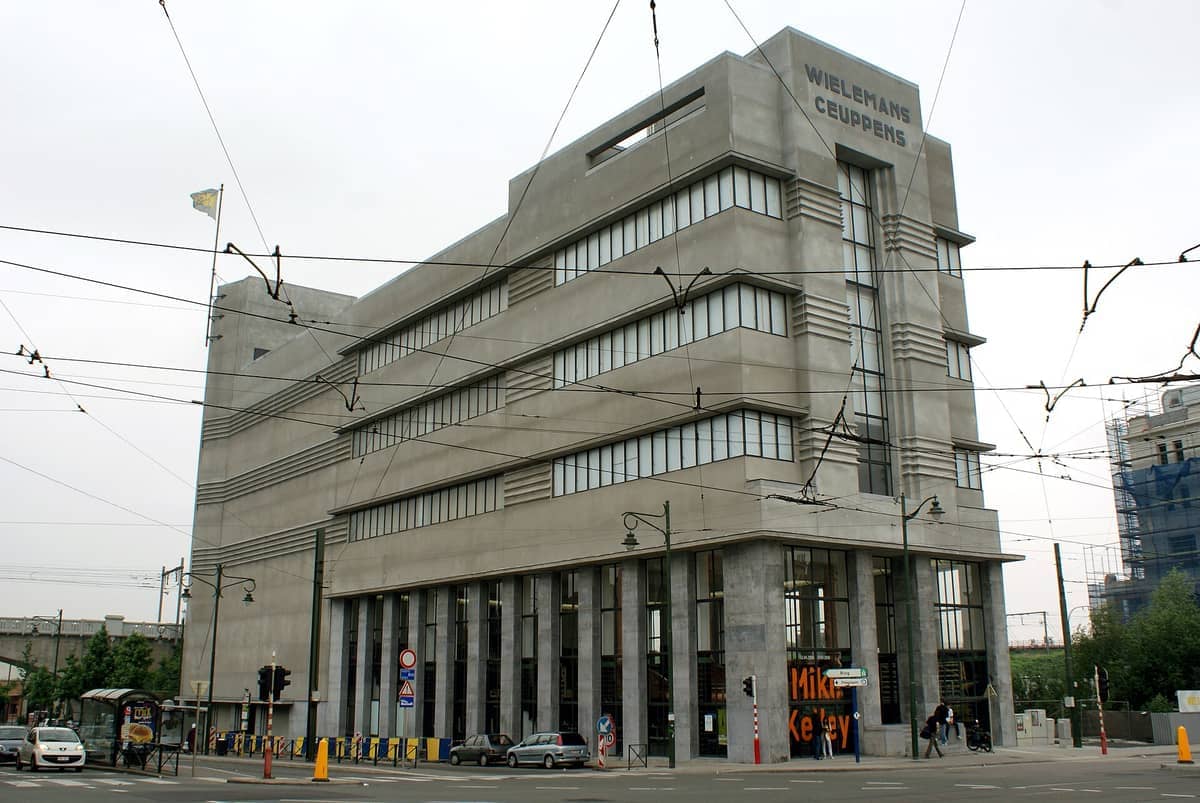
Occupying a striking Art Deco brewery in the Forest municipality, WIELS Contemporary Art Centre is one of Europe's most respected platforms for cutting-edge contemporary art. With ambitious rotating exhibitions, monthly evening openings, and a rooftop terrace overlooking south Brussels, it rewards visitors who want more than the usual museum circuit.
Quick Facts
- Location
- Avenue Van Volxem 354, 1190 Forest, Brussels
- Getting There
- Tram or bus toward Forest; check STIB/MIVB planner for current routes
- Time Needed
- 1.5 to 2.5 hours depending on exhibitions
- Cost
- €12 standard; €8/€5 reductions; free under 18 and museumpassmusées holders
- Best for
- Contemporary art enthusiasts, architecture admirers, curious off-the-beaten-track visitors
- Official website
- www.wiels.org/en
What WIELS Actually Is (and Why It Matters)
WIELS Contemporary Art Centre is not a permanent collection museum. There are no Magrittes on the walls, no chronological journey through Belgian art history. Instead, WIELS operates as a kunsthalle-style institution: it commissions and presents ambitious temporary exhibitions by both established and emerging artists, many of whom are showing in Belgium for the first time. The programming leans international, experimental, and often politically engaged.
That distinction matters before you visit. If you are hoping for a broad cultural survey of Belgian art, you will find more familiar ground at the Royal Museums of Fine Arts or the Magritte Museum on the Mont des Arts. WIELS is the place to come when you want to encounter work that challenges assumptions, occupies industrial space in unexpected ways, and occasionally makes you stand still for longer than you planned.
The institution has built a reputation across Europe for the quality and scale of its commissions. It sits within a broader Brussels art scene that includes BOZAR and the KANAL-Centre Pompidou, but WIELS occupies a distinct position: less mainstream than either, more focused on the kind of large-scale spatial installation that requires a building with genuine volume.
The Building: A Brewery Turned Exhibition Hall
The WIELS building is itself a reason to make the trip to Forest. It was originally constructed as the Wielemans-Ceuppens Brewery, an Art Deco industrial complex built in the 1930s. The architect Adrien Blomme designed a structure that combined the functional demands of large-scale brewing with an architectural ambition rare in industrial commissions of that era. The facade features strong vertical lines, decorative brickwork, and the kind of deliberate composition that reads as architecture rather than mere engineering.
Inside, the former brewing halls provide the exhibition spaces: tall ceilings, open floor plates, and the kind of raw, uninterrupted volume that allows artists to install work on a scale impossible in most conventional gallery buildings. Natural light enters at angles that shift through the day, which means the quality of the light in early afternoon is noticeably different from what you find at the evening nocturne openings, when artificial lighting takes over and the atmosphere changes completely.
The rooftop terrace, accessible during regular opening hours, gives a perspective over the Forest and Saint-Gilles neighborhoods that most visitors to Brussels never see. It is not a panoramic viewpoint in the way the Atomium or Basilica of the Sacred Heart might be, but it is a genuinely pleasant place to pause between galleries, and on clear days the view extends north across the lower city.
💡 Local tip
Check the WIELS website before visiting to confirm which exhibitions are currently installed. The building undergoes installation periods between shows when some or all galleries may be closed to the public. A quick check saves a wasted journey.
Tickets & tours
Hand-picked options from our booking partner. Prices are indicative; availability and final rates are confirmed when you complete your booking.
Brussels pub crawl meet people and party
From 16 €Instant confirmationFree cancellationBrussels Art and History Museum ticket with Ancient Egypt audio tour
From 19 €Instant confirmationPrivate walking tour of Brussels' history and art
From 129 €Instant confirmationFree cancellationBrussels exclusive private art and culture tour with a local expert
From 134 €Instant confirmationFree cancellation
What a Visit Feels Like, Hour by Hour
WIELS opens at 11:00, Tuesday through Sunday. Arriving close to opening time on a weekday means you will often have entire gallery floors to yourself, or close to it. The building is quiet at that hour: the reception desk occupies a corner of the entrance hall, there may be soft ambient sound drifting from an audiovisual work somewhere upstairs, and the smell is faintly of old brick and concrete, the particular atmosphere of a building that was never fully domesticated into a neutral white cube.
By midday on weekends, visitor numbers increase noticeably, though WIELS never feels crowded in the way the Grand-Place area does. The scale of the building absorbs groups comfortably. If you visit with a partner or small group and want to discuss what you are looking at without self-consciousness, a mid-morning weekday slot is ideal. Lone visitors who prefer to move slowly through exhibition spaces will find the same window comfortable.
The first Wednesday of every month brings a nocturne until 21:00. These evenings have a different social texture: more Brussels residents than tourists, the bar area more active, and occasionally a program of talks, performances, or guided tours running alongside the exhibitions. If you want to experience WIELS as a cultural institution embedded in the city rather than as a tourist stop, a nocturne evening is the most revealing way to do it.
ℹ️ Good to know
Opening hours: Tuesday to Sunday, 11:00 to 18:00. Closed Monday. Open on public holidays but closing at 16:00 on 24 and 31 December. Closed on 25 December and 1 January. Monthly nocturne on the first Wednesday of each month until 21:00.
Tickets, Passes, and Who Gets In Free
Standard admission is €12. Reduced rates apply in several categories: €8 for teachers, visitors aged 65 and over, groups of ten or more, and Lottery Club members; €5 for students, job seekers, and visitors with a disability. The Article 27 social tariff brings admission down to €1.25 for eligible visitors.
Free entry applies to visitors under 18, art school students up to age 26, Welcome Pass holders (residents within one kilometre of WIELS who can show proof of address), and holders of the museumpassmusées. If you are planning to visit multiple Brussels museums, the museumpassmusées in particular pays for itself quickly.
The Brussels Card also covers free entry and is worth considering if you plan to visit several institutions in the same trip. You can find more on how to plan a multi-museum visit in the guide to the best museums in Brussels.
Getting to Forest: Practical Transit Information
WIELS sits at Avenue Van Volxem 354 in the Forest municipality, which sits south of the city centre and southeast of the Saint-Gilles neighborhood. It is not within easy walking distance of central Brussels, so public transport is the logical choice. Brussels urban transport is operated by STIB/MIVB, and the most current routing to WIELS is best confirmed through the STIB/MIVB journey planner, as tram and bus line numbers and stops can change.
From the city centre, tram lines and bus services running south toward Forest pass close to WIELS. The journey from central Brussels typically takes around 20 to 30 minutes. If you are combining WIELS with a visit to the Saint-Gilles neighborhood or the Horta Museum, the geography works in your favour: Forest borders Saint-Gilles to the south, so both can be covered on the same afternoon.
For a broader orientation to moving around the city, the guide to getting around Brussels covers the STIB/MIVB network, ticketing, and the difference between metro, tram, and bus lines.
⚠️ What to skip
Do not assume you can walk easily from the Grand-Place area to WIELS. The distance is a little over 4 kilometres and the route is not scenic. Use STIB/MIVB trams or buses and check the planner for the most direct current option.
Photography, Accessibility, and Practical Details
Photography policies at WIELS vary by exhibition, as they do at most contemporary art institutions. Some works are under specific copyright restrictions, and video installations are almost always photography-restricted. The general rule at European contemporary art centres is to check at reception and to avoid flash photography. The building's industrial architecture, including the stairwells and the rooftop terrace, is usually fair game and photographs well in natural light.
Reduced admission for visitors with a disability is explicitly part of the pricing structure. Physical accessibility details, including specific information on lift access and wheelchair-accessible routes through the building, are not fully detailed in publicly available documentation; visitors with specific mobility needs are best advised to contact WIELS directly via the official website before their visit to confirm arrangements.
The entrance hall includes a bookshop with a focused selection of exhibition catalogues, artist monographs, and critical texts that reflects the programming direction of the institution rather than the broader Belgian art canon. It is worth browsing even if you do not intend to buy: the selection is a reasonable guide to what is considered significant in the contemporary art world at any given moment.
Honest Assessment: Who Will Love This and Who Should Go Elsewhere
WIELS consistently delivers exhibitions of genuine ambition. The programming team takes risks on younger artists, commissions site-specific work, and does not default to blockbuster names. If you follow contemporary art at all, or if you are simply curious about what European institutions are commissioning right now, WIELS will almost certainly have something worth your two hours.
If your primary interest is Belgian art history, Flemish painting, or the kind of encyclopedic museum experience that gives you clear historical context, WIELS is not the right destination for this visit. It is also not a family attraction in the way the Museum of Natural Sciences or Mini-Europe are, though the monthly Family Funday events organised by Brussels Museums can make it more approachable for older children.
Visitors with limited time in Brussels who want to prioritise the classic cultural circuit should note that WIELS requires a specific trip to Forest and works best as a deliberate destination rather than a quick stop. For a fuller picture of how to structure limited time, the two-day Brussels itinerary is a useful starting point.
Insider Tips
- The monthly nocturne on the first Wednesday of each month (open until 21:00) often coincides with talks, performances, or guided tours that may not be highlighted on the main exhibitions page. Check the WIELS events calendar specifically, not just the exhibitions page.
- If you hold a museumpassmusées, WIELS is one of the less-visited institutions on the card, which means you are more likely to see major shows without the crowds that affect more central Brussels museums.
- The rooftop terrace is open during regular hours but is not signposted aggressively inside the building. Ask at reception if you cannot find the access point; it is worth the extra few minutes.
- Exhibition installation periods can close some or all gallery spaces for days at a time. The WIELS website updates this information, but the calendar is not always prominent; look for a 'practical information' section rather than just checking exhibition dates.
- Forest's Avenue Van Volxem has a handful of neighbourhood cafes and a local weekly market character that contrasts sharply with the tourist centre. Arriving a little early or allowing time afterward to walk a few blocks in either direction gives a more realistic picture of how Brussels actually functions away from the Grand-Place.
Who Is WIELS Contemporary Art Centre For?
- Contemporary art enthusiasts looking for serious international programming rather than tourist-facing collections
- Architecture admirers interested in adaptive reuse of Art Deco industrial buildings
- Visitors with museumpassmusées or Brussels Card who want to use their pass at a less-crowded institution
- Travellers spending three or more days in Brussels who have already covered the central circuit
- Anyone visiting on a first Wednesday evening who wants to experience Brussels' local cultural scene rather than its tourist infrastructure
Nearby Attractions
Combine your visit with:
- AfricaMuseum Tervuren
Set in a grand neoclassical palace 14 km east of Brussels, the AfricaMuseum is one of Europe's largest museums dedicated to Central Africa. Reopened in 2018 after a five-year renovation, it now confronts its own colonial past head-on while housing world-class natural history, ethnographic, and art collections.
- Basilica of the Sacred Heart (Koekelberg)
The National Basilica of the Sacred Heart in Koekelberg is one of the largest Art Deco religious buildings in the world, its green copper dome rising 89 metres above Brussels. Entry to the basilica is free; a paid climb to the dome platform delivers one of the city's most underrated panoramas.
- Cantillon Brewery (Brasserie Cantillon)
Cantillon Brewery (Brasserie Cantillon) is one of the few remaining traditional lambic breweries in Brussels, doubling as the Brussels Museum of the Gueuze since 1978. Located a short walk from Gare du Midi in Anderlecht, it is a working industrial site and a serious destination for anyone wanting to understand why Belgian beer culture earned UNESCO recognition.
- Comic Strip Route (Mural Trail)
Brussels' Parcours BD is a free, self-guided trail of more than sixty large-scale comic murals painted on building walls across the city. Created in 1991, it turns the streets themselves into an open-air gallery celebrating Belgium's most distinctive art form. No ticket required, no opening hours to check.