Kanal – Centre Pompidou: Brussels' Industrial Art Experiment on the Canal
Kanal – Centre Pompidou occupies a vast former Citroën car dealership on the Brussels canal. Part ongoing renovation project, part art institution, it challenges what a museum can look and feel like. Here is what visitors need to know before making the trip.
Quick Facts
- Location
- Square Sainctelette 21, 1000 Brussels (Molenbeek-Canal)
- Getting There
- Metro lines 2 and 6 – Yser station, then 5-min walk; buses 47, 58, 88
- Time Needed
- 2–3 hours minimum; allow more if an exhibition runs
- Cost
- Verify current admission on the official site; status has been subject to change
- Best for
- Contemporary art, architecture, urban regeneration, photography
- Official website
- kanal.brussels
What Kanal – Centre Pompidou Actually Is
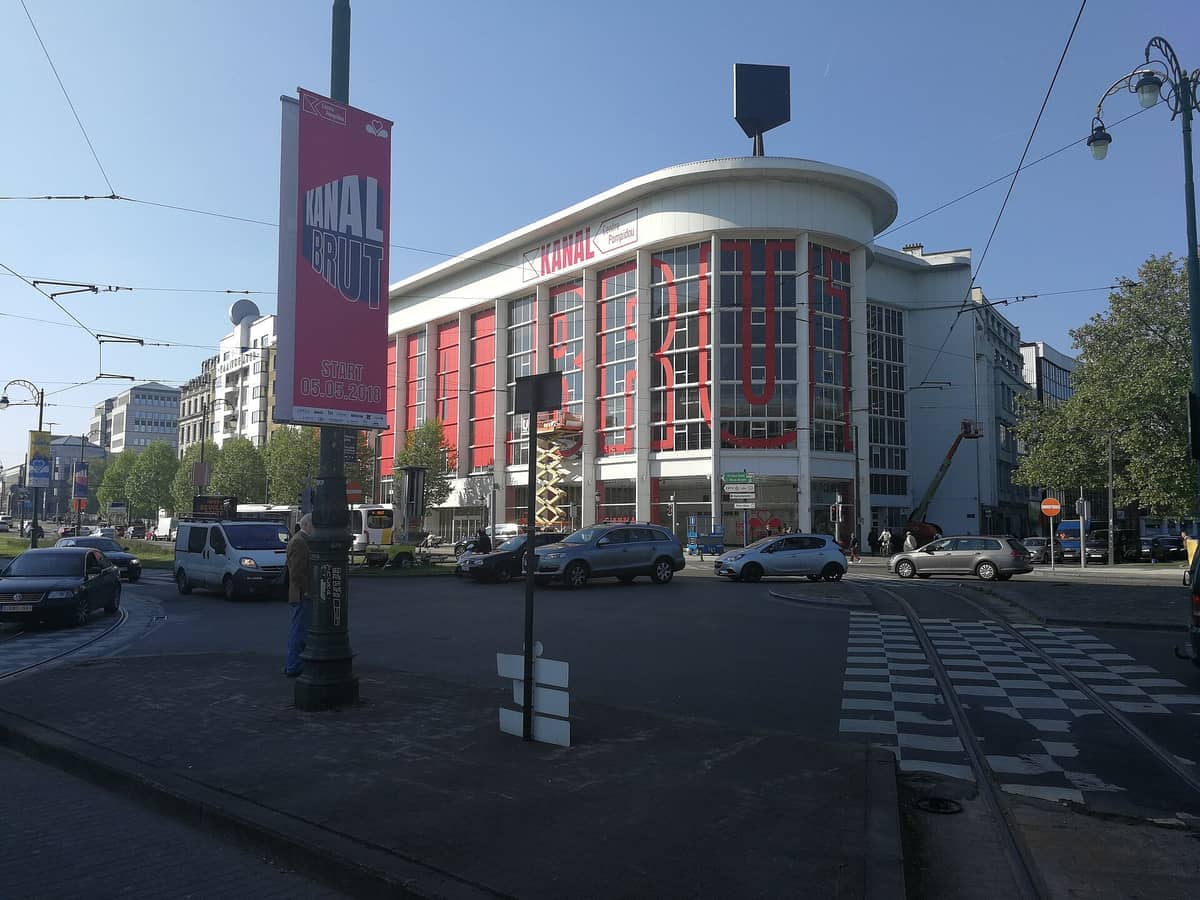
Kanal – Centre Pompidou is not quite like any other cultural institution in Brussels. It occupies a monumental 1930s building on the Brussels canal that served for years as the Citroën Yser garage for Belgium. The raw concrete floors, service ramps, hydraulic lifts, and multi-storey open bays have been kept largely intact. The result is a space that feels more like an industrial site still mid-transformation than a polished white-cube gallery, and that tension is very much intentional.
The institution was established with backing from the Brussels-Capital Region in 2017, the same year Centre Pompidou in Paris signed its partnership agreement on 18 December 2017. The collaboration links one of Europe's most important modern art institutions to a neighbourhood, Molenbeek, that has rarely been on tourist itineraries. That pairing, a globally recognised art brand anchored in a working-class canal-side district, defines the ambition and the contradictions of the project in equal measure.
⚠️ What to skip
Important before you visit: Kanal – Centre Pompidou is listed as temporarily closed on Brussels Museums listings while the building progresses toward its reopening. Always check kanal.brussels/en/visit for the latest opening status before travelling.
The Building: A Citroën Garage as Cultural Monument
The building at Square Sainctelette 21 is the real protagonist. The structure runs across several floors and spans a footprint that would comfortably house multiple conventional galleries. When Citroën occupied it, cars would be driven up internal ramps to upper service floors, and the building's bones still communicate this function clearly. The ramps remain walkable. The signage, the concrete columns, the industrial skylights that wash upper floors in diffuse northern light, all of it survives.
Visiting the building feels like moving through a time-layered document of Brussels industrial history. The ground floor in particular, with its wide open floor plates and double-height ceilings, creates a sense of scale you do not encounter in the city's more traditional art venues. Sound behaves differently here too: voices carry, footsteps echo, and large installations can dominate acoustically in ways that would be impossible in a carpeted gallery.
For context on how Brussels has historically adapted large civic and commercial structures for cultural use, the Halles Saint-Géry and Tour & Taxis offer instructive comparisons elsewhere in the city.
Tickets & tours
Hand-picked options from our booking partner. Prices are indicative; availability and final rates are confirmed when you complete your booking.
Central Brussels sightseeing tour with audio guide
From 11 €Instant confirmationGhent tour from Brussels
From 43 €Instant confirmationFree cancellationTablet Workshop at Choco-Story Brussels
From 45 €Instant confirmationShared tour of Delft and the Keukenhof Estate from Brussels
From 86 €Instant confirmationFree cancellation
The Programming: What to Expect Inside
Kanal draws on the Centre Pompidou collection in Paris, one of the largest holdings of modern and contemporary art in the world, while also commissioning site-specific work and hosting temporary exhibitions developed in Brussels. The programming spans visual art, design, architecture, performance, and film. Because the building itself is still undergoing renovation, the spatial relationship between exhibitions and architecture shifts depending on which phase of construction is active.
Exhibitions here tend to engage directly with the building's industrial character rather than fighting it. Large-scale sculpture works particularly well in the former service bays. Video installations take on extra weight in the darker mechanical spaces on the upper floors. The collection works on display have included 20th-century masters and contemporary figures, though specific works rotate.
If your primary interest is modern and historical Belgian art in a more traditional setting, the Royal Museums of Fine Arts provide a contrasting experience. For contemporary work with a different curatorial approach, Wiels Contemporary Art Centre in Saint-Gilles is worth considering alongside Kanal.
The Neighbourhood: Molenbeek and the Canal Context
The canal side location is not incidental. Molenbeek has undergone gradual change over the past decade, with the canal waterfront attracting cultural investment alongside the older industrial and residential fabric. Arriving at Kanal from Yser metro station, you cross a bridge over the Brussels-Charleroi Canal and soon encounter the building's full scale. The exterior is utilitarian, identifiable more by its size than by any architectural flourish.
The area around Square Sainctelette has cafés and canal-side public space, though it is not yet the kind of polished cultural district you encounter around more established arts venues in other European capitals. That incompleteness is part of what makes visiting interesting. You are watching a neighbourhood and an institution develop in parallel, and the experience feels less stage-managed than most major urban cultural projects.
To understand the broader canal regeneration context, the Molenbeek-Canal neighbourhood guide covers what is happening in the wider area and how to combine a Kanal visit with other stops along the waterfront.
Visiting in Practice: Time of Day and What to Bring
Morning visits, especially on weekdays, mean the building is at its most open and uncrowded. The upper floors receive the best natural light in the late morning as daylight enters through the industrial skylights. If you are interested in photographing the architecture rather than attending a specific programme event, weekday mornings are the practical choice.
Evening openings associated with specific events tend to draw larger crowds, and the building takes on a different character: more social, louder, with the industrial aesthetic becoming a backdrop rather than the main subject. Check the programme schedule in advance because the visitor experience varies considerably depending on whether a major exhibition is running or the space is in a quieter phase between shows.
Wear comfortable shoes with good grip. The concrete floors and ramp surfaces are not difficult to navigate, but they are not museum-carpet soft either. In colder months, the large open spaces can feel chilly even when heated, so an extra layer is practical. Accessibility details are available on the official site, and it is worth confirming in advance which areas are open on the day you visit, especially if you want to access upper floors, as renovation-related closures can affect specific sections.
💡 Local tip
Photography tip: The building's ramps and multi-level volumes create strong geometric lines. Wide-angle lenses suit the large industrial bays, while the upper floors, with their overhead skylights and mechanical remnants, reward more detailed shots. Tripods are not always permitted during busy exhibition periods; check in advance.
Getting There from Central Brussels
From central Brussels, Metro lines 2 and 6 both stop at Yser (Ijzer in Dutch), the most direct station for Kanal. The walk from Yser to Square Sainctelette 21 is a short one on foot, crossing the canal bridge. Buses 47, 58, and 88 also serve Yser for those coming from other parts of the city.
By bicycle, the canal-side paths make for a direct and flat route from the city centre. Brussels has a public bike-share scheme, and the route along the canal towpath is straightforward. Driving is possible but parking in this part of Molenbeek requires patience and is not the easiest approach. The transit and cycling options are more practical.
For broader advice on navigating Brussels without a car, the getting around Brussels guide covers metro, tram, bus, and cycling options across the city.
Honest Assessment: Is It Worth the Visit?
Kanal – Centre Pompidou rewards visitors who come with an appetite for process and ambiguity rather than a desire for a complete, finished experience. If you want a comprehensive permanent collection presented in optimal conditions, this is not that. The building's renovation is ongoing, the programming evolves continuously, and parts of the site may be unavailable depending on the phase of work.
What it offers instead is something rarer: a genuine sense of encounter with a city thinking hard about what its cultural future might look like, in a building of real industrial power, in a neighbourhood that is not performing for tourists. For architecture enthusiasts, contemporary art followers, and anyone interested in urban regeneration, that is considerable.
Visitors who prefer clean narratives, finished permanent galleries, or air-conditioned comfort throughout may find the experience frustrating. The building can feel raw, the programming calendar matters a great deal to the quality of any given visit, and the temporary closure periods mean planning ahead is essential.
Insider Tips
- Check the programme calendar on kanal.brussels before visiting, not just the opening hours. A visit during a major exhibition opening or performance event gives a completely different experience from an ordinary gallery day.
- The building's ramps between floors are part of the exhibition circuit, not just circulation. Slow down on them and look back as well as forward: the views through the building's levels are among the most photogenic moments in the whole visit.
- Yser metro station is also the starting point for exploring the wider canal waterfront. Arriving slightly early for your Kanal visit and walking the canal bank south toward the city centre first gives useful orientation to the neighbourhood.
- The accessible entrance and automatic doors make arrival straightforward, but confirm in advance which areas are open on the day you visit, especially if you want to access upper floors, as renovation-related closures can affect specific sections.
- Brussels Museum Night (Nuit des Musées) often includes Kanal in its programme. The industrial building takes on a striking quality in the evening under artificial light, and it is usually busier and more atmospheric than a standard daytime visit.
Who Is Kanal – Centre Pompidou For?
- Contemporary art enthusiasts who engage with the collection context and building as much as individual works
- Architecture and industrial heritage followers drawn to adaptive reuse projects
- Travellers interested in Brussels beyond the city centre tourist circuit
- Photographers looking for strong geometric and industrial backdrops
- Visitors who want to understand Brussels' urban regeneration in real time
Nearby Attractions
Other things to see while in Molenbeek & the Canal Zone:
- Tour & Taxis
Tour & Taxis is a massive repurposed customs and rail freight complex on the Brussels canal, now home to markets, concerts, co-working spaces, and seasonal events. Free to enter the grounds, it rewards visitors who time their trip to coincide with something happening inside.