Halles Saint-Géry: Brussels' Iron Market Hall and Cultural Crossroads
Halles Saint-Géry is a landmark 19th-century covered market hall on Place Saint-Géry, at the geographic and cultural heart of Brussels' Dansaert quarter. Free to enter and open daily, it functions as a heritage exhibition centre, event venue, and social gathering space that genuinely earns its place in the city's civic life.
Quick Facts
- Location
- Place Saint-Géry 1, 1000 Brussels (Dansaert–Saint-Géry quarter)
- Getting There
- Bourse/Beurs tram stop (lines 4 and 10); 10–15-minute walk from Brussels-Central station
- Time Needed
- 30–60 minutes for the hall itself; 2–3 hours if you combine it with the surrounding square and neighbourhood
- Cost
- Free entry to the heritage and exhibition centre (always)
- Best for
- Architecture lovers, Brussels history, weekend market-goers, travellers exploring beyond the Grand-Place
- Official website
- en.hallessaintgery.be
What Halles Saint-Géry Actually Is
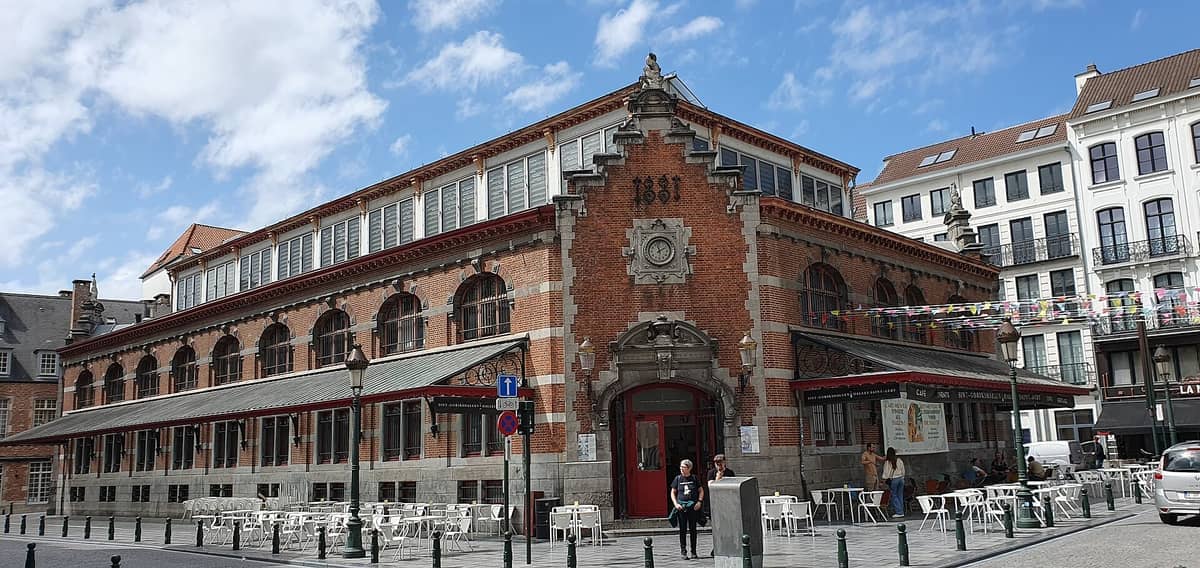
Halles Saint-Géry is a covered iron-and-brick market hall built in the late 19th century on Place Saint-Géry, a square that sits at what historians consider the founding point of Brussels itself. The island formed by the Senne river here was where the first settlement grew, long before the Grand-Place took shape a few hundred metres to the east. The square's name honours Saint Géry (Gaugericus), the bishop credited with establishing a chapel on this site around 695 AD.
Since April 1999, the hall has been managed by the Brussels-Capital Region as an information and exhibition centre dedicated to the heritage and living environment of Brussels. In practice, that means rotating exhibitions on urban history, architecture, and city life alongside a programme of markets, cultural events, and public gatherings. Entry to the permanent heritage displays is always free.
ℹ️ Good to know
Opening hours for the heritage and exhibition centre: Monday to Sunday, 10:00–18:00. Some individual events (markets, evening programmes) may run later into the evening; check the official events calendar at en.hallessaintgery.be before visiting.
The Architecture: Iron, Brick, and Filtered Light
The structure itself is worth pausing over. The hall's skeleton is cast iron, characteristic of the public market architecture that swept through European cities in the second half of the 19th century. Large arched windows run along the upper walls, and the central roof section rises into a glazed lantern, so the interior is lit by natural light that shifts noticeably depending on cloud cover and the time of day. On a grey Brussels morning, the hall has a quiet, industrial weight to it. On a sunny afternoon, the light turns warm and diffuse, softening the iron framework.
The exterior facing the square retains its original brick and stone facades with ornamental detailing that reflects the civic ambition typical of late-19th-century Belgian municipal architecture. Unlike many Brussels landmarks that are routinely photographed from a single obvious angle, the hall rewards a slow circuit of the square: the north and south elevations read quite differently, and the relationship between the building and the surrounding water features on the square changes with the light.
If 19th-century iron architecture interests you, the Galeries Royales Saint-Hubert is a short walk east and represents an earlier, grander use of the same structural principle. For Art Nouveau, the Horta Museum in Saint-Gilles shows how Brussels architects pushed iron construction into its most expressive form a generation later.
Tickets & tours
Hand-picked options from our booking partner. Prices are indicative; availability and final rates are confirmed when you complete your booking.
Escape Tour self-guided, interactive city challenge in Brussels
From 30 €Instant confirmationEscape Tour self-guided, interactive city challenge in Brussels
From 30 €Instant confirmationBrussels' history audio tour with Halle Gate admission ticket
From 17 €Instant confirmationEscape Tour self-guided, interactive city challenge in Ghent
From 30 €Instant confirmation
How It Changes Through the Day
Weekday mornings are the quietest time. The square outside is populated mainly by people cutting through on the way to work, and the hall itself is unhurried. The permanent exhibition on Brussels urban heritage can be absorbed without crowds; the scale is modest, and forty minutes is enough to take in the displays carefully. The cloister area adjacent to the hall, described by the centre itself as a true treasure of Brussels urban heritage, receives almost no tourist foot traffic at this hour.
Weekend afternoons transform the dynamic entirely. When a market or event is scheduled, the square fills with a mix of local residents, families, and visitors. The sound level rises, coffee and food stalls appear, and the hall's open floor becomes a social space rather than a contemplative one. The weekly Marché Saint-Géry, when running, brings local producers and artisans to the square. This version of the place is livelier and more representative of how the neighbourhood actually uses it, but it is a different experience from a quiet midweek visit.
💡 Local tip
For photography, arrive before 10:30 on a weekday. The square is largely empty, the light enters the hall at a low angle through the east-facing windows, and the iron framework is visible without people blocking sightlines. Bring a wide-angle lens or use your phone's ultrawide mode: the interior is not large, but the ceiling height requires it.
The Neighbourhood Context: Why This Square Matters
Halles Saint-Géry sits at the western edge of the historic centre and the eastern edge of the Dansaert–Saint-Géry quarter, a neighbourhood that has evolved significantly over the past three decades. The streets between the hall and the canal, particularly Rue Antoine Dansaert, concentrate independent fashion boutiques, design studios, and a clutch of well-regarded restaurants and cafés. This makes Halles Saint-Géry a natural anchor point for a longer exploration of the quarter rather than an isolated attraction.
The canal lies roughly ten minutes on foot to the northwest, where the former industrial waterfront has been undergoing sustained regeneration. The hall itself sits almost exactly midway between the Grand-Place and the canal, which makes it a logical halfway stop on any walk that links the two zones. The streets are genuinely interesting to walk: the urban fabric here is denser and less polished than the tourist core around the Grand-Place, with wholesale traders, local bakeries, and neighbourhood bars alongside the design-focused businesses.
For a fuller picture of Brussels beyond the obvious sights, the Brussels hidden gems guide covers several stops in this part of the city that reward the walk from Halles Saint-Géry.
Exhibitions and Events: What to Expect Inside
The permanent exhibition focuses on the heritage of Brussels as a living city: its urban development, the communities that have shaped it, and the layered history visible in its streets and buildings. The presentation is informative rather than spectacular. Panels, maps, archival photographs, and some interpretive displays make up the core. This is not a large-scale museum experience; it is closer in scale and ambition to a well-curated local heritage centre.
Temporary exhibitions rotate through the hall's main floor and have covered topics ranging from Brussels architecture to neighbourhood histories and urban planning initiatives. The quality and scope vary. Free guided visits of Place Saint-Géry and its cloister are offered by the centre, providing context that the interior displays alone do not fully convey. These guided visits are worth booking if your interest in Brussels history goes beyond the surface.
Events scheduled in the evenings can run until 23:00 and include food markets, cultural nights, and community gatherings. The hall's proportions, with its high ceilings and open floor plan, make it well-suited to these formats. Check the official events calendar before your visit: arriving to find the hall mid-setup for an evening event when you expected a quiet exhibition visit is a common source of mild disappointment.
⚠️ What to skip
The exhibition content is modest in scale. Visitors expecting a comprehensive Brussels history museum will find it underwhelming. The building and its setting are the primary draw; the displays are a secondary benefit.
Practical Walkthrough: Getting There and Getting the Most From It
The nearest public transport stop is Bourse/Beurs, a tram and bus hub rather than a metro station, served by STIB tram lines 4 and 10 and several bus routes. From there, the walk to Place Saint-Géry takes under five minutes heading west along Rue Auguste Orts. From Brussels-Central station, allow roughly 15–20 minutes on foot through the pedestrianised lower city. The square itself is signed and easy to find.
The guide to getting around Brussels covers the full STIB/MIVB network in detail, including single tickets, the MOBIB card, and the 24-hour visitor pass options. For this particular destination, a single journey from the city centre costs under €3 with a standard ticket, and the walk from Bourse is short enough that many visitors simply cover it on foot from the Grand-Place.
Accessibility information is listed by Brussels Museums for Halles Saint-Géry; verify current details directly with the venue before visiting if you have specific mobility requirements. The square itself is flat and paved, which is straightforward for most visitors. The hall's interior is a single level without stairs on the main floor.
Brussels has an oceanic climate with reliable rainfall year-round. The hall is fully covered, making it a genuinely useful destination on a wet day. Combining it with the nearby covered Galeries Royales Saint-Hubert creates a practical rainy-day circuit in the city centre that requires no outdoor exposure except for a short connecting walk.
For a full rainy-day strategy, the Brussels rainy day activities guide maps out the best covered options across the city.
Who Will Enjoy It, and Who Might Not
Halles Saint-Géry works best as part of a wider exploration of the neighbourhood rather than as a standalone destination. Travellers with a genuine interest in Brussels history, urban heritage, or 19th-century iron architecture will find it rewarding and, because it is free, low-risk. Those combining it with a walk along Rue Dansaert, a visit to the canal area, or a broader circuit of the lower city will get the most from the stop.
Travellers focused primarily on major art collections, the EU institutions, or the concentrated museum offer of the Cinquantenaire complex may find the hall a diversion rather than a priority. First-time visitors to Brussels with only a day or two may rationally choose to spend their limited time on the higher-density attractions closer to the Grand-Place. Halles Saint-Géry rewards repeat visitors and those who have already covered the headline sights.
Families with children will find the open, airy space manageable, and the surrounding square gives children room to move. That said, the exhibition content is text-heavy and aimed at adults with an existing interest in the city. The weekly market events are more naturally engaging for mixed-age groups.
Insider Tips
- The free guided visit of Place Saint-Géry and its cloister, offered by the heritage centre, is the single best way to understand what you are looking at. Book it in advance via the official website rather than hoping to join one on arrival.
- The café and bar on the square's perimeter are used primarily by locals, not tourists. Sitting outside on a weekday afternoon gives you a more accurate read of the neighbourhood's character than anything inside the hall.
- If you are visiting on a Saturday, check the events calendar for the Marché Saint-Géry. When it runs, the square has a completely different energy, and local food producers bring goods that are unavailable in central Brussels supermarkets.
- The cloister adjacent to the hall receives almost no signage from the main square. Ask at the information centre desk for access; it is genuinely one of the quieter and more atmospheric spaces in the city centre.
- Combine a visit here with a walk north along Rue Antoine Dansaert toward the canal. The street concentrates some of Brussels' best independent design and fashion retail, and the 20-minute walk to the Tour and Taxis site adds significant depth to the excursion.
Who Is Halles Saint-Géry For?
- Architecture and urban history enthusiasts interested in 19th-century civic buildings
- Repeat visitors to Brussels looking to move beyond the Grand-Place circuit
- Travellers exploring the Dansaert quarter for design, food, and independent retail
- Rainy-day visitors who want a covered cultural stop near the city centre
- Budget travellers: the free entry makes it a genuinely no-cost cultural experience
Nearby Attractions
Other things to see while in Dansaert & Saint-Géry:
- Belgian Beer World
Belgian Beer World opened in September 2023 inside the grand Brussels Stock Exchange on Boulevard Anspach, turning 12,000 square metres of one of the city's most recognisable buildings into an immersive journey through Belgian brewing culture. It combines interactive storytelling, tasting, and a rooftop bar in a setting that no other beer attraction in the country can match.
- The Bourse (Brussels Stock Exchange)
The Brussels Stock Exchange, officially the Bourse de Bruxelles, is a grand 19th-century neoclassical landmark that has reinvented itself as a cultural venue at the heart of the Belgian capital. Today it houses the Belgian Beer World experience, a medieval archaeological site, and free public galleries beneath one of Brussels' most photographed facades.
- Église Saint-Jean-Baptiste au Béguinage
The Église Saint-Jean-Baptiste au Béguinage is a notable surviving example of Flemish Baroque architecture in Brussels, built between 1657 and 1676 on the site of a medieval beguinage. Free to enter and just minutes from the canal district, it rewards visitors who slow down long enough to look up.
- Zinneke Pis
Zinneke Pis is a small bronze dog caught mid-urination on a street corner in Brussels' Dansaert district. Free to visit at any hour, it completes the city's trio of peeing statues and carries a surprisingly meaningful message about Brussels' identity as a cosmopolitan, mixed city.