Dansaert & Saint-Géry is the creative and social heart of central Brussels, where a historic covered market square meets one of the city's best streets for independent fashion. The area draws a mix of locals, designers, and visitors looking for something beyond the tourist trail, all within a short walk of Grand-Place.
Dansaert & Saint-Géry occupies a stretch of central Brussels where the city's creative class has long set up shop alongside its bar-goers and food lovers. Rue Antoine Dansaert runs the spine of the district with independent fashion labels and design stores, while Place Saint-Géry gathers the evening crowds around the beautiful iron-and-glass Halles Saint-Géry. It is close enough to Grand-Place to be convenient, but distinct enough in character to feel like a different Brussels entirely.
Orientation
Dansaert & Saint-Géry sits within the Pentagon, the name Brusselers use for the historic city centre enclosed by the inner ring road. The area occupies the northwestern quadrant of that core, positioned between the Bourse district to the east and the canal to the west. The canal boundary matters: cross it and you are in Molenbeek, a very different neighbourhood in character and demographics. To the south, the district fades into the Stalingrad axis, while the Quays along the Bruxelles-Charleroi canal form the western edge.
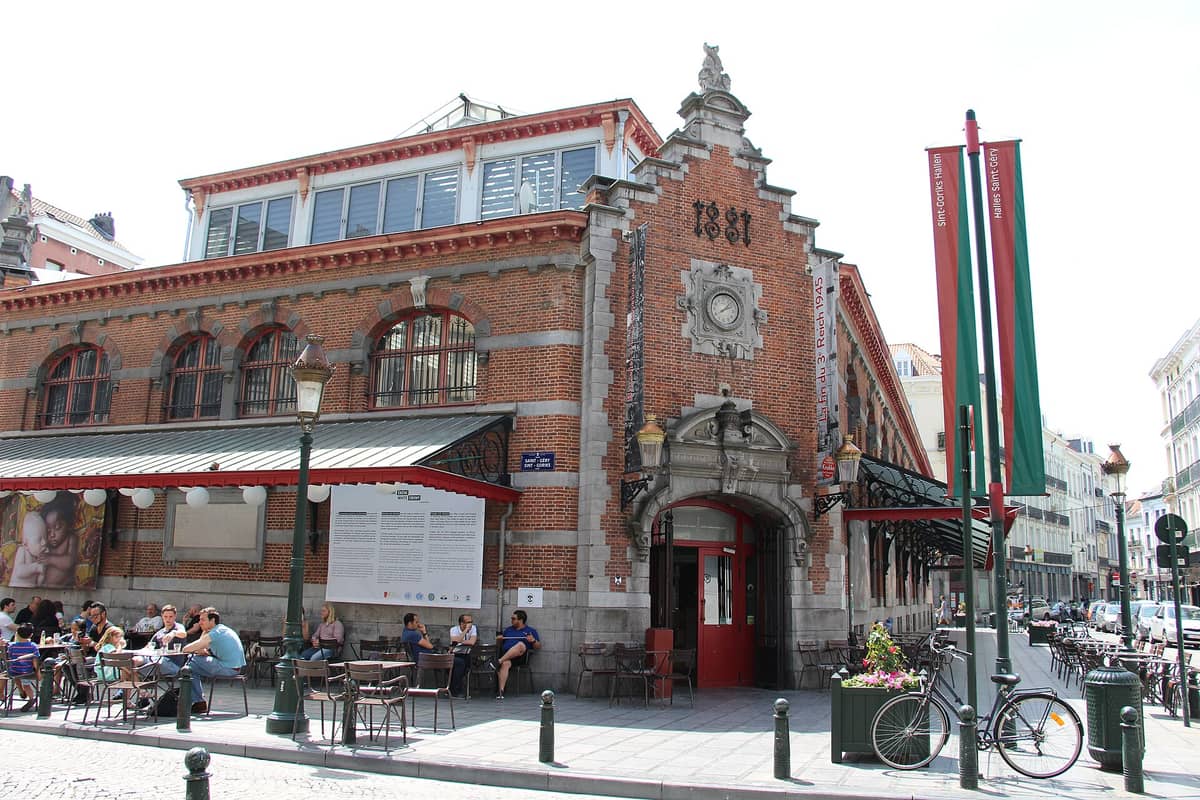
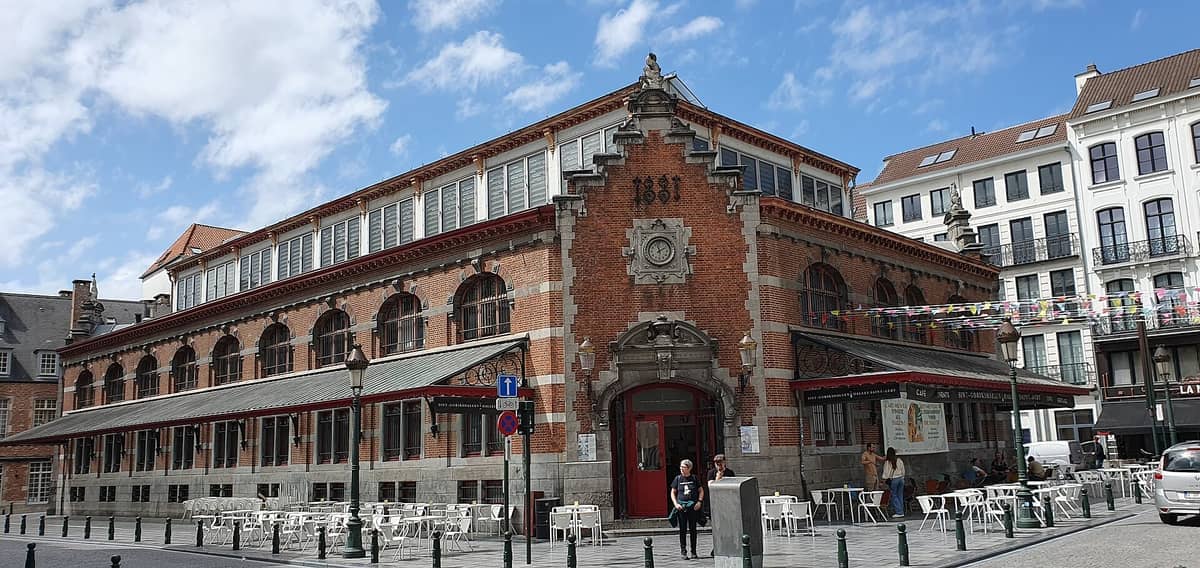
The two focal points are easy to locate on any map. Place Saint-Géry is the older of the two: this square sits on an island in what was once the River Senne, the waterway that was vaulted over in the nineteenth century as part of a major urban hygiene project. The Halles Saint-Géry, a covered iron market hall built in 1881–82, still dominates the square. From there, Rue Antoine Dansaert runs southeast toward the Palais de la Bourse, passing Rue Van Artevelde, Rue Sainte-Catherine, and Vieux Marché aux Grains along the way. The whole walkable territory from Place Saint-Géry to the Bourse is barely 600 metres.
Neighboring areas are all within easy walking distance. The Grand-Place and the Îlot Sacré are five minutes east on foot. The Marolles working-class quarter is a 15-minute walk to the south. And the canal-side Molenbeek and the canal district begin just across the water to the west, accessible via the Porte de Flandre end of Rue Antoine Dansaert.
Character & Atmosphere
The neighbourhood has two distinct rhythms that run in parallel. During the day, Rue Antoine Dansaert is a shopping street with genuine personality: independent Belgian fashion labels, concept stores, and design boutiques occupy narrow ground-floor spaces in 19th-century buildings. The street has carried this reputation since the 1980s, when Belgian designers began setting up here before the label 'Antwerp Six' had even been coined. It is not a luxury-brand corridor in the way that Avenue Louise is, and it is not a mainstream high street. The stores tend to be owner-run and opinionated, and the window displays reflect it.
Walk two blocks west toward Place Saint-Géry and the daytime mood softens. The square itself, particularly around the Halles Saint-Géry, fills with café terrasses from mid-morning. The iron and glass of the market hall casts a warm light on the stone pavements in the afternoon, and the square has the unhurried quality of somewhere people genuinely use as a meeting point rather than just a backdrop. Rue de Flandre, which runs north from the square toward Sainte-Catherine, is lined with fishmongers and North African grocery shops that give it a different texture again, a reminder that this part of Brussels has a long history as a working port quarter.
After about 19:00, the energy shifts decisively toward the evening. The terrasses fill up, the bars inside the Halles Saint-Géry start doing serious business, and Rue Antoine Dansaert's boutiques pull down their shutters to leave the street to the restaurant crowd. The area around Place Sainte-Catherine, a few minutes' walk north, runs parallel as a food destination in its own right, with a cluster of restaurants along the former fish market. On weekends the noise level around Saint-Géry square can be significant from around 22:00 until late, which is worth knowing if you are considering accommodation directly on or adjacent to the square.
ℹ️ Good to know
The neighbourhood is officially bilingual (French and Dutch), and most signage appears in both languages. In practice, French dominates in shops and bars here. English is widely spoken and understood throughout the area.
What to See & Do
The Halles Saint-Géry is the neighbourhood's most distinctive building and the best place to understand what the area is about. Built in 1881 on the site of the original church of Saint-Géry (from which both the square and the historic neighbourhood take their name), the iron-framed market hall was restored in the 1980s and now operates as a cultural venue, exhibition space, and bar. The building itself is the attraction as much as whatever is on inside; the combination of exposed ironwork, brick, and the small central pavilion that houses a permanent exhibition on the history of Brussels is worth seeing even if you only stop for a coffee on the terrace.
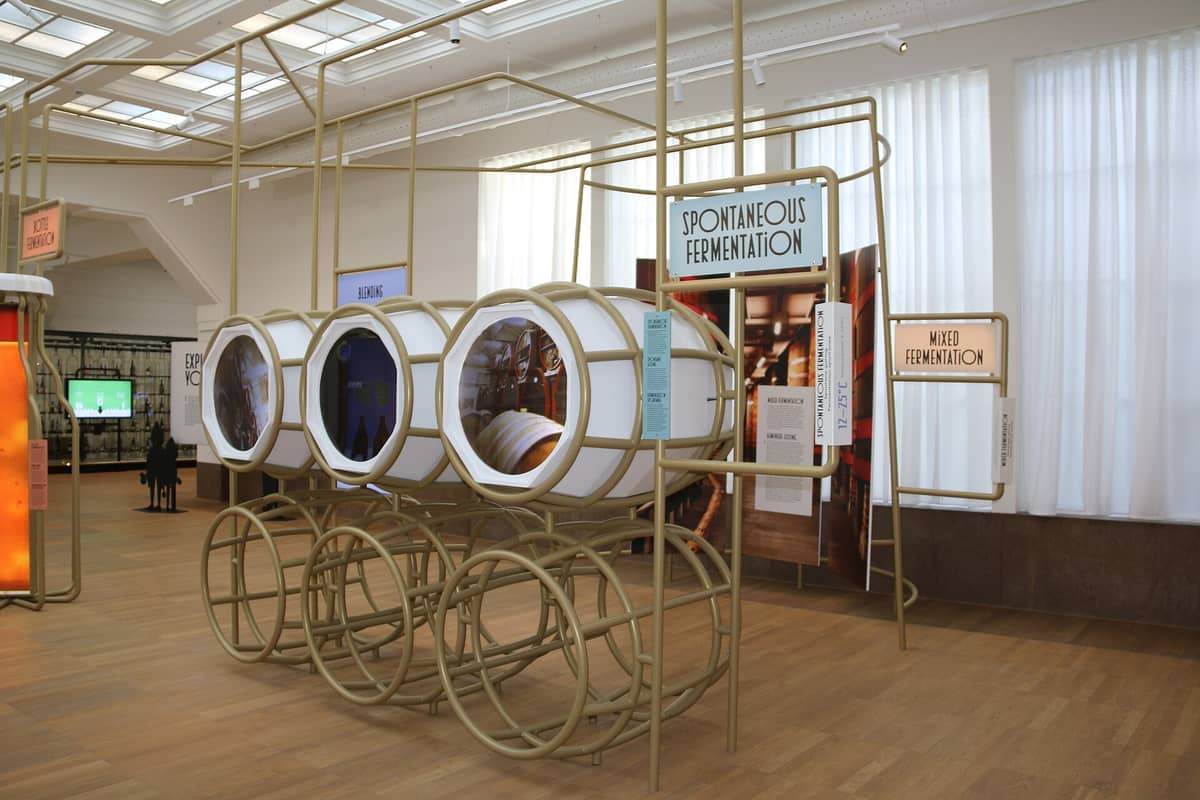
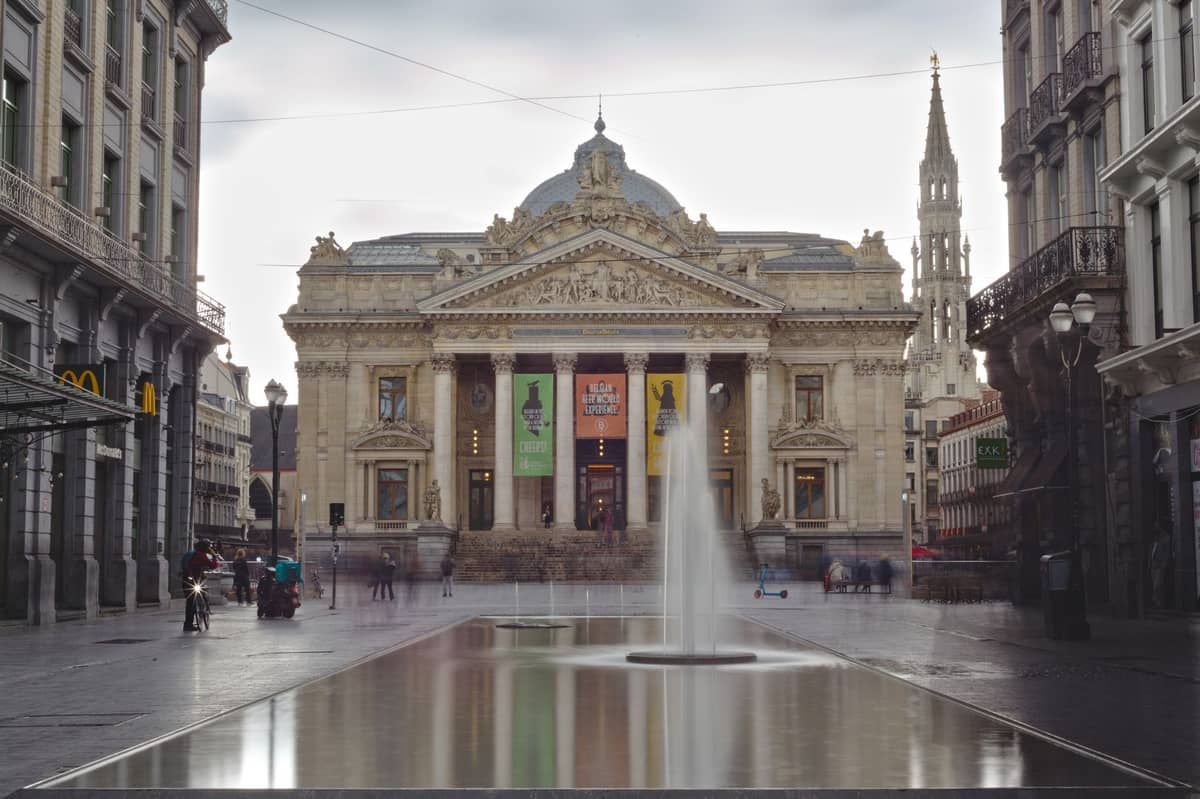
The Brussels Stock Exchange (Bourse/Beurs) stands at the southeast end of Rue Antoine Dansaert and marks the transition point between this neighbourhood and the central tourist zone. The neoclassical building, completed in 1873, now operates partly as a Belgian beer experience venue. It is impossible to miss, and it gives you a useful landmark: if the Bourse is behind you and you are walking northwest, you are heading into Dansaert territory.
Rue Antoine Dansaert itself rewards slow walking rather than purposeful striding. The street is not long, but the shop fronts change constantly and the quality of the architecture is consistently good. Several of the buildings are late 19th-century commercial properties with ornate facades that have survived largely intact because this part of the city missed the worst of the postwar modernisation that gutted sections of the Pentagon.
For those interested in Brussels's wider cultural offer, the Kanal Centre Pompidou at Tour & Taxis is a 20-minute walk north along the canal, and the Belgian Comic Strip Center is a 10-minute walk east. Both are accessible without leaving the central zone.
Halles Saint-Géry: cultural venue, permanent Brussels history exhibition, bar and terrasse
Rue Antoine Dansaert: independent Belgian fashion and design boutiques
Place Sainte-Catherine: former fish market square, now a restaurant hub with a surviving Baroque church
Vieux Marché aux Grains: small square connecting the Saint-Géry and Dansaert zones, lined with café terrasses
Brussels Stock Exchange (Bourse/Beurs): landmark neoclassical building at the district's eastern edge
Eating & Drinking
This is one of the stronger areas in Brussels for eating and drinking, partly because it serves both a local residential population and a crowd that comes specifically from other neighbourhoods for the evening. The price range is wide, from very cheap falafel and shawarma on Rue de Flandre to proper sit-down restaurants with serious wine lists around Place Sainte-Catherine and Vieux Marché aux Grains.
The fish restaurant cluster around Place Sainte-Catherine is a Brussels institution. The square takes its name from the old fish market that operated here when the Senne still ran above ground, and several restaurants have maintained that specialisation. On a weekday evening, the terrasses along the north side of the square fill with locals in a way that many parts of the tourist centre do not manage. The cooking tends toward Belgian classics: moules-frites, waterzooi, and North Sea fish preparations, at prices that are fair without being cheap.
Rue Antoine Dansaert has its own café and lunch scene separate from the boutiques. Several small coffee bars and sandwich spots operate for the daytime crowd, and there are a handful of restaurants that shift into evening mode without the tourist-menu feel you find closer to Grand-Place. The intersecting streets, particularly around Vieux Marché aux Grains, have outdoor seating that turns into a social focal point on warm evenings.
Belgian beer is, of course, available everywhere here, but the density and quality of the selection is particularly high. If you want context for what you are drinking, the Belgian Beer World inside the renovated Stock Exchange building is a short walk away. For a more traditional brewing experience, the Cantillon Brewery is a 20-minute walk south in Anderlecht and offers a very different perspective on Brussels beer culture.
💡 Local tip
Rue de Flandre, running north from Place Saint-Géry toward the canal, has a cluster of affordable restaurants and takeaway spots that cater mainly to locals. It is worth exploring on foot if you want to eat well without paying terrasse prices. The quality of the North African and Middle Eastern food options here is consistently good.
Getting There & Around
The nearest metro station is De Brouckère on lines 1 and 5, which places you about a 5-7 minute walk from Place Saint-Géry. De Brouckère is one of Brussels's central interchange stations and connects directly to major hubs including Brussels-Central (one stop), Gare du Midi (four stops), and the European Quarter. From the station, walk southwest on Boulevard Anspach and turn left onto Rue Van Artevelde to reach the square.
Trams serve the area directly via the Bourse/Beurs stop on the Boulevard Anspach tram corridor, which is the main north-south transit axis through the Pentagon. From Bourse it is a three-minute walk west to Place Saint-Géry, or a two-minute walk northwest along Rue Antoine Dansaert. Several bus lines, including the 33, 46, 89, and 95, stop at Bourse/Beurs or Saint-Géry/Sint-Gorik within a 2-3 minute walk of the square.
On foot from Grand-Place, the walk to Place Saint-Géry takes around 7-8 minutes heading northwest via Rue du Marché au Charbon. From Brussels-Central station, allow about 12 minutes on foot. The area is entirely flat, which matters in a city where the upper town around the Royal Quarter and Sablon require climbing. Walking is the most practical way to get around once you are in the neighbourhood, as the distances between its main points are very short.
For wider context on getting around Brussels by public transport, including metro maps and tram routes across the city, see the complete guide to getting around Brussels.
ℹ️ Good to know
Brussels's urban transport is run by STIB/MIVB. Single tickets, day passes, and multi-journey cards are available at metro station machines and via the STIB app. The same ticket covers metro, tram, and bus within the Brussels-Capital Region for 60 minutes from first validation.
Where to Stay
Dansaert & Saint-Géry is a reasonable base for visitors who want to be within the central city without being directly in the tourist core around Grand-Place. The accommodation options tend toward smaller boutique hotels, apartment rentals, and B&Bs rather than large chain properties, which suits the neighbourhood's independent character.
The best-positioned accommodation is in the streets between Rue Antoine Dansaert and Place Sainte-Catherine, roughly the northern half of the area. This puts you close to the restaurants around the fish market square while keeping you slightly removed from the weekend noise of Place Saint-Géry itself. If you are a light sleeper, avoid rooms directly overlooking the square or the southern stretch of Rue de Flandre, where bar noise on Friday and Saturday nights can carry until 02:00 or later.
The neighbourhood suits independent travellers, couples on city breaks, and anyone using Brussels as a base for day trips, given the metro connection to Brussels-Midi for Eurostar services. For a broader overview of accommodation choices across the city, including how Dansaert compares to alternatives like Ixelles or Saint-Gilles, see the where to stay in Brussels guide.
⚠️ What to skip
Place Saint-Géry and the immediately surrounding streets are genuinely noisy on Thursday, Friday, and Saturday nights. The bars inside and around the Halles Saint-Géry attract large crowds, and the sound carries across the square. If you have an early start or are sensitive to noise, book accommodation at least one or two blocks north, toward Place Sainte-Catherine, rather than on the square itself.
Safety & Practical Notes
Dansaert & Saint-Géry is a central and generally well-patrolled area. The City of Brussels has historically maintained a reinforced presence along commercial axes including Rue Antoine Dansaert, with patrols during both daytime trading hours and evening bar periods. As in any busy city centre area, the main risk is opportunistic theft: pickpocketing in crowded bar areas and theft from café terrasses are more common than violent crime. Standard urban precautions apply.
The neighbourhood is well-lit at night, and the mix of residents, restaurant-goers, and bar crowds means the streets are not empty after dark on most evenings. For broader safety context across the city, the Brussels safety tips guide covers areas and situations in more detail.
Tap water in Brussels is potable and regulated under EU drinking water standards. The Euro is the currency; card payments are widely accepted in the boutiques and restaurants along Rue Antoine Dansaert, though some of the smaller market stalls and older café terrasses around Saint-Géry still prefer cash. Belgium's emergency number is 112, and Brussels area code for landlines is 02.
TL;DR
Best for: independent travellers, shoppers interested in Belgian fashion and design, food and bar enthusiasts, and anyone who wants central access without Grand-Place crowds on the doorstep.
Key strengths: excellent restaurant density around Place Sainte-Catherine, one of Brussels's best streets for independent retail on Rue Antoine Dansaert, the Halles Saint-Géry as a genuine neighbourhood anchor, and strong metro and tram connectivity.
Main drawbacks: weekend nightlife noise around Place Saint-Géry can be significant; the area is not the right choice for those seeking quiet evenings or a residential feel.
Getting here: De Brouckère metro (lines 1 and 5) is the most direct connection; trams via Bourse/Beurs stop are an alternative; Grand-Place is 7-8 minutes on foot.
Not ideal for: families with young children seeking quiet early evenings, or travellers who prioritise proximity to the EU Quarter or the Sablon museum corridor over nightlife and fashion.
Two days is enough time to cover Brussels' historic core, world-class museums, and legendary food scene — if you plan it right. This itinerary cuts through the noise to give you a practical, hour-by-hour plan that works around real opening hours, Monday closures, and the best use of the Brussels Card.
Brussels holds one of the greatest concentrations of Art Nouveau architecture on the planet. This guide covers the essential buildings, the best museums, how to use the Art Nouveau Pass, and when to visit for the BANAD Festival — with a frank note on what's actually open and what requires booking ahead.
Brussels sits at the heart of one of the world's great beer cultures. This guide covers every major brewery, museum, and tasting experience in the city, with clear pricing, practical logistics, and the context to understand what makes Belgian beer genuinely different.
Brussels is the undisputed capital of Belgian chocolate, with heritage praline houses, boundary-pushing artisan makers, and chocolate museums all within walking distance of each other. This guide covers the best chocolate shops, realistic prices, seasonal considerations, and exactly what to skip.
Brussels has an unusually dense museum scene for its size. From a world-class Surrealism collection to a living lambic brewery, a spectacular natural history hall, and a free EU history centre, the Belgian capital offers remarkable depth across every genre. This guide covers the best of them.
Brussels rewards visitors in every season, but the timing of your trip shapes everything from hotel rates to crowd levels to which festivals you can catch. This guide breaks down exactly what to expect each month, with the real trade-offs for every type of traveller.
Brussels rewards those who seek elevation. This guide covers the city's best viewpoints, from iconic hilltop terraces and Art Deco rooftops to medieval towers and futuristic observation spheres. Whether you want free skyline vistas or ticketed platforms, here's exactly where to go and when.
Brussels Airport (BRU) in Zaventem is 12 km from the city centre, with a direct train station beneath the terminal. This guide covers every transport option, realistic fares, terminal layout basics, and the common mistakes that cost travellers time and money.
Brussels transforms each winter into one of Europe's most atmospheric seasonal destinations. This guide covers every aspect of Winter Wonders (Plaisirs d'Hiver): where the markets actually are, what things cost, when to visit to avoid the worst crowds, and the practical details that most guides overlook.
Brussels takes comic art more seriously than almost any city on earth. This guide covers the official mural route with 60+ painted walls, the Belgian Comic Strip Center housed in a Victor Horta building, and everything you need to navigate the city's Franco-Belgian comic heritage without wasting a step.
Brussels is the de facto capital of the European Union, and its EU quarter is one of the few places on earth where you can step inside a functioning democratic institution for free. This guide covers every visitor attraction in the European Quarter, with opening hours, booking tips, and a frank take on what's worth your time.
The Brussels Flower Carpet is one of Europe's most spectacular temporary installations, covering the Grand-Place in nearly one million flowers for just four days every two years. This guide covers dates, viewing options, crowd strategy, and practical tips to help you plan a visit worth the trip.
Brussels rewards couples who look beyond the obvious. This guide covers the city's most romantic squares, gardens, museums, and neighborhoods, with practical details on timing, cost, and what to skip, so you can plan a genuinely memorable trip together.
Brussels rewards curious travellers who look beyond the Grand-Place. From buried medieval palaces and spontaneous-fermentation breweries to Art Nouveau masterpieces and canal-side art museums, the city's best experiences are often the least obvious ones.
Brussels has a deeper luxury scene than many visitors expect. From a dense cluster of Michelin-starred restaurants across the Brussels-Capital Region to a cluster of exceptional five-star hotels along Avenue Louise, this guide covers exactly where to stay, eat, and spend your time when budget is not the constraint.
Brussels nightlife is not one scene but many, spread across distinct neighborhoods from the beer bars of Saint-Géry to the techno clubs of Ixelles. This guide breaks down the best districts, key venues, realistic costs, and the practical logistics every visitor needs to know.
Brussels has a reputation as an expensive EU capital, but the reality is more nuanced. Between free museum Sundays, affordable public transport, and some of the best street food in Europe, a trip to Brussels can cost surprisingly little. This guide breaks down exactly where your money goes and where you can save it.
Brussels gets rain year-round, but a wet day here is far from a wasted one. The city packs in some of Europe's finest museums, covered galleries, breweries, and atmospheric indoor spaces that reward slow exploration whatever the weather.
Brussels is the capital of Belgium and the de facto capital of the European Union, drawing millions of visitors each year. Most trips are trouble-free, but understanding where the real risks lie, and which fears are overblown, makes a significant difference. This guide covers crime patterns, safe neighborhoods, transport safety, emergency contacts, and practical tips for navigating the city with confidence.
Brussels rewards shoppers at every budget level, from designer boutiques on Avenue Louise to the chaotic pleasures of the Marché du Midi. This guide breaks down every major shopping district, market, and seasonal event with plain assessments, opening hours, and local context.
The Brussels to Amsterdam corridor is one of Europe's most well-connected intercity routes, with high-speed trains completing the journey in under two hours and budget buses offering a cheaper alternative. This guide breaks down every option, what it actually costs, and how to book smart.
Bruges is Belgium's most visited city for good reason, and from Brussels it takes under 70 minutes by direct train. This guide covers every transport option, what to expect on arrival, the best way to structure your day, and the honest truth about crowds, costs, and whether one day is actually enough.
Brussels takes its waffles seriously, and visitors who don't know the difference between a Brussels waffle and a Liège waffle often end up disappointed. This guide explains exactly what to order, where to find the best versions across the city, what you should expect to pay, and which spots are overpriced tourist traps.
Brussels rewards walkers more than almost any other European capital. This guide covers the best walking tours and self-guided routes in the city — from the medieval Grand-Place loop to Art Nouveau trails in Saint-Gilles — with honest breakdowns of costs, crowd patterns, and what to skip.
Brussels rewards families with an unusually rich mix of hands-on museums, outdoor parks, and genuinely weird landmarks that kids actually remember. This guide covers the best family activities in Brussels, from the Atomium to Train World, with practical advice on what to prioritise.
Brussels sits at the centre of one of Europe's most rewarding day-trip networks. Within 90 minutes by train or car, you can reach medieval cities, ancient forests, living brewery museums, and one of history's most significant battlefields. This guide covers the best excursions, organised by type.
Brussels offers an unusually rich set of free experiences. From its UNESCO-listed Grand-Place and world-class museums with free admission days to self-guided comic mural trails and sweeping city panoramas, you can fill several days in Brussels without opening your wallet.
Brussels has one of Western Europe's most comprehensive urban transport networks, but navigating two airports, four metro lines, and a tangle of tram routes takes some preparation. This guide covers every practical option — from the STIB/MIVB metro to airport trains, taxis, and cycling — with current fares, route logic, and the mistakes most visitors make.
Brussels divides opinion like few European capitals. This guide gives you a clear-eyed look at what the city genuinely offers, what it gets wrong, and exactly who will love it, so you can decide before you book.
The Paris to Brussels train is one of Europe's most efficient city-to-city rail connections: under 1h30, departures nearly every hour, and advance fares starting around €29. This guide covers everything from booking strategy and station logistics to what awaits you in Brussels.
Brussels rewards visitors who look past the postcard images. This guide covers the essential things to do in Brussels, from UNESCO-listed squares and world-class museums to flea markets, beer culture, and EU institutions, with practical notes on timing, costs, and what to skip.
Brussels is a serious food city for its size. This guide covers every dish worth knowing, from the classics served in century-old brasseries to street food you should seek out, with clear price guidance and tips on what to skip.
Brussels offers far more than one good neighborhood for visitors. This guide breaks down the best areas to stay by location, budget, and travel style, with a clear read on each district, current price benchmarks, and practical advice on taxes, timing, and transport.