Molenbeek-Saint-Jean and the Brussels Canal Zone form one of the Belgian capital's most complex and compelling neighborhoods: a former industrial waterfront now layered with creative institutions, diverse communities, and ongoing urban transformation. It rewards curious visitors willing to look beyond the headlines.
Molenbeek and the Canal Zone sit just west of Brussels city centre, separated from it by the Brussels-Charleroi Canal, and they tell a story the city's tourist brochures rarely lead with. This is working-class Brussels in real time: a municipality with a diverse population, where a former industrial waterfront is slowly being rewritten by creative institutions, independent breweries, and cultural centres, without losing the grit that gives it meaning.
Orientation
Molenbeek-Saint-Jean is one of the 19 municipalities that make up the Brussels-Capital Region. Its eastern boundary is the Brussels-Charleroi Canal, which forms a hard geographic edge between Molenbeek and the City of Brussels proper. Cross one of the canal bridges and you move from a dense, historically working-class municipality into the city centre. This proximity is easy to underestimate: from the canal quays in Molenbeek, you can see the rooftops of central Brussels in under ten minutes on foot. of central Brussels in under ten minutes on foot.
The neighborhood most visitors are interested in is the Maritime Quarter (Quartier Maritime), a canal-side district in northern Molenbeek. Its rough boundaries run east to the canal itself, north to the Tour & Taxis complex, west to the railway line, and south toward Molenbeek's older residential centre around the Place Communale. This northern strip is where most of the cultural regeneration activity is concentrated.
The broader Canal Zone extends across several Brussels municipalities, including Molenbeek-Saint-Jean and the City of Brussels. To the north, the canal connects to the Tour & Taxis freight depot and the Laeken area. To the south, it feeds into Anderlecht. Major rail hubs ring the zone: Gare du Nord to the northeast, Gare du Midi to the south, and Gare de l'Ouest inside Molenbeek itself.
If you are planning a wider Brussels itinerary, Molenbeek fits naturally alongside visits to the Dansaert and Saint-Géry area, which sits directly across the canal on the city centre side, and is connected by foot across the Pont de Molenbeek in under five minutes.
Character & Atmosphere
Walking into Molenbeek from the canal bridges in the early morning, the neighborhood feels like a city still running on its own internal logic rather than any tourist infrastructure. Bakeries selling Moroccan pastries and fresh-baked bread open early along the Rue de Ransbeek and surrounding streets. You hear French and Arabic in roughly equal measure, occasionally Dutch, and the general low-level noise of a dense municipality going about its day: delivery trucks, school kids, the clatter of market stalls being set up.
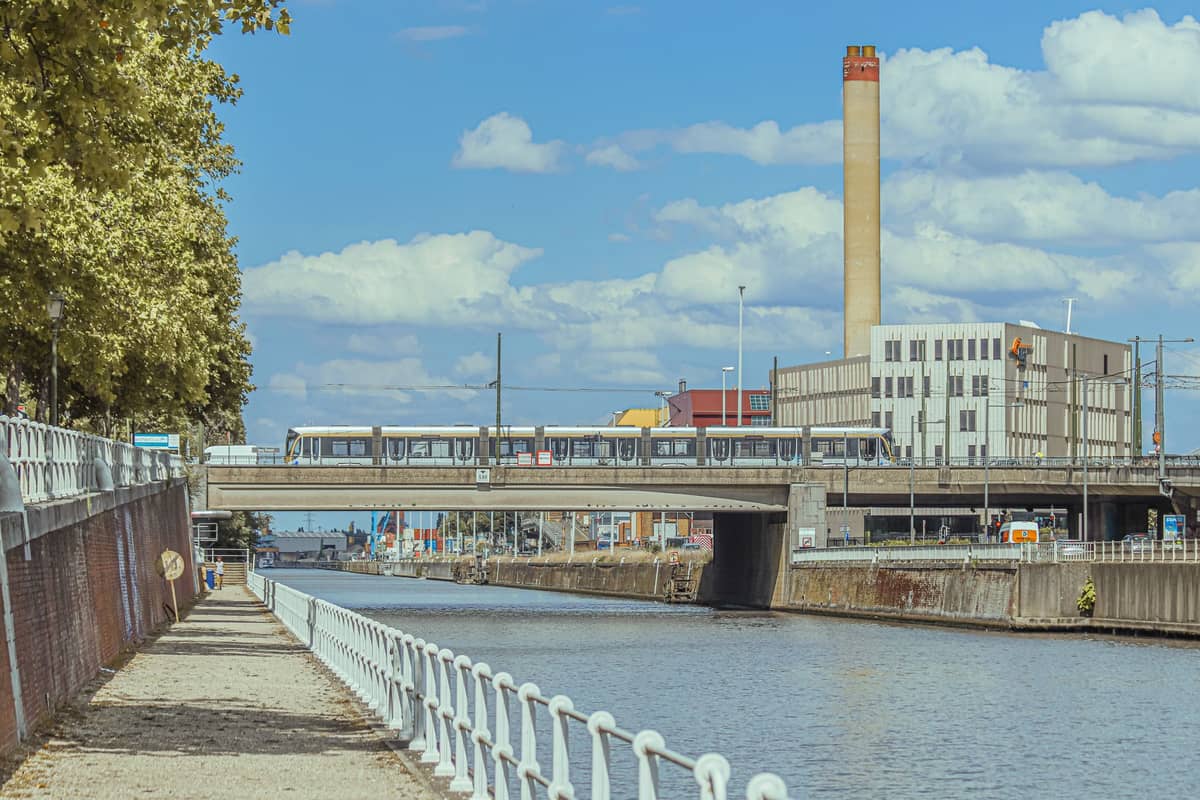
By midday, the canal quays attract a different crowd. The waterfront path running along the Quai de la Batelerie draws joggers, cyclists, and people from both sides of the canal taking lunch breaks on the stone steps near the water. The light in the afternoon falls flat and grey for much of the year, as it does everywhere in Brussels, but on a clear spring afternoon the canal surface does something genuinely cinematic with the reflection of the converted warehouse buildings. The former MIMA museum building, a former Belle-Vue brewery with its distinctive red-brick facade, anchors the waterfront visually.
After dark, the Canal Zone around the Maritime Quarter is quieter than central Brussels but not dead. The area around Tour & Taxis has a concentration of bars and event spaces that draw a young creative crowd on weekends. Side streets in the residential interior of Molenbeek, away from the waterfront, are much quieter at night and in some stretches feel more isolated. Sticking to the canal-side paths and the streets immediately around MIMA and Tour & Taxis gives a very different experience from wandering deep into the residential grids.
ℹ️ Good to know
Molenbeek received significant international media attention following the 2015 Paris attacks due to connections between suspects and addresses in the municipality. Belgian authorities subsequently launched the Kanaalplan, deploying additional federal police officers to the Canal Zone municipalities. to the Canal Zone municipalities. The neighborhood has continued to evolve since then. Standard urban common sense applies here, as in any dense European city neighborhood: stay aware of your surroundings, keep valuables secure, and exercise more caution in poorly lit residential streets at night.
The honest character of Molenbeek is one of coexistence and contrast. Pockets of genuine urban renewal sit immediately adjacent to streets that reflect high unemployment rates and concentrated poverty. This is not a neighborhood where everything has been smoothed over for visitor comfort, and that is precisely what makes it interesting as a destination for travelers who want more than a polished version of Brussels.
What to See & Do
The single most compelling institution in the Canal Zone was the MIMA (Millennium Iconoclast Museum of Art), housed in a converted wing of the former Belle-Vue brewery on the Quai du Hainaut. MIMA closed permanently in January 2025; the former Belle-Vue brewery building remains a landmark of the canal-side stretch. The building itself is worth seeing: exposed brick and industrial ironwork above the canal.
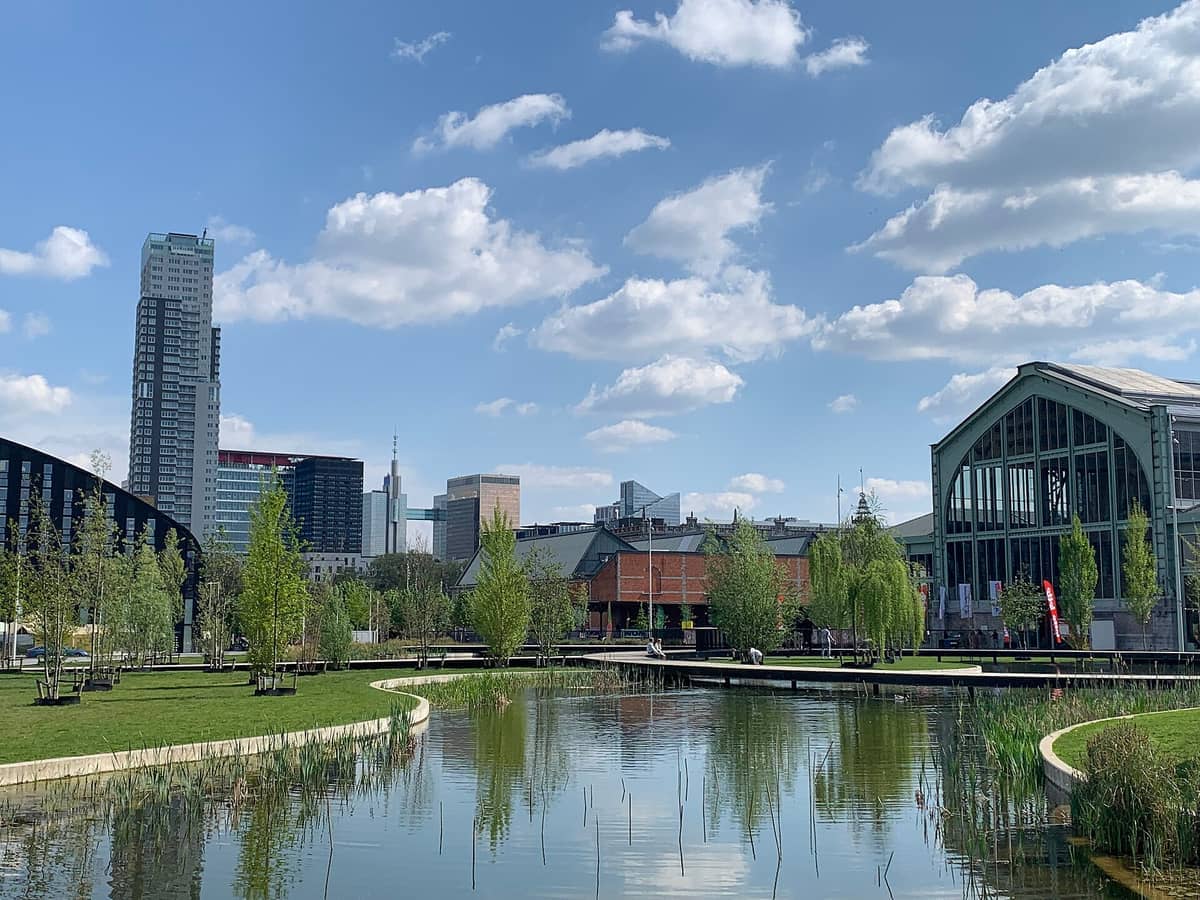
Just north of the Maritime Quarter, the Tour & Taxis complex is one of the most ambitious urban redevelopment projects in Brussels. This former international freight depot, a vast ensemble of late 19th and early 20th century industrial buildings, now houses offices, event spaces, a covered market, and a growing food and drink scene. The Royal Depot, with its enormous glass and steel roof, regularly hosts large-scale art exhibitions and food markets. The grounds also include a public park, making it a destination in its own right rather than just a venue.
The Maison des Cultures et de la Cohésion Sociale at Rue Mommaerts 4 functions as a community and cultural hub within Molenbeek, programming performances, workshops, and events that reflect the neighborhood's multicultural makeup. Programming is mostly in French and tends toward community participation rather than tourist-facing content, but the building and its courtyard are worth knowing about. The Maison des Cultures et de la Cohésion Sociale at Rue Mommaerts 4 functions as a community and cultural hub within Molenbeek, programming performances, workshops, and events that reflect the neighborhood's multicultural makeup. Programming is mostly in French and tends toward community participation rather than tourist-facing content, but the building and its courtyard are worth knowing about.
MIMA (Millennium Iconoclast Museum of Art): rotating exhibitions of urban and contemporary art in a canal-side converted brewery
Tour & Taxis: industrial heritage complex with markets, events, park, and food and drink
Canal waterfront walk: from the Tour & Taxis grounds south along the Quai de Mariemont and Quai de la Batelerie
Maison des Cultures et de la Cohésion Sociale: community programming and cultural events reflecting Molenbeek's diverse population
Brussels Museum of Industry and Labour (La Fonderie): industrial history of Brussels, housed in a former foundry on Rue Ransfort
💡 Local tip
The canal-side walking path between MIMA and Tour & Taxis is short and covers most of what makes this stretch interesting. but covers most of what makes this stretch interesting. Combine it with a visit to the Dansaert area by crossing back over the canal into the city centre, where independent design shops and wine bars make a strong contrast to Molenbeek's industrial waterfront feel.
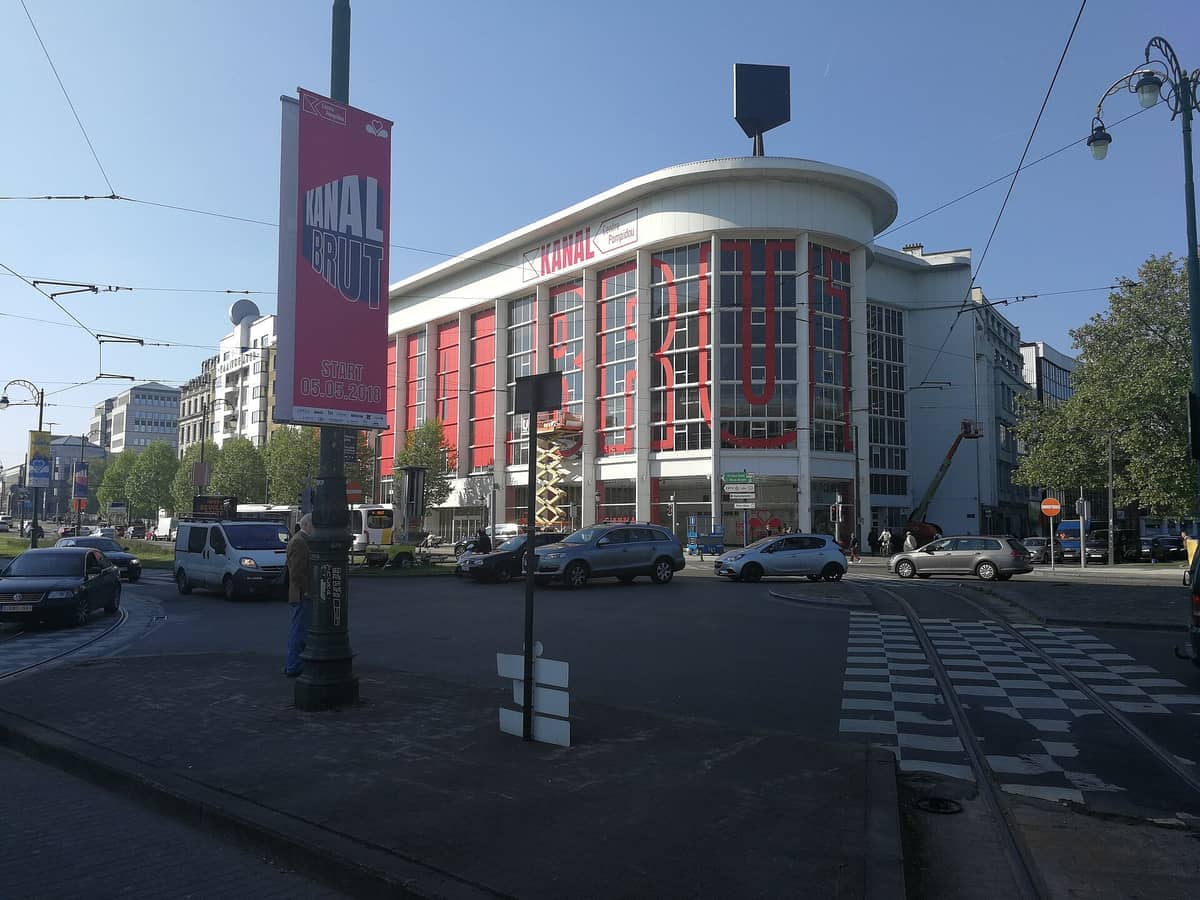
If you are following a broader Brussels itinerary focused on culture and museums, the Canal Zone connects logically to the KANAL Centre Pompidou, a major contemporary art and cultural institution occupying the former Citroën dealership on the Brussels city side of the canal at Place de l'Yser. It is technically in the City of Brussels rather than Molenbeek, but the two waterfront institutions are a short walk apart along the quays.
Eating & Drinking
The food landscape in Molenbeek reflects its population honestly. The strongest offerings are North African and Middle Eastern: Moroccan tajine restaurants, Lebanese street food, Algerian pastry shops selling baklava and chebakia alongside strong mint tea. Around the Place Communale and the streets running off it, you will find restaurants that serve generous portions at prices that feel like a different city from the Sablon or the Ilot Sacré. This is where Brussels residents who actually live here eat.
The canal-side and Tour & Taxis area has a growing layer of newer food and drink options aimed at the creative and professional crowd that the regeneration projects have drawn in. The covered market at Tour & Taxis (held on weekends and during special events) brings together artisan food producers, craft breweries, and street food vendors in the dramatic setting of the Royal Depot hall. It draws a very different crowd from the rest of Molenbeek and feels distinctly Brussels-trendy in a way the surrounding streets do not.
Brasserie De la Senne, the respected Brussels craft brewery, has its production and public bar/shop in the Canal Zone. it is a significant presence in the neighborhood and its beers appear on menus at canal-side bars and at the Tour & Taxis market events. For a dedicated deep dive into Brussels brewing culture, the neighborhood connects naturally to wider exploration.
Belgian beer culture is central to the Brussels experience across the city. For context on what to drink and where, the Belgian beer guide for Brussels covers the wider scene, from lambic producers to modern craft operations, several of which have roots in this part of the city.
Moroccan and North African restaurants: best concentrated around Place Communale and Rue de Ransbeek, mostly affordable
Tour & Taxis weekend market: artisan food, craft drinks, and street food in a spectacular industrial setting
Canal-side bars near MIMA: small selection of café-bars oriented toward the creative crowd, best on weekend afternoons
Halal butchers and Moroccan pastry shops: genuine neighborhood provisioning rather than tourist food
⚠️ What to skip
Dining options specifically oriented toward tourists are sparse in Molenbeek. If you are looking for the kind of dense, varied restaurant strip you find in Ixelles or the Sablon area, you will not find it here. Treat eating in Molenbeek as an experience in its own right, oriented around North African cooking and canal-side café culture, rather than an extension of central Brussels dining.
Getting There & Around
Molenbeek is well-served by Brussels's STIB/MIVB metro network. Lines 1 and 5 serve the municipality via Comte de Flandre/Graaf van Vlaanderen, while lines 2 and 6 serve the canal side via Ribaucourt. For the Maritime Quarter and the area around the former MIMA site and Tour & Taxis, the most useful station is Ribaucourt on lines 2 and 6, which puts you within a five-minute walk of the canal waterfront. For the southern and central parts of Molenbeek, Comte de Flandre/Graaf van Vlaanderen (lines 1 and 5) is the main entry point.
Other metro stations serving different parts of Molenbeek include Étangs Noirs/Zwarte Vijvers, Osseghem/Ossegem, Belgica, Beekkant, and Gare de l'Ouest/Weststation. Gare de l'Ouest is also a significant multimodal station with SNCB/NMBS connections, making it a useful hub if you are arriving from elsewhere in Belgium and want to avoid central Brussels entirely., making it a useful hub if you are arriving from elsewhere in Belgium and want to avoid central Brussels entirely.
From central Brussels, the simplest way to reach the canal waterfront in Molenbeek is on foot from the Dansaert area. Walking west along Rue Antoine Dansaert, crossing the canal at the Pont de Molenbeek or the Pont du Viaduc, puts you on the Quai des Charbonnages within about ten to fifteen minutes of leaving the city centre. This approach also gives you the best visual sense of the canal as a dividing line between two distinct urban environments.
For full details on Brussels public transport options, the STIB/MIVB network, and how to get around the city efficiently, see the guide to getting around Brussels.
💡 Local tip
The canal waterfront is an underused cycling route. Brussels has a bike-share network (Villo!) with stations on both sides of the canal, and the quay paths are largely traffic-free. Cycling south from Tour & Taxis along the canal toward the Anderlecht border is one of the better ways to take in the industrial scale of the waterfront without needing transit connections.
Where to Stay
Molenbeek is not an established hotel district and most visitors to Brussels will stay elsewhere. That said, the canal-side and Maritime Quarter area has seen some accommodation development alongside the broader regeneration, and the area is not without logic as a base if you are traveling on a tight budget or specifically want proximity to the Tour & Taxis and canal-side cultural venues.
The most practical parts of Molenbeek for staying are the eastern edges nearest the canal, within easy walking distance of metro stations and the Dansaert side of the city. Staying deeper into the residential interior of Molenbeek, away from the canal and the metro lines, adds little in convenience and reduces access to the neighborhood's more interesting streets.
For most first-time visitors to Brussels, the Canal Zone is better visited as a half-day or full-day excursion from a base in the city centre or in neighborhoods like Saint-Gilles or Ixelles, which offer better overall access to the city's main attractions alongside a more varied dining and nightlife scene. For a broader overview of accommodation options across Brussels, the guide to where to stay in Brussels covers each neighborhood's strengths and tradeoffs.
Practical Notes & Honest Assessment
Molenbeek and the Canal Zone reward a specific kind of visitor: someone interested in the real texture of a European city rather than its curated surface, someone willing to navigate a neighborhood where tourist infrastructure is minimal and the energy comes from the people who actually live there rather than from hospitality built for outsiders. The MIMA, Tour & Taxis, and the canal waterfront provide genuine anchors for a half-day visit.
The neighborhood's reputation, shaped heavily by international media coverage in 2015 and 2016, is disproportionate to the experience most visitors will have. Molenbeek is not a no-go zone. It is a working-class municipality with high population density, high unemployment in some sectors, and a complex social fabric. The same instincts that apply in any dense urban European neighborhood apply here: don't advertise valuables, stay aware in quieter streets at night, and stick to the areas with active foot traffic if you are unfamiliar with the streets.
For travelers planning a broader Brussels itinerary, the Canal Zone fits most naturally into a day that combines it with the adjacent Dansaert and Saint-Géry neighborhoods on the city side of the canal. Together, they form a coherent east-west urban cross-section: from the independent boutiques and wine bars of Dansaert, across the water into the industrial cultural institutions and multicultural street life of Molenbeek.
TL;DR
Molenbeek and the Canal Zone offer canal-side industrial heritage, the former MIMA contemporary art museum site, and the Tour & Taxis cultural complex: a half-day to full-day destination rather than a base for a Brussels stay.
The neighborhood is a genuinely diverse, working-class municipality undergoing active regeneration. It is not a tourist-polished area, which is part of its interest for travelers seeking a less mediated Brussels.
Best accessed from central Brussels on foot across the canal bridges or via metro lines 2 and 6 to Ribaucourt station for the Maritime Quarter.
Food and drink is strongest for North African and Middle Eastern cuisine in the Place Communale area, and for artisan market culture at Tour & Taxis on weekends.
Standard urban safety awareness applies. The neighborhood is not dangerous for visitors who stick to the canal waterfront and main thoroughfares, but it is not sanitized, and late-night wandering in unfamiliar residential streets is not recommended.
Two days is enough time to cover Brussels' historic core, world-class museums, and legendary food scene — if you plan it right. This itinerary cuts through the noise to give you a practical, hour-by-hour plan that works around real opening hours, Monday closures, and the best use of the Brussels Card.
Brussels holds one of the greatest concentrations of Art Nouveau architecture on the planet. This guide covers the essential buildings, the best museums, how to use the Art Nouveau Pass, and when to visit for the BANAD Festival — with a frank note on what's actually open and what requires booking ahead.
Brussels sits at the heart of one of the world's great beer cultures. This guide covers every major brewery, museum, and tasting experience in the city, with clear pricing, practical logistics, and the context to understand what makes Belgian beer genuinely different.
Brussels is the undisputed capital of Belgian chocolate, with heritage praline houses, boundary-pushing artisan makers, and chocolate museums all within walking distance of each other. This guide covers the best chocolate shops, realistic prices, seasonal considerations, and exactly what to skip.
Brussels has an unusually dense museum scene for its size. From a world-class Surrealism collection to a living lambic brewery, a spectacular natural history hall, and a free EU history centre, the Belgian capital offers remarkable depth across every genre. This guide covers the best of them.
Brussels rewards visitors in every season, but the timing of your trip shapes everything from hotel rates to crowd levels to which festivals you can catch. This guide breaks down exactly what to expect each month, with the real trade-offs for every type of traveller.
Brussels rewards those who seek elevation. This guide covers the city's best viewpoints, from iconic hilltop terraces and Art Deco rooftops to medieval towers and futuristic observation spheres. Whether you want free skyline vistas or ticketed platforms, here's exactly where to go and when.
Brussels Airport (BRU) in Zaventem is 12 km from the city centre, with a direct train station beneath the terminal. This guide covers every transport option, realistic fares, terminal layout basics, and the common mistakes that cost travellers time and money.
Brussels transforms each winter into one of Europe's most atmospheric seasonal destinations. This guide covers every aspect of Winter Wonders (Plaisirs d'Hiver): where the markets actually are, what things cost, when to visit to avoid the worst crowds, and the practical details that most guides overlook.
Brussels takes comic art more seriously than almost any city on earth. This guide covers the official mural route with 60+ painted walls, the Belgian Comic Strip Center housed in a Victor Horta building, and everything you need to navigate the city's Franco-Belgian comic heritage without wasting a step.
Brussels is the de facto capital of the European Union, and its EU quarter is one of the few places on earth where you can step inside a functioning democratic institution for free. This guide covers every visitor attraction in the European Quarter, with opening hours, booking tips, and a frank take on what's worth your time.
The Brussels Flower Carpet is one of Europe's most spectacular temporary installations, covering the Grand-Place in nearly one million flowers for just four days every two years. This guide covers dates, viewing options, crowd strategy, and practical tips to help you plan a visit worth the trip.
Brussels rewards couples who look beyond the obvious. This guide covers the city's most romantic squares, gardens, museums, and neighborhoods, with practical details on timing, cost, and what to skip, so you can plan a genuinely memorable trip together.
Brussels rewards curious travellers who look beyond the Grand-Place. From buried medieval palaces and spontaneous-fermentation breweries to Art Nouveau masterpieces and canal-side art museums, the city's best experiences are often the least obvious ones.
Brussels has a deeper luxury scene than many visitors expect. From a dense cluster of Michelin-starred restaurants across the Brussels-Capital Region to a cluster of exceptional five-star hotels along Avenue Louise, this guide covers exactly where to stay, eat, and spend your time when budget is not the constraint.
Brussels nightlife is not one scene but many, spread across distinct neighborhoods from the beer bars of Saint-Géry to the techno clubs of Ixelles. This guide breaks down the best districts, key venues, realistic costs, and the practical logistics every visitor needs to know.
Brussels has a reputation as an expensive EU capital, but the reality is more nuanced. Between free museum Sundays, affordable public transport, and some of the best street food in Europe, a trip to Brussels can cost surprisingly little. This guide breaks down exactly where your money goes and where you can save it.
Brussels gets rain year-round, but a wet day here is far from a wasted one. The city packs in some of Europe's finest museums, covered galleries, breweries, and atmospheric indoor spaces that reward slow exploration whatever the weather.
Brussels is the capital of Belgium and the de facto capital of the European Union, drawing millions of visitors each year. Most trips are trouble-free, but understanding where the real risks lie, and which fears are overblown, makes a significant difference. This guide covers crime patterns, safe neighborhoods, transport safety, emergency contacts, and practical tips for navigating the city with confidence.
Brussels rewards shoppers at every budget level, from designer boutiques on Avenue Louise to the chaotic pleasures of the Marché du Midi. This guide breaks down every major shopping district, market, and seasonal event with plain assessments, opening hours, and local context.
The Brussels to Amsterdam corridor is one of Europe's most well-connected intercity routes, with high-speed trains completing the journey in under two hours and budget buses offering a cheaper alternative. This guide breaks down every option, what it actually costs, and how to book smart.
Bruges is Belgium's most visited city for good reason, and from Brussels it takes under 70 minutes by direct train. This guide covers every transport option, what to expect on arrival, the best way to structure your day, and the honest truth about crowds, costs, and whether one day is actually enough.
Brussels takes its waffles seriously, and visitors who don't know the difference between a Brussels waffle and a Liège waffle often end up disappointed. This guide explains exactly what to order, where to find the best versions across the city, what you should expect to pay, and which spots are overpriced tourist traps.
Brussels rewards walkers more than almost any other European capital. This guide covers the best walking tours and self-guided routes in the city — from the medieval Grand-Place loop to Art Nouveau trails in Saint-Gilles — with honest breakdowns of costs, crowd patterns, and what to skip.
Brussels rewards families with an unusually rich mix of hands-on museums, outdoor parks, and genuinely weird landmarks that kids actually remember. This guide covers the best family activities in Brussels, from the Atomium to Train World, with practical advice on what to prioritise.
Brussels sits at the centre of one of Europe's most rewarding day-trip networks. Within 90 minutes by train or car, you can reach medieval cities, ancient forests, living brewery museums, and one of history's most significant battlefields. This guide covers the best excursions, organised by type.
Brussels offers an unusually rich set of free experiences. From its UNESCO-listed Grand-Place and world-class museums with free admission days to self-guided comic mural trails and sweeping city panoramas, you can fill several days in Brussels without opening your wallet.
Brussels has one of Western Europe's most comprehensive urban transport networks, but navigating two airports, four metro lines, and a tangle of tram routes takes some preparation. This guide covers every practical option — from the STIB/MIVB metro to airport trains, taxis, and cycling — with current fares, route logic, and the mistakes most visitors make.
Brussels divides opinion like few European capitals. This guide gives you a clear-eyed look at what the city genuinely offers, what it gets wrong, and exactly who will love it, so you can decide before you book.
The Paris to Brussels train is one of Europe's most efficient city-to-city rail connections: under 1h30, departures nearly every hour, and advance fares starting around €29. This guide covers everything from booking strategy and station logistics to what awaits you in Brussels.
Brussels rewards visitors who look past the postcard images. This guide covers the essential things to do in Brussels, from UNESCO-listed squares and world-class museums to flea markets, beer culture, and EU institutions, with practical notes on timing, costs, and what to skip.
Brussels is a serious food city for its size. This guide covers every dish worth knowing, from the classics served in century-old brasseries to street food you should seek out, with clear price guidance and tips on what to skip.
Brussels offers far more than one good neighborhood for visitors. This guide breaks down the best areas to stay by location, budget, and travel style, with a clear read on each district, current price benchmarks, and practical advice on taxes, timing, and transport.