What to Eat in Brussels: The Complete Belgian Food Guide
Brussels is a serious food city for its size. This guide covers every dish worth knowing, from the classics served in century-old brasseries to street food you should seek out, with clear price guidance and tips on what to skip.
Plan and book this trip
Tools from our partner Travelpayouts help you compare flights and hotels. If you book through them, we may earn a commission at no extra cost to you.
Flights
Hotels map
TL;DR
- Brussels food culture centres on a handful of iconic dishes: moules-frites, Flemish beef carbonnade, stoemp, and frites from a proper friterie.
- Brussels waffles and Liège waffles are genuinely different products, and knowing the difference saves you from overpaying for a tourist trap version. See our Brussels waffle guide for the full breakdown.
- Expect to pay €18–25 for moules-frites at a decent restaurant, €3.50–5 for a cone of frites, and €3–5 for a plain waffle at a quality stand.
- Rue des Bouchers is the most-photographed restaurant street in Brussels and also one of the least rewarding places to eat. Avoid it for serious meals.
- For Belgian beer to go with your food, the Belgian beer guide for Brussels covers breweries, bar recommendations, and what to order.
The Dishes You Need to Know
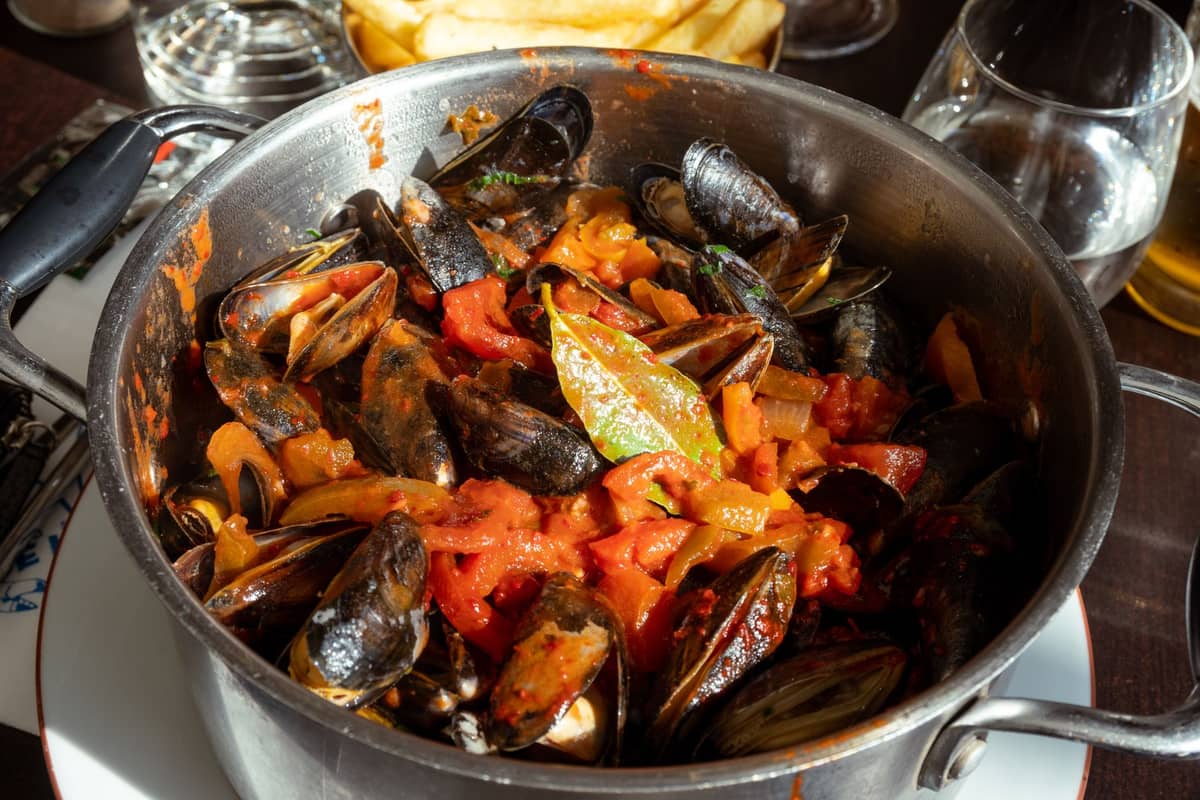
Belgian food in Brussels is deeply regional, seasonal, and unpretentious. The city claims two national dishes, not one: moules-frites and Flemish carbonnade (stoofvlees). Both are serious comfort food, built around local ingredients and long cooking times, and both are better understood as categories than single recipes, since every kitchen makes them differently.
Moules-frites is the most visible dish in Brussels, appearing on nearly every brasserie menu from September through spring. The mussels are typically farmed in the Netherlands and arrive in large black pots, cooked in white wine and aromatics, alongside a portion of frites with mayonnaise. A generous pot costs around €18–25 at a mid-range restaurant. On tourist-heavy streets like Rue des Bouchers, expect to pay €22–30 and receive notably less care in preparation.
Flemish carbonnade, known locally as stoofvlees, is a slow-braised beef stew simmered in brown or amber Belgian beer, often with a touch of mustard and dark bread thickened into the sauce. The result is deeply savoury with a mild sweetness from the malt. It is almost always served with frites or thick-cut bread. This is a winter dish at its best, and the version served at a proper Brussels brasserie in January is genuinely different from a summer offering at a tourist spot.
- Moules-frites Mussels cooked in white wine, cream, or beer broth, served with Belgian frites and mayonnaise. Best from September to April when mussel quality peaks.
- Stoofvlees (Flemish carbonnade) Beef braised in Belgian ale for several hours. Rich, malty, and best served on a cold day. Pairs well with a Dubbel or amber beer.
- Stoemp A Brussels staple: mashed potatoes folded with seasonal vegetables like leeks, carrots, cabbage, or spinach, served alongside sausages or smoked bacon. Composition changes with the season.
- Frites Double-fried in beef fat at a proper friterie. Served in a paper cone with a wide range of sauces; plain mayonnaise remains the classic. A large cone runs €3.50–5.
- Croquettes de crevettes Deep-fried croquettes filled with North Sea grey shrimp in a béchamel sauce. One of the finest bar snacks in Belgium and a common starter on brasserie menus.
- Waterzooi A cream-based stew from Ghent, made with chicken or fish, vegetables, and herbs. Less common in Brussels than in Ghent, but found on traditional menus.
💡 Local tip
Stoemp changes through the year because it uses whatever vegetables are in season. If you visit in autumn, expect Brussels sprouts and cabbage. In spring, leeks and spinach take over. The winter version with smoked sausage and root vegetables is particularly worth ordering.
Waffles and Street Food: What to Buy and Where
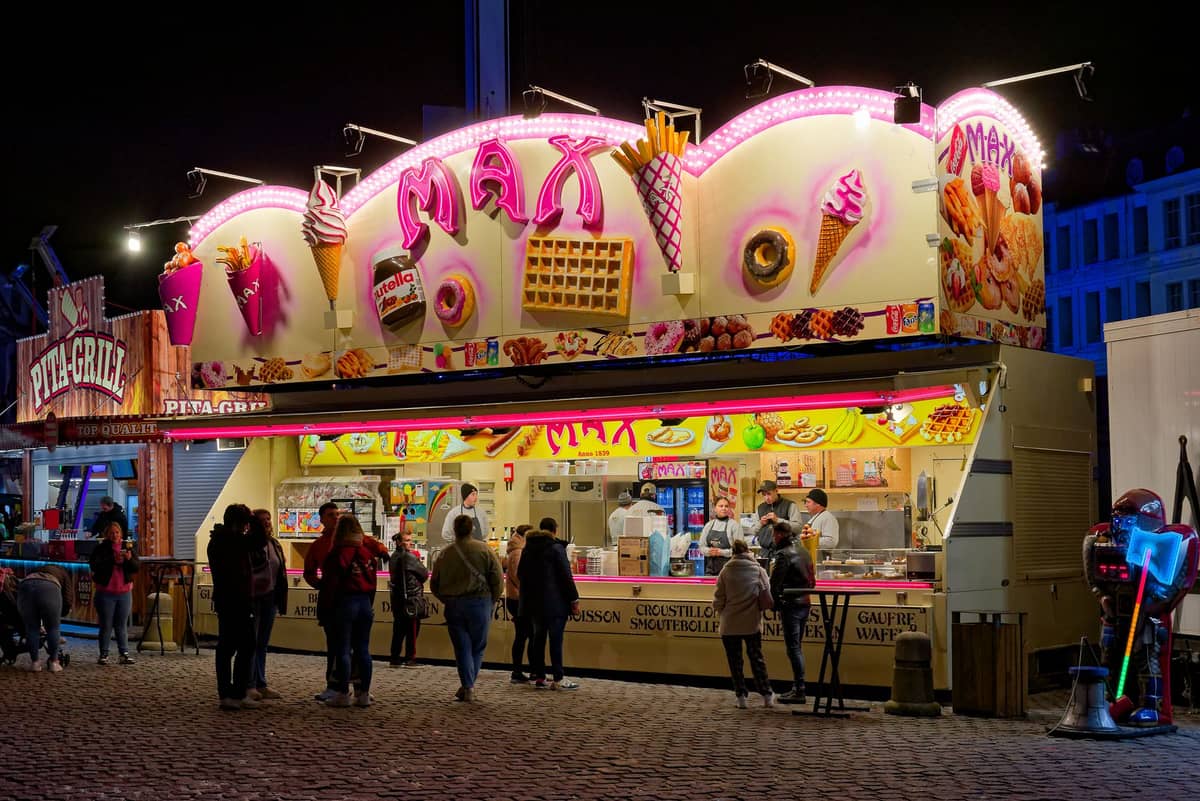
Brussels and Liège waffles are not the same product, and conflating them is a common tourist mistake. A Brussels waffle is rectangular, made from a yeast-leavened batter, light and crisp, with deep pockets. A Liège waffle is rounder, denser, made from a brioche-style dough enriched with pearl sugar that caramelises on the iron. Both are sold all over Brussels. The Brussels waffle is more neutral and traditionally eaten as a dessert waffle with toppings; the Liège waffle is sweet enough on its own and is the version you see at street stands.
Price is a reliable quality signal here. A plain Brussels waffle at a quality establishment costs €3–5. A plain Liège waffle from a street vendor runs €2–4. The heavily decorated versions piled with strawberries, whipped cream, Nutella, and chocolate sauce you see near the Grand-Place cost €6–10 and exist primarily for photographs. They are not representative of how Belgians eat waffles, which is usually plain or with powdered sugar.
⚠️ What to skip
The streets immediately around the Grand-Place and Manneken Pis are lined with waffle and chocolate shops. Quality varies enormously and prices skew high. Walking two or three blocks in any direction usually reveals better options at lower prices. The stands with long queues of locals are always worth investigating.
Frites deserve more attention than they usually get in travel guides. Belgium takes its fried potatoes seriously, and a proper friterie uses specific potato varieties, cuts them thick, and fries them twice in beef fat for a crisp exterior and fluffy interior. The sauce selection at a real friterie includes samurai sauce (a spicy mayonnaise), andalouse (pepper and tomato), and tartare alongside standard mayo and ketchup. For a broader look at Brussels street food and budget eating options, the Brussels on a budget guide covers where to find the best value meals across the city.
Chocolate and Pralines: Separating Quality from Tourist Packaging
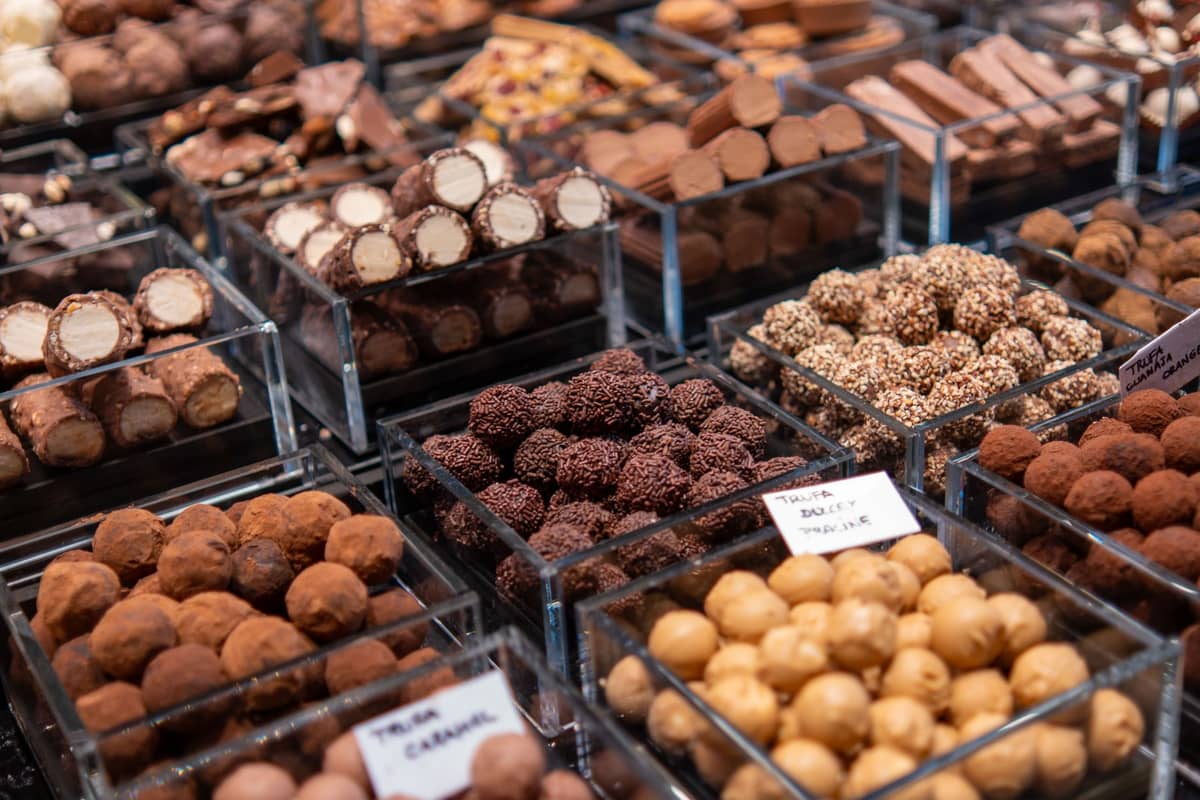
Belgium's reputation for chocolate is well-founded, but not every box of chocolates sold in Brussels deserves it. The distinction that matters is between the large commercial brands that flood airport shops and the smaller artisan chocolatiers producing pralines to order. Belgian pralines, invented in Brussels in 1912, are filled chocolates with ganache, gianduja, or cream centres. The guide to Belgian chocolate in Brussels covers the best chocolatiers by neighbourhood and explains what to look for on the label.
The practical rule: if a chocolate shop has its production visible from the street or counter, that is a good sign. If it is selling branded boxes stacked to the ceiling and the staff are focused on throughput, you are buying packaging, not craft. Pralines bought from a serious chocolatier typically cost €40–70 per kilogram, which sounds steep until you realise a 250g box as a gift represents about €12–18 and will reliably impress.
Where to Eat in Brussels: Neighbourhoods That Reward Exploration
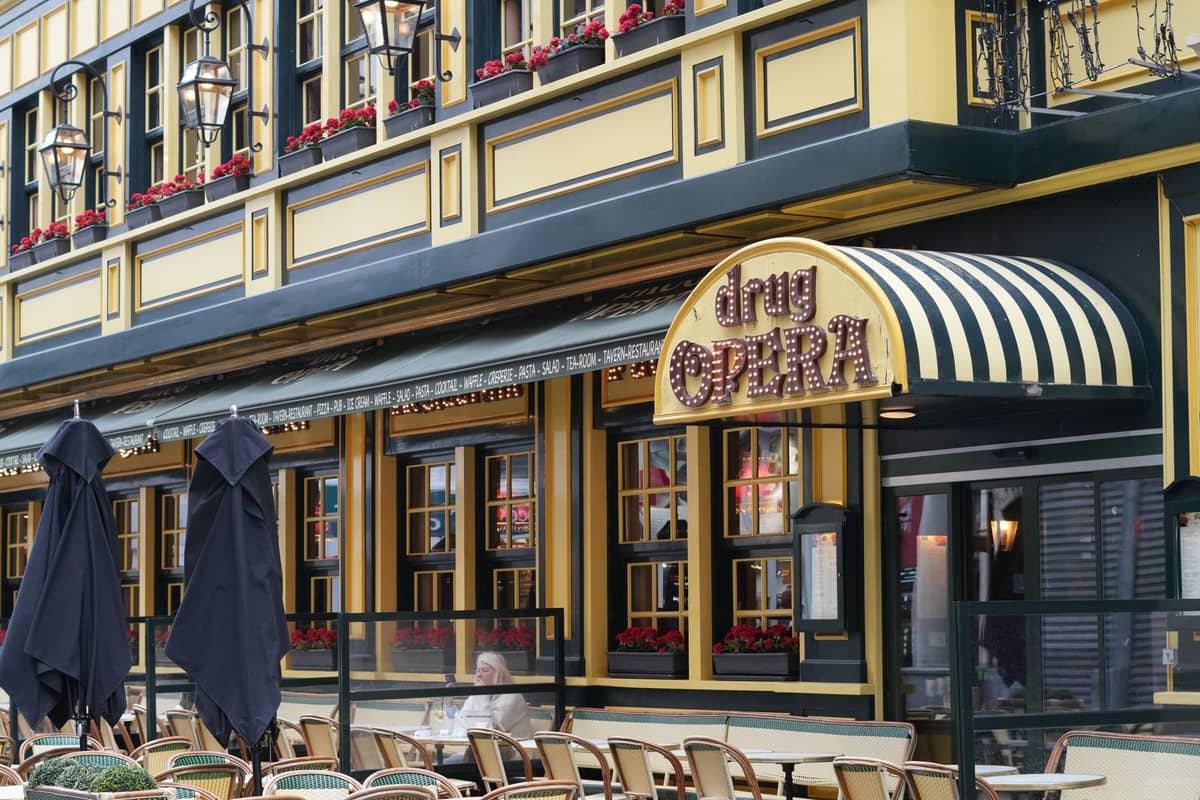
The quality of your food experience in Brussels depends significantly on where you eat, not just what you order. The city is organised into distinct neighbourhoods with different characters and price points. The Grand-Place and Îlot Sacré area is convenient but expensive and inconsistent. Restaurants on Rue des Bouchers rely on foot traffic rather than repeat customers, and the seafood displays outside often look better than the food inside.
The better areas for food in Brussels include the Sablon for patisseries, chocolatiers, and upscale restaurants; Ixelles for a wider range of mid-range and ethnic restaurants; and the Dansaert area for a younger, more experimental dining scene. Saint-Gilles has developed a strong neighbourhood restaurant culture over the past decade, with several serious kitchens operating in what was once purely a residential area.
The Marolles district, south of the centre, is one of the more honest parts of Brussels for eating. It has traditional working-class roots and still has lunch spots that serve stoemp, carbonnade, and daily specials at prices aimed at locals rather than tourists. The Marolles is also home to the flea market at Place du Jeu de Balle, which makes it a natural combination: market in the morning, lunch in one of the surrounding cafés.
✨ Pro tip
Brussels restaurants tend to fill up fast on Thursday and Friday evenings. If you want to eat at a specific restaurant without a booking, aim for an early sitting (before 7pm) or a Tuesday or Wednesday. The concept of walking in without a reservation on a Friday night and getting a table at a popular place does not work well here.
Belgian Beer and Food Pairing: A Practical Overview
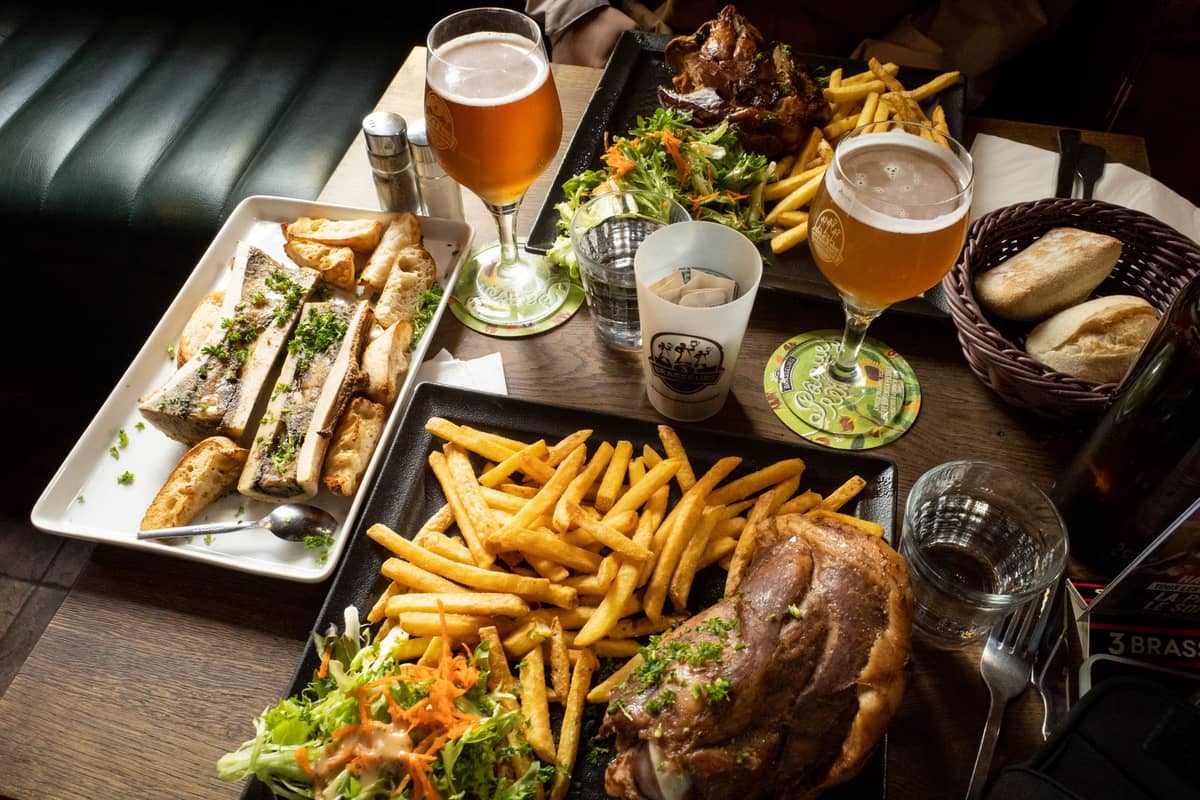
Beer in Brussels is not a sideshow to the food, it is genuinely integrated into the cuisine. Carbonnade gets its depth from beer. Many mussels dishes are cooked in Witbier. Even the frites at traditional friteries are sometimes served in establishments that stock 20 or 30 Belgian ales on draught. A beer in a café costs around €3.50–6 for standard ales; specialty or Trappist beers run €5–8 per glass. For serious beer drinkers, the Cantillon Brewery in Anderlecht produces lambic and gueuze under traditional methods and offers tastings. It is one of the few places in the world where you can drink spontaneously fermented sour beer directly from the production site.
When matching beer to food in a Brussels restaurant, a rough guide: Witbier or light Blonde goes with mussels and lighter dishes; a Dubbel or amber Trappist suits carbonnade and game; a Tripel works with creamy sauces and pork dishes; and a gueuze or kriek (cherry lambic) cuts through rich desserts or pairs surprisingly well with strong Belgian cheese.
- Witbier (white beer, e.g., Hoegaarden): light, citrusy, pairs with moules-frites and shrimp croquettes
- Dubbel (e.g., Westmalle Dubbel): dark and malty, pairs with carbonnade and stews
- Tripel (e.g., Chimay White): strong and complex, works with roast pork and creamy pasta dishes
- Lambic and gueuze (e.g., Cantillon): sour, dry, pairs with aged cheeses and rich desserts
- Saison (e.g., Saison Dupont): versatile, food-friendly, good with chicken waterzooi or lighter dishes
Practical Prices and Honest Budget Expectations
Brussels is not a cheap food city compared to Eastern Europe, but it is more reasonable than Paris or Amsterdam for equivalent quality. A mid-range restaurant meal with a starter, main course, and a beer runs roughly €30–45 per person. At a traditional brasserie ordering the classics, expect to pay €25–35. Street food and friteries keep costs low: a filling lunch of frites, a croquette, and a soft drink can come in under €10.
- Moules-frites (pot, mid-range restaurant) €18–25 at a reliable brasserie. Avoid tourist-facing restaurants on Rue des Bouchers where prices reach €30 for inferior quality.
- Frites (large cone at a friterie) €3.50–5. Always better at a standalone friterie than at a sit-down restaurant.
- Brussels waffle (plain, quality stand) €3–5. Heavily topped tourist versions cost €6–10 and are not worth it.
- Liège waffle (street vendor) €2–4 for a plain version. One of the better value snacks in the city.
- Beer in a café €3.50–6 for standard Belgian ales, €5–8 for Trappist or specialty beers.
- Mid-range restaurant, full meal €18–30 per person for main course only; €30–45 including starter, main, beer or glass of wine.
Tipping in Brussels restaurants is optional rather than expected. Service charges are typically included in the bill. Rounding up or leaving a few euros for good service is appreciated but not obligatory. For a more detailed look at managing costs across food, transport, and accommodation, see the full Brussels budget travel guide.
ℹ️ Good to know
Many Brussels restaurants do not open for lunch on weekdays, particularly smaller neighbourhood spots that operate dinner-only Tuesday to Saturday. Always check hours before making a trip, especially in residential areas outside the tourist centre.
FAQ
What is the most popular food to eat in Brussels?
Moules-frites is the most recognised dish, appearing on nearly every brasserie menu. Frites from a proper friterie and Belgian waffles are the most common street food options. For a sit-down meal, carbonnade (beef stew in beer) and stoemp (mashed potato with vegetables and sausage) represent classic Brussels cooking.
Are Brussels waffles different from Belgian waffles?
Yes. A Brussels waffle is rectangular, light, and crisp, made from a yeast-leavened batter. A Liège waffle is rounder and denser, made with a brioche-style dough and pearl sugar that caramelises during cooking. Both are widely sold in Brussels. What is marketed internationally as a 'Belgian waffle' is typically based on the Brussels style.
Where should I avoid eating in Brussels?
Rue des Bouchers and the streets immediately around Manneken Pis are the most tourist-concentrated dining areas and offer the worst value in the city. Restaurants here rely on foot traffic rather than quality. Walking two or three blocks into the Sablon, Saint-Gilles, Ixelles, or the Dansaert area consistently produces better meals at lower prices.
How much should I budget for food per day in Brussels?
A realistic daily food budget is €25–40 for someone eating street food and a single sit-down meal. Eating two restaurant meals per day, including drinks, typically costs €50–80. Splurging on a serious dinner at an upscale restaurant can push daily costs above €100 easily, since Brussels has a strong fine dining scene.
When is the best time to eat moules-frites in Brussels?
Mussels are available year-round in Brussels, but quality peaks from September through April when the water temperatures in mussel-farming areas off the Dutch and Belgian coasts are cooler. Many Belgians follow the traditional rule of only eating mussels in months containing an 'r', which aligns roughly with September through April. Summer mussels are available but tend to be smaller and less flavourful.