Shopping in Brussels: Best Areas, Markets & Practical Tips
Brussels rewards shoppers at every budget level, from designer boutiques on Avenue Louise to the chaotic pleasures of the Marché du Midi. This guide breaks down every major shopping district, market, and seasonal event with plain assessments, opening hours, and local context.
Plan and book this trip
Tools from our partner Travelpayouts help you compare flights and hotels. If you book through them, we may earn a commission at no extra cost to you.
Flights
Hotels map
TL;DR
- Shopping in Brussels spans five distinct zones: luxury avenues, high-street chains, independent designer boutiques, daily flea markets, and seasonal Christmas stalls.
- The Place du Jeu de Balle flea market runs every single day (9:00–14:00 weekdays, until 15:00 on weekends), not just on Sundays as many visitors assume.
- Most shops open Monday to Saturday, 10:00–18:30; nearly all regular retail closes on Sundays, but markets and tourist-area chocolate shops stay open.
- For Belgian-made souvenirs worth buying, prioritise chocolate, beer, and lace over generic Grand-Place trinkets. See our Belgian chocolate guide for the best praline shops.
- The Winter Wonders Christmas market (late November to early January) transforms central Brussels into one of Europe's largest seasonal markets, open daily until 22:00.
How Brussels Shopping Is Organised
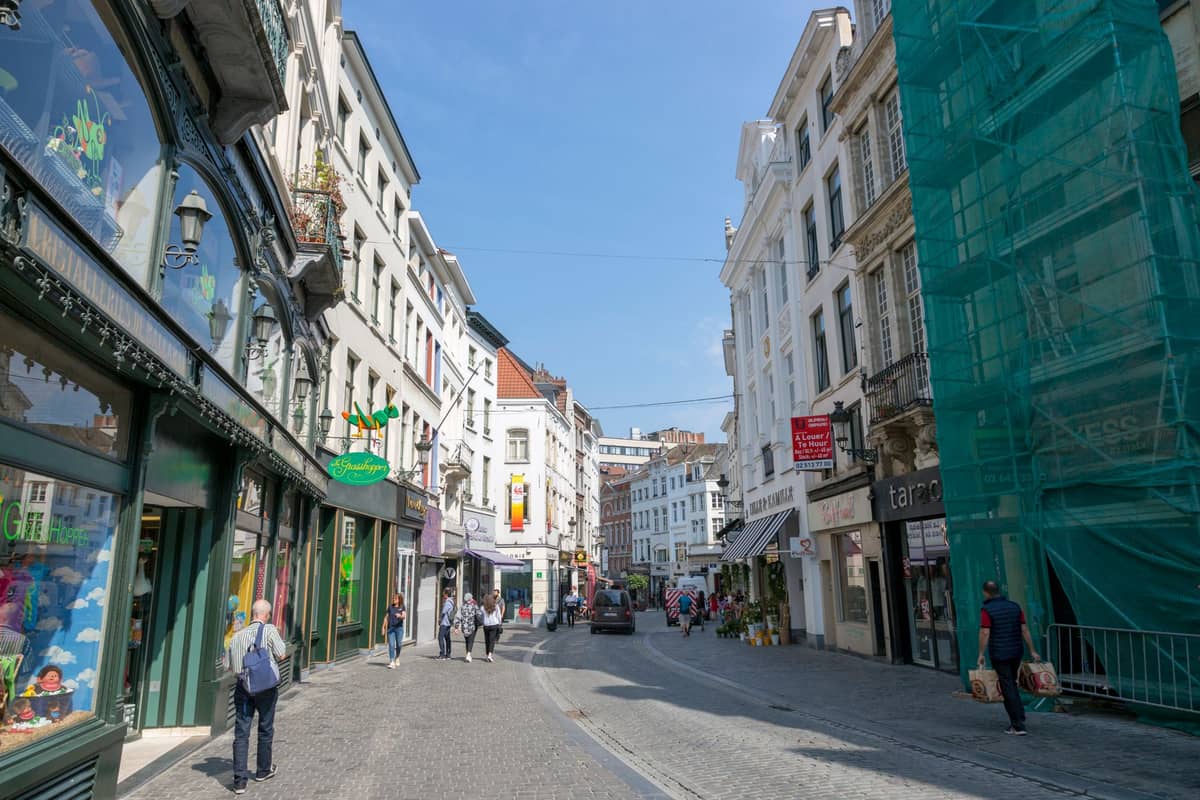
Brussels does not have a single shopping district. Instead, the city is divided into clearly defined commercial zones, each with a different character, price point, and clientele. Understanding which zone suits your needs will save you from wandering the wrong streets. The main areas are: the luxury corridor running south from the city centre along Avenue Louise; the pedestrianised high street at Rue Neuve in the centre; the independent designer strip on Rue Antoine Dansaert near the canal; the antiques and flea market culture of the Marolles; and the sprawling Sunday market at Gare du Midi. Each zone is roughly 15 to 30 minutes apart by foot or a short metro ride.
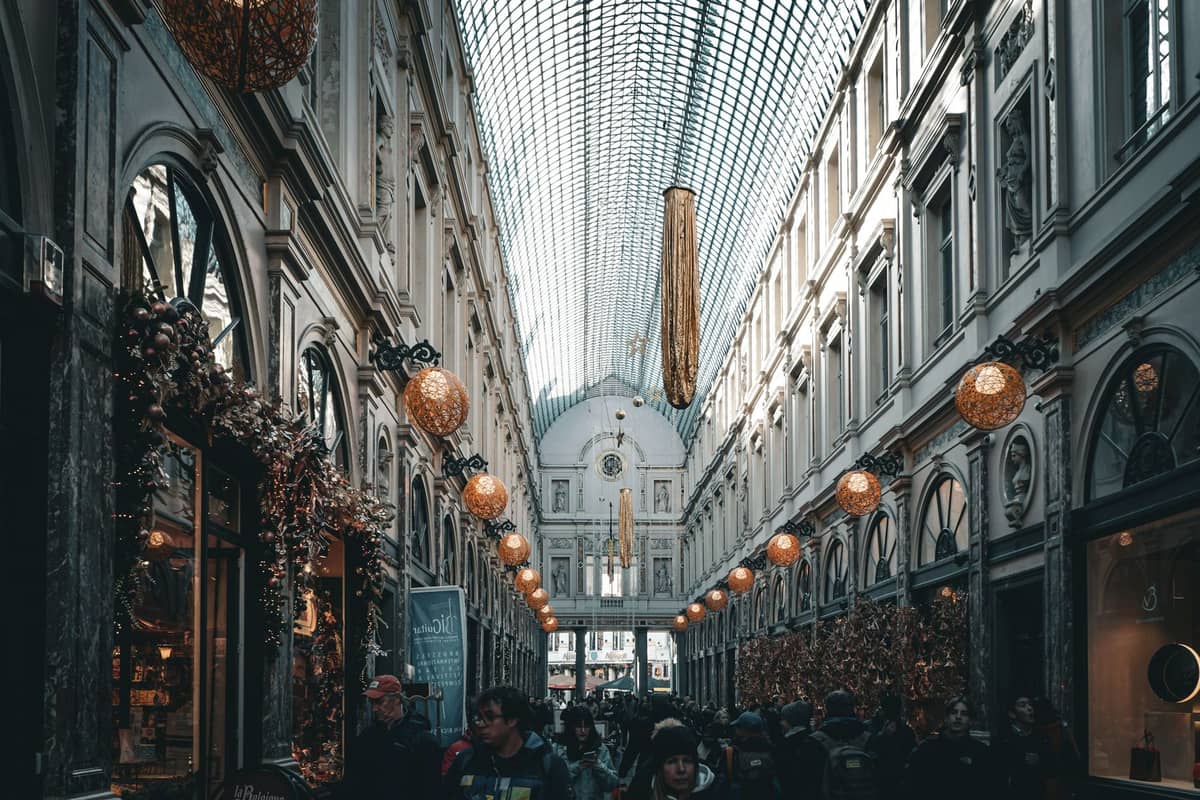
The city's official bilingual status (French and Dutch) means shop names, signage, and staff can alternate between languages, but English is reliably spoken throughout commercial areas, particularly around Grand-Place and the Îlot Sacré, the Galeries Royales Saint-Hubert, and the main high-street zones. You will rarely need to speak French or Dutch to shop comfortably.
ℹ️ Good to know
Standard shop hours in Brussels are Monday to Saturday, roughly 10:00–18:30 or 19:00. Most regular retail is closed on Sundays. Exceptions include souvenir and chocolate shops near Grand-Place, market stalls, and shopping centres, which may have extended weekend hours. Always confirm hours during public holidays, as closures are common.
Luxury Shopping: Avenue Louise and the Toison d'Or Corridor
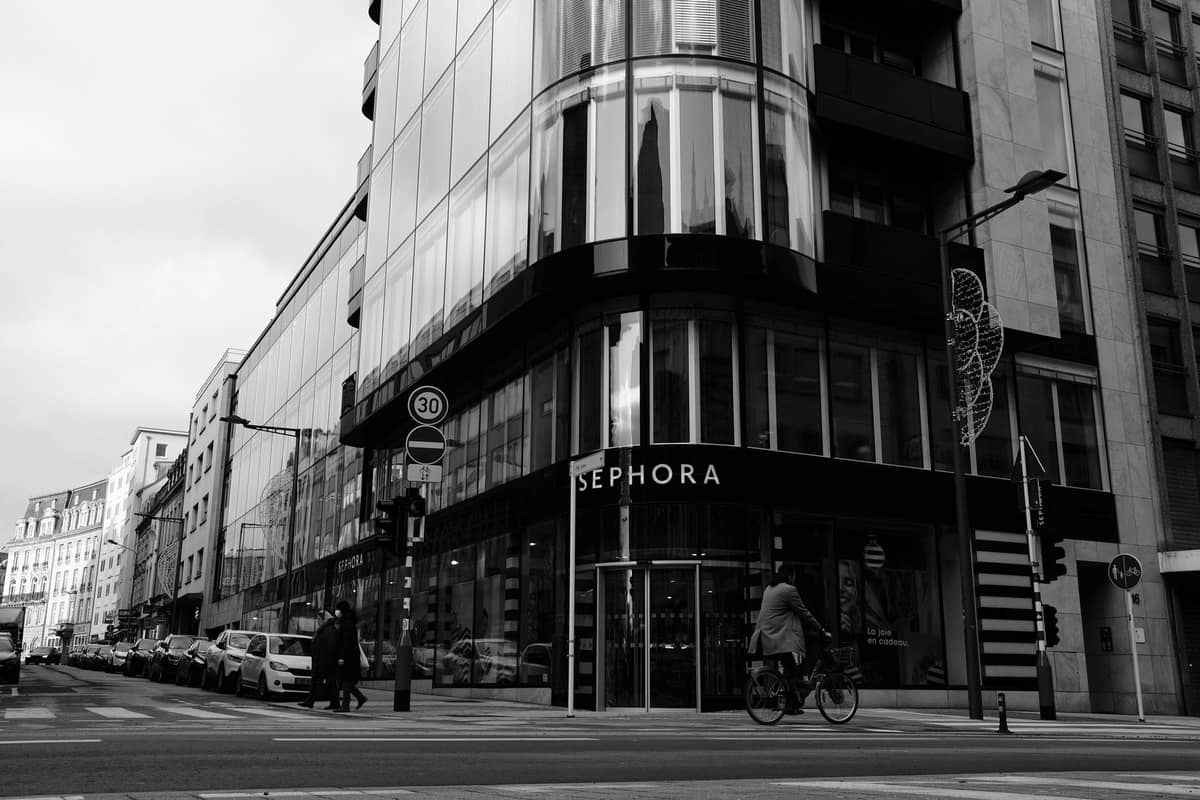
Avenue Louise is Brussels's answer to Paris's Avenue Montaigne. The upper section of the avenue and the connecting Rue de Namur host flagship stores for international luxury brands alongside Belgian jewellers and upscale interior design studios. The covered Galerie Louise, which connects Avenue Louise to Boulevard de Waterloo, concentrates several high-end boutiques in a quieter arcade setting. This is not a place for browsing on a tight budget, but window shopping along the tree-lined boulevard costs nothing and the architecture alone justifies the walk.
Avenue de la Toison d'Or, running northeast from Place Stéphanie, bridges the gap between full luxury and accessible premium retail. The Galerie de la Toison d'Or shopping centre along this strip carries mid-to-high-end international brands. The Ixelles neighbourhood just south of this corridor adds independent boutiques, art galleries, and concept stores to the mix, making the combined area the most polished shopping experience in the city.
💡 Local tip
Belgian VAT (TVA/BTW) is currently 21% for most goods. Non-EU residents spending over a minimum threshold at participating stores can claim a VAT refund at the airport. Look for 'Tax Free Shopping' logos in store windows and ask for the refund paperwork before you leave the shop.
High Street and Chains: Rue Neuve and City 2
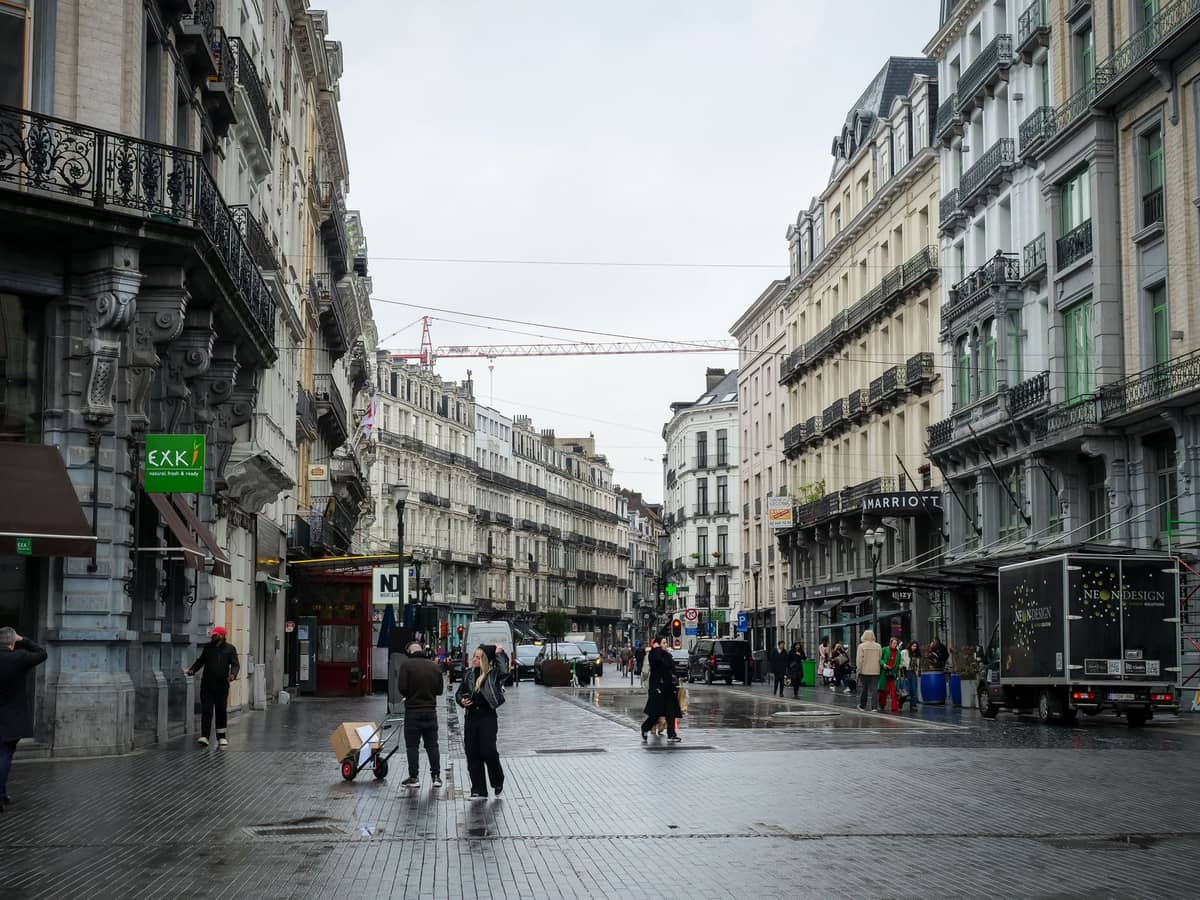
Rue Neuve is one of the busiest shopping streets in Belgium by foot traffic. The pedestrianised strip runs north from Place de la Monnaie and is almost entirely composed of European chain stores: Zara, H&M, Primark, Fnac, and similar retailers. City 2, the shopping centre anchoring the northern end of the street, adds several more floors of mainstream brands. If you need practical clothing or electronics and want predictable prices, this is your quickest option. Shops here typically stay open until 19:00 or 20:00, slightly later than independent retailers elsewhere.
The honest assessment: Rue Neuve offers little that you cannot find in any large European city. It is useful rather than interesting. If your visit to Brussels is short, skip it in favour of areas that are specific to this city. The crowds on Saturday afternoons are considerable, and the street offers no particular atmosphere beyond commerce.
Belgian Designers and Independent Boutiques: Rue Antoine Dansaert
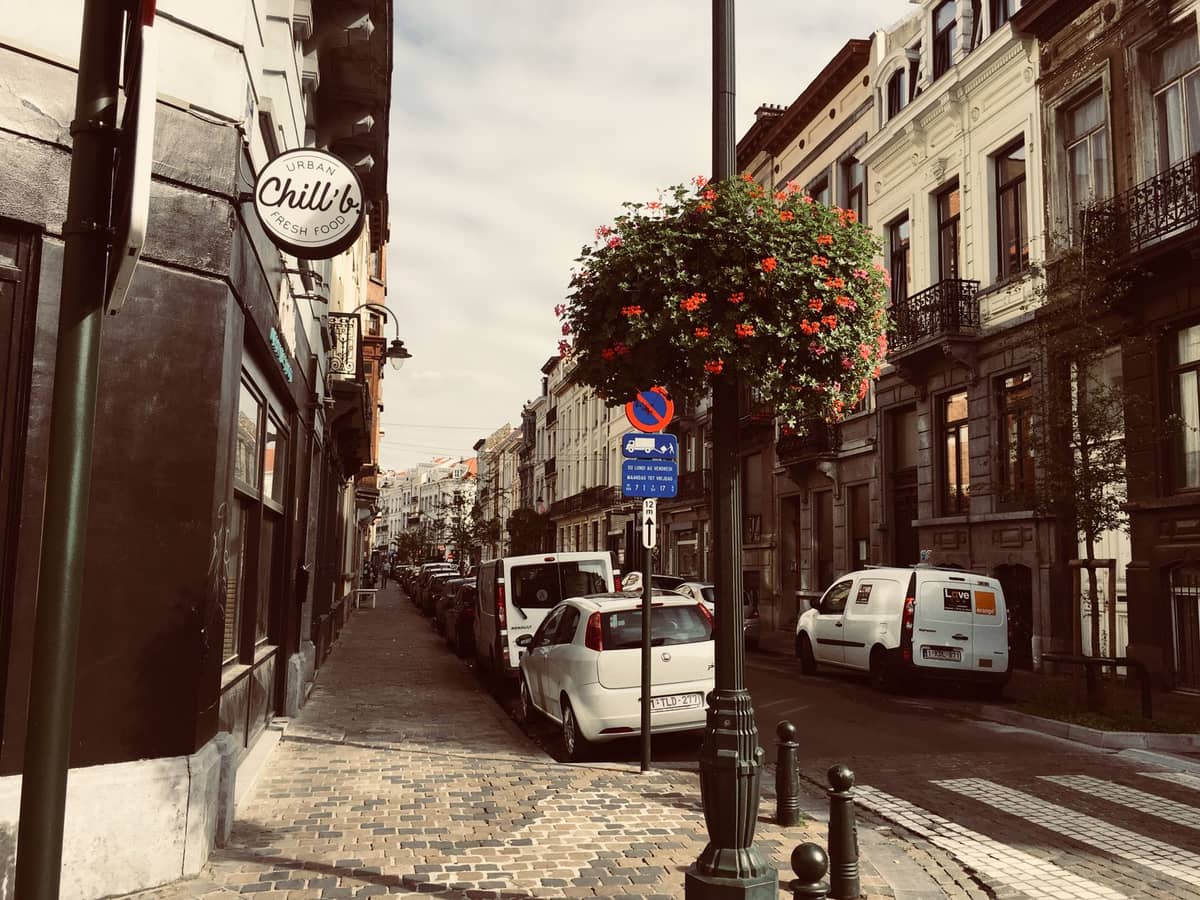
Rue Antoine Dansaert, running west from Place de la Bourse toward the canal, is where Brussels does fashion on its own terms. The street gained its reputation in the 1980s and 1990s as the base for Belgian avant-garde designers, and several original concept stores remain. Stroll both the main street and the side streets off it, including Rue du Vieux Marché aux Grains, to find independent labels, vintage stores, and small design studios. The broader Dansaert and Saint-Géry quarter surrounding the street has evolved into a mixed shopping and dining area with a consistently local character.
Prices here reflect the independent retail model: expect to pay more than on Rue Neuve, but you are buying pieces with genuine provenance rather than mass-produced goods. Many shops in this area close on Mondays and observe shorter Saturday hours, so a mid-week or Friday afternoon visit is ideal. The area is also significantly less crowded than the city centre, which makes the experience more relaxed.
- Rue Antoine Dansaert Core strip for Belgian designer labels and concept stores; best on Thursday and Friday afternoons.
- Rue du Vieux Marché aux Grains Side street with vintage shops, small galleries, and homeware boutiques.
- Galeries Royales Saint-Hubert Elegant 19th-century arcade near Grand-Place with chocolate shops, bookstores, and specialist retailers. Covered and therefore excellent in wet weather.
- Sablon antiques district Grand Place du Grand Sablon and surrounding streets for antiques, art, and high-end chocolatiers. Weekend antiques market runs Saturday and Sunday mornings.
Markets: From Daily Flea Markets to the Massive Sunday Midi
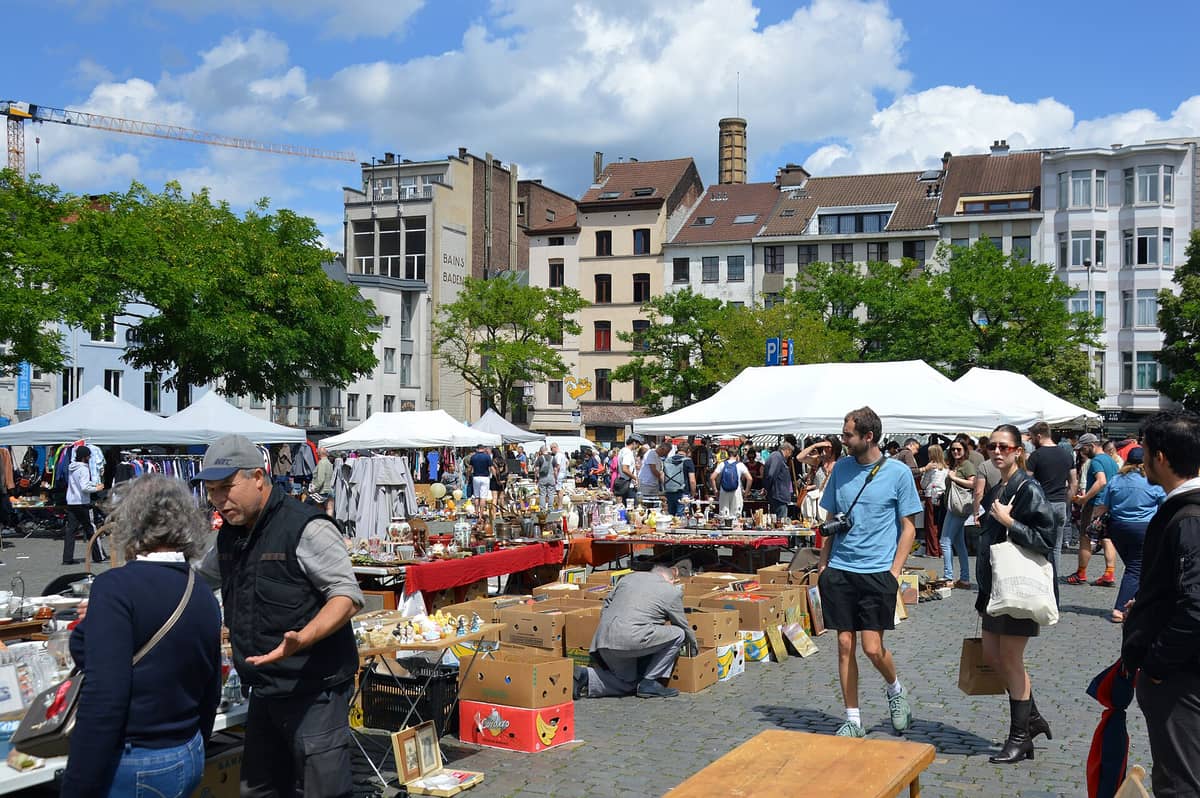
Brussels takes its markets seriously. The most historically significant is the Place du Jeu de Balle flea market in the Marolles district. This market operates every single day of the year, 9:00–14:00 on weekdays and 9:00–15:00 on weekends and public holidays. The Marolles is one of Brussels's oldest working-class districts, and the flea market reflects that history: dealers spread furniture, ceramics, vinyl records, old books, and general bric-a-brac across the cobblestones. Prices are negotiable, especially in the last hour before closing. The quality varies enormously from one stall to the next, which is half the appeal.
The Marché du Midi, held every Sunday from 6:00 to 14:00 around Gare du Midi (Brussels-South station), is a different proposition entirely. This is one of the largest outdoor markets in Belgium, with a strong North African and Mediterranean character reflecting the communities that live in the surrounding neighbourhoods. You will find fresh produce, olives, spices, fish, textiles, and cheap household goods. Arrive before 9:00 for the best selection and to avoid the main crowd. The market has been running for decades and is genuinely used by local residents rather than pitched at tourists, which keeps both quality and prices honest.
For antiques specifically, the Sablon weekend market on Place du Grand Sablon runs Saturday 9:00–18:00 and Sunday 9:00–14:00. This is a curated antiques market rather than a junk market: dealers here focus on silverware, old maps, art prints, and genuine antique furniture. Prices reflect that curation. The Sablon neighbourhood around the market is worth exploring on its own terms for the cluster of established chocolate makers and the beautiful Notre-Dame du Sablon church.
- Place du Jeu de Balle: daily flea market, 9:00–14:00 weekdays / 9:00–15:00 weekends; best for furniture, vinyl, vintage objects.
- Marché du Midi: every Sunday 6:00–14:00 near Gare du Midi; best for fresh produce, spices, and affordable textiles.
- Place du Grand Sablon: Saturday 9:00–17:00 and Sunday 9:00–14:00; curated antiques market.
- Marché de la Place du Châtelain (Ixelles): Wednesday afternoons from around 14:00 to 19:00 for fresh food, cheese, and local produce.
- Tour & Taxis market: periodic large-scale markets and design fairs in the repurposed industrial complex; check event calendars for dates.
⚠️ What to skip
The Grand-Place area is lined with souvenir shops selling mass-produced chocolates, waffles, and Manneken Pis figurines at inflated prices. Chocolate sold in bulk bins near the main tourist drag is rarely made by the brand whose name is on the packaging. For genuine Belgian pralines, walk five minutes to the Sablon or Galeries Saint-Hubert, where established chocolatiers like Neuhaus, Pierre Marcolini, and Wittamer operate their proper shops.
Seasonal Shopping: Winter Wonders and the Christmas Market
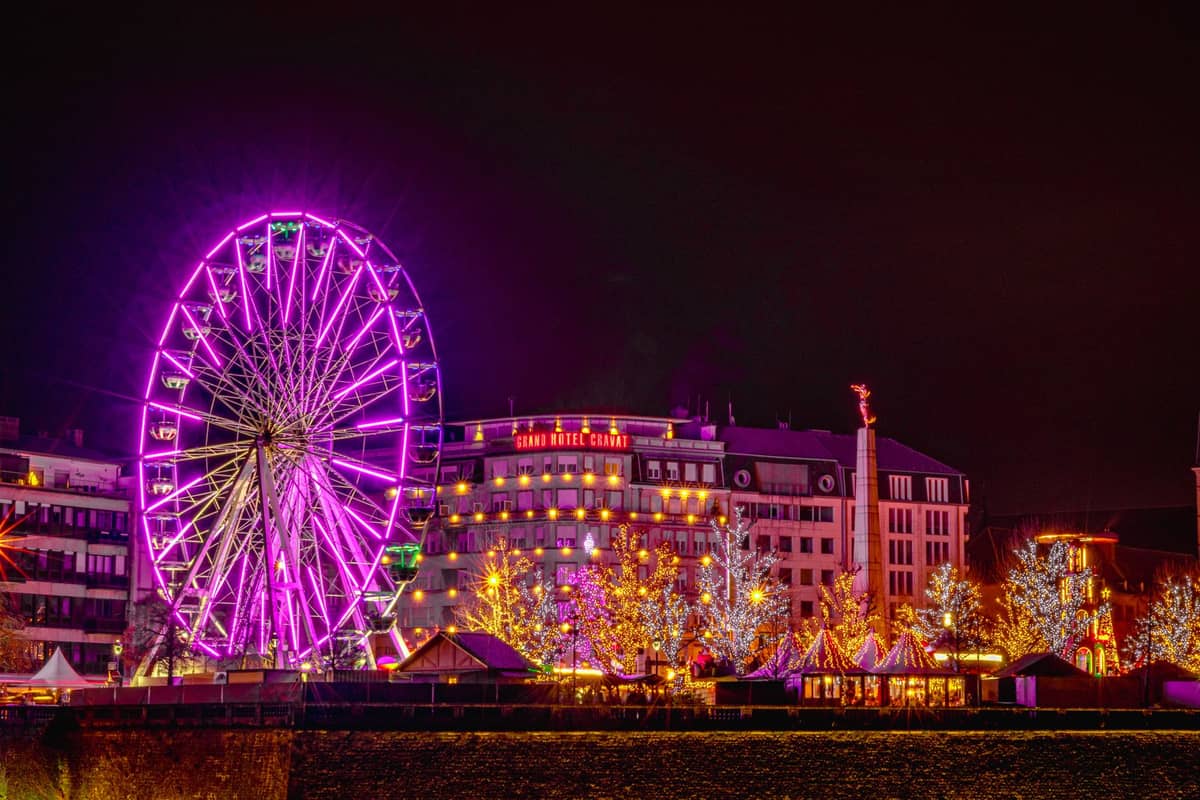
Each year from late November to early January, central Brussels hosts the Winter Wonders Christmas market, one of the largest in Europe. The market spreads across multiple squares and streets simultaneously: Grand-Place, the area around the Bourse (Brussels Stock Exchange), Place De Brouckère, Place Sainte-Catherine, and extending to Mont des Arts. Stalls operate daily from 12:00 to 22:00, with earlier closing at around 18:00 on 24 and 31 December. For more details on timing and atmosphere, the Brussels Christmas market guide covers what to expect each season.
The market sells a predictable mix of mulled wine, hot chocolate, seasonal foods, decorations, and craft goods. Quality varies widely from stall to stall. The setting, particularly around Grand-Place where the building facades are lit up, is genuinely impressive after dark. Weekday evenings are significantly more manageable than Saturday nights in December, when the central streets become very congested. If you plan to visit specifically for shopping, come on a Tuesday or Wednesday evening and allocate at least two hours to cover all the zones properly.
✨ Pro tip
Brussels holds national sales periods twice a year: the winter soldes (sales) from 3 to 31 January, and the summer soldes from 1 to 31 July. These are the best times to shop Avenue Louise and Dansaert boutiques at significantly reduced prices. Mark the dates in advance as the first week of each sales period offers the deepest discounts.
What to Actually Buy in Brussels
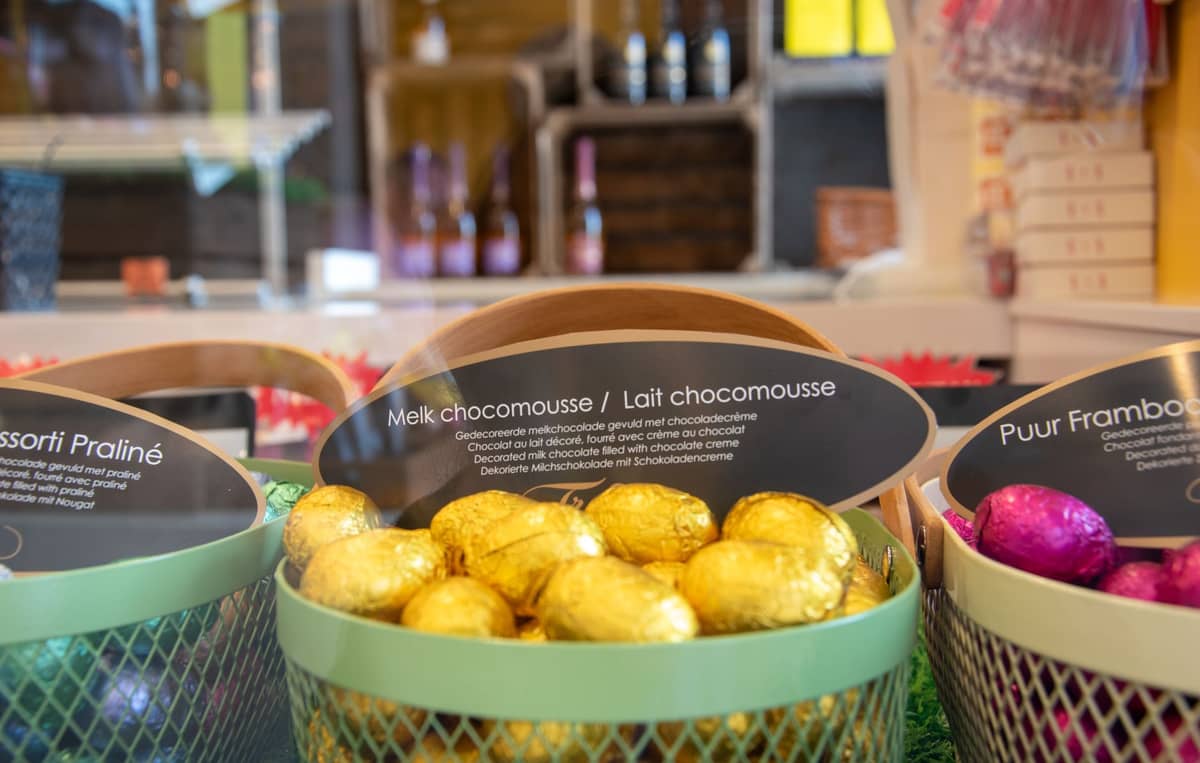
The three genuinely worthwhile categories of Belgian-made goods are chocolate, beer, and lace. For chocolate, avoid the Grand-Place shops and focus on praline makers in the Sablon or the Galeries Saint-Hubert. Our guide to Belgian chocolate in Brussels identifies the best chocolatiers by neighbourhood and style. For beer, the specialist beer shops near the centre stock hundreds of Belgian labels including Trappist ales and lambic varieties that you will not easily find abroad. The Belgian beer guide for Brussels covers both where to drink and where to buy bottles to take home.
Brussels lace has a long history and remains a legitimate craft, but much of what is sold in tourist shops is machine-made and imported from Asia. Authentic handmade Belgian lace is expensive because it is extraordinarily labour-intensive to produce. If you are buying lace as a souvenir rather than a collector's item, the price difference probably does not matter much. If you want genuine handmade lace, look for shops in the Sablon or near the Galeries Saint-Hubert that can certify provenance, and expect to pay significantly more. Comics and graphic novel collections, reflecting the city's deep connection to the Belgian comic strip tradition, are another distinctive purchase, particularly from specialist comic book shops around the city centre.
Design and homeware are worth considering too. Brussels has a strong tradition in Art Nouveau decorative objects and reproductions, and several shops near the Horta Museum in Saint-Gilles sell quality Art Nouveau-inspired pieces. The ADAM design museum near the Atomium has a well-curated shop focusing on Belgian industrial and graphic design.
FAQ
Are shops open on Sundays in Brussels?
Most regular retail shops are closed on Sundays. Exceptions include souvenir and chocolate shops in the Grand-Place area, supermarkets in some tourist zones, and market stalls. The Marché du Midi near Gare du Midi runs every Sunday 6:00–14:00, and the Sablon antiques market operates Sunday mornings until around 14:00. During the Christmas market period, stalls across the city centre are open daily.
Where is the best flea market in Brussels?
Place du Jeu de Balle in the Marolles district is the most established flea market in Brussels. It operates every day of the year: 9:00–14:00 on weekdays and 9:00–15:00 on weekends and public holidays. Sunday mornings attract the most dealers and the largest crowds. Arrive early for the best selection; the last 30 minutes before closing is best for negotiating prices down.
What is the best area for shopping in Brussels?
It depends on what you are looking for. Avenue Louise and the Toison d'Or corridor are best for luxury brands. Rue Neuve is best for high-street chains and practical shopping. Rue Antoine Dansaert is best for independent Belgian designers. The Marolles and Sablon are best for antiques and curiosities. There is no single 'best' area because each zone serves a different purpose.
When is the Brussels Christmas market in 2024-2025?
The Winter Wonders Christmas market typically runs from late November to early January, with stalls open daily from 12:00 to 22:00 (closing earlier, around 18:00, on 24 and 31 December). Exact dates change each year. Check the official Winter Wonders website (plaisirsdhiver.be) or visit.brussels for confirmed dates for the current edition.
Can I get a VAT refund on shopping in Brussels?
Yes. Non-EU residents can claim a VAT refund on purchases above a minimum threshold at participating stores. The standard Belgian VAT rate is 21% for most goods. Ask for a tax-free shopping form at the point of purchase and look for the 'Tax Free Shopping' sign in the window. Process the refund at Brussels Airport (BRU) before departure. EU residents are not eligible for this refund.