Design Museum Brussels (ADAM): Where Belgian Design Gets Its Due
Design Museum Brussels, located steps from the Atomium in the Laeken district, turns everyday objects into cultural statements. From mid-century plastic furniture to contemporary fashion, this museum makes a compelling case for design as a serious art form — and it rarely gets the crowds its quality deserves.
Quick Facts
- Location
- Place de Belgique 1 / Belgiëplein 1, 1020 Brussels (Laeken) — about 150m from the Atomium
- Getting There
- Metro Line 6 to Heysel/Heizel; Tram 7 or 62; Bus 83
- Time Needed
- 1.5 to 2.5 hours for a focused visit; longer if exhibitions change
- Cost
- Adults €11, reduced rates €8.50/€4 depending on age; verify current prices at designmuseum.brussels
- Best for
- Design enthusiasts, architecture lovers, families with curious teenagers, rainy-day cultural visits
- Official website
- designmuseum.brussels/en
What Design Museum Brussels Actually Is
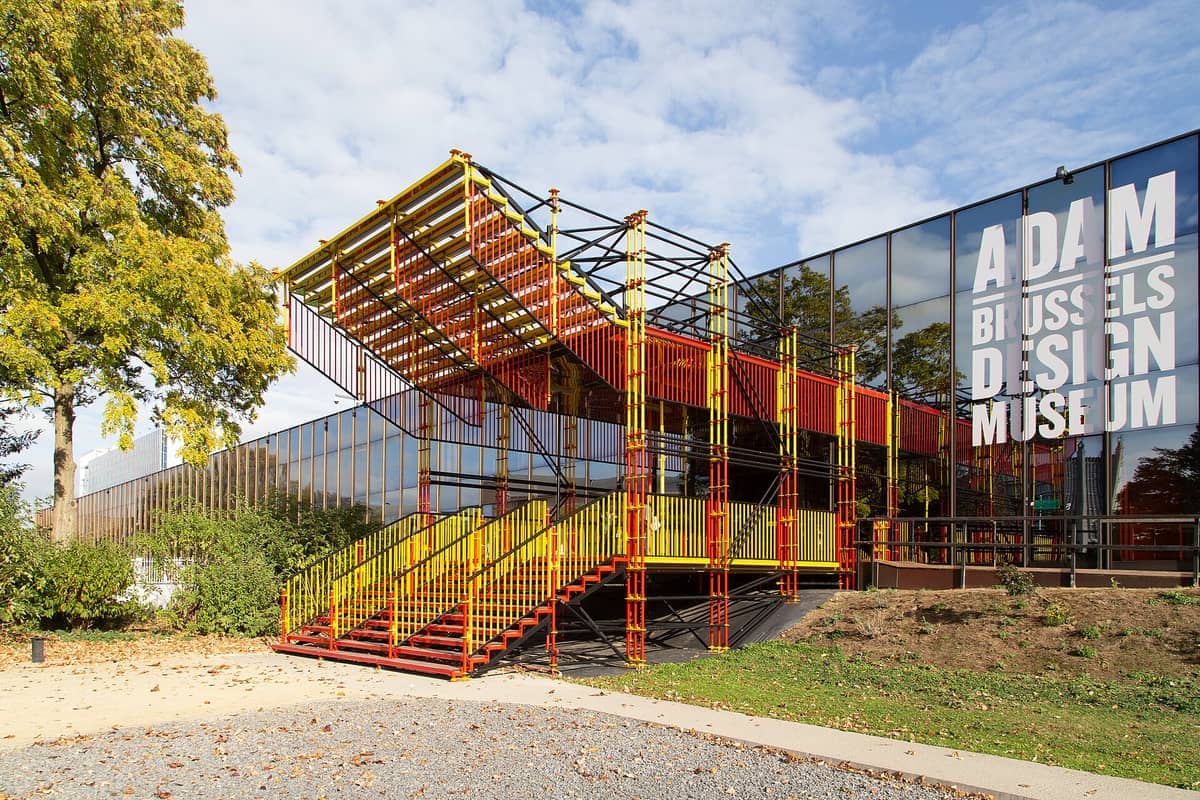
Design Museum Brussels, still widely recognised under its former identity as ADAM (Art Design & Atomium Museum), occupies a deliberate and somewhat counterintuitive location: Trade Mart Brussels, in the Laeken district, about 150 metres from the Atomium. The building itself was never designed to be a museum, and that slightly industrial, repurposed character gives the interior an authenticity that more polished cultural institutions sometimes lack.
The museum's core collection grew out of a private collection of plastic design objects that was acquired by the Atomium, and that origin story shapes the whole institution. Plastics — Bakelite radios, moulded chairs, pop-art kitchenware, neon-bright storage systems — are treated here not as low-culture curiosities but as documents of 20th-century optimism, manufacturing ingenuity, and shifting social values. Alongside the permanent design holdings, rotating temporary exhibitions regularly expand into fashion, graphic design, and product innovation, so no two visits are quite the same.
💡 Local tip
Check the temporary exhibitions before you go. The museum updates its programming regularly, and some exhibitions have been genuinely strong — covering Belgian fashion designers, mid-century European industrial design, and contemporary sustainable materials. The website lists current shows.
The Visitor Experience, Floor by Floor
The museum opens at 11:00 every day, and the first hour after opening is usually quiet. By late afternoon, around 16:00 to 17:00, attendance drops again, and the ticket office closes at 18:30 regardless.
The permanent collection is arranged thematically rather than strictly chronologically, which rewards visitors who move slowly and read the object labels. A 1950s polyethylene chair and a 1970s inflatable sofa might sit in the same display, and the comparison is the point — both represent a cultural moment when plastic promised democratic, affordable modernity. The textures are genuinely varied: smooth lacquer surfaces, grainy Bakelite mouldings, the faint chemical smell that old plastic objects carry in enclosed spaces. Curators have not sanitised this into a purely visual experience.
Upper floors tend to house temporary exhibitions, and the quality fluctuates. When the shows are strong, they rival anything in Brussels's more prominent museums. When they are thinner, the space can feel underfilled. That variability is worth knowing in advance, so checking the current programme before committing travel time to this specific destination is genuinely practical advice, not a formality.
Tickets & tours
Hand-picked options from our booking partner. Prices are indicative; availability and final rates are confirmed when you complete your booking.
Ghent tour from Brussels
From 43 €Instant confirmationFree cancellationTablet Workshop at Choco-Story Brussels
From 45 €Instant confirmationShared tour of Delft and the Keukenhof Estate from Brussels
From 86 €Instant confirmationFree cancellationOrigins of Brussels exploration game and tour
From 10 €Instant confirmationFree cancellation
Historical Context: Why Plastic, and Why Here
The museum opened on 11 December 2015, positioned as a complement to the nearby Atomium, which has always carried symbolic weight as a monument to the 1958 Brussels World Exposition. That exposition was itself a showcase of post-war industrial confidence, with plastics and synthetic materials central to its vision of the future. Connecting the design museum to that legacy was a considered institutional decision, not just a matter of proximity.
Belgium has a specific and often underappreciated place in European design history. The country produced significant Art Nouveau architecture in the late 19th and early 20th centuries — the Horta Museum in Saint-Gilles documents that tradition with precision — and continued to produce distinctive industrial and graphic design through the 20th century. Design Museum Brussels sits within that longer story, even if it focuses primarily on the post-war period.
The choice to build the collection around plastics was not arbitrary. Synthetic polymers became the defining material of the 20th century in ways steel and glass never quite did for everyday domestic life. They shaped how ordinary people sat, stored things, carried objects, and organised kitchens. Treating that material history with museum-level seriousness is the institution's strongest intellectual contribution.
Getting There and the Laeken Context
The most straightforward approach is Metro Line 6 to Heysel (Heizel in Dutch), which puts you at the Atomium plaza in minutes. From the metro exit, the museum entrance on Place de Belgique is a short, flat walk along a pedestrianised approach. Tram lines 7 and 62 also serve the area, and bus 83 stops nearby. None of these require transfers from the city centre — a single STIB/MIVB ticket covers the journey.
Laeken itself is worth understanding as a district. It sits north of the city centre, and while it is not a neighbourhood most visitors walk through casually, it contains several significant attractions within a compact area: the Atomium, Mini-Europe, and the Royal Greenhouses of Laeken — the latter only open to the public for a few weeks in spring. Combining the Design Museum with the Atomium makes obvious sense and fills a half-day without requiring any additional transit.
There is no private guarded parking at the museum itself. Visitors arriving by car must use paid public parking nearby, including Parking Trade Mart. Given the directness of the metro connection, driving here offers no real advantage and is not recommended during major events at the nearby Paleis 5 (Palais 5) exhibition centre, when the area around the museum becomes significantly congested.
⚠️ What to skip
Heysel hosts large trade fairs and events at Paleis 5, near the museum. On event days, the surrounding area can be crowded and parking near-impossible. Check the Brussels Expo calendar before your visit if you are sensitive to crowds.
Practical Details: Hours, Tickets, and Accessibility
The museum is open every day from 11:00 to 19:00. The ticket office closes and last entry is at 18:30, so arriving after 18:00 does not leave enough time for a meaningful visit. On 24 and 31 December, the museum closes at 17:00. On 25 December and 1 January, it opens later, from 13:00 to 19:00. These adjusted hours are confirmed on the museum's official website, but worth checking again close to your visit if you are planning around the holiday period.
- Adult (18–65): €11
- Children under 12: free
- Children 12–18 years: €4
- Students: €8
- Seniors (65+): €8.50
- Teachers: €4
- Groups of 20 or more: reduced rates available — contact the museum directly
Accessibility is handled well for a building of this type. The museum has a lift and no significant architectural barriers, making it accessible for visitors with reduced mobility. The floors are largely smooth and level, which is practical to know if you are visiting with young children in a pram.
Photography, Timing, and Who This Suits
Photography is generally permitted in the permanent collection spaces, though restrictions may apply in specific temporary exhibitions — check signage at each gallery entrance. The colourful plastic objects photograph well under the existing lighting, and the design of many pieces lends itself to close-up detail shots. Wide-angle shots of the full galleries are less dramatic given the scale of the space, but individual objects reward patience.
If you are building a broader design-focused itinerary in Brussels, this museum pairs naturally with the Art Nouveau facades of Saint-Gilles and the Maison Cauchie for a day covering design across different periods and scales. For a deeper look at Belgian visual culture more broadly, the Royal Museums of Fine Arts covers painting from the 15th century onwards.
Travellers doing Brussels on a tight schedule should honestly weigh whether this museum is the right call. It is excellent for what it does, but it is niche. If your time in Brussels is limited to one or two days, prioritising the city centre, the Grand-Place area, and the established museums in the Royal Quarter might serve you better. This museum belongs on a longer visit, a specialist itinerary, or a well-timed rainy day when you want something away from the main tourist corridor.
Insider Tips
- The museum shop is worth browsing even if you skip the galleries — it stocks well-curated design objects, books, and prints that are harder to find in central Brussels. Prices are reasonable compared to museum shops at larger institutions.
- Combine the visit with the Atomium on the same day, but do the Design Museum first. By the time most Atomium visitors finish, they rarely cross the plaza to the museum, so afternoons here stay calmer than the Atomium itself.
- If you are visiting during the Brussels Design September festival (typically held annually in September), the museum often hosts special programming and the atmosphere around Heysel is more animated than usual.
- The café area inside the museum is modest but functional — useful for a break between galleries without having to leave the building and queue again. Vending and light snacks rather than a full restaurant.
- For groups or school visits, the museum offers guided tours and educational workshops, but these need to be booked in advance through the museum's official website. Walk-in group rates apply for parties of 20 or more.
Who Is Design Museum Brussels (ADAM Design Museum) For?
- Design and material culture enthusiasts who want a serious, uncrowded museum experience
- Families with children aged 10 and up, who can engage with the playful visual qualities of the plastic design collection
- Visitors pairing the museum with the Atomium for a half-day in Laeken
- Rainy-day seekers looking for a compelling indoor option away from the crowded city centre
- Architecture and art history students with an interest in 20th-century European applied arts
Nearby Attractions
Other things to see while in Laeken:
- Atomium
Built for the 1958 World's Fair, the Atomium is Brussels' most recognizable landmark: a steel structure representing an iron crystal magnified 165 billion times. Here is everything you need to know to make the most of your visit.
- Japanese Tower & Chinese Pavilion
Commissioned by King Leopold II and completed in the early 1900s, the Japanese Tower and Chinese Pavilion in Laeken are two of Brussels's most architecturally eccentric landmarks. Currently closed for structural restoration since 2013, they remain visible from the surrounding park and are worth understanding before any visit to the Laeken royal domain.
- Mini-Europe
Mini-Europe packs over 80 scale-model landmarks from across the EU into a single walkable park in Brussels's Laeken district. It is a genuinely engaging experience for families and Europe enthusiasts, though adults visiting alone may find the novelty fades faster than the entry price suggests.
- Royal Greenhouses of Laeken
The Royal Greenhouses of Laeken are among the most extraordinary glass-and-iron structures in Europe, open to the public for only a few weeks each spring. This guide covers what you'll see inside, how to secure your tickets, and whether the visit lives up to the anticipation.