Art Nouveau Facades of Saint-Gilles: Brussels's Open-Air Architecture Gallery
The Art Nouveau facades of Saint-Gilles form one of Brussels's finest open-air architectural collections. Clustered around Chaussée de Waterloo and the surrounding streets, these protected townhouses showcase the full decorative range of Belgium's early 20th-century architectural movement, and they cost nothing to visit.
Quick Facts
- Location
- Chaussée de Waterloo 248, Saint-Gilles, Brussels
- Getting There
- Tram 81 or bus routes serving the area; Gare du Midi (Brussels-South) is about a 15-minute walk
- Time Needed
- 1 to 2.5 hours depending on how many streets you cover
- Cost
- Free (outdoor streetscape, no ticket required)
- Best for
- Architecture enthusiasts, photographers, walkers, design history lovers
What You're Actually Looking At
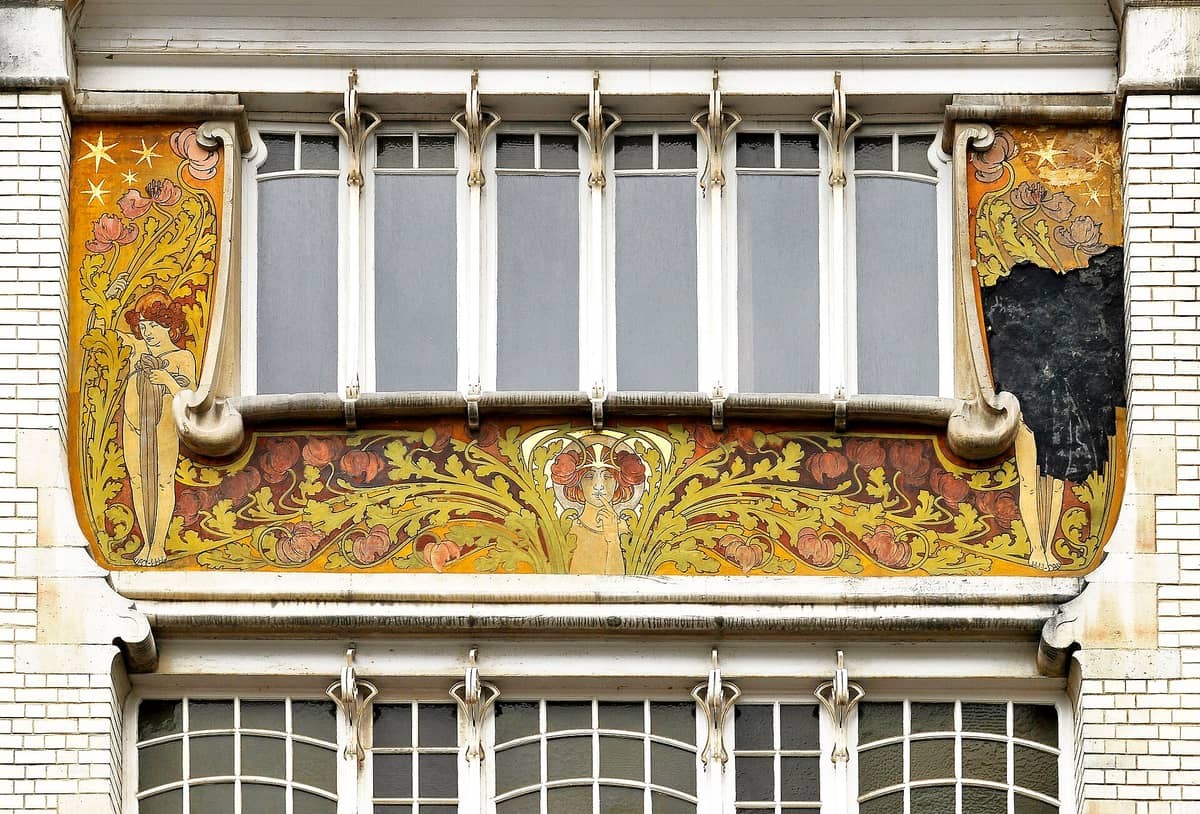
The Art Nouveau facades of Saint-Gilles, officially catalogued as the 'Art Nouveau houses ensemble', are a group of protected townhouse facades concentrated primarily along and near Chaussée de Waterloo in the Saint-Gilles municipality of Brussels. They were granted heritage protection in May 2008 and represent one of the densest concentrations of the style anywhere in the city.
What makes this ensemble striking is not a single signature building but the cumulative effect of walking a few hundred metres and encountering facade after facade of wrought ironwork, ceramic tile inlays, bow windows, undulating stone lintels, and the characteristic sinuous lines that define Art Nouveau at its most expressive. These are residential buildings, not museums, which means the ornamentation was commissioned by private citizens who wanted their homes to look like this. That choice tells you something about the ambitions of Saint-Gilles's bourgeois population at the turn of the 20th century.
💡 Local tip
The facades face southwest along Chaussée de Waterloo, which means afternoon light catches the stone and ironwork at its most revealing angle. Morning visits work well for photography with softer shadows, but 2pm to 5pm in spring and summer brings out the depth in the carved details.
The Architecture: What to Look For
Belgian Art Nouveau, which emerged in the 1890s and reached its peak around 1900 to 1910, drew heavily on the natural world for its ornamental vocabulary. On these Saint-Gilles facades you will see stone carved into forms that suggest water, plant stems, and peacock feathers. The wrought ironwork on balconies and window guards often spirals into shapes closer to illustration than engineering. Ceramic panels in pale greens, blues, and ochres are set into brickwork with a precision that has held for over a century.
Look closely at the transition zones where the facade meets the street: the base stones are often heavily rusticated, contrasting with the delicacy of the upper floors. Many buildings carry their architect's visual signature in a particular detail, a differently shaped window surround, a mosaic panel above the door, or a specific arrangement of the ironwork at cornice level. You do not need to know architectural history to appreciate these facades, but if you do, you will notice the influence of Victor Horta's work elsewhere in the city filtering down into the hands of less famous but technically accomplished designers.
Saint-Gilles is one of the best places in Brussels to understand how Art Nouveau moved beyond the city's elite commissions and into middle-class residential architecture. For context on the broader movement, the Art Nouveau guide for Brussels maps out how the style developed across the city's different municipalities.
Tickets & tours
Hand-picked options from our booking partner. Prices are indicative; availability and final rates are confirmed when you complete your booking.
Brussels pub crawl meet people and party
From 16 €Instant confirmationFree cancellationBrussels Art and History Museum ticket with Ancient Egypt audio tour
From 19 €Instant confirmationPrivate walking tour of Brussels' history and art
From 129 €Instant confirmationFree cancellationBrussels exclusive private art and culture tour with a local expert
From 134 €Instant confirmationFree cancellation
The Neighborhood Setting
Saint-Gilles is a dense, inner-city municipality directly south of the Brussels Pentagon, bordered by Ixelles to the east and Anderlecht to the west. Gare du Midi, Brussels's largest international rail hub, anchors its northern edge. The municipality has a notably mixed character: working-class streets around the station give way to the more prosperous residential avenues further south, where the Art Nouveau houses are concentrated.
Walking through Saint-Gilles you pass bakeries, small grocers, and local cafes that serve the neighbourhood rather than tourists. This is not a sanitised heritage precinct. The facades share walls with ordinary apartment buildings from later decades, which actually reinforces how remarkable the surviving Art Nouveau stock is. The broader Saint-Gilles neighbourhood rewards exploration beyond just the official facade ensemble: the streets around Parvis de Saint-Gilles contain additional examples of the style, and the area has a lively local market culture.
The Horta Museum, the former home and studio of Victor Horta himself, is located in Saint-Gilles a short walk from the facade ensemble. It is a key Art Nouveau interior visit and makes a natural companion to the outdoor facades.
How the Experience Changes Through the Day
Early morning, roughly 7am to 9am, the street is quiet. Residents leave for work, the light is flat and even, and the facades are largely unobstructed. This is the best window for systematic photography. The stone textures and ironwork read clearly without harsh shadows, and there are few cars parked tightly against the buildings blocking your sightlines.
By mid-morning the neighbourhood comes to life. Chaussée de Waterloo carries tram and bus traffic, so the main street itself has a persistent ambient hum. Side streets are calmer. On weekdays you will share the pavement primarily with local residents going about their routines, not fellow tourists. Weekends see slightly more visitors but nothing approaching the crowds you would find near Grand-Place.
Late afternoon in spring and summer is the most atmospheric time to walk the ensemble. The sun drops toward the southwest, throwing the carved stonework into sharp relief. The wrought iron turns from black to a warm charcoal tone. Locals sit outside nearby cafes. The neighbourhood feels inhabited rather than preserved, and that lived-in quality makes the architecture feel less like a museum exhibit and more like evidence of a genuine aesthetic moment in the city's history.
⚠️ What to skip
These are private residential buildings. Do not ring doorbells, attempt to enter, or photograph interior courtyards through open gates without permission. The facades are fully visible and photograph well from the public pavement.
Getting There and Getting Around
The ensemble is centered on Chaussée de Waterloo 248, Saint-Gilles. From central Brussels, public transport connects the area to Gare du Midi and nearby stops on Chaussée de Waterloo, and Gare du Midi is around a 15-minute walk north along Chaussée de Waterloo. From the station, the walk itself takes you through the transitional character of the neighbourhood, from the dense commercial streets near the tracks to the quieter residential avenues where the facades begin to appear.
Once you are in the area, the walks are short. The cluster of facades documented in the official ensemble covers a manageable stretch. Comfortable, flat-soled shoes are adequate since the terrain is standard urban pavement. There are no steps or steep gradients on the main routes. Wheelchair users can navigate the pavements, though some kerb cuts are uneven in older sections of the street.
If you are combining this with a broader architectural itinerary, the Horta Museum is the natural first or final stop of the same half-day. Allowing around two hours for the museum and ninety minutes for the outdoor facades is a reasonable planning estimate.
Photography Practical Notes
A standard wide-angle lens handles the full facades well. The buildings are tall relative to the street width, so stepping back is often limited by the pavement opposite. A moderate wide angle at around 24mm equivalent allows full facade captures without excessive distortion. For detail work, a short telephoto of around 85mm to 100mm lets you isolate ironwork and ceramic panels from street level.
Parked cars are the main obstacle. Early weekday mornings offer the fewest vehicles. On street-cleaning days, which vary by block and are posted on signs along the street, parking is temporarily prohibited and the facades are notably easier to photograph unobstructed. Brussels receives regular rainfall throughout the year, and wet cobblestones and pavements after rain can create foreground reflections that improve facade photographs considerably.
ℹ️ Good to know
Belgium uses 230V power with type C and E plugs. If you are travelling from outside Europe, bring adapters for charging camera batteries or other devices.
Who Should Skip This
Visitors with very limited time in Brussels who need to prioritise a single major attraction will find this a less efficient choice than the city's headline museums or Grand-Place, simply because appreciating it requires a slow walk and some capacity to read architectural detail. If you have under three hours in Brussels total, other priorities may take precedence.
Travellers primarily interested in interior design and craftsmanship rather than street facades should go directly to the Horta Museum, where the complete Art Nouveau interior experience is preserved. The outdoor ensemble is complementary to that visit, not a substitute for it.
Children under around ten are unlikely to find the facade walk engaging on its own terms, though combining it with a broader neighbourhood walk that includes a cafe stop can make the itinerary work for families.
Insider Tips
- Cross-reference the official Admirable Art Nouveau Brussels website before visiting. It maps specific facade addresses and includes photographs that help you know exactly what to look for at each building, so you do not walk past the most intricate details.
- The streets running parallel and perpendicular to Chaussée de Waterloo in Saint-Gilles contain additional Art Nouveau buildings not formally part of the 'Ensemble' listing. Allow time to wander one or two blocks off the main axis.
- Bring a printed or downloaded map. Mobile data reception is fine, but having facades pre-marked means you spend less time looking at your phone and more time looking at the buildings.
- Visit on a weekday morning if photography is a priority. Street-cleaning schedules and lower traffic mean fewer parked vehicles blocking the facades, and the quality of light before 10am is consistently more flattering than midday.
- Combine the walk with a stop at one of the local cafes on or near Parvis de Saint-Gilles, roughly ten minutes south on foot. The square has a genuine neighbourhood character, and it provides a natural rest point between the facade ensemble and the Horta Museum.
Who Is Art Nouveau Facades of Saint-Gilles For?
- Architecture and design history enthusiasts who want to understand Art Nouveau beyond a single landmark building
- Photographers looking for ornate, photogenic streetscapes without the crowds of central Brussels
- Walkers who prefer self-guided exploration of living neighbourhoods over curated museum circuits
- Visitors combining the walk with a Horta Museum visit for a complete Art Nouveau half-day
- Budget travellers: the entire outdoor experience is free and connects easily to other free attractions in the area
Nearby Attractions
Other things to see while in Saint-Gilles:
- Horta Museum
The Horta Museum in Saint-Gilles is the former home and workshop of architect Victor Horta, the man who effectively invented Belgian Art Nouveau. A UNESCO World Heritage Site, it offers one of the most intimate encounters with turn-of-the-century design anywhere in Europe.