Art Nouveau in Brussels: The Complete Guide
Brussels holds one of the greatest concentrations of Art Nouveau architecture on the planet. This guide covers the essential buildings, the best museums, how to use the Art Nouveau Pass, and when to visit for the BANAD Festival — with a frank note on what's actually open and what requires booking ahead.
Plan and book this trip
Tools from our partner Travelpayouts help you compare flights and hotels. If you book through them, we may earn a commission at no extra cost to you.
Flights
Hotels map
TL;DR
- Brussels is the global capital of Art Nouveau architecture, with hundreds of surviving buildings from the 1890s–1910s across multiple neighborhoods.
- The Horta Museum is the single best starting point: adult tickets cost €14, and free entry is available on the first Sunday of each month.
- The Art Nouveau Pass (€27–€37, valid 9 months) covers 3+ museums and is worth buying if you plan more than one or two visits.
- The annual BANAD Festival (March) opens private interiors usually closed to the public — book early, as guided slots fill fast.
- Art Nouveau in Brussels goes far beyond Victor Horta: Ixelles, Saint-Gilles, and Schaerbeek all have dense clusters worth exploring on foot.
Why Brussels Became the World Capital of Art Nouveau
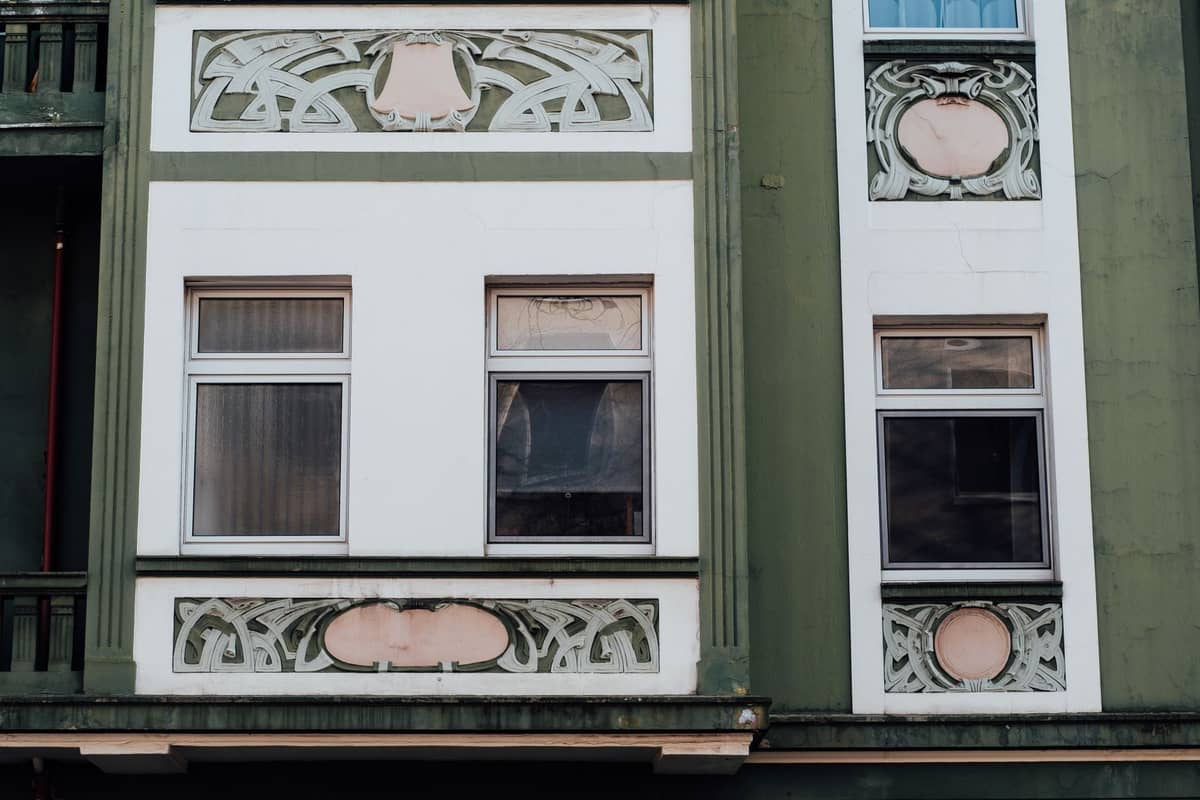
Art Nouveau emerged in Brussels in the early 1890s as a deliberate break from historical revivalism. Belgium at the time was one of the wealthiest countries in Europe, and its upper-middle class had both the money and the progressive politics to commission radically new architecture. Victor Horta's Hôtel Tassel (1893) is widely cited as the first true Art Nouveau building anywhere, introducing the flowing ironwork, organic curves, and integrated interior design that would define the style globally.
What makes Brussels exceptional is sheer density. The city went through a construction boom between roughly 1893 and 1914, and wealthy clients commissioned dozens of private townhouses in the new style. Unlike Paris, where Baron Haussmann's urban redesign had already fixed the city's fabric, Brussels was still expanding its inner neighborhoods. Architects had room to experiment. The result is a city where you can walk down a single street in Ixelles or Saint-Gilles and encounter three or four remarkable facades in a row.
ℹ️ Good to know
UNESCO recognized the architectural work of Victor Horta in Brussels as a World Heritage Site in 2000. Four buildings are listed: the Hôtel Tassel, Hôtel Solvay, Hôtel van Eetvelde, and the Horta Museum (his former private house and studio). These are the non-negotiable stops on any serious Art Nouveau itinerary.
The Essential Art Nouveau Sites
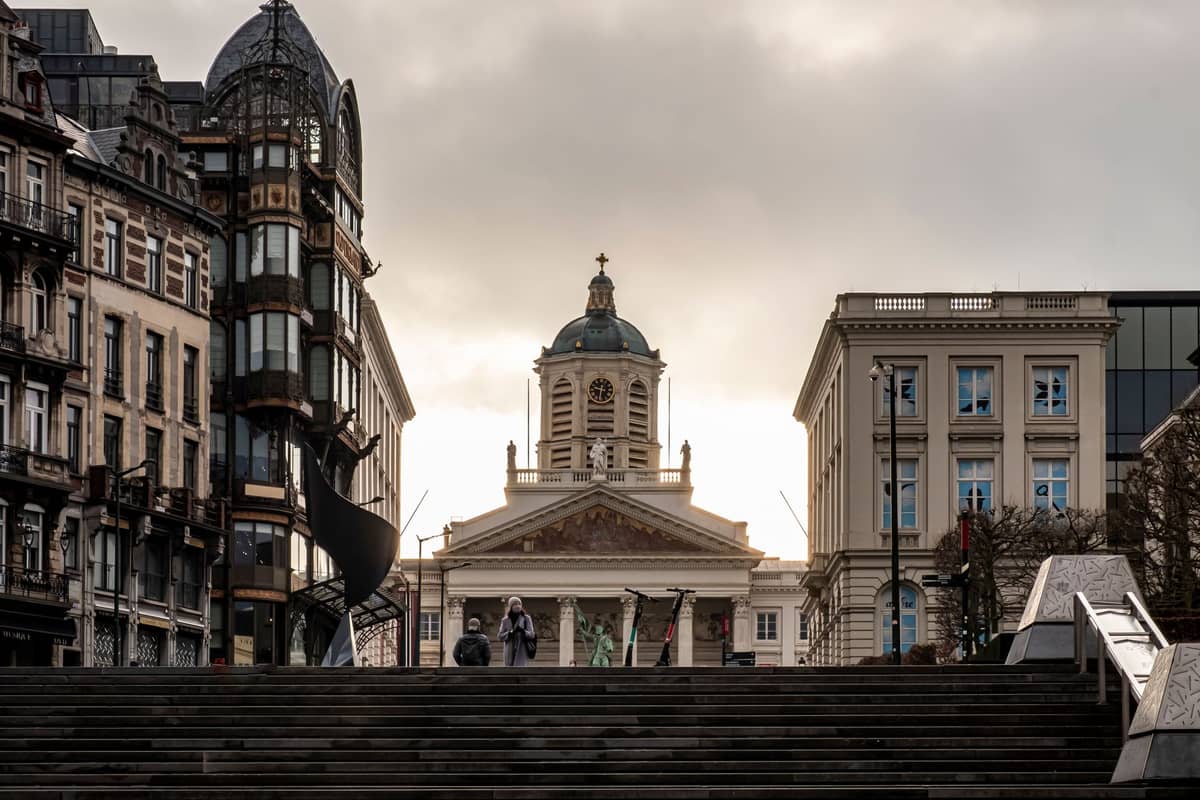
The Horta Museum at Rue Américaine 27 in Saint-Gilles is the most complete Art Nouveau experience in the city. Horta designed this as his personal home and studio between 1898 and 1901, and it survives almost entirely intact: the staircase with its skylights and wrought-iron bannisters, the mosaic floors, the custom-designed furniture. Opening hours are Tuesday to Friday 14:00–17:30 and Saturday to Sunday 11:00–17:30. Closed Mondays and on major public holidays. Adult entry is €14; students and job-seekers pay €6; children aged 6–17 pay €3.50.
The Hôtel Solvay on Avenue Louise is arguably more spectacular — a commission for the Solvay industrial dynasty that gave Horta virtually unlimited budget. Every detail of the interior was designed by Horta, from door handles to carpets. Unlike the Horta Museum, Hôtel Solvay is not open for self-guided visits; access is through organized tours, which can be booked via the Art Nouveau Pass (see below) or through specific tour operators. The Van Eetvelde House near the European Quarter is another UNESCO property, famous for its glass-domed central hall, and also accessible only through guided visits.
- Horta Museum (Rue Américaine 27, Saint-Gilles) UNESCO listed. The architect's own home. Self-guided entry, €14 adults. Free first Sunday of the month. Best visited on a weekday afternoon to avoid weekend crowds.
- Hôtel Solvay (Avenue Louise 224, Ixelles) UNESCO listed. The most lavish Art Nouveau interior in the city. Guided tours only — book in advance or use the Art Nouveau Pass.
- Van Eetvelde House (Avenue Palmerston 4, European Quarter) UNESCO listed. Remarkable glass rotunda. Guided access only; Art Nouveau Pass sold here during opening hours.
- Maison Cauchie (Rue des Francs 5, Etterbeek) Exceptional sgraffito facade by Paul Cauchie. Open the first weekend of each month; check ahead as hours are limited.
- Art Nouveau facades in Saint-Gilles The streets around Rue Defacqz and Rue Paul Emile Janson contain multiple facades from the 1900s. Viewable from the street at any time, no entry required.
For a self-guided street-level tour, Art Nouveau facades in Saint-Gilles are among the most accessible in the city. The neighborhood around Rue Defacqz and the surrounding streets contains a remarkable density of surviving facades that require no booking and no entry fee — just comfortable shoes and a willingness to look up.
The Art Nouveau Pass: Is It Worth It?
The Art Nouveau Pass, administered by Brussels Museums, is valid for 9 months from purchase. There are two tiers: €27 for entry to 3 Art Nouveau museums or exhibitions (excluding Hôtel Solvay), and €37 for 2 museums plus a guided visit to Hôtel Solvay. Both versions include discounts at selected Art Nouveau cafés and shops. It can be bought online through the official site at artnouveaupass.brussels, or in person at participating venues including Hôtel van Eetvelde and Maison Autrique.
The math works in your favor if you plan to visit two or more paid sites. The Horta Museum alone costs €14, and a guided tour of Hôtel Solvay would add significantly to that. If you are visiting Brussels over multiple days with a genuine interest in the period, the €37 pass is the more complete option. For a casual visitor doing one afternoon of architecture, the Horta Museum on its own is sufficient — especially if you time it for the free first Sunday of the month.
⚠️ What to skip
Free entry on the first Sunday of the month at the Horta Museum does not mean walk-in guaranteed. Capacity limits apply and the museum can fill up, particularly in summer. Arriving early in the day significantly improves your chances of getting in without a wait.
The BANAD Festival: The Best Way to See Closed Interiors
The Brussels Art Nouveau and Art Deco Festival, known as BANAD, runs every March over three weekends. The 10th edition is scheduled for 14–29 March 2026. It is organized by Explore.Brussels together with specialist associations including ARAU, Arkadia, Brussels Chatterguides, and Pro Velo. The programme typically includes walking tours, cycling routes, exhibitions, concerts, and family activities — but the reason serious architecture enthusiasts plan trips around it is access to private buildings that are never otherwise open.
BANAD has historically opened the interiors of private Art Nouveau townhouses in Ixelles, Schaerbeek, Uccle, and central Brussels that have no other public access. These are guided visits with limited places, and they sell out. If you are planning a trip to Brussels specifically around BANAD, register for your chosen tours as soon as bookings open — typically several weeks before the festival begins. The official programme is published at banad.brussels.
✨ Pro tip
BANAD is not only about Art Nouveau. Art Deco buildings from the 1920s and 1930s also feature prominently in the programme. If your interest is specifically the 1890–1914 period, filter your bookings carefully when the programme is released — the two styles share the festival but have distinct tour itineraries.
Art Nouveau in Brussels is not confined to famous names or famous streets. The neighborhoods worth exploring on foot are Saint-Gilles for the highest concentration of facades, Ixelles for grander commissions, and Schaerbeek in the northeast for a less-visited but architecturally rich set of streets. If you are planning a broader city itinerary, the Brussels walking tours guide covers routes that incorporate Art Nouveau stops alongside other landmarks.
Beyond Horta: Other Architects and Styles to Know
Victor Horta is the name most associated with Brussels Art Nouveau, but he was not the only practitioner, and focusing solely on him misses much of what makes the city remarkable. Paul Hankar, a contemporary of Horta, developed a slightly different vocabulary with more geometric elements and striking sgraffito decoration on facades. Gustave Strauven designed the extraordinary Maison Saint-Cyr on Square Ambiorix — a facade so exuberantly decorated it borders on excess, and all the more fascinating for it. Octave van Rysselberghe brought a more restrained, French-influenced approach.
The Maison Cauchie in Etterbeek deserves specific mention. Paul Cauchie was a painter and decorator rather than a mainstream architect, and his house reflects that: the facade is covered in sgraffito panels depicting allegorical female figures that are unlike anything else in the city. It opens only on the first weekend of each month, which makes timing your visit around it worthwhile if you are serious about the period.
- Victor Horta: fluid ironwork, light-filled staircases, fully integrated interiors. UNESCO-listed buildings are the priority.
- Paul Hankar: geometric rigor, rich sgraffito, more overtly decorative facades. Look for his work on Rue Defacqz.
- Gustave Strauven: the most ornate practitioner. Maison Saint-Cyr on Square Ambiorix is his masterpiece and freely viewable from outside.
- Paul Cauchie: painter-decorator turned architect. Maison Cauchie in Etterbeek is singular; open first weekend of each month.
- Octave van Rysselberghe: quieter, French-influenced approach. Less famous but architecturally significant, particularly in Ixelles.
Practical Planning: When to Go, How to Get Around, What to Budget
The best months to explore Art Nouveau in Brussels on foot are May through September, when temperatures sit between 18°C and 23°C and daylight extends into the evening. The facades look best in natural light, and walking between neighborhoods is genuinely pleasant in those conditions. March is the exception: colder and often wet, but the BANAD Festival makes it worthwhile for dedicated visitors. For a broader overview of timing, the best time to visit Brussels guide covers seasonal trade-offs in detail.
Getting between Art Nouveau sites requires a mix of walking and public transport. The STIB/MIVB metro, tram, and bus network covers the city well; a single ticket costs around €2.10 with a MOBIB card or more with contactless payment on board. Saint-Gilles is walkable from the city centre and from Ixelles. The Van Eetvelde House near the European Quarter is served by multiple metro and bus lines. For a full overview of getting around, see the getting around Brussels guide.
Budget for a full Art Nouveau day: Horta Museum entry €14, Art Nouveau Pass at €37 if you want Hôtel Solvay included, transport around €5–8 for a full day on STIB. A focused half-day using only the Horta Museum plus a street walk through Saint-Gilles and Ixelles costs €14 plus transport. Free options exist: the street facades require nothing but time, and the first Sunday of the month at the Horta Museum is genuinely free.
💡 Local tip
The Horta Museum's afternoon-only weekday hours (14:00–17:30) make it natural to combine with a morning walk through the Saint-Gilles and Ixelles facade streets. Start around 10:00, work your way through the outdoor sites, have lunch in the neighborhood, then visit the museum from 14:00. This pacing avoids the Saturday morning rush at the museum.
FAQ
Is the Horta Museum worth visiting?
Yes, for anyone with even a passing interest in architecture or design. It is the most intact Art Nouveau interior in the world, preserved almost exactly as Horta designed it. The afternoon-only hours on weekdays limit your time, but two hours is enough for a thorough visit. Adult tickets are €14; free on the first Sunday of the month, subject to capacity.
What is the Art Nouveau Pass and should I buy one?
The Art Nouveau Pass (€27–€37, valid 9 months) gives access to multiple Art Nouveau museums and, in its €37 version, includes a guided visit to Hôtel Solvay. It is worth buying if you plan to visit two or more paid sites, or if a Hôtel Solvay visit is a priority. Single-site visitors are better off buying individual tickets.
When is the BANAD Festival and how do I get tickets?
The BANAD Festival runs every March over three weekends. The 10th edition is scheduled for 14–29 March 2026. It is organized by Explore.Brussels. Guided visit slots to private buildings are limited and book out quickly. Check banad.brussels for the official programme and booking links when they open, typically several weeks before the festival.
Are there Art Nouveau buildings I can see for free in Brussels?
Many of the most striking Art Nouveau facades in Saint-Gilles, Ixelles, and Schaerbeek are on public streets and viewable at any time with no entry fee. Maison Saint-Cyr on Square Ambiorix and the Rue Defacqz area are particularly good. The Horta Museum also offers free entry on the first Sunday of each month, though capacity limits apply.
Is Art Nouveau in Brussels only about Victor Horta?
No. Horta's work is the UNESCO-listed pinnacle, but Brussels has a wide range of Art Nouveau architects worth seeking out: Paul Hankar, Gustave Strauven, Paul Cauchie, and Octave van Rysselberghe all produced distinct and significant work. The BANAD Festival and the Art Nouveau Pass both cover multiple architects and neighborhoods beyond the Horta sites.