Laeken is Brussels' royal district, a sprawling northern neighborhood where the Belgian royal family's private estate meets major tourist landmarks like the Atomium and Mini-Europe. It offers a quieter, greener contrast to the city center, with wide boulevards, ceremonial parks, and a residential character that feels worlds away from the Grand-Place crowds.
Laeken is Brussels' most regal district, home to the Belgian royal family's official residence and a cluster of landmark attractions that draw visitors from across the city. Broad avenues cut through parkland, royal monuments punctuate the skyline, and the Atomium rises above it all like a chrome exclamation point on the Heysel plateau.
Orientation
Laeken occupies the northwestern corner of the City of Brussels municipality, carrying the postal code 1020. It covers roughly 9.3 square kilometers as it did at the time of its 1921 annexation and sits at the northern edge of the Brussels-Capital Region, where the urban fabric gradually loosens into parkland and former royal estates. The Brussels-Scheldt Canal runs along its western and southern edges, and the Heysel plateau rises to the north, where the Atomium and King Baudouin Stadium dominate the horizon.
The neighborhood borders Wemmel, Vilvoorde, and Grimbergen (Strombeek-Bever) to the north; Neder-Over-Heembeek and Schaerbeek to the east; the historic Pentagon and Molenbeek-Saint-Jean to the south; and Jette to the west. Laeken was an independent municipality until 1921, when it was absorbed into the City of Brussels. That annexation did little to change its character: it still feels like a distinct place, with its own rhythms and sense of civic identity.
For visitors, it helps to think of Laeken in two zones. The lower part, closer to the canal and the Bockstael and Stuyvenbergh metro stations, is denser and more residential, with local shops, markets, and the kind of street-level life that rarely appears in guidebooks. The upper part, centered on the Heysel plateau, is where the major attractions cluster. If you are trying to orient yourself within Brussels more broadly, the Molenbeek canal district lies just to the south, and the royal institutions of the Royal Quarter are accessible in about 25 minutes by metro or tram.
Character & Atmosphere
Laeken does not feel like most of central Brussels. There is less architectural density here, fewer tourist cafés, and an absence of the mercantile energy you sense around the Grand-Place. Instead, the dominant impression is space: wide avenues lined with plane trees, long walls enclosing the royal domain, and parks that stretch further than you expect. On a bright morning in May, with the horse chestnut trees in full bloom along Avenue du Parc Royal, the neighborhood has a stately calm that can feel slightly dreamlike.
On weekday mornings, Laeken belongs to its residents. The market at Place de la Reine draws local shoppers from early, with stalls selling vegetables, cheese, and flowers. The surrounding streets fill with school runs, delivery vans, and people heading toward the Bockstael tram stop. By mid-morning the noise settles and the parks absorb whatever activity remains. The light in this part of Brussels, filtered through the tall trees around the royal estate, falls in long horizontal shafts in autumn that make even ordinary streets look almost ceremonial.
Weekends shift the balance toward visitors, particularly around Heysel. Tour groups arrive at the Atomium, families pour into Mini-Europe, and the area around the King Baudouin Stadium can get congested before major events. The contrast between the quiet residential streets to the south and the attraction-heavy plateau to the north is genuinely stark: you can walk ten minutes and feel like you have crossed between two completely different neighborhoods. After dark, Laeken is quiet. There is little nightlife to speak of, and most streets around the royal domain feel empty by 9pm. This is not a place to be out late without purpose.
ℹ️ Good to know
Laeken is primarily a daytime destination. Most of its major attractions, including the Royal Greenhouses when open, are best visited in the morning or early afternoon. Plan to be elsewhere in Brussels by early evening.
What to See & Do
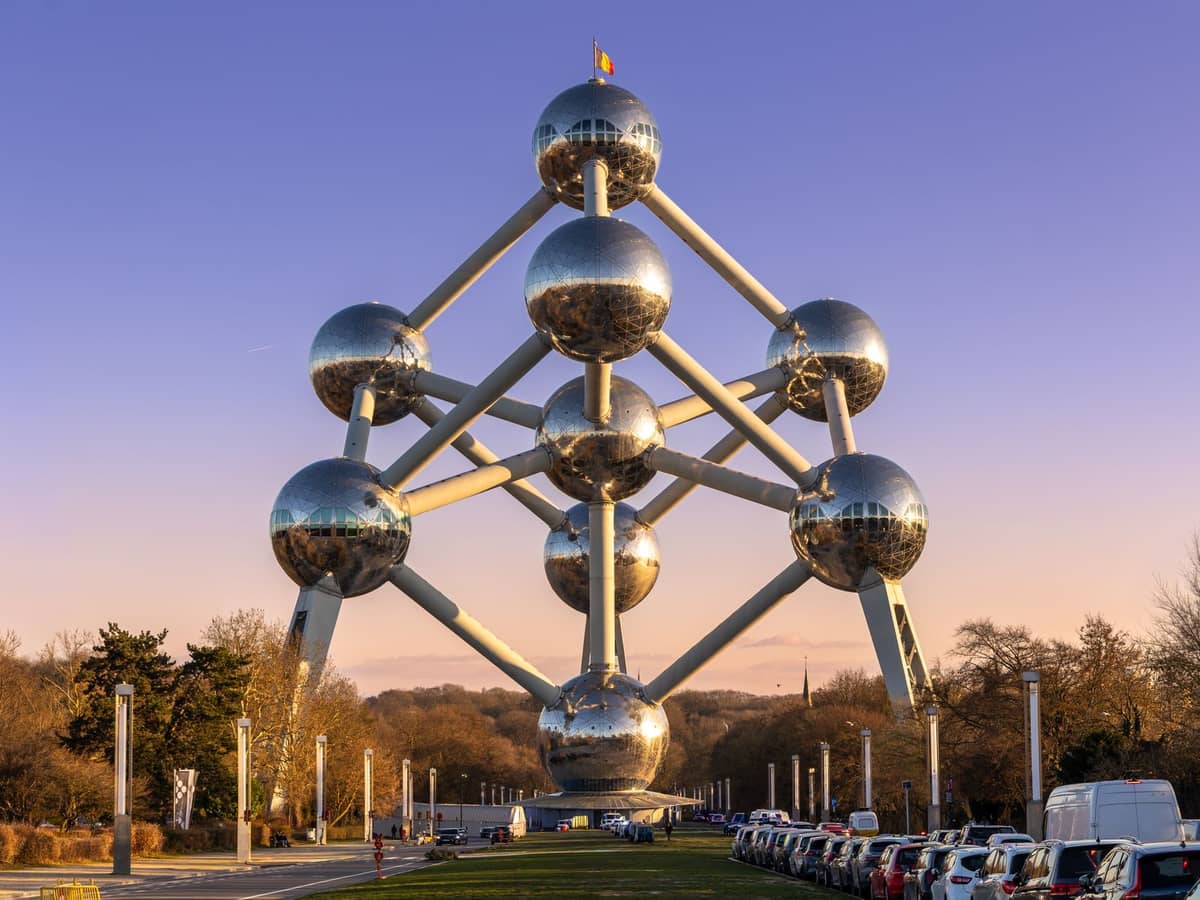
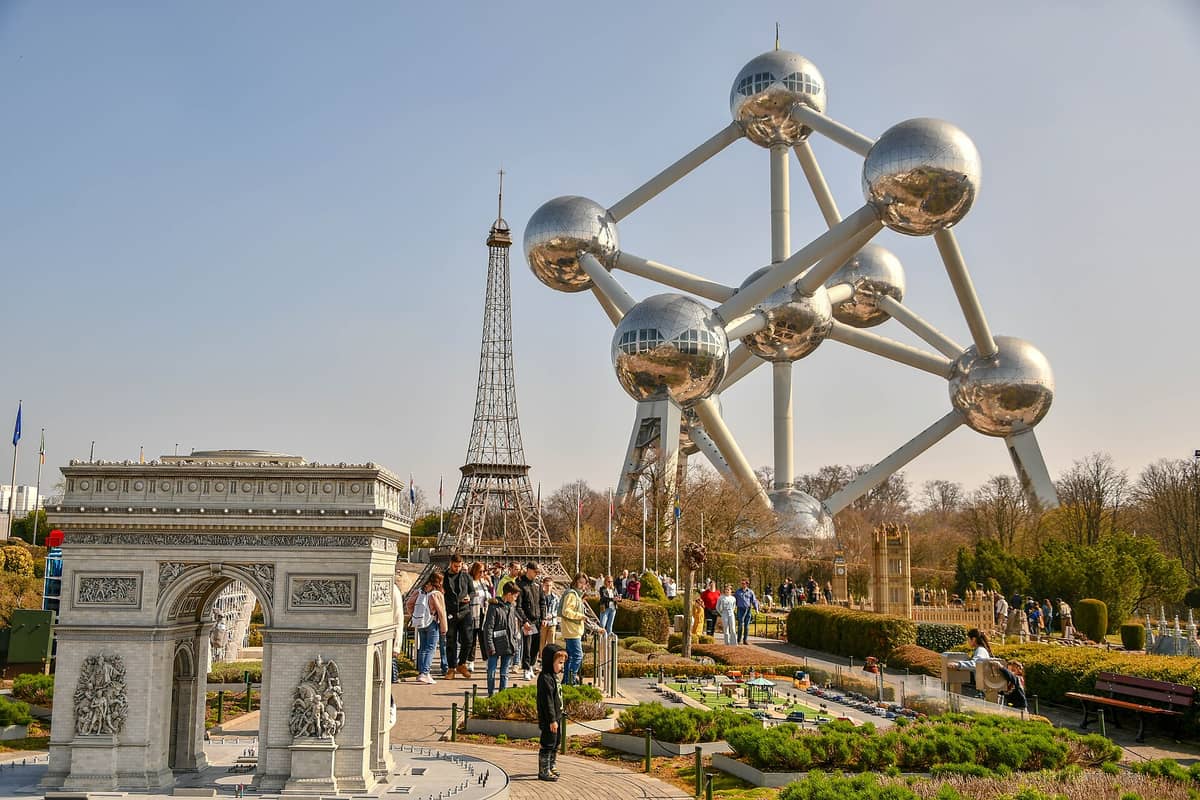
The most iconic structure in Laeken, and arguably in all of Brussels, is the Atomium. Built for the 1958 World's Fair, this 102-meter steel structure represents an iron crystal magnified 165 billion times. Inside, the spheres house rotating exhibitions, a panoramic restaurant, and a permanent collection exploring the story of the 1958 Expo. The views from the top sphere over Brussels and the Heysel plateau are among the best in the city, particularly in clear weather.
Adjacent to the Atomium, Mini-Europe compresses more than 350 scale models of European landmarks into a single outdoor park. It skews toward families with children, but the craftsmanship of some models is genuinely impressive, and on a warm afternoon it makes for an easy, low-pressure hour or two. The combination of both attractions in a single visit is a natural pairing, and combined tickets are available.
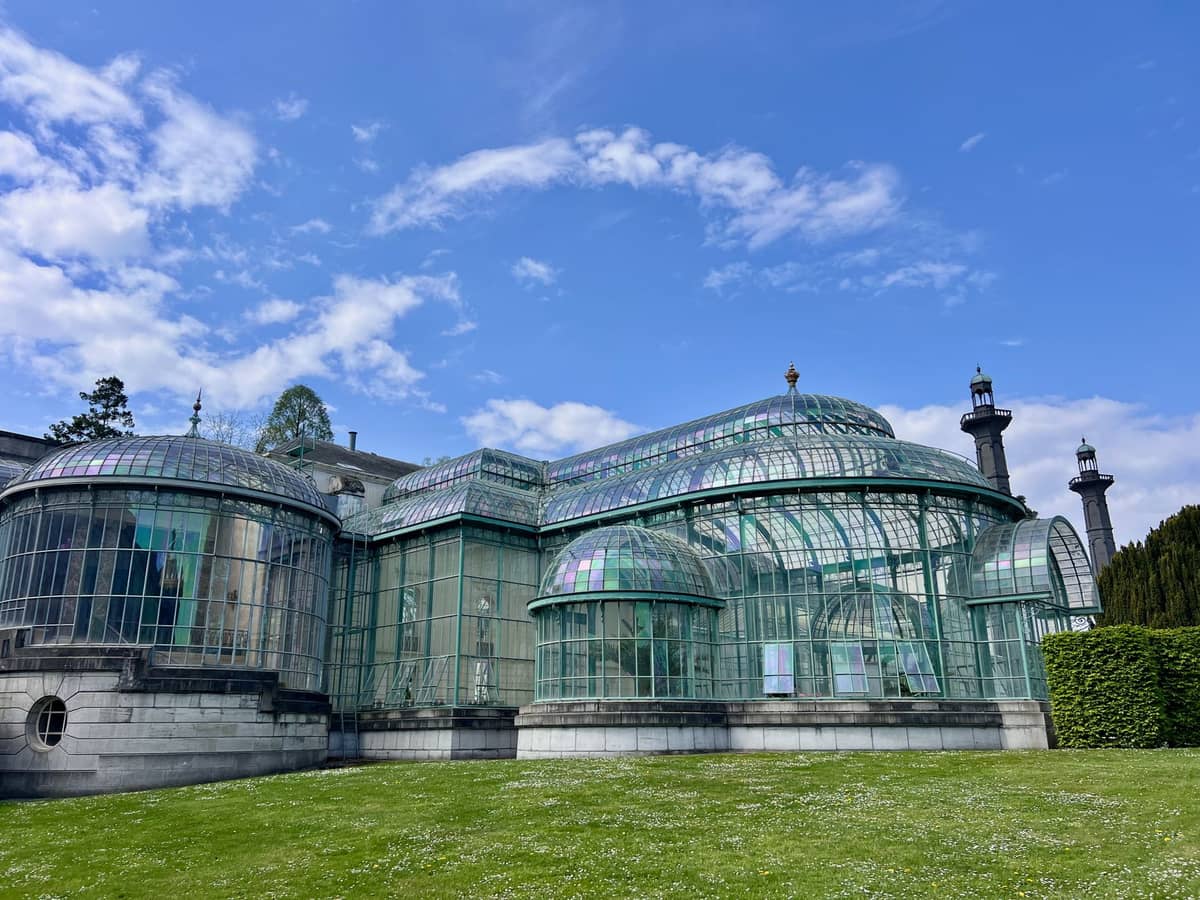
The Royal Greenhouses of Laeken are one of Brussels' most unusual experiences precisely because they are so rarely accessible. The glasshouses, commissioned by King Leopold II in the 1870s and designed by Alphonse Balat, cover roughly 2.5 hectares and contain one of Europe's finest collections of camellias, fuchsias, and tropical plants. They open to the public for only a few weeks each spring, typically in April and May, when the plants are in bloom. The combination of Victorian ironwork and massed floral color inside the heated glass structures is unlike anything else in the city.
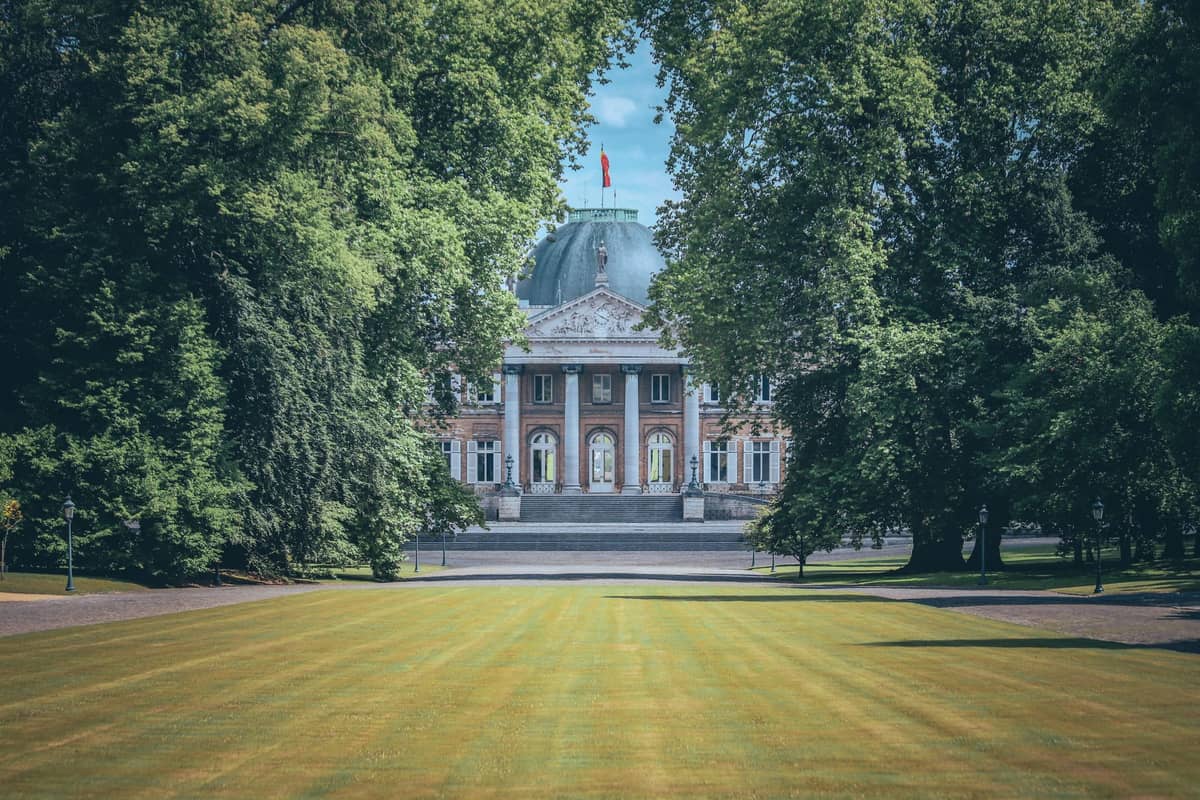
The Royal Palace of Laeken itself is not open to the public, and the surrounding domain includes parkland, a Japanese Tower and Chinese Pavilion complex that is currently closed to visitors but still worth noticing for its architectural eccentricity from the outside. The Church of Our Lady of Laeken, on Avenue de la Reine, contains the royal crypt where generations of Belgian monarchs are buried. The building is a neo-Gothic landmark visible from some distance, and the attached cemetery features elaborate funerary monuments that draw specialists in 19th-century sculpture.
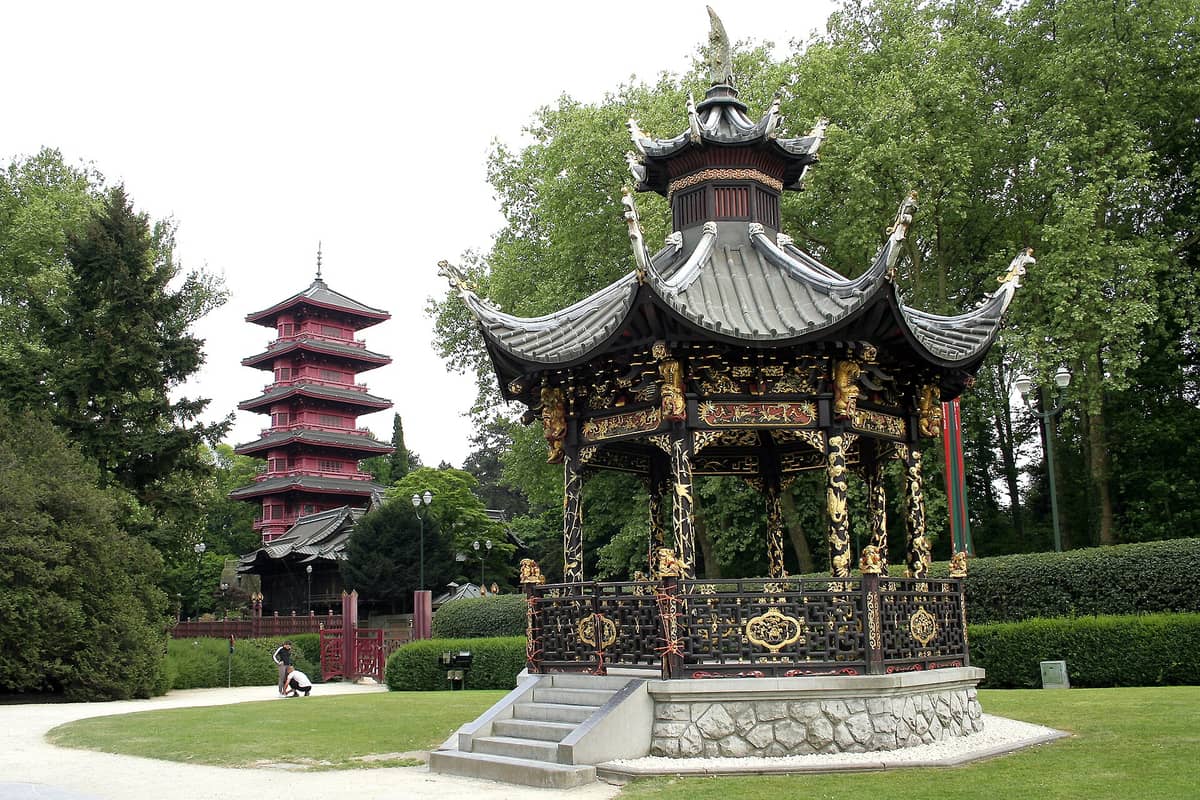
The Japanese Tower and Chinese Pavilion were both commissioned by Leopold II at the turn of the 20th century as part of his collecting ambitions. The Japanese Tower, a five-story pagoda, and the Chinese Pavilion, an elaborate structure inspired by the 1900 Paris Universal Exhibition, sit in parkland on Avenue Van Praet. They have had a complicated history of restoration and closure and are currently not open to the public, so check the latest status before planning a detour.
Atomium: iconic Cold War-era structure with panoramic views and rotating exhibitions
Mini-Europe: outdoor scale models of European landmarks, best for families
Royal Greenhouses of Laeken: only open a few weeks each spring, booking essential
Church of Our Lady of Laeken and royal crypt: significant funerary architecture
Japanese Tower and Chinese Pavilion: Leopoldian architectural curiosities in parkland
King Baudouin Stadium and Brussels Expo: major event venues, worth checking program
💡 Local tip
The Royal Greenhouses sell out quickly each spring. Check the official Belgian Royal Palace website as soon as dates are announced, typically in late February or early March, and book in advance. Queues without reservations can be very long.
Eating & Drinking
Laeken's food scene is honest and unpretentious rather than destination-worthy. Around the Heysel plateau, the options are largely geared toward tourist traffic: cafés and brasseries near the Atomium that do a functional job of feeding visitors between attractions, but rarely offer anything you would seek out for its own sake. Prices in this zone reflect the captive audience.
The more interesting eating is in the lower part of the neighborhood, particularly around Place de la Reine and along Rue Eloy and the streets radiating from Bockstael. This is where locals eat: straightforward Belgian brasseries serving steak-frites and mussels in season, small Turkish and North African restaurants reflecting the neighborhood's demographic mix, and a handful of bakeries worth stopping into for a morning croissant or a loaf of bread. None of these places will appear in any restaurant awards, but they are real and reasonably priced.
For a serious meal, most visitors will be better served heading south toward central Brussels or into Saint-Gilles or Ixelles, both of which have significantly richer dining options. Laeken is not a place to plan an evening around food and drink.
That said, Belgian staples are available throughout the neighborhood: Belgian beer at any brasserie, waffles at stands near the Atomium, and frites from street vendors that are as good as anything in the city center. For an introduction to Brussels' eating culture, the neighborhood does the basics without pretension.
Getting There & Around
Laeken is well connected to central Brussels by metro, tram, and bus, all operated by STIB/MIVB. The most direct route from the city center is metro line 6, which runs from central stations northward to Heysel in approximately 20 to 25 minutes from De Brouckère. Key stations along this line within or near Laeken include Bockstael, Stuyvenbergh, Houba-Brugmann, and Heysel. Heysel station deposits you directly at the Atomium and Mini-Europe; Bockstael is the better stop for the lower residential neighborhoods and market area.
Tram lines 3 and 7 also serve the district, stopping near the Royal Domain and connecting Laeken to other parts of the city. Trams tend to be slower than the metro but offer more street-level views and drop you closer to specific landmarks. If you are combining Laeken with a visit to the canal area or Molenbeek, trams are a practical way to move between them without returning to a metro hub.
Walking to Laeken from the city center is possible but takes 40 to 50 minutes on foot, and the route passes through stretches of urban arterial road that are not particularly enjoyable. The more practical combination is to use Brussels' public transport network for the journey north and then explore the neighborhood on foot once you arrive. The distance between Bockstael and the Atomium is about 2 kilometers, an easy 25-minute walk through the park zones.
Cycling is a reasonable option within Laeken itself. The wide avenues and park paths are relatively cycle-friendly, and the city's Villo! bike-share scheme has docking stations in the area. The canal towpath to the south also provides a pleasant cycling connection toward the city center. By car, parking is generally easier here than in central Brussels, but traffic around Heysel can be severe on event days at the stadium or expo center.
⚠️ What to skip
On days when King Baudouin Stadium hosts a major match or Brussels Expo runs a large trade fair, the Heysel area can be extremely crowded and public transport lines become very busy. Check event calendars before visiting on weekends, especially in autumn.
Where to Stay
Laeken is not a primary accommodation hub for tourists, and most visitors exploring Brussels will be better served by staying closer to the city center or in neighborhoods with more evening activity. That said, there are hotels in and around the Heysel area that cater to visitors attending events at the expo center or stadium, and these can be convenient if the Atomium or Royal Greenhouses are a central part of your itinerary.
For most travelers, Laeken works best as a day trip from accommodation elsewhere in Brussels. The metro connection makes it easy to arrive for a morning at the Atomium, spend a few hours in the area, and return to more centrally located neighborhoods for the evening. If you are uncertain where to base yourself, the Brussels accommodation guide covers all the main options across neighborhoods and price ranges.
Families visiting specifically for the Atomium and Mini-Europe might find the convenience of a nearby hotel worthwhile, particularly if they are arriving by car or have limited public transport mobility. The area is quiet at night and well-served for that purpose, even if it lacks the dining and entertainment infrastructure of central neighborhoods.
Is Laeken Worth Visiting?
For first-time visitors to Brussels, Laeken earns its place on the itinerary primarily because of the Atomium. It is one of the few 20th-century structures in Europe that fully justifies the tourist attention it receives, and the views from its upper sphere reward the journey north. The Royal Greenhouses, when open, are a genuinely extraordinary experience that most visitors leave having underestimated. If you are interested in the best views Brussels has to offer, this plateau delivers.
Beyond those headline attractions, Laeken rewards a specific kind of visitor: someone interested in royal history and Belgian ceremonial architecture, comfortable with doing some walking through residential streets that have no particular tourist infrastructure, and willing to make peace with a neighborhood that closes down early. It is not a place that reveals itself casually, but it has a coherence and a calm that more visited parts of Brussels often lack.
If your time in Brussels is limited, Laeken can be covered in a half-day combined with a visit to the Royal Quarter to the south. Combining both on a single day gives you the full arc of Brussels' royal geography, from the Palace on the Place des Palais up to the residential domain in the north. For a two-day visit to Brussels, the two-day Brussels itinerary shows how Laeken fits alongside the city's other essential areas.
TL;DR
Laeken is Brussels' royal district in the northwest, home to the Atomium, Mini-Europe, and the Belgian royal family's private estate.
Best visited as a half-day trip: metro line 6 to Heysel takes about 20-25 minutes from the city center.
The Royal Greenhouses are only open for a few weeks each spring and require advance booking.
Dining and nightlife options are limited; plan your meals before arrival or head to central neighborhoods for the evening.
Ideal for visitors interested in landmark architecture, royal history, or families with children; less suited to travelers prioritizing food, nightlife, or urban atmosphere.
Two days is enough time to cover Brussels' historic core, world-class museums, and legendary food scene — if you plan it right. This itinerary cuts through the noise to give you a practical, hour-by-hour plan that works around real opening hours, Monday closures, and the best use of the Brussels Card.
Brussels holds one of the greatest concentrations of Art Nouveau architecture on the planet. This guide covers the essential buildings, the best museums, how to use the Art Nouveau Pass, and when to visit for the BANAD Festival — with a frank note on what's actually open and what requires booking ahead.
Brussels sits at the heart of one of the world's great beer cultures. This guide covers every major brewery, museum, and tasting experience in the city, with clear pricing, practical logistics, and the context to understand what makes Belgian beer genuinely different.
Brussels is the undisputed capital of Belgian chocolate, with heritage praline houses, boundary-pushing artisan makers, and chocolate museums all within walking distance of each other. This guide covers the best chocolate shops, realistic prices, seasonal considerations, and exactly what to skip.
Brussels has an unusually dense museum scene for its size. From a world-class Surrealism collection to a living lambic brewery, a spectacular natural history hall, and a free EU history centre, the Belgian capital offers remarkable depth across every genre. This guide covers the best of them.
Brussels rewards visitors in every season, but the timing of your trip shapes everything from hotel rates to crowd levels to which festivals you can catch. This guide breaks down exactly what to expect each month, with the real trade-offs for every type of traveller.
Brussels rewards those who seek elevation. This guide covers the city's best viewpoints, from iconic hilltop terraces and Art Deco rooftops to medieval towers and futuristic observation spheres. Whether you want free skyline vistas or ticketed platforms, here's exactly where to go and when.
Brussels Airport (BRU) in Zaventem is 12 km from the city centre, with a direct train station beneath the terminal. This guide covers every transport option, realistic fares, terminal layout basics, and the common mistakes that cost travellers time and money.
Brussels transforms each winter into one of Europe's most atmospheric seasonal destinations. This guide covers every aspect of Winter Wonders (Plaisirs d'Hiver): where the markets actually are, what things cost, when to visit to avoid the worst crowds, and the practical details that most guides overlook.
Brussels takes comic art more seriously than almost any city on earth. This guide covers the official mural route with 60+ painted walls, the Belgian Comic Strip Center housed in a Victor Horta building, and everything you need to navigate the city's Franco-Belgian comic heritage without wasting a step.
Brussels is the de facto capital of the European Union, and its EU quarter is one of the few places on earth where you can step inside a functioning democratic institution for free. This guide covers every visitor attraction in the European Quarter, with opening hours, booking tips, and a frank take on what's worth your time.
The Brussels Flower Carpet is one of Europe's most spectacular temporary installations, covering the Grand-Place in nearly one million flowers for just four days every two years. This guide covers dates, viewing options, crowd strategy, and practical tips to help you plan a visit worth the trip.
Brussels rewards couples who look beyond the obvious. This guide covers the city's most romantic squares, gardens, museums, and neighborhoods, with practical details on timing, cost, and what to skip, so you can plan a genuinely memorable trip together.
Brussels rewards curious travellers who look beyond the Grand-Place. From buried medieval palaces and spontaneous-fermentation breweries to Art Nouveau masterpieces and canal-side art museums, the city's best experiences are often the least obvious ones.
Brussels has a deeper luxury scene than many visitors expect. From a dense cluster of Michelin-starred restaurants across the Brussels-Capital Region to a cluster of exceptional five-star hotels along Avenue Louise, this guide covers exactly where to stay, eat, and spend your time when budget is not the constraint.
Brussels nightlife is not one scene but many, spread across distinct neighborhoods from the beer bars of Saint-Géry to the techno clubs of Ixelles. This guide breaks down the best districts, key venues, realistic costs, and the practical logistics every visitor needs to know.
Brussels has a reputation as an expensive EU capital, but the reality is more nuanced. Between free museum Sundays, affordable public transport, and some of the best street food in Europe, a trip to Brussels can cost surprisingly little. This guide breaks down exactly where your money goes and where you can save it.
Brussels gets rain year-round, but a wet day here is far from a wasted one. The city packs in some of Europe's finest museums, covered galleries, breweries, and atmospheric indoor spaces that reward slow exploration whatever the weather.
Brussels is the capital of Belgium and the de facto capital of the European Union, drawing millions of visitors each year. Most trips are trouble-free, but understanding where the real risks lie, and which fears are overblown, makes a significant difference. This guide covers crime patterns, safe neighborhoods, transport safety, emergency contacts, and practical tips for navigating the city with confidence.
Brussels rewards shoppers at every budget level, from designer boutiques on Avenue Louise to the chaotic pleasures of the Marché du Midi. This guide breaks down every major shopping district, market, and seasonal event with plain assessments, opening hours, and local context.
The Brussels to Amsterdam corridor is one of Europe's most well-connected intercity routes, with high-speed trains completing the journey in under two hours and budget buses offering a cheaper alternative. This guide breaks down every option, what it actually costs, and how to book smart.
Bruges is Belgium's most visited city for good reason, and from Brussels it takes under 70 minutes by direct train. This guide covers every transport option, what to expect on arrival, the best way to structure your day, and the honest truth about crowds, costs, and whether one day is actually enough.
Brussels takes its waffles seriously, and visitors who don't know the difference between a Brussels waffle and a Liège waffle often end up disappointed. This guide explains exactly what to order, where to find the best versions across the city, what you should expect to pay, and which spots are overpriced tourist traps.
Brussels rewards walkers more than almost any other European capital. This guide covers the best walking tours and self-guided routes in the city — from the medieval Grand-Place loop to Art Nouveau trails in Saint-Gilles — with honest breakdowns of costs, crowd patterns, and what to skip.
Brussels rewards families with an unusually rich mix of hands-on museums, outdoor parks, and genuinely weird landmarks that kids actually remember. This guide covers the best family activities in Brussels, from the Atomium to Train World, with practical advice on what to prioritise.
Brussels sits at the centre of one of Europe's most rewarding day-trip networks. Within 90 minutes by train or car, you can reach medieval cities, ancient forests, living brewery museums, and one of history's most significant battlefields. This guide covers the best excursions, organised by type.
Brussels offers an unusually rich set of free experiences. From its UNESCO-listed Grand-Place and world-class museums with free admission days to self-guided comic mural trails and sweeping city panoramas, you can fill several days in Brussels without opening your wallet.
Brussels has one of Western Europe's most comprehensive urban transport networks, but navigating two airports, four metro lines, and a tangle of tram routes takes some preparation. This guide covers every practical option — from the STIB/MIVB metro to airport trains, taxis, and cycling — with current fares, route logic, and the mistakes most visitors make.
Brussels divides opinion like few European capitals. This guide gives you a clear-eyed look at what the city genuinely offers, what it gets wrong, and exactly who will love it, so you can decide before you book.
The Paris to Brussels train is one of Europe's most efficient city-to-city rail connections: under 1h30, departures nearly every hour, and advance fares starting around €29. This guide covers everything from booking strategy and station logistics to what awaits you in Brussels.
Brussels rewards visitors who look past the postcard images. This guide covers the essential things to do in Brussels, from UNESCO-listed squares and world-class museums to flea markets, beer culture, and EU institutions, with practical notes on timing, costs, and what to skip.
Brussels is a serious food city for its size. This guide covers every dish worth knowing, from the classics served in century-old brasseries to street food you should seek out, with clear price guidance and tips on what to skip.
Brussels offers far more than one good neighborhood for visitors. This guide breaks down the best areas to stay by location, budget, and travel style, with a clear read on each district, current price benchmarks, and practical advice on taxes, timing, and transport.