Tour & Taxis Brussels: Former Customs Giant, Reborn Cultural Campus
Tour & Taxis is a massive repurposed customs and rail freight complex on the Brussels canal, now home to markets, concerts, co-working spaces, and seasonal events. Free to enter the grounds, it rewards visitors who time their trip to coincide with something happening inside.
Quick Facts
- Location
- Avenue du Port 86c, 1000 Brussels
- Getting There
- Brussels-North Station (15-min walk); free weekday shuttle from North Station (Simon Bolivarlaan) every 5–10 min, 5:30 AM–10 PM, with a midday stop at Rogier
- Time Needed
- 1–2 hours for a wander; 3–4 hours if attending a market or event
- Cost
- Grounds free to access; event and market pricing varies
- Best for
- Architecture enthusiasts, market-goers, design and culture seekers
- Official website
- tour-taxis.com
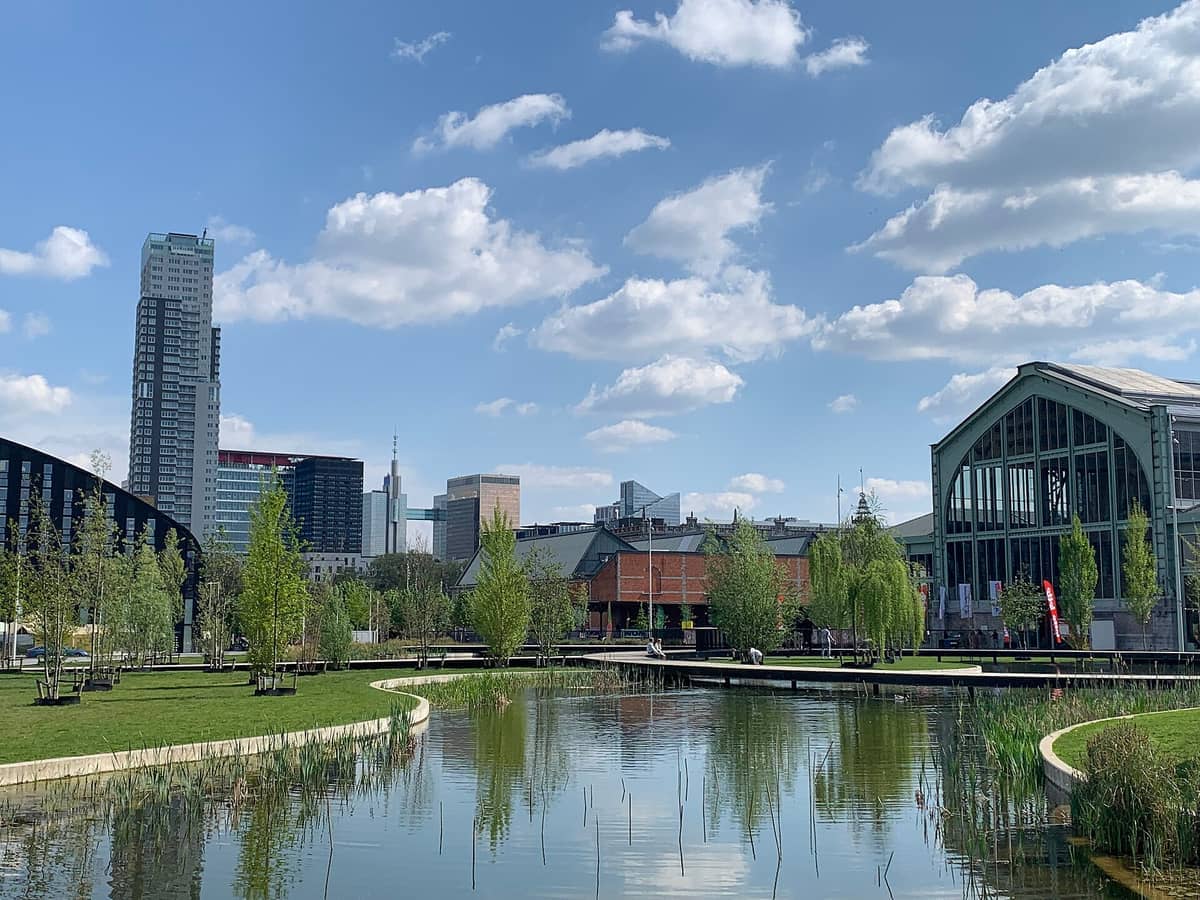
What Is Tour & Taxis, and Why Does It Matter?
Tour & Taxis is a former customs and rail freight depot complex on the north bank of the Brussels canal, and it is one of the most ambitious heritage redevelopment projects in Belgium's capital. The name is not, as many visitors assume, a reference to taxis or a tower: it derives from the powerful Thurn und Taxis family, the German-Belgian dynasty that ran the postal relay network across the Holy Roman Empire for centuries. Their influence left a physical stamp on this corner of Brussels, and the grandeur of the surviving warehouses reflects the commercial ambitions of a city that was, at the turn of the 20th century, a serious European trading hub.
The complex was built between roughly 1902 and 1910 as a centralized customs inspection and freight facility. After decades of industrial decline, the site was largely abandoned by the late 20th century, and redevelopment proposals circulated for years before a long-term plan took hold. Today the grounds serve as a mixed-use cultural and commercial campus: event halls, offices, a hotel, residential buildings, and large outdoor spaces that host everything from antiques fairs to open-air cinemas.
ℹ️ Good to know
The grounds are generally accessible without charge, but individual events inside the halls require separate tickets or registration. Check the Tour & Taxis agenda at tour-taxis.com before visiting to avoid arriving on a quiet weekday with nothing programmed.
The Architecture: What You Are Actually Looking At
The visual centrepiece is the Entrepôt Royal, the main warehouse building whose iron-framed structure and glazed roof panels create a space that feels more cathedral than freight shed. When light filters through the upper windows on a clear morning, the effect is genuinely striking: the interior glows with a diffused warmth that makes even an empty hall feel charged with atmosphere. The ironwork is ornate in places, a reminder that late 19th and early 20th century industrial architecture in Belgium was not always purely utilitarian. Decorative flourishes appear at the column capitals and roof junctions that you would not expect in a building designed to store crates.
The Station Royale, the former royal station building at the heart of the complex, is another structure worth studying closely. Its brickwork and formal proportions place it firmly in the monumental public building tradition of the period, a style visible elsewhere in Brussels at train stations and government buildings from the same era. Taken together, the cluster of surviving structures gives Tour & Taxis a coherent industrial campus identity that most repurposed sites in Europe struggle to maintain.
If Tour & Taxis sparks an interest in Brussels's industrial and architectural heritage, the Molenbeek-Canal district that surrounds it rewards further walking. The canal waterfront north and south of the site has its own overlooked architectural texture, and the area is undergoing the kind of gradual transformation that makes it interesting to observe before the renovation cycle is complete.
Tickets & tours
Hand-picked options from our booking partner. Prices are indicative; availability and final rates are confirmed when you complete your booking.
Ghent tour from Brussels
From 43 €Instant confirmationFree cancellationTablet Workshop at Choco-Story Brussels
From 45 €Instant confirmationShared tour of Delft and the Keukenhof Estate from Brussels
From 86 €Instant confirmationFree cancellationOrigins of Brussels exploration game and tour
From 10 €Instant confirmationFree cancellation
How the Site Feels at Different Times of Day
On a weekday morning outside of an event, Tour & Taxis is calm to the point of feeling slightly underused. Workers arrive at the office buildings along the perimeter, delivery vehicles navigate the wide access roads, and a handful of cyclists cut through the grounds. The scale of the complex becomes apparent when you realize how long it takes simply to walk from the main gate to the far end of the Entrepôt. The outdoor spaces are wide and exposed, and on grey Brussels mornings the combination of flat ground, canal wind, and large empty brick facades gives the place an austere, melancholy quality that is not unpleasant if you are in the right frame of mind.
Market days change the atmosphere entirely. The Brussels Christmas Market has staged events here, and seasonal food and design markets draw large, sociable crowds. On those occasions the Entrepôt Royal fills with stall holders, the smell of street food drifts through the iron structure, and the building finally feels inhabited at the scale it was built for. Weekend afternoon light inside the hall during a busy market is among the better photographic opportunities in Brussels for industrial-heritage enthusiasts. Bring a wide-angle lens if you want to capture the full height of the roof.
For context on how Tour & Taxis fits into the broader Brussels events calendar, the things to do in Brussels guide covers seasonal programming across the city.
💡 Local tip
The free weekday shuttle from Brussels-North Station (Simon Bolivarlaan stop) runs every 5–10 minutes from 5:30 AM to 10 PM, with a midday stop at Rogier. If you arrive by train at Brussels-North, this is the simplest way to reach the site without navigating unfamiliar streets on foot, though the 15-minute walk is straightforward in good weather.
Practical Walkthrough: Getting Around the Grounds
The main entrance is off Avenue du Port, and the site opens into a large central courtyard flanked by the main warehouse and ancillary buildings. There are no queues or bag checks simply to enter the grounds, which makes Tour & Taxis feel more like a public urban space than a ticketed attraction. Navigation inside is intuitive: the Entrepôt Royal is directly ahead of the central axis, the Station Royale sits adjacent to it, and the newer development zones including co-working offices and the hotel occupy the surrounding buildings.
Parking on site is noted as available 24 hours. Accessibility across the site is stated by the venue as guaranteed in all their spaces. The outdoor areas are flat and hard-surfaced, making them straightforward to navigate in dry conditions. After rain, some sections of the open courtyards can be wet and exposed, so appropriate footwear matters more here than at a typical indoor attraction.
Events, Markets, and the Real Reason Most People Visit
Tour & Taxis does not function as a conventional museum or permanent attraction. It is, first and foremost, an events venue. The site hosts trade fairs, design expos, food markets, music concerts, corporate events, and cultural festivals. The Brussels Christmas Market has used the site, and the Antiques and Fine Art Fair (BRAFA) has historically taken place here, drawing serious collectors and curious visitors in roughly equal measure. Without an event, the grounds and architecture are interesting but not sufficient to justify a long journey across the city on their own.
The Brussels Christmas Market is one of the larger seasonal events that has featured Tour & Taxis as a venue. If your visit coincides with the market period, the combination of the Entrepôt Royal interior and the festive programming makes for one of the more distinctive holiday market experiences in the city.
For design and contemporary culture visitors, Tour & Taxis sits in a productive part of the Brussels scene. The area north of the canal has developed creative and cultural institutions over the past decade, and the site itself reflects a broader pattern of industrial-to-cultural conversion that has accelerated across European cities. Whether the long-term mixed-use plan delivers on its ambitions, including the planned residential and commercial development, remains to be seen, but as a snapshot of urban transformation in progress it is a genuinely interesting place to observe.
⚠️ What to skip
If you travel specifically to see Tour & Taxis without checking the event calendar first, you may find a largely quiet industrial campus with limited visitor infrastructure. It is not a walk-up attraction with permanent exhibitions. Always verify current programming at tour-taxis.com before making it the primary focus of a trip.
The Surrounding Neighborhood and How to Combine the Visit
Tour & Taxis sits at the edge of the Molenbeek-Canal district, one of the most geographically central but often overlooked parts of Brussels. The canal waterfront here is undergoing gradual regeneration, and a walk south along the canal path towards the city centre connects the site to Sainte-Catherine, the fish market neighborhood, within about 20 to 25 minutes on foot. The walk itself passes a sequence of canal-side infrastructure and emerging cultural venues that reflect the changing character of the area.
From Tour & Taxis, Brussels-North Station is a 10-minute walk, which makes it straightforward to reach the Grand-Place area by metro. For a more architecturally focused day, the Kanal Centre Pompidou is located nearby along the canal and houses contemporary art exhibitions inside a former Citroën showroom. The two sites together make for a coherent afternoon around the Brussels canal corridor without significant transit time between them.
Budget-conscious visitors should note that Tour & Taxis grounds are free to enter, making it one of the few large-scale architectural sites in Brussels with no admission barrier. For more free options across the city, the free things to do in Brussels guide covers a range of no-cost experiences.
Insider Tips
- Check the Tour & Taxis agenda page before you visit, not the homepage. The events section (tour-taxis.com/see-do/ and the agenda) is where you find out whether there is actually something happening on your date. The main site can look active when the grounds are quiet.
- The Entrepôt Royal interior is most photogenic in morning light on clear days, when sunlight enters through the south-facing glazing and illuminates the ironwork at a low angle. Midday light is flatter and less interesting for photography.
- The free weekday shuttle from Brussels-North is genuinely useful but not well-publicised. It departs from the Simon Bolivarlaan side of the station, which is the back exit relative to the main city-side entrance. Allow extra time to find the correct stop the first time.
- During large markets or fairs, the car parks on site fill quickly. If arriving by car, plan to arrive early or check whether the specific event has pre-booked parking. The surrounding streets in the canal zone have limited stopping options.
- If you are visiting primarily for the architecture and have no specific event to attend, combine the trip with a walk south along the canal to the Halles Saint-Géry area. The architectural contrast between the industrial Tour & Taxis complex and the 19th-century covered market hall in the city centre is an interesting study in how Brussels has repurposed its heritage buildings.
Who Is Tour & Taxis For?
- Architecture and industrial heritage enthusiasts who appreciate large-scale iron and glass construction from the early 20th century
- Market and design fair visitors who plan their Brussels trip around a specific event programmed at the venue
- Photographers looking for dramatic interior spaces with high ceilings and natural light
- Travelers curious about Brussels's ongoing urban transformation around the canal corridor
- Visitors combining Tour & Taxis with a broader canal-side walk through the Molenbeek district
Nearby Attractions
Other things to see while in Molenbeek & the Canal Zone:
- Kanal – Centre Pompidou
Kanal – Centre Pompidou occupies a vast former Citroën car dealership on the Brussels canal. Part ongoing renovation project, part art institution, it challenges what a museum can look and feel like. Here is what visitors need to know before making the trip.