Place Flagey: Ixelles's Living Room and Cultural Heart
Place Eugène Flagey is the social and architectural anchor of the Ixelles municipality, southeast of central Brussels. A 9,000 m² square built over a drained 19th-century pond, it combines a celebrated Art Deco radio building, a twice-weekly market, and some of the city's most rewarding café terraces into one address that locals rarely leave willingly.
Quick Facts
- Location
- Place Eugène Flagey, 1050 Ixelles, Brussels-Capital Region
- Getting There
- Tram 81 (Flagey stop); buses 38, 59, 60, 71; TEC bus 366
- Time Needed
- 1–3 hours, longer if attending an event at Flagey
- Cost
- Free (public square); market free to browse; Flagey events ticketed separately
- Best for
- Architecture enthusiasts, weekend market visitors, café culture, local Brussels life
- Official website
- www.flagey.be
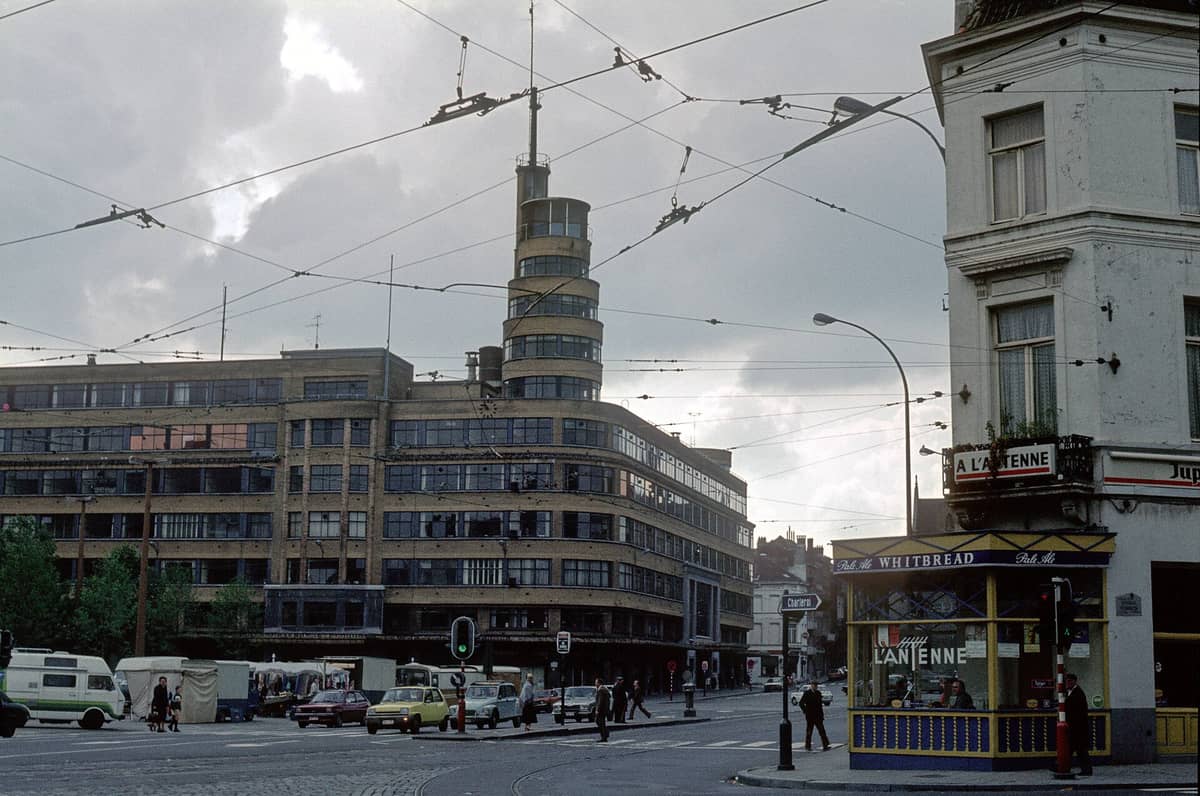
What Is Place Flagey?
Place Eugène Flagey, known simply as Place Flagey in everyday speech, is the central square of the Ixelles municipality in the Brussels-Capital Region. Covering roughly 9,000 m², it sits at the junction of several major tram and bus corridors and serves as an informal meeting point for students, young professionals, families, and the significant international population that gravitates toward Ixelles. The square was formed after the draining of the northern tip of the Grand Étang d'Ixelles around 1860, and it took its current name in 1937, honouring Eugène Flagey, a former Ixelles mayor.
The square is not a manicured tourist set-piece. Its appeal comes from density of use: the terraces fill from mid-morning, the trams slide through without pausing, vendors at the weekend market call across each other, and the Art Deco building at the far end anchors it all with a quiet architectural authority. Unlike the Grand-Place area further north, there are almost no souvenir shops and very few tour groups.
💡 Local tip
Visit on a Saturday or Sunday morning for the weekend market, when the square reaches its most social, photogenic state. Weekday mornings are significantly quieter and better for appreciating the architecture without distraction.
The Flagey Building: Art Deco in an Unlikely Setting
The dominant structure on the square is the Flagey building itself, a Streamline Moderne structure originally built in the 1930s as the home of INR/NIR (Institut National de Radiodiffusion/Nationaal Instituut voor Radio-omroep), Belgium's national broadcaster. With its curved facade, brick-and-concrete horizontal banding, and porthole-style windows, it has been compared in appearance to an ocean liner run aground in the middle of Ixelles. That comparison is not flattery: the building has a purposeful, almost muscular presence that reads as unusually serious for a neighbourhood square.
After decades of partial disuse and a major restoration programme, the building reopened as a multi-hall cultural venue. Today it houses concert halls, a cinema, a café-restaurant, and event spaces. The acoustics of Studio 4, the main concert hall, are frequently cited by classical musicians and audio engineers as among the finest in Belgium. Programming covers classical music, jazz, world music, cinema, and occasional dance productions.
The building is fully accessible to wheelchair users and people with limited mobility, with wheelchair-accessible toilets on every floor, making it one of the more inclusive cultural venues in the city. For a full picture of Brussels's Art Deco and architectural heritage, the Art Nouveau Brussels guide provides useful context on the broader movement that shaped much of Ixelles's built environment during the same era.
Tickets & tours
Hand-picked options from our booking partner. Prices are indicative; availability and final rates are confirmed when you complete your booking.
Origins of Brussels exploration game and tour
From 10 €Instant confirmationFree cancellationSelf-guided discovery walk in Brussels' Place Sainte Catherine
From 26 €Instant confirmationFree cancellationThe best of Brussels walking tour
From 229 €Instant confirmationFree cancellationBrussels audio tour with BELvue Museum admission
From 20 €Instant confirmation
The Weekend Market: What to Expect
The Place Flagey market is busiest on Saturdays and Sundays and draws a noticeably local crowd. Unlike the tourist-heavy organic markets near the Châtelain square a few streets away, this market functions more as a practical weekly shop for residents. Stalls sell bread, cheese, charcuterie, olives, fresh fish, seasonal vegetables, and cut flowers, alongside a handful of secondhand book sellers and small craft producers.
The smell of the market shifts as you move through it: roasting coffee near the entrance, then brined olives and cured meats, then fresh bread. In autumn the flower stalls carry dahlias and chrysanthemums in deep reds and oranges. In summer, the same stalls spill over with sunflowers and herbs. The market typically fills between 9:00 and 11:30, after which vendor stock begins to deplete; arriving close to closing time on a Sunday means picking over what remains.
The terraces of the café-bars immediately surrounding the square serve as the market's informal satellite: people collect their shopping, take a seat, order a coffee or a beer, and settle in for an hour or more. This is not a rushed interaction. Conversations at neighbouring tables run long, and no one seems to treat lingering as unusual.
The Square by Time of Day
Early mornings on weekdays, Place Flagey is almost private. The trams arrive and depart nearly empty, the café chairs are still stacked, and the only movement comes from people heading to work and delivery vans unloading at the back of the Flagey building. The light is best at this hour, especially in spring and autumn when it hits the building's curved brick facade at low angles. If you are photographing the exterior, arrive before 9:00.
By mid-morning the square normalises into a neighbourhood rhythm. The terraces open, students from the nearby Université Libre de Bruxelles appear, and the square becomes background noise rather than foreground attraction. Lunchtime brings a brief surge of office workers and a more transactional energy.
Early evenings, particularly from Thursday to Saturday, are when Place Flagey feels most alive without the market. Terraces fill with people who have clearly come from work, groups meeting before a concert at the Flagey building, and couples settling in for the long end of the day. The tram stop operates as a social pivot point: people meet here, split apart, and reconvene. In summer, this lasts past 10:00 pm.
ℹ️ Good to know
The Flagey ticket office has a seasonal schedule: between July 21 and August 15, it opens only one hour before the first event of the day and closes at the start of the last event, as stated by Flagey’s official ticketing information.
Getting There and Getting Around
Tram 81 stops directly at Place Flagey and connects the square to the city centre, running through Ixelles toward the southern edge of Brussels. Buses 38, 59, 60, and 71 also serve the square, and TEC bus 366 operates regional connections. There is no direct metro stop, but the tram or bus journey from the city centre typically takes around 15 minutes depending on traffic.
On foot, Place Flagey is about a 30–35 minute walk from the Grand-Place, passing through the upper end of the Ixelles commune. This route is worth attempting at least once: it reveals several Art Nouveau residential facades along Chaussée d'Ixelles and its side streets. The Art Nouveau facades of Saint-Gilles offer a comparable architectural streetscape if you want to extend the walk westward after visiting the square.
Cycling to Place Flagey is practical. Brussels's Villo! bike-sharing stations are present nearby, and the streets around Ixelles are manageable by bike outside of peak commuting hours. Driving is not recommended: parking is limited around the square and the surrounding streets have significant tram and bus priority.
What's Around It: Ixelles as Context
Place Flagey sits near the lower end of Ixelles, a municipality that rewards slow exploration. The Étangs d'Ixelles, the remaining ponds of the original Grand Étang, are a 10-minute walk to the south and worth a detour in any season. The Ixelles neighbourhood stretches upward through a network of residential streets, antique dealers on the upper Chaussée de Wavre, and a growing concentration of independent restaurants and wine bars around Place du Châtelain.
The Place du Grand Sablon is roughly 20 minutes away on foot to the northwest and makes a logical pairing if you want to contrast Flagey's neighbourhood scale with a more formal, tourist-facing Brussels square. For museum visits nearby, the Horta Museum in Saint-Gilles is a 15-minute tram or walk from Flagey and provides one of the most significant architectural experiences in the city.
One honest note: visitors expecting the grandeur or historical weight of Brussels's central monuments will find Place Flagey understated by comparison. It is a working neighbourhood square with a significant building at one end. Its value is in atmosphere and everyday life, not formal spectacle. Travellers on a tight itinerary focused solely on landmark sights may reasonably skip it. Those who want to understand how the city actually operates at street level will find it genuinely useful.
Photography and Practical Notes
The Flagey building photographs best in soft, diffused light: overcast mornings give the brick facade an even tone without harsh shadows. Direct afternoon sun in summer creates strong contrast on the horizontal bands of the building that works well for architectural detail shots. The tram tracks and overhead cables are very much part of the foreground in any wide shot from the square; they are an honest part of the scene rather than an obstacle.
On market days, a wide-angle lens or a phone camera works well for candid street photography, though the crowds around the stalls are dense enough that positioning requires patience. Early in the market, around 9:00 to 9:30, vendors are still arranging stalls and light is at its most workable.
⚠️ What to skip
Brussels weather can shift quickly. The city's oceanic climate means rain is possible in any month, with roughly 800 mm annually and no genuinely dry season. Carry a compact umbrella regardless of the forecast, especially in autumn and winter when market days can become wet and cold quickly.
Insider Tips
- The café-terrace directly facing the Flagey building's main entrance is the most atmospheric spot for a drink on a warm evening, but it fills fast after 18:00 on weekends. Arrive by 17:30 to secure an outside table with a clear sightline to the facade.
- The Flagey building's ground-floor café-restaurant is open to non-ticket-holders during daytime and is one of the more relaxed places in Ixelles for a coffee or a light lunch without tourist pricing.
- If you are visiting on a Sunday, combine Place Flagey's morning market with the flea market at Place du Jeu de Balle in the Marolles, about 35–40 minutes on foot to the northwest. Both markets are at their best before noon, and the contrast between them shows two very different registers of Brussels street life.
- The tram stop at Flagey is a practical orientation point for exploring Ixelles: all the key streets radiate outward from the square, making it easier to navigate back here than to try to memorise the surrounding street grid.
- Attend a weekday concert or film screening at the Flagey building if your schedule allows. Ticket prices are generally accessible, and the restored interior is worth seeing in its proper context rather than just from the square outside.
Who Is Place Flagey For?
- Travellers who want to see Brussels beyond the central tourist circuit
- Architecture enthusiasts interested in Streamline Moderne and Art Deco
- Weekend visitors who enjoy food and farmers' markets in a local setting
- Those who appreciate café culture and want a long, unhurried morning
- Music and arts audience looking for quality programming outside the main concert venues
Nearby Attractions
Other things to see while in Ixelles:
- Bois de la Cambre
Bois de la Cambre (Ter Kamerenbos in Dutch) is a sprawling public park at the southern end of Avenue Louise in Ixelles, Brussels. Free to enter year-round, it draws joggers, families, and picnickers on weekday mornings and transforms into a lively outdoor gathering place on car-free weekends. Its centrepiece lake, island restaurant, and old-growth tree canopy make it the most atmospheric green space in the Belgian capital.
- Hôtel Solvay
Built for industrialist Armand Solvay and designed by Victor Horta between 1894 and 1898, Hôtel Solvay is one of Brussels' four UNESCO-listed Horta townhouses. Located on Avenue Louise in Ixelles, it opens to individual visitors on limited days each week, offering a rare look at an Art Nouveau interior preserved almost entirely in its original state.