Bois de la Cambre: Brussels's Favourite Urban Park
Bois de la Cambre (Ter Kamerenbos in Dutch) is a sprawling public park at the southern end of Avenue Louise in Ixelles, Brussels. Free to enter year-round, it draws joggers, families, and picnickers on weekday mornings and transforms into a lively outdoor gathering place on car-free weekends. Its centrepiece lake, island restaurant, and old-growth tree canopy make it the most atmospheric green space in the Belgian capital.
Quick Facts
- Location
- Bois de la Cambre, 1050 Ixelles, Brussels, Belgium
- Getting There
- Tram 23, 90, 93, 94 or Bus 38, 41, 60 to park entrances; Bus 41 near the main entrance
- Time Needed
- 1.5 to 3 hours for a relaxed visit; half a day if dining at Chalet Robinson
- Cost
- Free entry. Chalet Robinson ferry approximately €1 round-trip (verify on-site). Cafes and restaurants charge separately.
- Best for
- Joggers, families with children, picnics, weekend cycling, autumn foliage walks
- Official website
- www.boisdelacambre.brussels
What Is Bois de la Cambre?
Bois de la Cambre is an urban public park at the southern tip of Avenue Louise, straddling the boundary between the municipality of Ixelles and the outer edge of Brussels city. Its official Dutch name, Ter Kamerenbos, derives from the same source as its French one: the historic Abbey of La Cambre, whose grounds once extended into this forested land. Today the park functions as the lungs of the city's southern corridor, a place where dense residential streets give way almost suddenly to old-growth trees, gravel paths, and the quiet lapping of a central lake.
The park occupies a significant footprint for an inner-city green space, large enough that once you move away from the main perimeter roads, the city recedes almost entirely. The canopy closes overhead, the traffic noise drops, and the air carries the particular damp earthiness of mature woodland. It is not a manicured formal garden in the Brussels tradition. It is wilder, more English in its landscape design sensibility, with winding paths, open meadows, and unexpected clearings.
ℹ️ Good to know
Opening hours: 1 April to 30 September, 06:00 to 22:00. 1 October to 31 March, 07:00 to 21:00. The park is accessible to the public except during periods of high wind when tree fall risk is assessed. Entry is free. Entry is free.
The Park at Different Times of Day
Early morning brings out runners and dog walkers before the rest of Brussels has had its coffee. From around 7am on weekdays, the main paths are populated by a quiet but steady flow of joggers doing circuits around the lake. The light at this hour filters through the canopy at low angles, and on autumn mornings a thin ground mist sits over the grass. This is genuinely the best time to appreciate the scale and atmosphere of the park without distraction.
Midday on a clear weekday draws office workers from the nearby Ixelles and Avenue Louise corridor who eat lunch on the grass or the lakeside benches. The atmosphere is relaxed but never entirely quiet. Weekend afternoons are a different proposition: the park fills with families, cyclists, and groups spreading out across every available meadow. The paths around the lake become a slow-moving parade of strollers, children on balance bikes, and elderly couples feeding the ducks.
On weekends, the road axes running through the park are closed to cars from Saturday morning to Sunday evening. This transforms the atmosphere dramatically. What functions as a transit route during the week becomes an impromptu cycling and skating circuit, with children taking up the full width of the tarmac and cyclists moving at leisure rather than alongside traffic. If you are visiting for the first time, a weekend morning visit gives the fullest sense of how much Bruxellois genuinely use this place.
💡 Local tip
Arrive on a Saturday or Sunday morning for the car-free road experience. The eastern road loop is popular with inline skaters and families; the lakeside is calmer and better for photography before 10am.
Tickets & tours
Hand-picked options from our booking partner. Prices are indicative; availability and final rates are confirmed when you complete your booking.
Ghent tour from Brussels
From 43 €Instant confirmationFree cancellationTablet Workshop at Choco-Story Brussels
From 45 €Instant confirmationShared tour of Delft and the Keukenhof Estate from Brussels
From 86 €Instant confirmationFree cancellationOrigins of Brussels exploration game and tour
From 10 €Instant confirmationFree cancellation
The Lake and Chalet Robinson
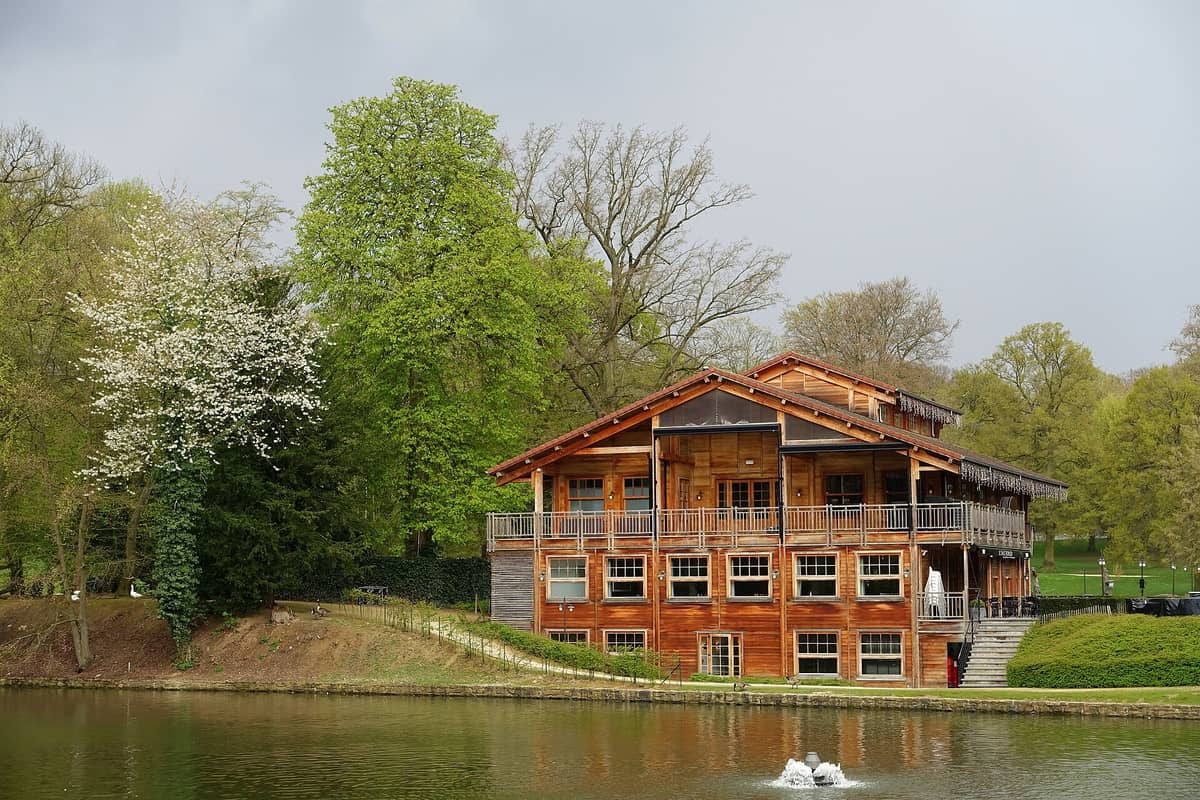
The park's central feature is its artificial lake, which occupies a substantial portion of the interior. A small island sits in the middle of the water, and reaching it requires crossing by ferry boat, a short crossing operated for a nominal fare of approximately €1 round-trip (verify current pricing at the landing stage). The island is home to Chalet Robinson, a restaurant and brasserie that has existed on this spot in various forms for well over a century.
The ferry crossing itself is part of the appeal, especially for visitors with children. The boats are simple and slow, and the approach to the island gives an unusual perspective back across the water to the surrounding woodland. Chalet Robinson operates a full restaurant service as well as a terrace bar, making it a practical lunch destination if you are spending a longer stretch of time in the park. Tables fill quickly on sunny weekend afternoons, so arriving by midday rather than later is advisable.
The lake also supports rowing and pedalos, available for hire seasonally. Check current availability and pricing at the lakeside kiosks, as these services operate independently and schedules vary. Swans and mallards are permanent residents and entirely accustomed to visitors; the western shore of the lake is the quieter side, less trafficked and better for sitting without distraction.
History and Cultural Context
The park owes its name to the Abbey of La Cambre, a Cistercian abbey founded in the 13th century whose grounds once extended southward into what is now forested parkland. The abbey itself still stands and is worth a short detour: it sits just to the northeast of the park's main entrance. The connection between the two sites is rarely highlighted in standard tourist itineraries, but walking from the abbey directly into the park gives a satisfying sense of the landscape's historical continuity.
Bois de la Cambre became a formal public park during the 19th century urban expansion of Brussels, when Avenue Louise was laid out as a prestige boulevard designed to connect the city centre directly to the Forêt de Soignes, the ancient beech forest that begins immediately south of the park. Bois de la Cambre functions as a transition zone between the urban fabric and this larger forest. Visitors who want to extend their walk can pass through the park's southern edge directly into the Forêt de Soignes, an entirely different experience of woodland that feels remote despite being within the city's administrative limits.
The park sits within the broader Ixelles municipality, one of Brussels's most residentially mixed and internationally populated communes. The surrounding streets, with their Art Nouveau facades and independent restaurants, make the park a natural endpoint or starting point for a half-day walk through the neighbourhood's residential architecture. The contrast between the ornate bourgeois streetscape of Avenue Louise and the rougher textures of the park interior is part of what makes the area interesting.
Practical Walkthrough: Navigating the Park
The main entrance from the city is at the southern end of Avenue Louise, approached via Avenue Diane. From here, the central lake is visible within a few minutes of walking. The most direct circuit around the lake takes roughly 30 to 40 minutes at a moderate pace. Most visitors complete this loop and then either leave, sit by the water, or take the ferry to Chalet Robinson.
For a longer walk, the interior paths branch away from the lake into thicker woodland where the crowds thin considerably. The terrain is gently undulating, typical of Brussels's topography, and the paths are a mixture of compacted gravel and earthen trails. Proper walking shoes or trainers are recommended in wet conditions; after rain, the inner woodland paths can be muddy and uneven. Flat-soled city shoes manage the main perimeter and lakeside paths without difficulty.
The park is confirmed as accessible for people with reduced mobility, with main paths and the lakeside perimeter navigable in a wheelchair or with a pushchair. The interior woodland paths are less suitable due to uneven terrain and tree roots. Toilets are available within the park grounds near the main facilities; check signage on arrival for current locations.
⚠️ What to skip
The park closes during periods of high wind due to tree fall risk. This is enforced without advance notice, so if a storm is forecast, check the City of Brussels traffic and park updates before making a dedicated trip.
Getting There
The park is well served by public transport operated by STIB/MIVB. Tram lines 23, 90, 93, and 94 all stop near the park, as do bus lines 38, 41, and 60. Bus 41 to the 'Gendarmes' stop places you close to the main entrance. From central Brussels, travelling down Avenue Louise by tram and walking the final stretch is straightforward and gives a good sense of how the avenue leads visually and geographically toward the park. For full transport planning, the getting around Brussels guide covers STIB/MIVB routes and ticketing in detail.
Cycling to the park is practical, particularly on weekends when the internal roads are car-free. Brussels's shared bike network serves Avenue Louise, and locking facilities are available near the entrance. Driving to the park and parking nearby is possible on weekdays, but parking options nearby are limited. On weekends, the road closures within the park itself make driving into the interior impossible.
Weather, Seasons, and When to Visit
Brussels has an oceanic climate with rain distributed fairly evenly across the year, so no single season is guaranteed to be dry. That said, the park changes character dramatically across the calendar. Late spring (May and early June) brings the canopy into full leaf and the wildflower margins into bloom; temperatures typically reach 18 to 20°C and the days are long. This is the most photogenic period. Autumn (October especially) produces the best foliage colour, with the beech and oak trees turning deep amber and rust. For more on timing your visit to the city, the best time to visit Brussels guide provides climate breakdowns by month.
Winter visits are quieter and colder, with January highs typically around 5°C, but the bare canopy opens up long sightlines through the woodland that are invisible in summer. Serious rain is always possible; a compact waterproof jacket is worth carrying on any visit regardless of the forecast. In summer, the shade provided by the mature canopy is genuinely welcome on warm afternoons, making the park more comfortable than the city's open squares and plazas.
Photography Notes
The park offers varied photographic subjects but requires patience with light. The canopy filters direct sunlight aggressively, meaning midday light produces harsh shadows on the paths. Early morning and late afternoon give the softest conditions. The lake reflects well in still conditions, typically in the early morning before wind picks up. The ferry crossing to Chalet Robinson offers a brief window for wide shots back across the water toward the tree line.
On weekday mornings, you can photograph the main paths almost empty. On weekend afternoons, the crowd itself becomes part of the picture; the car-free roads with cyclists and families moving through dappled light have a documentary appeal. Drone use in Brussels public parks is subject to Belgian civil aviation rules and local restrictions; check current regulations before attempting aerial photography.
Insider Tips
- The quietest lakeside spot is on the western shore, away from the main ferry landing. Walk past the rowing hire area and follow the path around the back of the lake to find benches that are rarely occupied even on busy afternoons.
- The Abbey of La Cambre is a five-minute walk from the main park entrance and is free to visit. Its formal gardens and Gothic church are rarely crowded and make a logical first stop before entering the park.
- On weekends, the internal road loop is car-free from Saturday morning. If you are cycling, this is the time to go: the route is wide, flat, and safe for children. Bring your own bike or use the Brussels shared cycling network from Avenue Louise.
- Bois de la Cambre connects directly to the Forêt de Soignes at its southern edge. If you walk through the park and continue south, the urban environment disappears and you enter ancient beech woodland within minutes. There are no gates or entry fees for this continuation.
- For the least crowded restaurant experience at Chalet Robinson, visit on a weekday lunch rather than a weekend afternoon. The ferry still operates but the terrace fills slowly, and the island is at its most atmospheric with fewer people.
Who Is Bois de la Cambre For?
- Joggers and cyclists looking for a car-free weekend circuit within the city
- Families with young children who want ferry boats, ducks, and open grass without leaving Brussels
- Visitors combining a walk with a meal at an island restaurant in a green setting
- Autumn walkers chasing foliage colour in October
- Anyone wanting to connect into the Forêt de Soignes for a longer woodland walk
Nearby Attractions
Other things to see while in Ixelles:
- Hôtel Solvay
Built for industrialist Armand Solvay and designed by Victor Horta between 1894 and 1898, Hôtel Solvay is one of Brussels' four UNESCO-listed Horta townhouses. Located on Avenue Louise in Ixelles, it opens to individual visitors on limited days each week, offering a rare look at an Art Nouveau interior preserved almost entirely in its original state.
- Place Flagey
Place Eugène Flagey is the social and architectural anchor of the Ixelles municipality, southeast of central Brussels. A 9,000 m² square built over a drained 19th-century pond, it combines a celebrated Art Deco radio building, a twice-weekly market, and some of the city's most rewarding café terraces into one address that locals rarely leave willingly.