Porte de Hal (Halle Gate): Brussels' Last Standing Medieval Gate
Porte de Hal is the sole surviving gate of Brussels' second medieval city walls, a 14th-century tower that now houses a museum dedicated to the city's medieval history. Located on the edge of the Marolles neighborhood, it offers panoramic rooftop views and a collection that rewards curious visitors willing to climb its worn stone stairs.
Quick Facts
- Location
- Boulevard du Midi 150, 1000 Brussels (Marolles neighborhood)
- Getting There
- Metro lines 2, 3, 4, 6 – stop 'Porte de Hal'; Tram 4; Brussels-Midi train station nearby
- Time Needed
- 1 to 1.5 hours
- Cost
- Adults €7, Seniors (65+) €5, Under-18 free; free with Brussels Card
- Best for
- History enthusiasts, architecture lovers, rooftop views without the crowds
- Official website
- www.hallegatemuseum.be/en
What Is Porte de Hal, and Why Does It Matter?
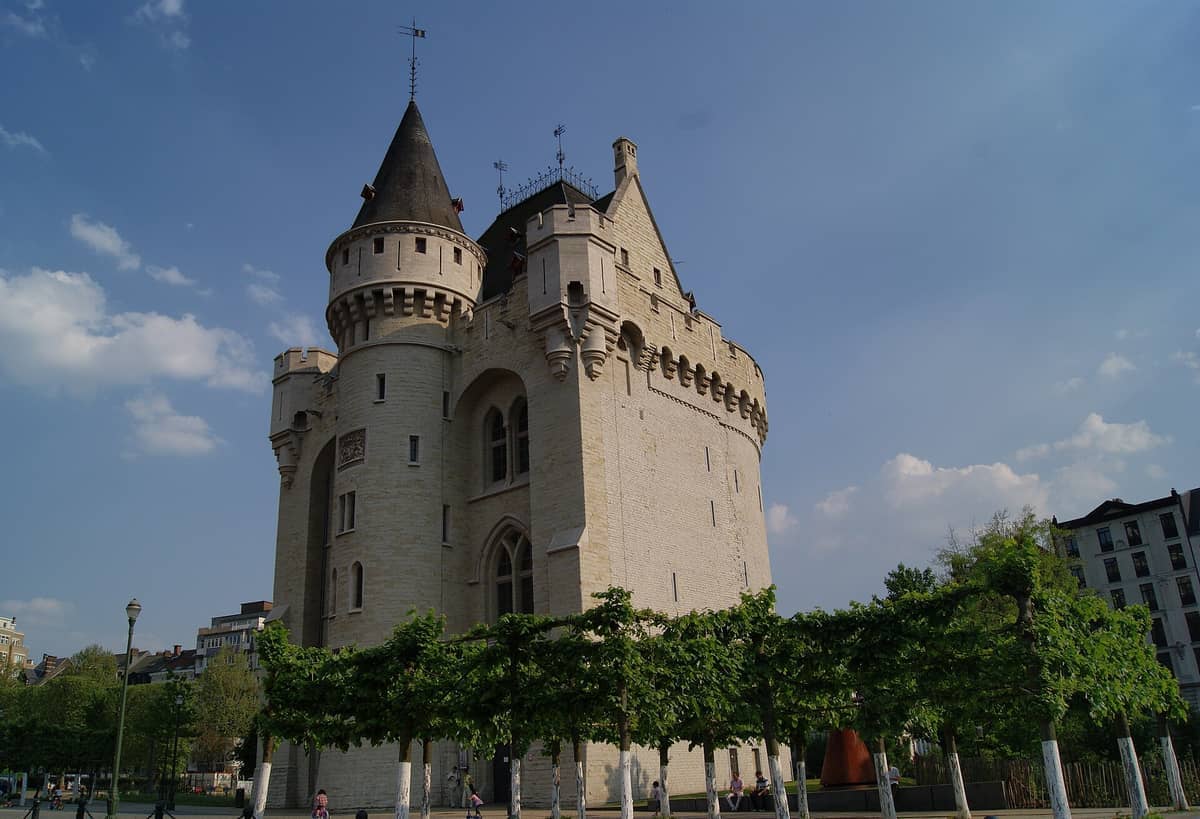
Of the seven gates that once punctuated Brussels' second ring of medieval city walls, only Porte de Hal still stands. The other six were demolished in the 19th century as the city expanded and modernized; this one survived, largely because it was repurposed as a prison and later as a museum rather than being pulled down for a boulevard. That accident of history makes the Halle Gate — to use its English name — one of the most significant medieval structures remaining in the Belgian capital.
The gate was originally completed in the late 14th century as part of a fortification system that defined Brussels' urban limits for centuries. The second city walls enclosed a far larger area than the first and reflected the ambitions of a growing commercial city. Today, the tower sits on Boulevard du Midi, a busy inner-ring road, looking slightly incongruous among tram tracks and apartment facades — which is precisely what makes it striking.
The museum inside is part of the Royal Museums of Art and History network. It focuses on medieval Brussels: the walls themselves, daily life inside them, and the city's evolution from a fortified trading town to a European capital. The exhibition is modest in scale but considered in its curation, and the building itself is as much the attraction as anything inside it.
⚠️ What to skip
Porte de Hal is closed every Friday. It also closes on 1 January, 1 May, 1 November, 11 November, and 25 December. In summer 2025, the museum was closed on alternate weekends in July and August due to restoration work. On 24 and 31 December, the museum closes at 15:00 instead of 17:00. Check the official site before visiting: hallegatemuseum.be/en
The Visit: Floor by Floor
You enter through a low doorway at street level, immediately inside what was once the gate passage itself. The stone walls are thick enough to muffle the traffic outside almost entirely. There's a brief orientation at ground level before the spiral staircase begins — a narrow, worn stone affair that winds upward through several exhibition floors.
Each level holds different elements of the permanent collection: medieval weapons and armor, artifacts related to the city's fortifications, scale models of Brussels at different historical periods, and explanatory panels on the social life of the walled city. The audioguide, included in the ticket price, adds useful context without being overwhelming. Allow around 45 minutes for the interior floors if you read the panels properly.
The top of the tower opens onto a panoramic walkway. The view takes in the inner ring road below, the Marolles neighborhood to the southeast, and on clear days, extends toward the Basilica of the Sacred Heart on the horizon to the northwest. The rooftop is fitted with augmented reality telescopes that overlay historical images of the city's former walls onto the present-day skyline. It's a genuinely clever interpretive tool. The walkway is accessible only by stairs, so visitors with limited mobility should be aware they will not be able to reach it; a lift serves the interior exhibition floors.
💡 Local tip
The augmented reality telescopes on the rooftop are a highlight — they work best in good weather when visibility is clear. On overcast days the effect is less dramatic, though still functional.
Tickets & tours
Hand-picked options from our booking partner. Prices are indicative; availability and final rates are confirmed when you complete your booking.
Escape Tour self-guided, interactive city challenge in Brussels
From 30 €Instant confirmationEscape Tour self-guided, interactive city challenge in Brussels
From 30 €Instant confirmationBrussels' history audio tour with Halle Gate admission ticket
From 17 €Instant confirmationDiscover the history and mystery of Bruges
From 0 €Instant confirmation
The Building Itself: Architecture Worth Examining
The tower is built from local sandstone and brick, with a roughly cylindrical form typical of Brabantine Gothic military architecture. The 19th century left its mark: when the gate was converted and later restored under the supervision of architect Henri Beyaert between 1868 and 1871, a neo-Gothic crown was added to the top. This addition is historically contentious — it's not original — but it gives the tower its distinctive silhouette and is now inseparable from its identity.
From outside, the gate rewards a slow walk around its full perimeter. The base shows the oldest stonework, pocked and weathered, with the proportions of something built to withstand siege. Higher up, the smoother restoration work and the ornamental parapet tell the story of Brussels' 19th-century passion for medievalism. Spend five minutes outside before you enter — it orients you to what you're actually looking at.
Location and the Marolles Context
Porte de Hal sits at the northern edge of the Marolles, the old working-class neighborhood that runs south from the gate toward the Palais de Justice. The Marolles has its own distinct character: a mix of antique dealers, secondhand shops, social housing, and an evolving restaurant scene. Visiting Porte de Hal in isolation misses an opportunity. Walk south from the gate into the neighborhood and you'll find the Place du Jeu de Balle flea market, one of Brussels' most authentic daily markets, about ten minutes on foot.
The boulevard itself is not particularly scenic — it's a busy arterial road — but the gate's position at this junction was deliberate. This was one of the main southern entry points into medieval Brussels, and traffic still converges here. Metro, tram, and several bus lines all stop at 'Porte de Hal', making it one of the better-served spots in the inner city for onward connections.
Time of Day and Weather: What Changes
The museum opens at 09:30 on weekdays (Monday to Thursday) and 10:00 on weekends and public holidays; it closes at 17:00. Mornings tend to be quieter inside. By early afternoon, particularly on weekends, small school groups and tour parties can fill the spiral staircase and make passing awkward. If you're visiting with children or anyone with mobility considerations, the morning slot is noticeably more comfortable.
On a grey Brussels winter day — which is to say, on many days between November and March — the rooftop is cold and the view is flat. The interior floors, however, are always warm and well-lit regardless of conditions. Brussels' climate means rain is possible any month; the interior is entirely worthwhile on a wet day, making this one of the better options in any Brussels rainy day itinerary.
Honest Assessment: Is It Worth Your Time?
Porte de Hal is not a blockbuster attraction and it shouldn't be treated as one. The collection is small, the building is the main event, and visitors expecting the scale of, say, the Royal Museums of Fine Arts will leave underwhelmed. At €7 for adults, the price is fair rather than exceptional, and the rooftop alone is worth it on the right day.
For travelers with a genuine interest in medieval urban history, military architecture, or the layers of Brussels that predate the Grand-Place era, this is a rewarding stop. It pairs well with a walk through the Marolles and fits naturally into a broader day that includes the Brussels Town Hall or the Coudenberg Palace — both of which dig into the same historical period from different angles.
Travelers on a tight two-day schedule who are prioritizing the Grand-Place, Atomium, and major museums can reasonably skip this. It's not the kind of attraction that defines a Brussels trip, but for anyone with an extra morning and an interest in what the city looked like before the 19th century remade it, Porte de Hal delivers something few other Brussels attractions can: a physical sense of the medieval city's scale and defensiveness.
ℹ️ Good to know
Photography policy: the interior is generally photographable for personal use. Flash photography may be restricted near older artifacts. Tripods are not generally permitted in the stairwells, which are narrow. The rooftop offers the best natural light for exterior shots of the tower itself in the late afternoon.
Getting There and Practical Notes
The gate is directly at the 'Porte de Hal' stop served by metro lines 2, 3, 4, and 6, as well as tram line 4. Several bus lines also stop here: 27, 48, 134, 136, 137, 365, and W. Brussels-Midi station, one of the city's main rail hubs with Eurostar connections, is roughly a ten-minute walk north along the boulevard. If you're arriving in Brussels by international train, Porte de Hal is actually one of the more convenient major sights to visit without going back to the center first.
Tickets can be purchased at the museum desk or through links on the official site. The Brussels Card covers entry, which makes sense if you're visiting multiple museums — check the best museums in Brussels guide to see whether the card pays off for your itinerary. Under-18s enter free regardless.
A lift serves the interior exhibition floors, making the permanent collection accessible to visitors with reduced mobility. The rooftop panoramic walkway is stairs-only and cannot be reached by wheelchair or with a pushchair. The entrance on Boulevard du Midi is at street level with no steps.
Insider Tips
- The rooftop augmented reality telescopes overlay historical maps of Brussels' former city walls onto the present skyline. Take your time with them — they require a moment to calibrate and the payoff is a genuinely useful mental picture of how the medieval city was laid out.
- The museum is almost always quieter than the Grand-Place area, even on busy Saturday afternoons. If you're suffering from tourist fatigue mid-trip, this is a calm, uncrowded space to regroup.
- Check the official site for temporary exhibitions before visiting. The permanent collection is modest in size, but temporary shows occasionally expand the experience significantly and may affect your time estimate.
- Combine the visit with the Place du Jeu de Balle flea market in the Marolles, which runs every morning. Go to the market first (it winds down by midday), then head up to Porte de Hal for the late morning opening slot.
- On 24 and 31 December, the galleries close early at around 15:00. If you're visiting Brussels over the Christmas period, plan accordingly and verify the exact closing time on the official site.
Who Is Porte de Hal (Halle Gate) For?
- Medieval history and military architecture enthusiasts who want more than a facade
- Travelers combining a Marolles neighborhood walk with a cultural stop
- Visitors looking for a quieter, less-crowded museum experience away from the Grand-Place area
- Families with under-18s, who enter free and can engage with the interactive rooftop telescopes
- Arrivals via Brussels-Midi looking for a nearby attraction before heading to the city center
Nearby Attractions
Other things to see while in Marolles:
- Place du Jeu de Balle Flea Market
The Marché aux Puces du Jeu de Balle is Brussels's most enduring open-air flea market, held every single day of the year on a cobbled square in the working-class Marolles district. With up to 450 stallholders spreading everything from chipped ceramics to genuine Art Deco silverware, it rewards early risers and casual browsers alike — and entry is always free.