El Cabanyal
El Cabanyal is Valencia's most architecturally distinctive coastal neighborhood, a former fishing village with a grid of tiled Modernista façades, fresh seafood restaurants, and direct access to the Mediterranean. It has a complicated recent history of near-demolition and gradual regeneration, giving it a character unlike anywhere else in the city.
Located in Valencia, Spain
Overview
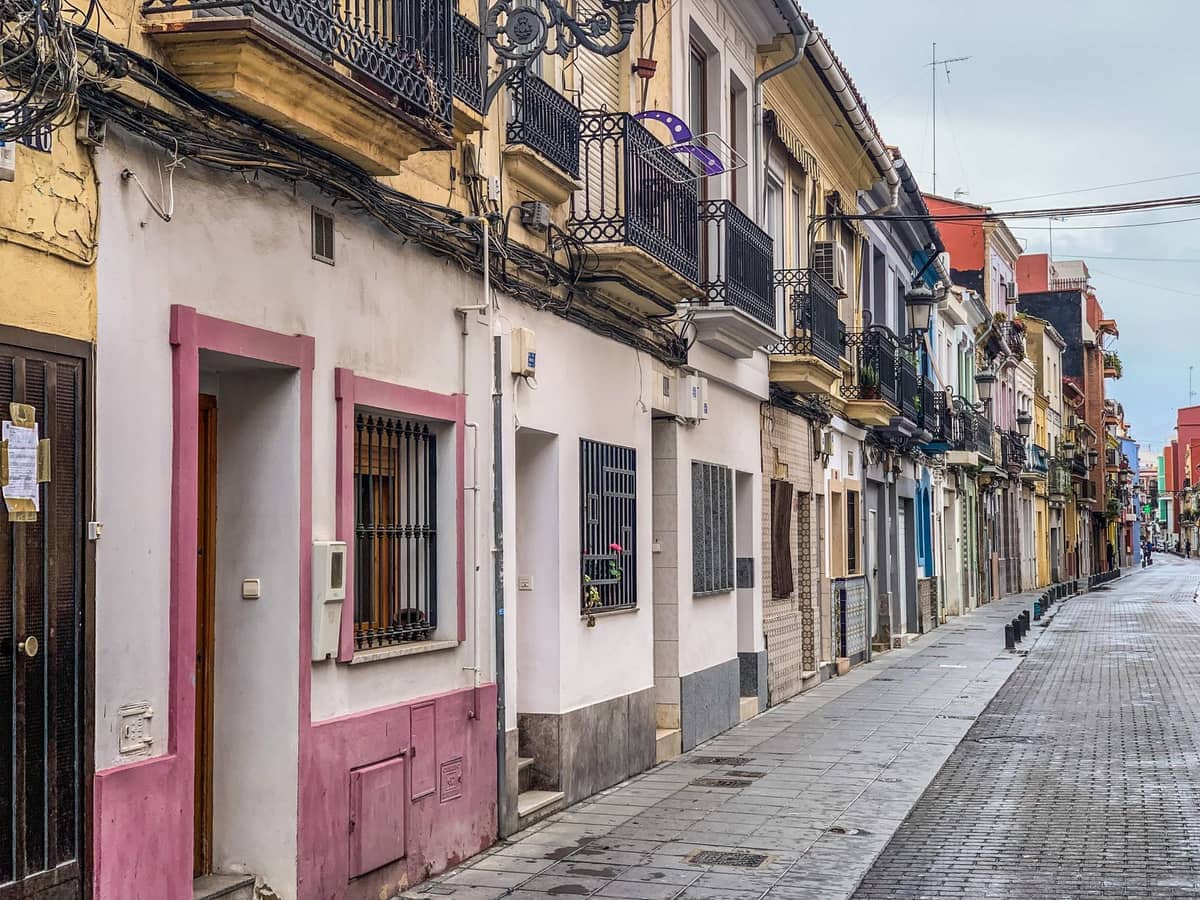
El Cabanyal is the kind of neighborhood that stops you mid-step: a former fishing village pressed up against the Mediterranean, its narrow streets lined with colorful tiled façades and the faint smell of salt air. It has survived decades of neglect and a controversial demolition plan, emerging as one of Valencia's most compelling places to explore, raw and refined at the same time.
Orientation
El Cabanyal sits roughly 3 kilometers east of Valencia's historic center, forming part of the Poblats Marítims district alongside its neighbors El Canyamelar to the south and La Malva-rosa to the north. The official name of the combined barrio is El Cabanyal–El Canyamelar, though most people simply say El Cabanyal. The neighborhood runs perpendicular to the sea, its street grid oriented east-west so that nearly every street leads, eventually, to the beach.
The boundaries are roughly defined by Carrer de la Serrería and Carrer Lluís Peixó to the west, the Mediterranean coastline and Playa de las Arenas to the east, Avenida de los Naranjos toward the north, and Carrer Francesc Cubells and the Plaça de la Setmana Santa Marinera to the south, where the neighborhood blends into El Grau and the commercial port area. The western edge, near the Marítim-Serrería metro station, is where the neighborhood begins to feel urban and connected; the eastern edge, closer to the sea, is quieter and more residential.
Understanding El Cabanyal's place in the wider city requires knowing what separates it from the center: there is no continuous urban fabric linking it to Barrio del Carmen or Valencia's historic core. The Turia park and several busy arterial roads interrupt the walk, which takes about 35–45 minutes on foot. This geographic separation is part of why El Cabanyal retained its own identity long after being formally absorbed into the municipality in 1897.
Character & Atmosphere
El Cabanyal is a neighborhood of striking visual contrasts. On Carrer de la Reina, Carrer Doctor Lluch, and Carrer José Benlliure, the facades of early-20th-century houses are covered in geometric ceramic tiles, some perfectly preserved, others cracked and faded from decades of exposure to sea air. These Modernista and Art Nouveau-influenced buildings give the streets a festive, almost theatrical quality even on overcast days. Then, on the very next block, you might pass a shuttered shopfront or an overgrown lot, reminders that the regeneration here is still a work in progress.
In the mornings, especially on weekdays, El Cabanyal belongs to its residents. Older men carry baguettes from the bakery. Café owners stack chairs on the pavement. The light at this hour comes in low from the east, cutting across the tiled facades in warm, directional beams that make the tilework almost glow. By mid-morning, the area around the local market fills with the voices of vendors and the smell of fresh fish. This is still a working neighborhood where people actually live, shop, and argue about parking, and that everyday texture is part of what makes it so worth visiting.
By afternoon, especially on weekends and throughout the summer, the crowds shift toward the seafront. The interior streets quiet down. Shutters close against the heat. The long, straight streets that once led fishermen directly to their boats now channel cyclists and pedestrians to the beach, and the rhythm slows to something closer to a resort town. Come evening, the restaurants fill up, the bars open their terraces, and the neighborhood takes on a sociable, neighborhood-party energy that goes well past midnight in summer.
It is worth being honest about the atmosphere in parts of El Cabanyal. Several streets away from the main arteries, particularly toward the western edge near Carrer de la Serrería, the neighborhood still shows the effects of decades of disinvestment. Some blocks feel genuinely run-down, and foot traffic drops noticeably after dark on the quieter side streets. The neighborhood's recovery is real but uneven, and this coexistence of renovation and decay is part of what defines it.
ℹ️ Good to know
El Cabanyal was placed on Europa Nostra's list of Europe's 7 Most Endangered Heritage Sites due to a city plan that would have demolished a wide corridor of historic buildings to extend Avenida de Blasco Ibáñez to the sea. After years of campaigning by residents and international heritage organizations, the demolition plan was officially cancelled. The neighborhood is now undergoing a more sympathetic process of regeneration.
What to See & Do
The primary draw of El Cabanyal is the architecture itself. The streets around Carrer Escalante, Carrer Doctor Lluch, and the Progrés–Empar Guillem area contain some of the finest examples of vernacular Modernista architecture in Valencia, distinct from the grander civic buildings in the city center. These are working-class homes built in the late 19th and early 20th centuries, their facades decorated with ceramic tiles in patterns ranging from simple geometric borders to complex floral arrangements. Walking these streets without a fixed itinerary, looking up at the facades, is a genuinely absorbing way to spend two hours.
The beach is the obvious other anchor. Playa de las Arenas borders El Cabanyal's eastern edge, and the wider stretch of Playa de la Malvarrosa extends northward. Both are wide, sandy, and accessible, with good facilities in the summer months. The seafront promenade, Passeig Marítim, runs the length of the beachfront and is one of the better places in Valencia for an early evening walk as the light fades over the water.
The former Lonja de Pescadores, the old fish auction hall near the port end of the neighborhood, is worth seeking out for its architectural character even if it is not always open to visitors. The nearby Mercado del Grao gives a glimpse into the working life of the port area. The neighborhood also hosts a distinct local festival, the Setmana Santa Marinera, a Holy Week procession with strong maritime traditions that is among the more authentic festive experiences in Valencia.
- Walk Carrer de la Reina and Carrer José Benlliure for the densest concentration of tiled facades
- Explore the beach promenade at Passeig Marítim, especially in the early evening
- Visit the local market in the morning for fresh produce and fish
- Look for street art and murals, which have multiplied across the neighborhood in recent years as part of community regeneration projects
- Attend Setmana Santa Marinera in Holy Week if your visit coincides with it
💡 Local tip
The best light for photographing the tiled facades falls in the morning, when the low eastern sun hits the street-facing walls directly. By afternoon, most of the Cabanyal's east-west streets are in shadow.
Eating & Drinking
El Cabanyal has a well-earned reputation for seafood, and with good reason. The proximity to the port and the neighborhood's deep fishing roots mean that fresh fish and shellfish have always been central to local cooking. The restaurants along and just behind the Passeig Marítim serve rice dishes, grilled fish, and shellfish in a straightforward, unsentimental style. These are not the fanciest places in Valencia, but many are excellent, and the paella and arroz a banda served in the seaside restaurants here are among the most credible in the city.
For a broader sense of what Valencia eats, the seafront area around El Cabanyal is one of the best places to start. The combination of the beach setting, the working-port atmosphere, and the straightforward cooking gives meals here a context that the more touristic rice restaurants elsewhere in the city sometimes lack. If you want to understand why rice dishes matter so much to Valencia, reading our guide to the best paella in Valencia will help calibrate expectations before you choose a table.
Beyond seafood, the neighborhood's regeneration has brought a wave of independent cafés, natural wine bars, and small-plate restaurants to the inner streets. Carrer Doctor Lluch and the blocks around it have attracted a younger crowd and a more creative food scene in recent years. Prices in El Cabanyal tend to run lower than equivalent quality in the city center or in Ruzafa, partly because the neighborhood is still off the main tourist circuit for many visitors.
The morning bar culture is intact here. Locals take their coffee standing at zinc counters, and a proper bocadillo or pastry with a strong café con leche is easy to find for well under two euros in the neighborhood's traditional bars. The contrast between these old-school morning spots and the artisanal coffee shops that have opened nearby is itself a snapshot of how El Cabanyal is changing.
- Seafood rice dishes (paella, arroz a banda, arroz del senyoret) are the signature order at seafront restaurants
- Fresh grilled fish and shellfish are widely available and competitively priced
- Independent wine bars and tapas spots on Carrer Doctor Lluch and surrounding streets
- Traditional morning bars for coffee and bocadillos at local prices
- Horchata and fartons are easy to find, especially toward the summer beach season
💡 Local tip
Lunch is the main meal in El Cabanyal's seafood restaurants, and a weekday lunch often gets you the same food for significantly less than a weekend dinner at the same table. The menú del día at local spots typically includes a starter, main, bread, drink, and dessert.
Getting There & Around
El Cabanyal is easily reached from the city center by tram or bus. The most convenient public transport option is the tram, with lines such as Line 6 and Line 8 running from Pont de Fusta, near the Turia park in the city center, eastward through the Poblats Marítims and into the Cabanyal area. The Marítim-Serrería stop sits at the western edge of El Cabanyal and is an important transit access point for the neighborhood. From here, the beach is roughly a 10-15 minute walk east along any of the main streets.
City bus lines operated by EMT Valencia also connect central Valencia with El Cabanyal and the beachfront, running along routes that cover much of the seafront area. For visitors staying in the city center or near the Estació del Nord, either the tram from Pont de Fusta or a bus from the city center provides a straightforward, inexpensive connection. The full tram journey from Pont de Fusta to the Marítim-Serrería stop takes approximately 15-20 minutes depending on traffic and frequency.
Within El Cabanyal itself, walking is both practical and preferable. The neighborhood is flat and compact, and the grid layout means orientation is straightforward: streets running east-west lead toward the sea, streets running north-south run parallel to the coast. A bicycle is an excellent option if you plan to continue along the seafront toward the Malva-rosa, and bike lanes connect El Cabanyal to the wider city network.
Cycling the old Turia riverbed from the city center to the sea is one of the more enjoyable ways to arrive. The Jardí del Túria runs almost continuously from the Bioparc in the west to the maritime neighborhoods in the east, and the final stretch deposits you near the Marítim-Serrería area with minimal traffic interaction. See our guide on cycling the Turia Garden for the full route details.
⚠️ What to skip
Parking in El Cabanyal on summer weekends and public holidays is extremely difficult, and the narrow streets make driving stressful. If you are staying elsewhere in Valencia, public transport or a bicycle is strongly recommended over driving.
Where to Stay
El Cabanyal is not a neighborhood dominated by hotels. The accommodation offer here consists mainly of holiday apartments, short-term rentals, and a small number of boutique guesthouses. For visitors who want to be within walking distance of the beach and experience a more authentic, residential side of Valencia, staying here makes genuine sense. It is particularly well-suited to those who prefer to cook some of their own meals, given the proximity to the local market and the lower food prices in the neighborhood's shops.
The tradeoff is distance from the main sightseeing circuit. If your priority is the Cathedral, the Mercado Central, or the concentration of museums in Ciutat Vella, staying in El Cabanyal adds a 20-minute tram journey to each excursion. For visitors whose main interests are the beach and the neighborhood itself, this is a reasonable exchange. For those trying to see a lot of the city quickly, it is less ideal.
Within the neighborhood, the streets closest to the beach and along the main arteries like Carrer de la Reina and Carrer Doctor Lluch are the most convenient for both amenities and transport. The streets nearer the western edge of the neighborhood, toward Carrer de la Serrería, are less attractive as a base and can feel isolated after dark.
For a full comparison of Valencia's accommodation zones, our guide to where to stay in Valencia covers the tradeoffs between El Cabanyal, the historic center, Ruzafa, and the other main options.
Safety & Practical Notes
El Cabanyal's reputation has historically been more complicated than most Valencia neighborhoods. Decades of urban blight, the long uncertainty created by the demolition plan, and concentrated social challenges in certain pockets produced a neighborhood that was genuinely rougher than the city average, particularly in the area west of the main interior streets. The situation has improved significantly with ongoing regeneration, but it has not disappeared entirely.
The practical picture for most visitors during daylight hours is unremarkable. The main streets, the market area, and the seafront are busy, well-watched, and pose no unusual risk. The standard precautions that apply anywhere in a European city, keeping bags secure and being aware of your surroundings, are sufficient on the main arteries. On the quieter side streets, particularly after dark, it is worth being more attentive. Solo travelers and those unfamiliar with the area may find it useful to stay on the better-lit, busier streets after midnight.
⚠️ What to skip
The blocks nearest to the western boundary of El Cabanyal, around Carrer de la Serrería, are the least regenerated part of the neighborhood and can feel uncomfortable at night. Visitors staying in the neighborhood should familiarize themselves with where the busier streets are and which direction leads toward the beach versus toward the port.
For general safety guidance in Valencia, including the latest context on pickpocketing and urban precautions, see our Valencia safety tips guide.
TL;DR
- El Cabanyal is Valencia's most architecturally distinctive coastal neighborhood, with a grid of tiled Modernista fishermen's houses, direct beach access, and a food scene rooted in fresh seafood.
- Best for: travelers who want a beach-adjacent base with local character, architecture enthusiasts, and those interested in a neighborhood still mid-transformation.
- Not ideal for: visitors prioritizing proximity to the historic center's monuments, or those who prefer polished, tourist-ready environments throughout.
- Getting there is easy via the tram from Pont de Fusta or city bus services; walking or cycling via the Turia park is a rewarding alternative.
- The neighborhood is safe on the main streets during the day, but requires some awareness on quieter western blocks after dark. The regeneration is real but uneven.
Related Travel Guides
- 3 Days in Valencia: The Perfect Itinerary
Three days is enough time to cover Valencia's historic core, its futuristic waterfront district, and the natural lagoon on its doorstep. This day-by-day itinerary gives you a realistic, logistically sound plan built around walking, cycling, and public transit.
- Albufera Day Trip from Valencia: The Complete Guide
Spain's largest natural lake sits just 10-15 km south of Valencia, and it's one of the most rewarding half-day escapes in the country. This guide covers exactly how to get there independently, what to do once you arrive, where to eat authentic paella, and when to go for the best experience.
- Art Nouveau in Valencia: A Guide to the City's Modernista Buildings
Valencia's Art Nouveau heritage, locally known as Modernismo Valenciano, produced some of Spain's most distinctive early-20th-century architecture. This guide covers the key buildings, the architects behind them, the best routes to follow, and what to know before you visit.
- Best Beaches in Valencia: Urban Sands, Wild Dunes & Hidden Coves
Valencia sits on the Mediterranean with over three kilometres of urban beach on its doorstep and wilder, pine-backed shores just minutes south. This guide covers every beach worth knowing, from the classic city strips to the natural shorelines of the Albufera.
- The Best Museums in Valencia: Art, History, Science & More
Valencia delivers more than its reputation suggests for museum culture. From a world-class fine art collection rivalling Madrid's to an underground Roman city and a science museum inside a whale skeleton, this guide covers the best museums in Valencia across every interest and budget.
- Where to Eat the Best Paella in Valencia (And How Not to Get It Wrong)
Valencia is the birthplace of paella, and eating it here is a serious affair. This guide covers where locals go, what authentic paella actually contains, how much to pay, and the mistakes that send tourists home disappointed.
- Best Time to Visit Valencia, Spain: A Month-by-Month Breakdown
Valencia enjoys a Mediterranean climate with over 300 sunny days a year, but the best time to visit depends entirely on what you want from the trip. This guide breaks down every season by weather, crowd levels, prices, and key events so you can plan with confidence.
- Best Viewpoints in Valencia: Towers, Terraces & Natural Panoramas
Valencia rewards those who look up and climb. From medieval towers rising above terracotta rooftops to waterfront terraces overlooking the Mediterranean, these are the city's finest vantage points, ranked and described so you know exactly where to go and when.
- Cycling the Turia Garden: Valencia's Complete Green Route Guide
The Jardí del Túria is Valencia's greatest urban cycling route: a free, 9km green corridor running through the city's former riverbed. This guide covers the full route from Parque de Cabecera to the City of Arts and Sciences, with practical advice on bike rentals, seasonal timing, and the best stops along the way.
- Best Day Trips from Valencia: The Definitive Guide
Valencia sits at the centre of one of Spain's most varied regions. Within two hours, you can reach a medieval hill town with a castle above the rooftops, thermal pools in an inland gorge, a dramatic coastal castle, and a lagoon that inspired the original paella. This guide covers the best day trips from Valencia with honest travel times, transport breakdowns, and seasonal advice.
- Free Things to Do in Valencia: 25 Ways to See the City Without Spending a Euro
Valencia rewards budget travellers more than almost any other Spanish city. World-class museums with free entry, a 9-kilometre riverside park, Gothic towers, contemporary art, and urban beaches are all yours without buying a single ticket.
- Getting Around Valencia: The Complete Transport Guide
Valencia is one of Spain's most navigable cities, with an integrated metro, bus, tram and bike network covering everything from the airport to the beaches. This guide breaks down every transport option, current fares, ticket types, and the honest trade-offs between them.
- Horchata in Valencia: Where to Drink It and Why It Matters
Valencia's horchata de chufa is one of the most misunderstood drinks in Spain. This guide explains what it really is, where to find the best versions, how to tell authentic from commercial, and why making the trip to Alboraya is worth your time.
- Is Valencia Worth Visiting? Here's What You Actually Need to Know
Valencia is Spain's third-largest city, the birthplace of paella, and home to UNESCO-listed heritage, futuristic architecture, and 300+ days of sunshine a year. This guide cuts through the hype to tell you exactly what Valencia offers, what it costs, and whether it belongs on your itinerary.
- Las Fallas Valencia: The Complete Festival Guide
Las Fallas is Valencia's most spectacular annual event, a UNESCO-recognised festival of fire, sculpture, and pyrotechnics that transforms the entire city each March. This guide covers the full schedule, key events, neighbourhood highlights, and practical advice to help you experience it properly.
- Luxury Valencia: Best High-End Hotels, Restaurants & Experiences
Valencia delivers more than its reputation suggests in the luxury travel market. From intimate boutique hotels inside medieval palaces to world-class fine dining and the architectural spectacle of the Ciudad de las Artes y las Ciencias, this guide covers everything you need to plan a genuinely high-end visit to Spain's third-largest city.
- One Week in Valencia: The Complete 7-Day Itinerary
Seven days is the ideal amount of time to see Valencia properly. This itinerary covers the medieval Old Town, Calatrava's futuristic City of Arts and Sciences, Albufera Natural Park, the best beaches, and Ruzafa's food scene — with practical logistics, honest timing, and no filler.
- Romantic Things to Do in Valencia: A Complete Couples' Guide
Valencia rewards couples with a rare mix of Mediterranean light, historic streets, and outdoor spectacle. This guide covers the best romantic experiences in the city, from golden-hour boat trips on Albufera to twilight strolls through Turia Gardens, with honest advice on timing, costs, and what to skip.
- Best Things to Do in Valencia, Spain: The Definitive Guide
Valencia is Spain's third-largest city and one of its most rewarding to explore. This guide covers the best things to do in Valencia — from UNESCO-listed medieval architecture and futuristic science complexes to rice-field wetlands and urban beaches — with practical details on prices, timing, and how to avoid the crowds.
- Valencia Architecture Guide: From Gothic to Calatrava
Valencia holds one of Europe's most complete architectural timelines, from Roman foundations and Valencian Gothic civic buildings to Modernista markets and Santiago Calatrava's white concrete landmark complex. This guide breaks down each era, where to find it, and how to see it without wasting a day.
- Best Churches in Valencia: A Guide to the City's Most Remarkable Sacred Spaces
Valencia's churches span eight centuries of architecture, from Romanesque foundations to extravagant Baroque ceilings. This guide covers the essential churches in the historic centre and beyond, with practical details on what to see, what to pay, and when to go.
- Valencia in Summer: What to Know Before You Go
Summer in Valencia, Spain runs hot and busy from June through August. This guide covers everything from actual temperatures and beach conditions to crowd patterns, seasonal pricing, and how to make the most of the city without melting in the midday sun.
- Valencia Nightlife: Best Bars, Clubs & Late-Night Areas
Valencia runs later than almost any city in Europe. This guide covers every major nightlife district, the best bars and clubs by area, realistic timing advice, and honest warnings about what not to waste your night on.
- Valencia on a Budget: How to Visit Valencia, Spain for Less
Valencia is one of Spain's most affordable big cities, and with the right approach you can see almost everything that matters for well under €80 a day. This guide covers accommodation, food, transport, free attractions, and the common spending traps to avoid.
- Is Valencia Safe? A Practical Safety Guide for Visitors
Valencia ranks among Spain's safer major cities, Valencia ranks among Spain's safer major cities, with low violent crime. But pickpockets target specific areas, festivals bring elevated risk, and autumn flooding is a genuine concern. This guide gives you the honest picture.
- Shopping in Valencia: Best Markets, Streets & Malls
Valencia rewards shoppers at every level — centuries-old food markets, independent boutiques in converted Art Nouveau buildings, dedicated high-street corridors, and modern malls. This guide covers every format, with honest assessments of what's worth your time and what to skip.
- Valencia with Kids: The Definitive Family Activity Guide
Valencia, Spain delivers an exceptional range of family activities beyond the beach: a world-class aquarium, an immersive zoo, a 9-km park built in a riverbed, and free playgrounds that keep kids occupied for hours. This guide covers the best options by age, budget, and season — with honest assessments of what works and what to skip.
- Self-Guided Walking Tour of Valencia's Old City: The Complete Route Guide
Valencia's Ciutat Vella packs over 2,100 years of history into just 1.5 square kilometres. This guide gives you a practical, well-sequenced route through the old city's best monuments, markets, and medieval streets, with practical notes on what to skip, what to pay for, and how long everything actually takes.
- What to Eat in Valencia: A Food Lover's Guide
Valencia is the birthplace of paella, but its food culture runs far deeper than a single dish. This guide covers everything from traditional rice dishes and seafood stews to mid-morning snacks and the city's iconic tigernut drink — with real prices, meal timing, and honest advice on what to skip.
- Where to Stay in Valencia: Best Neighbourhoods & Hotels (2026 Guide)
Choosing where to stay in Valencia depends on more than price. This guide breaks down every major neighbourhood by atmosphere, location, transport links, and honest drawbacks, so you can pick the right base for your trip.