Playa de las Arenas: Valencia's Classic City Beach
Known officially as Playa del Cabanyal and popularly as Las Arenas, this broad sandy beach sits minutes from Valencia's city centre along Avenida Neptuno. Wide, gently sloping sands, a promenade lined with seafood restaurants, and easy tram access make it the default choice for a beach day without leaving the city.
Quick Facts
- Location
- Avenida de Neptuno, Poblats Marítims, Valencia (Playa del Cabanyal)
- Getting There
- EMT buses and Metrovalencia tram to Platja Les Arenes and Dr. Lluch stops from central Valencia
- Time Needed
- 2–5 hours depending on season; full day in summer
- Cost
- Free beach access; sunbeds and umbrellas available at separate cost
- Best for
- Families, solo beach days, seafood lunches, early morning walks
- Official website
- www.visitvalencia.com/
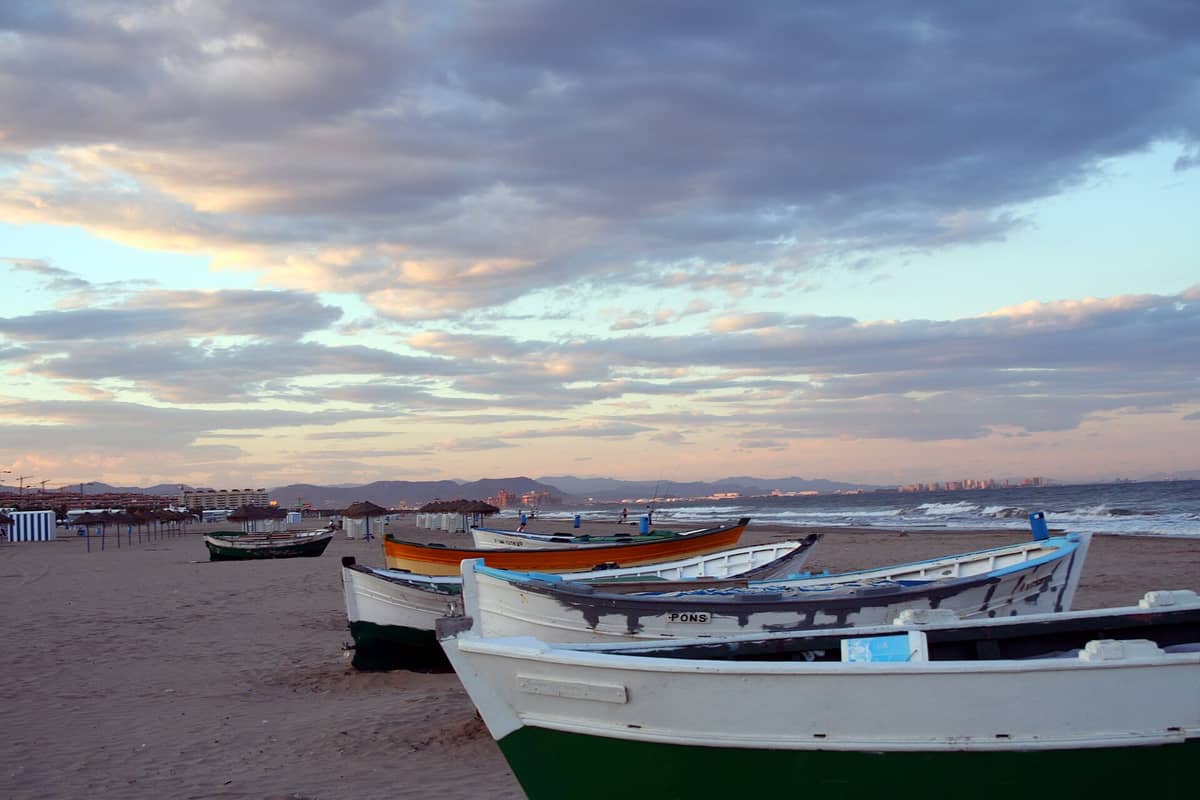
What Is Playa de las Arenas?
Playa de las Arenas is the popular name for Valencia's most visited urban beach, officially designated Playa del Cabanyal (or Platja del Cabanyal in Valencian). The two names coexist, with Las Arenas being what locals and most visitors actually say, and Cabanyal appearing on maps and official signage. The beach sits within the Poblats Marítims district, immediately north of the Port of Valencia and directly south of Playa de la Malvarrosa, forming a continuous stretch of Mediterranean coastline that defines the city's seafront identity.
The name Las Arenas traces to the Balneario Las Arenas, a fashionable spa establishment founded in 1898 where wealthy Valencian families came to take supervised wave baths. That original balneario building was eventually converted into a luxury hotel, which still stands at the northern edge of the beach and gives the area a sense of architectural continuity that many purely modern city beaches lack. The name stuck long after the spa culture faded, and today it labels one of the most accessible sandy beaches attached to any major Spanish city.
ℹ️ Good to know
The beach is a public urban beach with free access year-round. Sunbed and parasol hire from beach concessions costs extra; prices are set by individual operators and are not standardised.
The Beach Itself: Sand, Scale, and Setting
The sand at Las Arenas is fine-grained, pale golden, and maintained by regular mechanical grooming during peak season. The beach is broad and flat, sloping very gently toward the water, which makes it comfortable for families with young children and easier to navigate than steeper or rockier alternatives. The sea is shallow for a good distance out, and average water temperatures in July and August are in the low-to-mid 20s Celsius.
Reported dimensions vary depending on exactly which section of the Cabanyal beach complex is being measured, but official sources place Playa del Cabanyal–Las Arenas at roughly 1,200 metres long with an average width of around 60 metres. Either way, the beach is large enough that it rarely feels claustrophobic except on peak August weekends, when every square metre fills with sun umbrellas and the promenade becomes a slow-moving current of people.
Behind the sand runs an extensive promenade fronted by a near-unbroken row of restaurants and chiringuitos. This is one of the best stretches in Valencia for eating paella by the sea, and the concentration of seafood places here is significant enough that the city's own guides specifically highlight it. If you're researching where to eat the real thing close to the water, the best paella restaurants in Valencia guide covers several spots near this exact promenade.
Tickets & tours
Hand-picked options from our booking partner. Prices are indicative; availability and final rates are confirmed when you complete your booking.
Saint Nicholas Church Entrance Tickets and Audioguide
From 11 €Instant confirmationVegetable paella cooking class and Ruzafa market visit
From 45 €Instant confirmationFree cancellationValencia English tour with entry to La Lonja, Catedral and San Nicolas
From 39 €Instant confirmationFree cancellationValencia top attractions MegaPass Classic with Oceanografic and Science Museum
From 79 €Instant confirmation
How It Changes Through the Day
Before 9am, Las Arenas is genuinely quiet. Dog walkers move along the wet sand near the waterline, a few joggers use the promenade, and the light comes in low and golden from the east. This is when the beach looks its best photographically, when you can appreciate the width of the sand, the clarity of the water, and the faded elegance of the old hotel building without a crowd blocking any of it. The smell at this hour is salt, seaweed, and coffee from the few cafes already open.
From mid-morning onward the dynamic shifts. By 11am in summer, sun loungers fill steadily from the promenade end inward. By 1pm on a July Saturday the beach is packed, and finding a spot without renting a sunbed becomes genuinely difficult. Noise levels rise with the crowds: music from phones, vendor calls from those selling water and sliced coconut, the ambient roar of several thousand people in close proximity. It's social and energetic rather than serene.
Afternoons stretch long in Valencia's Mediterranean summer. The beach remains full well past 7pm, when the direct sun softens and a sea breeze usually picks up. This is when locals, many of whom finish work late, arrive for a swim. The promenade restaurants hit their peak at 9pm or later. If you prefer a calmer experience but still want warm water, arriving around 6:30pm on a weekday in late June or early September strikes the best balance between temperature, crowd level, and light quality.
💡 Local tip
Weekday mornings in May, June, and September offer near-empty sands, warm water, and no direct competition for space. High summer (July–August) weekends are the hardest to enjoy without arriving before 10am or after 6pm.
Getting There from Central Valencia
The beach sits roughly 4 to 5 kilometres from the historic centre, close enough that cycling is a realistic option for anyone using the city's bike infrastructure. The Turia Garden park corridor runs east toward the sea and connects naturally to the coastal zone, making it a pleasant off-road route on a bicycle.
By public transport, several EMT bus lines serve the Cabanyal seafront, and the Metrovalencia network has stops in the Cabanyal neighbourhood from which the beach is a short walk. The city's public transport system is reliable enough that a car is completely unnecessary. For a fuller overview of getting around the city, the guide to getting around Valencia covers tram, bus, metro, and cycling in detail.
There is street parking in the surrounding residential streets of the Cabanyal neighbourhood, but it fills fast on warm weekends and the area's narrow streets are not designed for high vehicle volume. Driving is the least recommended option, particularly in summer.
The Cabanyal Neighbourhood Behind the Beach
Playa de las Arenas does not exist in isolation. Directly behind the promenade is the El Cabanyal neighbourhood, one of the most historically layered and visually interesting parts of Valencia. The barrio developed as a fishermen's settlement and retains a grid of low-rise streets lined with tiled facades in an eclectic mix of Modernisme, Baroque, and vernacular styles. The neighbourhood has spent decades resisting a major demolition project that would have razed much of it to extend a central boulevard to the sea. That project was ultimately halted, and the area is now undergoing careful regeneration.
Walking two or three blocks back from the promenade after a swim gives you a completely different register of the city: quieter streets, local cafes, families sitting outside, a fish market operating at its own unhurried pace in the mornings. This is what separates Las Arenas from a purely resort-style beach. There's a living city immediately behind it.
💡 Local tip
The Cabanyal fish market on Calle Pescadores operates in the early morning. If you're combining a beach day with neighbourhood exploration, arrive at the market around 8am before heading to the sand.
Facilities, Services, and What to Bring
Las Arenas is a fully serviced urban beach. Lifeguard posts operate during the designated bathing season, typically from mid-June to mid-September, though exact dates and hours are set by the municipality each year and should be verified closer to your visit. Shower and foot-wash stations are distributed along the beach access points. Accessible ramps lead toward the waterline. Toilets are available at the promenade level.
Sunbed and parasol concessions operate in rows across the sand from roughly late May through September. These are privately operated and charge by the hour or day. There is no obligation to rent one, and the open beach beyond the concession zones is freely usable, though the best shaded spots near the promenade fill up with towels early.
- Bring reef-safe sunscreen: the Mediterranean sun in June to August is stronger than many northern Europeans expect
- A beach mat or towel: sunbed hire is convenient but not cheap if you are on a budget
- Water and snacks if you plan to stay all day: promenade restaurants are good but not budget-priced
- A light layer for the tram or bus ride back: after sunbathing, air-conditioned public transport feels cold
Honest Assessment: What Las Arenas Is and Isn't
For a city beach attached to a major urban centre, Playa de las Arenas is genuinely good. The sand is well-maintained, the water is clean enough by Mediterranean standards (the beach currently has Blue Flag status, though verification against current season data is recommended), and the combination of beach, promenade dining, and a real neighbourhood behind it makes for a full half-day or full-day experience.
That said, it is not a remote paradise or a place of solitude. In July and August it is busy in the way that any major city beach is busy. Travellers looking for quieter, wilder coastline should consider heading south toward Playa de Pinedo or further into the natural areas near the Albufera. Visitors who want a long beach walk in a more residential atmosphere might prefer the transition north to Playa de la Malvarrosa, which continues directly from Las Arenas and has a slightly different character.
People who find crowds immediately draining, who dislike vendor solicitation, or who want crystal-clear water and no urban backdrop will be better served by beaches further from the city. Las Arenas is ideal for those who want the beach as part of a larger urban day, not as an escape from the city.
Insider Tips
- The stretch of promenade restaurants near the old Balneario hotel building tends to have slightly higher quality kitchens than the middle sections, which are more geared to tourist turnover. Look for places with handwritten daily menus.
- Blue Flag status is awarded annually and can be withdrawn between seasons. Check the current year's Blue Flag database (blueflag.global) before your visit if water quality certification is important to you.
- If you are visiting in spring or autumn, the beach café terraces often have gas heaters and are open from late morning. You can sit with a coffee and have the sand almost entirely to yourself on a clear November morning.
- The area immediately south of the beach, near the Marina de Valencia, has a different atmosphere: more sailing culture, fewer beach crowds. It makes a good 30-minute circuit combined with the beach.
- Valencians rarely swim before the water hits what they consider acceptable temperatures, usually around mid-June. Before then, the beach is used largely for walking and sunbathing, and you will have the water almost to yourself if you're comfortable with cooler temperatures.
Who Is Playa de las Arenas For?
- Families with young children who need gentle slopes and shallow water
- Travellers who want to combine a beach swim with a seafood lunch on the same visit
- City visitors on a tight schedule who cannot commit to a full-day trip out of Valencia
- Early morning walkers who want open sand and Mediterranean light before the city wakes up
- Those curious about the Cabanyal neighbourhood and want to combine beach time with urban exploration
Nearby Attractions
Other things to see while in Poblats Marítims & The Waterfront:
- Marina de València
La Marina de València is a sprawling public waterfront district built around Valencia's historic harbor, transformed into a leisure and cultural hub after hosting the 2007 and 2010 America's Cup. Covering roughly one million square metres of combined land and water — docks, promenades, and open plazas — it is free to enter and rewards visitors at almost any time of day.
- Playa de la Malvarrosa
Playa de la Malvarrosa is Valencia's signature city beach, stretching roughly 1,800 metres of fine golden sand along the Mediterranean coast. Free, accessible, and well-served by public transit, it draws everyone from early-morning swimmers to late-night terrace crowds. This guide covers what to expect, when to go, and what the tourist brochures leave out.
- Veles e Vents
Designed by David Chipperfield and Fermín Vázquez for the 2007 America's Cup, Veles e Vents is a layered glass-and-concrete pavilion rising above Valencia's marina. Entry is free, the views across the Mediterranean are wide open, and the building itself is one of the most architecturally coherent structures built in Valencia this century.