Playa de Pinedo: Valencia's Quieter Southern Beach
Playa de Pinedo sits about 6 km south of Valencia's city centre, in the small outlying village of Pinedo. It offers fine sand, natural dunes, and a noticeably calmer atmosphere than the more visited northern beaches. Free to access, it rewards those willing to travel a little further.
Quick Facts
- Location
- Pobles del Sud district, ~6 km south of Valencia city centre
- Getting There
- EMT city bus lines serving Pinedo, or by car via CV-500 road
- Time Needed
- 2 to 4 hours for a beach visit; longer if combining with Albufera
- Cost
- Free — public municipal beach, no entrance fee
- Best for
- Families, nature-conscious travellers, visitors seeking fewer crowds
What Playa de Pinedo Actually Is
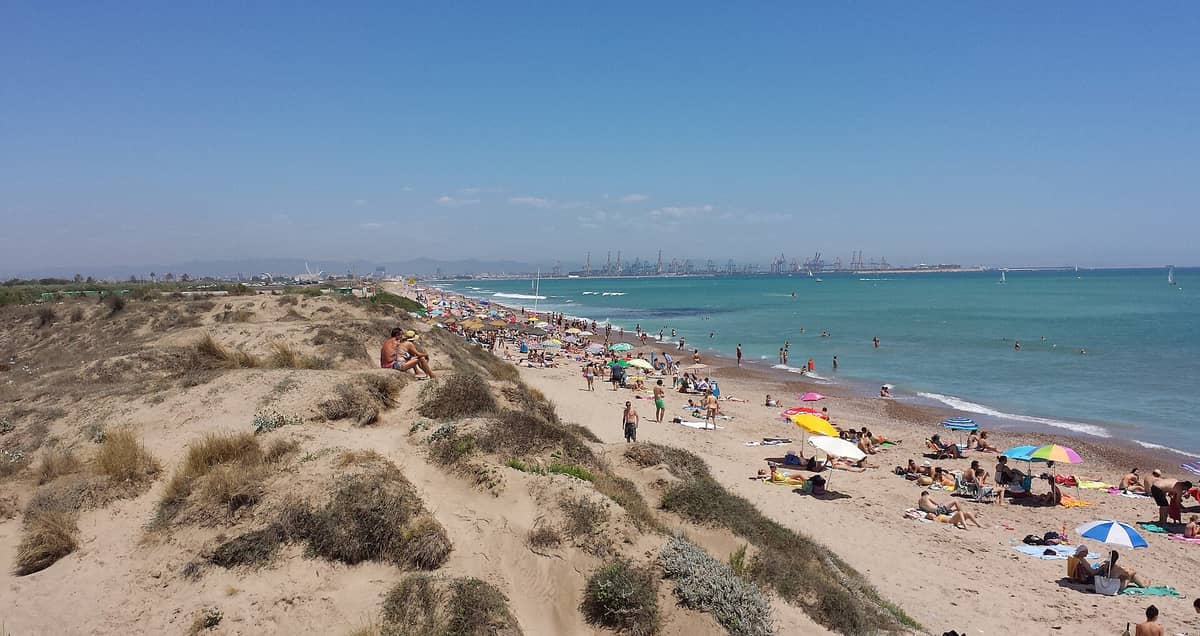
Playa de Pinedo is a semi-urban sandy beach on Valencia's Mediterranean coastline, located in the pedanía (outlying village) of Pinedo, within the Pobles del Sud district. It sits roughly 6 km south of the city centre, well beyond the tourist-heavy stretch around Malvarrosa and Las Arenas, and its character reflects that distance. The sand here is fine, the dunes are still partially intact along sections of the shoreline, and the backdrop is low-rise and residential rather than lined with hotel terraces.
The beach stretches along the Costa de Valencia with moderate Mediterranean waves, making it suitable for casual swimming for most of the summer season. It is a public municipal beach with no entrance fee and no formal opening hours. Lifeguard services and seasonal facilities operate during the summer months, consistent with the pattern across Valencia's guarded beaches.
ℹ️ Good to know
Playa de Pinedo is officially listed at Paseo Marítimo s/n, 46012 València. GPS coordinates: 39.4197°N, 0.3339°W. Approach by car via the CV-500 road; street parking is available near the beach access points.
The Experience at Different Times of Day
Arrive in the morning, before 10:00, and Playa de Pinedo has a particular stillness to it. The smell of salt air and damp sand is strong, the sound of the surf uninterrupted by the crowd noise that arrives later. A few local joggers and dog walkers use the beach at this hour. The light is low and soft, coming off the water at an angle that makes the fine sand look almost golden. It is one of the better times to walk the full length of the shore and appreciate the dune vegetation that lines the back edge of the beach.
By midday in July and August, the character shifts. Families with young children arrive, beach umbrellas go up, and the seasonal chiringuitos (beach bars) are operating. It is busy by Pinedo's own standards, though still significantly calmer than Malvarrosa on the same afternoon. The sea breeze keeps temperatures tolerable until around 14:00, when the combination of sun angle and reflected heat from the sand makes shade genuinely important.
Late afternoon, from around 17:00 to 19:30, is arguably the most pleasant time to swim. The direct overhead sun has dropped, the water has had all day to warm up, and the crowd begins to thin. The light turns amber and long shadows fall across the beach, making this a productive hour for photography. By evening the beach empties quickly, and outside of peak summer it can be near-deserted by sunset.
💡 Local tip
Late afternoon (17:00–19:30) offers warm sea water, softer light, and noticeably fewer people than the midday peak. For families with younger children, this slot also avoids the strongest UV hours.
Tickets & tours
Hand-picked options from our booking partner. Prices are indicative; availability and final rates are confirmed when you complete your booking.
Valencia Silk Museum tickets and audio guide
From 7 €Instant confirmationFree cancellationSaint Nicholas Church Entrance Tickets and Audioguide
From 11 €Instant confirmationHistoric Valencia walking tour
From 27 €Instant confirmationFree cancellationNatural thermal springs and Girlfriend Waterfall tour from Valencia
From 89 €Instant confirmationFree cancellation
Location and Surroundings: The Pinedo Village Context
The village of Pinedo itself is a quiet settlement with a local identity quite separate from Valencia's urban core. It sits between the city's industrial port infrastructure to the north and the Albufera Natural Park to the south, which gives the area an unusual mix: working waterfront on one side, protected wetland ecosystem on the other. This position means the landscape around the beach has a rawer, less manicured quality than the seafront promenades further north.
Pinedo's proximity to the Albufera is significant for anyone interested in nature. The natural park, one of Spain's largest coastal lagoons and a critical habitat for migratory birds, begins just south of the village. Combining a morning at Albufera Natural Park with an afternoon at Playa de Pinedo makes for a logical and rewarding day away from the city, with the CV-500 road connecting both without difficulty.
The approach to the beach from the village is low-key: a short walk past local houses and small restaurants serving rice dishes typical of this part of the coast. There are no large souvenir shops and no hotel complexes blocking the view. That absence of commercial layering is either a feature or a limitation, depending on what you are looking for.
Sand, Sea, and Physical Conditions
The sand at Playa de Pinedo is notably fine and pale, with a texture that packs together firmly near the waterline but remains soft and loose further up the beach. Dune formations are present along sections of the back beach, held in place by coastal vegetation. These dunes represent a genuinely natural feature of the shoreline, rarer along the more developed stretches of Valencia's coast, and they deserve respect: walking through them off the established paths accelerates erosion.
Wave conditions are generally moderate for the Mediterranean, meaning calm enough for children and casual swimmers on most days, but with enough movement to make bodyboarding occasionally possible. In autumn and after storms the sea can become choppy and the water visibly murkier due to sediment disruption. The rainiest seasons for Valencia are autumn and late winter, so beach visits outside the core summer window (June through September) require checking conditions in advance.
⚠️ What to skip
Autumn storms can affect water clarity and wave conditions at Pinedo. If you are visiting outside the June–September window, check the local weather and any flag system at the beach before swimming.
Practical Access and Getting There
Playa de Pinedo is reachable by EMT city bus from Valencia. The Pobles del Sud area, which includes Pinedo, is served by bus lines that connect to the city centre. Journey times from central Valencia vary depending on the line and traffic conditions. It is advisable to verify current routes and frequency on the EMT Valencia website before travelling, as timetables are subject to seasonal adjustment.
By car, the CV-500 coastal road provides a direct route south from the city. Parking is available near the beach access points, though spaces fill quickly during August weekends and public holidays. Cycling is also a realistic option for those already using the Turia Garden cycling routes: the garden's cycle path network connects to the coastal path south of the city, allowing for a continuous ride from the centre.
The beach has no Valencia Metro connection. The metro network does not extend to Pinedo, so those relying on public transport will depend on the bus or a taxi. Factor in the transfer time when planning a day trip.
Facilities and Accessibility
During the summer season, Playa de Pinedo is equipped with showers, public toilets, and seasonal beach bars. Lifeguard services operate during the guarded hours, which are typical of Valencia's main beaches in summer. Outside of June to September, some facilities may be closed or reduced, and there will be no lifeguard presence.
Accessibility provision at this beach is notably good for a beach of its type. Wooden walkways cross the sand to the waterline, accessible pedestrian routes connect the parking area to the beach, and there are reserved parking spaces for visitors with disabilities. Adapted access points and accessible shower and toilet facilities are present according to accessibility audit data from Tur4all. Visitors with reduced mobility should note that soft sand beyond the walkways remains a practical challenge, as is the case at most natural beaches.
Photography Conditions and What to Bring
Pinedo's dune-backed shoreline and low urban profile create a cleaner photographic frame than beaches further north, where high-rise buildings dominate the background. Early morning and late afternoon both produce strong directional light. The stretch of beach nearest the dune vegetation is particularly photogenic in low light. Wide-angle lenses capture the sweep of the shore well; telephoto options are useful for isolating the wetland birds that occasionally appear along the water's edge near the southern end of the beach.
In terms of what to bring: there are no large supermarkets immediately adjacent to the beach. Stock up on water, snacks, and sun protection before arriving. The seasonal chiringuitos provide food and drinks but are not open year-round. A hat and SPF 50 sunscreen are practical requirements from late May through September, when midday UV levels are high. Sand shoes are useful given the occasional presence of seagrass deposits near the waterline after rough weather.
Who This Beach Suits and Who Might Not Enjoy It
Playa de Pinedo works well for families who want a beach without constant commercial noise, for nature-interested visitors who want to pair a swim with a trip to the Albufera, and for anyone who prefers a beach that has not been entirely smoothed into a resort product. Travellers who want a lively, well-serviced beach scene with bars, sun lounger rental services, and easy access from central Valencia will likely find the experience more rewarding at Playa de la Malvarrosa or Playa de las Arenas, both of which are better connected and more fully equipped throughout the season.
Visitors without a car or a bicycle should think carefully about the bus journey: the added travel time is not prohibitive, but it does make a casual half-day trip less spontaneous. For context on planning a broader visit to Valencia's coastline and beaches, the guide to the best beaches in Valencia covers the comparative tradeoffs across the full range of options.
Insider Tips
- Arrive before 10:00 in summer to claim a spot near the dune edge, which provides natural shade in the late morning and the best angle for photographing the shoreline.
- The CV-500 road south from Pinedo leads directly to the Devesa del Saler pine forest and the Albufera lagoon. Combining both in a single day by car is straightforward and gives a complete picture of Valencia's southern coastal landscape.
- Outside of July and August, weekday visits see the beach drop to near-local use only. September is a particularly good month: the water is still warm from the summer, the light is excellent, and the summer crowds have gone.
- The dune vegetation at the back of the beach is ecologically sensitive. Keep to the established wooden walkways and sandy paths rather than cutting through the dune plants, which are protected as part of Valencia's coastal zone regulations.
- If you are travelling by bus, confirm the current EMT line serving Pinedo on the EMT Valencia app or website before you set out. Schedules on routes serving outer villages can be infrequent, especially on weekends outside the summer peak.
Who Is Playa de Pinedo For?
- Families with young children looking for a calmer beach without heavy commercial infrastructure
- Nature travellers combining a beach visit with a trip to the Albufera Natural Park
- Cyclists using Valencia's coastal paths for a longer day ride south from the city
- Visitors in September or early October who want warm sea water without summer peak crowds
- Photographers interested in natural dune landscapes and low-clutter beach compositions
Nearby Attractions
Combine your visit with:
- Parc Natural de l'Albufera
Just 10 kilometres south of Valencia, Parc Natural de l'Albufera is a protected coastal lagoon covering 21,120 hectares of freshwater lake, rice paddies, pine forests, and wetlands. It is one of Spain's most important bird sanctuaries, the birthplace of Valencian paella, and a complete change of pace from the city.
- Devesa del Saler
Stretching roughly 8 kilometres between the Mediterranean Sea and Lake L'Albufera, the Devesa del Saler is one of Europe's most intact coastal dune forests. Part of Albufera Natural Park since 1986, this approximately 800-hectare strip of umbrella pines, wetland edges, and wild beach is free to enter and reachable from central Valencia in under 30 minutes.
- El Palmar Village
Tucked inside Albufera Natural Park roughly 20 kilometres south of Valencia, El Palmar is a small fishing village of around 750 residents that sits on the edge of a freshwater lagoon ringed by rice fields. It is widely credited as one of the birthplaces of authentic Valencian paella, and a visit here combines slow rural atmosphere, boat trips on the lake, and some of the most seriously traditional rice cooking in the region.
- Estadio de Mestalla
Estadio de Mestalla is the historic home of Valencia CF, one of Spain's most decorated football clubs. Inaugurated in 1923, it holds close to 49,430 spectators and ranks among the oldest top-flight grounds in La Liga. Whether you're catching a live match or exploring the stadium on a guided tour, Mestalla delivers a concentrated dose of local identity that few attractions in Valencia can match.