Playa de la Malvarrosa: Valencia's Urban Beach Explained
Playa de la Malvarrosa is Valencia's signature city beach, stretching roughly 1,800 metres of fine golden sand along the Mediterranean coast. Free, accessible, and well-served by public transit, it draws everyone from early-morning swimmers to late-night terrace crowds. This guide covers what to expect, when to go, and what the tourist brochures leave out.
Quick Facts
- Location
- Poblats Marítims district, seafront area near Calle Acequia de la Cadena, 46011 València
- Getting There
- EMT bus lines 19 and 31 reach the seafront; Metrovalencia tram line 4/6 (Eugènia Viñes or Malvarrosa stops) is the most direct rail option
- Time Needed
- 2–4 hours for a relaxed beach visit; half a day if you combine it with the promenade and lunch
- Cost
- Free — no admission fee for beach access
- Best for
- Swimming, sunbathing, seafront dining, families, accessible bathing
What Is Playa de la Malvarrosa?
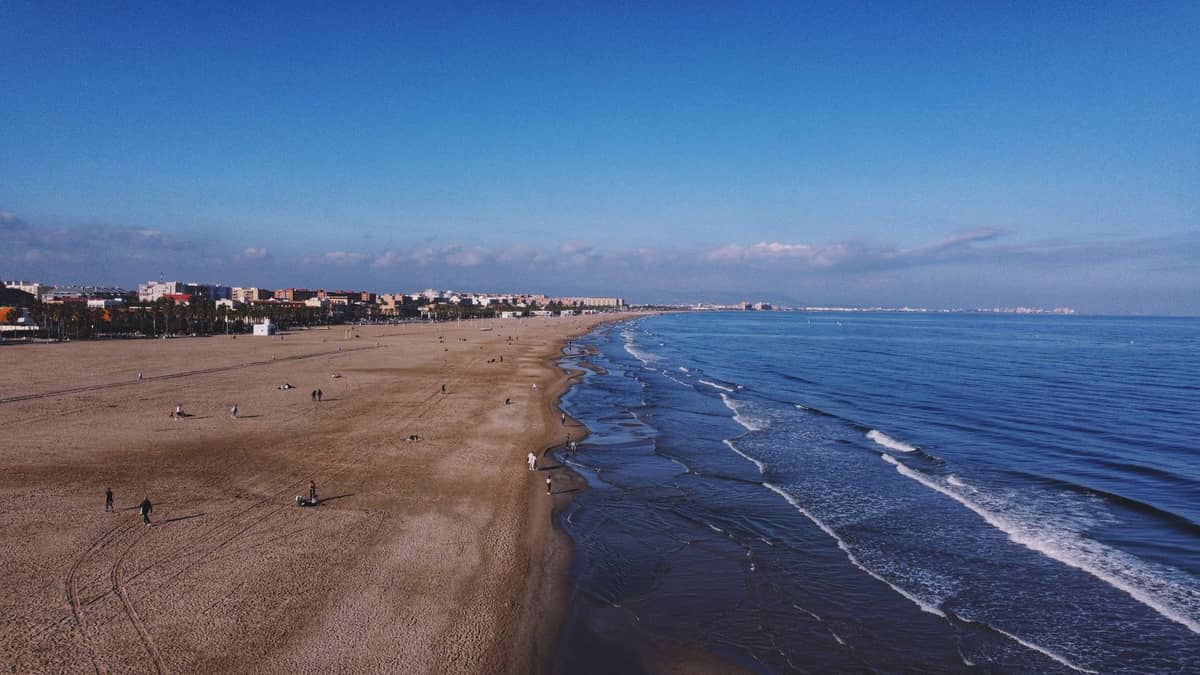
Playa de la Malvarrosa (Valencian: Platja de la Malva-rosa) is Valencia's most prominent urban beach, sitting at the northern end of the city's Mediterranean waterfront in the Poblats Marítims district. The official measurement from the Ajuntament de València puts the beach at 1,800 metres long, with fine, pale golden sand that stays reasonably clean thanks to daily mechanical raking during the main season. It connects without interruption to Las Arenas beach to the south and borders La Patacona to the north, so in practice the coastline feels continuous rather than divided.
Entry is entirely free. There are no gates, no reservations, and no peak-season admission fees. What you will find is a well-maintained public beach with seasonal lifeguard coverage, adapted access for reduced mobility visitors, showers, sun lounger rental operators, and a wide palm-lined promenade called the Paseo de Neptuno running parallel to the sand. The promenade is lined with restaurants and paella houses, so the beach and a proper Valencian meal are easy to combine in a single outing.
ℹ️ Good to know
Lifeguard coverage is seasonal. The 'summer season' runs from 7 June to 7 September, 10:00–19:30. A 'low season' with shorter hours (11:00–19:00) covers selected dates in May, early June, and September. Outside these periods, swimming is unguarded.
The Beach at Different Times of Day
Early morning, roughly 07:00–09:00, is when Malvarrosa shows its best side. The Mediterranean light is soft and horizontal, the sand is freshly raked, and the only people around are local swimmers doing laps parallel to the shore, joggers on the promenade, and the odd cyclist cutting through from the city. There is almost no noise except the low rhythmic break of small waves. The sea at this hour can be glassy, particularly in summer, and the water temperature in July and August typically sits in the low-to-mid 20s Celsius.
By 11:00 on a summer weekend, the tone shifts entirely. Families claim territory with umbrellas and cool boxes, the sun lounger vendors set up their rows, and the beach becomes genuinely crowded in the central sections. If you arrive late on a Saturday in August, expect to walk a few minutes north toward La Patacona to find comfortable space. Weekdays are noticeably quieter, and the northern stretch near the Calle Acequia de la Cadena boundary sees fewer people throughout the day.
Late afternoon brings a second wind. Spanish beach culture skews later than northern European norms: many locals arrive at 17:00 or even 18:00 when the direct sun has eased, and the promenade fills with people walking, cycling, and settling into terrace tables for a long dinner. Sunsets here, looking inland and along the coast as the sun sets behind the city, are not the fiery kind you get over land, but the light on the water in the hour before dusk is clean and worth lingering for.
Tickets & tours
Hand-picked options from our booking partner. Prices are indicative; availability and final rates are confirmed when you complete your booking.
Malvarrosa and Patacona beach catamaran tour with drink
From 18 €Instant confirmationFree cancellationValencia Silk Museum tickets and audio guide
From 7 €Instant confirmationFree cancellationSaint Nicholas Church Entrance Tickets and Audioguide
From 11 €Instant confirmationHistoric Valencia walking tour
From 27 €Instant confirmationFree cancellation
Historical and Cultural Context
The Malvarrosa neighbourhood takes its name from a plant, the malva rosa (a type of mallow), which historically grew in abundance along this stretch of coast. For much of the 19th and early 20th century, this was an industrial and working-class area: warehouses, factories, and the homes of fishermen and dock workers from the Cabanyal neighbourhood inland. The beach itself was not the leisure destination it is today.
The writer Vicente Blasco Ibáñez, born in Valencia in 1867 and one of the most widely translated Spanish authors of his era, lived in Malvarrosa and set several of his novels along this coast. His novel 'Flor de Mayo' (1895) is rooted directly in the fishing community here. A small house-museum dedicated to him stands close to the beach. This literary heritage gives the area a cultural depth that the average beach day does not make obvious, but it is worth knowing if you walk the neighbourhood beyond the promenade.
The adjacent neighbourhood of El Cabanyal, directly inland from Malvarrosa, has its own layered history and distinctive Modernista-influenced architecture — ceramic facades, colourful tilework, and a grid of streets that developed from a fishing village into a dense urban barrio. Exploring it makes a natural extension to a beach visit. See our guide to El Cabanyal for context on what to look for.
Practical Walkthrough: Getting There and Getting Set Up
From Valencia's historic centre, the tram is the most straightforward option. Metrovalencia lines 4 and 6 (the tram lines, not the underground metro) run to the seafront, with the Eugènia Viñes and Malvarrosa stops placing you a short walk from the beach. Several EMT city bus lines also serve the area, including lines 19 and 31. The journey from the centre takes roughly 15–20 minutes by tram. Cycling is a popular alternative: the Jardí del Turia park runs almost the entire length of the city and its cycling paths connect near the port and seafront area.
If you are already based in the Poblats Marítims district, Malvarrosa is within walking distance of most accommodation. From the city of arts and sciences area further south, the tram ride takes around 30 minutes.
Sun lounger and parasol rentals are available from private operators on the beach during the main season; pricing is set by individual vendors and should be confirmed on arrival. Public showers are positioned along the beach. The accessible bathing point is located near one of the main lifeguard posts, with assisted bathing service during the official seasonal program — a detail worth flagging if you are visiting with someone who needs it, as not all Mediterranean beaches offer this.
💡 Local tip
Bring cash for beach vendors and smaller promenade cafes. Card payment is common at the larger terrace restaurants on Paseo de Neptuno, but smaller operators often prefer cash, especially for sun lounger rental.
Swimming and Water Conditions
The water at Malvarrosa is generally calm. The beach faces east, which means it is somewhat sheltered from westerly winds, and the Mediterranean here lacks strong tidal movements. Waves are typically small and gentle, which makes it suitable for children and less confident swimmers during normal summer weather. After significant storms, particularly the autumn gales that occasionally affect Valencia's coast, water clarity can drop and debris may appear on the shore. The beach usually recovers within a day or two.
Water quality is monitored under EU Blue Flag standards. The beach has historically held Blue Flag status, though certification is reviewed annually, so it is worth checking current status before a visit if this matters to you. The sea bottom is sandy and gradual at the entry points, with no significant rocks in the main swimming areas.
⚠️ What to skip
Valencia's coast can experience jellyfish (medusas) during certain periods, typically in late summer or after onshore winds. Local beach services usually post warnings when jellyfish are present. Check the promenade noticeboards or ask lifeguard staff before getting in.
Photography, Weather, and When to Visit
Valencia has a classic Mediterranean climate, with summers that are warm and dry, winters that are mild, and the rainiest periods falling in autumn and late winter. For beach use specifically, the reliable window runs from late May through to early October, with July and August being the hottest and most crowded months. September often offers the best balance: warm water (which retains summer heat well into the month), slightly cooler air, and noticeably thinner crowds.
Spring visits can work on calm days, but the water remains cool until June. Winter visits are not for swimming but the promenade stays active year-round, and the beach in January or February has a particular quiet appeal. For a broader picture of when Valencia suits different types of trips, see the best time to visit Valencia guide.
For photography: the golden hour before sunset (which arrives later in summer thanks to Spain's CET/CEST time zone running ahead of solar noon) produces good warm light on the promenade and the sea. The beach stretches far enough that you can frame shots with very few people in them if you walk toward the northern end in the late afternoon. The palm trees along the promenade and the characteristic flat horizon of the Mediterranean make for clean compositions without needing much in the way of technique.
Dining and the Promenade
The Paseo de Neptuno, running the length of the beach, is where Valencia's paella restaurants cluster most visibly. This is not where locals go for a quiet meal — these are large, tourist-facing operations with outdoor terraces, and prices reflect the location. That said, the quality at several establishments is genuinely good, particularly for rice dishes. Valencia is the home of paella, and if you are going to eat it once, doing so within sight of the sea has a certain logic to it. For a more considered guide to where to eat, the best paella in Valencia guide is a more reliable resource than the menus on the promenade.
For something more casual, the cafes and smaller bars slightly back from the front, toward the Cabanyal streets, tend to be cheaper and less tourist-oriented. Horchata con fartons, the local cold drink made from tiger nuts, is widely sold near the beach in summer and worth trying if you have not had it before.
Insider Tips
- The northern section of the beach, near the border with La Patacona, is consistently less crowded than the central stretch on summer weekends. It takes an extra 10-minute walk from the main tram stops but the payoff in space is significant.
- Malvarrosa faces east, which means it gets full morning sun and is partly shaded by the apartment buildings lining the promenade from late afternoon. If you burn easily, morning is counterintuitively the time to be most careful; the angle of light can be deceptive.
- The tram back to the centre gets very crowded at around 19:00–20:00 on summer evenings as beachgoers head home. If you can shift your departure to after 21:00 or before 18:00, you will travel in far more comfort.
- Free outdoor showers are positioned at regular intervals along the beach. They are functional but the water pressure is modest; a small towel for your feet is useful if you prefer not to walk across dry sand after rinsing off.
- If you are visiting during Las Fallas in March, the beach becomes part of the broader city celebration, with fireworks visible over the water on the final nights. It is not a beach event per se, but the combination of the lit-up promenade and the pyrotechnics offshore is memorable.
Who Is Playa de la Malvarrosa For?
- Families with children: gentle entry, sandy bottom, seasonal lifeguards, and accessible bathing facilities
- First-time visitors to Valencia wanting an easy half-day combination of city and sea
- Cyclists arriving via the Turia garden path network
- Visitors who want to combine a swim with a proper Valencian paella lunch on the promenade
- People with reduced mobility, given the dedicated accessible bathing point at lifeguard post 1
Nearby Attractions
Other things to see while in Poblats Marítims & The Waterfront:
- Marina de València
La Marina de València is a sprawling public waterfront district built around Valencia's historic harbor, transformed into a leisure and cultural hub after hosting the 2007 and 2010 America's Cup. Covering roughly one million square metres of combined land and water — docks, promenades, and open plazas — it is free to enter and rewards visitors at almost any time of day.
- Playa de las Arenas
Known officially as Playa del Cabanyal and popularly as Las Arenas, this broad sandy beach sits minutes from Valencia's city centre along Avenida Neptuno. Wide, gently sloping sands, a promenade lined with seafood restaurants, and easy tram access make it the default choice for a beach day without leaving the city.
- Veles e Vents
Designed by David Chipperfield and Fermín Vázquez for the 2007 America's Cup, Veles e Vents is a layered glass-and-concrete pavilion rising above Valencia's marina. Entry is free, the views across the Mediterranean are wide open, and the building itself is one of the most architecturally coherent structures built in Valencia this century.