Where to Eat the Best Paella in Valencia (And How Not to Get It Wrong)
Valencia is the birthplace of paella, and eating it here is a serious affair. This guide covers where locals go, what authentic paella actually contains, how much to pay, and the mistakes that send tourists home disappointed.
Plan and book this trip
Tools from our partner Travelpayouts help you compare flights and hotels. If you book through them, we may earn a commission at no extra cost to you.
Flights
Hotels map
TL;DR
- Paella valenciana contains chicken, rabbit, green beans, butter beans, and sometimes snails — not seafood. Seafood paella is a later variation.
- Paella is a lunch dish. Most serious restaurants serve it at midday, typically from around 13:00 to 16:00.
- The best paella is rarely in the old town. Head to the El Palmar area or the Malvarrosa beach zone.
- Expect to pay €18–25 per person at a reputable restaurant. Cheaper is almost always a red flag.
- Book ahead, especially on weekends and during summer. Tables at top spots fill up days in advance.
What Authentic Paella Valenciana Actually Is
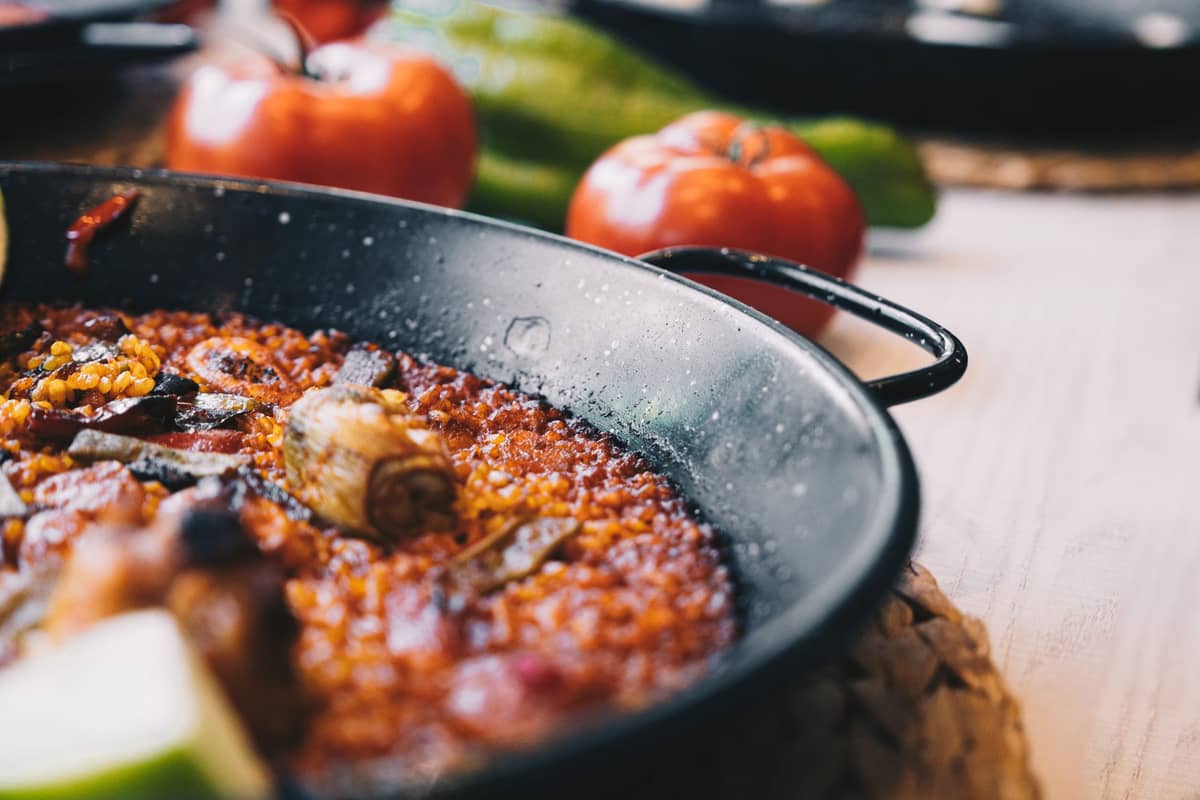
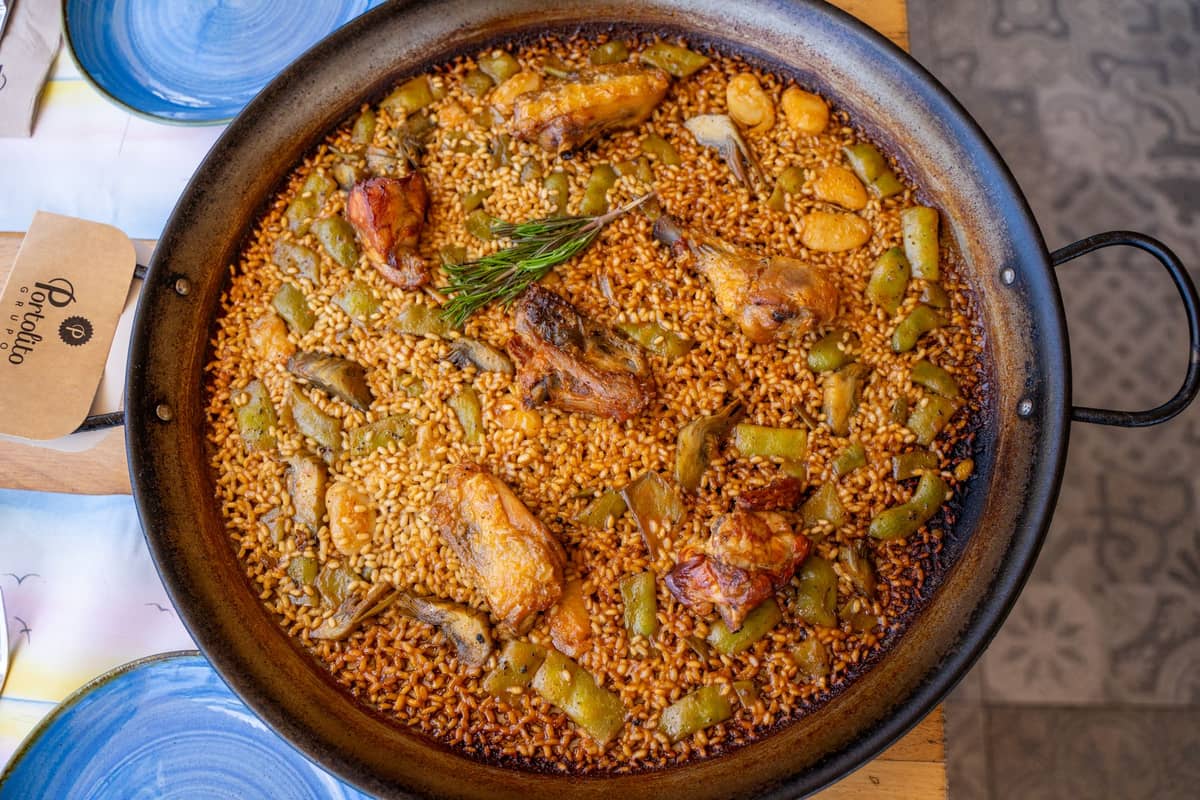
Paella valenciana is one of the most misrepresented dishes in global cuisine. The version you know from tourist menus across Europe, loaded with prawns and mussels, bears little resemblance to what Valencians actually cook and eat. The original recipe uses short-grain rice, chicken, rabbit, ferraura (flat green beans), garrofó (large butter beans), tomato, olive oil, saffron, and water. Snails are optional but traditional. The whole thing is cooked in a wide, shallow pan, ideally over a wood fire, which adds a distinct smoky note.
The rice is everything. A properly made paella has a thin, even layer of rice that absorbs all the cooking liquid and develops socarrat at the base: the caramelized crust that forms where the rice meets the pan. No socarrat, no glory. The dish should be almost dry when it arrives at the table, never wet or soupy. If your paella looks like risotto, something has gone wrong.
ℹ️ Good to know
Arroz a banda (rice cooked in fish stock, served with alioli) and arroz negro (black rice with squid ink) are also excellent Valencian rice dishes, but they are not paella valenciana. Many restaurants specialize in all three — ordering one of these alongside the classic is a smart way to compare the local rice tradition.
Where Locals Actually Go: The Best Areas for Paella
The honest answer is that the best paella in Valencia is almost never found in the historic centre. Tourists cluster around Plaza de la Reina and the cathedral district, and many restaurants in that zone serve paella that is pre-cooked, reheated, or simply made for volume rather than quality. Locals head elsewhere, and so should you.
- El Palmar and L'Albufera Natural Park This small village about 10 km south of Valencia, set within the Albufera wetlands where Valencian rice has been grown for centuries, is considered the spiritual home of paella. Restaurants here cook over open fires and serve the dish to multigenerational local families, especially on Sundays. Combine lunch with a boat trip on the lagoon.
- Malvarrosa and Las Arenas Beach Zone The stretch of restaurants along Valencia's main beach promenade has a long paella tradition. Quality varies significantly, but the best spots here — including the well-regarded Casa Carmela on Isabel de Villena — use wood-fired cooking and local ingredients. The setting is casual and the crowd is mixed local and visitor.
- Benisanó (Day Trip) About 25 km northwest of Valencia, Restaurante Levante in Benisanó is widely cited by food writers and locals as one of Spain's definitive paella destinations. It is not convenient to reach without a car, but for serious paella seekers it is worth the effort.
⚠️ What to skip
Any restaurant displaying photos of paella on a sign outside, offering 'paella for one person at any time of day', or charging under €12 per person should be avoided. Authentic paella requires around 45–60 minutes to cook properly. If it arrives in 15 minutes, it was made hours ago.
Specific Restaurants Worth Knowing
Casa Carmela, located steps from Malvarrosa beach, has been serving wood-fired paella since 1922. The restaurant uses orange wood for its fire and sources local rice from the Albufera. It is one of the most consistent and respected options in the city proper. Reservations are essential on weekends and public holidays; book at least a week ahead in summer. The paella valenciana for two is around €50 total, which is competitive for the quality.
Restaurante Levante in Benisanó is a different experience entirely. Run by the Margós family for generations, it has earned a reputation well beyond Spain's borders. The menu is focused and traditional, the service is formal by Spanish standards, and the socarrat here is frequently held up as a benchmark. Phone reservations are advised; the restaurant does not always appear reliably on third-party booking platforms.
In El Palmar itself, there are multiple family-run restaurants along the main street, most of which open primarily on weekends for lunch. The quality is generally high because the clientele is largely local — these are not tourist traps. Getting there without a car is possible via taxi or private transfer from central Valencia, or by combining it with a visit to Albufera Natural Park. The drive from the city takes around 20–25 minutes.
✨ Pro tip
If you want to eat paella in El Palmar on a Sunday, book at least two weeks ahead during spring and summer. Local families reserve tables months in advance for celebrations. Weekday lunches are considerably easier to access and often quieter, which also means more attention from kitchen staff.
Pricing, Timing, and Booking: The Practical Details
Paella is priced per person and almost always requires a minimum order of two. At a serious restaurant, expect to pay €20–25 per person for paella valenciana. Premium versions using heritage breeds of rabbit or organic local ingredients push toward the higher end. Anything below €15 per person at a sit-down restaurant should prompt skepticism.
Timing matters enormously. Paella is a lunch dish in Valencia, full stop. Service usually runs from roughly 13:00 to 16:00, and very few restaurants offer paella in the evening. Some beachside places serve an evening paella but the selection is narrower and the quality is not always the same. Arrive hungry at 13:30 or 14:00 for the full experience.
- Book via the restaurant's official website or by phone — TheFork (ElTenedor) lists some Valencia restaurants but not all of the best ones
- Specify the paella type when booking — some restaurants require 24–48 hours notice for the traditional wood-fired version
- A full paella lunch with a starter, house wine, and bread typically runs €30–45 per person at a good restaurant
- Sundays and public holidays are the peak paella days in Valencia — this is when locals eat it and when restaurants are fullest
- Ask for the socarrat when the server brings the pan — many will scrape the bottom crust for you as a final course
Understanding the Rice: Varieties and What They Mean
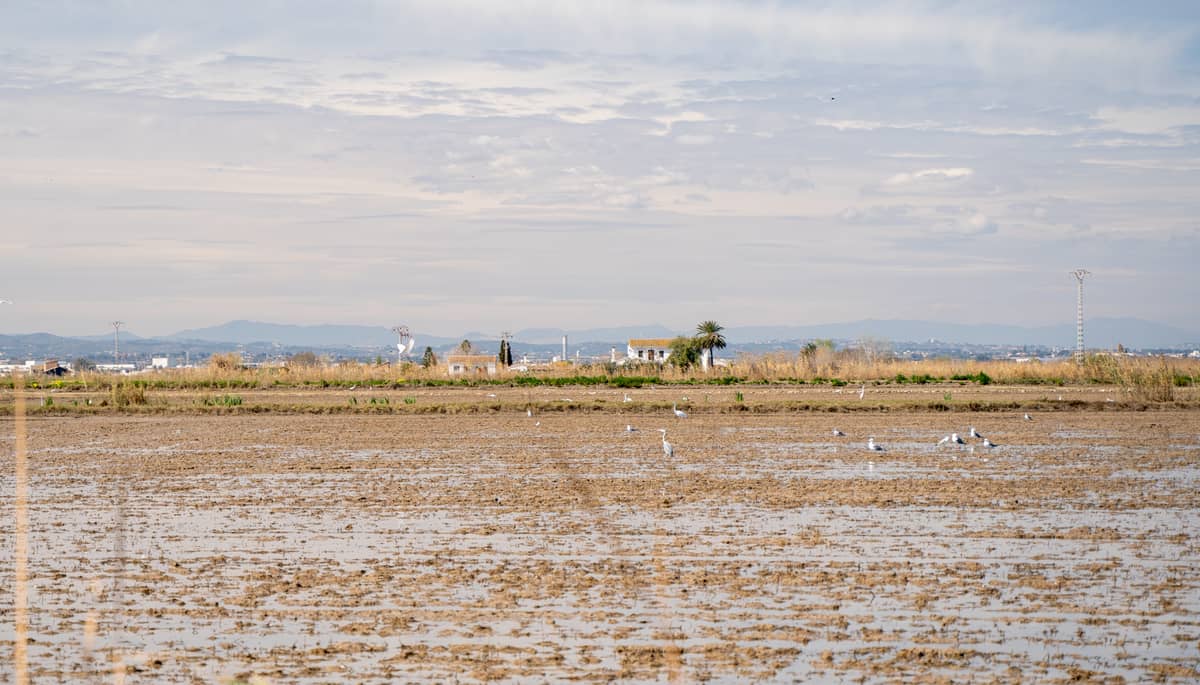
Valencia's paella country sits within and around L'Albufera, one of Spain's most important rice-growing regions. The rice used in authentic paella is short-grain, typically the Bomba or Senia varieties. Bomba absorbs liquid very well and holds its structure, making it forgiving and consistent. Senia absorbs more intensely and produces a creamier result — it is more fragile but many local cooks prefer the flavor. Some high-end restaurants specify the variety on the menu, which is a good sign.
The connection between the rice paddies and the plate is something worth seeing in person. A day trip to Albufera lets you walk through the wetlands where the rice is grown before sitting down to eat it a few kilometers away. It adds context that genuinely changes how the dish tastes.
Common Mistakes and Tourist Traps to Avoid
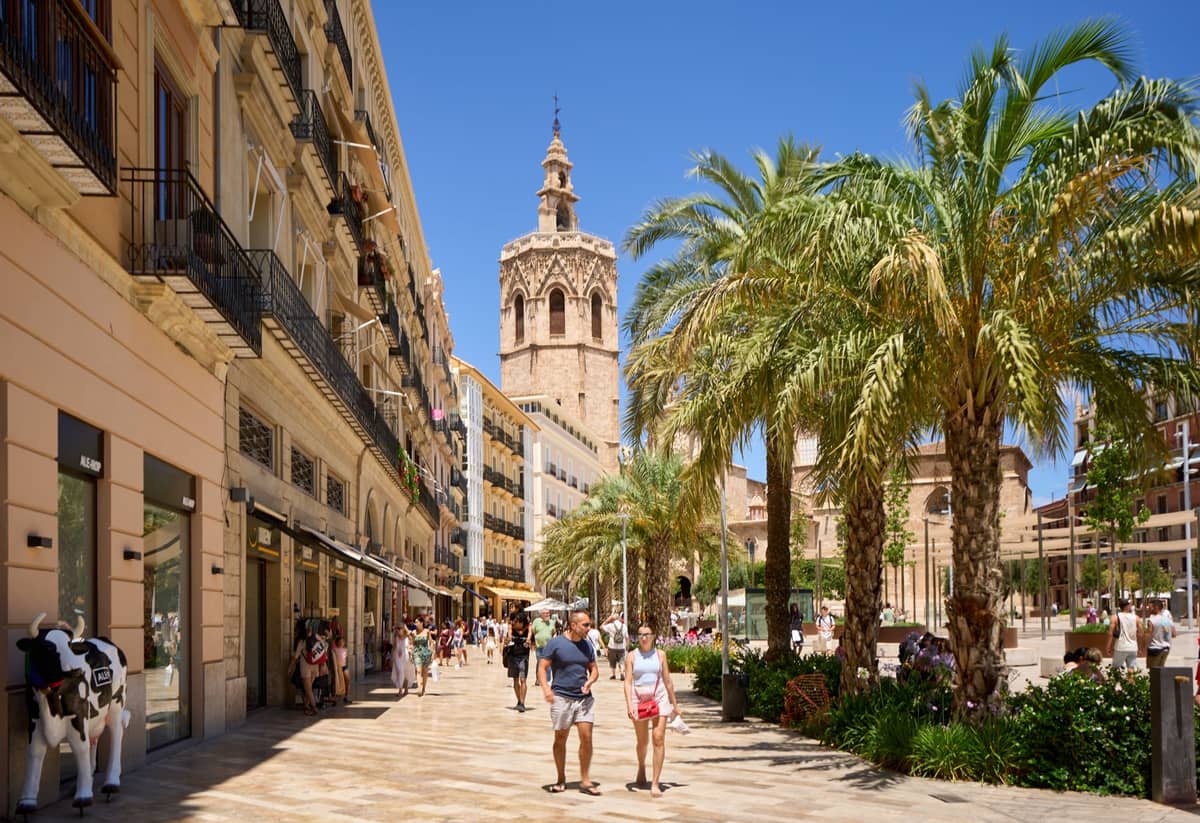
The tourist corridor around Valencia Cathedral and Plaza de la Reina is full of restaurants that will sell you something called paella. Most of it is made in bulk, served at all hours, and designed for people who do not know the difference. The photos look good. The reality is not.
Ordering paella for one is a practical warning sign. Traditional paella is cooked for a minimum of two people in a pan sized accordingly. A single-portion paella is almost always made in advance and reheated. The same applies to any establishment that can serve it in under 20 minutes.
Paella from the beach kiosks along Malvarrosa beach is a mixed proposition. Some small chiringuitos serve genuinely good rice. Many serve frozen, reheated dishes at beach-tourist prices. The safest bet is to stick to restaurants with fixed addresses, proper kitchens, and a menu that focuses on rice rather than offering 15 different dishes.
💡 Local tip
Valencia's Mercado Central is an excellent place to see the raw ingredients: local rice, fresh rabbit, green beans, and garrofó. Even if you are not cooking, walking through the market before lunch gives you a strong reference point for what goes into a proper paella. It also sells prepared meals and takeaway food, though not paella itself.
For a broader picture of what to eat while you are in the city, the Valencia food guide covers everything from horchata to fideuà. Paella is the headline act but it is far from the only reason to eat well here.
FAQ
What is the difference between paella valenciana and seafood paella?
Paella valenciana is the original recipe: chicken, rabbit, flat green beans, butter beans, and sometimes snails, cooked with short-grain rice over a wood fire. Seafood paella — with prawns, mussels, and squid — is a later adaptation that became popular in coastal areas. Both are legitimate rice dishes, but only the meat version is the traditional Valencian recipe. Ordering seafood paella in Valencia is not wrong, but it is not the local dish.
Where is the best place to eat paella in Valencia?
For the most traditional experience, El Palmar village in the Albufera area is where locals go for Sunday paella. Within the city, Casa Carmela near Malvarrosa beach is a reliable, well-established option using wood-fired cooking. For a destination-worthy meal further afield, Restaurante Levante in Benisanó (about 25 km from Valencia) is frequently cited as a benchmark. Avoid restaurants in the immediate tourist centre around the cathedral.
How much does paella cost in Valencia?
At a reputable restaurant, paella costs approximately €18–25 per person, with a minimum order of two people. A full lunch including starters, wine, and dessert will typically run €30–45 per person. Anything below €12–15 per person is likely to be pre-cooked or of significantly lower quality.
Can you eat paella for dinner in Valencia?
Rarely, and not at the best restaurants. Paella is traditionally a midday meal, served between approximately 13:30 and 16:00. Some beachside restaurants and tourist-facing places offer paella in the evening, but the selection is narrower and the quality often lower. If you want an authentic experience, plan for lunch.
Do I need to book a restaurant for paella in Valencia in advance?
Yes, at any restaurant worth visiting. On weekends and public holidays, popular spots fill up quickly — particularly in El Palmar, where local families reserve tables regularly. For summer visits, booking one to two weeks ahead is sensible for city restaurants and two to four weeks ahead for El Palmar. Weekday lunches are easier to access without a reservation, but calling ahead is still advisable.