El Palmar: Valencia's Ancient Fishing Village on Lake Albufera
Tucked inside Albufera Natural Park roughly 20 kilometres south of Valencia, El Palmar is a small fishing village of around 750 residents that sits on the edge of a freshwater lagoon ringed by rice fields. It is widely credited as one of the birthplaces of authentic Valencian paella, and a visit here combines slow rural atmosphere, boat trips on the lake, and some of the most seriously traditional rice cooking in the region.
Quick Facts
- Location
- Pobles del Sud district, Valencia municipality, inside Albufera Natural Park. About 20 km south of Valencia city centre.
- Getting There
- EMT bus line 24 from Valencia (stop near Navarro Reverter), approximately 30–40 minutes. By car, around 20 km via the V-31 and local roads.
- Time Needed
- 2–4 hours for a comfortable visit including a meal and a short walk around the village. Add 1–2 hours if you take a boat trip.
- Cost
- Free to enter the village. Boat trips and restaurant meals are priced separately by private operators.
- Best for
- Traditional Valencian paella, nature, slow-travel day trips, birdwatching, and photography.
- Official website
- www.visitvalencia.com/en/what-to-see-valencia/el-palmar
What El Palmar Actually Is
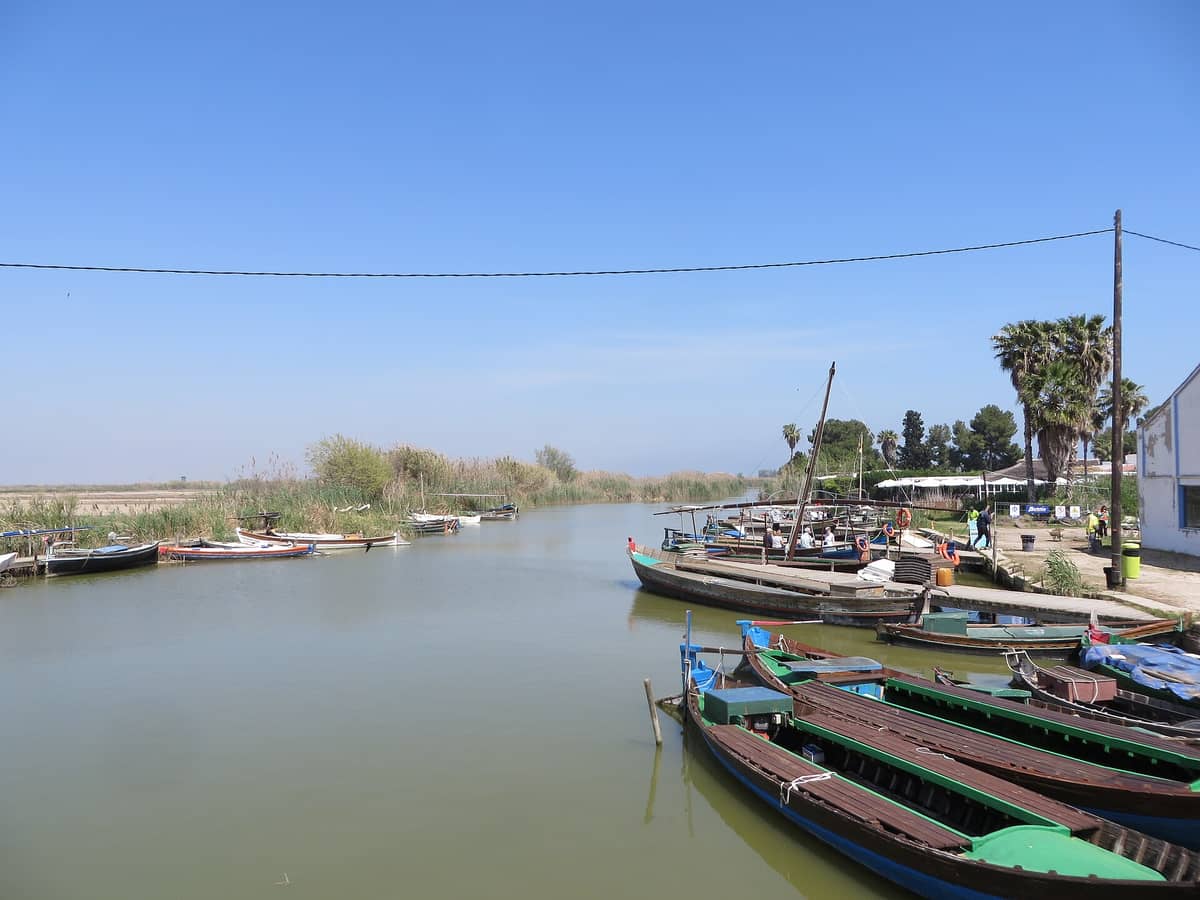
El Palmar is not a theme park, a resort, or a curated tourist district. It is a working pedanía, a hamlet administratively part of Valencia city, with a registered population of around 750 people. The village sits on the western shore of Lake Albufera, surrounded on almost every side by the flat green geometry of rice paddies that have been cultivated here since the Moorish period. The streets are narrow, the buildings low and whitewashed, and the dominant sounds are birds and the low hum of boat motors on the water.
Administratively, El Palmar belongs to the Pobles del Sud district of Valencia. Its postal code is 46012. Geographically, it sits entirely within the Parc Natural de l'Albufera, a protected wetland that covers roughly 21,000 hectares and is one of the most ecologically significant freshwater zones on the Iberian Peninsula. Coming here from Valencia city is a genuine shift in register: within 30 minutes on a bus, you move from a Mediterranean city of over 800,000 people to a village where the main thoroughfare is wide enough for one car.
ℹ️ Good to know
There is no entrance fee to visit El Palmar. The village is open at all times, as it is a residential neighbourhood. Individual restaurants and boat-tour operators set their own prices and schedules.
The Paella Connection: Why This Village Matters
El Palmar's central claim to culinary fame is its paella. The dish in its original form was not an urban invention: it developed in the rice-growing flatlands around Lake Albufera, where farmers and fishermen cooked rice over open fires using whatever protein was available locally, primarily rabbit, chicken, snails, and freshwater eels. El Palmar, sitting at the intersection of the lake's fish and the surrounding fields' rice, became one of the epicentres of this tradition.
Today the village is lined with paella restaurants, most of them family-run and oriented around large outdoor terraces facing the canals. The versions served here tend to be traditional: authentic paella valenciana uses short-grain rice, saffron, flat green beans, butter beans, rabbit, and chicken cooked over wood fire in a wide flat pan. If you have read about paella debates online, visiting El Palmar is a useful corrective. For a broader context on what makes a genuine Valencian rice dish, see the guide to the best paella in Valencia.
A practical note: most restaurants in El Palmar serve lunch as the primary meal of the day, with kitchens typically active from around 13:00. Some close by mid-afternoon. Booking ahead is strongly recommended on weekends and during summer, when the village draws significant numbers of visitors from the city.
Tickets & tours
Hand-picked options from our booking partner. Prices are indicative; availability and final rates are confirmed when you complete your booking.
Valencia Silk Museum tickets and audio guide
From 7 €Instant confirmationFree cancellationSaint Nicholas Church Entrance Tickets and Audioguide
From 11 €Instant confirmationHistoric Valencia walking tour
From 27 €Instant confirmationFree cancellationNatural thermal springs and Girlfriend Waterfall tour from Valencia
From 89 €Instant confirmationFree cancellation
The Village on Foot: What You Will See
El Palmar is small enough to walk end to end in about 15 minutes. The main street runs roughly parallel to one of the canals that thread through the village, and several smaller lanes branch off toward the water. Wooden flat-bottomed boats, traditional craft known locally as albuferenc barques, are moored along the canal edges. Their painted prows and quiet presence give the village much of its photogenic quality.
The church of Sant Pere i Sant Pau anchors the centre of the village. The architecture throughout is modest and domestic: low-rise whitewashed houses with tiled roofs, occasional covered porches, and garden walls trailing with vegetation. There is no grand monument here, which is precisely the point. The appeal of El Palmar is atmospheric, not monumental.
At the edges of the village, the rice fields begin immediately. In late spring and early summer, the paddies are flooded and reflective, creating a mirror landscape that extends to the treeline. In autumn, the rice turns gold before harvest. In winter, the fields are bare and the light is flat and grey. Each season changes the mood of the place considerably.
💡 Local tip
For photography, the best light is in the early morning or the hour before sunset. The canals reflect the sky, and the flat landscape around the village amplifies both golden and overcast light in ways that make even simple compositions look considered.
Boat Trips on Lake Albufera
Several operators in El Palmar offer boat trips onto Lake Albufera. These are short excursions, typically 30 to 45 minutes, on flat-bottomed wooden boats that move quietly across the lagoon. The lake itself is one of the largest freshwater lakes in Spain, though significantly shallower than its size might imply. On the water, the perspective shifts entirely: the village disappears behind the reeds, and you are surrounded by open water, distant silhouettes of mountains to the west, and large numbers of waterbirds.
Albufera is a critical habitat for migrating and resident birds, including herons, egrets, flamingos, ducks, and the rare Audouin's gull. Serious birdwatchers should combine the boat trip with a walk along the park's marked trails for a fuller picture of the ecosystem. The Albufera Natural Park page covers the broader park in detail, including access points beyond El Palmar.
Boat trip prices are set by individual operators and are not standardized. Operators are based along the canal in the village and trips generally run throughout the day, though availability can be limited on quiet weekday mornings. Sunset trips are popular but fill up quickly; ask at the dock rather than expecting an online booking system from every operator.
When to Go and What to Expect at Different Times
El Palmar receives most of its visitors at weekends, particularly on Sunday lunchtimes, when it is a well-established tradition among Valencians to come out for a proper paella. On these occasions, the village fills noticeably and the restaurant terraces become lively. If you prefer a quieter experience, a weekday visit, especially a Tuesday or Wednesday morning, gives you the village closer to its actual daily rhythm.
Summer is warm and the surrounding landscape is green and lush, but the heat at midday is considerable. Autumn is arguably the most rewarding season: the rice harvest is underway, the light is softer, and the village is less crowded than in high summer. Spring brings flooded paddies and birdlife activity. Winter is quieter and some restaurants may reduce their hours, but the park itself is active with wintering birds and the landscape is stripped back to something more elemental.
For a broader sense of when Valencia's weather suits outdoor day trips, the best time to visit Valencia guide covers seasonal conditions in more detail.
⚠️ What to skip
El Palmar is inside a protected natural park and the roads through it are narrow. Parking in the village itself is very limited. On busy weekend lunchtimes, traffic can back up significantly. Consider arriving by bus, or parking outside the village boundaries and walking the final stretch.
How to Get There and Practical Logistics
By public transport, EMT Valencia bus line 24 runs from the city to El Palmar. The departure stop is near Navarro Reverter in Valencia, and the journey takes approximately 30 to 40 minutes depending on traffic. The bus drops you at or near the main entrance to the village. Check current EMT timetables before travelling, as service frequency varies by day of the week.
By car, El Palmar is about 20 kilometres from central Valencia. The most direct route uses the V-31 motorway heading south, then local roads into the park. GPS navigation works reliably for this route. As noted, parking is limited in the village itself on busy days.
El Palmar can also be combined with a wider day trip taking in the rice fields, the park's information centres, and the coastal areas to the east. The Albufera day trip guide maps out how to structure a fuller day in the area.
Wear comfortable shoes with some grip if you plan to walk the field paths. The ground near the canals can be soft and uneven. Sun protection is essential in summer; the flat landscape offers little natural shade outside the village's narrow lanes. Mosquitoes can be present near the water in warm months, particularly at dusk.
Who This Is Not For
Visitors expecting a polished tourist experience with shops, museums, and a curated programme will find El Palmar underwhelming. There is no visitor centre in the village, no entry ticket, and no attraction in the conventional sense. The village exists on its own terms: residents live here, fishing still occurs, and the restaurants serve the same food they have always served. If your itinerary requires a certain density of sights per hour, El Palmar asks for more patience than that.
Formal accessibility information for the village is not published by the municipality or tourism authorities. The narrow lanes and uneven canal-side surfaces make some parts of the village difficult for wheelchair users. Anyone with specific mobility requirements should contact individual restaurants or boat operators directly before visiting.
Insider Tips
- Book a restaurant table for Sunday lunch at least a week in advance in spring and summer. The village's capacity is genuinely limited, and walk-ins on peak days are often turned away at the better-known spots.
- If you arrive by bus and want a boat trip, head to the canal-side dock first before finding your restaurant. Operators sometimes close early if the boats are not filling, and you do not want to miss the last trip of the afternoon.
- The road into El Palmar passes through open rice fields for the last couple of kilometres. Ask the bus driver to alert you to the stop if you are unsure, as there are few obvious landmarks until the village itself appears.
- For the quietest version of El Palmar, arrive on a weekday morning around 10:00, walk the canal paths before the lunch crowd arrives, and you will have much of the village to yourself for an hour or two.
- The sunsets over the lake from the edge of the village can be spectacular, particularly in autumn and winter when the sky is more dramatic. If you are staying for dinner, position yourself near the water before the light goes.
Who Is El Palmar Village For?
- Food travellers who want to eat traditional paella valenciana in its home territory rather than in a city restaurant
- Nature and birdwatching visitors who want a gentle entry point into Albufera Natural Park
- Families looking for a relaxed half-day outing with a boat trip and an outdoor lunch
- Photographers interested in flat wetland landscapes, reflections, and working village scenes
- Slow travellers who value atmosphere and authenticity over a dense programme of sights
Nearby Attractions
Combine your visit with:
- Parc Natural de l'Albufera
Just 10 kilometres south of Valencia, Parc Natural de l'Albufera is a protected coastal lagoon covering 21,120 hectares of freshwater lake, rice paddies, pine forests, and wetlands. It is one of Spain's most important bird sanctuaries, the birthplace of Valencian paella, and a complete change of pace from the city.
- Devesa del Saler
Stretching roughly 8 kilometres between the Mediterranean Sea and Lake L'Albufera, the Devesa del Saler is one of Europe's most intact coastal dune forests. Part of Albufera Natural Park since 1986, this approximately 800-hectare strip of umbrella pines, wetland edges, and wild beach is free to enter and reachable from central Valencia in under 30 minutes.
- Estadio de Mestalla
Estadio de Mestalla is the historic home of Valencia CF, one of Spain's most decorated football clubs. Inaugurated in 1923, it holds close to 49,430 spectators and ranks among the oldest top-flight grounds in La Liga. Whether you're catching a live match or exploring the stadium on a guided tour, Mestalla delivers a concentrated dose of local identity that few attractions in Valencia can match.
- Monasterio de San Miguel de los Reyes
Founded in the mid-16th century by the Dukes of Calabria and now housing the Biblioteca Valenciana Nicolau Primitiu, the Monasterio de San Miguel de los Reyes is one of the city's most architecturally significant monuments. Entry is free, and guided tours typically run on weekends, though schedules can vary, and the crowds that pack the historic centre rarely make it this far north.