Getting Around Valencia: The Complete Transport Guide
Valencia is one of Spain's most navigable cities, with an integrated metro, bus, tram and bike network covering everything from the airport to the beaches. This guide breaks down every transport option, current fares, ticket types, and the honest trade-offs between them.
Plan and book this trip
Tools from our partner Travelpayouts help you compare flights and hotels. If you book through them, we may earn a commission at no extra cost to you.
Flights
Hotels map
TL;DR
- Valencia's public transport network (Metrovalencia + EMT buses) is integrated — one ticket covers metro, tram, and buses across the main fare zones.
- You cannot tap a contactless bank card at metro gates; you need a Mobilis, TuiN, or SUMA card loaded with credit.
- The Valencia Tourist Card (24/48/72h, from around €15.30) covers unlimited transport including the airport and entry discounts — worth it if you plan to visit multiple museums in Valencia.
- Metro Lines 3 and 5 connect the airport to the city centre in roughly 20 minutes for around €4.80 (Zones A+B+).
- For most sightseeing, walking and cycling are the most practical options — the Jardí del Túria park runs 9 km through the city and doubles as a car-free cycling highway.
Getting from Valencia Airport to the City Centre
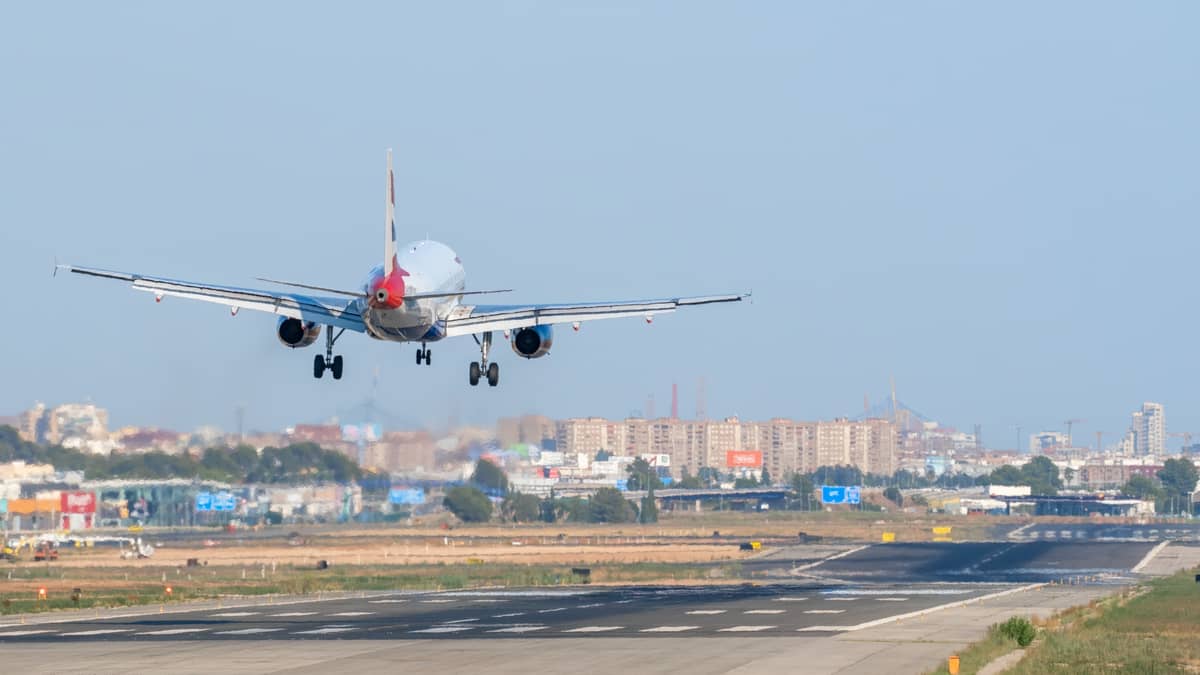
Valencia Airport (IATA: VLC), also called Manises Airport, sits about 8 km west of the city centre. A direct drive via the A-3 and V-11 motorways takes around 15 minutes in normal traffic. Three realistic options exist for most travellers: metro, bus, or taxi.
- Metro (Lines 3 and 5) — Best overall The airport station is on the ground floor of the regional flights terminal. Lines 3 and 5 run directly into the city centre in roughly 20 minutes. Fare: around €4.80 plus the card cost (€1.10–€2.20 for a reusable Mobilis card). Runs weekdays from approximately 04:00–23:30, weekends 05:00–00:30.
- Bus Line 150 — Cheaper, slower Runs from the airport to the city centre in about 35 minutes. On Sundays and holidays, service runs from approximately 07:35 to 22:15. Single ticket around €1.50. Good option if you arrive with time to spare and want to save a few euros.
- Taxi — Fastest, most expensive The 8 km journey costs vary by time of day and luggage surcharges — expect a higher flat fare than the metro. Useful for late-night arrivals when the metro has stopped, or if you're travelling with bulky luggage to a difficult address.
⚠️ What to skip
Valencia's metro does NOT accept contactless bank card payments at the turnstiles. You must load credit onto a physical Mobilis, TuiN, or SUMA card, which you buy at any metro station. Factor in a few extra minutes at the machine on your first trip — especially at the airport during peak arrival times.
The Metrovalencia Network: What It Covers
Metrovalencia operates 10 lines in total: 6 metro lines and 4 tram lines. This is a common source of confusion — many older guides still reference 5 lines, but the network has expanded significantly. The metro covers the airport, the historic centre, the Ciudad de las Artes y las Ciencias, and the beach suburbs, making it genuinely useful for tourists rather than just commuters.
The tram lines (Lines 4, 6, 8, and 10) are particularly handy for reaching the waterfront. Line 6 connects the city to the northern coast, while El Cabanyal and the main beaches at Playa de la Malvarrosa are well served by tram from the centre. Journey times from the historic core to the beach run about 15–20 minutes.
Metrovalencia uses a zone-based fare system (Zones A, B, and B+). Most journeys within the city proper fall in Zone A. The airport adds zones, which is why airport tickets cost significantly more than a standard single. During major events like Las Fallas in mid-March, the network runs extended timetables and modified routes — check the Visit València website for the latest service notices in the weeks before travel.
💡 Local tip
If you're staying for 3+ days and plan to use public transport daily, the 72-hour Valencia Tourist Card (around €30.00) pays for itself quickly. It covers unlimited rides on metro, tram, EMT buses, and the airport line, plus entry discounts at many attractions. Buy it online in advance or at tourist offices and major metro stations.
Buses, Night Buses, and the EMT Network
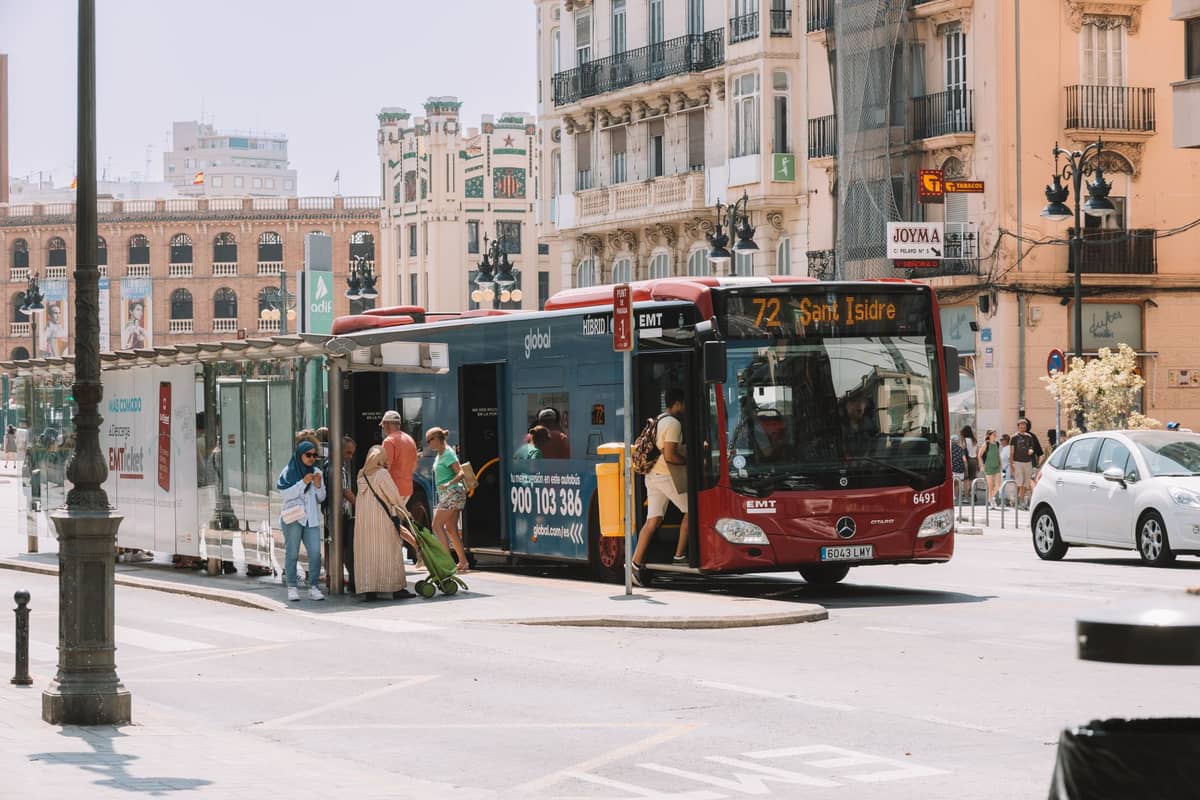
The EMT (Empresa Municipal de Transportes) operates around 60 urban bus lines plus metropolitan routes reaching the airport, l'Albufera, and surrounding towns. For most central tourist areas, the metro is faster — but buses fill the gaps the metro doesn't reach, and the night bus network is essential for anyone staying out past midnight.
Standard urban bus lines operate from roughly 05:30 through to around 22:00. After that, dedicated night bus lines run until the early hours on weekends and holidays. A single EMT bus ticket costs €1.50, payable to the driver or via card. The Bonobus EMT (10 rides for €8.50) saves money if you're bus-heavy on your trip.
- Single EMT ticket: €1.50
- Bonobus EMT (10 rides, buses only): €8.50
- SUMA 10 integrated ticket (metro + tram + EMT + selected Cercanías, Zone A): €8.00 for 10 trips
- Valencia Tourist Card 24h: approx. €17.00
- Valencia Tourist Card 48h: approx. €24.00
- Valencia Tourist Card 72h: approx. €30.00
- Metro/tram single Zone A or B: €1.50 + card cost
- Metro/tram airport Zone A+B+: €4.80 + card cost
Cycling: The Smartest Way to See the City
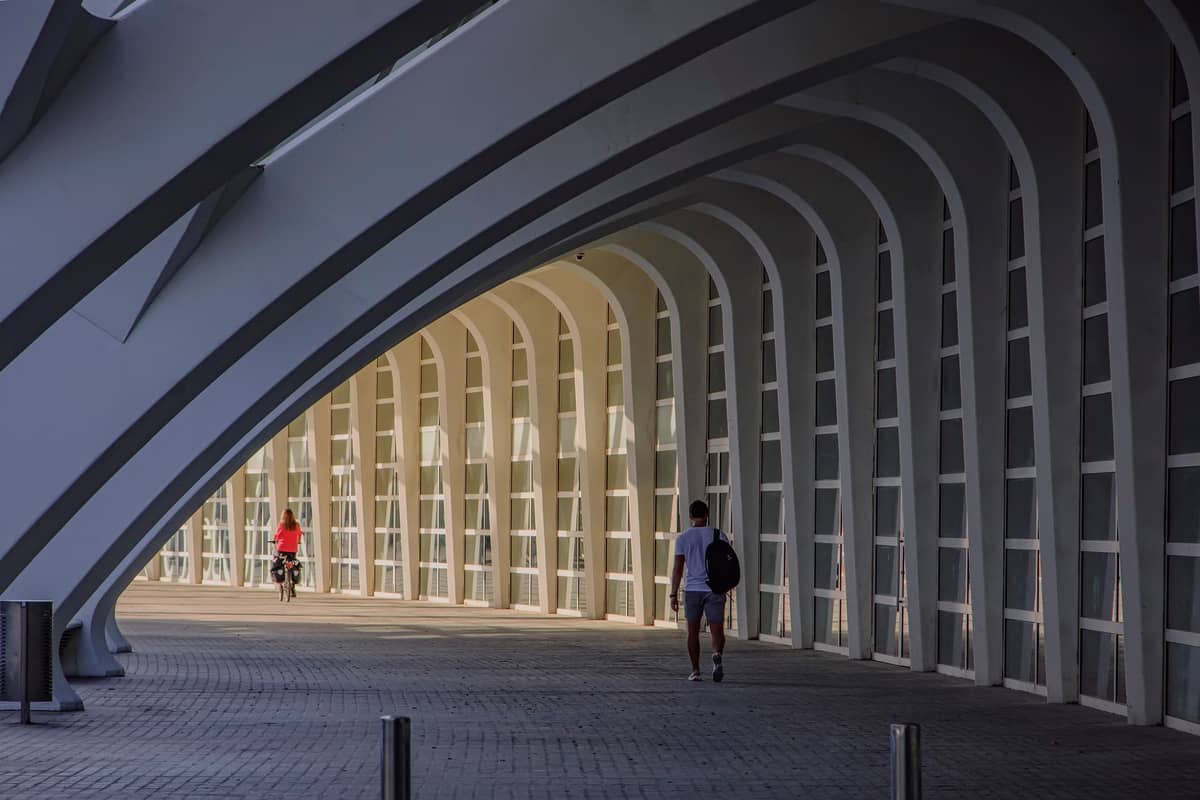
Valencia is one of Spain's most cycle-friendly cities, and for good reason. The old Turia riverbed was converted into a 9 km linear park, the Jardí del Túria, which stretches from the western outskirts all the way to the Ciudad de las Artes y les Ciències and beyond to the sea. It's completely car-free and connects most of the major attractions in a single flat corridor.
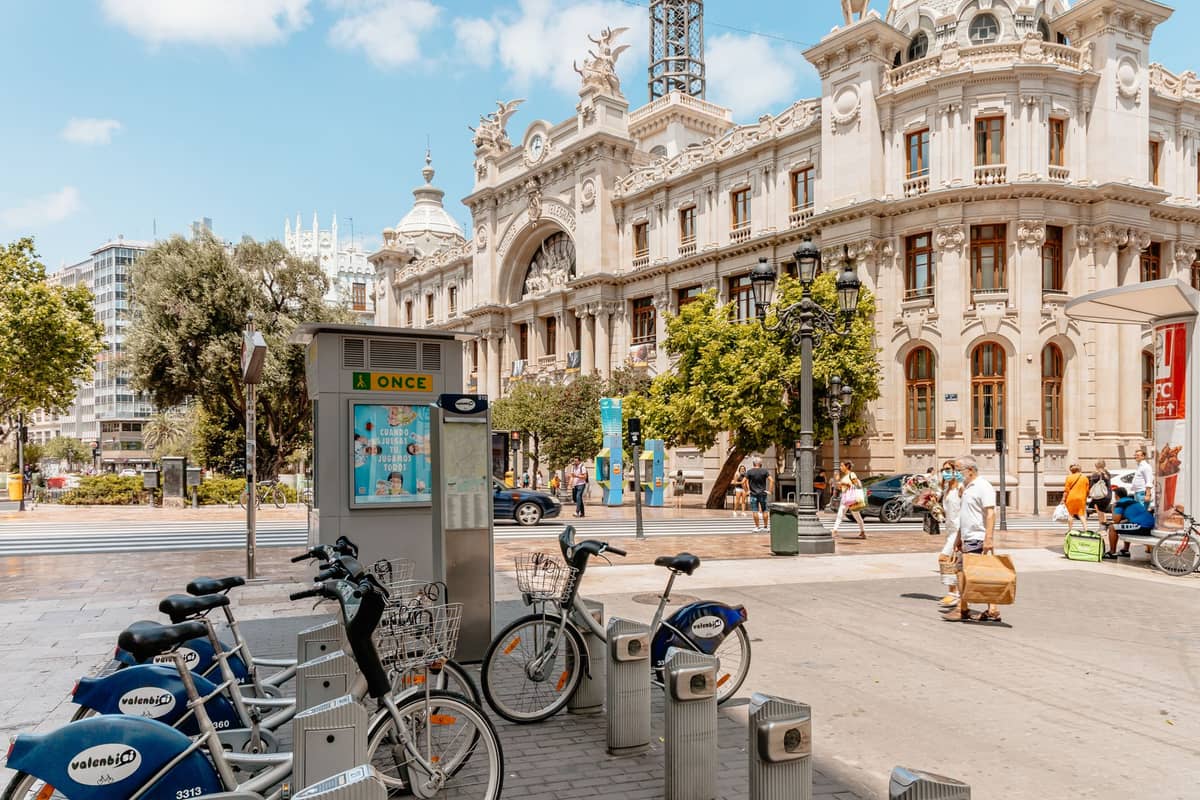
The city has over 150 km of dedicated bike lanes, and the Valenbisi public bike-share scheme operates at over 270 stations across the city. A 1-week Valenbisi subscription costs around €13.30, with unlimited 30-minute rides included — long enough to cross the entire city. Rental bikes from private operators near the beaches and the Turia park typically run €5–€15 per day depending on the type. For a more detailed route through the park, the Turia Garden cycling guide covers the best sections and what to stop for along the way.
✨ Pro tip
Avoid cycling in the historic centre streets around the Mercado Central and Plaza de la Reina during midday — they're pedestrianised or genuinely too crowded. Use the Turia park as your main east-west corridor and branch off from there. Early morning on the Turia path (before 09:00) is a completely different experience: near-empty and peaceful.
Taxis, Ride-Hailing, and Getting Around at Night
Licensed taxis in Valencia are white with a blue stripe and a VT identifier. They operate on meters, with base rates varying by time of day and whether you're carrying luggage or travelling on a public holiday. Taxi ranks are located at major transport hubs, the main squares, and near large hotels. Hailing a cab on the street is straightforward in most central neighbourhoods.
Cabify and Uber both operate in Valencia, though availability and pricing can vary. They're most useful for late-night returns from the beach clubs or after concerts at the Palau de les Arts, when the metro has stopped running and night buses involve a longer walk. For short hops within the city centre, a taxi or ride-share is rarely necessary — Valencia's walkability is one of its genuine strengths.
For context on how the different neighbourhoods connect: El Carmen and the historic core are entirely walkable from each other, while Ruzafa sits about 15 minutes on foot south of the centre. The beach at Malvarrosa is 5 km from the Plaza del Ayuntamiento — doable by bike, tram, or taxi, but not really on foot in summer heat.
Long-Distance Connections: Getting to Barcelona, Madrid, and Beyond
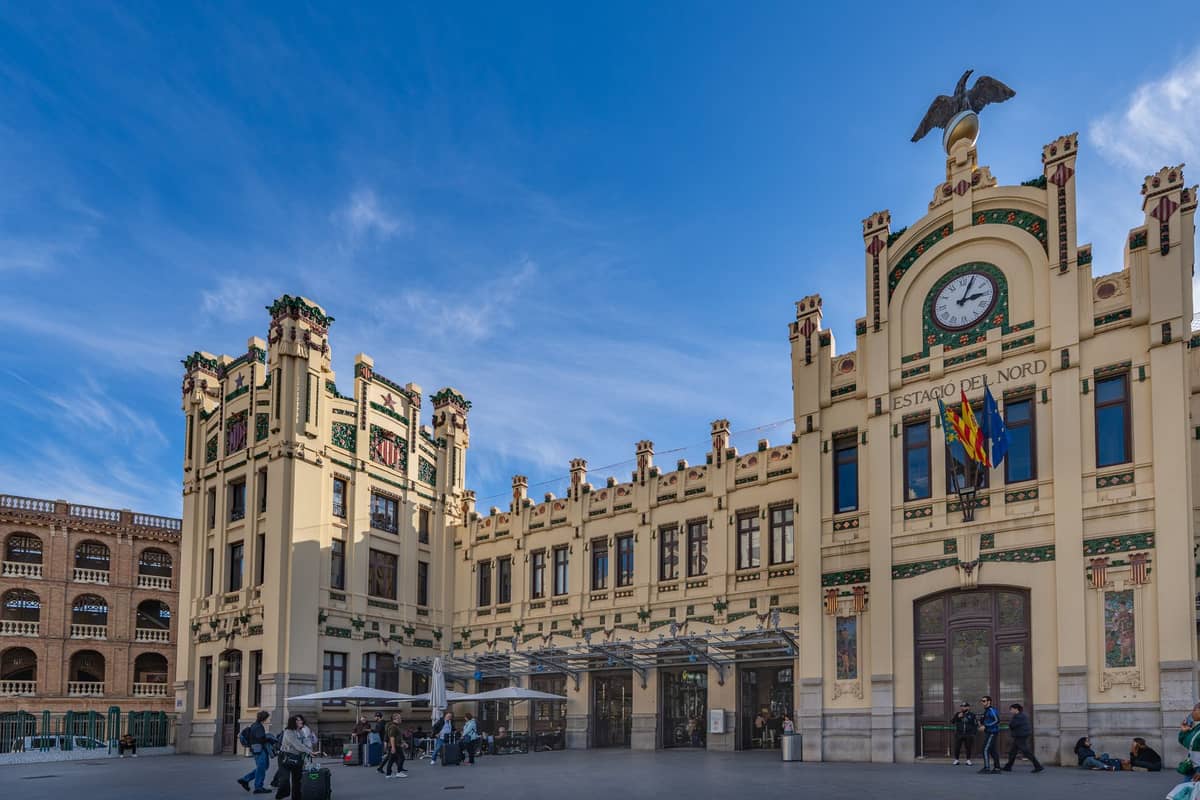
Valencia has two main train stations. Estació del Nord (Estación del Norte) handles regional and medium-distance services and is an architectural landmark worth seeing in its own right. Joaquín Sorolla station, a short walk away, is the high-speed rail hub for long-distance routes operated by Renfe. High-speed AVE trains connect Valencia to Madrid in around 1 hour 40 minutes and to Barcelona in about 3 hours 15 minutes, making both day trips realistic if ambitious.
The Valencia to Barcelona route is one of the more popular intercity connections in Spain. The high-speed service is faster and more comfortable than the bus, and generally comparable in price when booked in advance. If you're planning day trips from Valencia or considering a multi-city itinerary, the train network gives you good options north (Barcelona), west (Madrid), and south (Alicante, Murcia).
For reaching Albufera Natural Park from Valencia, the best public transport option is bus line 25, which runs from the city centre to El Palmar and surrounding villages. Alternatively, organised tours depart from the centre and include boat rides on the lake — a practical option if you want commentary without the logistics.
FAQ
Can I use a contactless bank card on Valencia's metro?
No. Valencia's Metrovalencia network does not currently support direct contactless bank card payment at turnstiles. You need to buy a physical Mobilis, TuiN, or SUMA card at a station ticket machine and load credit onto it. The card itself costs between €1.10 and €2.20 depending on the type, plus your chosen fare.
Is the Valencia Tourist Card worth buying?
It depends on how you travel. The 72-hour card costs around €30.00 and covers unlimited rides on metro, tram, EMT buses, and the airport line, plus discounts at many museums and attractions. If you plan to use public transport at least twice a day and visit two or more paid attractions, it typically pays for itself. For a single day of heavy transport use, the 24h card at around €17.00 makes less sense than a SUMA 10 multi-trip card.
How do I get from Valencia Airport to the city centre?
The easiest option for most travellers is the metro (Lines 3 or 5) from the station in the regional flights terminal. Journey time is roughly 20 minutes to the city centre, and the fare is approximately €4.80 plus card cost. Bus Line 150 is cheaper (around €1.50) but takes about 35 minutes. Taxis take roughly 15 minutes via the A-3 motorway and are the best choice for late-night arrivals.
What is the best way to get around Valencia without a car?
A combination of walking, cycling, and occasional metro rides covers almost everything a visitor needs. The city centre and most major attractions are within a compact area connected by the car-free Turia park corridor. For the beaches, the tram is the most pleasant option. Rent a Valenbisi public bike for a week (around €13.30) to cover more ground with less effort.
How long does it take to travel from Valencia to Barcelona by train?
High-speed Renfe AVE services connect Valencia (Joaquín Sorolla station) to Barcelona in approximately 3 hours 15 minutes. Booking in advance online secures the best prices. The journey is straightforward and considerably more comfortable than the equivalent bus route.