Ruzafa (officially Russafa) sits just south of Valencia's historic centre and has become the city's most culturally active neighborhood over the past decade. Its grid of early 20th-century streets mixes local bakeries with independent galleries, packed terrace bars, and some of the best international restaurants in the city. It works for almost every type of traveler.
Ruzafa is the neighborhood Valencia residents point to when they want to show the city at its most alive. South of the train station, away from the cathedral crowds, its compact grid of streets runs on a rhythm that shifts from morning coffee to afternoon market browsing to late-night bar-hopping with barely a pause.
Orientation: Where Ruzafa Sits in the City
Ruzafa occupies a compact 0.821 square kilometres in Valencia's Ensanche (Eixample) district, the planned 19th-century expansion south of the old city walls. Its boundaries are roughly: Gran Vía Marqués del Turia to the north, Avenida de Peris i Valero to the south, Avenida del Regne de València to the east, and the railway corridor to the west. In practical terms, you can walk from one edge to the other in about fifteen minutes.
The neighbourhood was an independent municipality until it was absorbed by Valencia in 1877. That history as a self-contained town still shows in the street layout: Ruzafa has its own internal logic and its own market, and it sits a short walk south of the city’s Plaza de Toros, which predates the annexation. Today it shares a northern border with San Francesc and sits within easy walking distance of the Estació del Nord and the bullring. The Jardín del Turia's eastern end is also reachable on foot, making Ruzafa one of the better-connected central neighbourhoods for anyone who wants both green space and urban energy.
To the west, the Parque Central (a large linear park built over former rail infrastructure) gives the neighbourhood a second green buffer. To the east, the wide boulevard of Gran Vía Marqués del Turia forms a clear dividing line between Ruzafa and the more residential El Pla del Remei. Knowing these boundaries helps: the atmosphere changes noticeably once you cross any of them.
Character and Atmosphere
The streets that define Ruzafa's character are Calle Sueca, Calle Denia, Calle Cuba, and Calle Cádiz. These run roughly parallel, linking the neighbourhood's main axes, and they carry a different energy depending on the hour. In the morning, before ten, you hear the metal shutters of the Mercado de Ruzafa rolling up, the espresso machines firing at the corner cafés, and the low conversation of residents doing the early shop. The neighbourhood is still mostly local at this hour: older residents with trolleys, delivery cyclists weaving between parked cars, a tabac owner setting out newspaper racks.
By midday the character shifts. The terrace tables fill with a younger crowd: remote workers nursing long coffees, groups of friends at weekend brunch, the occasional tourist who has figured out that Ruzafa's lunch options run circles around the overpriced tourist menus in the cathedral quarter. The light in the afternoon falls long and flat along the east-west streets, catching the ornate stone facades of the Eixample-era buildings, many of which have been repainted in the past decade in shades of ochre, terracotta, and pale cream.
After dark, Ruzafa is the engine of Valencia's mid-range nightlife. The bars on Calle Cádiz and Calle Denia don't properly fill until ten in the evening; by midnight on a Friday or Saturday, the narrow pavements on some streets make walking a negotiation. This is not a quiet neighbourhood to sleep in on weekends. That energy is exactly what draws many visitors, but it is worth knowing before you book.
⚠️ What to skip
If you are a light sleeper, choose a hotel on the quieter western side of Ruzafa, away from Calle Cádiz and Calle Denia. Noise from bar terraces on weekend nights can carry well past 2am.
The neighbourhood has a roughly 24,100-resident population and remains genuinely mixed. Long-term Valencian families live alongside students, digital nomads, and a significant immigrant community that arrived in the late 1990s and early 2000s, bringing Arabic bakeries, South American grocers, and Chinese-run convenience stores that coexist with the craft cocktail bars and vintage clothing shops that opened in the 2010s. This layering gives Ruzafa a texture that feels earned rather than manufactured.
What to See and Do
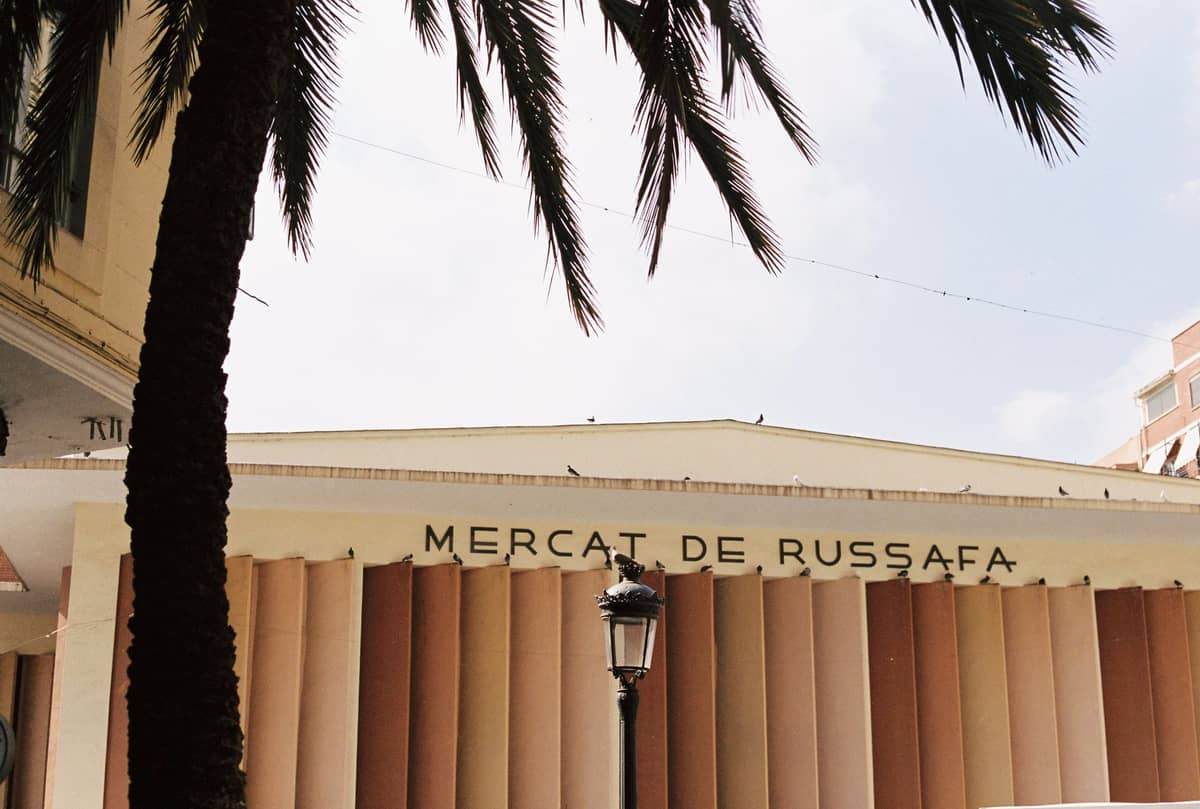
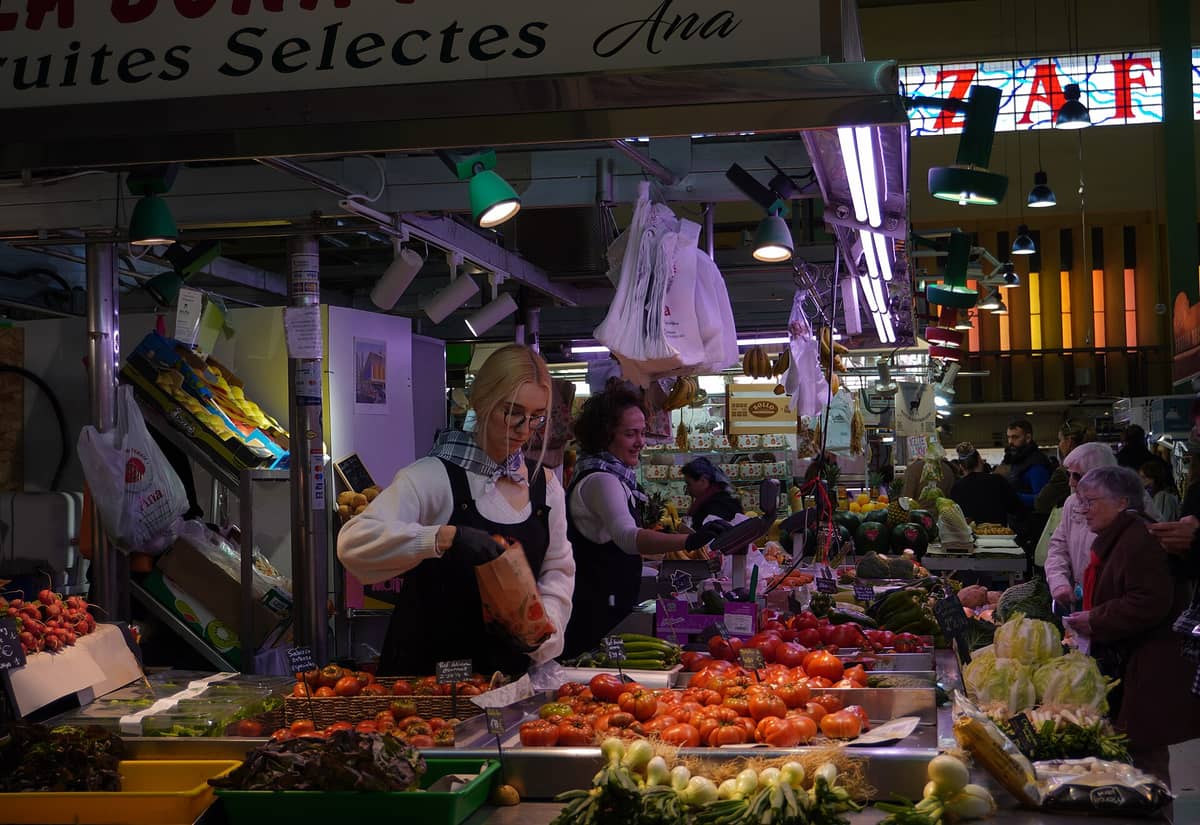
The most useful anchor point for exploring Ruzafa is the Mercado de Ruzafa, the neighbourhood's covered market on Calle Cádiz. It is smaller and less famous than the Mercado Central, but far more neighbourhood-scaled: stalls selling seasonal produce, fresh fish, cured meats, and prepared foods sit alongside a handful of bar counters where locals have a beer with their shopping. Saturday mornings, when a small outdoor market extends onto the surrounding streets, are particularly worth timing a visit around.
The streets themselves are the main attraction. Walking Calle Sueca from north to south takes you past independent bookshops, tattoo studios, a string of brunch cafés with handwritten menus, and at least two or three small gallery spaces that rotate exhibitions every few weeks. Calle Denia is slightly more bar-heavy, with several vintage furniture dealers mixed in among the restaurants. The neighbourhood hosts its own Fallas commission, and in March the streets are transformed with elaborate papier-mâché monuments that rival those in wealthier districts.
Just north of Ruzafa's official boundary, a five-minute walk up Calle Xàtiva, stands the Plaza de Toros de Valencia, one of the largest bullrings in Spain, and immediately beside it, the Estació del Nord, a Modernista railway station whose ceramic-decorated interior is worth a look even if you have no train to catch. Both are within walking distance and make natural additions to a Ruzafa morning.
Mercado de Ruzafa (Calle Cádiz): fresh produce, prepared food, bar counters
Independent galleries and studios on Calle Sueca and surrounding streets
Parque Central: the linear park directly west, good for a morning run or an afternoon break
Fallas monuments in March: Ruzafa's commission produces some of the most celebrated in the city
Street art along Calle Cuba and Calle Denia: look for murals on party walls and garage doors
ℹ️ Good to know
Ruzafa's gallery scene is informal and free. Many spaces operate without fixed hours, opening when the artist or curator is around. If a door is open and a light is on, you are generally welcome to walk in.
Eating and Drinking
Ruzafa has arguably the most concentrated and diverse restaurant scene in Valencia, covering more ground than the old city's restaurant strips while charging significantly less. It is the right place to look for serious food at honest prices. For background on what to order across the city, the guide to what to eat in Valencia is useful context, but Ruzafa specifically rewards explorers who walk the streets and pick by instinct.
The neighbourhood's food offer ranges from traditional Valencian lunch menus (a three-course menú del día for around ten to thirteen euros at midday, which remains one of Spain's great underrated food rituals) to Japanese, Lebanese, Mexican, and modern European cooking. Calle Sueca has the highest density of cafés and brunch spots; Calle Denia and Calle Cuba carry more dinner restaurants and tapas bars. The intersection of these streets in the centre of the neighbourhood is where the foot traffic peaks and where you will find the highest concentration of options within a few hundred metres.
Coffee culture in Ruzafa is taken seriously. Several independent roasters have opened here in recent years, and the neighbourhood has become a reference point for specialty coffee in Valencia. Mornings on the terrace of a good café on Calle Sueca, with a cortado and a crossword or a book, represent the neighbourhood at its most straightforward and most appealing.
Bar life follows the Spanish rhythm: vermut (vermouth) from noon on Sundays is a neighbourhood institution, with bars opening their stools to a mix of ages and setting out olives and chips without being asked. The cocktail bars that opened during the 2010s boom are still operating and doing good work, particularly on Calle Cádiz. Late-night venues cluster here and on the streets running south; the music gets louder past midnight and some spots operate close to dawn on weekends.
💡 Local tip
Sunday brunch is Ruzafa's most social moment. Arrive at a café on Calle Sueca or Calle Denia before 11am to get a table; by noon on a sunny Sunday, every terrace seat in the neighbourhood is taken.
Getting There and Around
Ruzafa sits about a fifteen-minute walk south of the historic centre. From the Plaza del Ayuntamiento, head south on Calle San Vicente Mártir, cross Gran Vía Marqués del Turia, and you are at the northern edge of the neighbourhood. This is also the most natural walking route from Estació del Nord.
The nearest metro stations are Xàtiva, served by lines 3, 5, and 9 on the northern edge of the neighbourhood, and Bailén on lines 7 and 10 slightly further north. From Xàtiva you can reach the airport (lines 3 and 5, around 20 minutes), the Ciudad de las Artes y las Ciencias (via line 10 to its nearby stops), and the main northern rail hub at Túria. The Metrovalencia network runs from approximately 05:00 to 00:30 at weekends and 04:00 to 23:30 on weekdays; current timetables and fares should be confirmed at metrovalencia.es.
City buses running along Gran Vía Marqués del Turia and Calle San Vicente Mártir connect Ruzafa to the beach at Malvarrosa and to the western end of the Jardín Botánico area. Ruzafa is also flat and well-suited to cycling: Valencia's Valenbisi bike-share has several docking stations within the neighbourhood, and the streets are manageable compared to the narrower lanes of the old city.
For a full overview of how to navigate Valencia by metro, bus, and bike, the guide to getting around Valencia covers the practical details. Ruzafa's central location means that almost no major sight in the city requires more than a twenty-minute journey from here.
Where to Stay
Ruzafa works well as a base for most types of traveler. It is central, well-connected, and has a much wider range of places to eat and drink at reasonable prices than the immediate surrounds of the old city. The Valencia accommodation guide covers the full city comparison, but Ruzafa specifically suits travelers who want a neighbourhood feel over a hotel-district experience.
The best part of Ruzafa to stay in, from a practical standpoint, is the central grid formed by Calle Sueca, Calle Denia, and their cross streets. This puts you equidistant from the market, the metro, and the main restaurant strips. If noise is a concern, streets on the western side of the neighbourhood near the Parque Central are noticeably quieter than those on Calle Cádiz or Calle Denia, which bear the brunt of weekend nightlife traffic.
Accommodation ranges from small boutique hotels in converted Eixample-era buildings to short-term rental apartments, which are abundant here. There are relatively few large chain hotels within Ruzafa proper; most of those sit on the Gran Vía or near the train station. For independent travelers, the apartment rental stock in the neighbourhood is high quality relative to price compared to the old city.
ℹ️ Good to know
Ruzafa is not the right base if your priority is proximity to the Ciudad de las Artes y las Ciencias or the beaches. Both are reachable by metro or bus, but walking distances are significant. For those attractions, the Ensanche east or the Cabanyal neighbourhood are closer alternatives.
Honest Assessment: Who Ruzafa Is For
Ruzafa is one of Valencia's most rewarding areas for first-time and repeat visitors alike, but it is not for everyone. It has little monumental architecture of its own; the cathedral, the Lonja, and the major museums are all a walk or a metro ride away. If sightseeing efficiency is the priority, staying in the historic centre makes more sense.
What Ruzafa delivers, consistently, is the feeling of being in a city that functions. The market works, the cafés are good, the restaurants are honest, and the streets have a density of life that comes from people actually living there. It does not package itself for tourists and it does not need to. That combination of quality and normality is harder to find than it sounds in a city of Valencia's size.
Travelers interested in Valencia's food culture will find this is the best single neighbourhood to base themselves in. Those drawn to nightlife will find Ruzafa covers mid-range bars and late venues better than anywhere in the city. And those who simply want to walk, eat, sit in a café, and observe how a functioning Spanish neighbourhood operates on a Tuesday morning will find Ruzafa entirely adequate for that too. For further planning, the 3-day Valencia itinerary routes through the neighbourhood and shows how it connects to the rest of the city.
TL;DR
Ruzafa is Valencia's most food-forward and culturally active neighbourhood, located just south of the historic centre and Estació del Nord, walkable from both.
Best for: food lovers, nightlife seekers, digital nomads, and travelers who want a genuine neighbourhood experience over a tourist-district stay.
Key streets: Calle Sueca, Calle Denia, Calle Cuba, and Calle Cádiz carry the neighbourhood's character. The Mercado de Ruzafa on Calle Cádiz is the daily anchor.
Transit: Metro stations Xàtiva (lines 3, 5, 9) and Bailén (lines 7 and 10) put the whole city within easy reach. The neighbourhood is also flat and very cyclable.
Not ideal for: light sleepers on weekend nights near the bar streets, or travelers whose priority is the beaches or Ciudad de las Artes y las Ciencias (both require a transit connection from here).
Three days is enough time to cover Valencia's historic core, its futuristic waterfront district, and the natural lagoon on its doorstep. This day-by-day itinerary gives you a realistic, logistically sound plan built around walking, cycling, and public transit.
Spain's largest natural lake sits just 10-15 km south of Valencia, and it's one of the most rewarding half-day escapes in the country. This guide covers exactly how to get there independently, what to do once you arrive, where to eat authentic paella, and when to go for the best experience.
Valencia's Art Nouveau heritage, locally known as Modernismo Valenciano, produced some of Spain's most distinctive early-20th-century architecture. This guide covers the key buildings, the architects behind them, the best routes to follow, and what to know before you visit.
Valencia sits on the Mediterranean with over three kilometres of urban beach on its doorstep and wilder, pine-backed shores just minutes south. This guide covers every beach worth knowing, from the classic city strips to the natural shorelines of the Albufera.
Valencia delivers more than its reputation suggests for museum culture. From a world-class fine art collection rivalling Madrid's to an underground Roman city and a science museum inside a whale skeleton, this guide covers the best museums in Valencia across every interest and budget.
Valencia is the birthplace of paella, and eating it here is a serious affair. This guide covers where locals go, what authentic paella actually contains, how much to pay, and the mistakes that send tourists home disappointed.
Valencia enjoys a Mediterranean climate with over 300 sunny days a year, but the best time to visit depends entirely on what you want from the trip. This guide breaks down every season by weather, crowd levels, prices, and key events so you can plan with confidence.
Valencia rewards those who look up and climb. From medieval towers rising above terracotta rooftops to waterfront terraces overlooking the Mediterranean, these are the city's finest vantage points, ranked and described so you know exactly where to go and when.
The Jardí del Túria is Valencia's greatest urban cycling route: a free, 9km green corridor running through the city's former riverbed. This guide covers the full route from Parque de Cabecera to the City of Arts and Sciences, with practical advice on bike rentals, seasonal timing, and the best stops along the way.
Valencia sits at the centre of one of Spain's most varied regions. Within two hours, you can reach a medieval hill town with a castle above the rooftops, thermal pools in an inland gorge, a dramatic coastal castle, and a lagoon that inspired the original paella. This guide covers the best day trips from Valencia with honest travel times, transport breakdowns, and seasonal advice.
Valencia rewards budget travellers more than almost any other Spanish city. World-class museums with free entry, a 9-kilometre riverside park, Gothic towers, contemporary art, and urban beaches are all yours without buying a single ticket.
Valencia is one of Spain's most navigable cities, with an integrated metro, bus, tram and bike network covering everything from the airport to the beaches. This guide breaks down every transport option, current fares, ticket types, and the honest trade-offs between them.
Valencia's horchata de chufa is one of the most misunderstood drinks in Spain. This guide explains what it really is, where to find the best versions, how to tell authentic from commercial, and why making the trip to Alboraya is worth your time.
Valencia is Spain's third-largest city, the birthplace of paella, and home to UNESCO-listed heritage, futuristic architecture, and 300+ days of sunshine a year. This guide cuts through the hype to tell you exactly what Valencia offers, what it costs, and whether it belongs on your itinerary.
Las Fallas is Valencia's most spectacular annual event, a UNESCO-recognised festival of fire, sculpture, and pyrotechnics that transforms the entire city each March. This guide covers the full schedule, key events, neighbourhood highlights, and practical advice to help you experience it properly.
Valencia delivers more than its reputation suggests in the luxury travel market. From intimate boutique hotels inside medieval palaces to world-class fine dining and the architectural spectacle of the Ciudad de las Artes y las Ciencias, this guide covers everything you need to plan a genuinely high-end visit to Spain's third-largest city.
Seven days is the ideal amount of time to see Valencia properly. This itinerary covers the medieval Old Town, Calatrava's futuristic City of Arts and Sciences, Albufera Natural Park, the best beaches, and Ruzafa's food scene — with practical logistics, honest timing, and no filler.
Valencia rewards couples with a rare mix of Mediterranean light, historic streets, and outdoor spectacle. This guide covers the best romantic experiences in the city, from golden-hour boat trips on Albufera to twilight strolls through Turia Gardens, with honest advice on timing, costs, and what to skip.
Valencia is Spain's third-largest city and one of its most rewarding to explore. This guide covers the best things to do in Valencia — from UNESCO-listed medieval architecture and futuristic science complexes to rice-field wetlands and urban beaches — with practical details on prices, timing, and how to avoid the crowds.
Valencia holds one of Europe's most complete architectural timelines, from Roman foundations and Valencian Gothic civic buildings to Modernista markets and Santiago Calatrava's white concrete landmark complex. This guide breaks down each era, where to find it, and how to see it without wasting a day.
Valencia's churches span eight centuries of architecture, from Romanesque foundations to extravagant Baroque ceilings. This guide covers the essential churches in the historic centre and beyond, with practical details on what to see, what to pay, and when to go.
Summer in Valencia, Spain runs hot and busy from June through August. This guide covers everything from actual temperatures and beach conditions to crowd patterns, seasonal pricing, and how to make the most of the city without melting in the midday sun.
Valencia runs later than almost any city in Europe. This guide covers every major nightlife district, the best bars and clubs by area, realistic timing advice, and honest warnings about what not to waste your night on.
Valencia is one of Spain's most affordable big cities, and with the right approach you can see almost everything that matters for well under €80 a day. This guide covers accommodation, food, transport, free attractions, and the common spending traps to avoid.
Valencia ranks among Spain's safer major cities, Valencia ranks among Spain's safer major cities, with low violent crime. But pickpockets target specific areas, festivals bring elevated risk, and autumn flooding is a genuine concern. This guide gives you the honest picture.
Valencia rewards shoppers at every level — centuries-old food markets, independent boutiques in converted Art Nouveau buildings, dedicated high-street corridors, and modern malls. This guide covers every format, with honest assessments of what's worth your time and what to skip.
Valencia, Spain delivers an exceptional range of family activities beyond the beach: a world-class aquarium, an immersive zoo, a 9-km park built in a riverbed, and free playgrounds that keep kids occupied for hours. This guide covers the best options by age, budget, and season — with honest assessments of what works and what to skip.
Valencia's Ciutat Vella packs over 2,100 years of history into just 1.5 square kilometres. This guide gives you a practical, well-sequenced route through the old city's best monuments, markets, and medieval streets, with practical notes on what to skip, what to pay for, and how long everything actually takes.
Valencia is the birthplace of paella, but its food culture runs far deeper than a single dish. This guide covers everything from traditional rice dishes and seafood stews to mid-morning snacks and the city's iconic tigernut drink — with real prices, meal timing, and honest advice on what to skip.
Choosing where to stay in Valencia depends on more than price. This guide breaks down every major neighbourhood by atmosphere, location, transport links, and honest drawbacks, so you can pick the right base for your trip.