3 Days in Valencia: The Perfect Itinerary
Three days is enough time to cover Valencia's historic core, its futuristic waterfront district, and the natural lagoon on its doorstep. This day-by-day itinerary gives you a realistic, logistically sound plan built around walking, cycling, and public transit.
Plan and book this trip
Tools from our partner Travelpayouts help you compare flights and hotels. If you book through them, we may earn a commission at no extra cost to you.
Flights
Hotels map
TL;DR
- Day 1 focuses on the historic centre: the Cathedral, Mercado Central, Barrio del Carmen, and the Torres de Serranos.
- Day 2 covers the City of Arts and Sciences and the Turia Gardens, best explored on foot or by bike.
- Day 3 is for the coast and Albufera Natural Park, with a proper paella lunch at El Palmar.
- You do not need a car. Metro Lines 3 and 5 connect the airport to the city in around 25 minutes, and bikes handle most of Day 2.
- Paella is a lunch dish in Valencia, not dinner. Plan accordingly or you will end up disappointed at tourist traps open late.
Arriving in Valencia and Getting Your Bearings
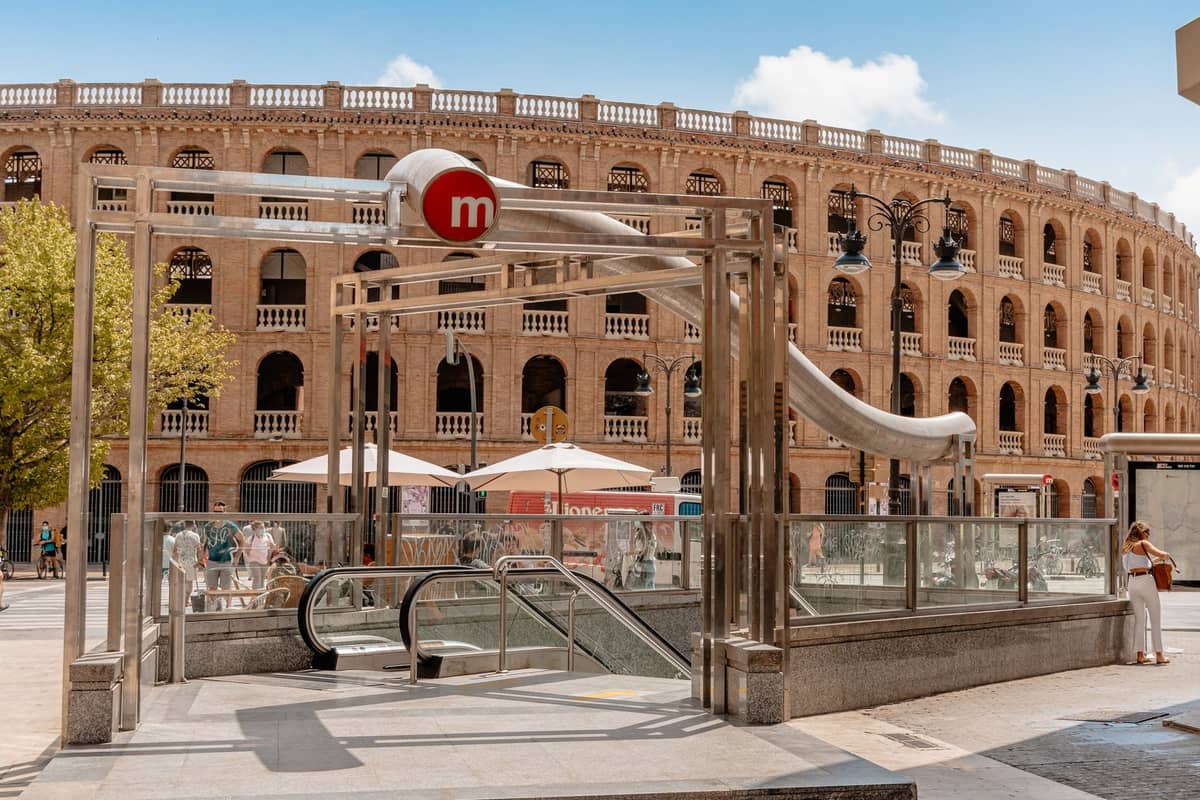
Valencia (officially València in Valencian) sits on Spain's Mediterranean coast at the mouth of the Turia River, about 8 km from its airport. From Valencia Airport (IATA: VLC), Metro Lines 3 and 5 run directly to the city centre in roughly 20–25 minutes. The airport station is on the ground floor of the regional flights terminal. Fares are subject to change, so confirm current prices on the Metrovalencia website before travel, but budget around €5 for a single ticket. City bus Line 150 is a slower alternative at around 35 minutes, useful if you are staying near the Joaquín Sorolla train station area.
If you are arriving by rail, the high-speed AVE from Madrid takes around 1 hour 55 minutes, and from Barcelona around 3 hours. Both services use Joaquín Sorolla station, which is a short walk or metro hop from the historic centre. From there, Valencia's compact old town is entirely walkable. The city's flat terrain also makes cycling practical for longer stretches, particularly the Turia Gardens route on Day 2.
💡 Local tip
If you plan to use public transport regularly, pick up a rechargeable transport card (Tarjeta de Transporte) at the airport metro station. It reduces per-journey costs and works across metro, tram, and bus. Confirm current pricing and card availability on the Metrovalencia or EMT Valencia websites before your trip.
Day 1: The Historic Centre
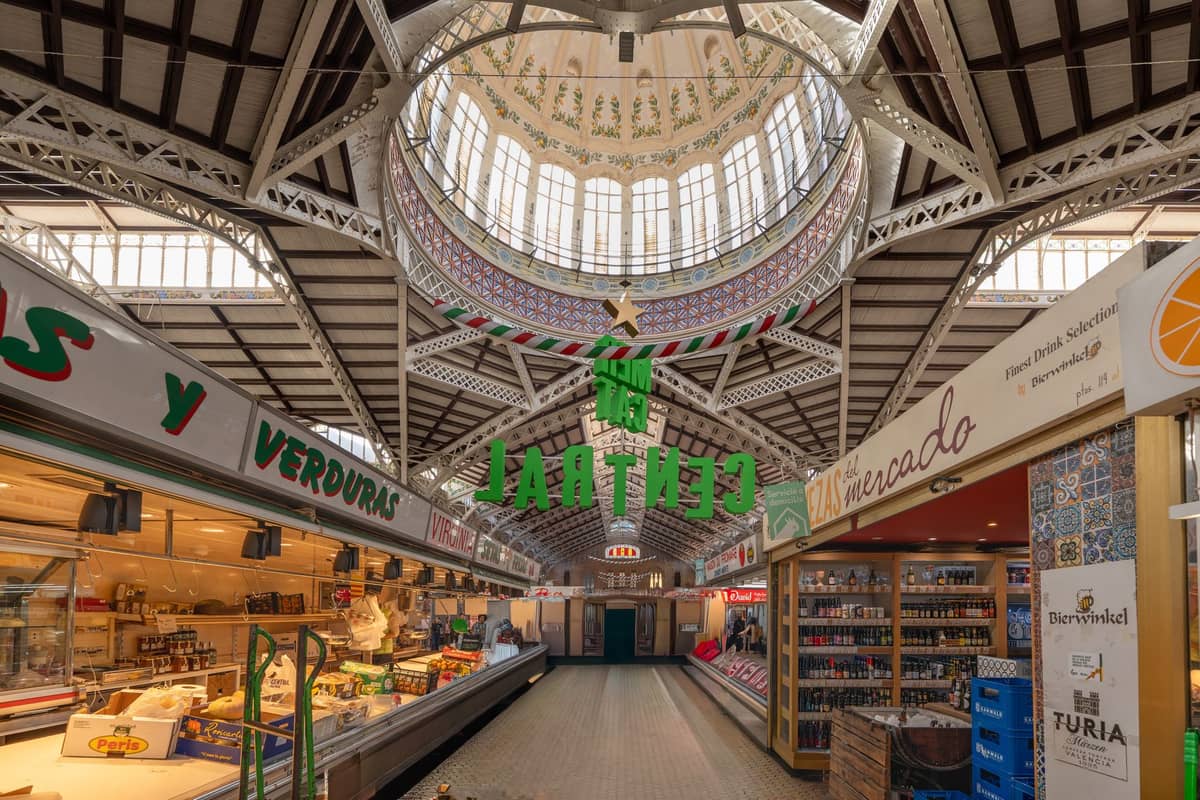
Start at the Mercado Central, one of the largest covered fresh markets in Europe, with several hundred stalls spread under a modernist dome. Arrive before 10:00 to see it at its most active and to avoid the midday tourist surge. The market closes early afternoon most days, so do not leave this for after lunch. Pick up a bag of local oranges here: Valencia oranges are cultivated in the surrounding huertas and are a genuine point of regional pride, not just a marketing angle.
From the market, it is a five-minute walk to the Valencia Cathedral, which sits on Plaza de la Reina. The Cathedral is worth entering for the Gothic nave and the chapel said to contain the Holy Grail, but the real payoff is climbing El Micalet, the bell tower, for a panoramic view over the terracotta rooftops. The climb involves a narrow spiral staircase, so it is not suitable for everyone. Next door, the Basilica de la Virgen de los Desamparados is free to enter and often uncrowded compared to the Cathedral.
After lunch, head into Barrio del Carmen, Valencia's oldest neighbourhood and one of the most architecturally layered parts of the city. Roman walls, a medieval layout, modernist facades, and contemporary street art occupy the same blocks. The Centre del Carme hosts rotating contemporary art exhibitions in a former convent, usually free or very low cost. It is easy to lose two hours here without a plan, which is actually the right approach.
End the afternoon at the Torres de Serranos, the 14th-century city gate that now offers elevated views over the Turia riverbed park. Admission is around €2, and free on Sundays. The nearby La Lonja de la Seda (the Silk Exchange) is a UNESCO World Heritage Site and one of the finest examples of Gothic civil architecture in Europe. It is often skipped by visitors who underestimate it. Do not make that mistake.
⚠️ What to skip
Many restaurants in the historic centre near Plaza de la Reina serve paella at dinner and market it as authentic. Authentic Valencian paella is a midday dish. If a restaurant is pushing paella at 9 PM to tourists, treat that as a red flag and look elsewhere. Check our dedicated guide to finding the best paella in Valencia for specific addresses worth trusting.
Day 2: City of Arts and Sciences and the Turia Gardens
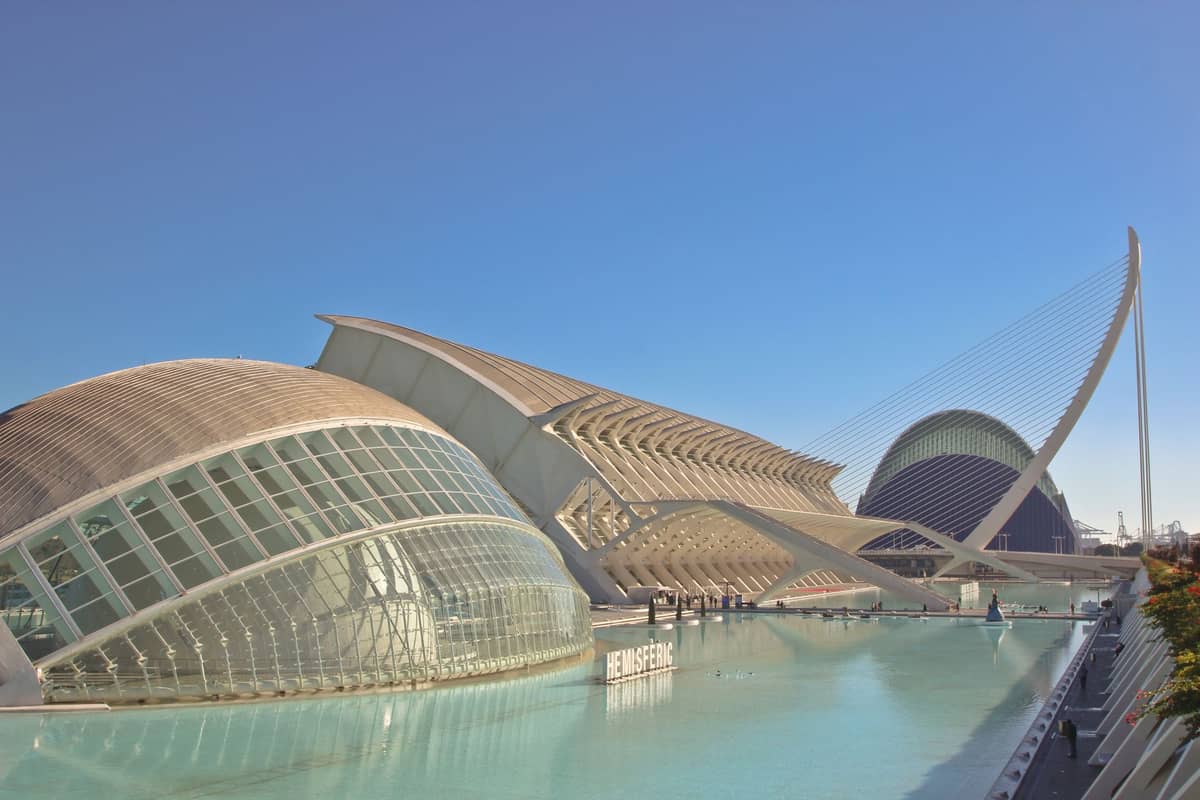
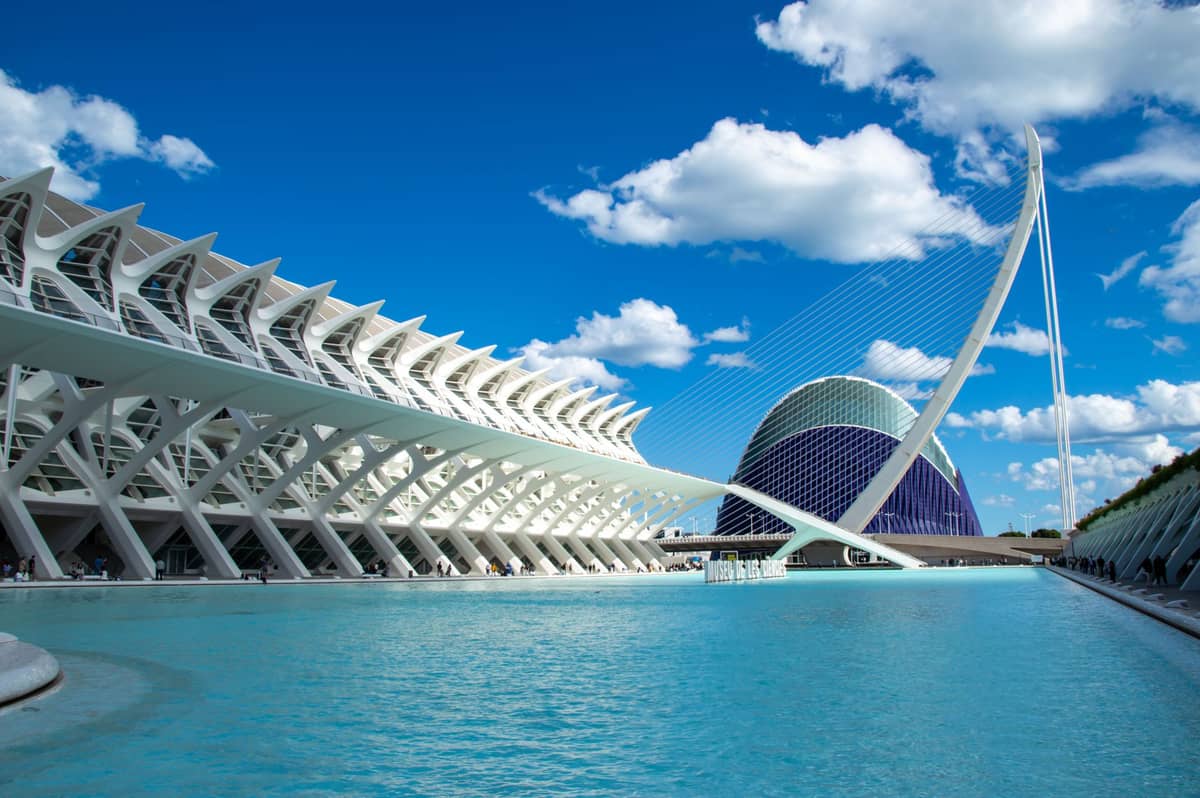
The City of Arts and Sciences complex, designed by Santiago Calatrava and Félix Candela, is Valencia's most photographed landmark and genuinely deserves the attention. The complex stretches along the eastern end of the Turia Gardens and includes several distinct venues. You do not need to visit all of them: the exterior architecture alone is striking, and budget-conscious travellers can spend a couple of hours photographing the grounds for free.
- L'Oceanogràfic Europe's largest aquarium, with over 45,000 animals. Expect to spend 2-3 hours. Buy tickets online to skip queues, especially in summer. This is the most expensive venue in the complex.
- Museu de les Ciències Príncipe Felipe An interactive science museum that works well for families but also holds genuine interest for adults. The building itself, shaped like a whale skeleton, is architecturally significant.
- L'Hemisfèric An IMAX cinema and planetarium housed in a structure resembling a giant eye. Show schedules rotate, so check the programme in advance if this is a priority.
- Palau de les Arts Reina Sofía Valencia's opera house. If you can get tickets for an evening performance, this is one of the better ways to spend a night in the city.
The best way to connect Day 2's sights is by cycling through the Jardín del Turia, the 9-kilometre linear park built in the former Turia riverbed. The river was diverted after catastrophic flooding in 1957, and the city converted the dry bed into a green corridor that now links the historic centre to the City of Arts and Sciences. Rent a bike from one of several Valenbisi docking stations near the old town. The route is flat, car-free, and passes through some of the city's best public space. See our dedicated guide to cycling the Turia Gardens for the full route breakdown.
✨ Pro tip
In July and August, midday temperatures in Valencia regularly exceed 32°C. If you visit in summer, plan outdoor cycling and walking for before 11:00 or after 18:00. The City of Arts and Sciences reflects heat off its white concrete surfaces and can be uncomfortable at peak hours. Spring (March to May) and autumn (September to November) are the most comfortable seasons for a walking-heavy itinerary.
For the afternoon, consider the neighbourhood of Ruzafa, about 15 minutes on foot south of the old town. This is Valencia's most interesting residential neighbourhood for food and independent retail: good coffee shops, wine bars, and the Mercado de Ruzafa offer a less tourist-oriented experience than the historic core. This is also the area to explore if you are looking for Valencia's nightlife, which tends to start late and run until well past midnight.
Day 3: Beaches and Albufera
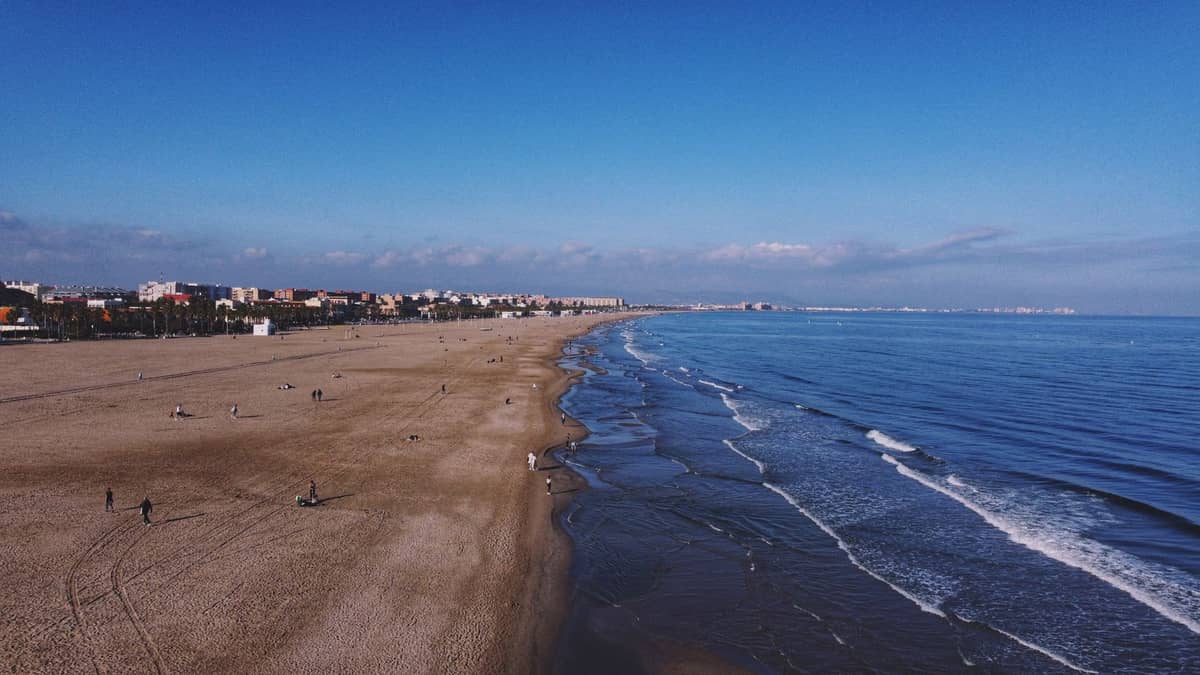
Valencia's beach situation is straightforward: the main urban beaches, Playa de la Malvarrosa and Playa de las Arenas, are accessible on tram Line 4 of the metro system or by bike from the city centre in about 25 minutes. They are wide, well-maintained, and free, though they get busy on summer weekends. If the crowd density bothers you, head further south to Playa de Pinedo, which is quieter. The beach neighbourhood of El Cabanyal, immediately behind Malvarrosa, is worth walking through: it has a distinct identity, tiled modernist fishermen's houses, and a genuine neighbourhood feel that sets it apart from the tourist-facing seafront strip.
The more rewarding half-day option for Day 3 is an excursion to Albufera Natural Park, a freshwater lagoon about 15 km south of the city. This is where authentic Valencian paella was historically developed: the rice fields surrounding the lagoon supplied the raw ingredient, and the tradition of cooking it outdoors over orange wood fires is still practiced in the village of El Palmar. A flat-bottomed boat ride across the lagoon takes around 30-40 minutes and costs around €5-8 per person depending on the operator. Book paella at one of the El Palmar restaurants in advance during peak season.
- Bus Line 24 from Valencia city centre runs to El Palmar and takes around 40-50 minutes. Verify current timetables with EMT Valencia before your visit.
- Taxis and rideshares can reach the lagoon in around 20 minutes and are practical for groups of three or more splitting the cost.
- Several organised half-day tours from Valencia combine the boat ride and paella lunch; these are worth considering if you want logistics handled for you.
- The lagoon is at its most scenic in the late afternoon when the light is lower, but if you want a proper lunch paella, plan to arrive by 13:00.
Practical Logistics for 3 Days in Valencia
Where you stay shapes how efficiently the itinerary flows. The historic centre (Ciutat Vella) puts you within walking distance of Day 1 entirely. Ruzafa is equally central and slightly calmer. For guidance on which area suits your budget and travel style, the where to stay in Valencia guide breaks down each neighbourhood honestly, including the trade-offs.
Budget travellers can run a very good three-day trip without spending heavily. Many of the city's best experiences, the Turia Gardens, Barrio del Carmen, the Torres de Serranos on Sundays, the exteriors of the City of Arts and Sciences, and the beaches, are free or near-free. See the free things to do in Valencia guide for a fuller list. On the other end, if you want premium accommodation, private tours, or opera tickets, check the luxury Valencia guide for curated options.
- Getting around Walking covers most of Day 1. Rent a bike for Day 2 via Valenbisi (the city's bike-share) or any local rental shop near the old town. Use Metro Line 4 or buses for the beach on Day 3.
- Valencia weather The city averages over 18°C annually with very mild winters rarely dropping below 10°C and dry summers. Spring and autumn offer the best balance for sightseeing. Summer is hot, with peak temperatures above 30°C, but the sea breeze on the coast helps.
- Language Both Spanish (Castilian) and Valencian are official languages. In tourist areas, English is widely spoken. Learning a few words of Spanish is appreciated even if you default to English.
- Emergency number Dial 112 for police, fire, and medical emergencies. This is the standard EU emergency number and works throughout the Valencian Community.
ℹ️ Good to know
If you have a fourth day or want to extend, the most logical day trips from Valencia are Albufera (already in this itinerary), the hill town of Xàtiva (about 40 minutes by train), and the walled city of Morella (around 3 hours by bus). For a full breakdown, see the day trips from Valencia guide.
What to Eat and Drink Across 3 Days
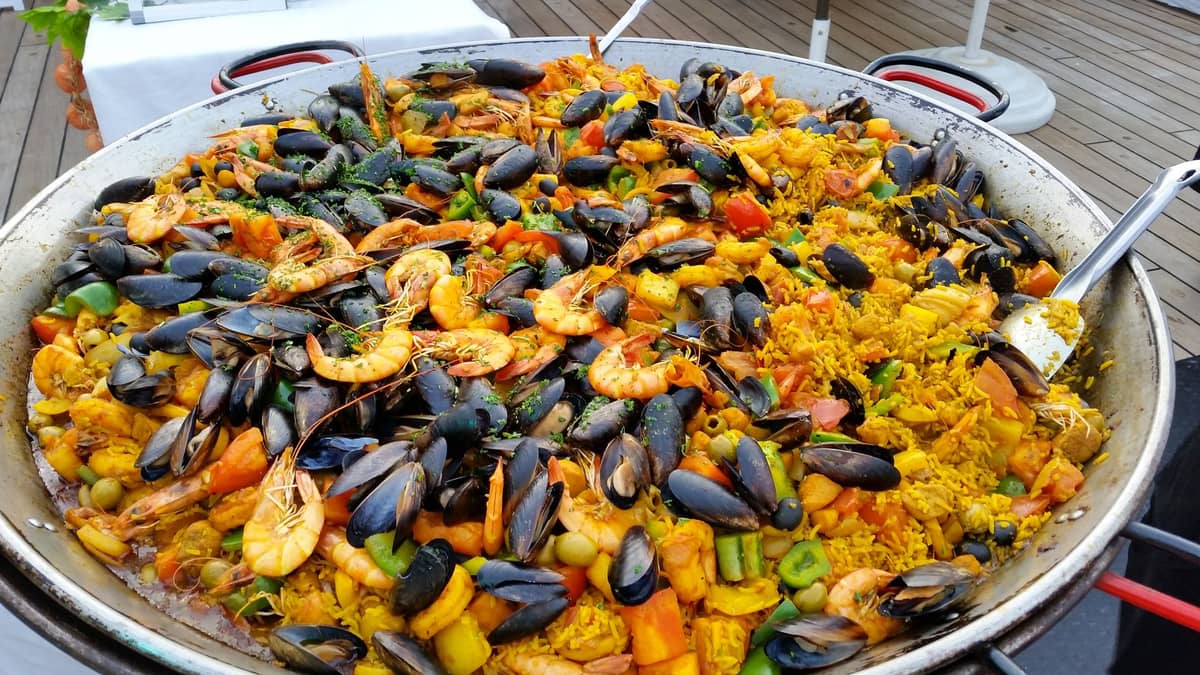
Paella is the obvious centrepiece and it belongs at lunch, specifically on Day 3 in El Palmar, where the context is right. For a thorough breakdown of where to eat it in the city itself, the best paella in Valencia guide lists specific restaurants with honest assessments. Beyond paella, Valencia's food culture is broader than most visitors expect: fideuà (the noodle-based cousin of paella), all i pebre (a garlic-paprika eel stew from the Albufera area), and fresh seafood from the La Marina restaurants are all worth prioritising.
For breakfast or an afternoon break, do not skip horchata. This milky drink made from tigernuts (chufas) grown in the Valencian huertas is a regional institution, best drunk cold with a long fartons pastry. The best places to try it are dedicated horchateras rather than cafes. See the horchata guide for where to go. The full picture of what Valencia's food scene offers, beyond the headline dishes, is covered in what to eat in Valencia.
FAQ
Is 3 days enough for Valencia?
Three days is a realistic minimum to cover the main areas without feeling rushed: the historic centre, the City of Arts and Sciences, and either the beaches or Albufera. You will not exhaust the city in three days, but you will leave with a solid understanding of what makes it distinct. A fourth or fifth day allows you to go deeper into neighbourhoods like El Cabanyal or Ruzafa, or add a day trip.
What is the best time of year for a 3-day Valencia trip?
Spring (March to May) and early autumn (September to October) offer the best combination of warm weather, manageable crowds, and comfortable walking temperatures. Summer is the busiest and hottest period, with temperatures regularly above 30°C. Mid-March is when Las Fallas peaks (usually 15–19 March), which transforms the city but also fills every hotel and doubles prices. Winter (December to February) is mild and uncrowded, but beach days are unlikely.
Do I need a car to follow this 3-day Valencia itinerary?
No. The historic centre and City of Arts and Sciences are best explored on foot and by bike. The beach is accessible by metro or bus in under 30 minutes. Albufera can be reached by city bus, though a taxi or organised tour is faster and easier. A car adds parking hassle in the centre and is only useful if you plan to drive to rural areas beyond the scope of this itinerary.
How far in advance should I book tickets for the City of Arts and Sciences?
For L'Oceanogràfic, booking online at least a few days ahead is recommended in peak season (July, August, Easter week) to guarantee entry and avoid queues. The science museum is generally easier to walk into. If you plan to attend a performance at the Palau de les Arts opera house, book several weeks in advance as popular productions sell out quickly.
What is the easiest way to get from Valencia to Barcelona after 3 days?
The high-speed AVE train from Joaquín Sorolla station to Barcelona Sants takes around 3 hours and departs frequently throughout the day. Book in advance through Renfe (Spain's national rail operator) for the best fares. Flights are faster door-to-door only if you factor in airport check-in time for both ends, which often makes the train the more practical choice.