Where to Stay in Valencia: Best Neighbourhoods & Hotels (2026 Guide)
Choosing where to stay in Valencia depends on more than price. This guide breaks down every major neighbourhood by atmosphere, location, transport links, and honest drawbacks, so you can pick the right base for your trip.
Plan and book this trip
Tools from our partner Travelpayouts help you compare flights and hotels. If you book through them, we may earn a commission at no extra cost to you.
Flights
Hotels map
TL;DR
- Ciutat Vella (Old Town) is the most central option but also the priciest, with average hotel rates starting around €80–120 per night for mid-range doubles.
- Ruzafa (Russafa) is the best all-round neighbourhood for food, nightlife, and day-to-day convenience — see our Ruzafa neighbourhood guide for the full picture.
- Beach districts (El Cabanyal, Malvarrosa) are well-connected to the centre by tram and metro — you do not need to sacrifice location to be near the sea.
- Las Fallas in mid-March and July–August see the biggest price spikes; book at least 2–3 months ahead for those periods.
- You do not have to stay in the Old Town to reach the main sights — getting around Valencia is straightforward from any of the neighbourhoods covered here.
How to Choose the Right Neighbourhood in Valencia
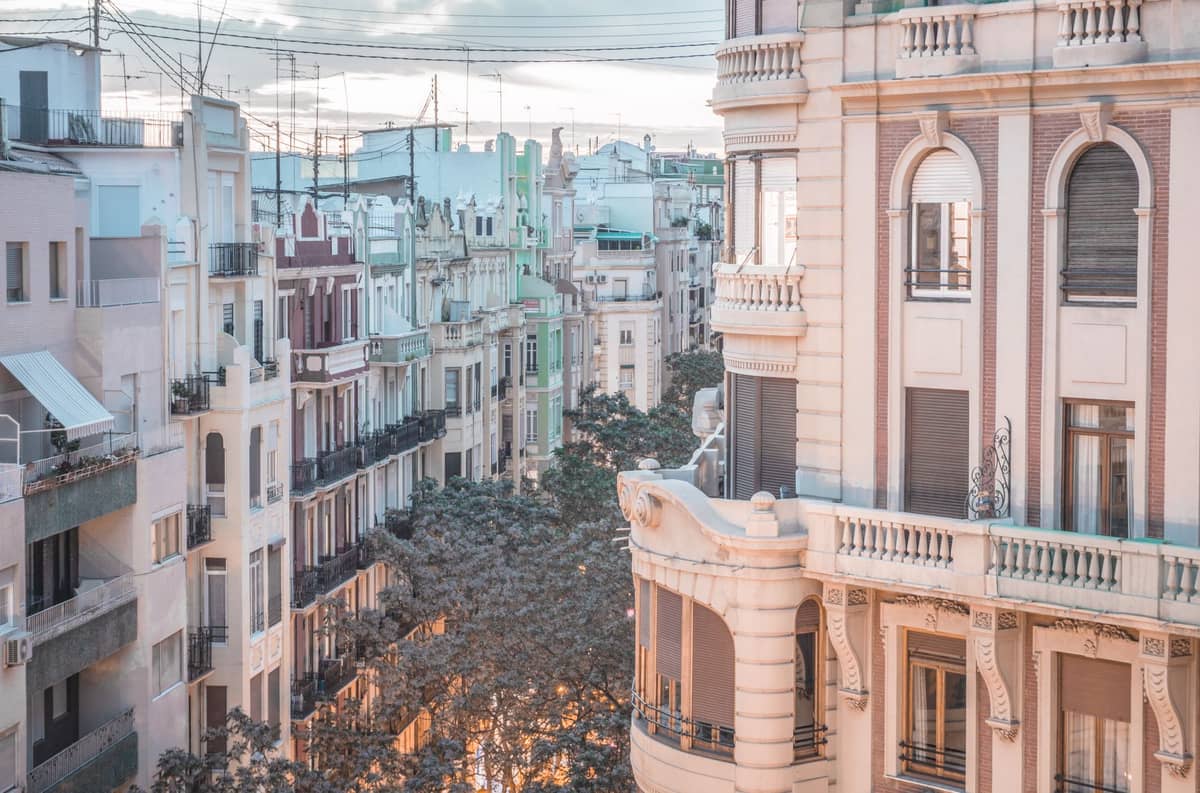
Valencia is a manageable city of roughly 800,000 people spread across 134.6 square kilometres. Most visitors spend time in a fairly compact arc that runs from the historic centre westward through Ruzafa, north toward Benimaclet, and east to the seafront at El Cabanyal and Malvarrosa. The City of Arts and Sciences sits on the southern edge of the Turia park, roughly 3 kilometres from the cathedral. This geography matters because no single neighbourhood is inconveniently far from anything else, which means your decision should be based on atmosphere and price, not just proximity to landmarks.
The clearest way to frame the choice: stay in Ciutat Vella if you want to step outside and immediately be among the medieval streets, markets, and churches. Choose Ruzafa or L'Eixample if you prioritise restaurants and a local feel over tourist infrastructure. Pick El Cabanyal or Malvarrosa if beach mornings matter more than a short walk to the cathedral. Each trade-off is real, but none of them is catastrophic.
ℹ️ Good to know
Valencia's public transport is reliable enough that staying 2–3 kilometres from the historic centre does not cost you significant time. The metro, tram, and bus network covers every neighbourhood on this list. A single-journey metro ticket costs around €1.50; a 10-trip card can bring the per-journey cost down considerably. Verify current fares on the official Metrovalencia or EMT Valencia websites before you travel.
Ciutat Vella (El Carmen and the Old Town): Best for First-Time Visitors
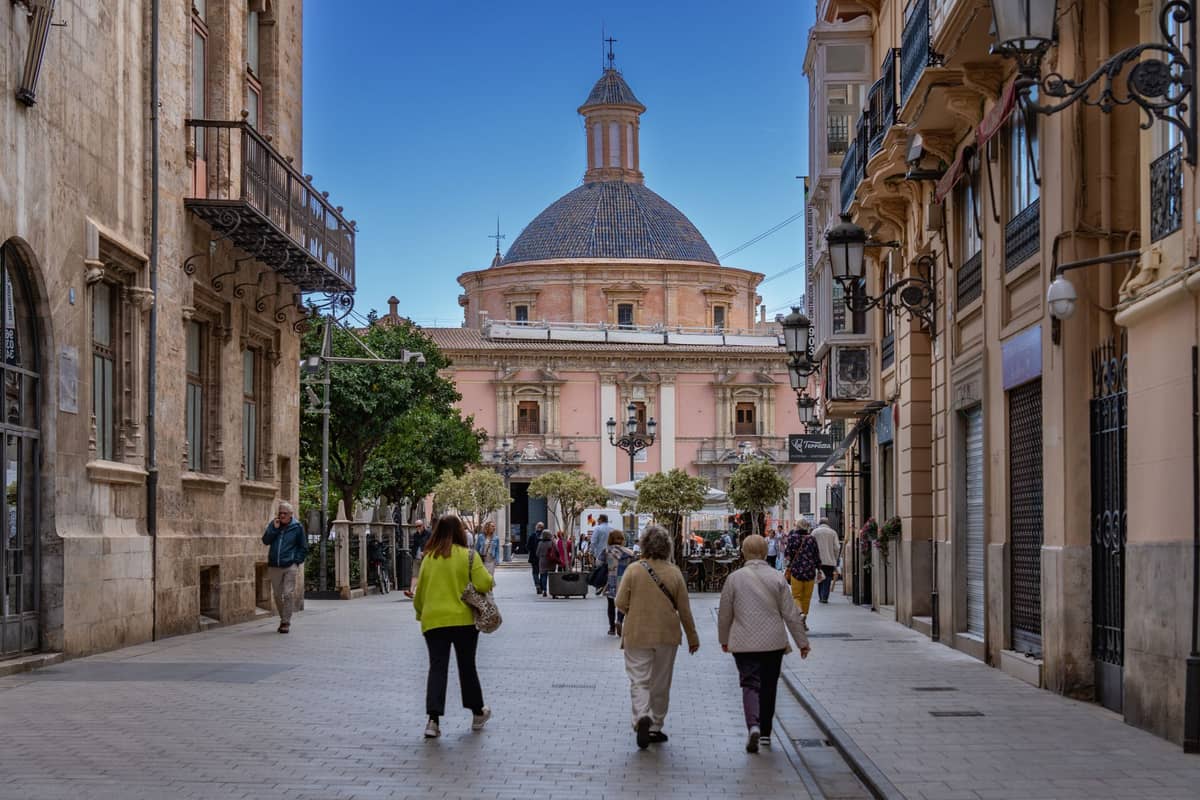
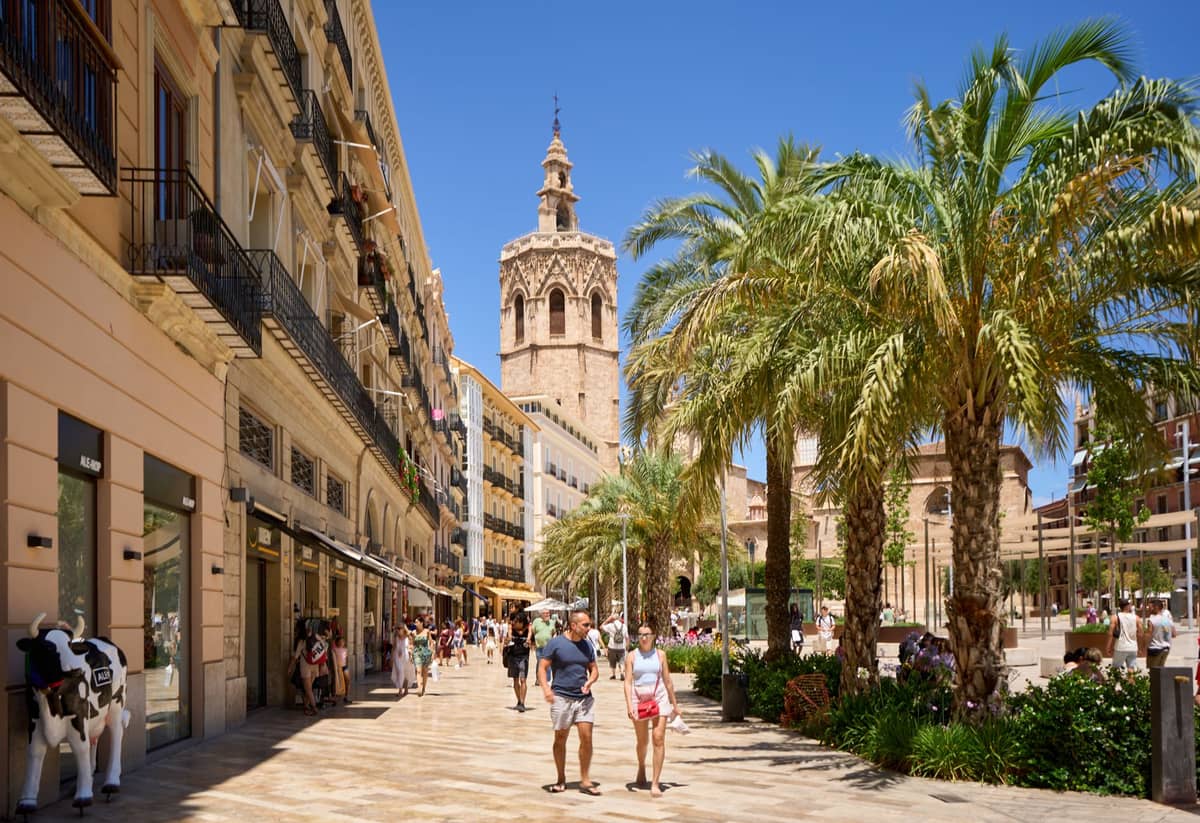
Ciutat Vella is Valencia's historic core, encompassing the barrio of El Carmen and the cathedral quarter around Plaza de la Reina. The Mercado Central, the Cathedral, La Lonja de la Seda, and the Torres de Serranos are all within a ten-minute walk of each other. Staying here means you can reach the main sights before the tour groups arrive at 10am, which is a genuine advantage.
The drawbacks are real. Ciutat Vella has the highest property prices in Valencia (around €4,500 per square metre as of 2025), and hotel rates reflect this. Narrow streets mean noise from nightlife carries easily, particularly in El Carmen, where bars stay open late on weekends. Some streets near Plaza de la Virgen and Barrio del Carmen also attract pickpockets in high season, so basic precautions apply. That said, the neighbourhood is compact enough that you can walk almost everywhere without relying on public transport at all.
El Carmen, the northwestern quarter of Ciutat Vella, has a younger, more creative edge with independent galleries and street art alongside the Gothic palaces. The area around Barrio del Carmen is particularly atmospheric but also the loudest at night. If you want central but quieter, look for hotels closer to Plaza del Ayuntamiento or the Eixample boundary rather than deep inside El Carmen.
- Best for First-time visitors, short stays of 2–3 nights, travellers prioritising walkability to heritage sites
- Avoid if You are light sleepers, travelling with young children, or watching your budget closely
- Transport Metro lines 1, 2, 3, 5 serve the area; Xàtiva and Àngel Guimerà stations are the most useful hubs
- Price range Mid-range doubles from around €80–120/night; boutique and design hotels often €130–200+
Ruzafa and L'Eixample: Best All-Round Base
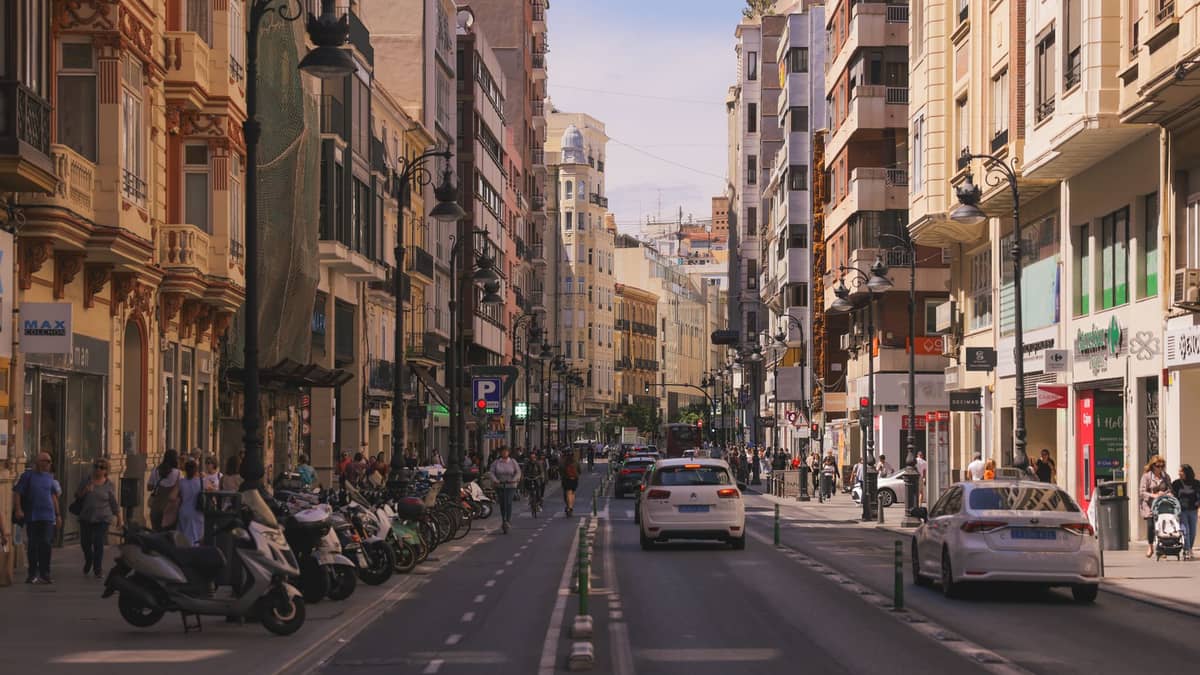
Ruzafa (officially Russafa) sits immediately south of the historic centre, separated from it by the Gran Vía. It is Valencia's most talked-about neighbourhood right now and for good reason: the concentration of independent restaurants, coffee shops, and weekend markets is unmatched elsewhere in the city. The Mercado de Ruzafa anchors the neighbourhood and remains a working local market rather than a tourist attraction. Streets like Calle Cádiz and Calle Cuba are lined with the kind of places where Valencians actually eat.
L'Eixample, the grid of broad avenues that connects Ruzafa to the city centre, is more residential and polished. It has some of Valencia's highest property values (around €4,900 per square metre in 2025), and the hotels here tend toward mid-range and four-star properties catering to business travellers and couples. The Colón area, anchored by the Mercado de Colón, sits at the northern end of L'Eixample and is one of the more pleasant parts of the city for an evening walk.
⚠️ What to skip
Ruzafa has become noticeably busier with tourists over the past five years. Calle Cádiz on a Friday night now draws crowds that rival El Carmen, and some bars cater almost exclusively to visitors. The neighbourhood still works well as a base, but the 'authentic local neighbourhood' framing is increasingly overstated. Go on a weekday morning and it is genuine; go on a Saturday night and it is a party district.
The practical case for Ruzafa as a base: it is a 15-minute walk to the cathedral, a 20-minute walk to the City of Arts and Sciences, and a 20-minute tram ride to the beach. The Xàtiva metro station on the Eixample-Ruzafa boundary connects to the airport in under 30 minutes. For a stay of four or more nights, Ruzafa offers more variety in terms of eating and drinking than the Old Town, at slightly lower hotel prices.
El Cabanyal and Poblats Marítims: Best for Beach Access
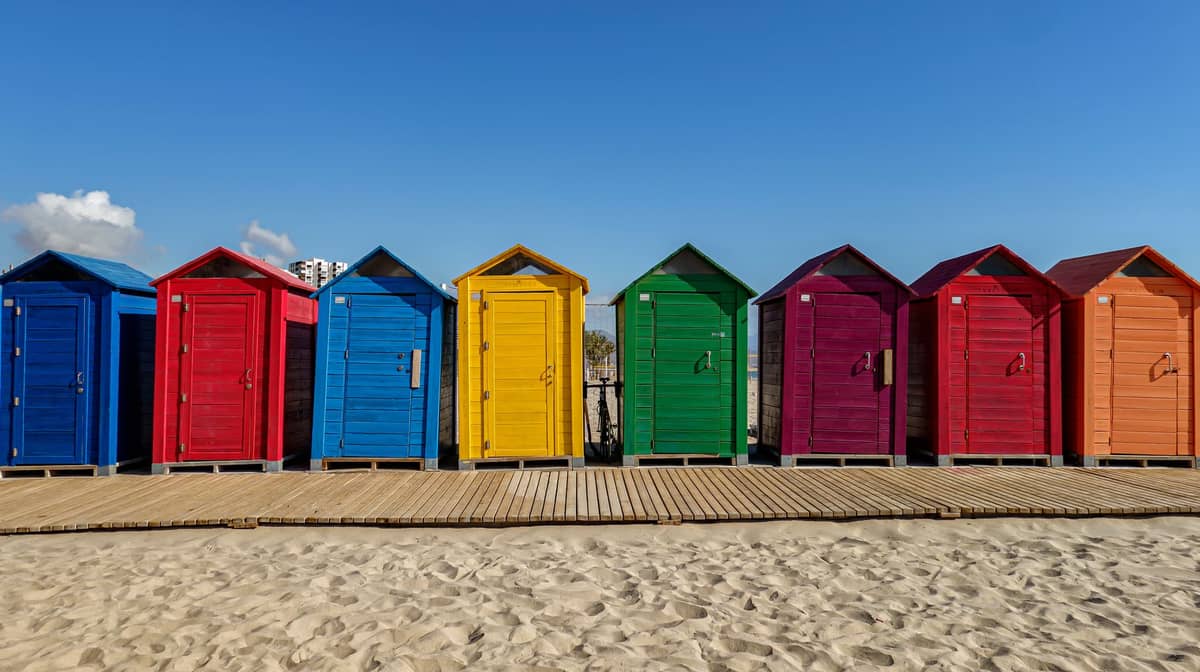
The coastal districts collectively known as Poblats Marítims include El Cabanyal, El Canyamelar, and the beachfront at Playa de la Malvarrosa and Playa de las Arenas. El Cabanyal itself is a former fishing village with a distinctive early-20th-century modernista architecture that sets it apart visually from the rest of Valencia. Property prices here average around €3,000 per square metre, making it noticeably more affordable than the historic centre.
The neighbourhood has been in a process of regeneration for over a decade, which means the experience is still uneven: beautifully tiled facades next to buildings in poor condition, excellent new restaurants alongside abandoned plots. That roughness is part of its character and appeal, particularly for travellers who find the Old Town too polished. The El Cabanyal area now has a solid selection of independent restaurants and wine bars along Calle del Rosario and the surrounding streets.
Getting to the centre from El Cabanyal takes around 20–25 minutes by tram (line 4) or metro (lines 3 and 5) to Xàtiva or Colón. Bus lines also run regularly along the seafront promenade. In summer, the convenience of walking to the beach in five minutes outweighs the slightly longer commute to the historic centre for many visitors. In winter, when the beach is empty, the calculus shifts somewhat, and the neighbourhood can feel quieter than expected.
✨ Pro tip
If you are visiting in July or August, the beach districts fill up fast. Book accommodation in El Cabanyal or near Malvarrosa at least 2 months ahead for summer dates. The same applies to Las Fallas (1–19 March), when the entire city sees an accommodation crunch and prices in all neighbourhoods spike significantly.
Benimaclet and Campanar: Quieter, More Local Alternatives
Benimaclet sits northeast of the historic centre, roughly 2.5 kilometres from the cathedral. It has a strong student population thanks to its proximity to the Universitat de València campus, which gives it an affordable and youthful energy without the tourist overlay of Ruzafa. There are good tapas bars, a small covered market, and a genuinely relaxed pace. Metro line 4 connects Benimaclet to the centre in around 10 minutes. For budget travellers or anyone staying a week or more, it is one of the most comfortable areas to base yourself in Valencia.
Campanar, to the northwest, is the opposite in character: quieter, greener, and predominantly residential. It attracts families and longer-stay expats looking for larger apartments at lower prices. The trade-off is that Campanar requires public transport or cycling to reach most attractions, and the neighbourhood itself has fewer restaurants and bars than anywhere else on this list. That said, it borders the Turia park, which makes it an excellent base if cycling is central to how you want to explore the city.
- Benimaclet: best for budget travellers, students, and anyone staying 5+ nights who wants a local feel without tourist pricing
- Campanar: best for families, slow travellers, and cyclists who want to use the Turia park as a daily commute route
- Both neighbourhoods are less suitable if you want to walk everywhere or if your trip is just 2–3 nights focused on the main landmarks
Practical Tips for Booking Accommodation in Valencia
Valencia is a city that rewards some advance planning. Seasonal patterns are pronounced: the city is at its most congested during Las Fallas in mid-March, and again from late June through August when domestic tourism peaks alongside international visitors. Outside those windows, particularly in spring (April–May) and autumn (October–November), prices drop and availability is good. Those shoulder months also offer the most comfortable weather for visiting Valencia.
For hotel bookings, Booking.com and direct hotel websites both cover the main areas well. Short-term rental platforms have a significant presence in El Cabanyal and Ruzafa, which has contributed to rising rents in those neighbourhoods. If you are staying more than a week, a self-catered apartment often makes more financial sense than a hotel, particularly in Benimaclet or outer Eixample where the daily rate is lower.
Transport logistics should factor into your decision. The airport (Valencia VLC, around 8 kilometres from the city centre) connects via metro lines 3 and 5 in approximately 20 minutes to the Xàtiva interchange, which sits on the Eixample-Ruzafa border. From Xàtiva, everywhere else described in this guide is within a 10-minute ride or 20-minute walk. If you are arriving by high-speed train, Joaquín Sorolla station is in the Eixample district, making that neighbourhood particularly easy to reach directly from the platform. For more detail on how the city connects, the Valencia transport guide covers metro, bus, tram, and cycling in full.
- Las Fallas (mid-March) Book 2–3 months ahead; Ciutat Vella and Ruzafa prices can double or triple
- Summer (July–August) Beach districts fill first; book 6–8 weeks ahead for El Cabanyal and Malvarrosa
- Shoulder season (April–May, Oct–Nov) Best availability and pricing across all neighbourhoods; often 30–40% cheaper than peak
- Christmas and New Year Moderate demand spike; easier to manage than Fallas or summer but worth booking early in central areas
💡 Local tip
If you want to balance sightseeing with beach time, staying in Ruzafa or southern Eixample gives you roughly equal transit time to both the historic centre (15 minutes on foot) and El Cabanyal (20 minutes by tram). It is the most versatile location in Valencia for a mixed itinerary.
FAQ
Where is the best area to stay in Valencia for tourists?
Ciutat Vella (the Old Town) is the most convenient for landmark sightseeing on a short trip. Ruzafa is a better all-round base for stays of four or more nights, offering more restaurant variety and a slightly lower price point. Both are well-connected to the beach and the City of Arts and Sciences.
Is it worth staying near the beach in Valencia?
Yes, if beach time is a priority, particularly in summer. El Cabanyal and the Malvarrosa promenade are around 20–25 minutes from the historic centre by tram or metro (line 4 or lines 3 and 5). Accommodation prices in those areas are generally lower than the historic centre, which makes the slightly longer commute a reasonable trade-off.
Where should I stay in Valencia during Las Fallas?
Anywhere in the central districts works, but be prepared for noise and crowds. Ruzafa and Eixample host many neighbourhood fallas (the large sculptural monuments) and are lively throughout the week. Ciutat Vella is close to the main pyrotechnic events. Book at least 2–3 months ahead as availability across the entire city tightens sharply during this period.
What is the cheapest neighbourhood to stay in Valencia?
Benimaclet consistently offers the lowest hotel and rental prices among central-ish neighbourhoods, followed by El Cabanyal and Campanar. Budget accommodation also exists in the outer Eixample, particularly south of Gran Vía Germanies. Prices in Ciutat Vella are the highest across all categories.
Is Ruzafa safe to stay in Valencia?
Yes. Ruzafa is one of Valencia's most popular residential neighbourhoods and is considered safe for tourists and residents alike. As with any urban area, standard precautions apply at night around busy bar streets. It is not a neighbourhood that requires any special alertness beyond what you would apply in any major European city.