Las Fallas Valencia: The Complete Festival Guide
Las Fallas is Valencia's most spectacular annual event, a UNESCO-recognised festival of fire, sculpture, and pyrotechnics that transforms the entire city each March. This guide covers the full schedule, key events, neighbourhood highlights, and practical advice to help you experience it properly.
Plan and book this trip
Tools from our partner Travelpayouts help you compare flights and hotels. If you book through them, we may earn a commission at no extra cost to you.
Flights
Hotels map
TL;DR
- Las Fallas runs 15–19 March, with the most intense days being 16–19 March when around 700–800 sculptural monuments appear across the city.
- Every day at 2:00 pm from 1–19 March during the broader Fallas period, the Mascletà firecracker show fires off in Plaza del Ayuntamiento — free to watch, genuinely deafening.
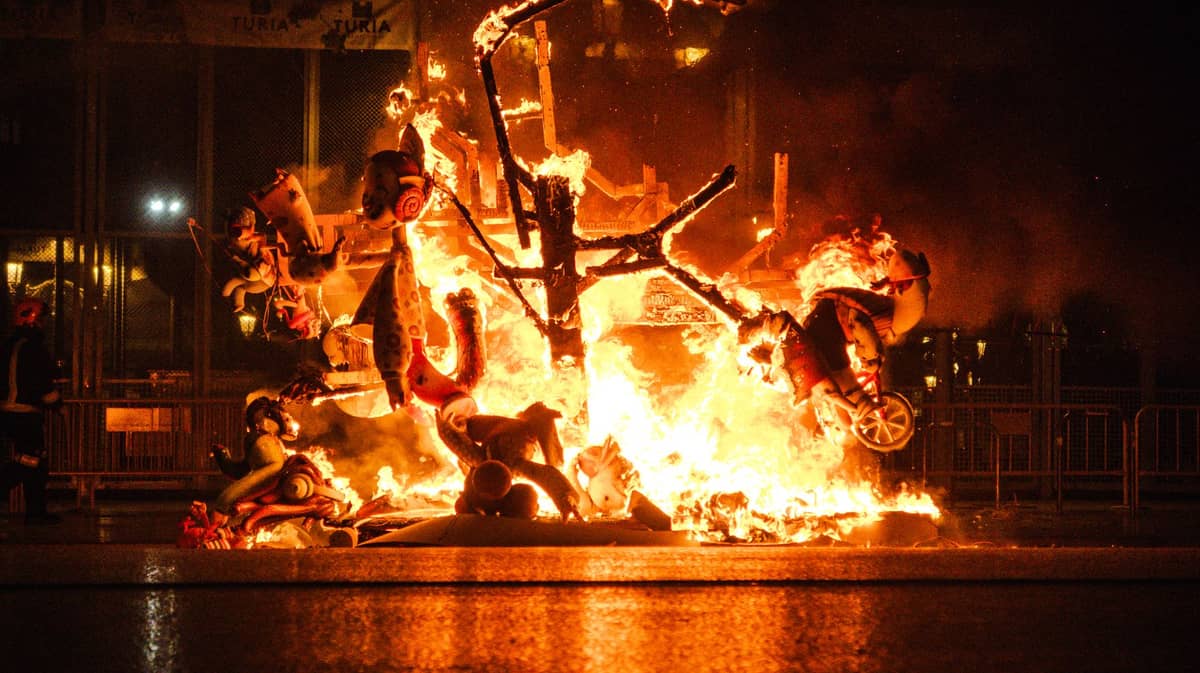
- La Cremà on the night of 19 March is the climax: almost every monument burns simultaneously, with the main falla at Plaza del Ayuntamiento burning last.
- Book accommodation months in advance for 15–19 March. Prices can triple compared with a normal March week. See where to stay in Valencia for neighbourhood options.
- Las Fallas was declared UNESCO Intangible Cultural Heritage in 2016. It is far more than burning sculptures — it includes parades, religious ceremonies, live music, and community street meals.
What Is Las Fallas? Origins and Cultural Significance
Las Fallas (La Falla in Valencian singular) began as a practical tradition among Valencia's carpenters. At the end of winter, craftsmen would burn the wooden lamp-holders and scrap timber that had accumulated through the dark months, timing the bonfire to coincide with the feast day of Saint Joseph on 19 March. Over centuries, those utilitarian bonfires evolved into competitive art installations, political satire, and one of the world's most elaborate civic festivals.
In 2016, UNESCO declared Las Fallas an Intangible Cultural Heritage of Humanity, recognising not just the spectacle but the deep social infrastructure behind it: hundreds of neighbourhood associations called comissions de falla that spend entire years fundraising, commissioning artists, hosting dinners, and electing their Fallera Mayor. The festival is as much about community identity as it is about fire.
The monuments themselves are called fallas (or fallas monuments), built from cardboard, wood, polystyrene, and paint by specialist artisans known as artistas falleros. Each consists of a central figure surrounded by smaller figures called ninots. Many are explicitly satirical, taking aim at politicians, celebrities, and current events. One ninot from each monument is voted to be spared from burning and preserved in the Museu Faller, Valencia's dedicated museum of saved sculptures.
Full Festival Schedule: What Happens and When
A common mistake is treating Las Fallas as a long weekend. The official Fallas festivity runs from mid‑March through to the night of 19 March, with the main events concentrated between 15 and 19 March. If you only have a few days, arriving on 15 March gives you the full experience. If you have more time, arriving earlier lets you see the city build toward its crescendo.
- 1–19 March: Daily Mascletà Every day at exactly 2:00 pm in Plaza del Ayuntamiento, a percussive firecracker show called the Mascletà fires for around 5–8 minutes. It is less a visual display and more a physical one — the pressure waves are felt in your chest. Arrive at least 30 minutes early to secure a position close to the square. Free to attend.
- 15–18 March: Plantà and Monuments Open From the night of 15 March, the fallas monuments are installed on their designated street corners across the city (this process is called the Plantà). By morning on 16 March, the city is transformed. Walking between monuments throughout the day is the main activity during this period.
- 17–18 March: Ofrena de Flors The Offering of Flowers is a two-day procession in which falleras (women in traditional dress) carry flower offerings to the Plaza de la Virgen to build a giant floral mantle on the statue of the Verge dels Desemparats. It is one of the more moving and photogenic events of the festival.
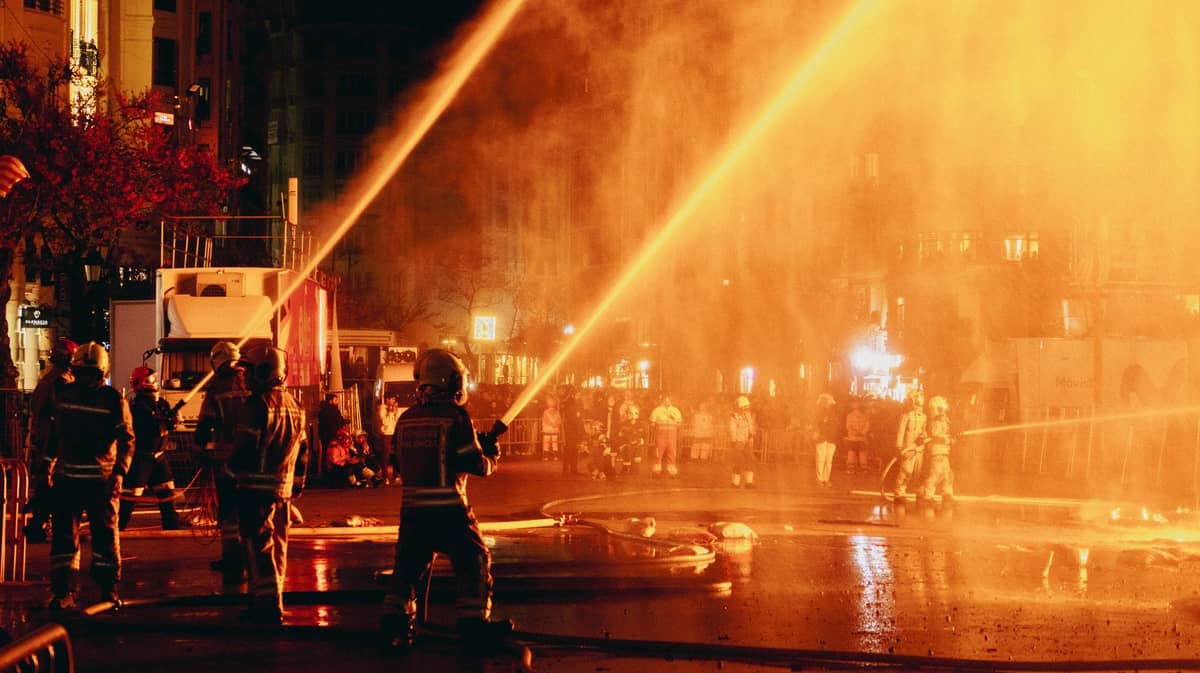
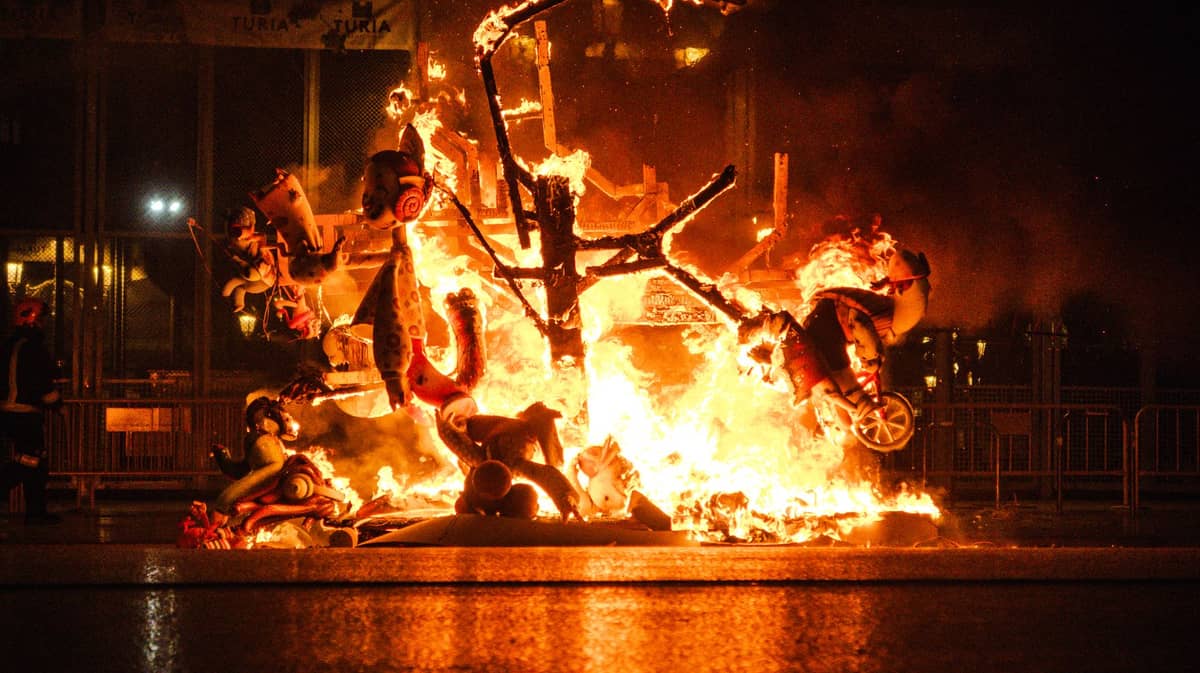
- Night of 19 March: La Cremà All monuments across the city are burned in a coordinated sequence. Smaller neighbourhood fallas burn earlier in the evening; the main falla at Plaza del Ayuntamiento burns last, typically after midnight. The heat is intense and crowds are enormous. Position yourself near a smaller local falla first, then move toward the centre for the finale.
💡 Local tip
The Mascletà on the final day (19 March) is the most powerful of the season. If you can only attend one, make it that one. The square fills fast — be in position by 1:15 pm at the latest.
The Monuments: What to Look For and Where to Find the Best
Valencia erects around 700–800 fallas monuments each year when you include the children's fallas (falletes), which are smaller versions placed alongside the main structures. Each comission de falla commissions its own monument, meaning quality and ambition vary widely across the city. Budgets range from a few thousand euros for neighbourhood falletes to hundreds of thousands for the prestige categories.
The highest-category monuments, classified as Special Section (Secció Especial), are clustered in a walkable route through the city centre. The area around Barrio del Carmen and the historic centre contains several competition entries worth seeking out. The official Visit Valencia website and app publish an updated map of monument locations each year.
When inspecting a falla, pay attention to the ninots — the individual figures. The satirical ones typically feature exaggerated caricatures of recognisable public figures, labelled with names or speech bubbles in Valencian. Political commentary is sharp, sometimes crude, and occasionally controversial. This is intentional. The tradition of using the festival to mock authority has been part of Las Fallas for centuries.
ℹ️ Good to know
The ninot indultat is the figure voted by the public to be spared from La Cremà. Each year's winner joins the permanent collection at the Museu Faller. If you visit Valencia outside of March, the museum is one of the best ways to understand the festival's artistic tradition.
Practical Planning: Accommodation, Crowds, and Getting Around
Las Fallas is the single most popular event in Valencia's calendar, and the accommodation situation during 15–19 March reflects that. Hotels, apartments, and hostels within the city centre can sell out six months in advance, and prices for peak nights regularly run two to three times the standard March rate. The earlier you book, the better the value. Staying slightly outside the centre, in neighbourhoods like Ruzafa or Benimaclet, can offer better availability without sacrificing access.
Getting around the city during the festival requires flexibility. Large parts of the historic centre are pedestrianised and many streets are closed to accommodate monument bases. Metro and bus services continue but become crowded, especially late at night. Valencia is a compact city and cycling through the Turia garden is a practical way to cross the city while avoiding traffic. Many visitors simply walk between monuments — the distances are manageable if you plan your route.
- Book accommodation for 15–19 March at least 4–6 months ahead. Last-minute options exist but are expensive and often poorly located.
- Wear ear protection for the Mascletà and for late-night street fireworks (nit del foc). Disposable foam earplugs are sold by street vendors throughout the festival.
- Carry cash. Street food stalls, bunyol vendors, and smaller bars during the festival often do not accept cards.
- Dress in layers. March in Valencia averages around 15–18°C during the day but drops significantly at night, especially when standing outdoors for La Cremà.
- Download the Visit Valencia app before you arrive. It publishes live monument maps, event schedules, and transport updates during the festival.
⚠️ What to skip
Petards (small firecrackers) are thrown and lit in the streets by locals throughout the festival period, including by children. If you are travelling with people who are sensitive to sudden loud noise, or with very young children, be prepared for this. It is continuous, unpredictable, and not something the city manages around visitors.
Food, Drink, and the Festival Street Experience
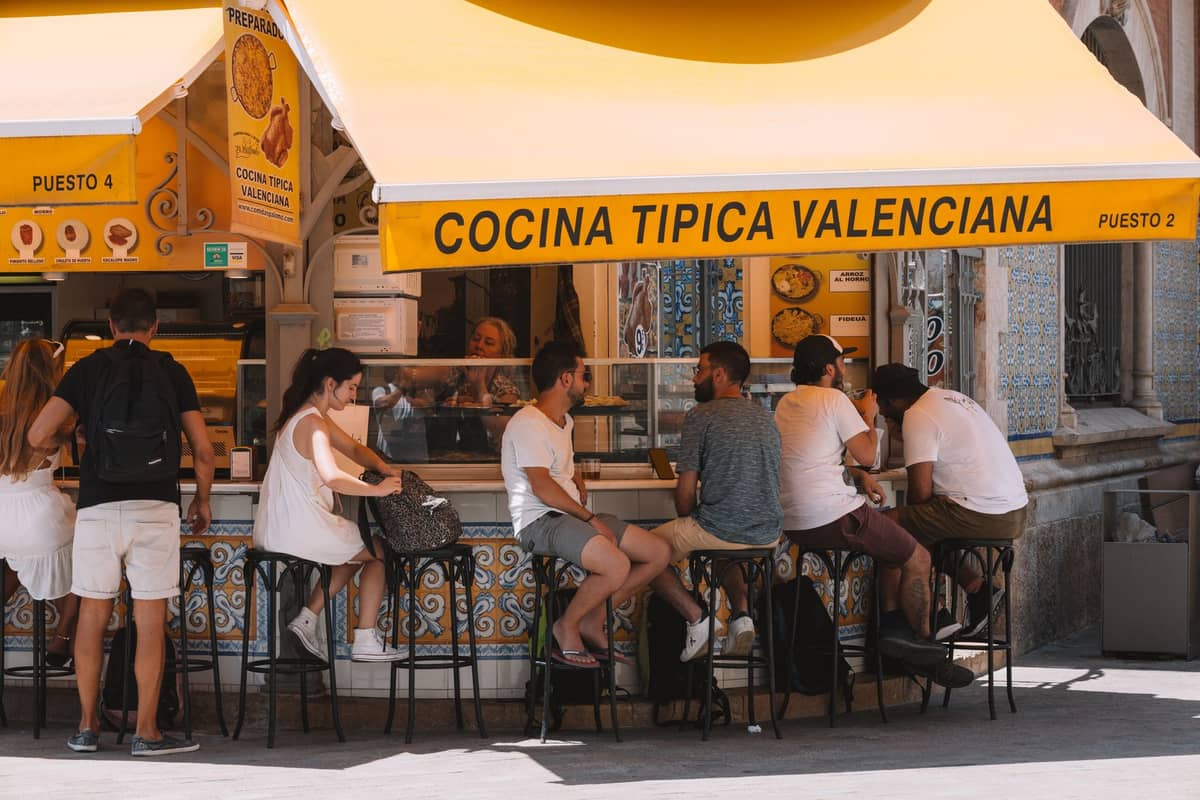
Las Fallas is inseparable from eating and drinking outdoors. Each neighbourhood comission sets up a marquee or street kitchen serving traditional food, often open to the public. Bunyols (fried doughnut-like pastries, typically eaten with hot chocolate or sugar) are the unofficial snack of the festival. For a deeper understanding of what Valencians eat during and outside the festival, the Valencia food guide covers the essentials.
Paella is not typically a festival street food — it is a Sunday and special occasion dish. You will find paella restaurants throughout the city, but for the best versions, visit the establishments around the Malvarrosa beach or plan ahead using the guide to the best paella in Valencia. Restaurants in the city centre during festival week are packed; booking a table for dinner on 18 or 19 March even two months in advance is not excessive.
The neighbourhood of Ruzafa tends to have a lively but slightly less chaotic atmosphere during Las Fallas compared with the immediate city centre. Its concentration of bars and restaurants makes it a good base for evening meals before heading to the monuments. The Mercado de Ruzafa is also worth visiting earlier in your trip for morning provisions.
Is Las Fallas Worth the Crowds? An Honest Assessment
Las Fallas is genuinely extraordinary but it is not comfortable travel. The city during peak days is extremely crowded, significantly louder than any other urban festival, and logistically demanding. Sleep deprivation is part of the experience — events run past midnight every night of the main week. If you are looking for a relaxed cultural trip, March is not the right time to visit Valencia.
For travellers who want to experience Valencia in full and at a more measured pace, the best time to visit Valencia guide outlines the trade-offs across all seasons. Spring and autumn outside of festival week offer pleasant weather, lighter crowds, and lower prices. But for scale, spectacle, and cultural intensity, Las Fallas has few rivals in Europe.
The festival is also free in its core form. Watching the Mascletà, walking between monuments, watching La Cremà from the street, and attending the Ofrena de Flors all cost nothing. Costs accumulate through accommodation, food, and drinks, but the festival itself imposes no entry fees. This makes it one of the most accessible major cultural events anywhere.
FAQ
When does Las Fallas take place in Valencia?
The official Fallas festivity in Valencia runs from 15 to 19 March each year. The peak period, when monuments are erected and the main events occur, is 15–19 March. The festival culminates on the night of 19 March with La Cremà, when all monuments are burned.
What is the Mascletà and where does it happen?
The Mascletà is a daily daytime firecracker display held at exactly 2:00 pm in Plaza del Ayuntamiento from 1 to 19 March during the Fallas period. It is primarily an audio experience — a structured sequence of explosions designed to produce rhythmic percussive waves. It lasts around 5–8 minutes and is free to watch. Arrive at least 30 minutes early during peak days.
How far in advance should I book accommodation for Las Fallas?
For the nights of 15–19 March, booking 4–6 months in advance is strongly recommended. The most central hotels and apartments sell out quickly, and prices increase significantly as the dates approach. Staying in Ruzafa, El Cabanyal, or other non-central neighbourhoods can offer better availability.
Is Las Fallas suitable for children?
It depends on the child. The scale, fire, and noise of the festival can be overwhelming for young children, particularly the continuous street firecrackers and the intensity of La Cremà. That said, the children's fallas monuments (falletes) are designed with younger audiences in mind, and the daytime parade activities are family-friendly. Ear protection is essential for children attending any pyrotechnic event.
What should I not miss during Las Fallas?
The Mascletà on 19 March, the Ofrena de Flors procession on 17–18 March, walking the Special Section monument route once they are installed on 16 March, and positioning yourself near a neighbourhood falla for the early burns on La Cremà night before moving toward Plaza del Ayuntamiento for the main event. Each of these is free and collectively they give you the full arc of the festival.