Museu Faller de València: Inside Valencia's Archive of Fallas Art
Every March, Valencia's Las Fallas festival ends with a ritual burning of enormous satirical sculptures. The Museu Faller de València preserves the rare figures voted too beautiful to burn, building a singular archive of Valencian folk art, craftsmanship, and political wit that spans decades.
Quick Facts
- Location
- Plaza Montolivet 4, Monteolivete district, Valencia 46006
- Getting There
- EMT Valencia bus lines 6, 13, 14, 15, 18, 24, 25, 95 and the tourist bus serve the Monteolivete area, and Metro line 2 stops at the El Saler shopping center about 900 meters away; verify current EMT and metro routes before visiting.
- Time Needed
- 1 to 2 hours
- Cost
- €2 standard; €1 concessions (groups, pensioners, and students with Youth Card); free under 16 and free for everyone on Sundays and public holidays
- Best for
- Fallas enthusiasts, folk art lovers, cultural travelers, families with older children
- Official website
- cultural.valencia.es/en/museu/fallero-museum
What Is the Museu Faller?
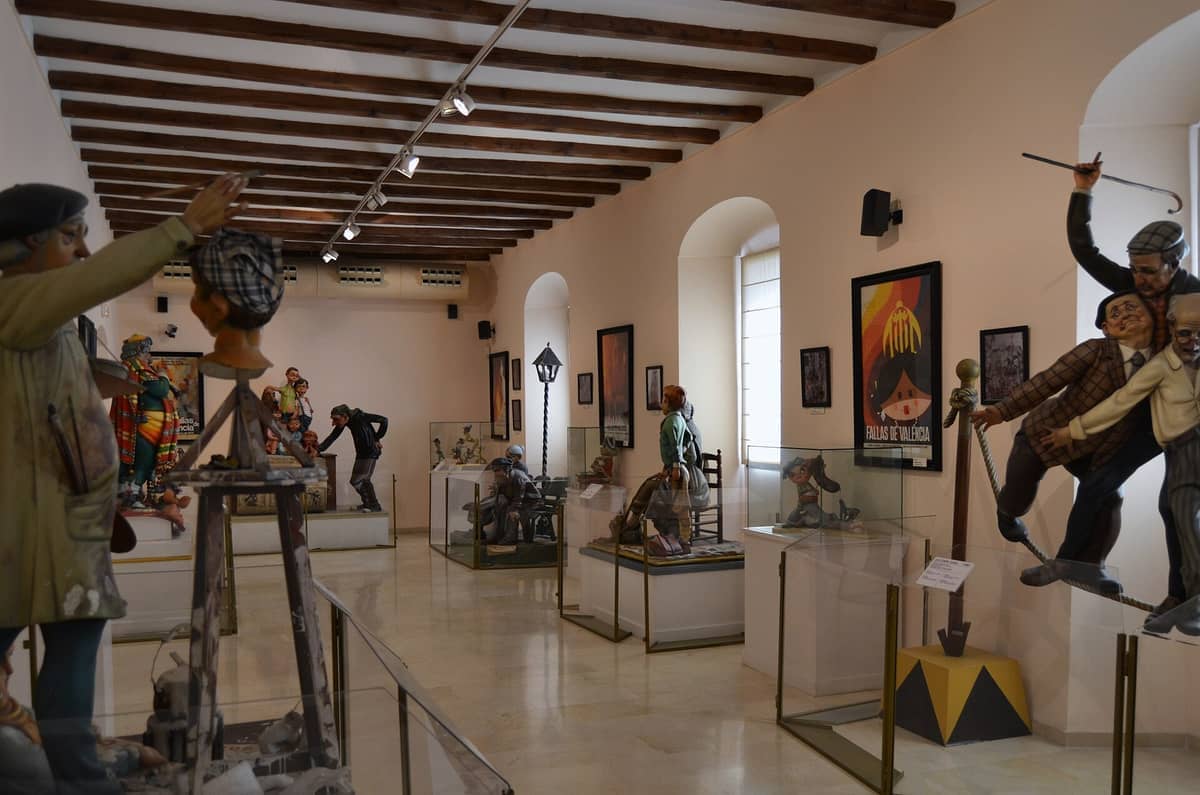
The Museu Faller de València (Spanish: Museo Fallero) is the official civic museum dedicated to preserving the artistic legacy of Las Fallas, Valencia's defining annual festival. Each year, the Fallas festival climaxes on the night of March 19 with La Cremà, the mass burning of hundreds of elaborate sculptural monuments called fallas, built from wood, cardboard, papier-mâché, polystyrene, and painted with extraordinary detail. Before the flames come, the public votes to spare one figure from each monument, a ceremony called the indulto del ninot. Those saved figures come here.
The result is a permanent collection unlike anything else in Spain: row upon row of ninots (individual figures), ranging from knee-high caricatures to life-sized tableaux, each one a survivor of a ritual that destroys almost everything around it. The collection grows by at least two pieces every year, creating a living archive of Valencian culture, humor, and craftsmanship that now spans decades.
ℹ️ Good to know
The museum has occupied a building of its own historical interest since 1971: the former convent of the Casa Misión de San Vicente de Paúl. The neoclassical structure adds a quiet architectural contrast to the flamboyant folk art it now houses.
The Collection: What You Actually See
Walking into the Museu Faller is genuinely surprising the first time. Visitors expecting a dry ethnographic display find instead a series of rooms filled with figures that seem too lively for a museum context. The ninots are expressive, frequently satirical, and technically accomplished. Many depict political figures, local celebrities, and social types rendered with a kind of exaggerated realism that falls somewhere between fairground art and serious sculpture.
The earliest pieces in the collection give a clear picture of how the craft has evolved. Mid-20th century figures tend toward painted papier-mâché with bold, flat color. Later decades see the introduction of new materials and increasingly complex dioramas. By the 1990s and 2000s, some pieces achieve a level of technical finish comparable to theatrical prop-making at the highest level. The shift in subject matter also tracks Valencian social history: the figures from the Franco era read very differently from those made after Spain's democratic transition.
If you want to understand what Las Fallas actually looks like before visiting the festival itself, this museum is the most efficient way to do it. For a broader context of the festival's place in Valencian life, the Las Fallas festival guide explains the full calendar and ritual structure in detail.
Tickets & tours
Hand-picked options from our booking partner. Prices are indicative; availability and final rates are confirmed when you complete your booking.
Valencia Silk Museum tickets and audio guide
From 7 €Instant confirmationFree cancellationValencia English tour with entry to La Lonja, Catedral and San Nicolas
From 39 €Instant confirmationFree cancellationValencia top attractions MegaPass Classic with Oceanografic and Science Museum
From 79 €Instant confirmationValencia Spanish tour with entry to La Lonja, Catedral and San Nicolas
From 49 €Instant confirmationFree cancellation
The Building and Its Atmosphere
The former convent building is well-suited to the collection. Its thick walls keep the interior noticeably cooler than the street on summer afternoons, and the high-ceilinged rooms give the larger figures enough vertical space to breathe. The stone flooring and archways of the original structure are still visible in parts, and the contrast between 19th-century neoclassical architecture and the primary-colored folk sculptures gives the space a slightly surreal quality that actually enhances the experience.
The museum is modest in scale compared to Valencia's larger institutions. It is not a grand, sprawling experience. The layout is relatively straightforward, and most visitors cover the collection in one continuous circuit of around 60 to 90 minutes. There is no permanent cafe on site, so plan your visit accordingly if traveling with children who need regular breaks.
When to Visit: Time of Day and Season
Weekday mornings, particularly Tuesday through Thursday before noon, offer the quietest conditions. The museum rarely reaches the kind of crowd density that makes moving difficult, but in the weeks immediately following Las Fallas (late March into April), visitor numbers climb noticeably as travelers who attended the festival return for a closer look at what they experienced. If you are visiting specifically in the post-Fallas period, come early in the day.
Sunday entry is free, which brings in more local visitors and families. If you prefer a relaxed pace and the commentary of locals who have a personal connection to the pieces, a Sunday morning visit has its own appeal. The closing time of 14:00 on Sundays is strict, so arrive no later than 12:30 to give yourself adequate time.
Visiting in summer? The museum's stone building stays cool, making it a genuinely comfortable midday option when outdoor sightseeing becomes uncomfortable. For more on navigating Valencia in high temperatures, see the Valencia in summer guide.
💡 Local tip
Photography is generally permitted inside. The figures are well-lit and static, making them easy subjects. Wide-angle framing works well for the room-spanning installations, while the facial expressions on individual ninots reward close-up shots.
Practical Opening Hours and Admission
The Museu Faller de València is open Tuesday to Saturday from 10:00 to 19:00 (last entry at 18:00). On Sundays and public holidays it opens from 10:00 to 14:00 (last entry at 13:00). The museum is closed on Mondays, January 1, January 6, May 1, and December 25.
Standard admission is €2. Reduced admission of €1 applies to groups, pensioners, and students holding a Youth Card. Entry is free for children under 16. Entry is also free for everyone on Sundays and public holidays, making the museum one of the more accessible cultural attractions in the city for budget-conscious visitors.
For travelers watching their spending, this attraction fits naturally into a wider plan of Valencia's free and low-cost cultural options. The free things to do in Valencia guide covers how to combine the Museu Faller with other no-cost or low-cost museum visits.
⚠️ What to skip
Double-check opening hours before visiting during public holiday periods beyond the closures listed above, as Valencia observes several regional and local holidays that may affect schedules. The official Cultural València website is the most reliable source for current information.
Getting There
The museum is located at Plaza Monteolivete 4 in the Monteolivete district, southeast of the historic city center and a moderate walking distance (around 2 km) from the main tourist circuit. It is less immediately central than the Cathedral or the Mercado Central, so many visitors will use public transport or a taxi. EMT Valencia bus services connect the area; verify current route numbers and stops on the EMT Valencia app or website before your visit, as lines can change.
For visitors combining the Museu Faller with a broader day of city exploration, the guide to getting around Valencia covers the metro, bus, and cycling options in practical detail.
Honest Assessment: Is It Worth Your Time?
The Museu Faller rewards visitors who arrive with some curiosity about Las Fallas and leave with a clearer understanding of what makes the festival significant. It is not a world-class museum in the institutional sense: the interpretive signage is functional rather than rich, the building is modest, and the collection will not hold everyone's attention for more than an hour. But for what it sets out to do, it does it well.
People who visit without any prior knowledge of Las Fallas may find the experience incomplete. The figures need context to be fully legible, and the museum's explanatory materials are not always detailed enough to supply that context for complete newcomers. Reading about the festival before you go will meaningfully improve your experience.
Travelers looking exclusively for high art, major collections, or architectural grandeur should probably prioritize elsewhere. Valencia's fine arts collection and its contemporary art institution offer richer experiences for those specific interests. But for anyone curious about Valencian popular culture, folk craft traditions, or the social function of public art, the Museu Faller is one of the most specific and honest cultural institutions the city has.
If you are planning a fuller museum day in Valencia, the best museums in Valencia guide will help you sequence visits efficiently.
Insider Tips
- Visit on a Sunday for free entry, but arrive before 12:30. The 14:00 closing is firm and the staff begin winding down the rooms noticeably before that.
- Spend a few minutes with the older figures before moving to the newer ones. The contrast in materials and painting technique between a 1960s ninot and a 2010s piece tells the story of the craft's evolution more clearly than any wall text.
- The exterior of the former convent building is worth a look before you enter. The neoclassical façade is understated but well-preserved, and it reads very differently once you know it now houses painted polystyrene festival figures.
- If you are visiting Valencia specifically for Las Fallas in March, combine a post-festival trip here with a walk through the Monteolivete neighborhood, which is less tourist-heavy than the historic center.
- The museum has limited facilities on site. Bring water, especially in summer, and make lunch arrangements before arriving since there is no cafe inside.
Who Is Museu Faller For?
- Travelers attending or who have attended Las Fallas and want to see surviving figures up close
- Folk art and craft enthusiasts interested in the evolution of a living artisan tradition
- Families with children aged 8 and up who will respond to the large, expressive figures
- Budget travelers: free on Sundays, and under €2 any other day
- Visitors seeking a culturally specific experience that reflects Valencia's own identity rather than generic Spanish heritage tourism
Nearby Attractions
Combine your visit with:
- Parc Natural de l'Albufera
Just 10 kilometres south of Valencia, Parc Natural de l'Albufera is a protected coastal lagoon covering 21,120 hectares of freshwater lake, rice paddies, pine forests, and wetlands. It is one of Spain's most important bird sanctuaries, the birthplace of Valencian paella, and a complete change of pace from the city.
- Devesa del Saler
Stretching roughly 8 kilometres between the Mediterranean Sea and Lake L'Albufera, the Devesa del Saler is one of Europe's most intact coastal dune forests. Part of Albufera Natural Park since 1986, this approximately 800-hectare strip of umbrella pines, wetland edges, and wild beach is free to enter and reachable from central Valencia in under 30 minutes.
- El Palmar Village
Tucked inside Albufera Natural Park roughly 20 kilometres south of Valencia, El Palmar is a small fishing village of around 750 residents that sits on the edge of a freshwater lagoon ringed by rice fields. It is widely credited as one of the birthplaces of authentic Valencian paella, and a visit here combines slow rural atmosphere, boat trips on the lake, and some of the most seriously traditional rice cooking in the region.
- Estadio de Mestalla
Estadio de Mestalla is the historic home of Valencia CF, one of Spain's most decorated football clubs. Inaugurated in 1923, it holds close to 49,430 spectators and ranks among the oldest top-flight grounds in La Liga. Whether you're catching a live match or exploring the stadium on a guided tour, Mestalla delivers a concentrated dose of local identity that few attractions in Valencia can match.