Centre del Carme Cultura Contemporània (CCCC): Medieval Walls, Modern Art, Free Entry
The Centre del Carme Cultura Contemporània occupies a historic monastery complex in the heart of El Carme. Today it hosts rotating contemporary art exhibitions, all free to enter, inside one of Valencia's most atmospheric historic complexes.
Quick Facts
- Location
- C/ Museu, 2, 46003 València — El Carme district, historic centre
- Getting There
- Tram Line 4 – Pont de Fusta; EMT buses 5, 28, 95
- Time Needed
- 1 to 2 hours depending on current exhibitions
- Cost
- Free entry, all exhibitions included
- Best for
- Contemporary art, architecture lovers, cultural exploration on a budget
- Official website
- www.consorcimuseus.gva.es/centro-del-carmen
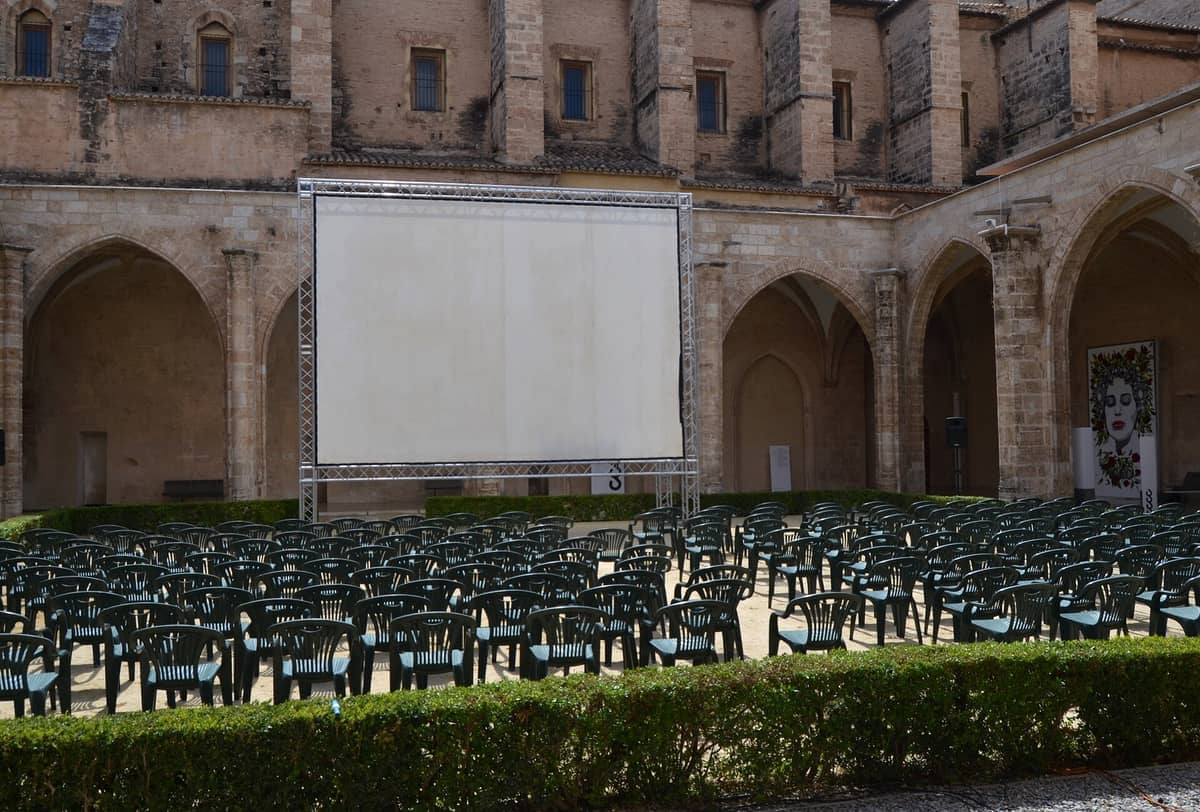
What Is the Centre del Carme?
The Centre del Carme Cultura Contemporània, known by its initials CCCC, is Valencia's main venue for contemporary culture — exhibitions, installations, performance, and cross-disciplinary programming — and it happens to be completely free. It sits inside the former Monastery of Our Lady of the Carmen, a Gothic and Renaissance complex dating back to the late medieval period following the Christian reconquest of the city. That combination of medieval architecture and contemporary art is the defining quality of the experience: you move through cloister corridors and vaulted church halls while looking at work that could have arrived from a gallery in Berlin or São Paulo.
The centre adopted its current name and programming focus in 2017, when it was repositioned under the Consorci de Museus de la Comunitat Valenciana as a flagship space for contemporary culture. It sits in El Carme, the oldest quarter of Valencia's historic centre, on a quiet street called C/ Museu just inside the old city walls. The neighbourhood is one of the denser, more characterful parts of the city, full of narrow lanes, independent bars, and street art — the CCCC fits right in without trying.
💡 Local tip
Check the CCCC website before visiting to confirm which exhibitions are currently running. Programming rotates regularly, and the character of a visit shifts significantly depending on the show.
The Architecture: What You're Actually Walking Through
The monastery complex is genuinely impressive, and understanding what you're looking at adds a lot to the visit. The site has two main cloisters. The Gothic cloister is the older of the two, with pointed arches and stone columns that date from the late medieval period. The Renaissance cloister, added later, has a calmer, more horizontal feel — wide arches opening onto a central garden where orange trees grow. Walking between them, you cross more than two centuries of architectural history without leaving the same compound.
The former church of the monastery is now used as an exhibition hall, its nave stripped back to stone and lime plaster. The scale is generous — large installations work well here. Temporary walls and modular display systems are installed for each show, so the spatial experience changes with the programming. Look up at the vaulting when you enter: it's easy to miss while your eyes adjust to whatever art is in front of you.
The building's exterior on C/ Museu is understated — a long stone facade with a relatively modest entrance that gives little away. Visitors arriving for the first time often walk past it once. The main entrance is marked but not showy. Once inside, the transition from the narrow street to the open cloister is one of the more satisfying spatial reveals in the city.
Tickets & tours
Hand-picked options from our booking partner. Prices are indicative; availability and final rates are confirmed when you complete your booking.
Cala del Moraig Hiking and Beach Trip from Valencia
From 32 €Instant confirmationFree cancellationHortensia Herrero Art Centre Guided Tour
From 15 €Instant confirmationFree cancellationHortensia Herrero Art Centre Entry Ticket
From 12 €Instant confirmationFree cancellationHistoric Valencia walking tour
From 27 €Instant confirmationFree cancellation
The Exhibitions: What to Expect
The CCCC programs rotating contemporary exhibitions across visual art, photography, design, and occasionally digital or audiovisual work. Shows typically run for two to three months, with several running concurrently across different rooms and courtyards. The programming leans toward Spanish and Valencian artists but includes international figures and touring shows. Quality is consistent with a serious regional institution, not a commercial gallery.
Because admission is free and the space is genuinely interesting architecturally, the centre tends to attract a broad audience: locals who treat it as a cultural meeting point, students, and travellers who stumble in. The result is an atmosphere that feels lived-in rather than hushed. People talk at a normal volume in the cloisters. Children occasionally run through the courtyards. It's more like a public cultural building than a museum in the traditional reverent sense.
If contemporary art is a priority on your trip, the CCCC pairs well with a visit to the Institut Valencià d'Art Modern (IVAM), which is just a few minutes' walk away and focuses on modern and contemporary art with a permanent collection. Together they give a more complete picture of Valencia's contemporary cultural scene.
How It Changes Through the Day
Morning visits, shortly after the 11:00 opening on Tuesdays through Sundays, tend to be quieter. The light in the Gothic cloister is particularly good in the late morning when sunlight works across the stone. The orange tree garden in the Renaissance cloister catches direct light from above, and the contrast between sun and shadow on the arches is worth pausing for, independent of whatever is being exhibited.
Afternoons from around 16:00 onward are busier, especially on weekends. School groups can arrive midweek during term time, which fills the cloister corridors and can disrupt a slower-paced visit. The centre stays open until 21:00, and the last hour before closing is often the calmest period of the day. In summer, the evening visit has a particular quality: the stone stays cool even after a hot afternoon, and the cloister garden is pleasant in the low light.
ℹ️ Good to know
Opening hours: Tuesday to Sunday, 11:00–21:00. Closed Mondays. Special reduced hours on 24 and 31 December (11:00–14:00). Closed 25 December, 1 January, and 6 January. Open 19 March and 1 May.
Getting There and Getting Around the Neighbourhood
The most straightforward public transport option is Tram Line 4 to Pont de Fusta, from which the centre is a short walk south into El Carme. EMT bus lines 5, 28, and 95 also stop nearby. The area is walkable from much of the historic centre — if you're coming from Mercado Central or the cathedral district, it's a comfortable 10 to 15-minute walk through the old city lanes.
El Carme is one of the best neighbourhoods for walking in Valencia, and the CCCC sits at a useful midpoint between the old city walls — specifically the Torres de Quart are just a couple of minutes away on foot — and the tangle of medieval streets running east. If you're making a half-day of it, the CCCC makes natural sense as an anchor point for an afternoon in El Carme.
The centre is listed as wheelchair accessible with accessible restrooms, and the main entrance is at street level. The Gothic cloister has some uneven stone flooring typical of historic buildings, so surfaces are not always perfectly smooth, but the primary exhibition spaces are accessible.
Photography Notes
The architectural spaces photograph well and photography is generally permitted in the common areas and cloisters. Individual exhibitions may have restrictions on photography — look for signage in each room, and when in doubt, ask at the front desk. The Gothic cloister columns and the orange tree courtyard are the most photographed elements. Late morning light in the Renaissance cloister is the most useful for architecture photography.
Who Should Skip This
If contemporary art leaves you cold and architecture alone isn't enough to hold your interest for an hour, this may not be worth slowing down for. The CCCC is not a comprehensive history museum — there are no permanent displays on the monastery's medieval past, no artefacts, and no reconstructed period rooms. For that kind of historical depth, the Museo de Prehistoria de València or the archaeological site at L'Almoina offer more structured historical content.
The CCCC is also not the right choice for a very short visit to Valencia if you're trying to see signature attractions efficiently. It rewards a certain kind of unhurried curiosity. On a rushed itinerary, the time might be better spent elsewhere. But if you're spending more than two days in Valencia and have any interest in contemporary culture or historic spaces, the free entry makes it a very low-cost addition to an afternoon in El Carme.
Insider Tips
- The cloister garden with orange trees is accessible even when you're just passing through the main entrance area — worth a brief stop even if you don't have time for the full exhibition circuit.
- Evening visits on weekdays are the quietest option. The 19:00 to 21:00 window is often nearly empty, which makes the architectural spaces significantly more atmospheric.
- The CCCC sometimes hosts free public events, screenings, and talks in the cloister — check the events calendar on the official website before your visit, as these are rarely advertised on third-party tourism platforms.
- If you're visiting during Las Fallas in March, note that the centre is open on 19 March (the main festival day), which is unusual for Valencia institutions and makes it a useful refuge if you need a break from the crowds.
- The street outside, C/ Museu, runs toward the Torres de Quart in one direction and into the deepest part of El Carme in the other — use it as a navigation spine for exploring the neighbourhood on foot.
Who Is Centre del Carme Cultura Contemporània (CCCC) For?
- Travellers interested in contemporary art who want a serious exhibition space without paying museum prices
- Architecture enthusiasts drawn to the contrast of Gothic and Renaissance within a single complex
- Visitors spending multiple days in Valencia who want to explore beyond the headline attractions
- Budget travellers looking for high-quality free cultural experiences
- Anyone building a walking afternoon through El Carme's historic streets
Nearby Attractions
Other things to see while in Barrio del Carmen:
- Casa-Museo Benlliure
Tucked into a narrow street in the historic El Carme quarter, the Casa-Museo Benlliure preserves the home and studio of José Benlliure Gil exactly as the painter left it. With original furnishings, Italian treasures, and a rear garden studio, it offers an unusually intimate glimpse into 19th-century Valencian artistic life — at a price that makes it one of the most accessible museums in the city.
- Iglesia de San Nicolás
Hidden in plain sight on Calle Caballeros, the Iglesia de San Nicolás is one of Valencia's oldest churches and its most visually overwhelming interior. A Gothic shell completely transformed by Renaissance frescoes, it rewards visitors who look up the moment they step through the door.
- IVAM – Institut Valencià d'Art Modern
The IVAM, or Institut Valencià d'Art Modern, is Valencia's flagship museum of modern and contemporary art, housed in a purpose-built concrete complex on the edge of the historic Barrio del Carmen. With a permanent collection built around sculptor Julio González and a rotating programme of international exhibitions, it delivers more than its reputation suggests for a regional institution.
- Museo de Prehistoria de Valencia
Housed inside the historic La Beneficència complex in Valencia's Barrio del Carmen, the Museu de Prehistòria de València traces human life in the region from the Paleolithic through the Visigothic period. Founded in 1927, it remains a respected provincial archaeology museum, and at €2 admission (free on weekends), it consistently overdelivers.