Art Nouveau in Valencia: A Guide to the City's Modernista Buildings
Valencia's Art Nouveau heritage, locally known as Modernismo Valenciano, produced some of Spain's most distinctive early-20th-century architecture. This guide covers the key buildings, the architects behind them, the best routes to follow, and what to know before you visit.
Plan and book this trip
Tools from our partner Travelpayouts help you compare flights and hotels. If you book through them, we may earn a commission at no extra cost to you.
Flights
Hotels map
TL;DR
- Valencia's Art Nouveau movement, called Modernismo Valenciano or Modernisme Valencià, flourished roughly between 1899 and 1917, leaving a concentrated legacy across the historic centre and the Eixample district.
- The style is defined by iron, glass, and ceramic tilework decorated with regional motifs: orange trees, orange blossom, the sea, and the huerta (fertile orchard plain).
- The two unmissable landmarks are Estación del Norte (1917) and Mercado Central (inaugurated 1928), both free to enter and open most days.
- Calle de la Paz is the single best street for concentrated Modernista facades, though many buildings mix eclecticism with Art Nouveau elements rather than belonging to one pure style.
- The Visit Valencia tourism board publishes official architecture routes covering Modernista itineraries. For broader context, see the Valencia architecture guide.
What Is Modernismo Valenciano? The Local Name for Art Nouveau
When Valencians talk about their Art Nouveau buildings, they call the style Modernismo Valenciano in Spanish, or Modernisme Valencià in the city's co-official language. The movement belongs to the broader European Art Nouveau wave that swept architecture, applied arts, and interiors from around 1890 through the early 1910s. In Valencia, its productive window is generally dated from 1899 to 1917, When Valencians talk about their Art Nouveau buildings, they call the style Modernismo Valenciano in Spanish, or Modernisme Valencià in the city's co-official language. The movement belongs to the broader European Art Nouveau wave that swept architecture, applied arts, and interiors from around 1890 through the early 1910s. In Valencia, its productive window is generally dated from 1899 to 1917, with some notable completions arriving later as earlier designs were finally built out.
What makes the Valencian version distinctive is its palette of local references. Where Barcelona's Modernisme drew heavily on Gothic revivalism and Catalan nationalism, Valencia's architects leaned into the imagery of the huerta: ceramic panels showing orange trees heavy with fruit, wheat ears, fishing boats, and the flowers of the orange blossom (azahar). Iron was used structurally and decoratively, and glazed ceramic tile (azulejo), a craft with deep roots in the region, became a defining surface material across facades and interiors alike.
ℹ️ Good to know
The terms Art Nouveau, Modernismo, and Modernisme Valencià all refer to the same stylistic family in Valencia. Internationally, Art Nouveau is the standard English label. Locally, you will see Modernismo used in Spanish-language signage and Modernisme in Valencian. Both are correct.
The Key Architects of Valencia's Art Nouveau Era
Four architects defined Valencian Modernismo. Understanding who designed what transforms a casual stroll into a genuinely coherent architectural reading of the city.
- Demetrio Ribes Marco (1875–1921) The most celebrated Modernista architect in Valencia, best known for designing Estación del Norte (opened 1917). Ribes studied in Madrid and travelled widely in Europe, absorbing influences from Viennese Secession as well as French Art Nouveau before applying them to his Valencia commissions.
- Francisco Mora Berenguer (1875–1961) A prolific designer of residential and commercial buildings, particularly in the Eixample district. Mora's work tends toward more restrained ornamentation than Ribes, making his buildings easy to overlook but rewarding when studied closely.
- Manuel Peris Ferrando Active across the same period, Peris contributed several notable residential commissions in the historic centre and the expanding Ensanche. His facades make frequent use of the ceramic tile panels that characterise the Valencian style.
- José María Manuel Cortina Pérez (1868–1950) An older figure whose eclectic work bridged historicism and the emerging Modernista vocabulary, particularly visible along Calle de la Paz where several buildings show his influence.
It is worth noting that Mercado Central was designed by Francisco Guardia Vial and Alejandro Soler March, architects who began the project in 1914 but saw it completed only in 1928, after the main Modernista period had already faded. The market is Modernista in inspiration and ornament, but its completion date places it It is worth noting that Mercado Central was designed by Francisco Guardia Vial and Alejandro Soler March, architects who began the project in 1914 but saw it completed only in 1928, after the main Modernista period had already faded. The market is Modernista in inspiration and ornament, but its completion date places it in a later phase of the movement..
The Essential Buildings: A Practical Rundown
The strongest concentration of Art Nouveau architecture in Valencia divides across three zones: the historic centre (Centro Histórico), the Ensanche (known locally as Eixample), and the stretch of Calle de la Paz that connects them. Most can be visited on foot in a half-day.
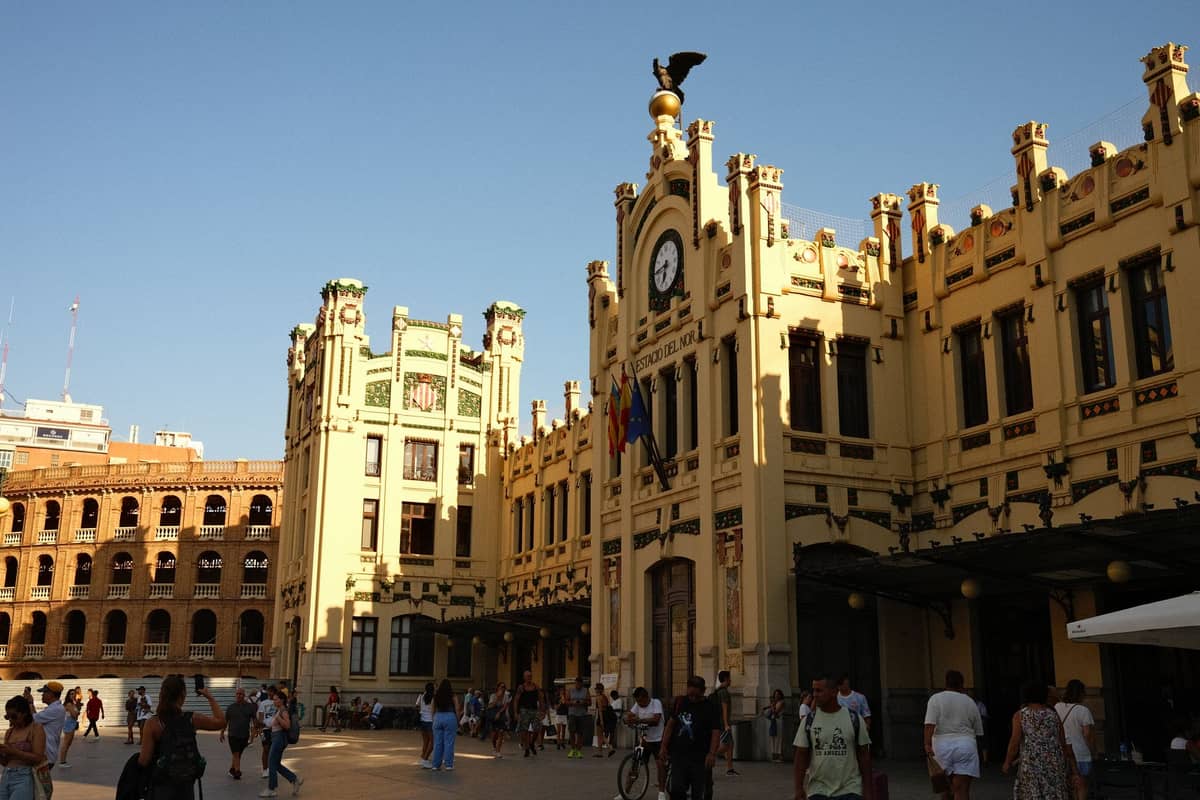
- Estación del Norte Valencia's main commuter and regional rail terminus, designed by Demetrio Ribes and opened in 1917. The facade is covered in ceramic panels depicting orange trees and ears of wheat — a manifesto in tile for Valencian agricultural identity. The main hall interior features elaborate ironwork, stained glass, and mosaic floors. Entry is free; you can walk through as a working station or simply stand outside to study the facade. It sits immediately south of the bullring (Plaza de Toros), making it easy to combine both on the same walk.
- Mercado Central Covering over 8,000 square metres across two floors, Mercado Central is one of Europe's largest covered markets and one of the most visually striking. The dome, ironwork pillars, stained-glass windows, and ceramic detailing make it as much an architectural experience as a food market. Arrive before 10:00 on a weekday for the best combination of produce and atmosphere, and before crowds thin the stalls. The market is generally open Monday to Saturday mornings; it closes Sundays and public holidays. Verify current hours at the Ayuntamiento de València website before visiting.
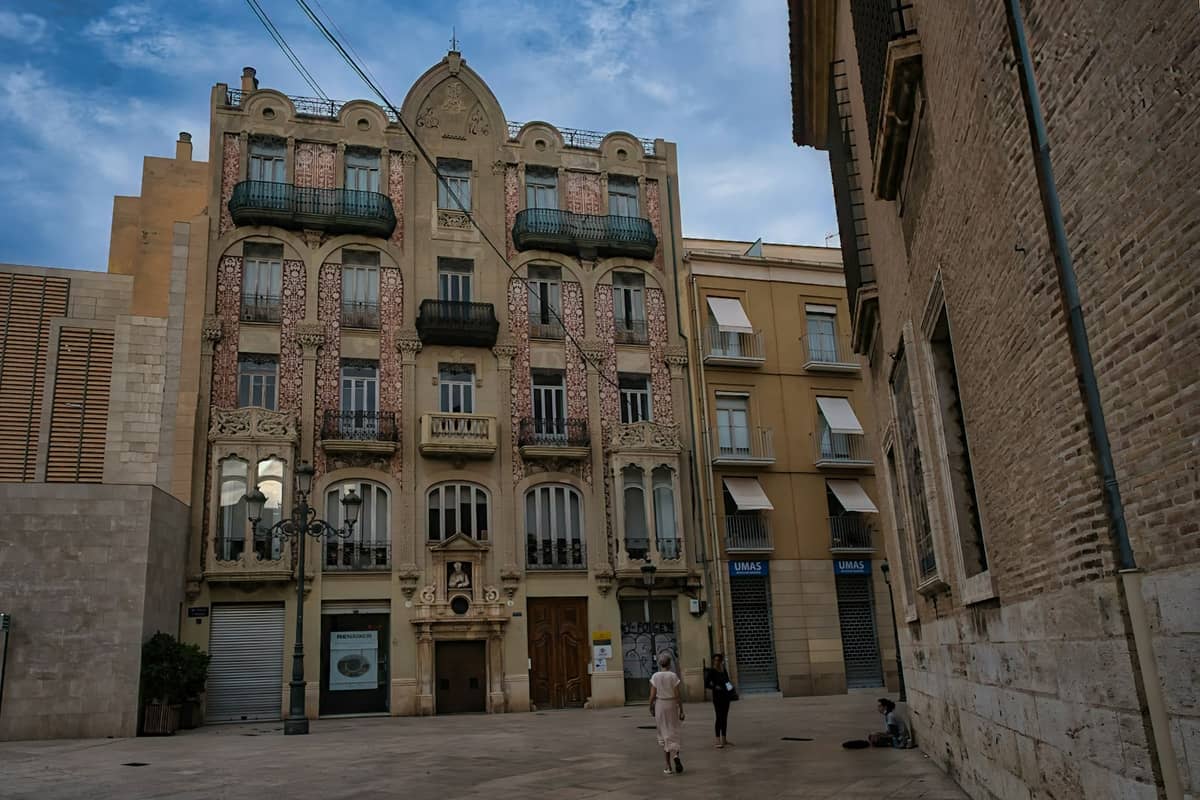
- Calle de la Paz This street running through the historic centre contains the densest run of Modernista and eclectic facades in the city. Seven significant buildings have been identified along it, though most blend Art Nouveau ornament with earlier historicist frameworks rather than representing pure Modernismo. Walk it slowly and look above ground-floor retail level, where the decorative work concentrates on balconies, cornices, and upper-storey windows.
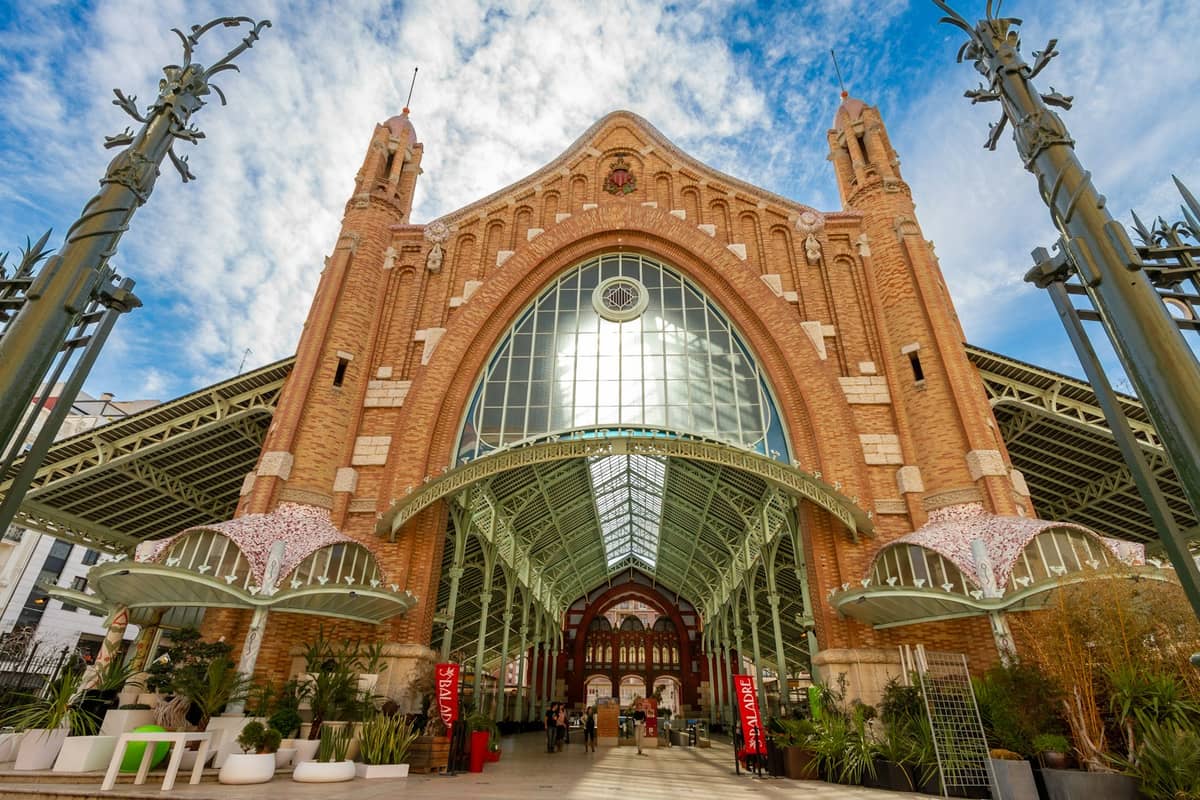
- Mercado de Colón Built between 1914 and 1916, the Mercado de Colón in the Eixample district is another major iron-and-ceramic Modernista market hall. Unlike Mercado Central, it has been extensively restored and now functions primarily as a food and drink venue rather than a traditional produce market, making it an easier place to linger over a coffee while absorbing the architecture.
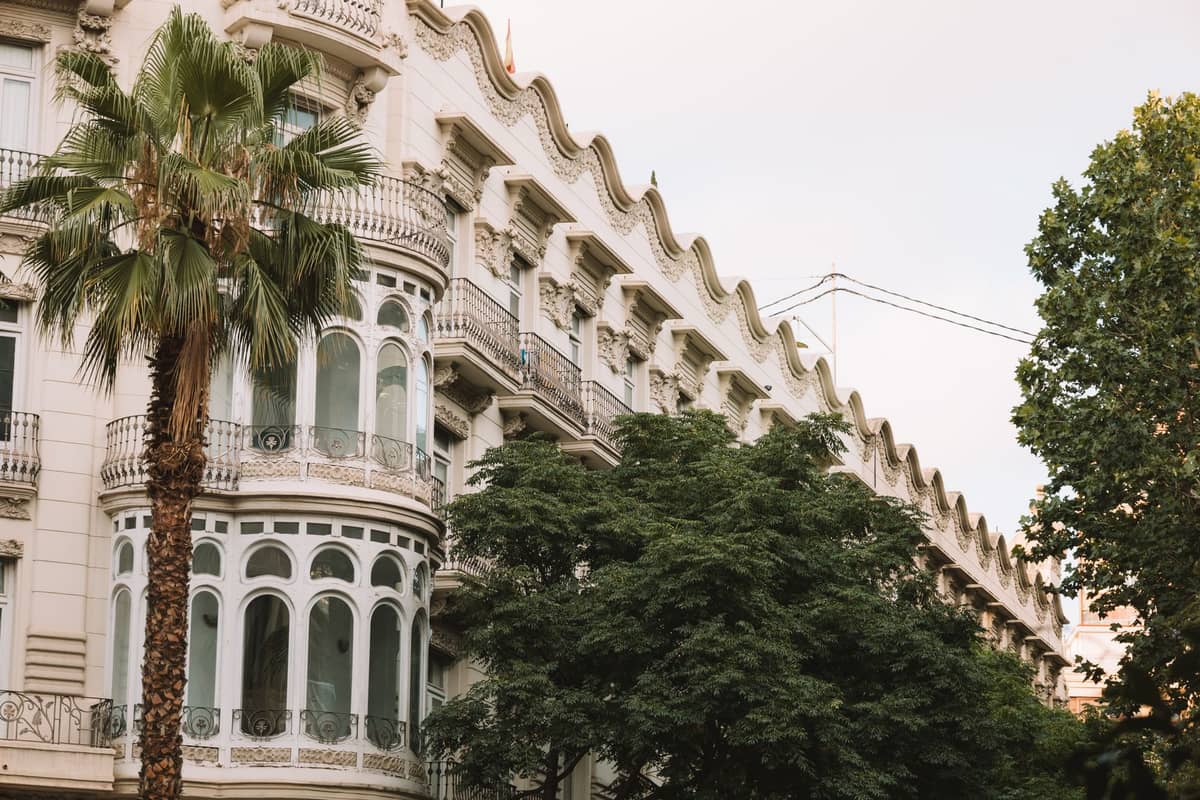
- Edificis along Gran Vía Marqués del Turia The grand boulevard of the Eixample contains numerous residential and commercial Modernista buildings. Less well-signposted than the major landmarks, these facades reward a slow walk and are almost entirely free of tourist crowds.
💡 Local tip
The Visit Valencia tourism board publishes a free Modernista architecture route map, The Visit Valencia tourism board publishes a free Modernista architecture route map. Download or pick one up before you start walking — the route is well-planned and covers buildings that are easy to miss independently.
The Best Routes for Seeing Modernista Valencia
The most efficient way to see Valencia's Art Nouveau buildings is to combine the official architecture route with the walking tour of Valencia's old city. The historic centre and the Eixample are directly adjacent, so a logical route starts at Estación del Norte, moves north along Calle Xàtiva past the Plaza de Toros, enters the historic core via Plaza del Ayuntamiento, follows Calle de la Paz toward the Cathedral quarter, then loops back through the Eixample via Gran Vía Marqués del Turia to reach Mercado de Colón.
Allow two to three hours for this route at a comfortable pace that includes stopping to photograph facades and read any interpretation panels. If you want to add Mercado Central, factor in at least 45 minutes there separately, ideally as your starting point early in the morning before the market crowds peak around 11:00.
For a more structured experience, private guided tours of Modernista architecture are bookable through local operators. These typically last two hours and are conducted in English or Spanish, covering the architectural and historical context that is hard to absorb from a map alone. Group tours run at around 15-20 euros per person; private tours cost considerably more but allow you to set the pace and focus.
✨ Pro tip
Morning light (before 11:00) hits the east-facing facades on Calle de la Paz and Estación del Norte particularly well. If photography matters to you, plan your route to reach these buildings early and save Mercado de Colón, which faces west, for late afternoon when the light is warmer.
Seasonal Considerations and Crowd Patterns
Because most Modernista buildings are either outdoor facades or working public spaces, the route is genuinely viable in any season. Valencia's Mediterranean climate means winters are mild (rarely below 10°C), so even a January visit is comfortable for extended walking. Spring (March to May) and autumn (September to November) offer the best balance of manageable temperatures and reasonable crowd levels.
The main seasonal caveat is Fallas in March. This enormous festival (see the Las Fallas guide) brings hundreds of thousands of visitors to the city and makes the historic centre extremely congested, particularly around the Plaza del Ayuntamiento area. On the one hand, the festive crowds add extraordinary energy. On the other, the narrow streets of the Calle de la Paz zone become difficult to navigate slowly, and Mercado Central operates at maximum chaos in the days before the main Fallas events as locals stock up on provisions.
Summer (June to August) is the driest season in Valencia but also the hottest. Temperatures regularly exceed 30°C in July and August, making a long architecture walk uncomfortable in the middle of the day. Start early (before 09:00) or push to late afternoon. The Modernista markets and station provide genuine shade and are natural rest points.
Common Mistakes and Honest Caveats
The biggest misconception visitors bring to Valencian Art Nouveau is expecting something on the scale of Barcelona. It is not that. Barcelona's Modernisme produced singular monuments of international fame: the Sagrada Família, Casa Batlló, Palau de la Música Catalana. Valencia's contribution is more distributed and more modest in scale. The value here is in the accumulation of detail across a walkable zone, not in a single overwhelming set piece (though Estación del Norte comes reasonably close to that).
Several buildings along Calle de la Paz are frequently described as Modernista in tourist materials but are more accurately classified as eclectic, combining Art Nouveau ornament with neo-baroque or historicist structural frameworks. This is not a reason to skip them — the facades are genuinely beautiful — but it is worth knowing that the style boundaries here are blurrier than in Barcelona or in the textbook examples.
Finally, if architecture is your primary motivation for visiting Valencia, pair the Modernista route with the city's broader architectural story. The Ciudad de las Artes y las Ciencias (City of Arts and Sciences) represents the opposite end of the architectural spectrum: futurist structures by Santiago Calatrava and Félix Candela that have redefined the city's skyline since the late 1990s. The contrast between these two poles, Ribes's ceramic orange trees at Estación del Norte and Calatrava's white exoskeletal forms, captures the breadth of Valencia's architectural ambition across a century.
⚠️ What to skip
Mercado Central is closed on Sundays and public holidays. If your trip falls entirely over a weekend, adjust your plans and visit on Saturday morning instead. Arriving after 12:00 on any day means many stalls will already be closing or closed.
FAQ
What is the best Art Nouveau building to visit in Valencia?
Estación del Norte is the single most complete and accessible example. It is a functioning railway station, so entry is free, the ceramics and ironwork are in excellent condition, and you can examine the interior and exterior without any time restriction. Mercado Central is a close second and is worth visiting on the same morning trip.
Is Valencia's Art Nouveau comparable to Barcelona's Modernisme?
Not in scale or international fame. Barcelona's buildings are architectural landmarks on a global level. Valencia's Modernismo is more distributed, more domestically scaled, and often mixed with eclectic stylistic influences. That said, for visitors who want to understand the movement without the crowds and price premium of Barcelona, Valencia offers a genuinely rewarding and far less congested experience.
How long does it take to walk the Modernista architecture route in Valencia?
A focused walk covering Estación del Norte, Calle de la Paz, and Mercado de Colón takes around two hours at a comfortable pace. Adding Mercado Central as a separate morning visit adds another 45 minutes to an hour. The full circuit including brief stops at secondary buildings along Gran Vía Marqués del Turia can stretch to a half-day.
When is the best time to visit Valencia for architecture tourism?
Spring (March to May, avoiding the Fallas crowds in the second week of March) and autumn (September to October) offer the most comfortable walking conditions and manageable crowds. Most Modernista buildings are outdoor facades or open public spaces, so the route works year-round, but the midday heat of July and August makes long walking tours tiring.
Are there guided tours of Modernista buildings in Valencia?
Yes. The Visit Valencia tourism board offers thematic architecture routes with printed itineraries. Private and small-group guided tours are available through local operators, typically lasting two hours and priced around 15-20 euros per person for group tours. Booking in advance is advisable during peak season (March, July, August, and October).