Valencia Architecture Guide: From Gothic to Calatrava
Valencia holds one of Europe's most complete architectural timelines, from Roman foundations and Valencian Gothic civic buildings to Modernista markets and Santiago Calatrava's white concrete landmark complex. This guide breaks down each era, where to find it, and how to see it without wasting a day.
Plan and book this trip
Tools from our partner Travelpayouts help you compare flights and hotels. If you book through them, we may earn a commission at no extra cost to you.
Flights
Hotels map
TL;DR
- Valencia's architecture spans 2,000 years: Roman, Gothic, Baroque, Modernista, and 21st-century avant-garde, all concentrated in a compact, walkable city.
- The UNESCO-listed La Lonja de la Seda (Silk Exchange) is the crown jewel of Valencian Gothic and one of the finest civic Gothic buildings in all of Europe.
- The City of Arts and Sciences by Santiago Calatrava is impressive but not without controversy; budget at least half a day to do it justice.
- Most major sites cluster in two zones: the historic centre (Ciutat Vella) and the former Turia riverbed leading to the marina. A single dedicated day covers both.
- Avoid midday visits to Gothic buildings in summer; facades photograph poorly in harsh overhead light and interiors get crowded. Early morning or late afternoon is consistently better.
Why Valencia Is an Architect's City
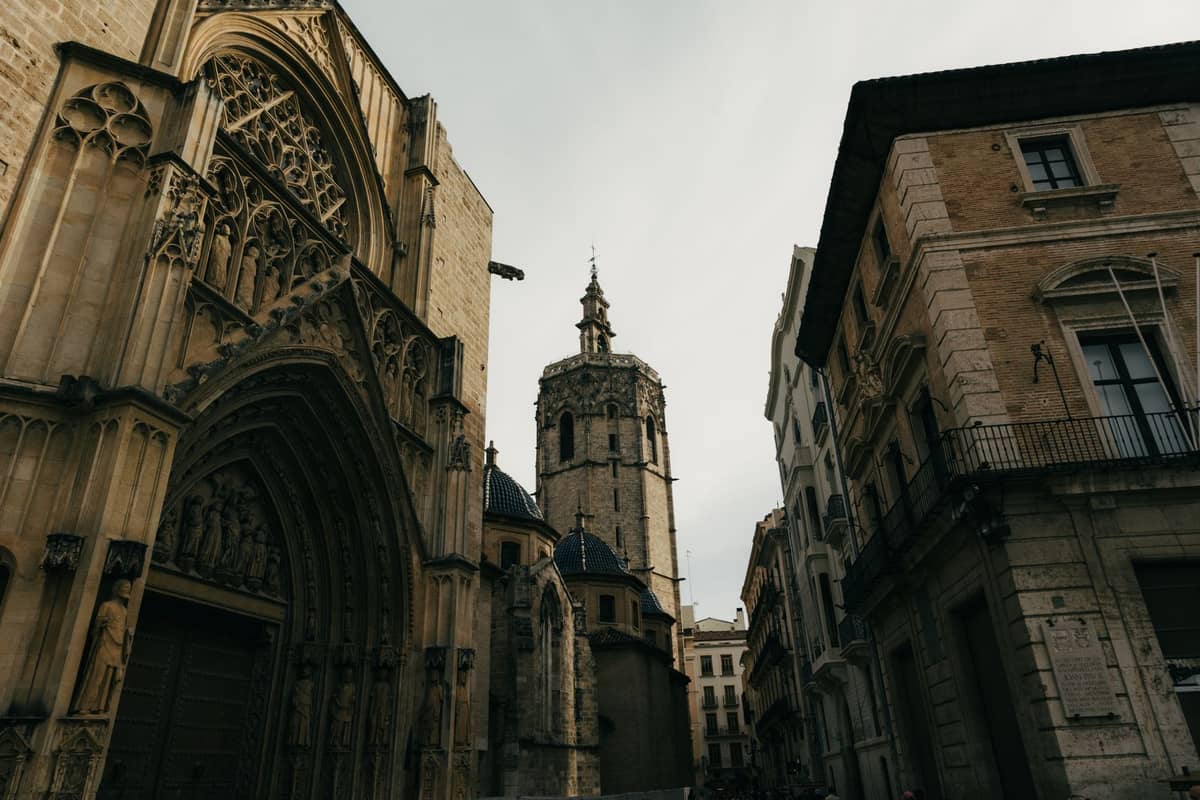
Valencia, Spain's third-largest city with around 824,000 inhabitants, has the unusual quality of wearing its entire history on its facade. Unlike cities that bulldozed the medieval to build the modern, Valencia layered its eras. Walk ten minutes from a 15th-century Gothic trading hall and you arrive at a Modernista iron-and-glass market. Walk another 20 minutes southwest along the old Turia riverbed and the skyline turns white and futuristic. The architectural range is extraordinary, and it is largely accessible without paying high entry fees. The best overview of the city's scope can be found in our walking tour of Valencia's old city, which threads together many of the key buildings described here.
One important framing note: Valencian Gothic is not generic Spanish Gothic. It developed as a distinct regional variant tied to the historical Kingdom of Valencia during the 13th to 15th centuries, at the crossroads of late European Gothic and early Renaissance influence. The hallmarks are elegance and structural restraint rather than the dramatic verticality of French or Castilian Gothic. Recognising this distinction makes visiting the key buildings significantly more rewarding.
Valencian Gothic: The City's Architectural Foundation
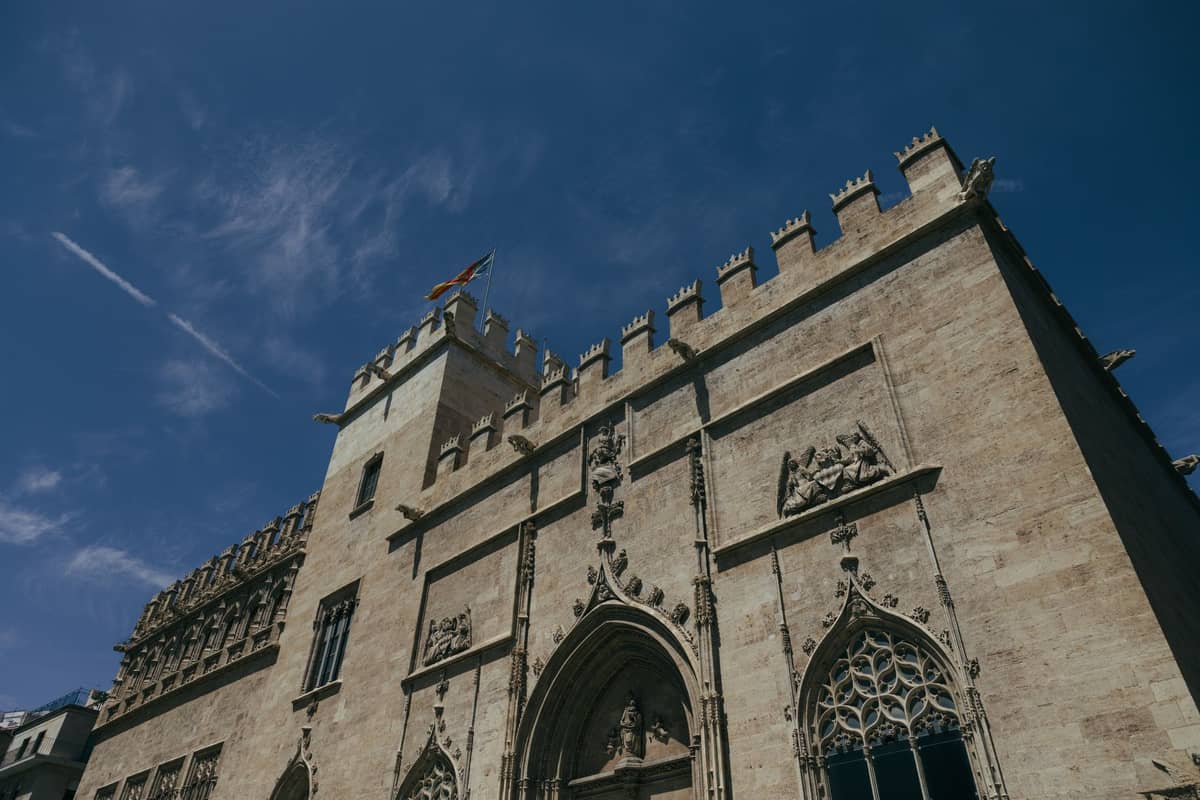
The single most important Gothic building in Valencia is La Lonja de la Seda, The single most important Gothic building in Valencia is La Lonja de la Seda, the Silk Exchange, built between approximately 1482 and 1533. Many visitors assume it is a church. It is not. It was purpose-built for silk and commodity trading during Valencia's mercantile golden age, and that civic confidence is precisely what makes it architecturally singular.
💡 Local tip
La Lonja de la Seda is municipally managed, which means entry is affordable and often free on Sundays. Exact opening hours change seasonally, so check the official Ayuntamiento de València website before visiting. Arrive at opening time to get the Trading Hall almost to yourself before tour groups arrive around 10:30.
The Cathedral of Valencia is a layered building rather than a pure Gothic statement. The Cathedral of Valencia is a layered building rather than a pure Gothic statement. Construction began in 1262 on the site of a mosque, and the result combines Romanesque, Gothic, Baroque, and Neoclassical elements across several centuries. For architecture specifically, focus on the Gothic apses and the Chapter House. The bell tower, known locally as the Miguelete (in Valencian, El Micalet), is a separate paid climb of 207 steps that rewards with panoramic views over the old city roofscape.
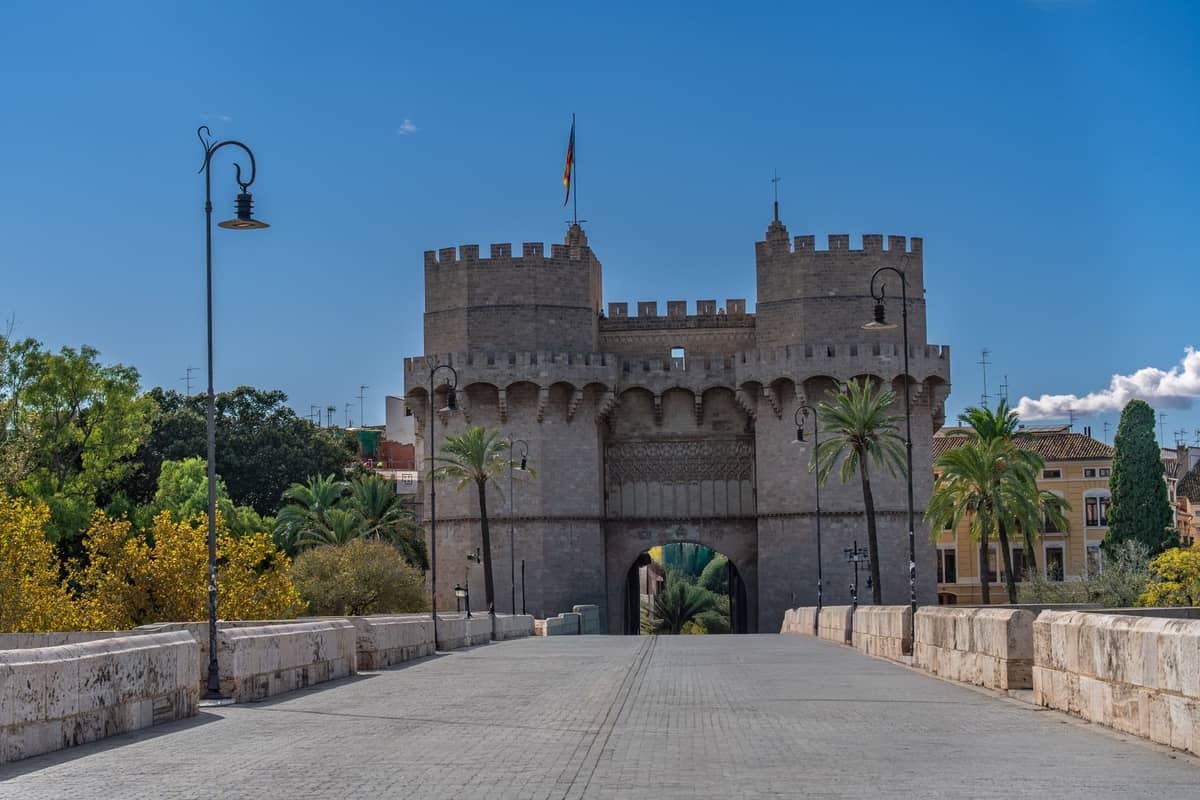
Two Gothic civic gates also survive in excellent condition: Torres de SerranosTwo Gothic civic gates also survive in excellent condition: Torres de Serranos and Torres de Quart. Both formed part of the 14th-century city walls. Torres de Quart still bears visible cannonball scars from the Napoleonic siege of 1808, which makes it one of the more tactile historical monuments in the city. Neither requires a significant time investment; factor in 20 to 30 minutes each.Torres de Quart. Both formed part of the 14th-century city walls. Torres de Quart still bears visible cannonball scars from the Napoleonic siege of 1808, which makes it one of the more tactile historical monuments in the city. Neither requires a significant time investment; factor in 20 to 30 minutes each.
- La Lonja de la Seda UNESCO-listed Silk Exchange, c.1482–1533. The Trading Hall with its spiralling columns is the defining interior of Valencian Gothic civic architecture.
- Cathedral of Valencia + El Micalet Multi-era building starting from 1252. Climb the Miguelete tower for the best rooftop perspective on the historic centre.
- Torres de Serranos 14th-century Gothic gate. Free entry on Sundays. Good views from the upper terrace over the Turia garden below.
- Torres de Quart Paired Gothic gate on the western wall. Scarred by Napoleonic cannonfire; no interior exhibits but worth the five-minute detour.
- Iglesia de San Nicolás Often called 'the Sistine Chapel of Valencia' for its ceiling frescoes. Gothic structure with a spectacularly decorated Baroque interior.
Modernista Valencia: Iron, Glass, and Ceramic Ambition
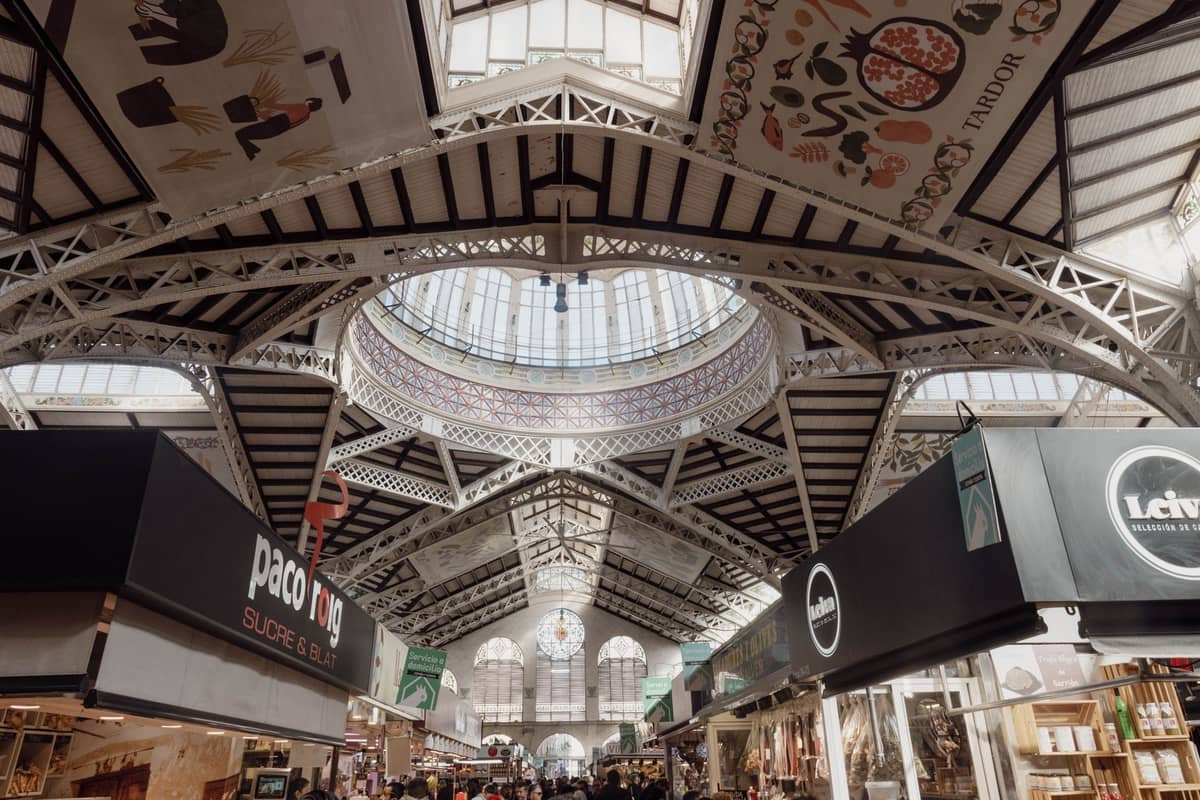
Valencia's Modernista (Spanish Art Nouveau) period produced some of its most beloved everyday buildings. The Mercado Central is the most visited example, and correctly so. Completed in 1928, it covers around 8,000 square metres under iron-and-glass vaulting, decorated with ceramic tiles, stained glass, and wrought iron details. Critically, it is still an active food market. You can appreciate the architecture while buying saffron, Valencian oranges, or fresh produce. It sits directly opposite La Lonja, which makes the Gothic-Modernista contrast immediate and striking.
Less visited but worth the detour is the Mercado de Colón, built between 1914 and 1916 in the Eixample district. The exterior is arguably more ornate than the Mercado Central, with elaborate ceramic decoration and a grand central archway. It now functions as a cafe and restaurant space rather than a traditional market, which divides opinion, but the architecture is fully intact and easier to photograph without crowds. The Art Nouveau architecture guide for Valencia covers the Modernista trail in greater depth, including lesser-known residential facades in the Eixample.
ℹ️ Good to know
The Estación del Norte, Valencia's main railway station completed in 1917, is another Modernista landmark worth entering even if you are not catching a train. The ceramic mosaics inside the booking hall depicting Valencian agricultural life are among the finest decorative tilework in the city.
Santiago Calatrava and the City of Arts and Sciences
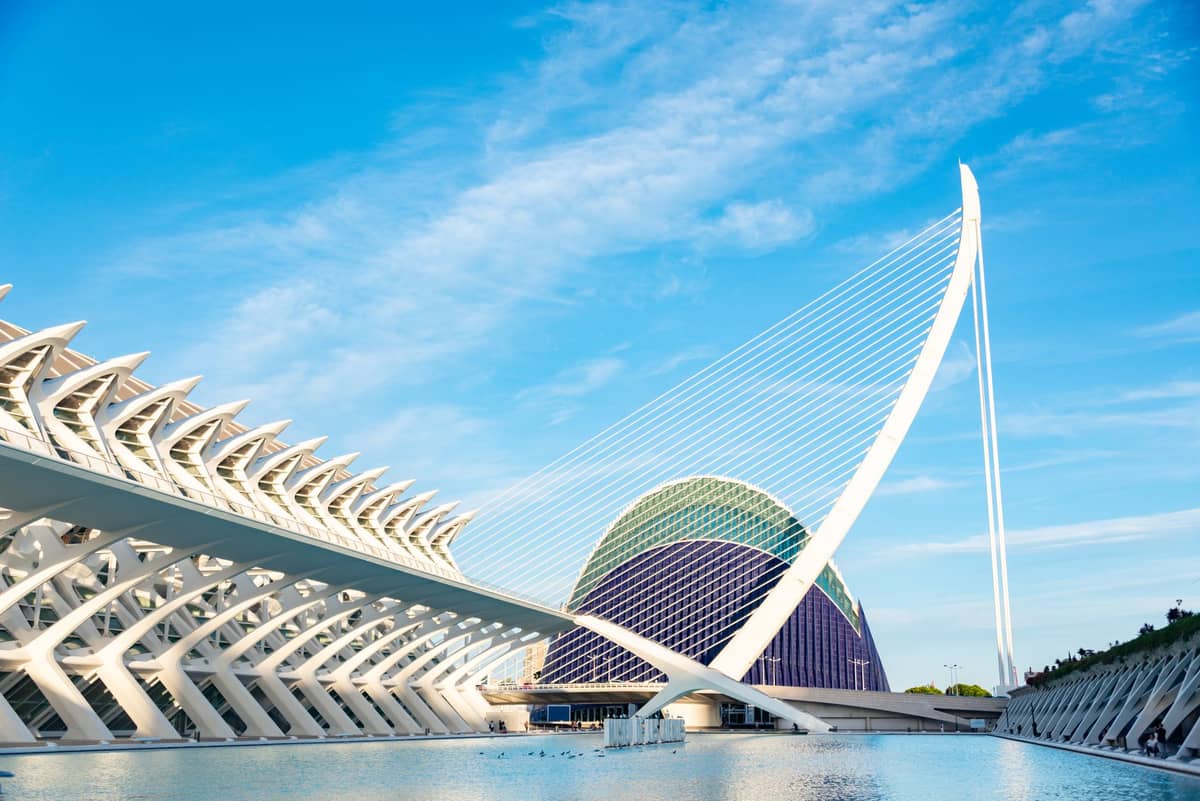
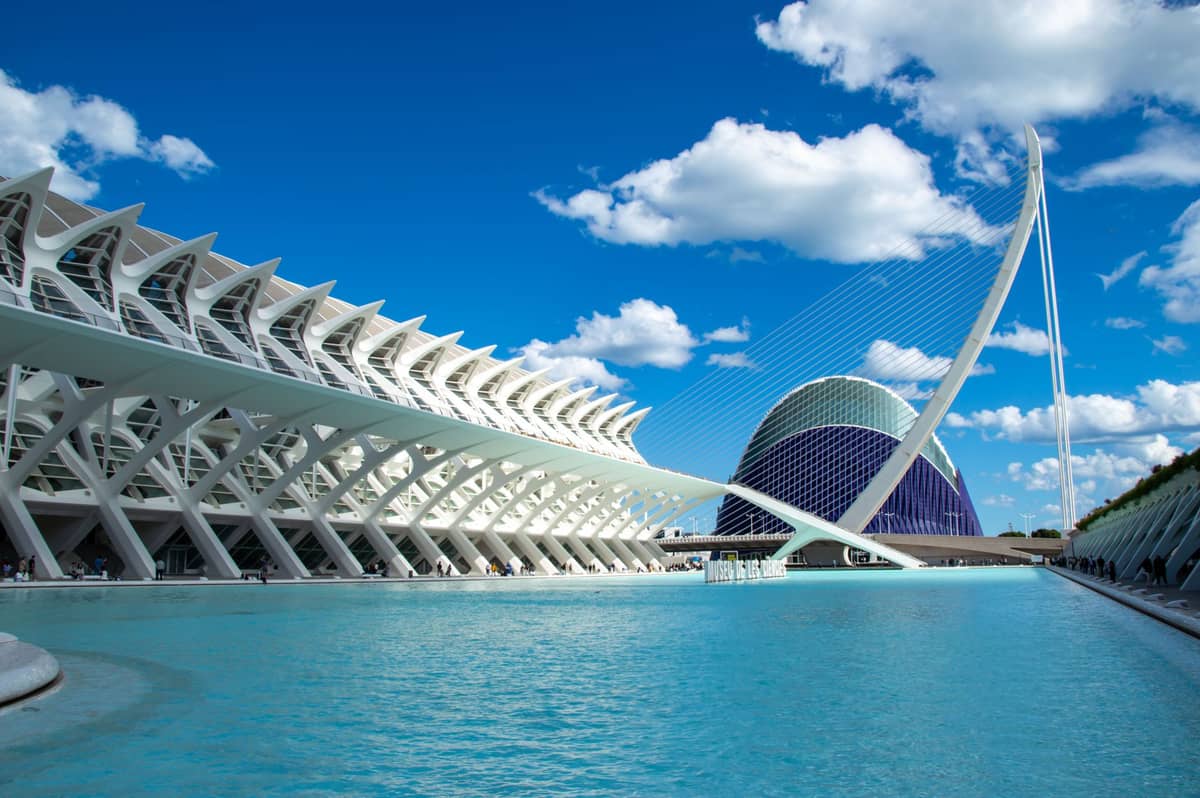
The Ciudad de las Artes y las Ciencias is Valencia's most photographed modern development and also its most contested. Built primarily between 1996 and 2009 in the former Turia riverbed, the complex was designed by Santiago Calatrava (a Valencia native) with contributions from Félix Candela on the Oceanogràfic. The construction costs vastly overran original estimates, a fact that remains a live political topic in the city. Whether or not that context changes how you see the buildings is a personal matter, but knowing it gives a more complete picture.
Architecturally, the individual structures warrant attention on their own terms. The Hemisfèric, shaped like a human eye and reflecting in surrounding pools, opened in 1998. The Museu de les Ciències Príncipe Felipe resembles a whale skeleton in white concrete and steel, stretching 241 metres. The Palau de les Arts Reina Sofia, the opera house completed in 2005, is the most complex of the buildings: a helmet-shaped structure clad in broken mosaic tile (trencadís) that references the Valencian vernacular while pushing into pure sculpture. The Àgora, a covered plaza added in 2009, demonstrates Calatrava's late-period tendency toward form over functional efficiency.
⚠️ What to skip
Do not try to visit the entire City of Arts and Sciences complex in a single morning, especially with children. The Oceanogràfic alone requires 3-4 hours. The Hemisfèric shows scheduled films at specific times and fills quickly in summer. Book the Oceanogràfic and Hemisfèric online in advance; walk-in queues in July and August can exceed 45 minutes.
For pure architectural photography without paying entry fees, the exterior of the complex is entirely open and the reflective pools around the Hemisfèric are accessible at all hours. The best light falls in the late afternoon, roughly from 17:00 to 19:30 depending on season, when the low sun catches the white concrete and the water reflections are sharpest. The best viewpoints in Valencia guide includes specific positions within the complex for photography.
Beyond Calatrava: Contemporary Architecture Worth Seeking Out
Calatrava is not the only contemporary architectural story in Valencia. Veles e VentsVeles e Vents at the Marina is a striking white layered terrace building designed by David Chipperfield Architects and b720 Fermín Vázquez Arquitectes, completed for the 2007 America's Cup. Its horizontal logic sits in deliberate contrast to Calatrava's expressive curves nearby. The building's public terraces offer free access and one of the better elevated views over the marina and Mediterranean coastline.
The neighbourhood of El Cabanyal offers a different architectural register entirely: traditional fishermen's houses with ceramic-tiled facades in pastel colours, arranged on a grid of narrow streets running perpendicular to the beach. The neighbourhood has been through decades of controversy regarding demolition plans that were ultimately abandoned, and many buildings are mid-restoration. It is not pristine, but that is also part of its character. Walking the main streets between Calle de la Reina and Calle de Josep Benlliure gives a representative sample of the traditional Valencian coastal vernacular.
- Veles e Vents (Marina): David Chipperfield, 2007. Free public terraces, best views at sunset facing west toward the city.
- IVAM (Institut Valencià d'Art Modern): Opened 1989, one of the first purpose-built contemporary art museums in Spain. The building itself is clean and functional rather than spectacular, but the permanent collection justifies entry.
- El Cabanyal vernacular housing: 19th and early 20th-century tiled fishermen's houses. Best explored on foot on a weekday morning before tourist groups arrive.
- Palau de la Generalitat: 15th-century Gothic palace with later Renaissance additions, still in use as the seat of the Valencian regional government. Exterior is freely visible; interior visits require advance arrangement.
How to Structure an Architecture Day in Valencia
Valencia's architecture divides naturally into two geographic zones that can each fill a half-day. The historic centre (Ciutat Vella) concentrates the Gothic and Modernista highlights within walking distance: La Lonja, the Cathedral, Torres de Serranos, the Mercado Central, and the Mercado de Colón. The historic centre is compact enough that a focused three-hour walk covers the exteriors of all major buildings, with time for one or two interiors.
The second zone runs along the former Turia riverbed, now the Jardí del Túria, a linear park stretching roughly 9 kilometres from the historic centre to the sea. Cycling this route is the most practical way to connect the Gothic core with the City of Arts and Sciences and then continue to Veles e Vents at the Marina. The cycling guide for the Turia Garden covers bike rental options and the route in detail. On foot, the journey from Torres de Serranos to the City of Arts and Sciences takes around 40 minutes at a moderate pace.
✨ Pro tip
If you only have one full day for architecture, start at La Lonja de la Seda at opening time (typically 09:30), cross the street to the Mercado Central for a coffee and market browse, walk to the Cathedral and climb El Micalet before midday crowds build, then cycle or walk the Turia garden to the City of Arts and Sciences for a late afternoon exterior visit. This sequence takes advantage of the best light at both ends of the day.
For visitors with more time, the 3-day Valencia itinerary builds architecture visits into a broader schedule that also covers food, beaches, and day trips. The best museums in Valencia guide is a useful companion, since several of the city's most architecturally interesting buildings also contain strong collections, particularly the Museo de Bellas Artes and the IVAM.
FAQ
What is the most important Gothic building in Valencia?
La Lonja de la Seda (Silk Exchange) is widely considered the finest example of Valencian Gothic architecture and is listed as a UNESCO World Heritage Site. Built between approximately 1482 and 1533, its Trading Hall features spiralling helicoid columns and palm-vaulted ceilings built for commercial, not religious, purposes. The Valencia Cathedral is also significant but represents several architectural periods rather than a pure Gothic statement.
Is the City of Arts and Sciences worth visiting?
For architecture specifically, yes: the exterior of the complex is free to access and the scale and ambition of the buildings is genuinely impressive. For the paid attractions inside (Oceanogràfic, Hemisfèric, Science Museum), value depends on your interests. The Oceanogràfic is one of Europe's largest aquariums and is strong for families. The Hemisfèric shows IMAX-format science films. If budget is a constraint, spending two hours walking the exterior and Umbracle gives a thorough architectural experience at no cost.
How do I get from Valencia's historic centre to the City of Arts and Sciences?
The most pleasant route is along the Turia Garden (Jardí del Túria), either on foot (around 40 minutes) or by bicycle (around 15 minutes). Valenbisi, the city's public bike-share system, has stations at multiple points along the route. Alternatively, EMT bus lines 35 and 95 connect the historic centre with the complex, and taxis or rideshares are readily available.
What is Valencian Gothic and how is it different from other Spanish Gothic architecture?
Valencian Gothic developed as a distinct regional style during the 13th to 15th centuries in the historical Kingdom of Valencia. It is characterised by elegance and structural restraint rather than the extreme verticality and ornamental density of Castilian or Catalan Gothic. Civic and commercial buildings like La Lonja are its defining monuments, rather than cathedrals. The style reflects Valencia's mercantile wealth and the Mediterranean influences that shaped the region's identity separately from Castile.
When is the best time to visit Valencia's architecture sites?
For the historic centre, early morning (09:00 to 11:00) is consistently best: lower crowds, cooler temperatures in summer, and better light for photography on south-facing facades. The City of Arts and Sciences photographs best in late afternoon from roughly 17:00 onward, when the low sun illuminates the white concrete and the reflective pools are at their most effective. Avoid visiting Gothic interiors during peak midday hours in July and August, both for comfort and for avoiding tour group congestion.