Self-Guided Walking Tour of Valencia's Old City: The Complete Route Guide
Valencia's Ciutat Vella packs over 2,100 years of history into just 1.5 square kilometres. This guide gives you a practical, well-sequenced route through the old city's best monuments, markets, and medieval streets, with practical notes on what to skip, what to pay for, and how long everything actually takes.
Plan and book this trip
Tools from our partner Travelpayouts help you compare flights and hotels. If you book through them, we may earn a commission at no extra cost to you.
Flights
Hotels map
TL;DR
- Ciutat Vella covers roughly 1.5 km², so the full circuit of major sights is easily walkable in 3–4 hours.
- The classic route runs: Plaza del Ayuntamiento → Estación del Norte → Mercado Central → La Lonja de la Seda → Cathedral → Plaza de la Virgen → El Carmen → Torres de Serranos.
- La Lonja de la Seda, the Cathedral, and the Iglesia de San Nicolás all charge entry; budget around €5–12 per person for admission across the route.
- Start early: the Central Market is best before 10:00, and popular stops get crowded by mid-morning in high season.
- Wear proper walking shoes: the streets use uneven medieval cobblestones throughout. See our full Valencia things-to-do guide for context on the wider city.
Why Valencia's Old City Rewards a Self-Guided Walk
Valencia (officially València in Valencian, the co-official language alongside Spanish) has a historic centre that genuinely surprises first-time visitors. Unlike Barcelona's Gothic Quarter, which has been heavily restored, or Madrid's Habsburg grid, Ciutat Vella here has pockets of authentic decay next to brilliantly maintained monuments. You get Roman archaeology, Gothic silk merchants' halls, Baroque church ceilings, and early-20th-century modernist ironwork within a ten-minute walk of each other.
The district measures approximately 1.3 km north to south and 1.2 km east to west. That compactness is your biggest advantage. There's no need for taxis or metro hops between stops: every monument on this route is within a five to ten minute walk of the next. A well-planned morning covers the highlights comfortably. Add a long lunch and an afternoon coffee, and you've filled a full day without ever feeling rushed.
ℹ️ Good to know
Ciutat Vella has two distinct characters. The southern half, around the Cathedral and La Lonja, is polished and well-trodden. The northern half, the Barrio del Carmen, is scruffier, more atmospheric, and where locals actually eat and drink in the evenings. A complete walk should cover both.
The Route: Stop by Stop
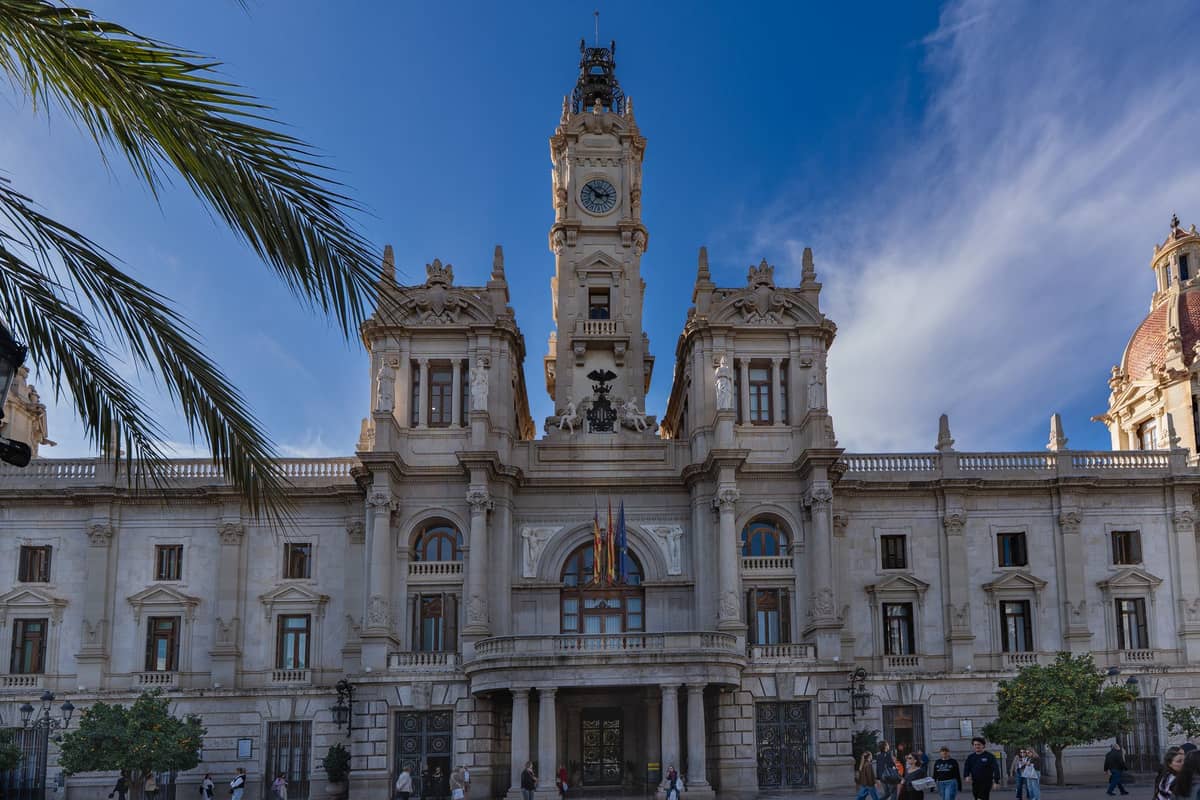
The best place to begin is Plaza del Ayuntamiento, Valencia's main civic square. The City Hall building (Ayuntamiento) sits at its northern end, and the square itself gives you an immediate sense of the city's scale and confidence. From here, walk one block east to reach the Estación del Norte, Valencia's main railway station and a striking example of Art Nouveau architecture in Spain. The exterior ceramic detailing and the ornate ticket hall interior are worth five to ten minutes, and entry to the station is free.
From the station, head northwest along Carrer de Xàtiva and then north through the market district to reach Mercado Central, one of Europe's largest covered fresh food markets. The building itself, completed in 1928, is an extraordinary piece of Valencian modernisme: a vast iron and ceramic dome lit from above through stained-glass skylights. Entry is free. If you're visiting before 10:00 on a weekday, you'll find the full market in operation, with stalls selling local citrus fruit (Valencia oranges are grown in the orchards just outside the city), cured meats, fresh seafood, and artisan cheeses. By 11:30, tourist foot traffic picks up considerably.
💡 Local tip
The Central Market closes around 15:00 on weekdays and Saturdays. It is closed Sundays. Don't plan your visit for a Sunday morning and expect to find it open.
Directly across the square from the market stands La Lonja de la Seda, the Silk Exchange, a UNESCO World Heritage Site built between 1482 and 1548. This is one of the finest Gothic civic buildings in Europe, and it's genuinely underrated compared to the Cathedral. The Sala de Contratación (trading hall) features 24 twisted stone columns rising to an elaborate vaulted ceiling, built at the height of Valencia's commercial power as a Mediterranean trading city. Entry fees apply; check current prices via the Visit Valencia website before you go, as they are updated periodically.
From La Lonja, it's a three-minute walk east to the Iglesia de San Nicolás, sometimes called the Valencian Sistine Chapel. The nickname is earned: the church's interior ceiling is covered in approximately 2,000 square metres of Baroque fresco painted by Antonio Palomino in the early 18th century. After years of neglect, a major restoration completed in 2015 brought the frescoes back to their original intensity of colour. Ticketed entry. The combination of Gothic structure and Baroque decoration is unusual and worth the price of admission.
Continue east to reach the Catedral de Valencia and the adjacent Plaza de la Reina. The cathedral was built over a former mosque from the 13th century onwards, which explains why its three doorways represent three different architectural eras: Romanesque, Gothic, and Baroque. Inside, it houses the Capilla del Santo Cáliz, which displays the chalice venerated since medieval times as the Holy Grail. Ticketed entry covers the cathedral interior. Climbing the Miguelete bell tower (El Micalet) costs extra but gives you one of the best elevated views over the old city's terracotta roofscape.
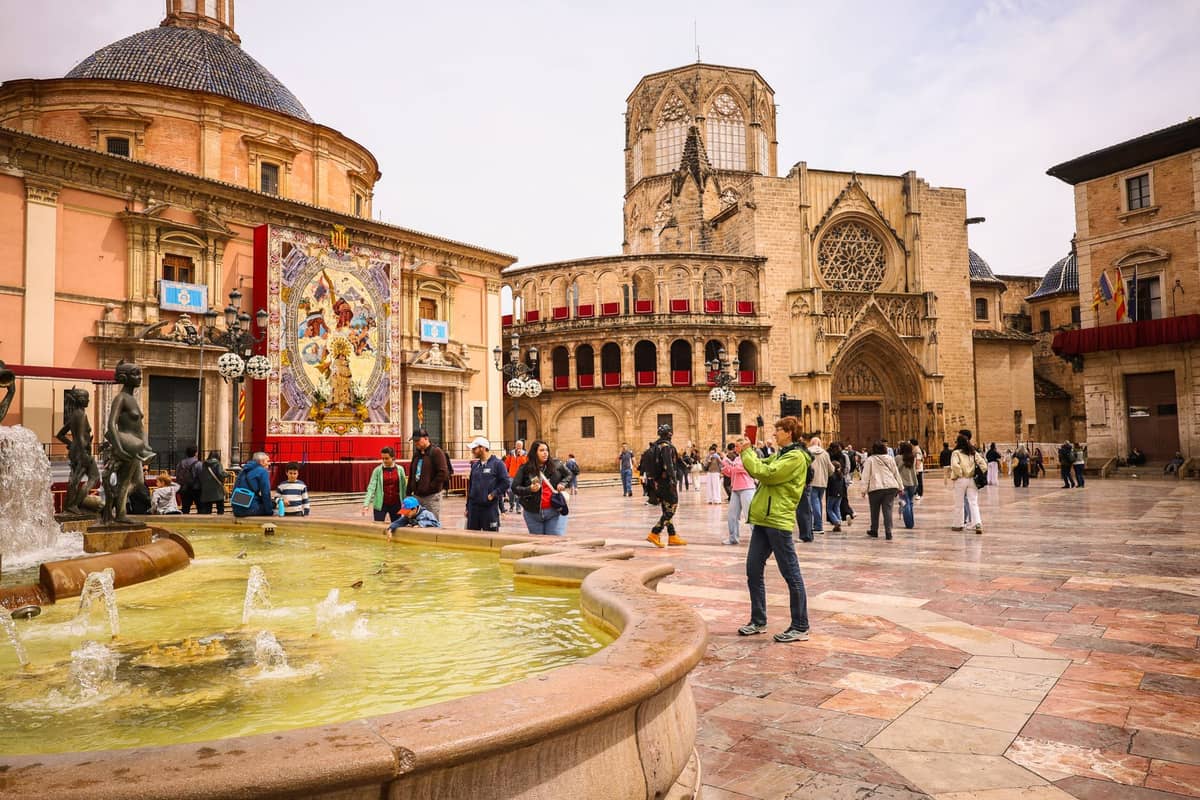
Just behind the cathedral on Plaza de la Virgen stands the Basílica de la Virgen de los Desamparados, home to Valencia's patron saint. Entry is free. The square itself, with its fountain and the baroque facade of the basilica, is one of the most photographed spots in the city.
El Carmen and the Northern Quarter
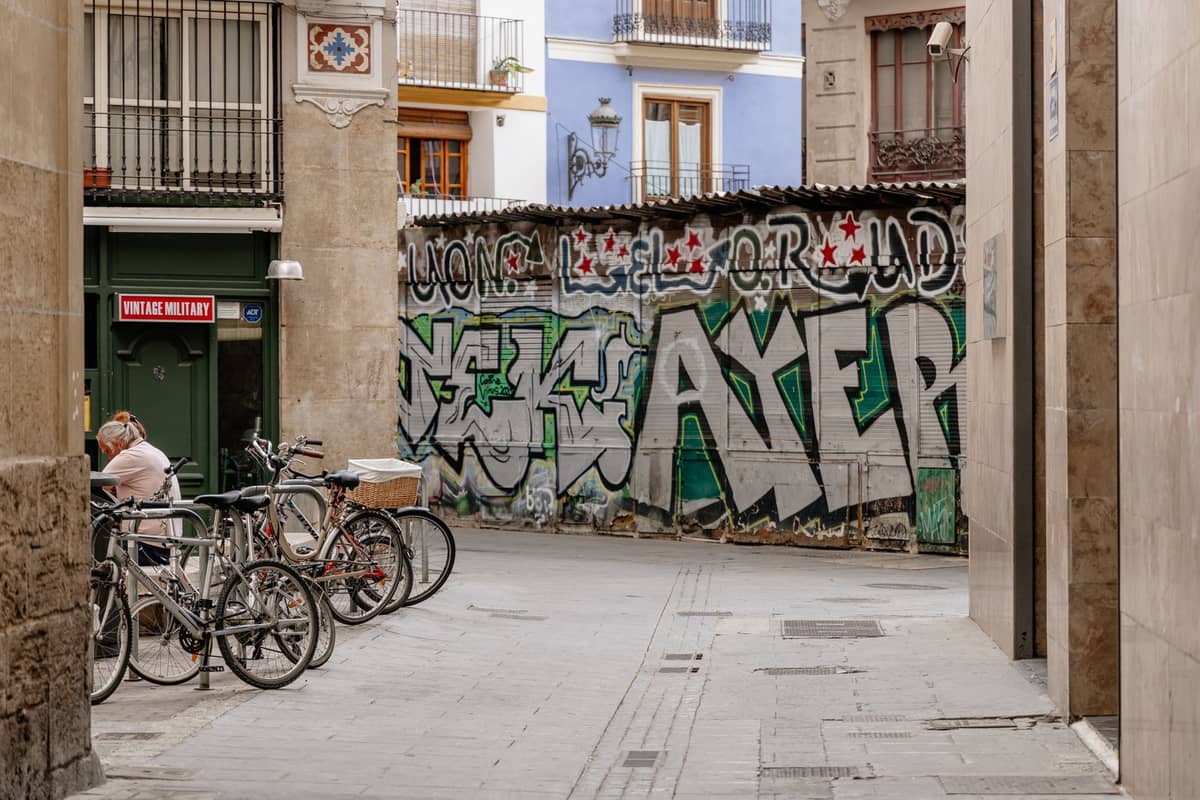
From Plaza de la Virgen, walk northwest into Barrio del Carmen, the oldest neighbourhood in the city and the one that feels least curated. The streets narrow, the graffiti increases, and the bars multiply. This is where you'll find the Centre del Carme Cultura Contemporània, a contemporary art centre inside a former convent, as well as the street art murals that cover large sections of the neighbourhood.
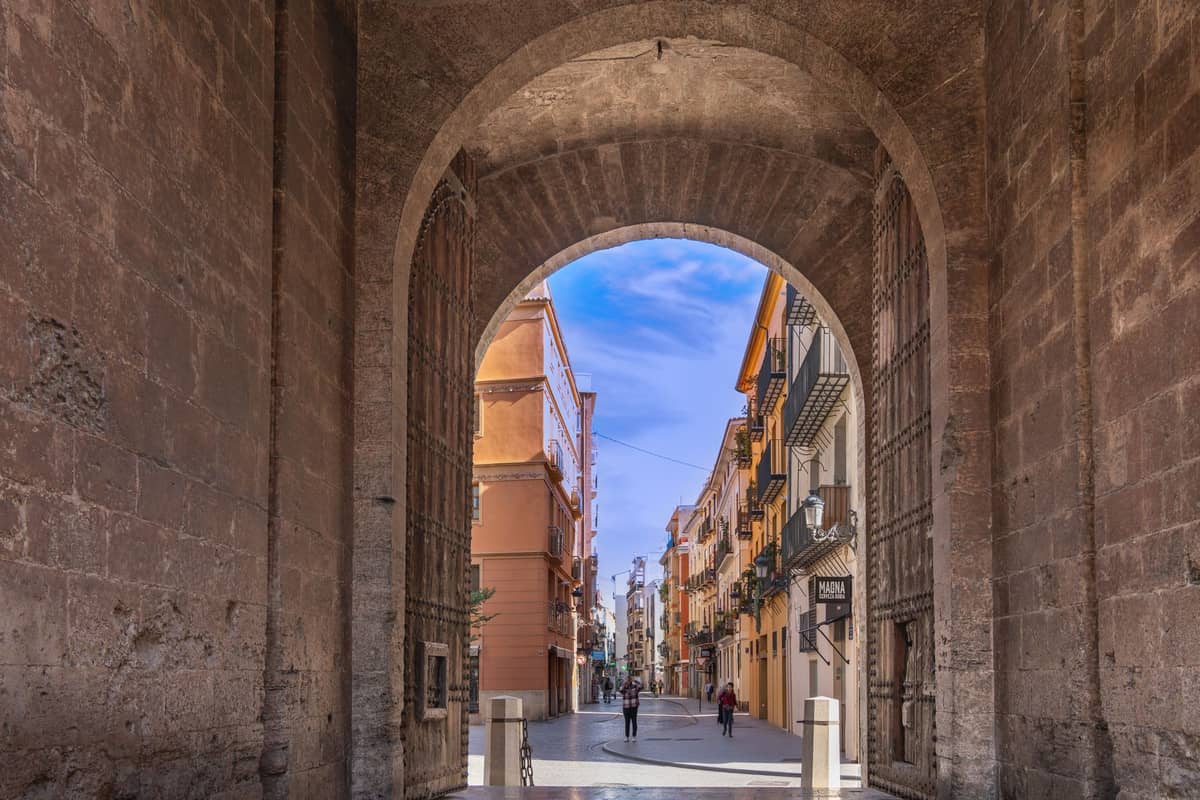
The northern edge of Barrio del Carmen ends at the two surviving medieval gate towers. The Torres de Serranos (1392) are the larger and more photogenic of the pair, opening onto what was once the road to Catalonia. A few hundred metres west stand the Torres de Quart (15th century), still bearing cannonball scars from the Napoleonic siege of 1808. Both towers are ticketed, and the views from the top are worth the modest entry cost.
✨ Pro tip
The route back from Torres de Serranos along Carrer de Cavallers is one of the best streets in the old city for architecture and atmosphere. It passes through the heart of El Carmen and ends near the Palau de la Generalitat, Valencia's regional government palace. Factor in an extra 20 minutes to walk it slowly.
Practical Logistics: Time, Tickets, and Timing
The full route from Plaza del Ayuntamiento to Torres de Serranos and back covers around 3–4 km of walking, depending on how many side streets you explore. Without stopping inside any ticketed attractions, the walk takes roughly 90 minutes. With stops at La Lonja, San Nicolás, and the Cathedral, allow 3 to 4 hours minimum. Add the Micalet tower climb and a lunch break and you're comfortably at 5 hours.
- Mercado Central Free entry. Open Monday to Saturday roughly 07:30–15:00. Closed Sundays. Best visited before 10:00 for atmosphere.
- La Lonja de la Seda Ticketed entry required. UNESCO World Heritage Site. Check current prices via Visit Valencia or the city's official heritage site. Closed Mondays.
- Iglesia de San Nicolás Ticketed entry. Approximately €8 for adults at time of writing; verify current prices before visiting. Timed entry slots apply in peak season.
- Catedral de Valencia + El Micalet Cathedral entry ticketed; tower climb costs extra. Combined tickets available. Verify current prices and hours via the official cathedral website.
- Torres de Serranos and Torres de Quart Both ticketed; modest entry fee. Sundays are often free admission for residents. Check current status with Valencia City Hall.
- Basílica de la Virgen de los Desamparados Free entry. Open daily. No photography restrictions in most areas.
For those who want a structured map and audio narration, the official Visit Valencia website publishes a historical city route with GPS waypoints at no cost. Several third-party apps and platforms sell downloadable audio tours for the old city, typically priced around €5–15 per person and lasting 2 to 2.5 hours. These are worth considering if you prefer guided narration over reading plaques. For context on how this walk fits into a longer trip, the 3-day Valencia itinerary shows how to sequence the old city with the Turia gardens and the Ciudad de las Artes.
⚠️ What to skip
Tip-based 'free walking tours' depart from Plaza de la Virgen most mornings and are widely advertised online. They are not actually free: guides work exclusively for tips, and €10–15 per person is the standard expectation. They can be good value, but go in knowing that upfront.
What to Skip, What's Overrated, and What Surprises People
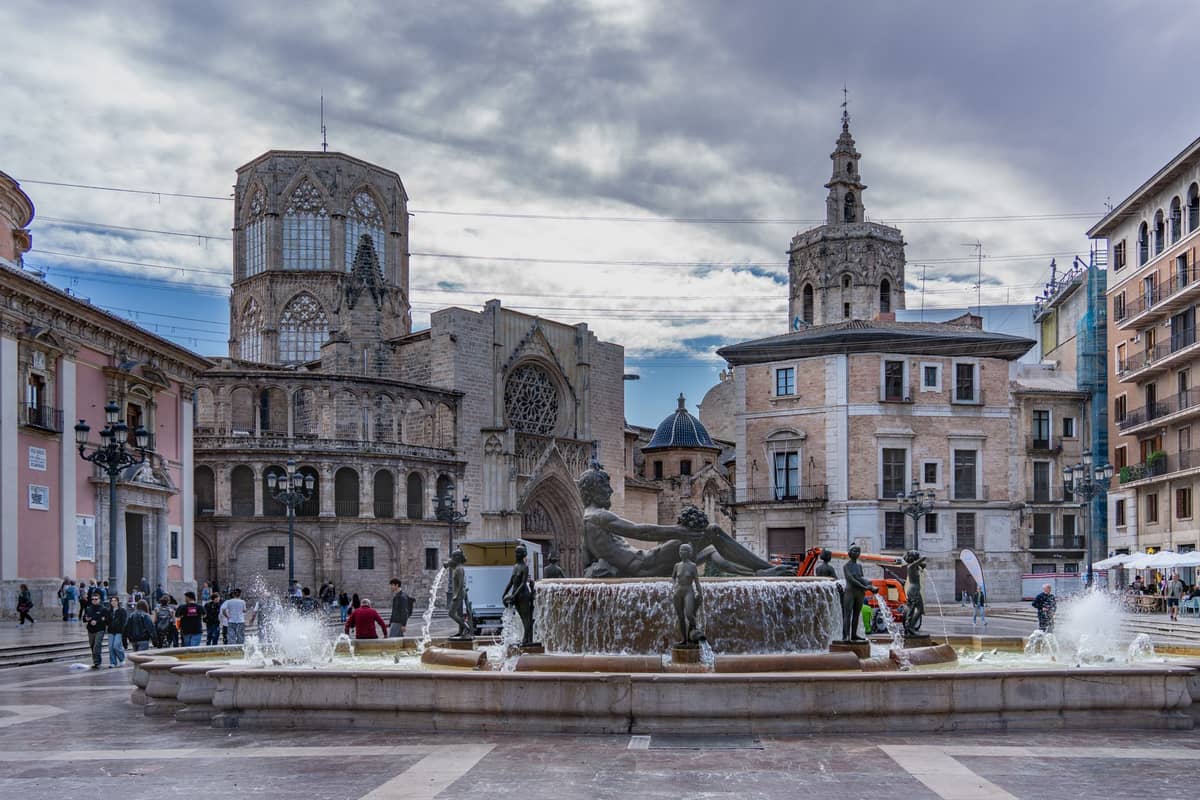
The Cathedral is worth visiting for its architectural variety and the Santo Cáliz, but the queues at the main Baroque door can be long in summer. Go early or use the side entrance on Plaza de la Almoina to save time. The Cathedral museum extension is moderately interesting but not essential if you're short on time.
The Museo Nacional de Cerámica on Calle del Poeta Querol is easy to walk past, but the building alone justifies a stop: the Palacio del Marqués de Dos Aguas has one of the most extravagant Rococo facades in Spain. The interior ceramics collection is genuinely excellent and rarely crowded. This is one of the most undervisited stops in Ciutat Vella.
The area immediately around Plaza de la Reina fills up with tourist restaurants that are priced well above what you'd pay two streets away. If you want lunch or a coffee break, walk into El Carmen proper or east toward Ruzafa rather than sitting at the plaza-facing terraces.
- Bring a reusable water bottle: drinking fountains are scattered throughout the old city, and Valencia tap water is potable.
- Wear rubber-soled shoes: medieval cobblestones are uneven and slippery when wet, particularly in the narrow lanes of El Carmen.
- April through October: carry sun protection. The old city has limited shade outside the narrow medieval streets.
- Weekday mornings are significantly quieter than weekend afternoons at major monuments.
- The Turia gardens (Jardí del Túria) are immediately north of Torres de Serranos and make an excellent post-walk cool-down on a warm day.
Getting to the Starting Point and Getting Around
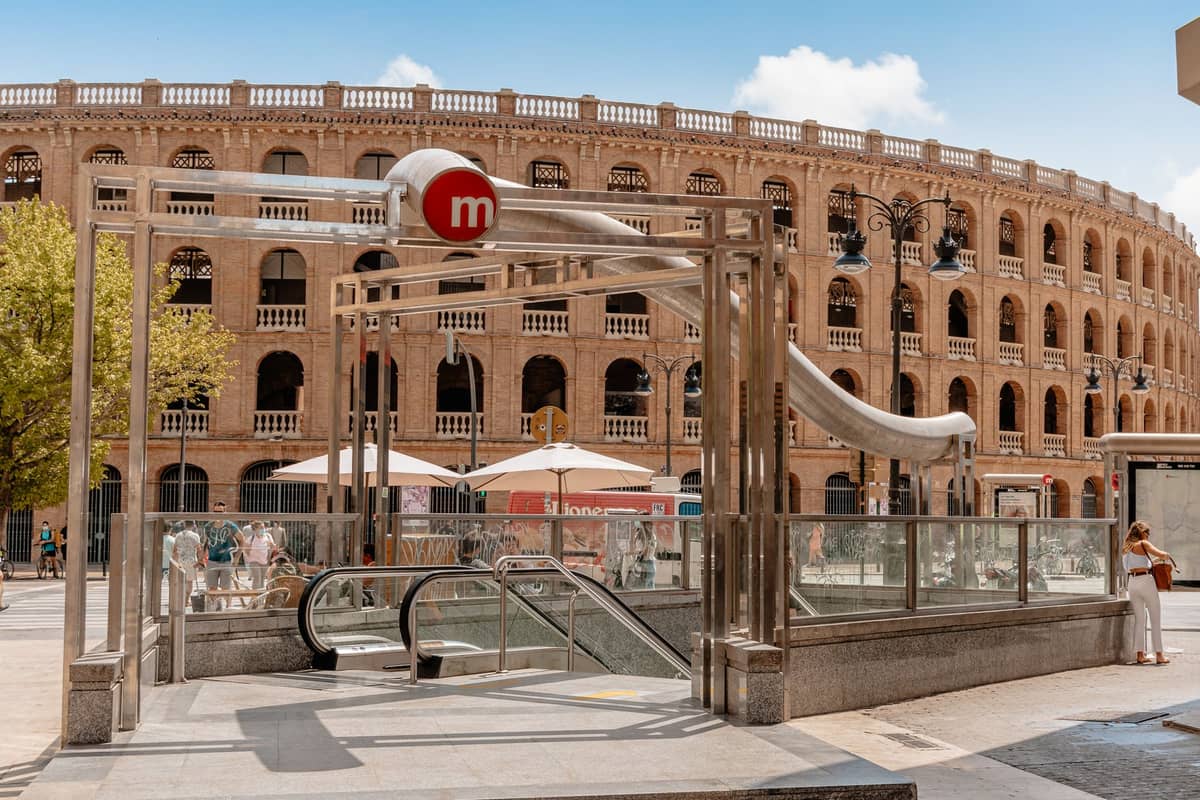
Plaza del Ayuntamiento is Valencia's central hub and well served by public transport. Metro Lines 3 and 5 stop at Xàtiva station, a short walk (around 5 minutes) from the square. Multiple city bus lines also stop here. If you're staying in the old city itself, the starting point is likely walkable from your accommodation. For a full overview of transport options including getting in from the airport, see the guide to getting around Valencia.
Cyclists can reach Ciutat Vella easily via the Turia gardens bike path, which runs parallel to the northern wall of the old city. Bike parking is available near Torres de Serranos. For a dedicated cycling route, the Turia Garden cycling guide covers the full riverside route. Note that cycling within the narrow medieval streets of El Carmen is restricted in many lanes and practically uncomfortable everywhere.
FAQ
How long does the self-guided walking tour of Valencia's old city take?
The full circuit covering the main monuments (Mercado Central, La Lonja, San Nicolás, the Cathedral, Plaza de la Virgen, El Carmen, and the medieval towers) takes 3 to 5 hours depending on how long you spend inside each stop. If you're moving quickly and skipping ticketed interiors, 90 minutes covers the walking route alone.
Is it worth paying for a guided tour rather than going self-guided?
A guided tour adds historical depth and storytelling that plaques and phone apps rarely match. However, Ciutat Vella is compact and well-signposted, and the free official route from Visit Valencia is genuinely useful. Self-guided is perfectly viable for independent travellers comfortable navigating on foot. Guided tours make more sense for those who want historical context without doing any research beforehand.
What is the best time of day to walk the Valencia old city?
Early morning, from around 08:30 to 11:00, is the best window. The Central Market is in full operation, crowds are thin at major monuments, and the light is better for photography. In summer (June to September), the combination of heat and tourist volumes makes mid-morning to early afternoon the most uncomfortable time to walk.
Are Valencia's old city monuments free to enter?
Several key stops charge admission: La Lonja de la Seda, the Cathedral, the Micalet tower, the Iglesia de San Nicolás, the Museo Nacional de Cerámica, and both medieval gate towers. Budget around €15 to €20 per person across the route for ticketed entries, depending on which you visit. The Central Market, the Basílica de la Virgen, and the exterior of all buildings are free.
Can I combine the old city walk with other Valencia neighbourhoods?
Yes, easily. The Turia gardens immediately border the north side of Ciutat Vella, and the walk to the Ciudad de las Artes y las Ciencias through the park takes around 40 minutes on foot or 15 minutes by bike. The Ruzafa neighbourhood, known for its food scene, is about a 15-minute walk south of Plaza del Ayuntamiento. A logical full-day combination is old city in the morning, lunch in Ruzafa, and the Turia gardens in the late afternoon.