Museo Nacional de Cerámica González Martí: Inside Valencia's Most Extravagant Palace
Housed in the theatrical 18th-century Palacio del Marqués de Dos Aguas, the González Martí National Museum of Ceramics and Decorative Arts combines one of Spain's finest ceramic collections with one of its most over-the-top Rococo facades. At just 3 euros, it is one of the best-value cultural stops in Valencia's historic centre.
Quick Facts
- Location
- Calle Poeta Querol 2, 46002 Valencia (Ciutat Vella / historic centre)
- Getting There
- Walkable from Plaza de la Reina and Valencia Cathedral; multiple EMT city bus routes serve the historic centre
- Time Needed
- 1 to 2 hours for a thorough visit; 45 minutes if you focus on highlights
- Cost
- General admission 3 €; free for under-18s, over-65s, and pensioners; free Saturday afternoons (after 16:00) and Sundays
- Best for
- Architecture enthusiasts, design and craft lovers, history buffs, budget-conscious cultural visitors
- Official website
- http://www.cultura.gob.es/mnceramica/home.html
First Impressions: The Facade That Stops People Mid-Stride
The Museo Nacional de Cerámica González Martí announces itself before you even reach the entrance. The alabaster portal of the Palacio del Marqués de Dos Aguas is one of the most exuberant pieces of Rococo carving in Spain, a writhing mass of figures, foliage, and mythological imagery that looks less like architecture and more like theatre scenery that accidentally became stone. Visitors rounding the corner from Calle de la Paz frequently stop completely still, phone already raised, trying to fit the whole thing into frame.
The portal was designed by painter and sculptor Hipólito Rovira and carved in alabaster around 1740, with the flanking figures representing the Júcar and Cabriel rivers. The building itself dates to the 17th century and was remodelled in the mid-18th century at the height of Valencian Rococo enthusiasm. The facade was given its current white-and-gold appearance during a 19th-century restoration. What you see today is a layered object: medieval shell, Baroque interior reorganisation, Rococo surface performance.
💡 Local tip
The facade faces north and is in shadow through the morning. If you want the best photographs without harsh contrast, visit on a slightly overcast day or arrive in late afternoon when reflected light from surrounding buildings fills in the shadows.
The Collection: Five Thousand Years of Clay, Glaze, and Human Ambition
The collection was assembled over decades by Manuel González Martí, a Valencian intellectual and ceramics scholar who donated his life's work to the Spanish state. The museum opened in 1954 and now holds one of the most comprehensive ceramic collections in Europe, spanning prehistoric pieces through to 20th-century studio work. The scope is genuinely impressive: Neolithic vessels, Roman amphorae, Islamic lusterware, medieval Valencian tiles, Baroque figurines, and industrial transfer-print pieces all coexist across the palace's floors.
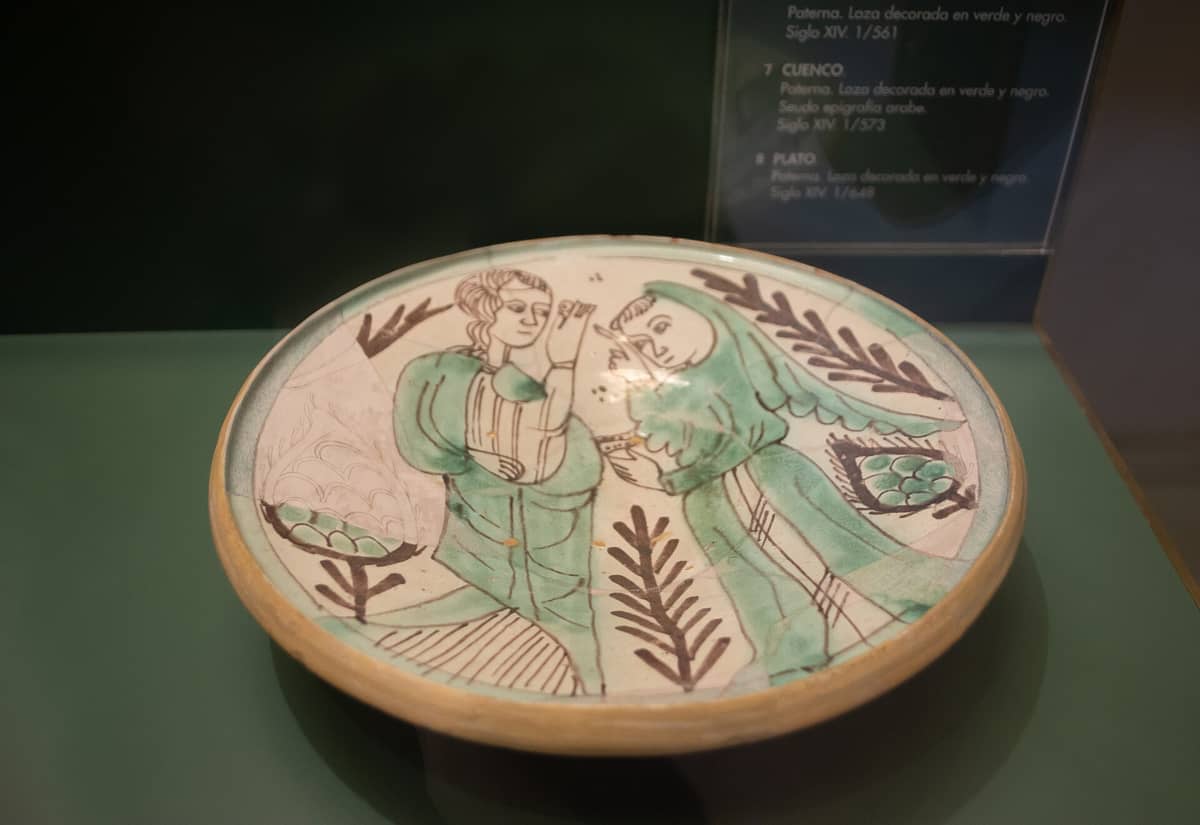
Valencia has been central to Spanish ceramic history for centuries, particularly through the workshops of Manises and Paterna, which produced the distinctive lusterware that reached courts across medieval Europe. The museum contextualises this local tradition within a broader Mediterranean and global ceramic story, which gives the collection intellectual depth beyond regional pride. You begin to understand not just what things look like, but why particular glazes and techniques moved along trade routes, and what they meant to the people who commissioned them.
The decorative arts component of the full title is worth taking seriously. Alongside ceramics proper, the museum displays furniture, carriages, embroidered textiles, glass, and silverwork from the palace's historic interiors. These rooms read as period settings rather than neutral display cases, which makes the experience considerably more immersive than a conventional ceramics museum.
Tickets & tours
Hand-picked options from our booking partner. Prices are indicative; availability and final rates are confirmed when you complete your booking.
Valencia Silk Museum tickets and audio guide
From 7 €Instant confirmationFree cancellationValencia English tour with entry to La Lonja, Catedral and San Nicolas
From 39 €Instant confirmationFree cancellationValencia top attractions MegaPass Classic with Oceanografic and Science Museum
From 79 €Instant confirmationValencia Spanish tour with entry to La Lonja, Catedral and San Nicolas
From 49 €Instant confirmationFree cancellation
Moving Through the Palace: What to Expect Floor by Floor
The ground floor introduces the building's architectural history and houses some of the oldest ceramic pieces in the collection. The transition from street level to these lower galleries is immediately atmospheric: stone floors, vaulted ceilings, the temperature dropping a few degrees. The smell is that particular combination of aged stone and museum-quality climate control, cool and faintly mineral.
The upper floors open into the palace's principal living quarters, where the 19th-century Valencian Rococo interiors are preserved largely intact. The ballroom and reception rooms are the visual peak of the building, with silk-covered walls, ornate plasterwork, and furniture arranged as it would have been for aristocratic use. These spaces feel less like a museum and more like a house that simply refused to be modernised, which is either magical or unsettling depending on your sensibility.
The ceramic galleries are distributed across multiple rooms and grouped roughly by period, region, and technique. Navigation is logical rather than exhausting. Labels are in Spanish and English throughout, and the information is substantive without being overwhelming. Allow at least an hour if you intend to read the panels; 45 minutes is enough for a visual pass.
ℹ️ Good to know
Opening hours: Tuesday to Saturday 10:00 to 14:00 and 16:00 to 20:00. Sunday and public holidays 10:00 to 14:00. Closed Mondays and on 1 January, 1 May, and 24, 25, and 31 December. Always check the official site before visiting as hours can change on local holidays.
Time of Day and Crowd Patterns
This museum draws a quieter, more focused crowd than the major blockbusters. Weekday mornings between opening and noon are reliably calm, with mostly independent travelers and occasional school groups that move through relatively quickly. The split-schedule hours (closing at 14:00 and reopening at 16:00) mean the afternoon session from 16:00 to 20:00 on weekdays tends to be the least crowded window of all, particularly useful if you want the palace rooms to yourself.
Sunday mornings attract more visitors, partly because entry is free and partly because the surrounding historic centre is already busy with people walking between the Cathedral and Plaza de la Reina. Saturday afternoons after 16:00 are also free and can be livelier as a result, though the museum never reaches the queue-around-the-block levels of more heavily marketed attractions.
If you are combining this with nearby sights, the museum fits naturally into a morning walking the historic centre, followed by the afternoon reopening session if you want to return for particular rooms. The building's split hours can feel inconvenient but they also enforce a useful break.
Architectural Context: The Palace Within the City
The Palacio del Marqués de Dos Aguas sits in the densely layered fabric of Valencia's historic centre, about two minutes on foot from the Valencia Cathedral and roughly the same distance from the main shopping street of Calle de la Paz. Its position is central enough to include on almost any walking route through the old city, yet the palace sits slightly off the most trafficked pedestrian axes, which contributes to its relatively calm atmosphere.
Understanding the building in context matters here. Valencia's historic centre contains a remarkable density of architectural periods, from Roman foundations to Gothic civic buildings to Baroque churches to 19th-century eclecticism. The palace represents the Rococo strand of that history, and it is the most complete example of that style in the city. If you are working through Valencia's architecture systematically, the Valencia architecture guide can help you trace these layers across multiple sites.
The street itself is modest in scale, which makes the palace's facade all the more surprising. Nearby, the Iglesia de San Nicolás offers another immersive decorative interior that pairs well with this visit, and both can be covered in a single half-day without rushing.
Photography, Accessibility, and Practical Notes
Photography without flash is generally permitted in the permanent galleries, which is a genuine benefit given the quality of natural light in the upper palace rooms. The ceramic pieces photograph well under the museum's artificial lighting, though close-up detail shots of lusterware glazes work best when there is no reflection from overhead fixtures. The grand salon interiors are the most photographed spaces and reward a patient approach with well-composed shots of the complete rooms rather than detail fragments.
The museum occupies a multi-floor historic palace, and while an elevator is reported to be available, some areas involve stairs and the uneven stone surfaces characteristic of buildings of this age and heritage status. Visitors with reduced mobility should contact the museum directly before visiting to confirm current step-free access routes, as these can be affected by ongoing conservation work.
⚠️ What to skip
The museum closes for a midday break from 14:00 to 16:00 Tuesday through Saturday. Several visitors each week arrive during this window expecting to enter. Plan your schedule around it or use the break to eat nearby and return refreshed.
The surrounding block offers several cafe options for the midday break. If you are mapping a broader day in the historic centre, consider pairing this visit with the La Lonja de la Seda, Valencia's 15th-century silk exchange and a UNESCO World Heritage Site, which is a 10-minute walk away. The contrast between Gothic civic grandeur and Rococo aristocratic excess makes for a genuinely instructive afternoon.
Honest Assessment: Is It Worth Your Time?
For visitors primarily interested in the facade and the palace interiors, the answer is straightforwardly yes, and the 3-euro admission makes the calculation even easier. For visitors who are deeply interested in ceramic history and technique, the collection offers real substance across several hours of careful looking. For visitors who are neither particularly architecture-focused nor interested in applied arts history, the museum is still a pleasant and uncrowded hour in an extraordinary building, but it is worth being realistic that the content is specialised.
This is not a museum that tries to be everything to everyone. It has a specific subject and a specific building, and it pursues both seriously. That focus is precisely what makes it worthwhile for the right visitor, and exactly why it might feel slight to someone who arrived expecting a general history of Valencia or a broader art museum experience.
Travelers building a fuller picture of Valencia's cultural offer should cross-reference this with the best museums in Valencia guide to understand how this fits alongside the IVAM, the Museo de Bellas Artes, and the science and natural history institutions further afield.
Insider Tips
- Free entry on Saturday afternoons after 16:00 and on Sundays is the best way to visit without paying, but Sunday mornings are noticeably busier. Saturday's 16:00 session offers free entry with a much calmer atmosphere.
- The midday closure from 14:00 to 16:00 is strictly observed. If you plan to visit before lunch, arrive by 12:30 at the latest to give yourself a comfortable hour before closing.
- The upper-floor salon rooms with the preserved aristocratic interiors are the most photographed spaces, but the medieval and Islamic lusterware rooms on the lower floors are often better lit and less rushed. Spend time there.
- The exterior portal is best observed from across the street at a slight angle, which captures both the central carving and the building's proportions. Standing directly in front flattens the relief and loses depth in photographs.
- If you are visiting Valencia in spring during Las Fallas, note that the museum may adjust its schedule around the festival period. Check the official site in advance for any temporary changes to hours.
Who Is Museo Nacional de Cerámica González Martí For?
- Architecture enthusiasts drawn to Rococo and Baroque interiors
- Design and applied arts lovers interested in the history of European ceramics
- Budget travelers: one of the lowest-priced cultural experiences in the city
- Visitors combining a walking route through the historic centre who want a shaded, substantive stop
- Photographers looking for richly textured interior spaces with good natural light
Nearby Attractions
Other things to see while in Centro Histórico:
- Basílica de la Virgen de los Desamparados
The Real Basílica de Nuestra Señora de los Desamparados stands at the heart of Valencia's historic centre, housing the revered image of the city's patron saint. Built between 1652 and 1667, it is free to enter and open every day, making it one of the most accessible and emotionally resonant stops in the old city.
- Catedral de València
Rising above Plaza de la Reina in Valencia's historic centre, the Cathedral of Valencia is a remarkable layered monument built over seven centuries. From a Romanesque doorway to Gothic vaulting, a Baroque facade, and a relic claimed to be the Holy Grail, this is one of Spain's most architecturally complex and historically loaded churches.
- Centre Cultural La Nau
Housed in the University of Valencia's historic headquarters since the late 15th century, Centre Cultural La Nau is a historic landmark in the old town offering free exhibitions, concerts, and theatre. It rewards visitors who slow down and look closely.
- Centre Arqueològic de l'Almoina
Beneath a quiet plaza steps from Valencia Cathedral lies one of Spain's most compelling urban archaeology sites. The Centre Arqueològic de l'Almoina preserves around 2,500 square metres of Roman, Visigothic, and medieval remains, excavated over two decades and now visible through a striking modern structure.