Centre Cultural La Nau: Valencia's Living Heritage at the Heart of the University
Housed in the University of Valencia's historic headquarters since the late 15th century, Centre Cultural La Nau is a historic landmark in the old town offering free exhibitions, concerts, and theatre. It rewards visitors who slow down and look closely.
Quick Facts
- Location
- C/ de la Universitat 2, 46003 València — La Xerea, Ciutat Vella
- Getting There
- Walkable from Plaza del Ayuntamiento (5 min); multiple EMT bus lines serve Ciutat Vella
- Time Needed
- 45 minutes to 1.5 hours depending on current exhibitions
- Cost
- Free for most exhibitions; occasional special exhibitions may charge a fee
- Best for
- Architecture lovers, culture seekers, and anyone who enjoys free, low-key art spaces
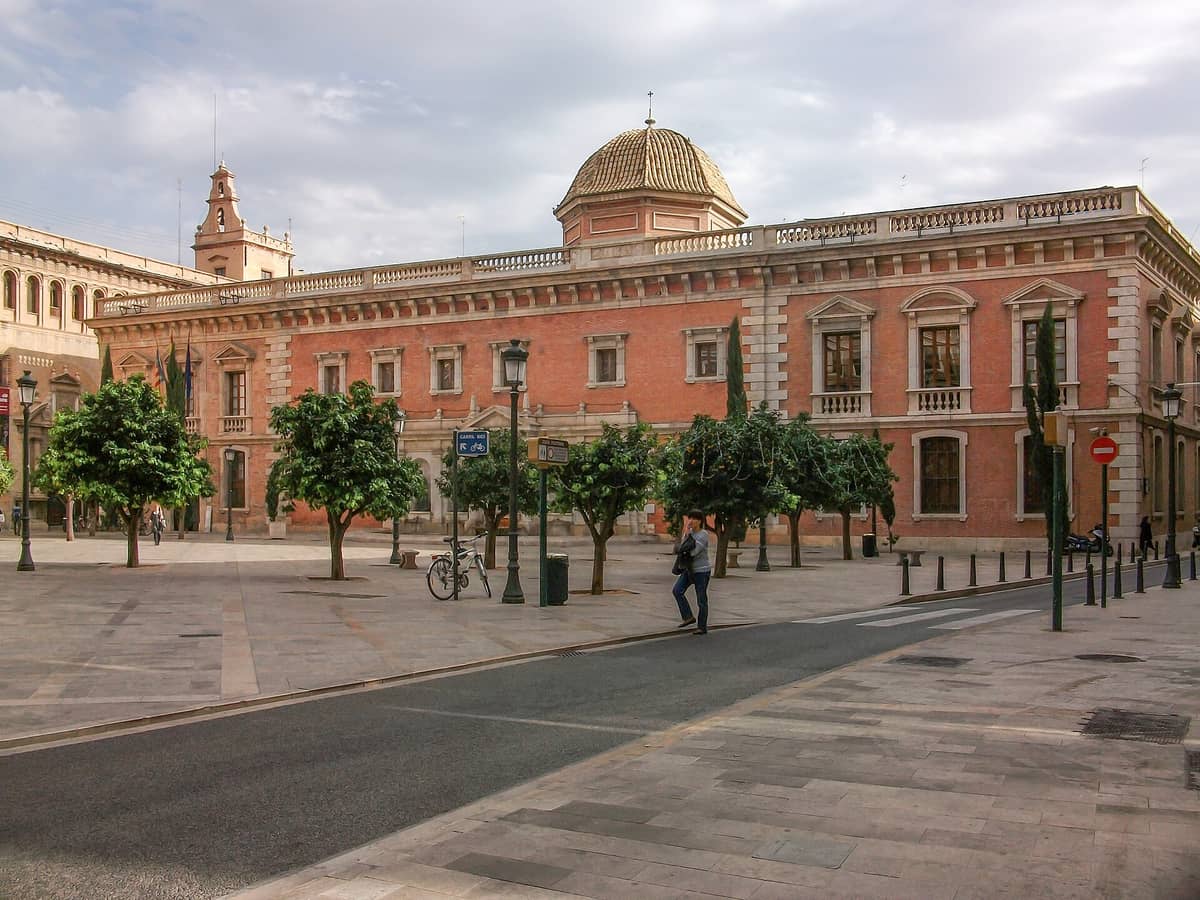
What Is La Nau and Why Does It Matter?
Centre Cultural La Nau, officially the Centre Cultural La Nau de la Universitat de València, occupies the historic headquarters of one of Spain's oldest universities. The University of Valencia was founded at the end of the 15th century, and this building has served as its heart ever since. Today it functions simultaneously as the university's Rectorate, a working cultural venue, and a publicly accessible piece of living architectural history, all on a single block in the historic centre of Valencia.
What makes La Nau unusual is the way those functions coexist without tension. On any given morning, you might walk through a stone courtyard that students have crossed for over five centuries, pass a rotating contemporary art exhibition on your way to the building's small theatre space, and end up reading a notice board for an upcoming classical music recital. None of it feels staged. It functions as a cultural institution that happens to be beautiful, rather than a heritage site that happens to host events.
💡 Local tip
Entry to the building and most exhibitions is free. Always check the University of Valencia's cultural programme online before visiting, since exhibitions rotate and some special events require advance tickets.
The Architecture: Neoclassical Bones, Five Centuries of Layers
The building's neoclassical character is most visible in its proportions and facade, but the real architectural pleasure is in the courtyard. The arcaded patio, with its stone columns and shaded walkways, sets a rhythmic, meditative pace that the surrounding old town streets rarely permit. Stone surfaces absorb sound in a way that makes the interior feel insulated from the city just metres away.
Light moves through the courtyard predictably. In the morning, the east-facing arcade catches early sun while the western walkway stays in cool shadow — useful to know if you plan to linger or photograph. By midday the courtyard is flooded, which flattens the texture of the stone but makes the full symmetry of the space readable in a single glance. Late afternoon light, angling in from the west, is when the architectural detail reads best: the carved stone capitals and the transitions between arched bays show clearly at that angle.
For context on Valencia's broader architectural inheritance, the art nouveau architecture guide and the general Valencia architecture guide are worth reading before or after a visit to La Nau. The building predates both movements, but understanding the city's architectural range makes the neoclassical restraint here more legible.
Tickets & tours
Hand-picked options from our booking partner. Prices are indicative; availability and final rates are confirmed when you complete your booking.
Hortensia Herrero Art Centre Guided Tour
From 15 €Instant confirmationFree cancellationHortensia Herrero Art Centre Entry Ticket
From 12 €Instant confirmationFree cancellationHistoric Valencia walking tour
From 27 €Instant confirmationFree cancellationValencia Food Tour with Tapas & Drinks with a Local
From 85 €Instant confirmationFree cancellation
The Exhibitions: Rotating, Free, and Often Overlooked
La Nau maintains several exhibition rooms across its ground floor and mezzanine levels. The programming tends toward fine art, photography, historical documentation, and contemporary Valencian and Spanish artists, though the mix changes frequently. Exhibitions are typically mounted for four to eight weeks, and the quality is consistently higher than the lack of admission fees might suggest.
The exhibition spaces themselves are modest in scale. Rooms are not enormous, but the lighting and installation quality reflect a professional curatorial approach. Because crowds are light compared to major paid venues, you can spend genuine time in front of individual works. That uninterrupted attention is increasingly rare in any city's cultural institutions.
ℹ️ Good to know
Exhibition hours (Tue–Sat 10:00–13:00 and 16:00–20:00; Sun and public holidays 10:00–13:00) differ from general building access hours (Mon–Fri 08:00–21:00; Sat 09:00–13:30; Sun 09:00–14:00). In August, the building opens mornings only. Check the university's cultural calendar before visiting.
How the Experience Changes by Time of Day
Visiting in the morning on a weekday, La Nau is quiet. University staff pass through with purpose, occasionally a small school group files in, but the courtyards and exhibition rooms are largely clear. The stone surfaces are cool, the air smells faintly of stone and old wood, and the city noise stays outside. This is the best window for photography: low tourist density and soft directional light.
Midday brings a modest increase in foot traffic, particularly on weekends when families and older visitors arrive. The atmosphere remains unhurried. Afternoons between 16:00 and 19:00 can occasionally draw small crowds when a new exhibition is in its first week, but the space absorbs them easily. Evening access is limited to the building itself rather than exhibitions, though if La Nau has a scheduled concert or theatre performance, the atmosphere transforms entirely: the courtyard, when used as an event space, takes on a different character under artificial light.
The Cultural Programme Beyond Exhibitions
La Nau is not only a gallery. The university runs a consistent programme of theatre, chamber music, lectures, and film screenings throughout the academic year. These events are often free or low-cost and are listed on the university's cultural website. Audiences tend to be a mix of students, faculty, and local residents rather than tourists, which gives events a genuinely local character.
The performance spaces are intimate. The theatre room is small enough that there is no bad seat. If you happen to be in Valencia during the academic year and the programme aligns with your schedule, attending a concert or lecture here is one of the more authentic ways to spend an evening in the old town, and almost certainly cheaper than anything happening at the Palau de les Arts.
For a contrasting scale of cultural ambition, the Palau de les Arts Reina Sofía is Valencia's main opera house and worth seeing even just for the architecture. La Nau and the Palau occupy opposite ends of Valencia's cultural spectrum: one understated and embedded in the city's daily rhythms, the other monumental and internationally programmed.
Practical Walkthrough: Getting There and What to Expect
La Nau sits on Carrer de la Universitat, a short pedestrian-friendly street in the La Xerea neighbourhood of Ciutat Vella. The entrance is straightforward: a stone portal leads directly into the main courtyard. There is no queue, no ticket window for general access, and no audio guide on offer. You navigate on your own, which suits the low-key atmosphere perfectly.
The building is walkable from virtually every major old town point of interest. From Plaza del Ayuntamiento it is a five-minute walk north. From the Cathedral area it is around eight minutes on foot heading south. Comfortable shoes are adequate; the floors are stone and tile, occasionally uneven in older sections, but there are no significant gradients inside.
If you are putting together a walking route through the historic centre, La Nau pairs naturally with the Llotja de la Seda (a UNESCO-listed Gothic merchant exchange a few minutes away) and the Mercado Central, making a coherent half-day loop through Valencia's civic and commercial heritage.
⚠️ What to skip
Accessibility information for visitors with mobility needs is not comprehensively documented in public sources. If you require step-free access, lifts, or accessible facilities, contact the University of Valencia's culture service directly before visiting.
Honest Assessment: Is It Worth Your Time?
La Nau is not a destination attraction in the sense that the Ciudad de las Artes y las Ciencias or the Cathedral are. It will not take your breath away from the outside. You could walk past it without a second glance. But for travelers who value depth over spectacle, it offers something those larger venues rarely do: a living institutional space that has been continuously occupied and used since the 15th century, now hosting free contemporary art in rooms that predate most European capitals' major cultural institutions.
The best way to frame it: this is a thirty-to-ninety-minute addition to an old town walk, not a half-day commitment. It pairs well with a coffee and a slow morning, or as a shaded midday stop when Valencia's summer heat makes outdoor sightseeing less appealing. Anyone expecting a major museum experience may feel underwhelmed. Anyone who enters without fixed expectations usually leaves having absorbed something unexpected.
Insider Tips
- Check the university's cultural calendar (uv.es/cultura) before visiting. The programme resets each academic term, and some of the best concerts and theatre events are not listed on general tourism sites.
- The courtyard is a legitimate rest stop even if you skip the exhibitions entirely. Benches along the arcades are shaded, the space is quiet, and there is no expectation to buy anything or move on quickly.
- If you are visiting in August, note that access is mornings only and exhibition programming is typically reduced or suspended. September and October are good months: new exhibitions open with the academic year and the building runs at full capacity.
- Photography inside the courtyard is generally unobstructed. For the best structural shots of the arcade and columns, position yourself in the northwest corner in the morning when raking light from the east defines the stonework.
- La Nau occasionally hosts events tied to Las Fallas (Valencia's major March festival) and other civic occasions. During these periods the atmosphere in the building is livelier than usual and worth timing a visit around.
Who Is Centre Cultural La Nau For?
- Architecture and heritage enthusiasts who want to see a working historic building, not a sanitised museum piece
- Travelers on a tight budget who want genuine cultural content without entry fees
- Anyone building a walking route through the historic centre who wants a mid-route stop with substance
- Visitors curious about Valencian academic and civic culture beyond the major tourist circuit
- Those traveling during summer who need a cool, quiet indoor space with something worth looking at
Nearby Attractions
Other things to see while in Centro Histórico:
- Basílica de la Virgen de los Desamparados
The Real Basílica de Nuestra Señora de los Desamparados stands at the heart of Valencia's historic centre, housing the revered image of the city's patron saint. Built between 1652 and 1667, it is free to enter and open every day, making it one of the most accessible and emotionally resonant stops in the old city.
- Catedral de València
Rising above Plaza de la Reina in Valencia's historic centre, the Cathedral of Valencia is a remarkable layered monument built over seven centuries. From a Romanesque doorway to Gothic vaulting, a Baroque facade, and a relic claimed to be the Holy Grail, this is one of Spain's most architecturally complex and historically loaded churches.
- Centre Arqueològic de l'Almoina
Beneath a quiet plaza steps from Valencia Cathedral lies one of Spain's most compelling urban archaeology sites. The Centre Arqueològic de l'Almoina preserves around 2,500 square metres of Roman, Visigothic, and medieval remains, excavated over two decades and now visible through a striking modern structure.
- El Micalet (Cathedral Bell Tower)
Rising roughly 50 metres above Plaça de la Reina, the Torre del Micalet is the detached bell tower of Valencia Cathedral, built between 1381 and 1429. For €3, you climb a narrow stone staircase to a terrace at about 50 metres and get one of the clearest, most unobstructed panoramas of Valencia's historic roofline. It earns its place on a short itinerary, though it demands a bit of effort to reach the top.