Jardín Botánico de la Universitat de València: A Green Sanctuary in the Heart of Valencia
Founded in its current form in 1802, the Jardín Botánico de la Universitat de València is one of Spain's oldest working botanical gardens. Tucked along the edge of the Turia riverbed park, it offers a rare combination of scientific depth and quiet beauty at one of the city's most affordable admission prices.
Quick Facts
- Location
- Calle Quart, 80, Valencia (Extramurs district, beside the Jardí del Túria)
- Getting There
- Metro Line 1 (Turia station); Metro Lines 3 & 5 (Ángel Guimerà station)
- Time Needed
- 1 to 2 hours
- Cost
- €2.50 standard; reduced rates from €1.00–€1.50; free for children under 7
- Best for
- Nature lovers, slow travelers, families with curious kids, history enthusiasts
- Official website
- www.jardibotanic.org
What the Jardín Botánico Actually Is
The Jardín Botánico de la Universitat de València is not a decorative park. It is a working scientific institution that has been collecting, cataloguing, and teaching with living plants for over two centuries. The garden holds a germplasm bank, a research herbarium (registered under the international code VAL), and a living collection spanning thousands of species from across the globe. For visitors, this means the labels are detailed, the collections are organized by taxonomy and geography, and there is genuine depth behind every planting bed.
The garden's roots go back further than 1802. The university's engagement with botanical science began as early as 1567, when a simples garden was established for teaching medicinal plants to pharmacy and medicine students. The current garden, laid out at its present location on Calle Quart, was created in 1802 and has been refined and expanded ever since. That continuity gives it a layered character: some structures feel classical and formal, while newer greenhouse pavilions reflect more recent conservation priorities.
ℹ️ Good to know
The garden closes on 25 December and 1 January, and may also close during days with strong wind or heavy rain. Check the official website before visiting in winter.
Opening Hours and Admission
Hours change seasonally, which is worth knowing before you plan. In the summer months of May through August, the garden stays open until 21:00, making it a pleasant late-afternoon option when the midday heat is too intense for outdoor activity. In November through February, closing time is 18:00. The transitional months fall in between: March and October close at 19:00, while April and September run until 20:00. The garden opens at 10:00 year-round.
Standard admission is €2.50, which makes this one of the most affordable green spaces in the city that still offers genuine content. Reduced tickets at €1.00 to €1.50 are available for a broad range of visitors including seniors over 65, pensioners, children aged 7 to 17, university students, unemployed persons, large families, people with absolute disabilities, and holders of the Valencia Tourist Card. Children under 7 enter free. A 10-entry pass costs €10 and an annual pass is available at €40 standard or €20 reduced. These prices are subject to change, so confirm on the official site before your visit.
Tickets & tours
Hand-picked options from our booking partner. Prices are indicative; availability and final rates are confirmed when you complete your booking.
Valencia Silk Museum tickets and audio guide
From 7 €Instant confirmationFree cancellationHistoric Valencia walking tour
From 27 €Instant confirmationFree cancellationNatural thermal springs and Girlfriend Waterfall tour from Valencia
From 89 €Instant confirmationFree cancellationMontanejos guided hike with natural pools full-day tour from Valencia
From 45 €Instant confirmationFree cancellation
The Experience: What You See and How It Feels
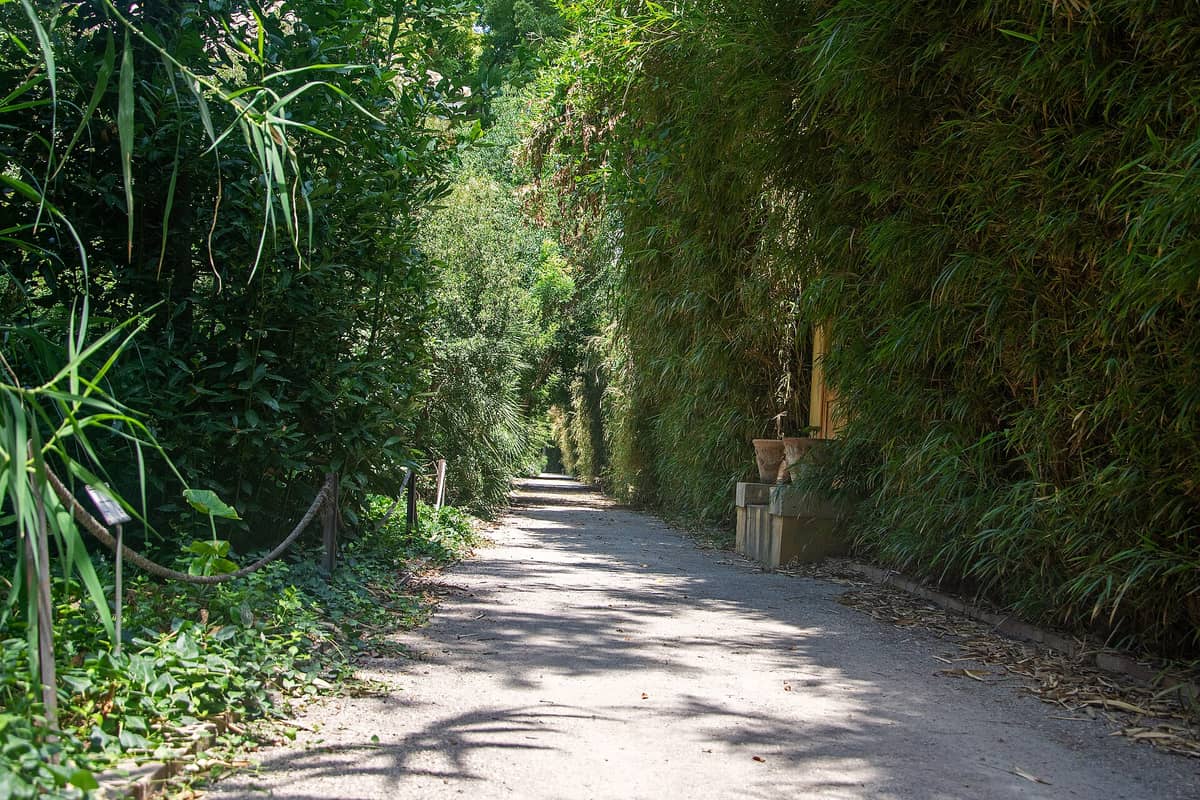
Walking through the entrance on Calle Quart, you leave the noise of the surrounding streets with surprising immediacy. The garden is not enormous, but its density of planting gives it a sense of enclosure that feels removed from the city. Gravel paths wind between labeled beds, tall palms create pockets of shade, and the Mediterranean light filters through canopy in a way that changes the character of the space hour by hour.
In the morning, particularly on weekdays, the garden is almost empty. Researchers come and go, and the occasional early visitor moves quietly through the taxonomy beds. This is the best time to read the species labels without interruption and to observe the greenhouse collections without crowds. By early afternoon on weekends, local families and small tour groups begin to fill the main paths, though the garden rarely becomes crowded in the way that larger Valencia attractions do.
The greenhouse pavilions are a highlight that some visitors rush past. Inside, the air is humid and warm, with that particular smell of moist soil and tropical foliage that signals serious horticultural effort. Collections include cacti and succulents, ferns, and tropical species that would be impossible to grow outdoors in Valencia's climate. The contrast between the desert-adapted plants and the lush tropical sections is striking, and instructive.
The garden sits directly adjacent to the Jardí del Túria, Valencia's 9-kilometer linear park built in the former Turia riverbed. Many visitors combine both in a single half-day outing, entering the botanical garden and then continuing on foot or by bicycle through the park.
Historical and Cultural Context
The Universitat de València is one of the oldest universities in Spain, founded in 1499. Its botanical garden is an extension of that academic legacy, originally created to supply medicinal plants and to train students in plant identification at a time when botany was inseparable from medicine and pharmacy. When the garden was formalized in its current location in 1802, European botanical gardens were at the height of their scientific prestige, serving as nodes in global networks of plant collection and exchange.
That institutional history still shows in the garden's structure. Unlike a municipal park designed primarily for leisure, the Jardín Botánico organizes its collections with scientific intent. Taxonomic beds group plants by family relationships, allowing visitors to trace morphological similarities across species. Geographic sections demonstrate how different climate zones produce different plant communities. For anyone with even a passing interest in botany, ecology, or natural history, this structure rewards slow attention.
Valencia's relationship with nature and its outdoor spaces is a broad theme worth exploring. For a wider view, the free things to do in Valencia guide covers both the botanical garden and the many other low-cost outdoor options across the city.
How to Get There
The garden is easy to reach by metro. Line 1 stops at Turia station, which puts you within a few minutes' walk of the entrance on Calle Quart. Lines 3 and 5 serve Ángel Guimerà station, a slightly longer walk but still straightforward. Several urban and interurban bus lines also run along the streets bordering the Turia park, making the area well-connected across the city.
If you are traveling by bicycle, the Turia riverbed park has a dedicated cycling path that passes close to the garden's perimeter, making this a natural stop on any ride through the park. For a more detailed breakdown of cycling routes and logistics, the cycling the Turia Garden guide covers routes, rental options, and what to expect along the way.
Photography, Accessibility, and Practical Notes
Photography is generally permitted for personal use throughout the garden. The best light for outdoor plant photography arrives in the morning, before harsh midday sun flattens the texture of leaves and flowers. The greenhouse interiors offer diffused light that works well at any time of day, though a camera that handles low-light conditions will produce better results than a standard phone camera in the darker corners.
The garden offers reduced admission for people with absolute disabilities, and companions of dependent persons may enter free, which suggests baseline accessibility provisions are in place. That said, gravel paths and some uneven surfaces may present challenges for wheelchair users or those with limited mobility. If accessibility is a specific concern, contacting the garden directly before your visit is the most reliable way to get current information.
Wear comfortable shoes. Flat sandals are fine on the main paths in dry weather, but after rain the gravel sections can become slightly uneven. There is no café inside the garden, so bring water, especially in summer when the greenhouses can feel very warm and the afternoon sun is strong. Hats and sunscreen matter more than most visitors expect for a garden visit in July or August.
💡 Local tip
In summer, visit after 18:00. The heat has dropped, the light is golden, and the garden's extended hours mean you often have the paths largely to yourself as other tourists shift toward dinner.
Is It Worth Your Time? An Honest Assessment
At €2.50 entry, the Jardín Botánico de la Universitat de València asks very little. What it returns depends on what you bring to it. If you engage with the species labels, follow the taxonomic logic of the layout, and take time in the greenhouses, you will leave with a richer understanding of plant diversity than most tourist attractions offer. If you are looking for a quick photo stop or a sweeping visual spectacle, this is not that place. The garden is quiet, scholarly in spirit, and small enough to feel intimate rather than impressive.
Visitors wanting more dramatic green space close by should note that the Jardí del Túria immediately alongside offers expansive cycling, running, and walking paths at no cost, and can easily fill a full morning. The botanical garden works best as a companion to the riverbed park rather than a standalone destination on a tight itinerary.
For travelers comparing Valencia's range of cultural sites, the best museums in Valencia guide includes the botanical garden alongside the city's more traditional indoor collections, giving useful context for how it compares in terms of depth and time investment.
Who should skip it: visitors with fewer than two full days in Valencia, who might struggle to justify the time against the city's higher-profile attractions. Those who find botanical collections dry or overly technical may not connect with the garden's format. Children under around age six are also likely to lose interest quickly unless paired with a longer walk through the adjacent Turia park.
Insider Tips
- The garden is one of the few attractions in Valencia that rewards a weekday morning visit above all other times. Foot traffic is minimal, researchers occasionally move through the collections, and the air still carries the cool of the previous night.
- Ask at the entrance about any temporary exhibitions or guided tours. The garden periodically hosts themed walks focused on specific plant families, medicinal use, or seasonal flowering, some of which are included in the admission price.
- The section housing the cactus and succulent collection tends to be at its visual peak in late spring, when many species produce flowers that last only a few days. If this is a specific interest, checking the garden's website or social media before your visit can help you time it.
- There is a small parking area nearby on Calle Quart, but street parking in this part of Valencia is competitive. The metro is genuinely faster and less stressful for most visitors coming from the city center.
- Combining the botanical garden with a walk through the Torres de Quart gateway, which stands just a short walk away on the same street, gives you an architectural counterpoint to the green visit and uses the same transit connection efficiently.
Who Is Jardín Botánico de la Universitat de València For?
- Slow travelers who prefer depth over volume in a single day
- Botany, ecology, or natural history enthusiasts looking for substance beyond typical tourist sights
- Families with children aged 7 to 12 who respond well to labeled, structured natural environments
- Visitors combining a morning walk through the Turia riverbed park with a focused cultural stop
- Photographers seeking soft morning or late-afternoon light in a relatively uncrowded setting
Nearby Attractions
Other things to see while in Jardín del Turia:
- Bioparc Valencia
Bioparc Valencia is a 10-hectare immersive zoo at the western tip of the Turia Garden, designed around the philosophy of 'zoo-immersion': no visible barriers between visitors and animals. Since opening in 2008, it has become one of Spain's most thoughtfully designed wildlife parks, with habitats spanning African savanna, equatorial forest, and Madagascar.
- Gulliver Park
Gulliver Park is a free outdoor playground built around a 70-metre fibreglass giant lying in Valencia's Turia Gardens. Open since 1992, it offers slides, ramps, and climbing structures that children can explore from head to toe. Entry is free, access is straightforward, and the scale of the sculpture makes it unlike any playground in Spain.
- Museo de Bellas Artes de València
Housed in a 17th-century palace at the edge of the Turia garden, the Museo de Bellas Artes de València holds one of Spain's most important collections of painting and sculpture — from medieval altarpieces to Valencian masters including Joaquín Sorolla — and charges nothing for admission. It is unhurried, serious, and frequently overlooked by visitors who head straight to the City of Arts and Sciences.