Best Day Trips from Valencia: The Definitive Guide
Valencia sits at the centre of one of Spain's most varied regions. Within two hours, you can reach a medieval hill town with a castle above the rooftops, thermal pools in an inland gorge, a dramatic coastal castle, and a lagoon that inspired the original paella. This guide covers the best day trips from Valencia with honest travel times, transport breakdowns, and seasonal advice.
Plan and book this trip
Tools from our partner Travelpayouts help you compare flights and hotels. If you book through them, we may earn a commission at no extra cost to you.
Flights
Hotels map
TL;DR
- Albufera Natural Park is the closest excursion, just 15 km south, and pairs perfectly with a dedicated half-day or full-day visit.
- Xàtiva and Sagunto are the strongest rail-based day trips: both have direct regional trains from Valencia and enough to fill a full day.
- Peñíscola and Montanejos are genuinely full-day commitments once travel time is included. Do not underestimate journey lengths.
- Many popular destinations are far easier by car or organised tour than by public transport. Check Renfe and Metrovalencia before planning.
- Coastal trips work well spring through autumn; inland gorge and hiking trips depend heavily on dry weather and summer water levels.
How to Think About Day Trips from Valencia

Valencia's location on Spain's east coast, roughly halfway between Barcelona and Alicante, gives it an unusually wide catchment for day trips. The Mediterranean coast stretches in both directions, the interior climbs quickly into dramatic limestone highlands, and the flat huerta plain to the south holds one of the most ecologically important wetlands in Europe. The variety is real, but so are the distances.
The biggest practical mistake travellers make is treating 'day trip' as a synonym for 'easy trip'. Some destinations on every Valencia day trip list require two hours of travel each way, meaning you spend four hours in transit for six hours on the ground. That can still be worthwhile, but you should go in with clear expectations. The destinations below are organised roughly by travel time and transport ease, not by popularity.
⚠️ What to skip
Not all day trips from Valencia are practical by public transport. Montanejos, Chulilla, and several coastal towns require either a car or a booked tour. Check current Renfe schedules and Metrovalencia connections before finalising any plan, as services and frequencies change seasonally.
Albufera Natural Park: The Closest Excursion

At just 15 km south of the city centre, Albufera Natural Park is the most accessible natural escape from Valencia and one of the most ecologically significant wetlands in Spain. The park encompasses a freshwater lagoon, rice paddies that supply most of Spain's paella rice, pine forests along the coast, and the village of El Palmar, which is the traditional hub for boat rides and rice-based cooking.
Bus line 25 from Valencia connects to the park, but coverage is limited once inside. For a more flexible visit, cycling south along the coast via the Turia garden route is a popular option that combines two experiences; see the cycling route through the Turia garden for practical details. The classic activities are a flat-bottomed boat ride on the lagoon and lunch at one of the rice restaurants in El Palmar. Sunset over the lagoon is particularly valued in spring and autumn when the light is lower and the heat less oppressive.
If you want to extend the trip southward, the coastal pine forest of Devesa del Saler runs between the lagoon and the sea and is worth including for a longer day out. The village of El Palmar is the most practical base for food and boat access.
💡 Local tip
Avoid Albufera on weekends in July and August if you want a quiet experience. The park's rice restaurant terraces fill up fast, and boat queues at El Palmar can be long by midday. Weekday morning visits in spring or early autumn offer far better conditions.
Xàtiva and Sagunto: The Best Rail Day Trips
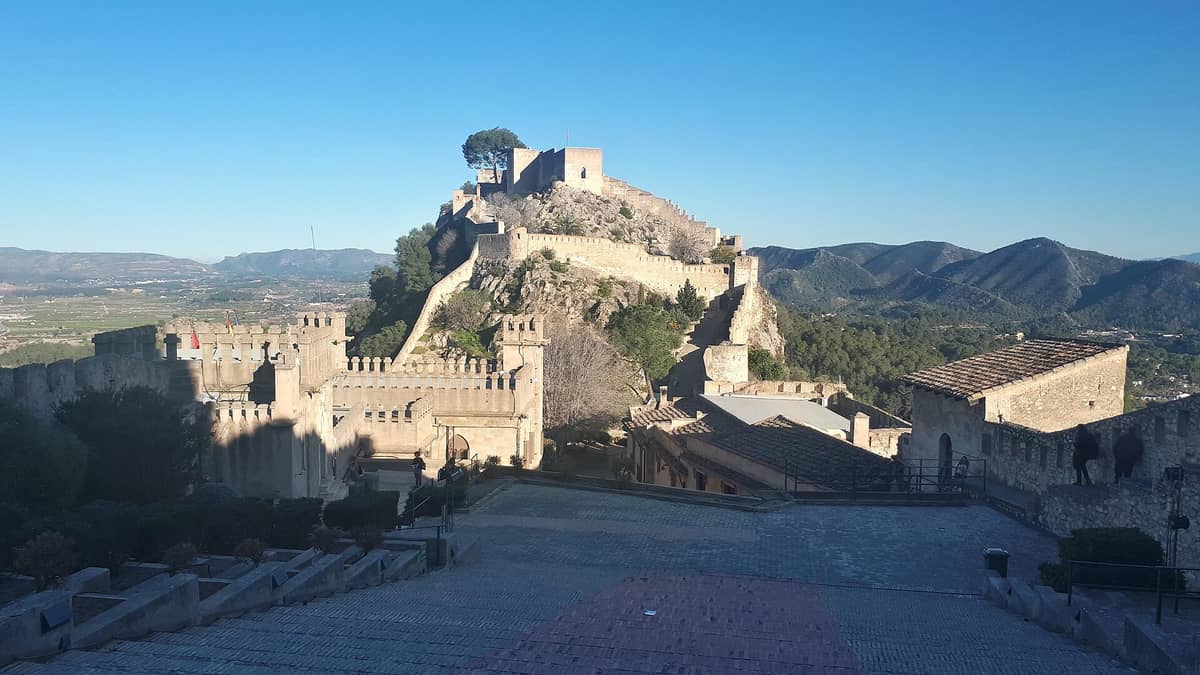
These two towns represent the strongest case for a car-free day trip from Valencia. Both are served by frequent regional trains, both have enough historic substance to fill a full day, and both are undervisited relative to their quality. If you can only do one rail-based day trip, make it one of these.
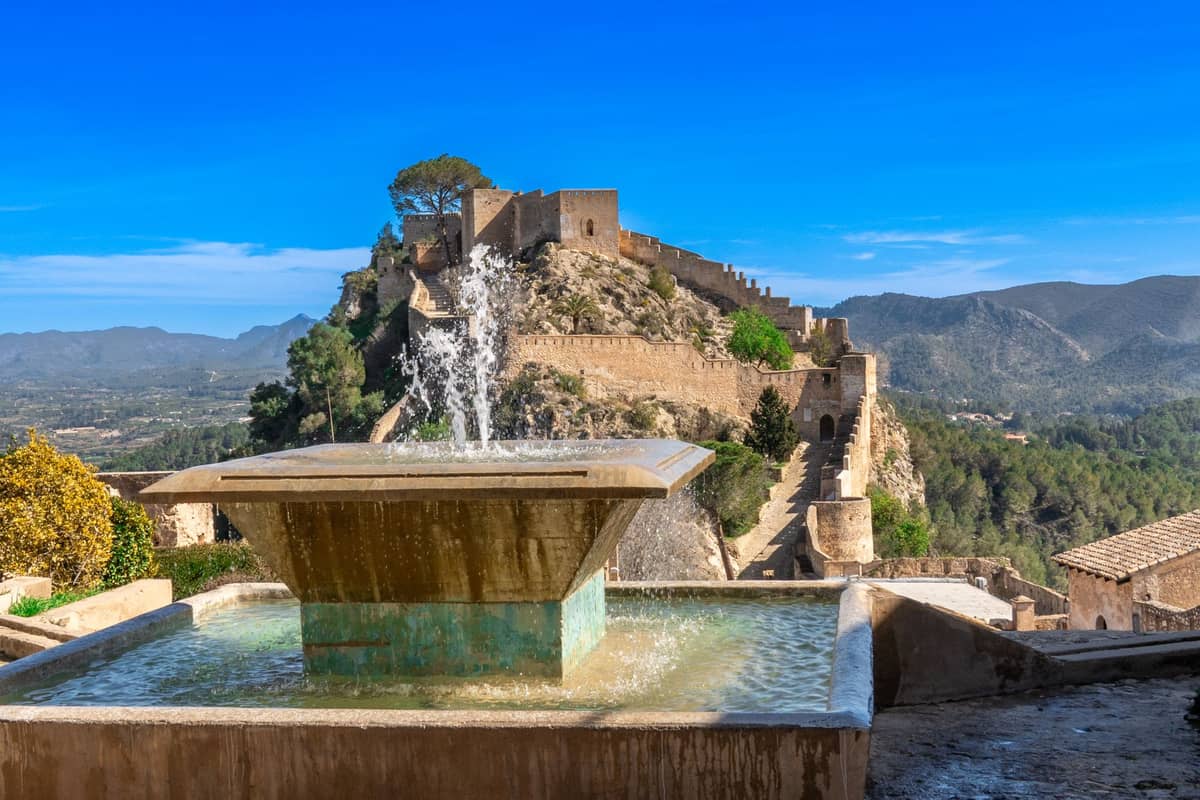
Xàtiva (also written Játiva) sits about 55–60 km south of Valencia and is reached in around 50–60 minutes on a regional Cercanías train. The town's castle complex stretches across a long limestone ridge above the old town and is one of the most impressive hilltop fortifications in the Valencian Community. The walk up takes around 30-40 minutes from the town centre, or you can take a small tourist train. The old town below has a cluster of Gothic and Renaissance churches, a covered market, and a medieval hospital building. This is comfortably a full-day destination.
Sagunto is closer, around 25–30 km north of Valencia, with trains running in roughly 28–35 minutes. The appeal is layered: a Roman theatre and ruins on the hilltop, a medieval Jewish quarter in the lower old town, and a large Moorish castle complex that covers the entire ridge. It works as a half-day trip if time is short, but the full historic site takes most of a day to explore properly. The combination of Roman, Jewish, and Islamic heritage layers in one town is genuinely unusual.
- Xàtiva ~60 km south. Cercanías train, ~45-55 min. Hilltop castle, historic old town, Gothic churches. Full day recommended. Best for castle and architecture lovers.
- Sagunto ~25 km north. Cercanías train, ~25-30 min. Roman theatre, medieval Jewish quarter, Moorish castle. Half or full day. Best for layered history and shorter trips.
Peñíscola: The Coastal Castle Town
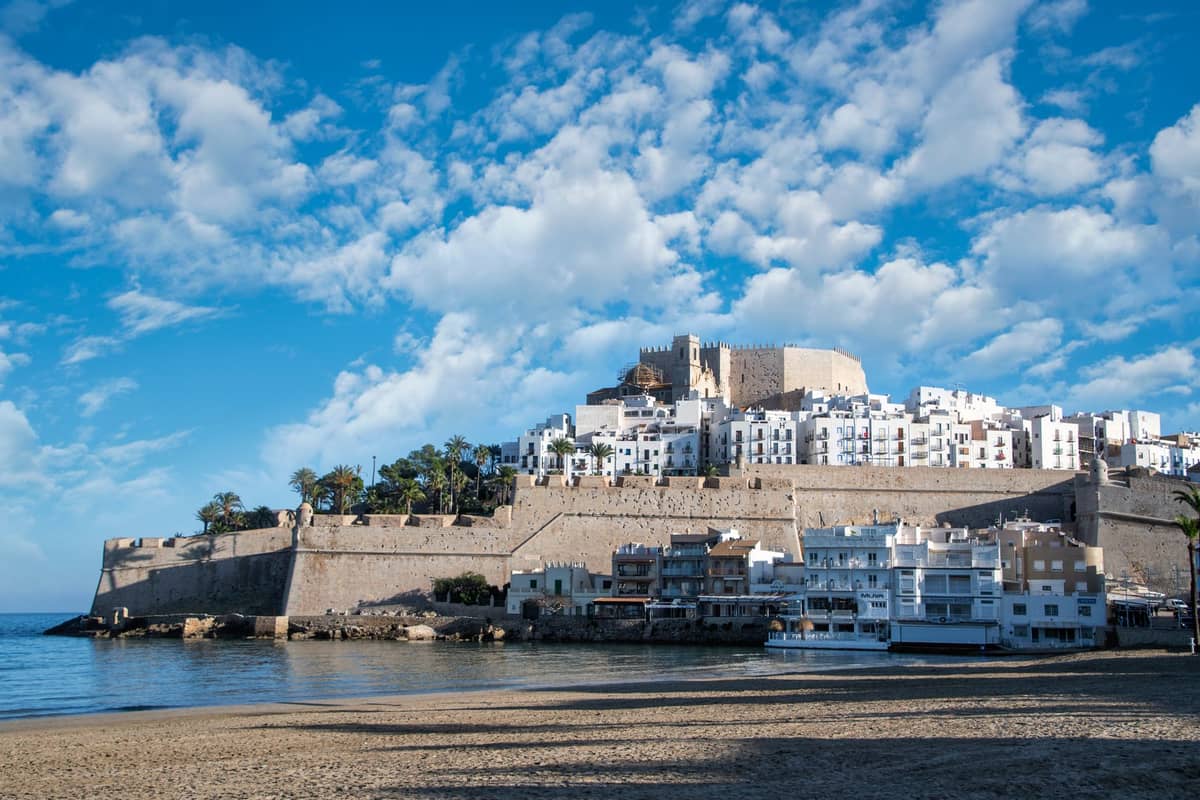
Peñíscola sits about 130 km north of Valencia on a rocky promontory jutting into the Mediterranean. The old town, enclosed by 14th-century walls and topped by the castle of Papa Luna, is striking from a distance and holds up on closer inspection. The narrow streets and clifftop views are genuinely photogenic, and the castle has enough historical substance to merit the journey.
The honest assessment: Peñíscola works as a day trip, but it is a long one. The fastest public transport option involves a train to Vinaròs followed by a bus, and the total journey approaches two hours each way. By car, the drive takes around 1 hour 30–40 minutes via the AP-7 toll motorway. If you are travelling without a car in summer, an organised coach tour from Valencia is often the most practical option. The surrounding beach area outside the old town is heavily developed and not the reason to make the journey.
Montanejos and Chulilla: Inland Nature Trips
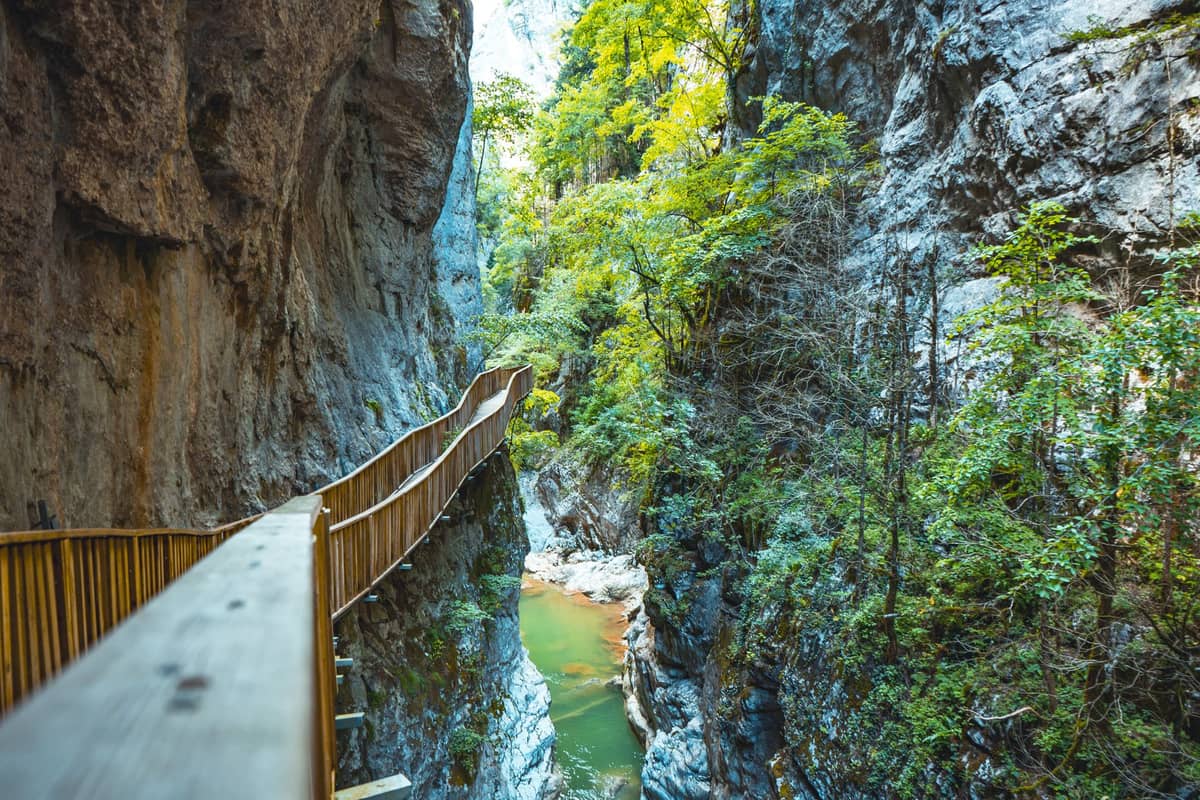
Both Montanejos and Chulilla represent a different kind of day trip: inland, nature-focused, and almost entirely car-dependent. If you have a vehicle or are willing to book a day tour, both are worth knowing about.
Montanejos is about 100 km northwest of Valencia in the Palancia river valley. The town's thermal spring feeds the Fuente de los Baños, a series of natural rock pools where the water stays around 25°C year-round. This makes it viable outside summer, but the pools are busiest in July and August when the surrounding landscape is dry and the water is a genuine draw. Access by public transport is difficult; a car or organised excursion is essentially required.
Chulilla is closer, around 50–60 km northwest, and is primarily a destination for hikers and rock climbers. The Turia gorge below the village has a dramatic suspension bridge walk and striking limestone scenery. Trail conditions depend heavily on recent rainfall, and the paths can be slippery after wet weather. Like Montanejos, it is not realistic without a car.
✨ Pro tip
For Montanejos in summer, arrive by 9am to secure a good spot at the Fuente de los Baños pools. By late morning on weekends in July and August the area around the pools is packed and parking near the town fills completely. Mid-week visits are significantly quieter.
- Montanejos ~100 km northwest. Car or tour essential. Natural thermal pools at ~25°C. Best late spring to early autumn. Busiest July-August weekends.
- Chulilla ~60 km northwest. Car essential. Gorge hiking, suspension bridge, limestone scenery. Weather-dependent; avoid after heavy rain. Best March-June and September-October.
Practical Transport Notes for All Day Trips
For rail-based trips, Renfe operates the Cercanías (Rodalies) regional network out of Estació del Nord, while Joaquín Sorolla station handles most medium- and long-distance services. Tickets are inexpensive for short regional journeys, and frequencies are generally good on weekday mornings. Always check the Renfe website for current timetables before travel, as weekend and public holiday services run on reduced schedules. Valencia's public transport network is reliable within the city, but connections to smaller towns drop off sharply.
If you are spending multiple days in Valencia and plan to do several day trips, renting a car for one or two days unlocks destinations like Montanejos, Chulilla, and the quieter sections of Albufera that buses simply do not reach. Combining a car day trip with the city's metro and bus network for urban sightseeing is a sensible approach. For ideas on filling the rest of your time in the city, the full Valencia activity guide covers the major attractions in detail.
ℹ️ Good to know
Valencia weather matters for day trip planning. The region follows a Mediterranean pattern: hot, dry summers; mild winters; and the rainiest periods in autumn and late winter. Inland hiking and gorge trips are best avoided after autumn storms. Coastal and lagoon trips are viable year-round but most comfortable from April through October.
For travellers with limited time, it is worth being selective. A three-day Valencia itinerary typically leaves room for one day trip at most without feeling rushed. Prioritise either Albufera for a nature and food focus, or Xàtiva for historic depth. Both are achievable without a car and reward a full day of exploration.
FAQ
What is the easiest day trip from Valencia without a car?
Xàtiva and Sagunto are the most straightforward. Both are served by direct Cercanías trains from Valencia, with journey times under an hour. Xàtiva offers the more impressive hilltop castle and a fuller day of sightseeing; Sagunto works well as a half-day. Albufera is technically closer, but public bus coverage inside the park is limited, making it less convenient than the rail options unless you cycle or book a tour.
Is Albufera worth visiting as a day trip from Valencia?
Yes, particularly if you combine a boat ride on the lagoon with lunch at a rice restaurant in El Palmar village. The park is at its most atmospheric in the late afternoon when the light hits the water and the tourist crowds thin out. Avoid peak summer weekends if you want a peaceful experience. The trip works best by bike, car, or organised excursion rather than the public bus alone.
How long does it take to get from Valencia to Peñíscola?
By car, around 1 hour 30–40 minutes via the AP-7 motorway. By public transport, the journey involves a train to Benicarló-Peñíscola or Vinaròs followed by a local bus, which adds up to roughly 1.5–2.5 hours each way. Factor in four hours of total travel time for a day trip and plan accordingly. Many travellers find an organised coach excursion from Valencia to be the most efficient option.
What day trips from Valencia are best in summer?
Coastal and lagoon trips are the most popular in summer: Albufera, Peñíscola, and the beaches south of the city. The natural pools at Montanejos are at peak demand from late June through August. Inland hiking destinations like Chulilla are less comfortable in summer heat and are better saved for spring or autumn. Check the Valencia weather patterns before planning: summer is the driest season, but temperatures inland can be significantly hotter than on the coast.
Can I do multiple day trips from Valencia in one week?
Realistically, two or three day trips fit comfortably into a week without sacrificing time in the city itself. A suggested combination: Albufera for a nature and food day, Xàtiva for history and castle sightseeing, and either Montanejos or Peñíscola depending on whether you have access to a car. Valencia itself rewards several full days of exploration, so avoid overfilling your schedule with outings at the expense of the city's own highlights.