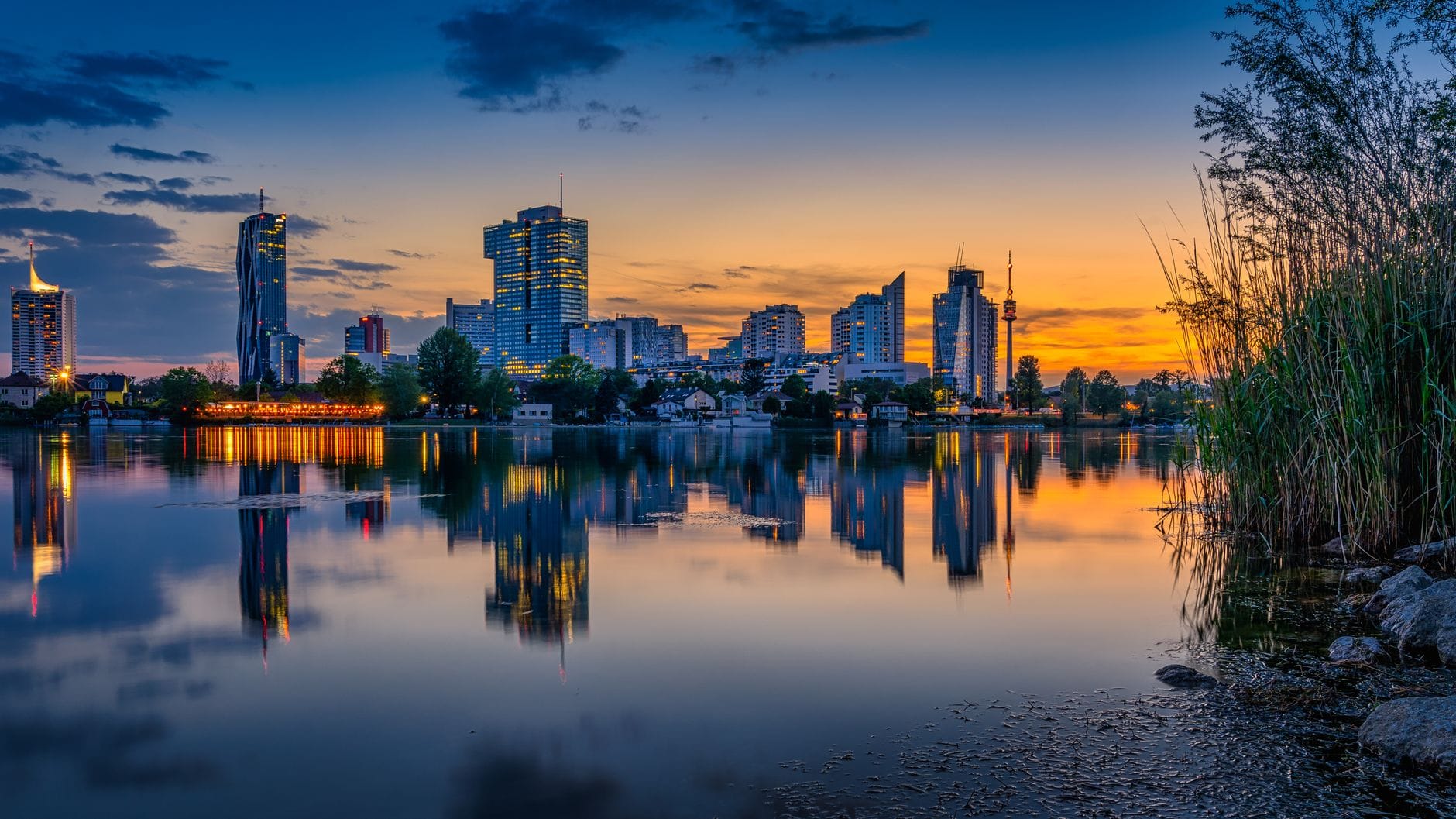
Donauinsel is Vienna's 21-kilometre artificial island in the Danube, built for flood protection and transformed into the city's favourite outdoor escape. Across the water, Donaucity rises as a cluster of modern towers around the Vienna International Centre, forming a district that feels unlike anywhere else in Austria's capital.
Donauinsel and Donaucity occupy Vienna's eastern edge, where the Danube splits into two channels and the city turns decisively outward. One side is water, sand, and open sky; the other is glass towers and international institutions. Together they form a district that Viennese residents use constantly and most tourists only glimpse from a train window.
Orientation
To understand this area, you need to picture the Danube as it passes through Vienna's northeastern quarters. The river does not flow as a single channel here. Beginning in the 1970s, Vienna's engineers excavated a parallel channel called the Neue Donau (New Danube), leaving a long sliver of land between the two waterways. That sliver is the Donauinsel: 21.1 kilometres long and between about 70 and 210 metres wide, stretching from the northern district of Floridsdorf down through the 22nd district of Donaustadt.
Donaucity occupies the eastern bank of the main Danube, immediately north of the Reichsbrücke bridge. Its skyline is anchored by the Vienna International Centre, known internationally as UNO City, surrounded by a cluster of residential and office towers that make this the closest thing Vienna has to a modern financial district. The two areas, island and city district, are separated only by the width of the Danube and connected by several bridges, so it makes practical sense to treat them as one destination.
The wider Donaustadt district (Vienna's 22nd) is a sprawling administrative zone that includes both Donaucity and the eastern end of the island. It borders Leopoldstadt to the west across the old Danube Canal, and its outer edges extend into suburban territory toward the Lobau wetlands. Travelers arriving from the historic first district will find the U1 metro line makes the crossing in under fifteen minutes from Schwedenplatz.
Character & Atmosphere
Donauinsel operates on a different rhythm from the rest of Vienna. On a weekday morning in June, the paths along the Neue Donau are quiet enough that you hear the water lapping against the gravel banks and the occasional cyclist ticking past. By early afternoon, the same paths fill with runners, inline skaters, and families dragging folding chairs toward the beaches. The light over the river in summer is flat and bright, reflecting off both channels simultaneously and giving the island a slightly unreal openness that feels far from the dense, ornate streets of the inner city.
After dark, the island changes again. The Copa Cagrana area, roughly in the middle of the island near the Reichsbrücke, concentrates most of the bars and open-air clubs. On warm summer nights, the music starts mid-evening and continues well past midnight. It is loud, occasionally chaotic, and entirely unpretentious. This is not a curated cocktail-bar scene; it is Viennese people of all ages drinking inexpensively by the water, which gives it an energy that more polished neighbourhoods lack.
Donaucity, across the main channel, has a cooler and more corporate atmosphere. The streets around UNO City are wide and deliberately planned, with modern architecture that prioritises function over charm. On weekdays, the area fills with international civil servants, diplomats, and business travellers. On weekends it quietens significantly. The Donauturm tower park and the paths along the riverbank offer genuine relief from the urban grid, but this is not a neighbourhood for wandering without a destination.
ℹ️ Good to know
Donauinsel was built between 1972 and 1988 primarily as flood protection infrastructure. The Neue Donau acts as an overflow reservoir capable of absorbing extreme Danube floods. The recreational function came second, but it has become the dominant reason most Viennese visit.
What to See & Do
The island itself is the main attraction. The Donauinsel offers over 40 kilometres of cycling and skating paths running the full length of both sides. The southern section of the island, accessible from the U6 stops at Neue Donau and Handelskai, is quieter and more naturalistic, with reed beds and wildlife corridors. The northern end near Floridsdorf is more open and attracts families. The central section around Reichsbrücke is where the action concentrates.
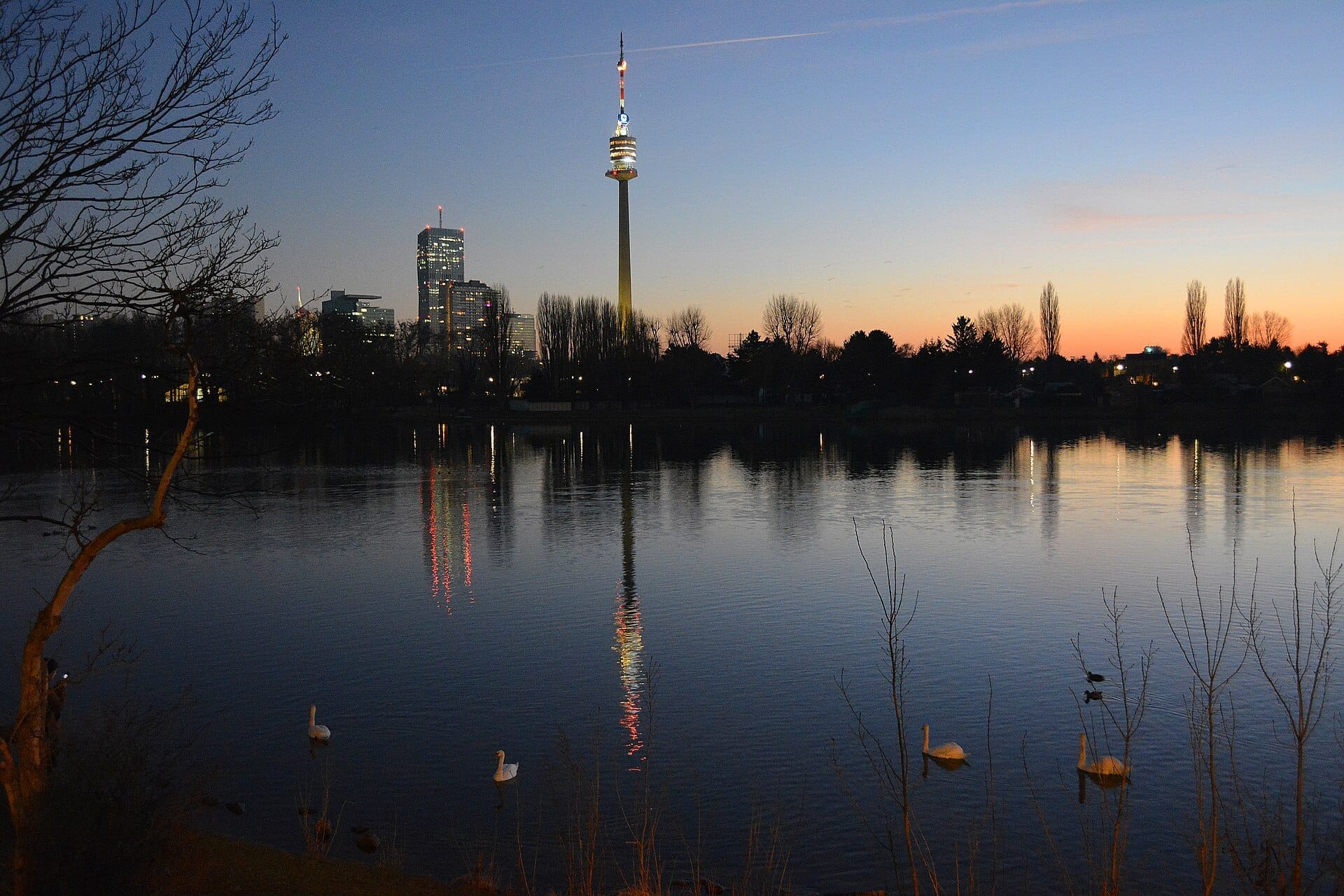
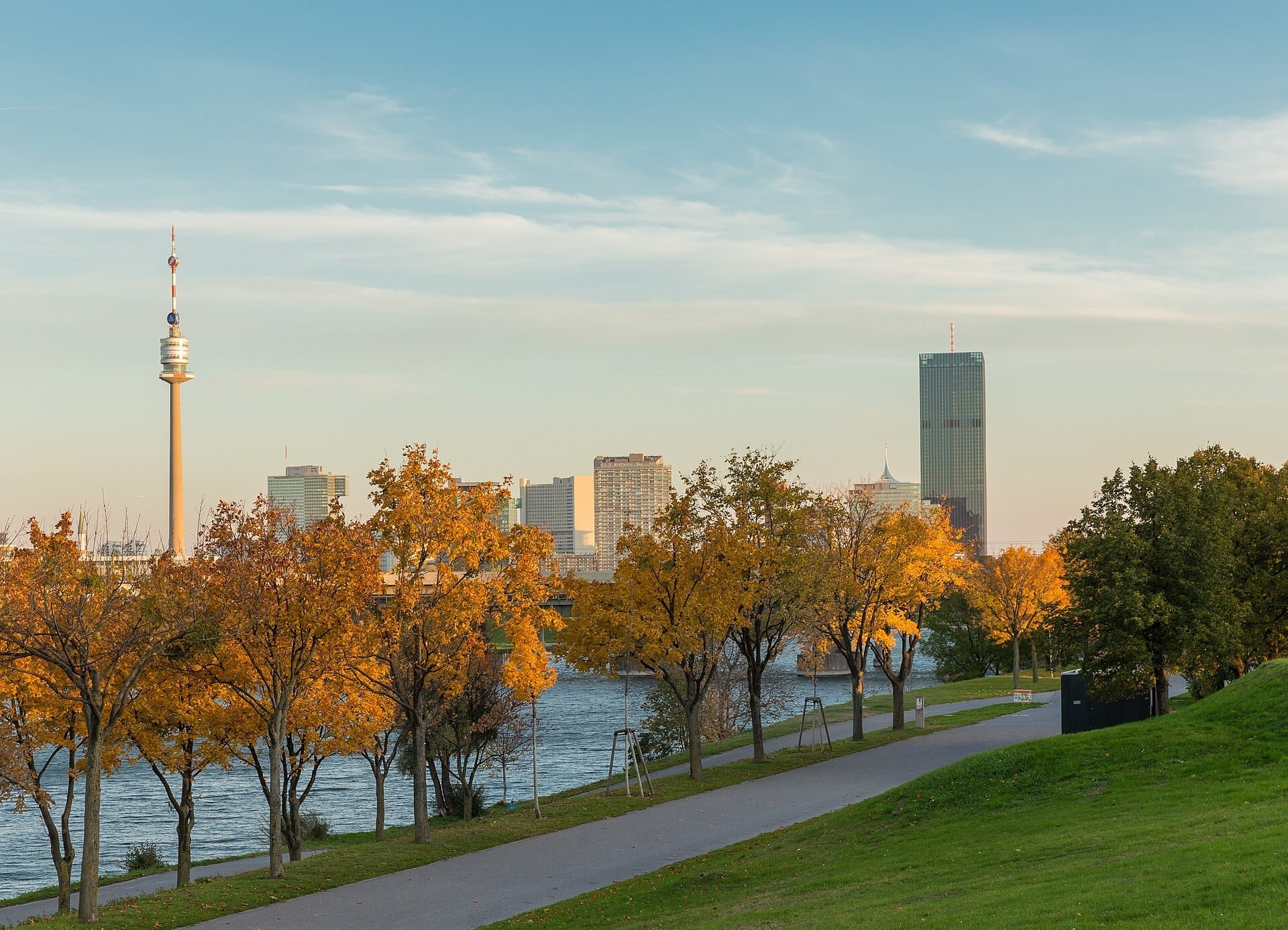
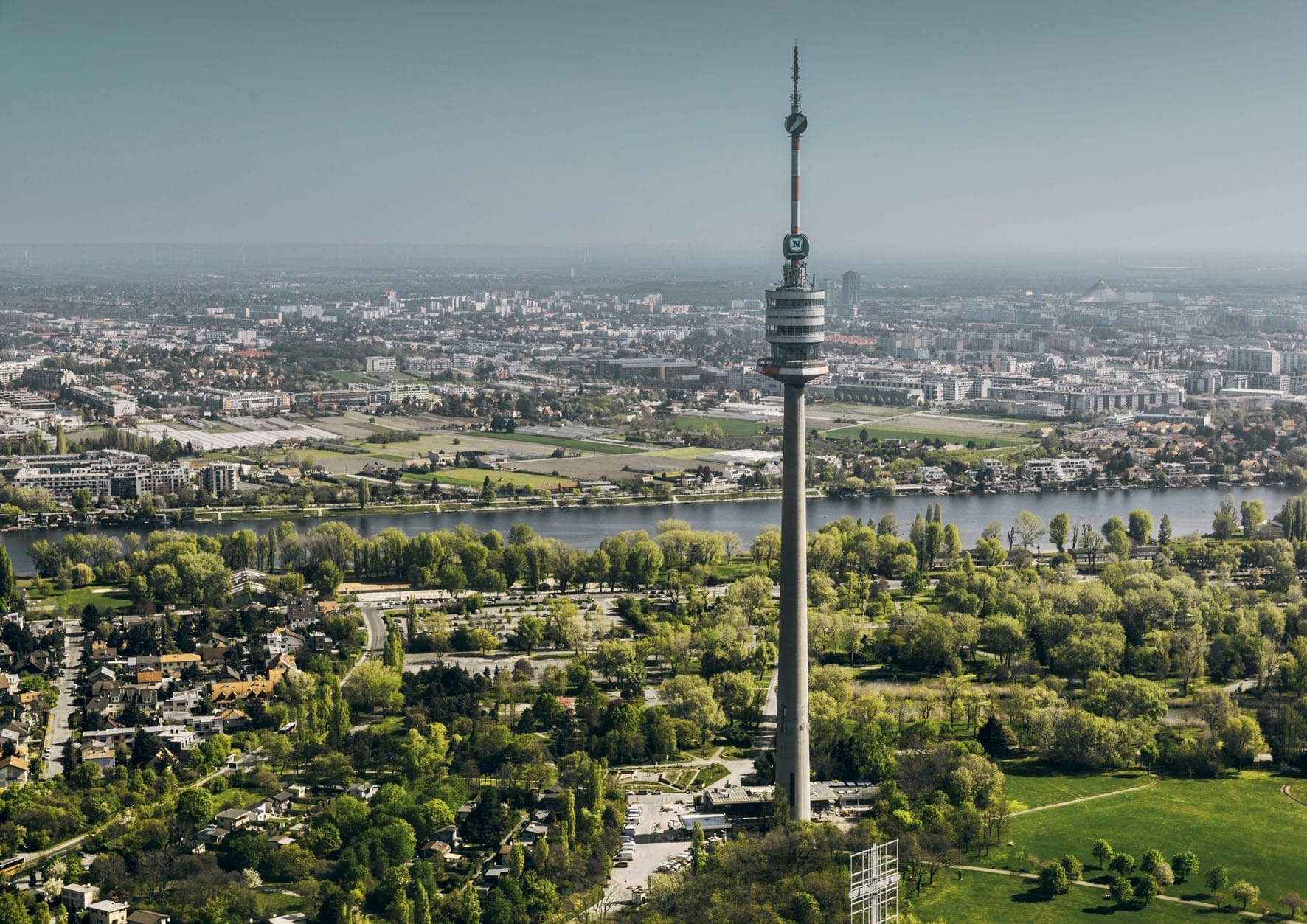
The Donauturm stands in the park immediately north of UNO City, at 252 metres the tallest structure in Austria. It has a revolving restaurant and observation decks with panoramic views over both the city and the Danube floodplains to the east. On a clear day you can see the Wienerwald hills framing the city to the west, which gives useful orientation for anyone still learning Vienna's geography.
The Vienna International Centre can be visited on guided tours when sessions are scheduled. It is one of four official UN headquarters globally, alongside New York, Geneva, and Nairobi, which gives the Donaucity district an outsized international significance relative to its modest size. The Alte Donau (Old Danube), a former arm of the river that was cut off and is now a calm inland lake, sits just east of Donaucity. It is lined with rowing clubs, sailing schools, and swimming spots and is particularly popular with Viennese who want calmer water than the Danube channels.
Cycling the full length of the island from Reichsbrücke north or south, returning on the opposite bank
Swimming at the designated bathing beaches on the Neue Donau side, which have calmer water than the main river
Visiting the Donauturm observation deck for city-wide orientation
Guided tours of the Vienna International Centre (check current schedules before visiting)
Kayaking or stand-up paddleboarding from rental points near Copa Cagrana
Watching the Danube from the pedestrian walkway on Reichsbrücke at dusk
Sailing or rowing on the Alte Donau, just east of the main UNO City complex
Each year at the end of June, the Donauinselfest takes place across the central section of the island. It is cited as one of Europe's largest open-air music festivals, drawing millions of visitors over three days to free stages across multiple genres. Admission is free. The logistics during this event are significant: U-Bahn trains run continuously overnight, the island paths become very congested, and accommodation across Vienna fills weeks in advance.
💡 Local tip
If you visit during Donauinselfest in late June, arrive via the U6 at Neue Donau rather than the U1 at Donauinsel. The U1 station exits directly into the most crowded zone. Arriving from the southern or northern ends of the island lets you walk in with the crowds rather than fighting against them.
Eating & Drinking
The food scene on Donauinsel is built around outdoor eating, seasonal opening, and convenience rather than gastronomy. The Copa Cagrana strip, which runs along the western (Neue Donau) side of the island near the U1 Donauinsel station, concentrates most of the bars and restaurants. In summer, this stretch operates as an extended open-air zone with terraces extending to the waterfront. The food leans toward the straightforward: grilled meats, fried fish, pizza, and international fast food alongside Austrian staples. Prices are moderate by Vienna standards, and the atmosphere compensates for any culinary ambition the kitchen may lack.
The bars in this zone tend to attract a younger crowd in the evenings, particularly on weekends from June through August. Music from multiple venues overlaps in places, and the general tone is festive rather than refined. If you want a quiet dinner by the water, walking further north or south along the island will reward you with occasional smaller kiosks and beer gardens that are significantly calmer.
Donaucity around UNO City has a different eating landscape suited to its weekday workforce: international canteens and business-lunch restaurants cluster near the Vienna International Centre, with a broader selection of cafés and chain restaurants along Wagramer Strasse. Weekend options are thinner, and the area does not have the kind of independent restaurant density that most visitors would expect from a European capital district. For serious dining, the Leopoldstadt district to the west or the inner city remain better options.
⚠️ What to skip
Most Copa Cagrana bars and beach clubs operate seasonally and are closed or reduced outside of May through September. If you visit in cooler months expecting riverside nightlife, you will find the island largely empty and many of the facilities shuttered.
Getting There & Around
Transit access is straightforward. The U1 metro line, the red line on Vienna's network, stops at Donauinsel station, which exits directly onto the island near Copa Cagrana. From Stephansplatz in the historic centre, the journey takes around ten minutes. The same U1 line stops at Kaisermühlen VIC one stop further east, which is the correct exit for UNO City and the Donaucity tower district. The U2 line provides access via Donaustadtbrücke and Donaumarina on the eastern bank, useful if you are approaching from the Prater or the Leopoldstadt direction.
The U6 line, running along the western (left) bank of the Danube Canal, has stops at Handelskai and Neue Donau that connect via pedestrian bridges to the southern portion of the island. These are the least crowded entry points and work well for cyclists who want to start their ride at the quieter southern end and work northward.
Once on the island, movement is on foot, by bicycle, or by inline skates along the car-free recreational paths. There are bike rental options near the main entry points, and the path surfaces are smooth and well-maintained. For broader context on navigating Vienna's public transport network, the getting around Vienna guide covers U-Bahn tickets, day passes, and transit zones in detail.
U1 to Donauinsel (central island, Copa Cagrana)
U1 to Kaisermühlen VIC (UNO City, Donauturm)
U6 to Neue Donau or Handelskai (southern island, quieter access)
U2 to Donaustadtbrücke or Donaumarina (eastern bank approach)
Bicycle from the city centre via the Ringstraße and Reichsbrücke bridge (approximately 4 km from Stubenring)
Where to Stay
Donaucity has a cluster of large business and conference hotels near UNO City that cater primarily to international visitors attending events at the Vienna International Centre. These hotels tend to offer competitive rates compared to the inner city and are well connected by the U1 line, making them a reasonable base for anyone whose priority is transit access and value rather than proximity to historic sights. The tradeoff is that the neighbourhood atmosphere, particularly on weekends, is sparse. For travelers weighing up options across the city, the where to stay in Vienna guide provides a thorough comparison of all major districts.
Donauinsel itself has no accommodation, which is consistent with its character as a recreational park. Travellers wanting the island experience are best served by staying in Donaucity or in Leopoldstadt, both of which put them within ten minutes of the island by transit or a short cycle via Reichsbrücke. Staying here makes most sense for visitors with a specific interest in cycling, water sports, or the Donauinselfest. Travelers focused on Habsburg monuments, museums, or the classical music circuit will find the commute to central attractions adds time they may not want to spend.
Honest Assessment: Who This Area Is For
The Donauinsel and Donaucity area is genuinely excellent for what it does, and genuinely limited outside those uses. Viennese residents rank the island among their most-used recreational assets, and rightly so: free, easily accessible, and large enough to absorb crowds without feeling overrun on ordinary days. For outdoor-focused visitors, cyclists, families with children, and anyone visiting during summer, it earns its place on the itinerary. Even if you are focused primarily on Vienna's imperial history and arts scene, an afternoon on the island provides useful contrast and breathing room. You can read more about balancing the city's different sides in the things to do in Vienna guide or plan your time around a structured 3-day Vienna itinerary.
The area is less compelling for travelers who want the concentrated density of sights, restaurants, and cafés that define central Vienna. Donaucity in particular can feel antiseptic on a weekend afternoon: the architecture is interesting but not warm, the streets wide but not lively. It is a district built to house an international bureaucracy, and it looks the part. Come with a clear purpose and you will not be disappointed; come expecting a neighbourhood to wander and discover and you may find yourself walking back to the U1 sooner than expected.
TL;DR
Donauinsel is a 21-kilometre artificial island designed for flood control and transformed into Vienna's primary outdoor recreation zone, with free beaches, cycling paths, and seasonal bars along the Copa Cagrana strip.
Donaucity is the adjacent modern district on the eastern Danube bank, anchored by the Vienna International Centre (UNO City) and the Donauturm tower, with a corporate character that quietens significantly on weekends.
Best visited in summer (May through September) when beaches, bars, and bike rentals are operational; the annual Donauinselfest in late June draws millions to free outdoor music stages.
Easily reached via the U1 metro in around ten minutes from the historic centre; no cars on the island itself, so bring or rent a bicycle if you want to cover more than the central section.
Well suited to outdoor-focused visitors, families, cyclists, and those attending UNO City events; less suited to travellers whose priorities are historic sights, independent restaurants, or walkable neighbourhood atmosphere.
Three days is enough to experience Vienna's imperial core, its greatest art museums, and its legendary coffeehouse culture — if you route each day by geography. This guide structures your visit around three logical zones: the historic Innere Stadt, the Belvedere and Naschmarkt corridor, and Schönbrunn with the Prater.
Vienna holds one of the densest concentrations of world-class museums anywhere in Europe, from imperial art collections built over centuries to cutting-edge contemporary spaces. This guide covers the essential institutions, what makes each one worth your time, and how to plan your visits efficiently.
Vienna rewards visitors in every season, but the experience varies dramatically depending on when you go. This guide breaks down the weather, crowd levels, pricing, and cultural calendar month by month so you can choose the timing that fits your priorities.
Vienna sits at the centre of Central Europe, which makes it one of the best bases on the continent for day trips. From the vine-covered slopes of the Wachau Valley to the baroque splendour of Salzburg, here is everything you need to plan a trip outside the city with confidence.
Vienna's public transport network is one of Europe's most efficient, covering the entire city with U-Bahn, trams, buses, and S-Bahn. This guide covers 2026 ticket prices, airport transfer options, night services, and everything you need to move around the city without a car.
Vienna delivers imperial grandeur at every turn, from Schönbrunn Palace and the Vienna State Opera to Michelin-starred restaurants and storied grand cafés. This guide covers everything you need to plan an indulgent 3-5 day stay, with practical guidance on where to splurge and what to skip.
Vienna rewards couples with imperial grandeur, world-class music, candlelit coffeehouses, and panoramic hilltop views. This guide covers the most romantic things to do in Vienna, from palaces and concert halls to wine taverns and riverside strolls.
Vienna rewards visitors who go beyond the postcard. This guide covers the top things to do in Vienna Austria — from Schönbrunn Palace and Klimt's 'The Kiss' to Naschmarkt and the city's underrated museum scene — with real prices, seasonal advice, and clear notes on what's worth your time.
Forty-eight hours is enough to experience Vienna's imperial grandeur, world-class museums, and legendary café culture. This itinerary cuts through the options and tells you exactly what to prioritize, in what order, and why.
Vienna International Airport (IATA: VIE) sits 18-20 km southeast of the city centre at Schwechat. This guide covers every transfer option in detail, from the 16-minute City Airport Train to pre-booked fixed-price transfers that often undercut metered taxis, plus everything you need to know before you land.
Vienna is one of Europe's great architectural cities, where Baroque palaces, 19th-century Historicist monuments, and Art Nouveau masterpieces exist within walking distance of each other. This guide takes you through the buildings that define the city's visual identity, from imperial grandeur to radical modernism.
Vienna's ball season transforms the city every winter into one of the world's great celebrations of formal dance. This guide covers everything from Opera Ball tickets and dress codes to affordable alternatives, so you can plan the right night for your budget and style.
Vienna transforms into one of Europe's most spectacular Christmas destinations from November through early January, with dozens of free markets spread across imperial palaces, Gothic squares, and cobblestone lanes. This guide covers the best markets, what to eat and drink, and the top nearby attractions to combine for a full festive day out.
Vienna's sacred architecture spans eight centuries, from Romanesque foundations to soaring Gothic cathedrals, opulent Baroque interiors, and one of the world's great Art Nouveau churches. This guide covers the essential churches across styles, with practical tips on what to see inside each one.
Vienna is the undisputed world capital of classical music, home to the Vienna Philharmonic, Vienna State Opera, Musikverein, and dozens of nightly concerts across palaces and churches. This guide covers every major venue, realistic ticket prices, seasonal highlights, and how to book without overpaying.
Vienna's traditional coffeehouses are UNESCO-recognised cultural institutions, not just places to drink coffee. This guide covers the best venues, what to order, typical costs, etiquette rules, and how to tell the genuine article from a tourist trap.
Vienna holds more Egon Schiele than anywhere else on earth. This guide covers the major museum collections, the art-world context that shaped him, and the biographical sites that trace his short, electric life in the city.
From the Hofburg to the Kapuzinergruft, the Habsburg dynasty left Vienna with one of Europe's most concentrated collections of imperial architecture, art, and ritual. This guide covers the key sites, historical context, ticket prices, and the best way to structure a full day in imperial Vienna.
Vienna rewards those who look beyond the Hofburg and Schönbrunn. These off-the-beaten-path experiences range from a private princely art collection to a cemetery full of composers, a hilltop vineyard trail, and a museum inside a WWII gun tower.
Vienna surprises most visitors with how much green space it packs within its borders. Between the forested hills of the Vienna Woods, the Danube's recreational islands, and 14 marked city hiking trails totaling over 240 km, the Austrian capital rewards anyone willing to lace up their shoes or rent a bike.
Summer in Vienna runs hot, loud, and remarkably free. From the Vienna Philharmonic playing open-air in Schönbrunn's gardens to lakeside swimming on the Old Danube, this guide covers every worthwhile summer activity, the major festivals with dates, and the honest truth about peak-season crowds.
Vienna in winter is cold, atmospheric, and surprisingly rewarding. From Christmas markets and imperial palace tours to world-class concerts and coffeehouse culture, this guide covers everything you need to plan a smart, enjoyable trip between November and March.
Gustav Klimt and the Vienna Secession transformed Western art in just a decade. This guide traces their legacy across the city, from the gold-domed Secession building to the museums, churches, and coffeehouses that shaped the movement.
Vienna after dark is more layered than its imperial reputation suggests. This guide breaks down the best bar districts, club zones, jazz venues, and classical nights out, with honest price breakdowns, seasonal advice, and the neighborhoods worth exploring beyond the tourist trail.
Vienna has a reputation for imperial grandeur and high prices, but a realistic daily budget of €50–80 covers accommodation, food, transport, and plenty of sightseeing. This guide breaks down exactly where your money goes, what you can skip paying for entirely, and how to get the most out of every euro.
Vienna is a city of palaces, with far more than the two famous names. From the sprawling Hofburg to the intimate Liechtenstein Garden Palace and the museum-filled Albertina, this guide takes you through the full sweep of Vienna's imperial and aristocratic architectural heritage.
The Vienna Pass promises free entry to 70+ attractions and hop-on hop-off buses, but it only pays off under specific conditions. This guide breaks down exactly who benefits, who overpays, and how to calculate your own savings before you buy.
The Sachertorte is Vienna's most iconic dessert, but not every slice is created equal. This guide breaks down the history, the competing originals, current prices, and where to actually eat chocolate cake in Vienna without overpaying or getting a subpar version.
Vienna's shopping scene ranges from Habsburg-era luxury arcades to independent boutiques in the 7th district and a sprawling open-air food market that has operated for over a century. This guide maps out every major shopping area by character, price point, and practical logistics.
The Vienna to Budapest train is one of Europe's most straightforward cross-border routes: direct, frequent, and genuinely fast. This guide covers ticket prices, how to book, which operators to use, whether a day trip is realistic, and how Budapest fits into a wider Central European itinerary.
The Vienna to Prague corridor is one of Central Europe's most traveled routes, with direct trains, budget buses, and flights all competing for your ticket. This guide breaks down real journey times, current price ranges, booking strategy, and which option actually gets you there fastest.
The Vienna to Salzburg route is one of Austria's most traveled corridors, with fast Railjet trains covering 249 km in as little as 2 hours 22 minutes. This guide covers every transport option, realistic fares, booking strategy, and how to structure a day trip without rushing.
The Wachau Valley is one of the most rewarding day trips from Vienna, combining a Baroque abbey, a ruined castle above the Danube, and one of Austria's finest wine towns. This guide covers the best route, transport options, seasonal cruise logistics, and what to skip so you can make the most of a single day.
The First District is Vienna's compact historic core, a UNESCO World Heritage site you can cross on foot in 20 minutes. This guide covers the full self-guided walking route, key landmarks, honest pricing, and practical tips for every season.
Vienna is one of the few world capitals with functioning vineyards inside its city limits. This guide covers the Heuriger tavern tradition, the best wine districts to visit, how to get there, what to drink, and what separates a genuine Buschenschank from a tourist-facing imitation.
Vienna is one of Europe's most underrated family destinations, with free museum entry for under-18s, affordable public transport for kids, and attractions that genuinely engage children of all ages. This guide covers the best things to do in Vienna with kids, from palace gardens and aquariums to hands-on science museums and a 127-year-old ferris wheel.
Vienna played a central role in both World Wars, first as the capital of the Austro-Hungarian Empire and later as a focal point of Nazi annexation and persecution. This guide covers the key historical sites, Holocaust memorials, and practical logistics for visiting them — along with the honest, complicated history that shaped modern Austria.
Vienna's food culture runs deep: centuries of imperial cooking, Central European comfort food, and a coffee house tradition unlike anywhere else. This guide covers the dishes you should actually order, where to find the best versions, realistic prices, and the misconceptions that trip up first-time visitors.
Vienna's 23 districts each offer a different pace, price point, and proximity to the city's top sights. This guide cuts through the noise to tell you exactly which neighborhoods suit first-timers, budget travelers, culture seekers, and those who want a more local experience — with practical advice on transport, pricing, and what to watch out for.