Alte Donau (Old Danube): Vienna's Urban Lake That Locals Actually Use
The Alte Donau is a former Danube river branch turned urban recreation lake in Vienna's 22nd district. Free to access year-round, it draws up to 1.2 million visitors annually for swimming, rowing, cycling, and waterside dining. This is where Viennese families spend their summers, not where tour groups go.
Quick Facts
- Location
- 21st/22nd districts (Floridsdorf/Donaustadt), 1220 Wien
- Getting There
- U1 – Alte Donau station (approx. 10 min from Stephansplatz); Bus 20A/20B
- Time Needed
- 2–4 hours for a walk and swim; full day for cycling and dining
- Cost
- Free to access; paid entry at lidos (e.g. Bundesbad Alte Donau); boat hire extra
- Best for
- Families, swimmers, cyclists, picnickers, anyone wanting a local Vienna day
- Official website
- www.wien.gv.at/en/environment/old-danube
What Is the Alte Donau?
The Alte Donau (Old Danube) is an oxbow lake in the northeastern reaches of Vienna, formed when the Danube was regulated between 1870 and 1875. Before those engineering works reshaped the riverbed, this stretch was a live branch of the Danube itself. Today it is a self-contained lake covering approximately 1.6 km², holding around 3.7 million cubic metres of water at an average depth of just 2.3 metres. That shallowness matters: the water warms quickly in summer, making it genuinely comfortable for swimming from late spring onward.
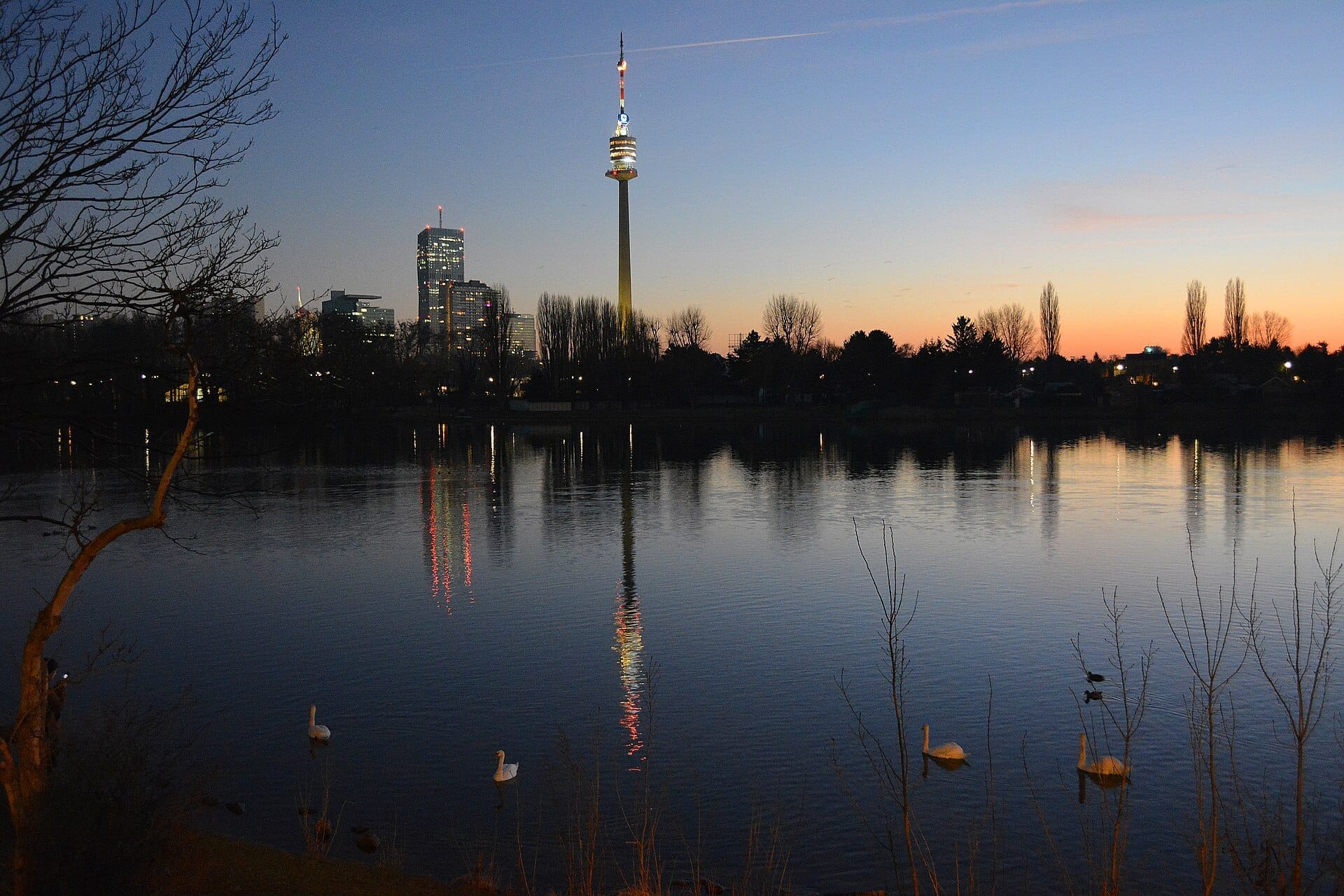
Unlike the broad, windswept New Danube (Neue Donau) directly to its south, the Alte Donau is enclosed on all sides by residential streets, garden restaurants, private boat moorings, and waterside paths. The effect is intimate. Sailboats and pedal boats move slowly across the surface; anglers sit on wooden jetties in the early morning; children in armbands wade near the lido beaches. It is one of those places that gives you a clear sense of how a city actually lives.
ℹ️ Good to know
The lake and all public waterfront paths are freely accessible at all hours. Admission fees apply only to specific facilities such as lidos (e.g. Bundesbad Alte Donau, season approx. late April to mid-September) and commercial boat hire operators. Verify current prices directly with each facility before visiting.
How the Experience Changes Through the Day
Early morning at the Alte Donau belongs to regulars. Joggers and cyclists claim the perimeter path before 8am, the water is glassy, and the light off the lake carries a particular stillness that the midday heat quickly burns away. A handful of anglers are almost always positioned along the northern bank, and the smell of lake water and damp grass is strongest at this hour.
By late morning on a warm day, the character shifts noticeably. Families arrive with bags and folding chairs. The Bundesbad Alte Donau, the main public lido on the southwestern shore, begins filling with swimmers. Kayaks and small sailing dinghies appear on the water. The garden restaurants along the eastern and northern banks start serving cold drinks and grilled food, and the smell of charcoal mixes with the sunscreen-and-cut-grass scent of summer.
Late afternoon, particularly on weekends, is the most social stretch of the day. Locals who have finished work arrive, tables at the waterfront Heurigen-style restaurants fill up, and the light turns warm and low over the water. Evenings in summer can be genuinely pleasant here: the heat dissipates, the lake reflects the last light, and the surrounding residential streets create a calm that the more tourist-facing parts of Vienna rarely offer.
💡 Local tip
Avoid the Alte Donau on hot summer weekend afternoons if crowds bother you. Peak congestion at the lidos and main entry points is between noon and 4pm on Saturdays and Sundays in July and August. Weekday mornings offer the same water with a fraction of the people.
Tickets & tours
Hand-picked options from our booking partner. Prices are indicative; availability and final rates are confirmed when you complete your booking.
SUP rental in Vienna's Alte Donau
From 16 €Instant confirmationFree cancellationImperial Vienna 72-hour hop-on hop-off bus
From 55 €Instant confirmationFree cancellationSkip-the-Line Entrance with Guide to Schonbrunn Palace and Gardens
From 45 €Instant confirmationFree cancellationLuggage Storage in Vienna
From 6 €Instant confirmationFree cancellation
Swimming, Lidos, and Water Activities
Swimming is the central draw from late spring to early autumn. The Bundesbad Alte Donau, operated by the federal building authority (Burghauptmannschaft), is the most established lido on the lake, with a formal swimming season typically running from late April to mid-September. It offers changing facilities, lawns, and direct lake access with supervised areas. Admission fees apply and vary by season; check directly with the operator before visiting.
Gänsehäufel, a larger and more famous lido on an island further north in the system, is technically part of the broader Alte Donau area and draws large crowds on hot days. It is worth knowing that both lidos can reach capacity on peak summer days, and entry may be briefly restricted during the busiest hours.
Beyond swimming, the lake supports a small but active sailing and rowing culture. Several clubs along the shore offer boat hire, and electric motorboats are available for rent by the hour. Kayaking and stand-up paddleboarding are also common. The sheltered, motor-free nature of the lake makes it suitable for beginners and families with children.
Walking and Cycling Around the Lake
The perimeter path around the Alte Donau is largely flat and well-surfaced, making it accessible to most visitors. A full circuit covers several kilometres and takes roughly 45 to 60 minutes on foot at a relaxed pace. The northern and eastern banks are quieter, lined with private garden plots, moored boats, and older residential properties that give the area an unhurried, suburban quality. If you are combining the Alte Donau with broader outdoor exploration, it connects naturally with the cycling infrastructure along the Danube corridor. Serious cyclists often link it with a ride along the Donauinsel (Danube Island), which runs parallel to the south.
Bicycles can be rented from several points near the U1 Alte Donau station, and the flat terrain means even occasional cyclists manage the route comfortably. Roller skates and inline skating are popular on the smooth sections of the lakeside path, particularly on the southern and western sides near the lido entrances.
💡 Local tip
The northern bank of the Alte Donau (away from the main lidos) offers the quietest walking and the best views back across the water toward the residential towers of Donaustadt. This stretch rarely appears in tourist materials but rewards those who continue past the first obvious entry points.
Getting There and Practical Logistics
The U1 metro line stops directly at Alte Donau station, placing the southern shore of the lake roughly 5 minutes on foot from the exit. From central points like Stephansplatz, the journey is around 10 minutes. Bus lines 20A and 20B serve the southern side of the lake and connect the Alte Donau and Neue Donau stations. If you are staying in the Innere Stadt or nearby districts, the U1 makes this one of the easiest natural escapes from the city centre.
The area around the U1 Alte Donau exit has supermarkets, a few cafes, and convenience stores, making it practical to pick up food and drinks before heading to the water. Most of the garden restaurants along the lake operate seasonally and open roughly when the lidos do, from late spring through early autumn. In winter, the waterfront is largely quiet, with only dog walkers and the occasional jogger using the paths.
Parking is available in the surrounding streets, but on hot weekends spaces fill early and the U1 is a significantly more reliable option. The lake sits in the 22nd district (Donaustadt), one of Vienna's newer, more residential outer districts, quite different in atmosphere from the historic center.
Weather, Seasons, and When to Visit
The Alte Donau is a genuinely seasonal attraction. Its appeal peaks between May and September, when water temperatures are warm enough for swimming and the restaurants and boat hire operators are open. Vienna's summer temperatures typically range between 20°C and 27°C, with occasional hotter spells that push locals to the water in large numbers. For context on planning your overall trip around the weather, the best time to visit Vienna guide covers seasonal trade-offs across the city.
In winter, the lake does not freeze reliably, but the recreational infrastructure closes down and there is little reason to visit unless you specifically want a quiet waterside walk away from the crowds. Spring (March to May) is transitional: the paths are pleasant for cycling and walking, but water temperatures are too low for most swimmers until late May or early June.
Rain affects the experience significantly. On overcast or rainy days in summer, the lidos and restaurants lose much of their appeal, and the lake can feel grey and unwelcoming. The Alte Donau is an outdoor-only experience; there is no indoor fallback here. On such days, the city's museums and covered attractions make more sense.
Honest Assessment: Who Should Come, and Who Should Skip It
For first-time visitors to Vienna on a short itinerary focused on art, architecture, and history, the Alte Donau probably does not belong at the top of the list. The attractions in the MuseumsQuartier area or along the Ringstrasse offer a more distinctly Viennese cultural experience in limited time. The Alte Donau's value is precisely that it is not a tourist attraction in the conventional sense. It is a recreation area used by the people who live here.
That said, for travellers staying several days, visiting in summer, or travelling with children, a half-day or full day at the Alte Donau offers something few city-centre sights can: space, water, shade trees, and the unhurried rhythm of a local summer afternoon. It pairs particularly well with an evening at one of the garden restaurants nearby, or with a broader day exploring the Donauinsel and Donaucity precinct.
Travellers who dislike unstructured outdoor time, who are visiting outside the May-to-September window, or who are working through a list of cultural sights will find little here to hold their attention. The Alte Donau rewards those who come deliberately, in warm weather, with time to spend.
Insider Tips
- The northern bank of the lake, accessible via the residential streets behind the U1 station, is consistently quieter than the southern lido strip. Walk past the private boat moorings for views across the water without the weekend crowds.
- Water quality at the Alte Donau is monitored and generally rated excellent; the City of Vienna publishes regular bathing water quality reports. Check the current status at wien.gv.at before swimming if you are visiting after heavy rainfall.
- Bundesbad Alte Donau can reach capacity on the hottest weekend days and may temporarily close its doors to new visitors. Arriving before 10am or after 4pm on a Saturday in July or August significantly reduces the chance of finding it full.
- The garden restaurants along the eastern bank of the lake tend to be less crowded and often better value than the ones immediately adjacent to the lido entrances. They also tend to stay open slightly later into the evening.
- Cyclists should note that the path immediately around the Alte Donau connects without a gap to the Donauinsel cycling routes, making it easy to combine both in a single half-day loop starting and ending at the U1 Alte Donau station.
Who Is Alte Donau (Old Danube) For?
- Families with young children looking for calm, shallow water and grassy picnic areas
- Swimmers wanting a free or low-cost alternative to hotel pools in summer
- Cyclists combining a lakeside loop with the Donauinsel path network
- Travellers on longer Vienna stays who want a genuine local summer afternoon
- Anyone visiting Vienna in summer who wants an outdoor day without museum queues
Nearby Attractions
Other things to see while in Donauinsel & Donaucity:
- Donauinsel (Danube Island)
Stretching 21 kilometres along the Danube, the Donauinsel is Vienna's largest free outdoor recreation area. Built for flood protection but claimed by locals as their backyard beach, it draws swimmers, cyclists, and festival-goers from spring through autumn.
- Donauturm (Danube Tower)
Standing 252 metres above the Donau-City district, the Donauturm is Austria's tallest structure and Vienna's most dramatic elevated viewpoint. Built for the 1964 International Garden Show, it offers panoramic views across the Danube, the city's imperial skyline, and the surrounding hills — from a rotating restaurant perched high above the river.