Donauinsel (Danube Island): Vienna's Outdoor Escape on the Water
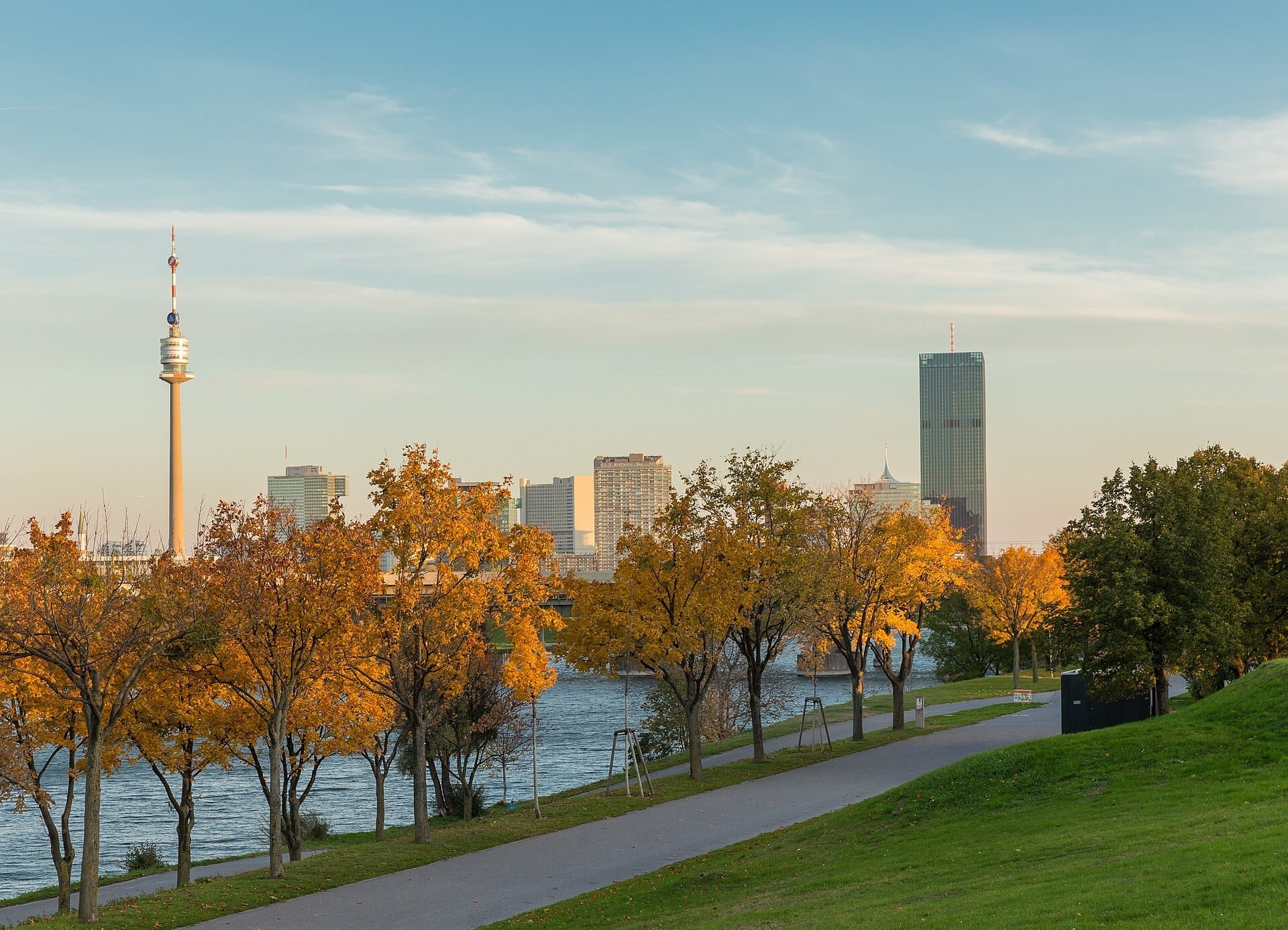
Stretching 21 kilometres along the Danube, the Donauinsel is Vienna's largest free outdoor recreation area. Built for flood protection but claimed by locals as their backyard beach, it draws swimmers, cyclists, and festival-goers from spring through autumn.
Quick Facts
- Location
- Donauinsel, 1220 Wien, between the Danube and Neue Donau
- Getting There
- U1 to Donauinsel (on the island); U6 to Handelskai or Neue Donau
- Time Needed
- 2 hours to a full day depending on activity
- Cost
- Free entry; individual rentals and facilities vary
- Best for
- Families, cyclists, swimmers, sun-seekers, summer evenings
- Official website
- www.wien.gv.at/en/environment/danube-island
What the Donauinsel Actually Is
The Donauinsel is not a natural island. It is a 21.1-kilometre-long, narrow strip of land created by the City of Vienna between 1972 and 1988, dug out of the riverbed to form a flood-relief channel called the Neue Donau (New Danube) alongside the main river. The engineering goal was serious: protect a growing city from Danube flooding. The cultural outcome was something nobody quite planned for. Viennese residents adopted the island so thoroughly that it now functions as the city's most democratic outdoor space, free to enter, open around the clock, and used by an extraordinary cross-section of people.
The island ranges from about 70 to 250 metres wide along its length, which means it never feels like a sprawling park. It is a corridor, with water on both sides, which gives the whole place a particular quality: there is almost always a breeze, and you are rarely far from the sound of the river. Grass banks slope down to gravelly shores on the Neue Donau side, where most of the swimming and sunbathing happens, while the main Danube side is typically more wooded and quieter.
💡 Local tip
The U1 metro line stops directly on the island at the Donauinsel station, placing you at the most active central stretch within minutes of the city centre. This is the best entry point for first-time visitors.
How the Island Changes Through the Day
Early mornings on the Donauinsel have a different character entirely from the afternoon peak. From around 6 a.m., joggers and cyclists claim the paths in relative quiet. The light across the Neue Donau is flat and silver at that hour, and the water is still. If you arrive by bike from the city via one of the Danube Canal paths, the transition from urban street noise to open riverside air is immediate and noticeable.
By mid-morning on warm days, the grassy banks begin to fill. Families with children arrive early to claim spots near the water playgrounds, which operate on a seasonal basis, typically from May through September. By early afternoon in summer, the Neue Donau swimming areas are busy, with teenagers jumping from the banks, older adults doing steady laps parallel to the shore, and groups occupying the volleyball nets and rental facilities.
Evenings bring a shift toward bars and casual outdoor dining along the central stretch near the U1 station. The island has a cluster of beach bars, snack stands, and simple restaurants that stay open into the night through the warmer months. This is when the atmosphere loosens and the age range skews younger. On clear summer evenings, the combination of sunset light over the water and the low hum of people settled in for the evening is one of the more pleasurable experiences Vienna offers without spending anything.
⚠️ What to skip
The island offers almost no shade on its southern Neue Donau slopes. On hot summer days, temperatures on the open grass banks can be significantly higher than in the city. Bring sun protection, water, and sandals: the ground gets extremely warm.
Tickets & tours
Hand-picked options from our booking partner. Prices are indicative; availability and final rates are confirmed when you complete your booking.
Imperial Vienna 72-hour hop-on hop-off bus
From 55 €Instant confirmationFree cancellationSkip-the-Line Entrance with Guide to Schonbrunn Palace and Gardens
From 45 €Instant confirmationFree cancellationLuggage Storage in Vienna
From 6 €Instant confirmationFree cancellationStrauss Dinner Show
From 99 €Instant confirmationFree cancellation
Swimming, Cycling, and What Else You Can Do
Swimming in the Neue Donau is the central activity for most summer visitors. The channel was specifically designed with calmer water than the main Danube, making it suitable for bathing. The water quality is monitored by the City of Vienna, and the island has designated swimming zones. There are no entry fees for the water itself, though shower and changing facilities at organized sections have their own arrangements.
Cycling is the other major draw. The island has dedicated cycling paths running along much of its 21-kilometre length, and a round trip covering the full extent and back through the city makes for a substantial half-day ride. The flat terrain is accessible to casual riders, and the island connects to Vienna's broader cycling network, making it a natural section of longer routes along the Danube. Bike rentals are available in Vienna but must be arranged on the city side before crossing over, as the island itself is primarily pedestrian and cycle terrain rather than a commercial hub.
For families travelling with children, the island's water playground and open grass areas are practical and well-suited to a long afternoon. The Alte Donau (Old Danube), a nearby oxbow lake just across the Danube to the east, offers a calmer, more sheltered swimming alternative with sailing schools and paddle boat rentals, and is worth considering if you want a different pace.
Inline skating is popular on the smooth central paths, particularly on weekend evenings. Fishing is permitted in designated areas along the main Danube side. The island also has volleyball courts, table tennis tables, and trampolines that charge a small fee.
The Donauinselfest: When the Island Transforms
Once a year, usually over a weekend in late June, the Donauinselfest takes over a large section of the island. It is one of the largest open-air music festivals in Europe by attendance, regularly drawing over two million visitors across three days. Entry to the festival itself is free, in keeping with the island's broader ethos. Multiple stages host everything from pop and rock to folk and electronic music simultaneously.
During the festival, the central sections of the island become extremely crowded. Access via the U1 Donauinsel station can involve significant queuing, and the city typically runs enhanced transport services for the event. If you are not specifically attending the festival but happen to be in Vienna during those dates, approaching the island from the northern or southern ends will give you a better sense of its normal character. The dates shift year to year, so checking the official festival schedule before your trip is advisable.
ℹ️ Good to know
The Donauinselfest is organized by the Social Democratic Party of Vienna (SPÖ) and has been running since 1983. Free admission has been a fixed principle of the event throughout its history.
Getting There and Moving Around
The most direct route to the island's central section is the U1 metro line to the Donauinsel station, which sits on the island itself. From Stephansplatz in the First District, the journey takes around 10 minutes. The station exits bring you out close to the main concentration of beach bars and recreational facilities, which is useful for a first visit.
The U6 line provides access via Handelskai or Neue Donau stations, both of which require a short walk across a bridge to reach the island. These entry points deliver you to slightly different sections of the island and can be useful if you want to start a longer north-to-south cycling route.
If you are staying in the Innere Stadt or nearby districts, cycling directly to the island along the Danube Canal path is a rewarding option that keeps you on water the entire way. The route is flat and straightforward, and the transition from canal to the main Danube crossing is well-signposted.
The island's own internal paths are well-suited to walking and cycling but are not designed for motor traffic. Distances are significant: walking from the central U1 exit to the northern tip of the island would take the better part of two hours at a relaxed pace. Plan your section of the island in advance unless you have a full day.
Wheelchair access via the U1 Donauinsel station is consistent with Vienna's newer metro infrastructure, which includes lifts and step-free boarding on standard U-Bahn trains. The central paths on the island are paved and relatively flat. The grassy banks leading to the water are uneven and less accessible. The information centre (Inselinfo), located approximately 350 metres downriver from the Reichsbrücke bridge, can provide maps and practical guidance for seasonal facilities.
Weather, Seasons, and When to Visit
The island only makes full sense as a destination from late April through early October. In winter, the paths remain accessible and are occasionally used by hardy joggers, but the facilities are closed, the banks are empty, and the appeal is largely limited to the unobstructed view of the river. On grey winter days it can feel bleak rather than scenic.
Summer in Vienna, roughly June through August, delivers warm temperatures typically in the 25 to 32 degree range, with occasional hotter stretches. These are the months when the island is genuinely worth a dedicated half-day. May and September offer a cooler, quieter alternative: facilities are generally still open, the paths are less crowded, and the river light is often better for photography.
For broader context on timing a Vienna trip around outdoor activities, the guide to Vienna in summer covers the season in detail, including how heat affects the city and which outdoor spaces hold up best on the hottest days.
Rain affects the island quickly. Without tree cover on the sun-facing slopes, there is nowhere obvious to shelter. Afternoon thunderstorms are a real possibility in July and August, and the open location makes lightning a consideration. Check the forecast before committing to a long bike route, and have an exit plan if the weather shifts.
Is the Donauinsel Worth Your Time?
For visitors with only two or three days in Vienna, the Donauinsel competes with a heavy schedule of museums, palaces, and cafes. It is not a historically significant attraction, and it offers nothing that requires advance booking or special knowledge to appreciate. What it offers is a genuine sense of how Viennese residents spend a summer afternoon: in the open, near water, unhurried.
Travellers who respond well to the Donauinsel tend to value outdoor space over cultural programming, or are looking for a counterpoint to a week of interiors. It also works well as a morning activity before afternoon museum visits, particularly for families whose children need to move around before sitting through galleries.
Travellers who should probably skip it include those on short city breaks focused on art and architecture, anyone visiting between November and March, and those who are primarily interested in Vienna's imperial history or classical music venues. The island has nothing to offer those visitors that cannot be found closer to the city centre.
Insider Tips
- The stretch of island north of the U1 station gets quieter quickly. If you cycle or walk 15 minutes north of the main central area, the crowds thin significantly and the banks feel more like a natural riverside than a managed beach zone.
- The Inselinfo information centre, located about 350 metres from the Reichsbrücke, distributes free printed maps of the island's facilities, which are more useful than relying on phone navigation when you are trying to locate specific activity zones or toilet blocks.
- The main Danube side of the island (the eastern bank, away from the Neue Donau swimming channel) is noticeably more wooded and sees a fraction of the visitor traffic. It is the better choice for a quiet walk or for birdwatching, particularly in the early morning.
- If you are visiting during the Donauinselfest, arriving by U6 to Neue Donau station rather than U1 to Donauinsel puts you slightly ahead of the main crowd flow and gives you better positioning for the northern stage areas.
- Sandals or water shoes are worth bringing even if you do not plan to swim. The gravelly and rocky sections of the bank can be sharp underfoot, and the path surfaces near the water get wet and slippery.
Who Is Donauinsel (Danube Island) For?
- Families with young children looking for free outdoor space and supervised swimming in summer
- Cyclists wanting a flat, traffic-free route along the water with city connections
- Travellers seeking a local, non-touristic afternoon away from the historic centre
- Summer visitors who want an outdoor evening with drinks near the water without a cover charge
- Anyone visiting during the Donauinselfest weekend who wants a free major music event
Nearby Attractions
Other things to see while in Donauinsel & Donaucity:
- Alte Donau (Old Danube)
The Alte Donau is a former Danube river branch turned urban recreation lake in Vienna's 22nd district. Free to access year-round, it draws up to 1.2 million visitors annually for swimming, rowing, cycling, and waterside dining. This is where Viennese families spend their summers, not where tour groups go.
- Donauturm (Danube Tower)
Standing 252 metres above the Donau-City district, the Donauturm is Austria's tallest structure and Vienna's most dramatic elevated viewpoint. Built for the 1964 International Garden Show, it offers panoramic views across the Danube, the city's imperial skyline, and the surrounding hills — from a rotating restaurant perched high above the river.