Donauturm (Danube Tower): Vienna's Sky-High Viewpoint Above the Danube
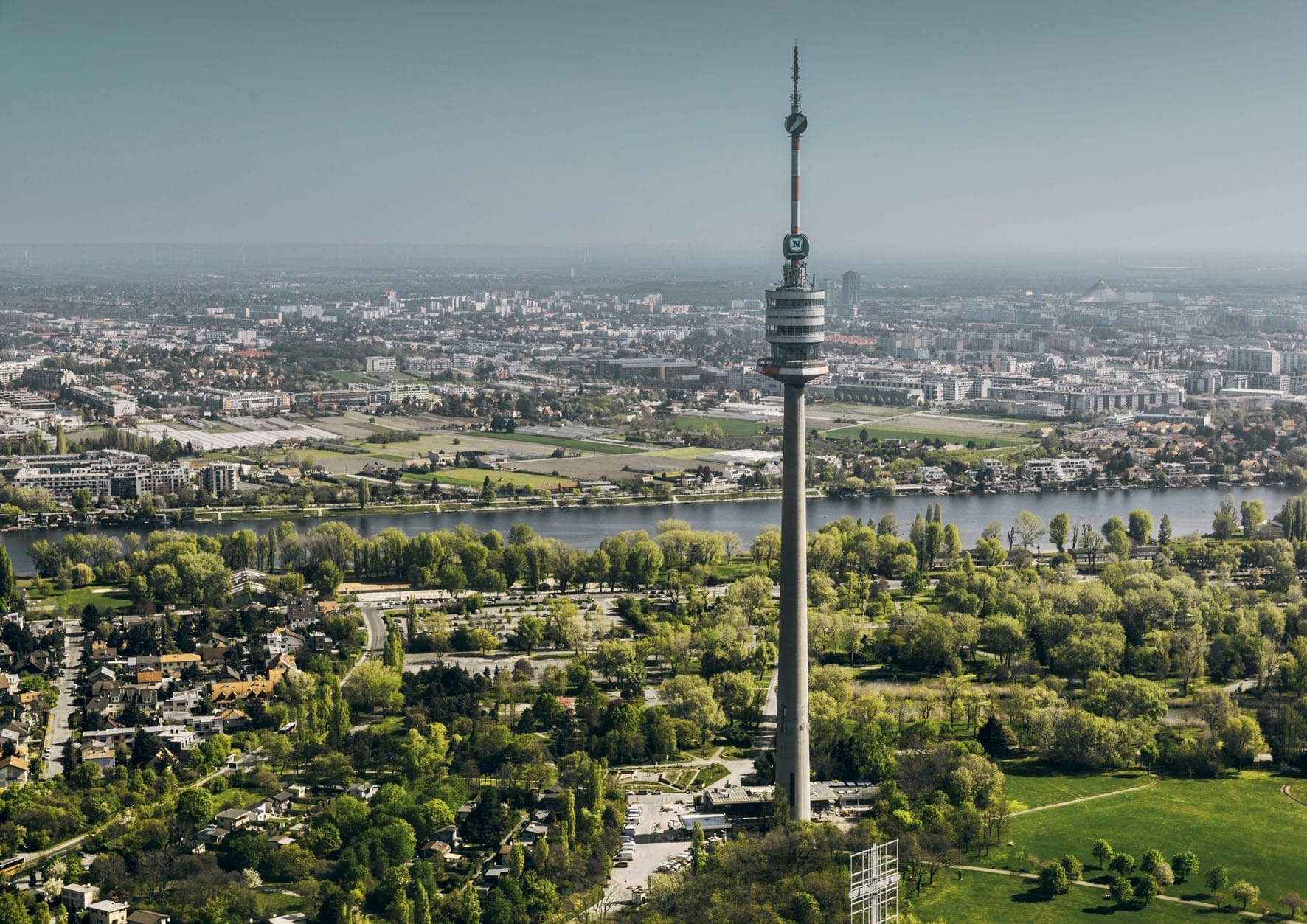
Standing 252 metres above the Donau-City district, the Donauturm is Austria's tallest structure and Vienna's most dramatic elevated viewpoint. Built for the 1964 International Garden Show, it offers panoramic views across the Danube, the city's imperial skyline, and the surrounding hills — from a rotating restaurant perched high above the river.
Quick Facts
- Location
- Donauturmplatz 1, 1220 Vienna (Donau-City / 22nd District)
- Getting There
- U1 to Kaisermühlen VIC or Alte Donau; Bus 20A to Donauturm stop
- Time Needed
- 1–2 hours for observation deck; longer if dining
- Cost
- €19.90 on-site (adults); €18.00 online Fastlane ticket. Verify current rates at donauturm.at
- Best for
- Panoramic city views, photography, families, architecture enthusiasts
- Official website
- www.donauturm.at/en
What the Donauturm Actually Is
The Donauturm, or Danube Tower, is a 252-metre telecommunications and observation tower completed in 1964, making it the tallest structure in Austria. It rises from the grounds of the former WIG 64, Vienna's International Garden Show, on the eastern bank of the Danube in the modern Donau-City quarter. The elevator takes roughly 35 seconds to reach the observation deck at 150 metres, which is fast enough to feel noticeable in your ears on the way up.
The tower has been a protected historic monument since 2001, which might surprise visitors who expect mid-century telecommunications towers to sit outside the heritage conversation. Its clean concrete shaft and restrained design reflect the optimism of early 1960s Austrian modernism, a counterpoint to the baroque and Ringstrasse architecture that dominates most Vienna sightseeing.
💡 Local tip
Buy the Fastlane ticket online at donauturm.at before you arrive. It saves €1.90 per adult and, more usefully, lets you bypass the on-site queue. On summer evenings and weekends, the queue for on-site tickets can add 20–30 minutes to your visit.
The View: What You Can See and When to Come
From the observation deck at 150 metres, the view opens in every direction without obstruction. To the south and west, Vienna's skyline arranges itself in a way you simply cannot replicate from street level: the Ringstrasse institutions shrink to scale, the Stephansdom steeple punctuates the dense inner city, and the Wienerwald hills roll up behind the western suburbs. On a clear day, the Alps are visible along the southern horizon.
The Danube itself is the dominant foreground feature. From this height, you can see how the river system actually works: the main Danube channel, the Neue Donau, and the Donauinsel island strip running between them. The geometry is striking and genuinely clarifying if you've spent any time exploring the area at ground level.
Time of day matters considerably. Midday light in summer is flat and slightly hazy. Late afternoon, roughly 17:00 onward, brings warmer directional light that sharpens the city's rooflines and gives the river a metallic shimmer. Sunset visits, possible in summer given the 22:30 closing time, are the most photogenic, though the observation deck fills up and space becomes limited. Night visits have their own appeal: the city lights grid is legible and the tower itself is illuminated.
⚠️ What to skip
The observation deck is partially open to the elements, and wind at 150 metres can be significantly stronger than at street level. Even in mild summer weather, bring a layer. In winter or during stormy conditions, the cold and wind can make extended time on the deck uncomfortable.
Tickets & tours
Hand-picked options from our booking partner. Prices are indicative; availability and final rates are confirmed when you complete your booking.
Imperial Vienna 72-hour hop-on hop-off bus
From 55 €Instant confirmationFree cancellationSkip-the-Line Entrance with Guide to Schonbrunn Palace and Gardens
From 45 €Instant confirmationFree cancellationLuggage Storage in Vienna
From 6 €Instant confirmationFree cancellationStrauss Dinner Show
From 99 €Instant confirmationFree cancellation
History and Architectural Context
Construction ran from 1962 to 1964, and the tower opened on 16 April 1964 as the centrepiece of the Vienna International Garden Show (WIG 64). At the time, the eastern bank of the Danube was largely undeveloped, and the tower was intended to anchor a new public park and leisure zone. The surrounding Donaupark, still intact today, gives the tower its green base and makes the walk from the U-Bahn stop pleasant rather than purely functional.
Vienna's mid-20th century modernist projects are rarely discussed alongside the city's imperial heritage, but the Donauturm belongs in that conversation alongside other bold architectural statements of the era. For a broader view of how Vienna's built environment evolved across centuries, the Vienna architecture guide provides useful context.
The heritage listing in 2001 reflects a reassessment of post-war modernism in Austria. The tower is not ornate, but its proportions and structural honesty have aged well. Standing at its base, looking up the tapered concrete shaft, the design reads as confident rather than austere.
Practical Walkthrough: Arrival to Descent
The U1 line stops at Kaisermühlen VIC, a short walk from the tower entrance through Donaupark. Bus 20A drops passengers directly at the Donauturm stop. From central Vienna, the U1 journey from Stephansplatz takes roughly 10–12 minutes, making this a straightforward half-day addition to any city itinerary.
The tower is open daily from 10:00 to 22:30, with the last elevator ascent at 21:45 and the last descent at 22:15. The tower slide operates from 11:00 to 21:00, with the last slide at 21:00. These hours apply on public holidays as well, but conditions do change, so check the official site before planning around a specific evening.
The observation deck offers a wraparound walkway. The glass barrier is high enough to feel safe but low enough that photography is straightforward without awkward angles. The tower also houses two rotating restaurants and a café, which complete a full rotation roughly every 26 minutes. Dining with a view is the premium option here, but reservations are strongly recommended, particularly for dinner service.
Wheelchair access is available. The high-speed elevators are spacious, and the observation level is navigable without stairs once you've arrived. The ground-level approach through Donaupark is paved and flat from the U-Bahn exits.
The Donau-City Neighbourhood Context
The Donauturm sits in Vienna's 22nd district, a part of the city that most short-stay visitors never reach. Donau-City is Vienna's modern business and residential quarter, marked by glass-and-steel towers that form a skyline entirely unlike the baroque core. It's an interesting contrast to explore, especially combined with a walk along the Donauinsel, the 21-kilometre island between the Danube channels that functions as the city's largest outdoor recreation area.
The immediate surroundings of the tower, Donaupark, are worth time on their own. The park is spacious, well-kept, and popular with local joggers and families, particularly in summer. It doesn't carry the historic weight of the Stadtpark in the inner city, but it offers something different: a quieter, less tourist-facing green space where Vienna's everyday outdoor culture is on display.
Photography Notes
The observation deck is workable for both smartphones and dedicated cameras. There's no reflective glass to shoot through on the open section, which removes the main frustration at many urban observation points. Wide-angle lenses make the most of the panorama, while a moderate telephoto brings in the city's architectural details from a distance.
For the Danube composition specifically, position yourself on the eastern side of the deck to get the river running diagonally through the frame. The Donauinsel strip and the contrasting green-blue water channels make for an unusual aerial photograph that reads distinctly as Vienna rather than a generic city skyline shot.
ℹ️ Good to know
The rotating restaurant and café move slowly enough that you can compose and take photographs without significant blur. If you're dining and want to photograph both the sunset and the lit city, plan to arrive at the restaurant about 90 minutes before sunset to catch the full transition.
Who Should Think Twice
The Donauturm is not the right choice for every visitor. If your Vienna trip is short and focused on the imperial inner city, the tower is a 20-minute metro journey away from the historic centre and sits in a neighbourhood with little else to draw a first-time visitor. The view is genuinely excellent, but Vienna also rewards ground-level exploration in a way that a sky-high platform cannot substitute for.
Travellers with a strong fear of heights or who find enclosed, fast-moving elevators uncomfortable should note that the ascent is quick and the deck height significant. Additionally, if your priority is Vienna's cultural and imperial heritage, the time might be better spent at the Upper Belvedere or exploring the Kunsthistorisches Museum. The Donauturm rewards those who want a physical grasp of the city's geography, or who want a venue that combines dining with a view.
Insider Tips
- Book the Fastlane ticket online to save money and skip the queue. On busy summer weekends, on-site queues can run 20–30 minutes even outside peak hours.
- The tower slide is a genuine novelty: a 65-metre enclosed slide that drops from near the observation deck to ground level in a few seconds. It's ticketed separately and primarily aimed at families, but adults use it too. Last slide at 21:00, so don't leave it until the end of your visit.
- If you're visiting on a clear winter day, the Alpine panorama to the south is sharper than in hazy summer conditions. Crowds are also thinner and the observation deck less crowded, though the cold and wind will limit how long you stay outside.
- Donaupark around the base of the tower has a small rose garden and several sculptures from the 1964 garden show that have stayed in place for six decades. It's worth a 15-minute walk around before or after your ascent.
- Combine the Donauturm with a trip to the Alte Donau, the old oxbow lake just north of the U1 stop, for a half-day that shows a completely different side of Vienna to the tourist-heavy centre.
Who Is Donauturm (Danube Tower) For?
- Photographers wanting a clear, unobstructed 360-degree city panorama
- Families with children who will appreciate the tower slide and the Donaupark grounds
- Visitors on longer stays who want to understand Vienna's geography beyond the historic centre
- Architecture enthusiasts interested in Austrian modernism and Donau-City's contemporary skyline
- Couples looking for a dinner reservation with genuine elevated views, particularly at sunset
Nearby Attractions
Other things to see while in Donauinsel & Donaucity:
- Alte Donau (Old Danube)
The Alte Donau is a former Danube river branch turned urban recreation lake in Vienna's 22nd district. Free to access year-round, it draws up to 1.2 million visitors annually for swimming, rowing, cycling, and waterside dining. This is where Viennese families spend their summers, not where tour groups go.
- Donauinsel (Danube Island)
Stretching 21 kilometres along the Danube, the Donauinsel is Vienna's largest free outdoor recreation area. Built for flood protection but claimed by locals as their backyard beach, it draws swimmers, cyclists, and festival-goers from spring through autumn.