Stadtpark (Vienna City Park): What to Expect, When to Go, and Why It Works
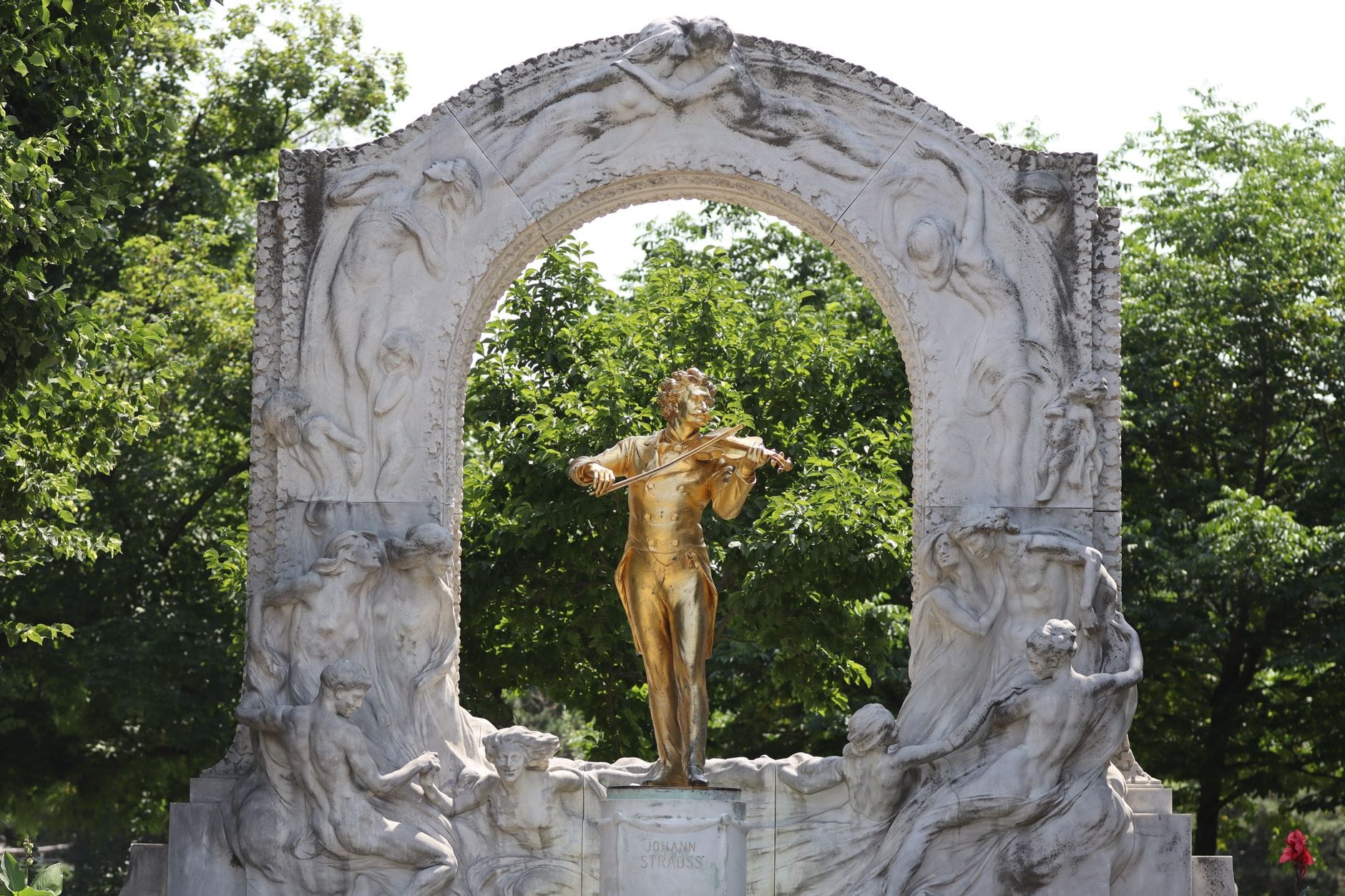
Opened in 1862, Stadtpark is Vienna's oldest public park, a 65,000 m² green corridor that cuts between the 1st and 3rd districts. It is free, open around the clock, and famous for its gilded Johann Strauss II statue, though it offers considerably more than that one photograph.
Quick Facts
- Location
- Parkring, 1010 Wien (between the 1st and 3rd districts)
- Getting There
- U4 Stadtpark (direct); U3/U4 Wien Mitte-Landstraße; Tram 2
- Time Needed
- 45 minutes to 2 hours depending on pace
- Cost
- Free, open 24/7
- Best for
- Leisurely walks, photography, picnics, escaping the inner city crowds
- Official website
- www.wien.gv.at/freizeit/stadtpark
What Stadtpark Actually Is
Stadtpark, or Wiener Stadtpark, is Vienna's oldest public park, opened in 1862 as part of the grand Ringstrasse redevelopment that reshaped the city's face in the second half of the 19th century. Covering approximately 65,000 m², it sits at the southeastern edge of the Innere Stadt, separated from the outer districts by the Wien River, which flows through the park in a gently curved channel lined with weeping willows and stone embankments.
The park was designed by landscape architect Joseph Selleny and city engineer Rudolf Siebeck in the English landscape style, which prioritized naturalistic curves, varied planting, and visual variety over the rigid geometry of French formal gardens. The result is a park that feels organic rather than ceremonial, a place where the paths lead you around corners and open onto different scenes rather than presenting everything at once.
ℹ️ Good to know
Stadtpark is free and open around the clock with no seasonal closures. There are no gates, no ticket barriers, and no entry fees.
The Strauss Statue and the Other Monuments
Most visitors come specifically for the Johann Strauss II statue, and it earns its place as the park's focal point. The gilded bronze figure of Strauss playing his violin stands within an ornate marble arch framed by sculpted dancers and relief panels. Completed in 1921 and regilded several times since, it catches the light differently depending on the time of day. Midmorning in summer, when low-angle sunlight hits the gold leaf and the surrounding roses are in bloom, is when it looks most striking. By early afternoon in peak season, tour groups tend to cluster around it, so photographers looking for a clean shot are better served by arriving before 9:00 AM or after 6:00 PM.
Strauss is the most famous resident of the park's monument collection, but he is not alone. Stadtpark contains statues of Franz Schubert, Anton Bruckner, Franz Lehár, Robert Stolz, Hans Makart, and Emil Jakob Schindler, among others. Most visitors walk past these without stopping, which is their loss. The Schubert monument in particular, positioned in a quieter corner of the park, is a beautifully proportioned piece that rewards a closer look.
The density of composer and artist monuments in a single park reflects Vienna's deliberate self-presentation as a city of culture, a theme explored in detail in the Vienna classical music guide.
Tickets & tours
Hand-picked options from our booking partner. Prices are indicative; availability and final rates are confirmed when you complete your booking.
Imperial Vienna 72-hour hop-on hop-off bus
From 55 €Instant confirmationFree cancellationSkip-the-Line Entrance with Guide to Schonbrunn Palace and Gardens
From 45 €Instant confirmationFree cancellationLuggage Storage in Vienna
From 6 €Instant confirmationFree cancellationStrauss Dinner Show
From 99 €Instant confirmationFree cancellation
How the Park Changes Through the Day
Early morning, before 8:00 AM, Stadtpark belongs to joggers, dog walkers, and the occasional commuter cutting through on their way to Wien Mitte station. The Wien River sounds more prominent at this hour, and the bird noise from the tree canopy is considerable. The light at this time is soft and the paths are nearly empty.
By mid-morning, especially on weekdays, office workers from the surrounding districts settle onto the benches during breaks, and language school groups begin appearing near the Strauss statue. Families with young children are a consistent presence from around 10:00 AM onwards, gravitating toward the wider open lawns in the central section of the park.
Evenings in summer are arguably the best time to visit. The crowds thin considerably after 7:00 PM, the temperature drops to something comfortable, and the Kursalon building, a grand late-19th-century event hall on the park's southern edge, takes on a pleasantly theatrical quality as its lights come on. The park does not close, and the paths remain reasonably well lit into the night, though some of the more secluded corners near the river embankment are darker and less frequented after dark.
💡 Local tip
For the Strauss statue without crowds, aim for early morning on a weekday, ideally before 9:00 AM. Tour groups arrive in force between 10:00 AM and 1:00 PM.
The Wien River and the Landscape Design
The Wien River runs through Stadtpark in a section that was deliberately left open and naturalized as part of the park's original design. The stone embankments slope gently to the water, and the weeping willows that line the banks are old enough to drape dramatically over the surface. Ducks are a permanent feature. In spring, the riverbank section is one of the most photogenic stretches of green space in the inner city.
The paths on either side of the river connect the park's northern and southern sections, and the bridges crossing it are original 19th-century structures with decorative ironwork. If you walk the full perimeter of the park rather than cutting directly through, you will cover roughly 1.5 kilometers and encounter most of the statues, the main flower beds, and several good viewpoints of the Kursalon facade.
In winter, the park loses most of its color but gains a particular quietness. The bare plane trees reveal their structure, and on frosty mornings the embankment paths along the Wien River are almost entirely deserted. This is not necessarily a reason to avoid it in winter; it simply requires adjusting expectations.
Practical Details for Visiting
The most straightforward way to reach Stadtpark is the U4 line to Stadtpark station, which deposits you directly at the park's northern entrance. From the historic center around St. Stephen's Cathedral, the park is about a 15-minute walk east along Parkring, which is itself a section of the Ringstrasse boulevard.
The surrounding area offers easy extensions. Wien Mitte station, a few minutes' walk from the park, connects to the U3 line and the City Airport Train (CAT). The Kunsthistorisches Museum and the MuseumsQuartier are roughly a 20-minute walk west, while the Upper Belvedere is about 25 minutes south on foot.
There are public toilets in the park, though their hours and condition can vary. Several cafes operate within or directly adjacent to the park boundaries, including the Kursalon, which runs a cafe and hosts concerts. Bringing your own food and sitting on the grass is entirely normal and widely practiced.
The main paths through the park are paved and relatively flat, making them accessible for prams and wheelchairs. The paths along the river embankment are narrower and may have minor surface irregularities. The park does not have formal accessibility information published by the city beyond general access points.
⚠️ What to skip
In wet weather, the grass sections become muddy and some of the narrower riverside paths can be slippery. Wear shoes with grip if rain is forecast.
Photography Notes
The Strauss statue is the obvious target, but the Kursalon building, with its yellow-painted Historicist facade and arcaded loggia, is equally photogenic and far less crowded. The best angle is from the central path leading south through the park, shooting toward the building with the flower beds in the foreground.
The river embankment section in spring, when the willows are fully leafed out and the water level is higher after snowmelt, offers compositions that feel genuinely surprising for a city park this close to a major urban center. Autumn works well too: the plane trees drop large leaves and the park takes on a muted, amber quality that photographs well in the hour before sunset.
If you are building a wider photography itinerary of Vienna's outdoor spaces, the Schönbrunn Palace Gardens and the Belvedere Gardens offer very different visual registers and are worth planning as separate visits.
Honest Assessment: What Stadtpark Is and Isn't
Stadtpark is a pleasant, well-maintained urban park. It is not a grand destination in the way that Schönbrunn's grounds or the Belvedere Gardens are. It doesn't have the scale, the formal symmetry, or the palace backdrop. What it has is accessibility, a genuine neighborhood-park atmosphere, and a cluster of cultural monuments in a compact, walkable space.
Visitors who arrive expecting a major tourist attraction may feel it is over in 20 minutes if they go only to see the Strauss statue, photograph it, and leave. Those who slow down, walk the river embankment, notice the lesser-known monuments, and sit for a while will find it considerably more rewarding. It functions best as part of a broader walk through the Innere Stadt rather than as a standalone destination.
For a fuller sense of how the park fits into the surrounding neighborhood and the Ringstrasse era, the Ringstrasse itself is worth walking as a structured route. The Innere Stadt walking tour guide covers this and several adjacent sights.
ℹ️ Good to know
Stadtpark is a logical stopping point between the inner city and Wien Mitte/Landstraße station, making it an easy fit within a longer day of sightseeing rather than a dedicated excursion.
Insider Tips
- The Schubert and Makart monuments, both in quieter corners of the park, are frequently overlooked by visitors focused on the Strauss statue. They are better preserved and often entirely unoccupied.
- Weekday mornings between 7:00 and 9:00 AM are the quietest window for photography, particularly for the Strauss statue and the Kursalon facade.
- The stretch of path along the Wien River's south bank, heading toward Heumarkt, is where locals tend to sit rather than tourists. It is calmer and shadier on warm afternoons.
- In spring, the rose beds flanking the main central path are maintained to a high standard and bloom from roughly late May. They add significant color to compositions featuring the Strauss statue arch.
- The Kursalon hosts regular Johann Strauss and Mozart concert evenings. Attending one is a very different experience from visiting the park in daylight, and the building's interior is not otherwise publicly accessible.
Who Is Stadtpark For?
- Travelers who want a calm mid-day break from the density of the inner city
- Photography enthusiasts interested in 19th-century monuments and ornamental horticulture
- Families with young children looking for open lawn space within easy reach of the city center
- Visitors on a walking itinerary through the Ringstrasse district
- Anyone wanting a free, unhurried outdoor experience with cultural context
Nearby Attractions
Other things to see while in Innere Stadt (1st District):
- Albertina Museum
Housed in a former Habsburg palace at the edge of the Ringstrasse, the Albertina holds one of the largest and finest graphic art collections in the world. With over one million drawings and prints alongside rotating exhibitions of modern masters, it rewards both the casual visitor and the serious art traveler.
- Austrian National Library (Prunksaal State Hall)
The Prunksaal, or State Hall of the Austrian National Library, is a Baroque masterpiece built for Emperor Charles VI between 1723 and 1726. At roughly 80 metres long and crowned by Daniel Gran's sweeping ceiling frescoes, it is one of the most visually arresting interiors in central Europe, and still holds around 200,000 historic volumes in its carved walnut shelves.
- Burgtheater
The Burgtheater is Austria's national theatre and one of the most significant German-language stages in the world. Its Neo-Renaissance building on Vienna's Ringstraße dates to 1888, and its institutional history stretches back to the court of Empress Maria Theresa. Whether you come for a performance or a guided tour, it rewards attention.
- Café Central
Housed inside the Palais Ferstel in Vienna's historic first district, Café Central has been serving coffee and conversation since 1876. Once the gathering point for Freud, Trotsky, and a constellation of Central European intellectuals, it remains one of the most architecturally remarkable coffeehouses in the world.