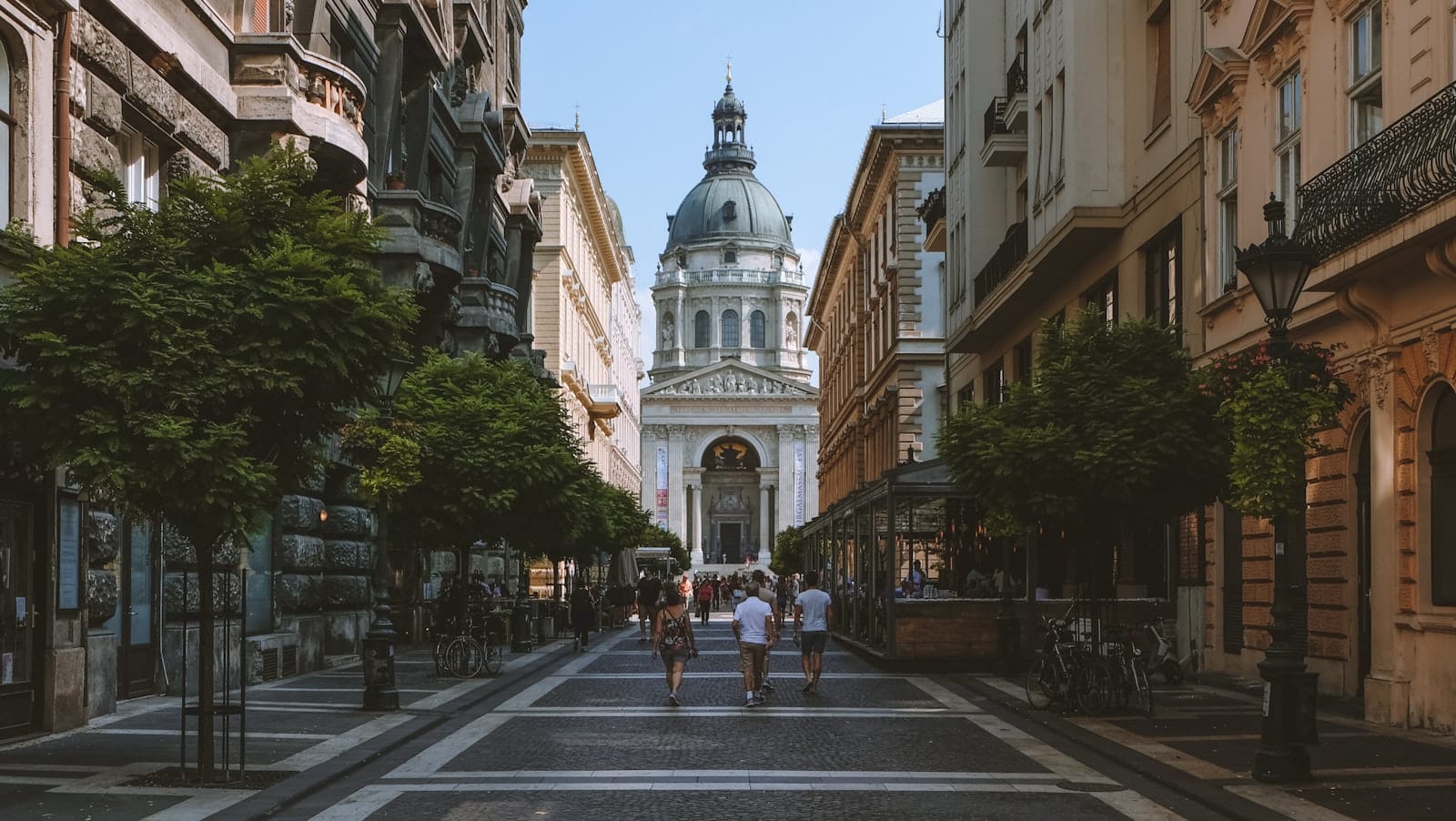
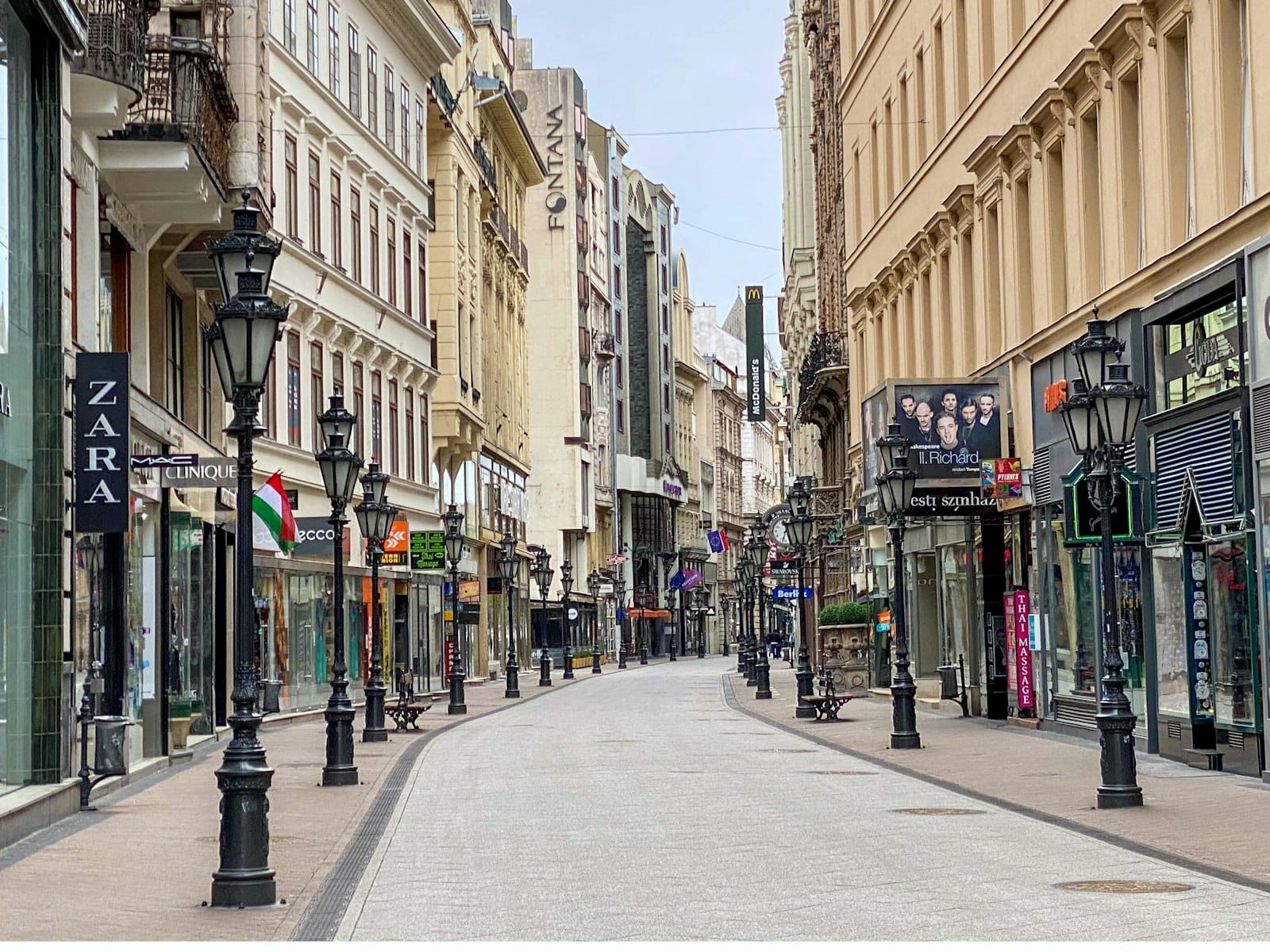
Budapest's V. District, known as Belváros-Lipótváros, is the historic and administrative heart of the city. Stretching along the Pest bank of the Danube, it packs the Parliament building, St. Stephen's Basilica, and the city's most famous pedestrian street into a compact, walkable area that rewards both first-time visitors and repeat travelers.
The V. District is where Budapest presents its most formal face: grand Neo-Gothic and Neo-Renaissance architecture lining the Danube, wide avenues leading to civic monuments, and the kind of hotel-and-restaurant density that makes it the city's default base for first-time visitors. It is not the city's most local neighborhood, but it may be its most essential.
Orientation
District V, officially Belváros-Lipótváros, sits on the east bank of the Danube in central Pest and is the smallest district in Budapest by area. Despite its compact size, it forms the geographic and symbolic center of the entire city. The district is divided into two distinct zones: Belváros (the Inner City), which is the historic medieval core of Pest to the south, and Lipótváros (Leopold Town), the planned 19th-century administrative and banking quarter to the north.
The Danube riverbank forms the western boundary, with the Chain Bridge and Elizabeth Bridge marking its northern and southern edges respectively. Inland, the district is bounded by the Kiskörút (Small Ring Road), which runs along Károly körút, Múzeum körút, and Vámház körút. Walking the district end-to-end from Vörösmarty tér in the north to the Great Market Hall at the southern tip takes roughly 40 minutes at a relaxed pace.
District V shares borders with District VI (Terézváros) to the north, Districts VII and VIII to the east, and District IX (Ferencváros) to the south. Across the Danube to the west lie Districts I and II in Buda. The central transport hub of Deák Ferenc tér, where metro lines M1, M2, and M3 all converge, sits right on the district's eastern edge. This makes the V. District extraordinarily well connected to every other part of Budapest. For a broader overview of how to get around the whole city, see the guide to getting around Budapest.
Character & Atmosphere
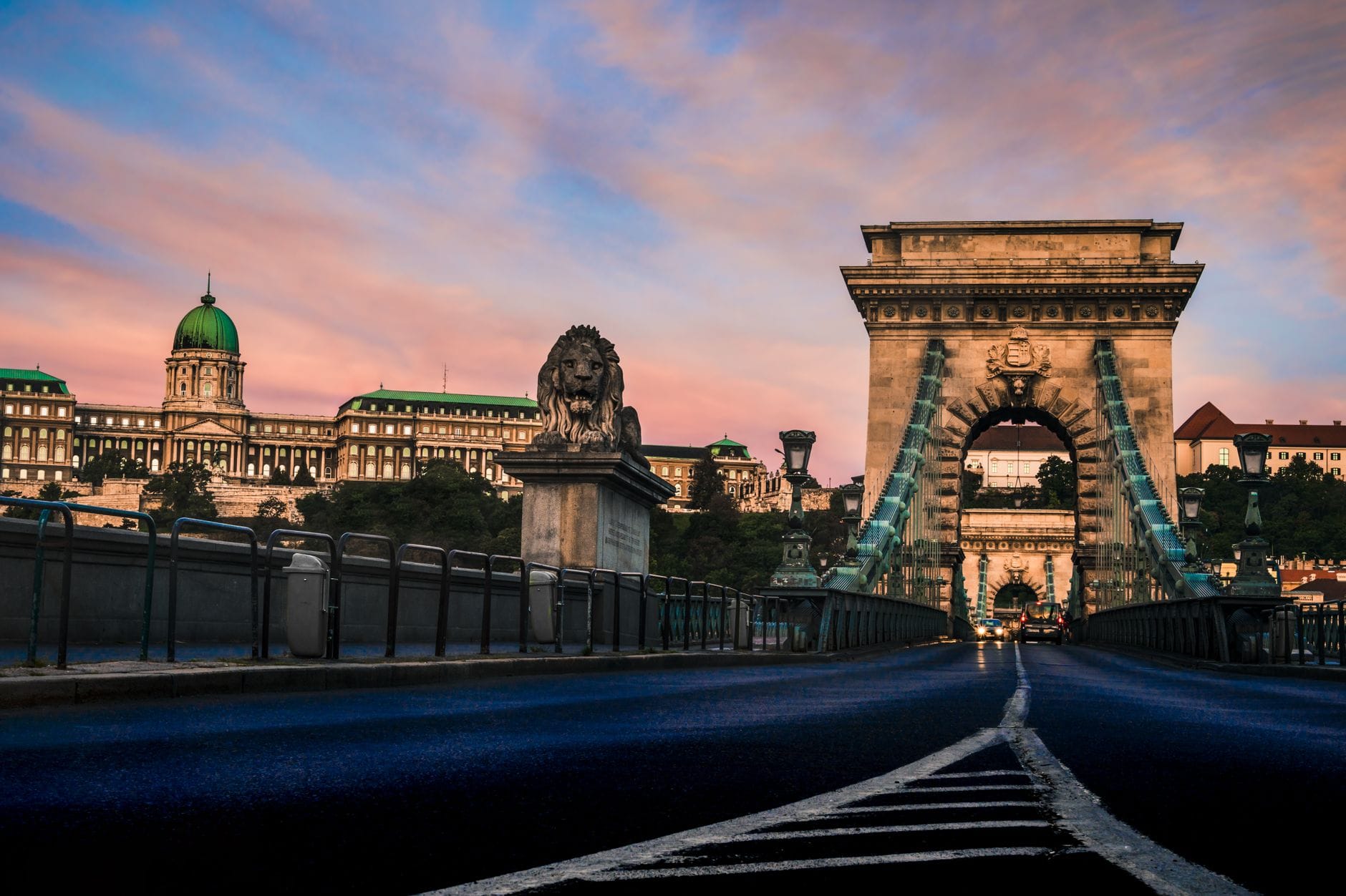
In the early morning, the V. District belongs to delivery workers, joggers along the Danube promenade, and the occasional hotel guest looking for coffee. The streets around Vörösmarty tér are quiet before 8am, pigeons occupying the square and the light falling at a low angle across the facades of the grand Eclectic and Neo-Renaissance buildings. The Danube embankment, the Corso, is particularly worth walking at this hour: you get unobstructed views of Buda Castle and the Chain Bridge without a tourist in sight.
By mid-morning the crowds arrive. Váci utca, the main pedestrian artery, shifts from pleasant to congested, and the stretch closest to Vörösmarty tér fills with souvenir stalls, restaurant touts, and group tours following umbrellas. This is the most tourist-oriented strip in all of Budapest, and it shows. The prices on Váci utca reflect its captive audience: coffee and food tend to cost more here than almost anywhere else in the city center.
Step one block east of Váci utca, however, and the character changes. The streets around Szervita tér and Régiposta utca are quieter, with a mix of office workers, local cafes, and pre-war architecture that receives far less foot traffic. Lipótváros, the northern half of the district around Liberty Square (Szabadság tér) and Kossuth Lajos tér, has a different rhythm again: wide, formal streets lined with government ministries, bank headquarters, and grand residential apartment blocks. It feels more like a capital city's civic core than a tourist zone.
After dark, the riverbank around the Belváros becomes genuinely atmospheric. The Parliament building is illuminated from across the water, and the Chain Bridge glows against the dark sky. The restaurant and bar scene on the side streets is busiest between 7pm and midnight, after which the area quiets down considerably compared to the nightlife districts further east.
💡 Local tip
If you want to see Váci utca without the crush, walk it before 9am or after 9pm. The architecture and the street itself are genuinely attractive once the crowds thin out.
What to See & Do
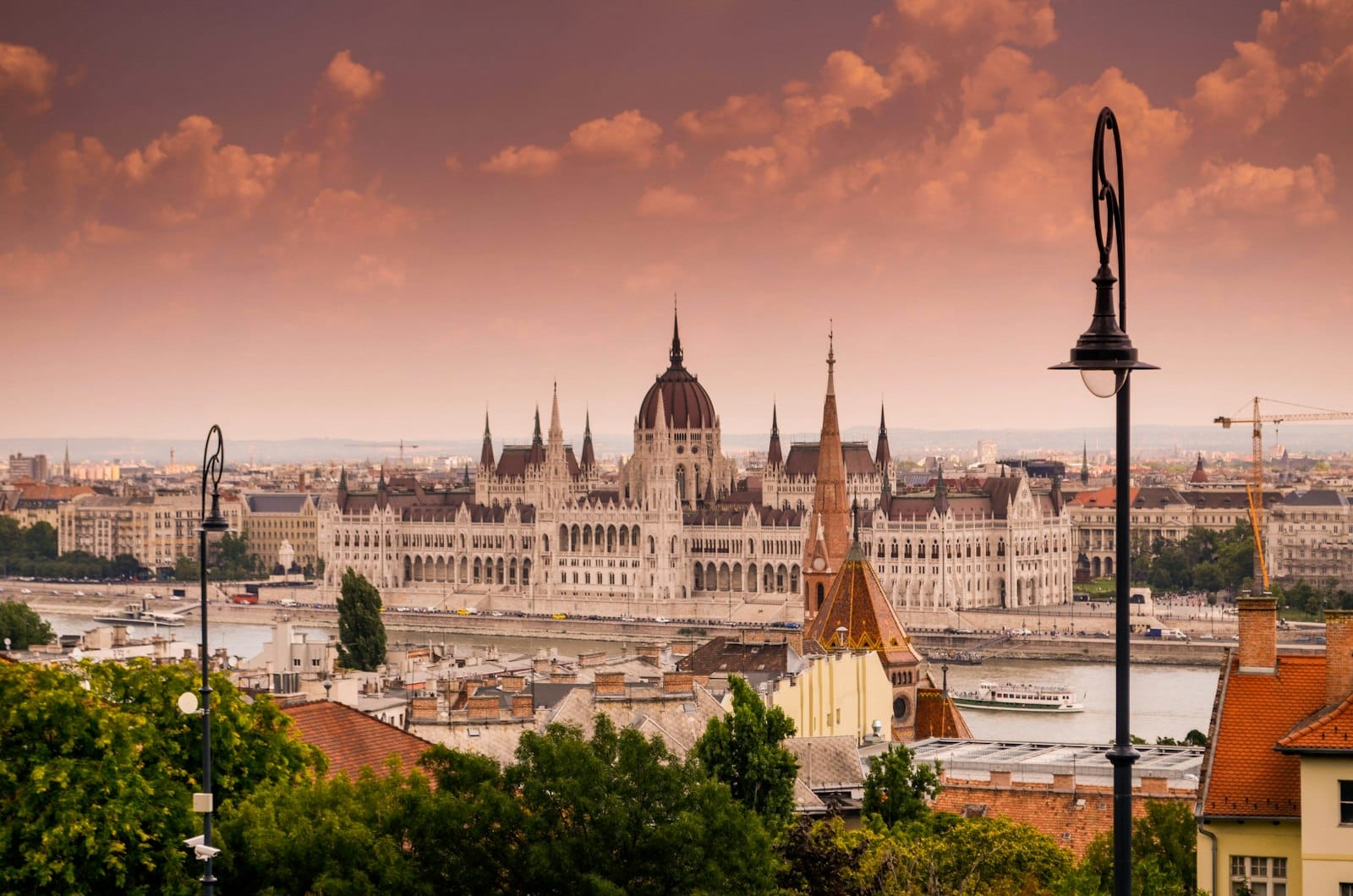
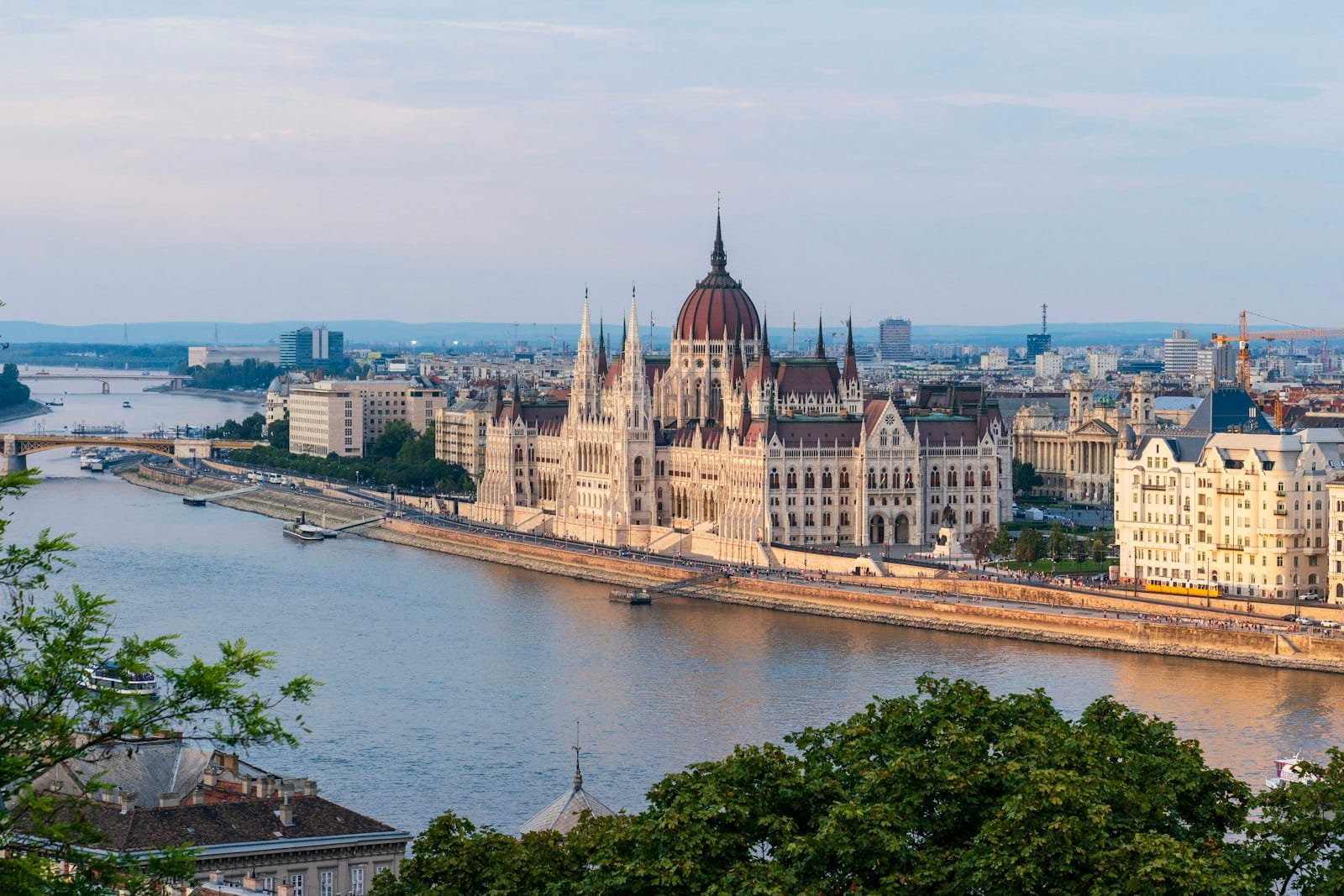
The Hungarian Parliament Building on Kossuth Lajos tér is the undisputed centerpiece of the district and one of the most recognizable buildings in Central Europe. Completed in 1904 in Neo-Gothic style with Renaissance and Baroque elements, it stretches along the Danube for 268 meters and is best viewed from the Buda side of the river, particularly from Fisherman's Bastion, or directly from the Kossuth tér esplanade at dusk when the exterior is lit. Guided interior tours run regularly and include access to the Hungarian Crown Jewels; booking in advance is strongly recommended in summer.
St. Stephen's BasilicaSt. Stephen's Basilica anchors the western edge of Lipótváros just a few minutes' walk from Deák Ferenc tér. The basilica, completed in 1906, can hold 8,500 people and its dome reaches 96 meters, the same height as the Parliament — a deliberate symbolic parity between church and state. The viewing terrace near the top of the dome offers one of the best panoramas over flat Pest. The square in front of the basilica, Szent István tér, is particularly lively in summer when outdoor concerts and markets take over the space.
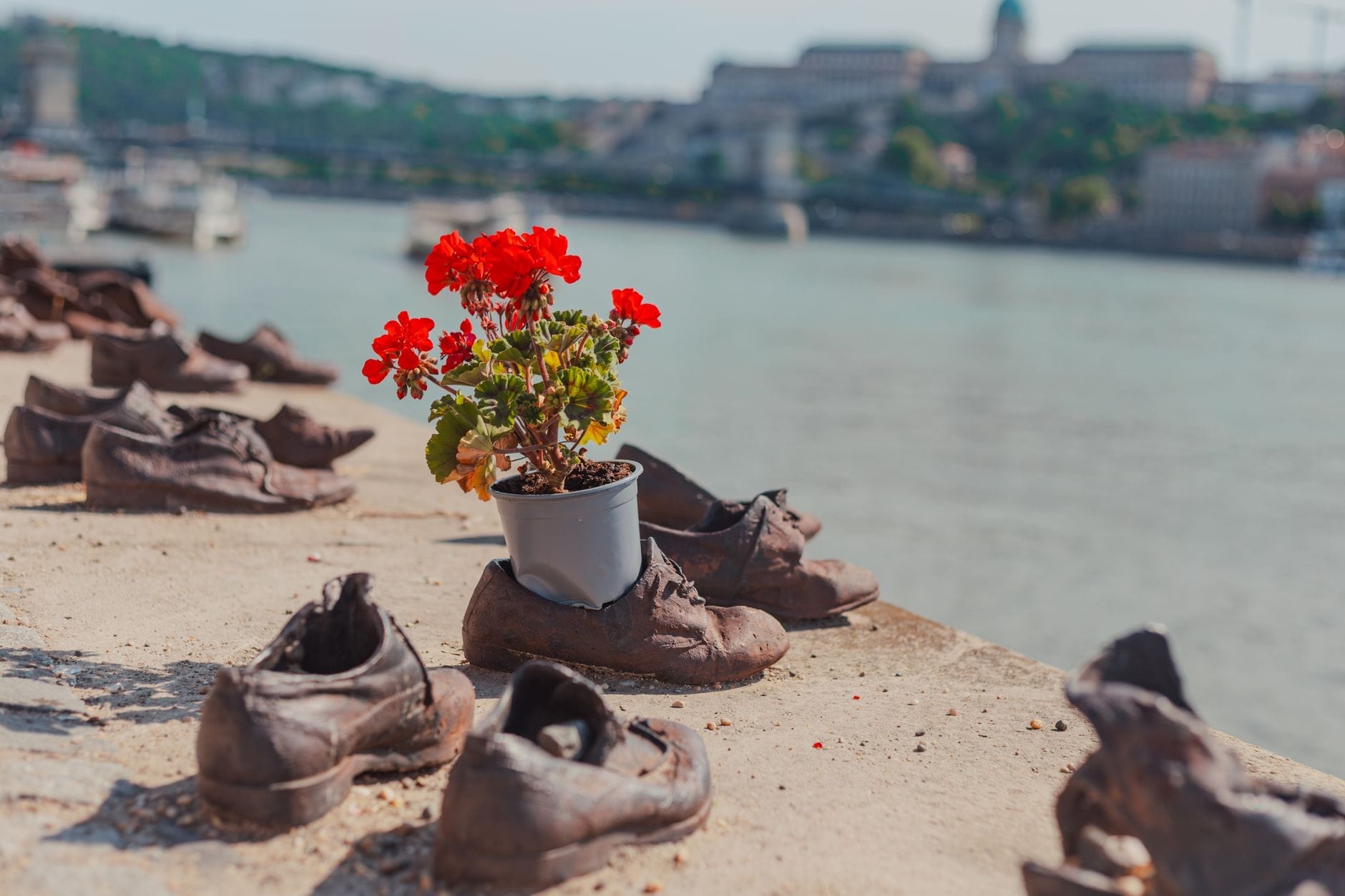
Liberty Square (Szabadság tér) in Lipótváros is worth seeking out for its unusual collection of monuments and the grandeur of its surrounding architecture. The square holds a Soviet war memorial, a statue of US President Ronald Reagan, and is flanked by the imposing former stock exchange building and the National Bank of Hungary. It is a genuine civic space used by locals rather than a tourist set-piece. A short walk south along the Danube brings you to the Shoes on the Danube memorial, one of Budapest's most quietly powerful sites: 60 pairs of cast-iron shoes mark the spot where Jewish people were shot into the river by Arrow Cross militiamen during World War II.
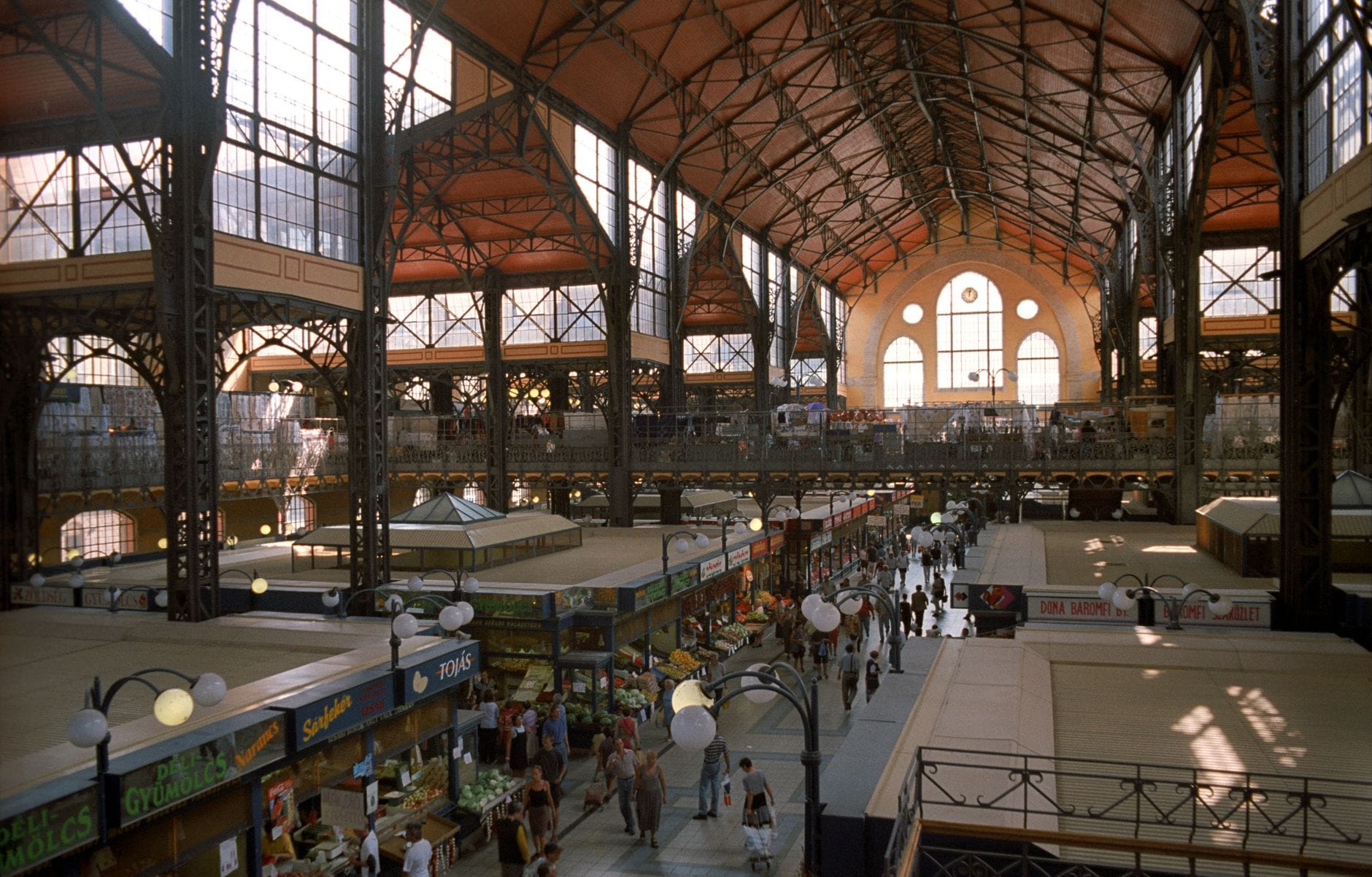
Váci Street runs south from Vörösmarty tér for about 1.5 kilometers to the Great Market Hall. The northern half between Vörösmarty tér and Ferenciek tere is the heavily commercialized section; the southern half below Ferenciek tere is marginally more local and more interesting architecturally. The Central Market Hall at the southern end is a working food market in a magnificent 1896 iron-and-tile hall. The ground floor sells produce, meat, and local goods at reasonable prices; the upper gallery is tourist-oriented but still worth a look for the paprika, salami, and embroidered textiles.
Walk the Danube Corso at sunrise or sunset for the best views of the Buda hills and bridges
Join a guided tour of the Parliament interior (book ahead online)
Climb the dome of St. Stephen's Basilica for Pest's best flat-city panorama
Explore Liberty Square and the surrounding Lipótváros streets for Budapest's civic architecture
Visit the Shoes on the Danube memorial in the quieter morning hours for reflection
ℹ️ Good to know
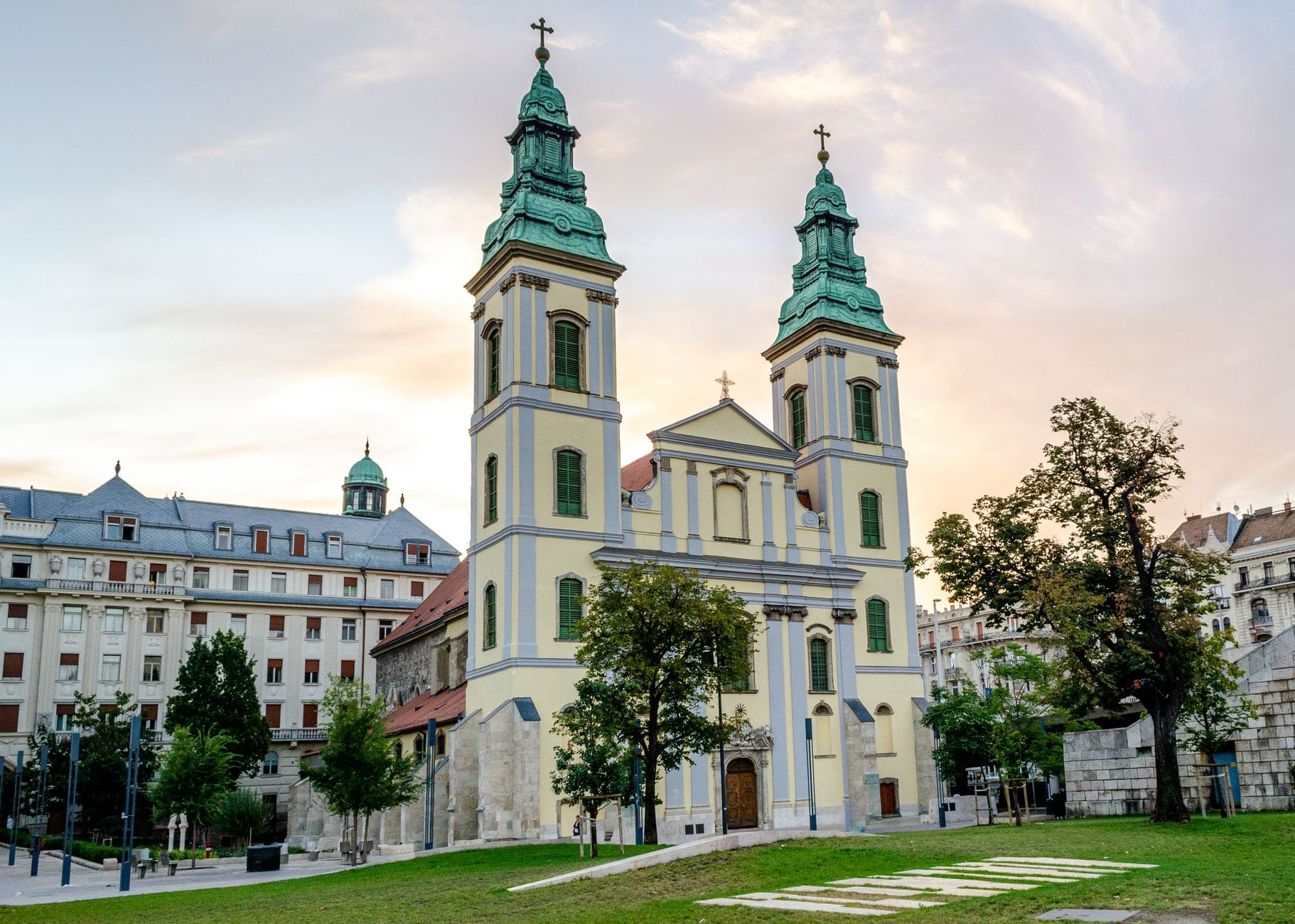
The Inner City Parish Church (Belvárosi Főplébánia-templom) on Március 15. tér, tucked beside Elizabeth Bridge, is the oldest church in Pest, with origins in the 12th century. It is easy to walk past without noticing, but the interior contains Roman and medieval stonework.
Eating & Drinking
The V. District offers the full range from excellent to overpriced, and knowing which streets to walk down makes the difference. Váci utca itself and the streets immediately around Vörösmarty tér skew heavily toward tourist pricing: you will pay significantly more for a coffee or a meal here than you would two blocks away. The menus outside are often laminated, and the staff sometimes actively recruits passersby, neither of which is a good sign in any city.
Side streets running parallel to Váci utca toward the east tend to have better value and more interesting options. The area around Szervita tér has several cafes that function as genuine local spots. For sit-down dining in the Belváros, look for restaurants on streets like Párizsi utca or around the Ferenciek tere intersection, where there is more competition and less dependence on passing tourist traffic.
Lipótváros has a cluster of lunch options near the offices around Szabadság tér and Honvéd utca, mostly aimed at government workers and bank employees. These tend to offer good-value set lunches on weekdays. The streets around Szent István tér near the Basilica have a mix of upscale restaurants and traditional Hungarian kitchens; prices are elevated but more competitive than Váci utca.
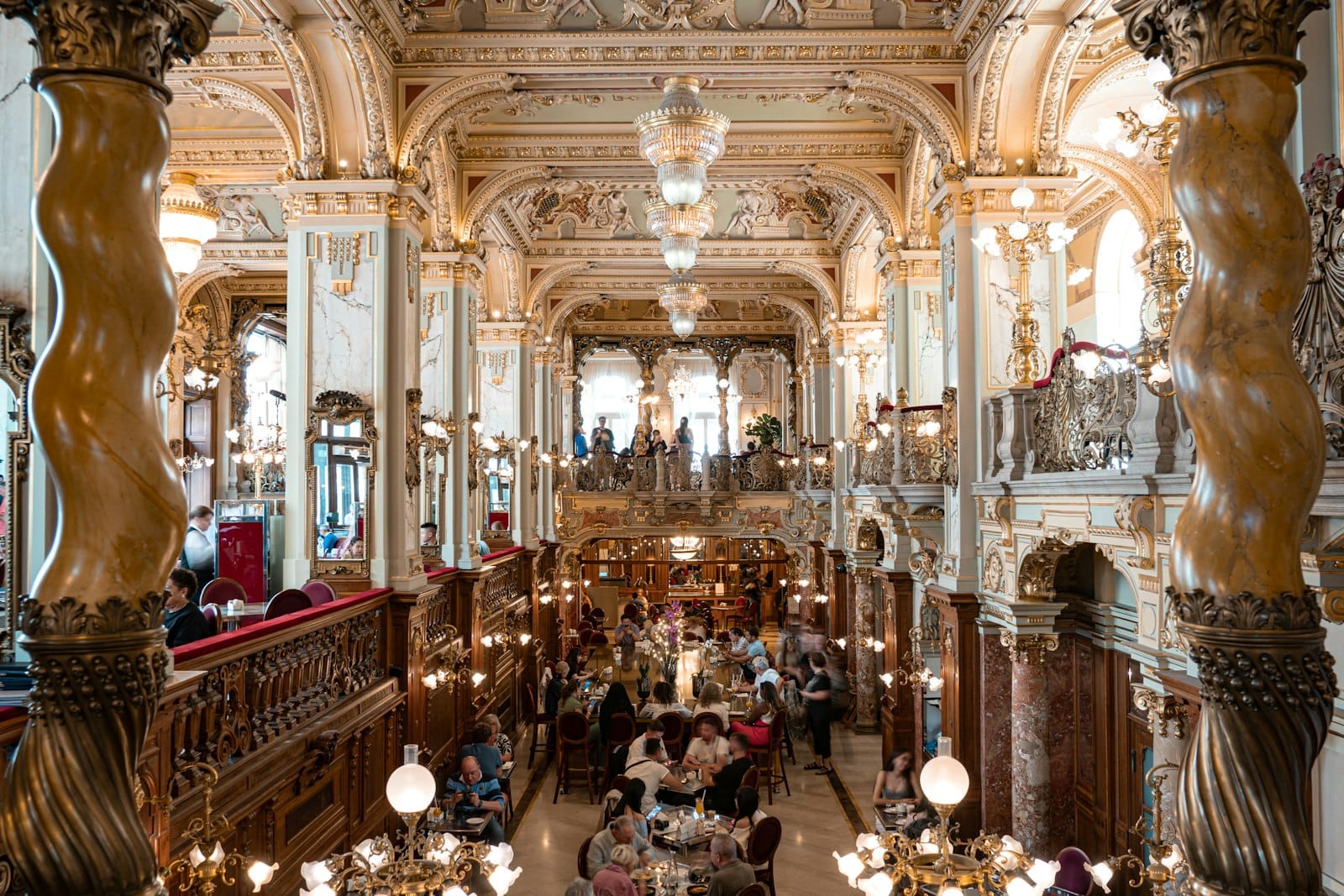
For coffee culture, the V. District sits within easy walking distance of the New York Café (technically in District VII but a short walk away) and several excellent specialty coffee roasters operating in the side streets of Belváros. The district's bar scene is fairly subdued compared to the ruin bar district to the east; it leans toward hotel bars, wine bars, and quieter cocktail spots rather than nightlife venues. For Budapest's actual after-dark scene, most visitors move east toward the Jewish Quarter.
⚠️ What to skip
Several establishments around Váci utca and Vörösmarty tér have received persistent complaints about inflated bills, especially in bars. Always check the menu price before ordering, look for establishments that display their full price list clearly, and review the bill carefully before paying.
Getting There & Around
Deák Ferenc tér is the V. District's main transit hub and the only station in Budapest where metro lines M1, M2, and M3 all intersect. It sits on the eastern boundary of the district, making it the starting point for most visitors arriving by public transport. From Deák Ferenc tér, the Basilica is a 10-minute walk northwest, the Danube promenade is a 12-minute walk west, and Kossuth tér by the Parliament is about 20 minutes north along the riverbank.
Tram lines run along the Danube embankment (tram 2) and along the Kiskörút ring road, giving fast connections between the district's main points and to adjacent neighborhoods. The airport express bus 100E terminates at Deák Ferenc tér, meaning travelers arriving directly from Budapest Liszt Ferenc International Airport (approximately 16 km southeast of the center) arrive right at the heart of District V. Verify current fares and schedules with BKK before travel, as these are subject to change.
The district is compact and extremely walkable. Most major attractions are within a 20-minute walk of each other, and the flat terrain makes navigation easy. The Danube promenade provides a clear west-side reference line. For a full practical overview of Budapest's transport network, the guide to getting around Budapest covers metro lines, tram routes, and ticketing in detail.
Where to Stay
The V. District is Budapest's most hotel-dense neighborhood and the default choice for first-time visitors who want to walk to the major sights. The range runs from international luxury brands on the Danube embankment to boutique hotels on quieter side streets. For travelers prioritizing proximity to the Parliament, St. Stephen's Basilica, and the Chain Bridge, this is the most practical base in the city. A broader look at accommodation options across all districts is in the where to stay in Budapest guide.
Hotels on the Danube-facing side of the district, particularly along the Corso, command premium prices but offer some of the most iconic views in Central Europe: the Buda hills, the Castle District, and the lit bridges at night. Hotels set back from the river on the Lipótváros side tend to be quieter and slightly more affordable, with easier access to Szabadság tér and the Parliament.
The one honest caveat about staying here: the immediate surroundings of Váci utca and Vörösmarty tér are heavily tourist-oriented and can feel removed from everyday Budapest life. Travelers who want a more residential feel with easier access to local restaurants and street culture may find the adjacent VII. District around the Jewish Quarter a better fit, with the V. District still walkable in under 15 minutes.
History & Context
Understanding why District V looks and feels the way it does requires a brief look back at Budapest's 19th-century transformation. Buda and Pest were unified into a single city in 1873, and the decades that followed produced an extraordinary burst of construction as the new capital sought to build an urban fabric worthy of a major European city. Most of what you see in Lipótváros dates from this period: the Parliament (1902), St. Stephen's Basilica (1906), the National Bank, and the grand apartment blocks lining Nádor utca and Széchenyi István tér were all products of this era. For more on how Budapest's architecture and history evolved, the Budapest history guide and the Budapest Art Nouveau guide provide useful context.
Belváros, the older southern half of the district, has a longer history: the medieval city of Pest grew up here, and traces of that earlier urban fabric survive in the irregular street pattern around Március 15. tér and in the foundations of the Inner City Parish Church, which incorporates stonework from a 12th-century Romanesque church. The Roman road from the ancient settlement of Aquincum passed through this area, and excavations have turned up Roman-era remains beneath the modern streets.
The district's dual character, grand civic Lipótváros in the north and commercially active Belváros in the south, reflects the original planning logic of the late Austro-Hungarian era. Lipótváros was designed as an institutional and financial quarter; Belváros was always the trading and retail core. That division remains broadly legible today.
TL;DR
District V (Belváros-Lipótváros) is Budapest's compact historic core on the Pest bank of the Danube, home to the Parliament, St. Stephen's Basilica, Liberty Square, the Shoes on the Danube memorial, and the Great Market Hall.
The district is best for first-time visitors who want to walk to the major landmarks, stay in well-located hotels, and use Deák Ferenc tér as a transit hub for the rest of the city.
Váci utca is worth seeing but approaches it with realistic expectations: it is a heavily tourist-oriented shopping street with elevated prices, not a representative slice of local Budapest life.
Lipótváros — the northern half around the Parliament and Liberty Square — is quieter, more architecturally consistent, and gives a better sense of the city's civic grandeur than the crowded Belváros streets.
Travelers wanting a livelier, more local experience in the evenings should plan to walk or take the metro east into Districts VI and VII, where the restaurant and nightlife scene is denser and less tourist-dependent.
Budapest punches well above its weight as a museum city. From a world-class collection of Old Masters to underground WWII hospitals and open-air Communist statues, these are the museums that make Budapest worth dedicating serious time to.
Budapest rewards visitors in every season, but the timing of your trip shapes everything from what you pay to how crowded the sights are. This guide breaks down every month so you can match your priorities, whether that's mild weather, low prices, major festivals, or the city's legendary Christmas markets.
Budapest is one of Europe's great Art Nouveau cities, with a distinct national style that sets it apart from Vienna or Paris. This guide covers the key buildings, the architects behind them, how to explore the city's Szecesszió heritage on foot, and what to watch out for along the way.
The Budapest Card bundles unlimited public transport with free museum entry, one free thermal bath visit at Lukács, and a free Danube river cruise into one pass. But at up to €129, it only pays off under specific conditions. Here's a clear breakdown of who should buy it, who should skip it, and how to activate it correctly.
Budapest food is hearty, affordable, and deeply underrated. This guide covers the essential dishes to try, where to find them, what things actually cost in 2026, and how to avoid the tourist traps that pass off mediocre goulash stew as the real thing.
Budapest rewards those who look beyond the Parliament and Chain Bridge. From ancient Roman ruins in Óbuda to a Cold War bunker beneath Castle Hill, this guide points you toward the city's most overlooked and underrated experiences.
Budapest carries more than 2,000 years of history across its two riverbanks. This guide traces the city's major eras, from Roman legions to Habsburg grandeur and Cold War upheaval, and shows you exactly where to see that history in person.
December transforms Budapest into one of Europe's most atmospheric winter destinations, with free Christmas markets, steaming thermal baths, and far fewer crowds than summer. This guide covers weather realities, the two flagship markets, pricing, crowd patterns, and practical tips for getting the most from a winter visit.
Three days is exactly enough time to get a serious handle on Budapest. This itinerary splits the city logically across both banks of the Danube, covers the unmissable sights without rushing, and leaves room for the thermal baths, Jewish Quarter, and a proper evening out.
Budapest punches well above its weight in the luxury travel market. Five-star hotels cost 40-60% less than comparable properties in Vienna or Paris, the thermal spa culture is unmatched in Europe, and the fine dining scene has quietly matured into something genuinely world-class. This guide covers where to stay, where to soak, and where to eat at the top end of the market.
Budapest after dark is one of Europe's most distinct nightlife scenes, built around crumbling courtyards, thermal bath parties, and riverfront venues that keep going until sunrise. This guide covers the key districts, best venues, realistic drink prices, and how to navigate the city's nights without the common tourist mistakes.
Budapest's ruin bars are unlike anything else in Europe: abandoned buildings transformed into labyrinthine bars, galleries, and gardens. This guide covers the best venues, realistic prices, transport logistics, and seasonal tips to help you experience them properly.
Budapest is one of Central Europe's safer capitals, but petty crime, taxi overcharging, and bar bill scams catch many visitors off guard. This guide breaks down exactly what to watch for, where the risks concentrate, and how to handle each situation confidently.
Budapest rewards shoppers across every budget, from paprika and Tokaji wine at the Great Market Hall to luxury boutiques on Andrássy Avenue and Soviet-era curiosities at Ecseri flea market. This guide covers where to go, what to buy, and how to avoid overpaying on Váci Street.
Budapest sits on top of nearly 130 natural hot springs, and its thermal baths are among the most atmospheric in Europe. This guide cuts through the hype: which baths are actually open in 2026, what you'll realistically pay, how to avoid peak crowds, and which options suit your budget and travel style.
Everything you need to plan the Budapest to Prague journey, whether you want the comfort of a direct train, the cheapest bus fare, or the fastest flight. Includes prices, schedules, booking tips, and what to expect on each route.
Budapest is one of Europe's most photogenic cities, and knowing where to look changes everything. This guide covers the best panoramic viewpoints, hilltop terraces, and elevated bars where the city reveals itself in full.
Budapest rewards families with an impressive range of kid-friendly experiences: a century-old zoo, a narrow-gauge railway run by children, interactive science centers, and a car-free island with playgrounds and bike rentals. This guide covers the best family activities in Budapest, with practical advice on what works for different ages, what to skip, and how to plan your days efficiently.
Budapest sits at the center of one of Central Europe's best rail networks, putting medieval towns, thermal lake resorts, and even Vienna within easy reach. This guide covers the top day trips from Budapest with exact transport options, realistic fares, and clear assessments of what each destination is actually worth your time.
Budapest rewards budget travelers generously. From sweeping hilltop panoramas to centuries-old bridges and grand market halls, some of the city's most memorable experiences cost absolutely nothing. This guide covers the best free things to do in Budapest, organized so you can plan a full day without opening your wallet.
Budapest has one of Central Europe's most comprehensive public transport networks, run by BKK. This guide covers every mode of transport, ticket types with current prices, how to avoid fines, and the best ways to get from the airport to the city center.
Budapest is one of Central Europe's most rewarding cities, but it's not for everyone. This guide breaks down exactly what you get: the UNESCO-listed landmarks, thermal baths, food scene, and nightlife, alongside the real drawbacks, seasonal trade-offs, and practical logistics you need to know before booking.
Budapest is one of Europe's most atmospheric cities for couples, combining grand architecture, thermal spa culture, candlelit river cruises, and sweeping hilltop views. This guide covers the best romantic experiences in Budapest, from free sunset walks to splurge-worthy dinner cruises, with practical advice on timing, cost, and what to skip.
Budapest rewards visitors with an unusually rich mix of history, architecture, and culture packed into a compact, walkable city. This guide covers the best things to do in Budapest — from iconic landmarks and thermal baths to underrated neighborhoods — with practical advice on what is worth your time and what is not.
Budapest divides naturally into distinct neighborhoods, each with its own character, price range, and practical trade-offs. This guide breaks down the best areas to stay based on what you actually want from your trip, from walkable sightseeing bases to quieter hillside retreats.