Art Nouveau in Budapest: The Complete Architecture Guide
Budapest is one of Europe's great Art Nouveau cities, with a distinct national style that sets it apart from Vienna or Paris. This guide covers the key buildings, the architects behind them, how to explore the city's Szecesszió heritage on foot, and what to watch out for along the way.
Plan and book this trip
Tools from our partner Travelpayouts help you compare flights and hotels. If you book through them, we may earn a commission at no extra cost to you.
Flights
Hotels map
TL;DR
- Budapest's Art Nouveau scene flourished between roughly 1890 and 1914, producing a nationally distinct style known as Szecesszió that fuses folk patterns, Eastern motifs, and bright Zsolnay ceramic tiles.
- Ödön Lechner is the defining figure, but architects including Béla Lajta, Marcell Komor, Emil Vidor, and Károly Kós contributed equally important buildings.
- Gresham Palace, the Gellért Baths façade, and the Museum of Applied Arts exterior are the unmissable trio (Gellért baths are closed for renovation until around 2028; the Applied Arts main building has been closed for renovation since 2017, so plan on exterior viewing). For a broader picture, pair them with a walk along Andrássy Avenue where residential Art Nouveau villas line the street.
- Most façades can be viewed free of charge year-round. Interior access to some sites, including Gresham Palace, requires paying for hotel services or a guided entry.
- The House of Hungarian Art Nouveau (Bedő House) has had inconsistent opening status since around 2020. Verify locally before visiting, or check the relocated exhibition at Villa György Ráth (Városligeti fasor 12). See our Budapest history guide for broader architectural context.
What Makes Budapest's Art Nouveau Different
Art Nouveau arrived in Budapest at a politically charged moment. The 1867 Austro-Hungarian Compromise gave Hungary new autonomy, and architects responded by developing a style that deliberately signalled national identity rather than simply following Viennese or Parisian trends. In Hungarian, the movement is called Szecesszió, a reference to the Vienna Secession, but the results look like nothing in Vienna.
The key visual signatures are Zsolnay ceramic tiles (produced in Pécs and known for their vivid turquoise-green eosin glaze), rooflines encrusted with floral and geometric ornament, and façade motifs drawn from Hungarian folk embroidery traditions, particularly the needlework patterns of the Kalotaszeg and Matyó regions. Add in Moorish arches, stylised tulips, and references to Magyar mythology, and you get a style that is immediately legible as something specific to this city.
ℹ️ Good to know
The term 'Hungarian Secession' is sometimes used interchangeably with Art Nouveau in Budapest, but technically Szecesszió refers to the broader European movement as it arrived in Hungary. The specifically nationalist variant, pioneered by Ödön Lechner, is what most visitors are looking for when they come to study Budapest architecture.
Ödön Lechner and the Architects Who Shaped the Style
Ödön Lechner (1845–1914) is the unavoidable starting point. Often compared to Antoni Gaudí for his willingness to push ornament to expressive extremes, Lechner spent years studying Indian Mughal and Islamic architecture before synthesising those influences with Hungarian folk art. His buildings read as coherent, almost eccentric systems: every surface carries meaning. His best work in Budapest includes the Museum of Applied Arts (Iparművészeti Múzeum) at Üllői út 33–37 and the Geological Institute of Hungary at Stefánia út 14. Both reward an exterior look at any time (the Applied Arts main building has been closed for renovation since 2017, so plan on the façade and Zsolnay roof rather than an interior visit).
Lechner's contemporaries deserve equal attention. Béla Lajta moved from Lechner's circle toward a more geometric proto-modernism that anticipates the 1920s. Marcell Komor and Dezső Jakab produced several significant synagogues in Hungary. Emil Vidor designed expressive residential villas concentrated around the Andrássy Avenue corridor. Géza Maróti contributed sculptural decoration to multiple buildings including the Opera House vestibule and the Museum of Applied Arts. Károly Kós took the folk element further than almost anyone, drawing on Transylvanian vernacular architecture. Together, these figures created a city where Art Nouveau is not a single building but a texture that reappears block after block.
The Essential Buildings: Where to Go First
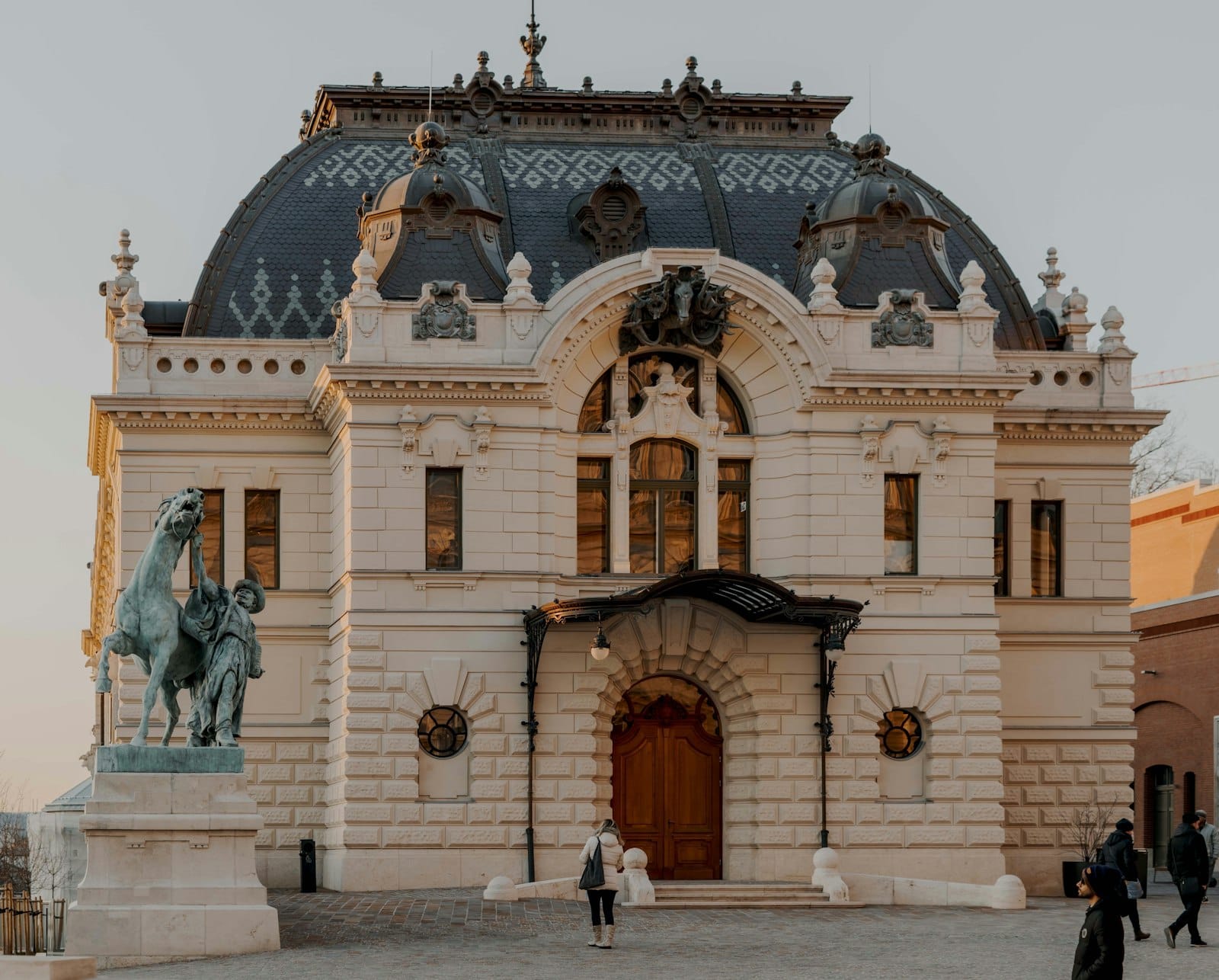
Start with the three buildings that represent the full range of what Budapest Art Nouveau can do.
- Gresham Palace (Four Seasons Hotel Gresham Palace) Széchenyi István tér 5, 1051 Budapest. Built 1902–1906 for the British Gresham Life Assurance Company, this is the most photographed Art Nouveau building in the city. The peacock gate inside the entrance hall is one of the finest pieces of wrought ironwork in Central Europe. The lobby is accessible to non-guests during the day; linger over coffee in the Kollázs bar if you want a reason to stay longer.
- Museum of Applied Arts (Iparművészeti Múzeum) Üllői út 33–37, 1091 Budapest. Lechner's 1896 masterpiece has a white Zsolnay-tiled roof that reads from across the road like a textile pattern transposed into ceramic. The main building has been closed for renovation since 2017, so treat this as an exterior architecture stop for now — the tiled roof and façade remain the highlight from the street. Check imm.hu for any temporary exhibition venues or reopening updates before planning an interior visit.
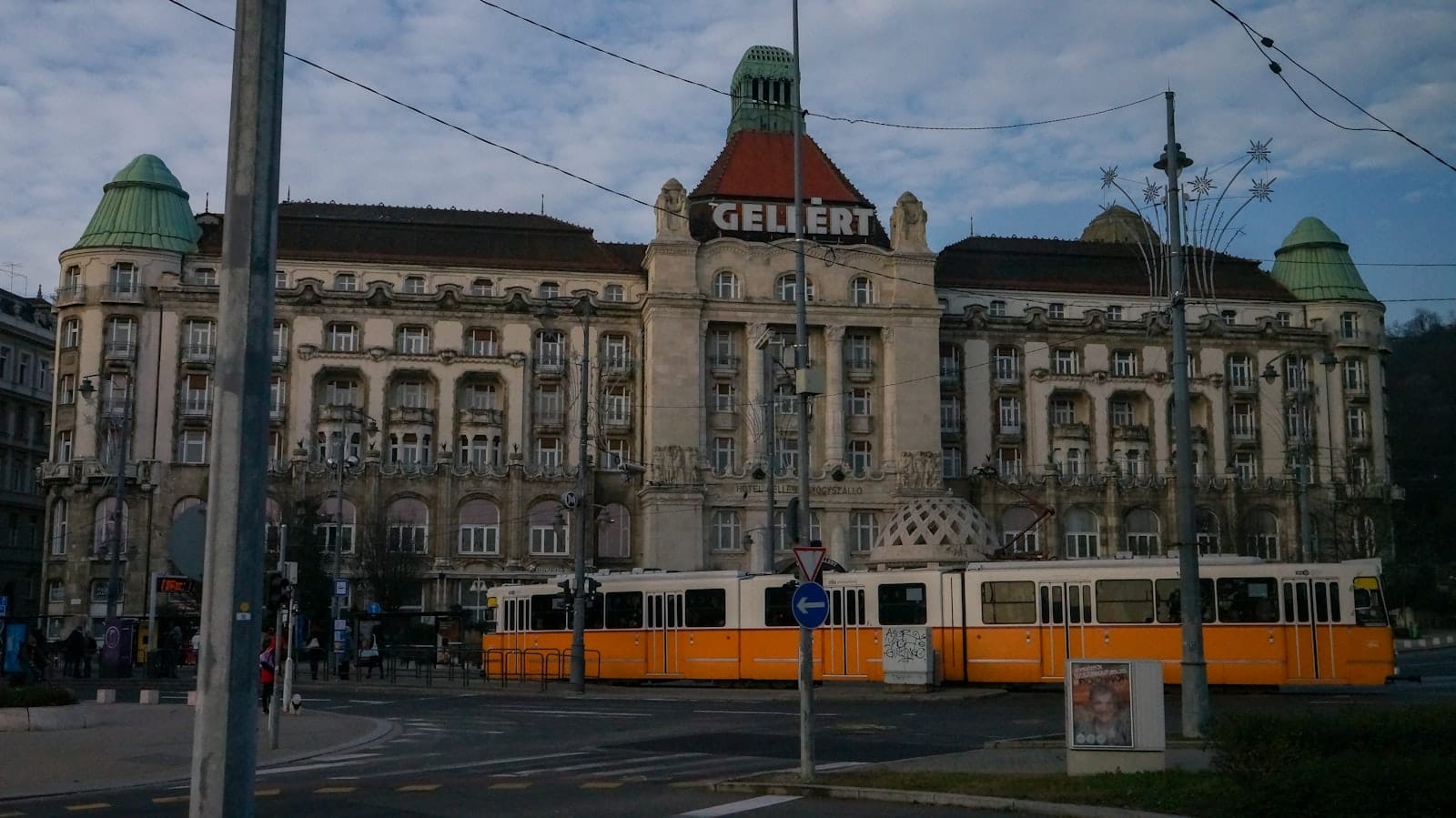
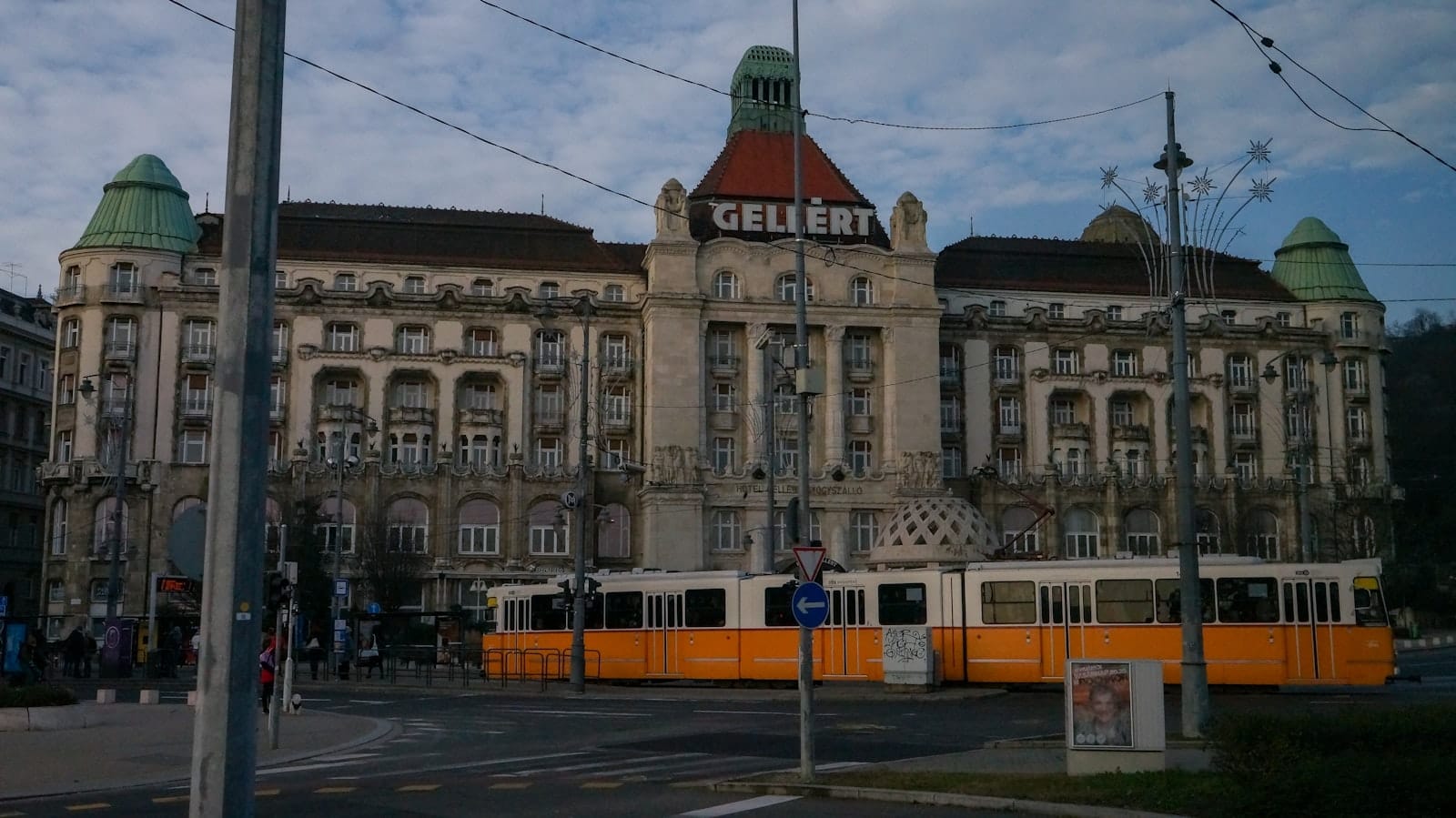
- Gellért Baths (Hotel Gellért complex) Kelenhegyi út 4, 1118 Budapest. Built 1909–1918, the Gellért complex integrates a thermal bath, hotel, and café under a single Art Nouveau roof. The main pool hall, with its mosaic floors and arched windows, is among the city's most elegant bathing spaces — but the baths themselves have been closed for major renovation since October 2025, with reopening projected around 2028. The exterior and hotel setting are still worth seeing from Szent Gellért tér; for bathing, choose Széchenyi, Rudas, or Lukács instead.
These three sites sit in different parts of the city. Gresham Palace is on the Pest riverfront near the Chain Bridge. The Museum of Applied Arts is southeast of the centre in District IX, about 20 minutes by tram from the inner city. The Gellért complex is on the Buda side of the river in District XI. Trying to combine all three in a single morning is possible but rushed. A better approach is Gresham Palace plus a walk along the embankment, then a separate trip to view the Gellért exterior on the Buda side (baths closed until around 2028) or to soak at Rudas nearby.
💡 Local tip
Gellért Thermal Bath is closed for renovation until around 2028, so ignore older advice about weekday-morning queues there. For an Art Nouveau–era soak still open to visitors, Rudas (Ottoman core with a modern wing) and Széchenyi are the practical alternatives; confirm current hours on official sites.
Walking the Szecesszió City: A Practical Route
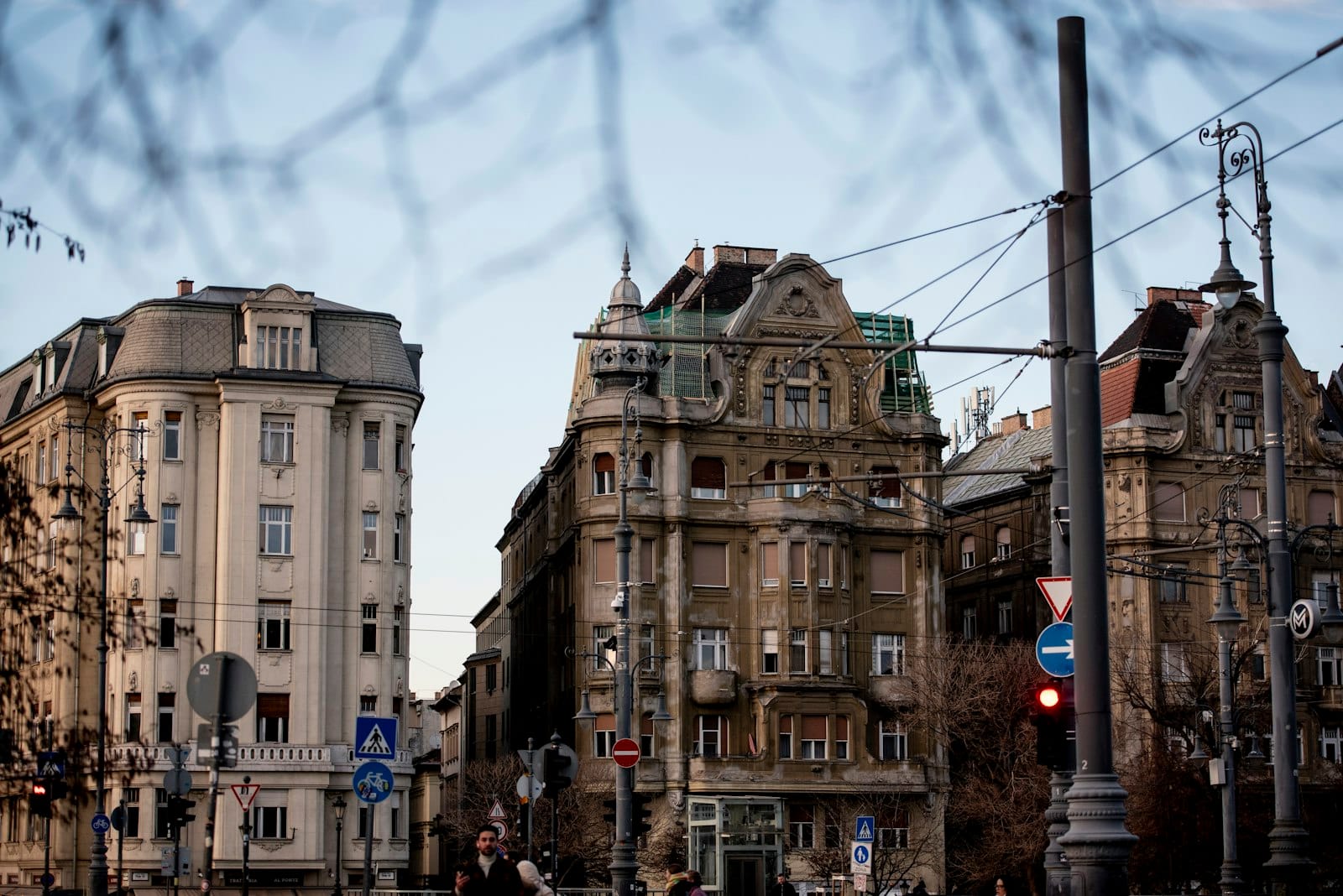
The highest concentration of Art Nouveau outside the three flagship sites runs along and around Andrássy Avenue, Budapest's UNESCO-listed grand boulevard. The avenue itself is lined with eclectic historicist palaces, but the streets leading off it, particularly Bajza utca, Városligeti fasor, and Rippl-Rónai utca, contain residential villas and apartment buildings where architects had more freedom to experiment.
A logical walking route starts at Oktogon metro station (Metro Line M1, the oldest underground railway on the European continent) and heads northeast along Andrássy Avenue toward Heroes' Square. Along the way, turn left into Városligeti fasor to find several notable villas, including Villa György Ráth at number 12, which now houses a relocated Art Nouveau collection worth checking on before you visit. The route ends near the entrance to City Park, where the Geological Institute at Stefánia út 14 is a ten-minute walk east.
- Geological Institute of Hungary, Stefánia út 14: Lechner's 1898–1899 building, with deep blue Zsolnay roof tiles and a roofline punctuated by seated figures holding globes. Exterior viewing is free and unobstructed.
- Bedő House (Hungarian House of Art Nouveau), Honvéd utca 3, District V: A 1903 apartment building with a striking Art Nouveau façade. The interior exhibition has had variable status since around 2020. Verify current opening by phone or via local listings before visiting.
- Post Office Savings Bank (Magyar Postatakarék), Hold utca 4, District V: Often overlooked because it is a working government office, but the roofline ceramic decoration by Lechner is extraordinary when viewed from across the street. Free to view from outside.
- Philanthia Flower Shop building, Váci utca area: A small but well-preserved example of commercial Art Nouveau on the city's main shopping street.
- Thonet House, Váci utca 11: Built 1888–1890 by Ödön Lechner and Gyula Pártos, considered one of the earliest significant Secession-influenced buildings in the city.
Guided Tours vs. Self-Guided Exploration
Self-guided exploration works well for façades and the general rhythm of the style. A good map, a charged phone, and three to four hours will get you through the core sites at your own pace. The cost is essentially zero for exterior viewing.
Guided tours add value if you want to understand the historical and political context that shaped the style, access interiors that require coordination (some private villas participate in periodic open-door events), or simply want someone to point at details you would otherwise walk past. Insight Cities runs an Art Nouveau walking tour with standard group departures on selected days of the week. Departure times and schedules change seasonally, so confirm via insightcities.com before booking. Private tours are typically available daily at 10:00 and 14:00 with hotel pick-up; group tours are considerably cheaper per person.
⚠️ What to skip
Be cautious about 'Art Nouveau tours' sold by street vendors near Váci utca. These often focus on the same three or four buildings any guidebook covers, with limited historical depth. A reputable operator will publish an itinerary and guide credentials in advance. If neither is available, the self-guided route is a better use of your time.
If you want to go deeper into the architecture of the city beyond Art Nouveau, the Budapest history guide covers the broader building timeline from the medieval castle district through to Communist-era modernism. For a day structured around architecture and culture, combine the Andrássy Avenue walk with a visit to the Museum of Fine Arts Budapest at Heroes' Square, which sits in an eclectic historicist building at the end of the boulevard.
Seasonal Considerations and Practical Planning
Art Nouveau is an outdoor architecture story for most of the year. Façades look best in direct sun, which means late spring and early autumn give you the most photogenic light without the extreme summer heat. In July and August, temperatures regularly reach 28–32°C, which makes extended walking tours uncomfortable by midday. May, June, September, and early October are the practical sweet spots for combining architecture walks with manageable weather.
Winter visits are underrated for architecture tourism. Budapest in December and January is cold, often around 0–3°C, but the reduced tourist traffic means you can photograph Gresham Palace's lobby or the Gellért façade without crowds (bath interiors are closed for renovation until around 2028). Some smaller venues shorten their hours between November and March, so confirm before visiting. The Budapest in December guide covers the practical logistics of a winter visit, including which sites scale back hours and which stay fully operational.
For transport between sites, Metro Line M1 (the yellow line, running under Andrássy Avenue) connects several key stops and is itself a historic landmark. Tram 47 and 49 are useful for reaching the Gellért complex from the inner city. A 24-hour or 72-hour BKK transit pass covers all of these and is worth buying on arrival at the airport or any metro station. See the full getting around Budapest guide for current fare information, which you should verify before travel as BKK prices are updated periodically.
FAQ
What is the best Art Nouveau building in Budapest?
Gresham Palace is the most complete and accessible example, with its famous peacock gate, mosaic floors, and well-preserved lobby open to the public during the day. For the most ambitious architectural vision, the Museum of Applied Arts by Ödön Lechner still edges ahead on the exterior (the main building remains closed for renovation since 2017, so interior access is not currently available). Which you call 'best' depends on whether you prioritise accessible craftsmanship detail at Gresham or Lechner's street-facing ambition.
Is Budapest Art Nouveau the same as the Vienna Secession?
Related but distinct. Both movements rejected academic historicism in favour of organic ornament, but Hungarian Szecesszió incorporated a strong nationalist dimension: folk embroidery patterns, Zsolnay ceramics, and Eastern motifs tied to Magyar historical identity. Vienna Secession tended toward more cosmopolitan, geometric abstraction. Ödön Lechner and his circle consciously rejected the Viennese model to create something they felt was authentically Hungarian.
Can I see Budapest's Art Nouveau buildings for free?
Yes, most of the significant buildings can be viewed from the street at no cost. The Museum of Applied Arts main building has been closed for renovation since 2017 — photograph the exterior freely and check imm.hu for any temporary venues. Gresham Palace's lobby is accessible without paying, though you are encouraged—not strictly required—to use a service (coffee, restaurant) if you stay. The Gellért Baths are closed for renovation until around 2028, so the main pool hall is not currently visitable; the façade at Szent Gellért tér remains worth seeing. The Geological Institute and Post Office Savings Bank exteriors are completely free to view.
How long does an Art Nouveau walking tour of Budapest take?
A focused self-guided route covering Gresham Palace, the Andrássy Avenue corridor, Városligeti fasor, and the Geological Institute takes around 3–4 hours at a comfortable walking pace, plus a short stop for the Museum of Applied Arts exterior in District IX. Add another hour if you cross to Buda for the Gellért façade (baths closed until around 2028) or a soak at Rudas. A full Art Nouveau day without counting on closed interiors runs to roughly 5–6 hours.
Is the House of Hungarian Art Nouveau (Bedő House) open to visitors?
The status of Bedő House at Honvéd utca 3 has been uncertain since around 2020. Some sources report the main exhibition relocated to Villa György Ráth at Városligeti fasor 12. Always verify current opening status by phone or through local listings before making it a firm part of your itinerary. The exterior of Bedő House is worth seeing regardless, as the 1903 façade is a textbook example of residential Szecesszió.