Andrássy Avenue (Andrássy út) is Budapest's most architecturally ambitious street, stretching approximately 2.3 kilometres from the inner city to Heroes' Square and City Park. A UNESCO World Heritage Site since 2002, it combines neo-Renaissance grandeur with high-end shopping, landmark cultural institutions, and a metro line beneath it that opened in 1896 as continental Europe’s first underground railway.
Andrássy Avenue is Budapest's answer to a grand European boulevard: a UNESCO-listed, 2.4-kilometre stretch of neo-Renaissance architecture, opera houses, and embassies running in a near-perfect line from the inner city to Heroes' Square. It is simultaneously a working city street and an open-air monument to the late 19th-century ambition that transformed Budapest into one of Europe's great capitals.
Orientation
Andrássy Avenue (Andrássy út) begins at the junction of Bajcsy-Zsilinszky út and József Attila utca, near Erzsébet tér and within easy walking distance of St. Stephen's Basilica. It runs northeast in a broad, straight line for approximately 2.3 kilometres until it arrives at Hősök tere (Heroes' Square) and the edge of Városliget, the large public park known in English as City Park. The avenue passes through District VI (Terézváros) for most of its length, briefly brushing the boundary of District XIV near its far end.
The surrounding street grid helps explain why the avenue feels the way it does. Running roughly parallel to the south is the Jewish Quarter (District VII, Erzsébetváros), a denser, older urban fabric of narrow streets and courtyarded apartment blocks. To the north, residential side streets of Terézváros fill in the blocks between Andrássy and the Nagykörút (Grand Boulevard). The avenue itself cuts through this context like a deliberate interruption: wide, tree-lined, and symmetrical in a way that few streets in central Pest manage to be.
The midpoint of the avenue is Oktogon, a large octagonal intersection where Andrássy crosses Teréz körút. This is one of the city's busiest transport nodes and marks the informal division between the lower stretch (closer to the city centre, more touristic) and the upper stretch (more residential in character, leading toward Heroes' Square). For a broader look at how Andrássy fits into Budapest's geography, the where to stay in Budapest guide provides useful district-level context.
Character & Atmosphere
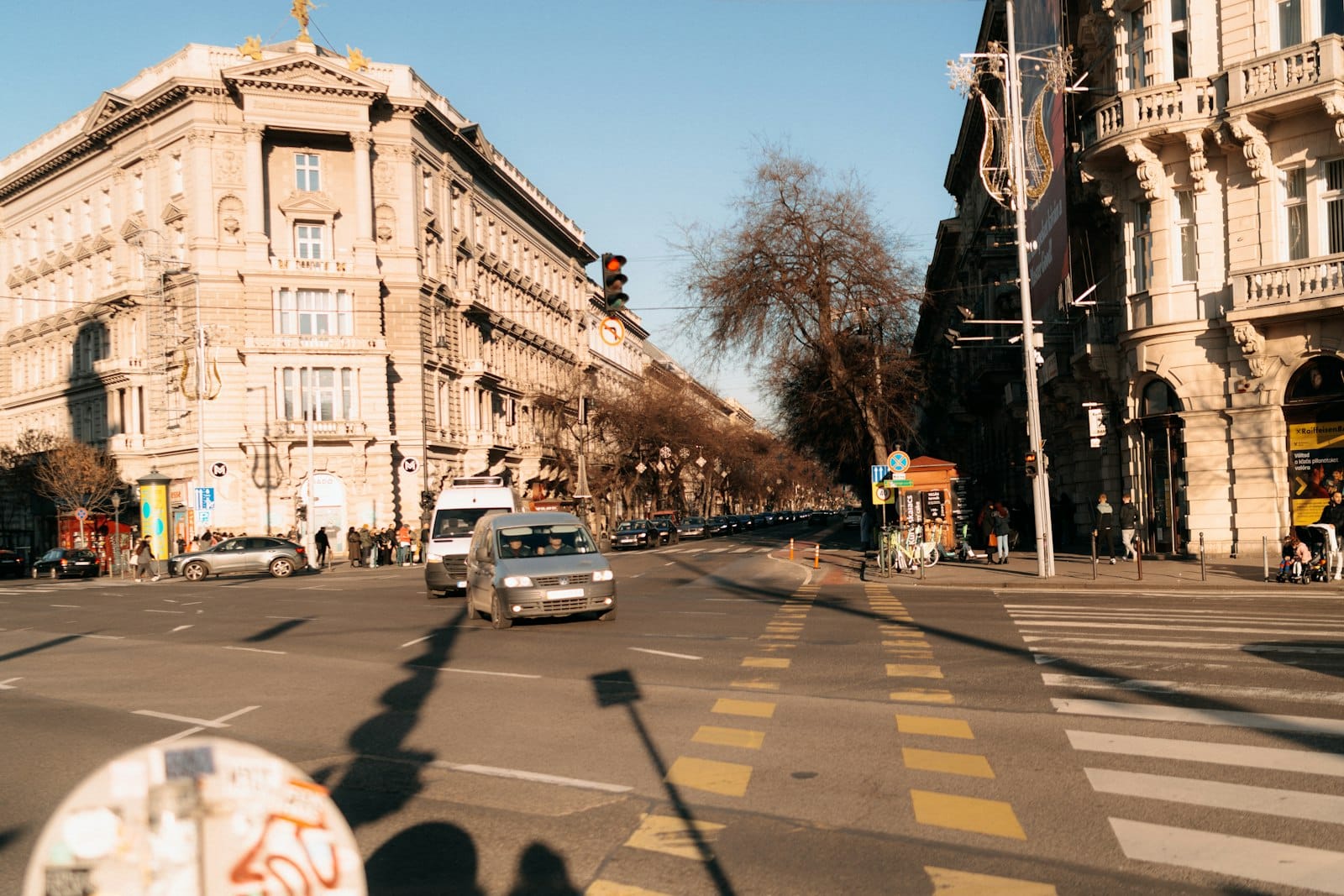
The lower section of Andrássy, between the city centre and Oktogon, is the most tourist-facing part of the avenue. The buildings here are among the largest and most ornate: six- and seven-storey neo-Renaissance palaces with carved stone facades, wrought-iron balconies, and ground floors occupied by luxury boutiques, upscale restaurants, and the occasional embassy. In the morning, this stretch is surprisingly quiet for a major boulevard. The wide pavement feels almost empty before 9am, when the light falls at a low angle and you can study the architecture without the distraction of foot traffic.
By midday the street fills with tourists walking between the State Opera House and the House of Terror, and the café terraces along the lower avenue become busy. The atmosphere is pleasant but undeniably curated: this is Budapest as it was designed to be seen, formal and impressive rather than accidental or intimate. Street noise is moderate even at peak times, because the avenue is wide enough to absorb it.
Above Oktogon the character shifts. The boutiques thin out, replaced by embassies, private clinics, and residential entranceways with intercom panels. Kodály Körönd, the circular plaza roughly two-thirds of the way along the avenue, is framed by four matching neo-Renaissance mansions and has a quietness that the lower section lacks. Walking this stretch in the late afternoon, with the sun cutting across the upper floors of the buildings, gives a strong sense of why Andrássy was compared to the Champs-Élysées when it was built in the 1870s. The final few hundred metres before Heroes' Square become progressively more open, as the city loosens its grip and the park begins to take over.
After dark, Andrássy is well-lit and busy near the Opera but quieter above Oktogon. The avenue itself is safe at any hour, though the side streets between Oktogon and Kodály Körönd can feel empty late at night. Most visitors heading out in the evening use the lower section as a route between the inner city and the ruin bar area of District VII, rather than as a destination in itself.
ℹ️ Good to know
Andrássy Avenue, Heroes' Square, and the Millennium Underground Railway (M1) beneath it were collectively designated a UNESCO World Heritage Site in 2002, recognized as an outstanding example of late 19th-century urban planning.
History
The avenue was constructed between roughly 1870–1872 and 1885 as part of a sweeping urban modernisation plan following the unification of Buda, Óbuda, and Pest into a single city in 1873. It was named after Count Gyula Andrássy, the first Prime Minister of Hungary under the Austro-Hungarian Compromise of 1867. The brief was straightforward: to build a Parisian-style boulevard that would link the inner city with a new public park and demonstrate that Budapest could compete architecturally with Vienna and Paris.
The buildings were designed primarily in neo-Renaissance style, with a consistency of scale and ornamentation that was enforced by city regulations at the time. The Millennium Underground, opened in 1896 to mark the 1,000th anniversary of the Magyar conquest of the Carpathian Basin, was the first underground railway on the European continent. It runs beneath most of Andrássy with closely spaced stations and has changed remarkably little since its original construction. The history of the boulevard is inseparable from the broader story of Budapest's transformation in this period, which is covered in detail in the Budapest history guide.
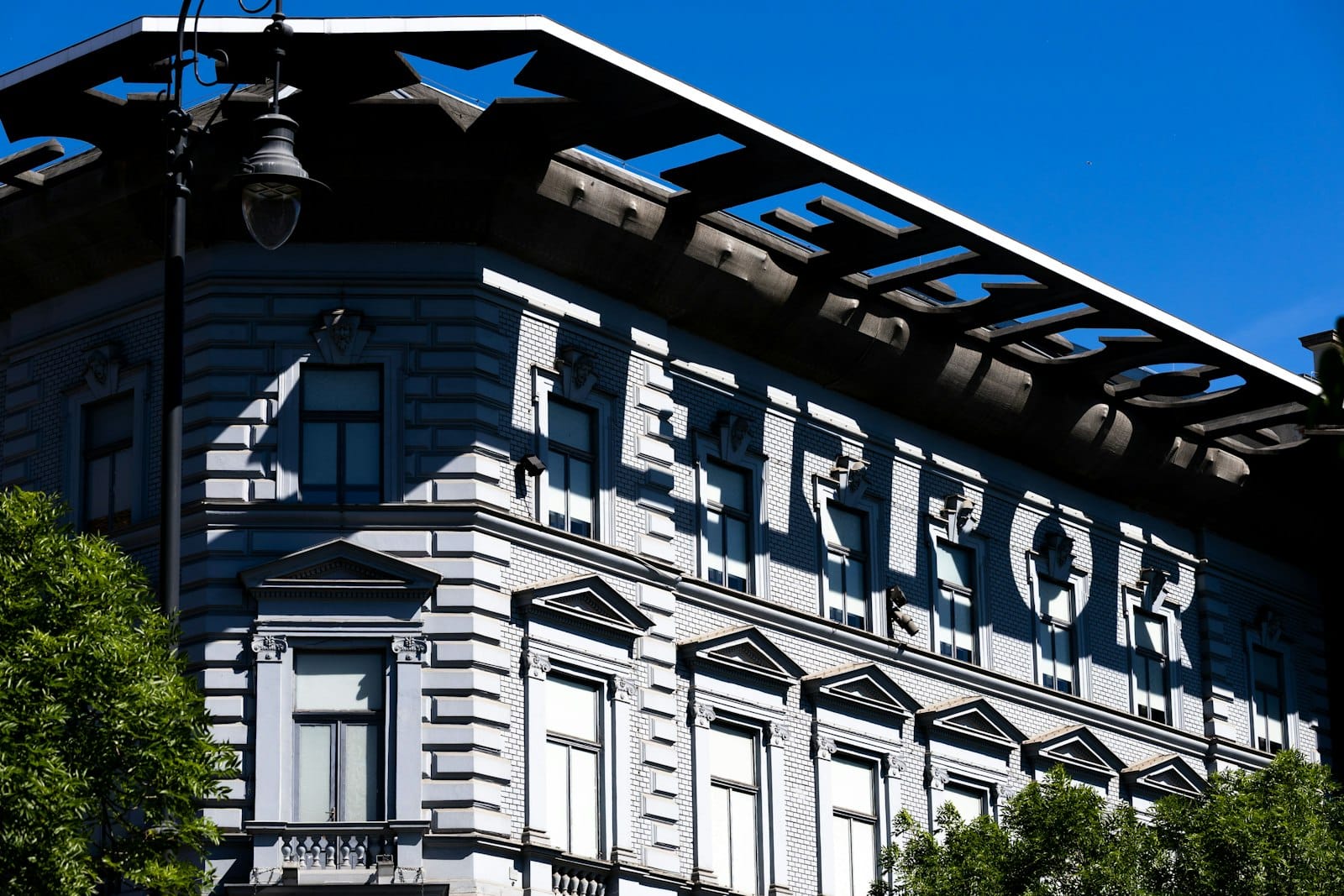
The 20th century left darker marks. The building at number 60, a neoclassical mansion near Oktogon, served as the headquarters of the Arrow Cross (Hungary's fascist party) during World War II and later as the headquarters of the communist secret police (ÁVH). It is now the House of Terror Museum, one of the most significant historical institutions on the avenue.
What to See & Do
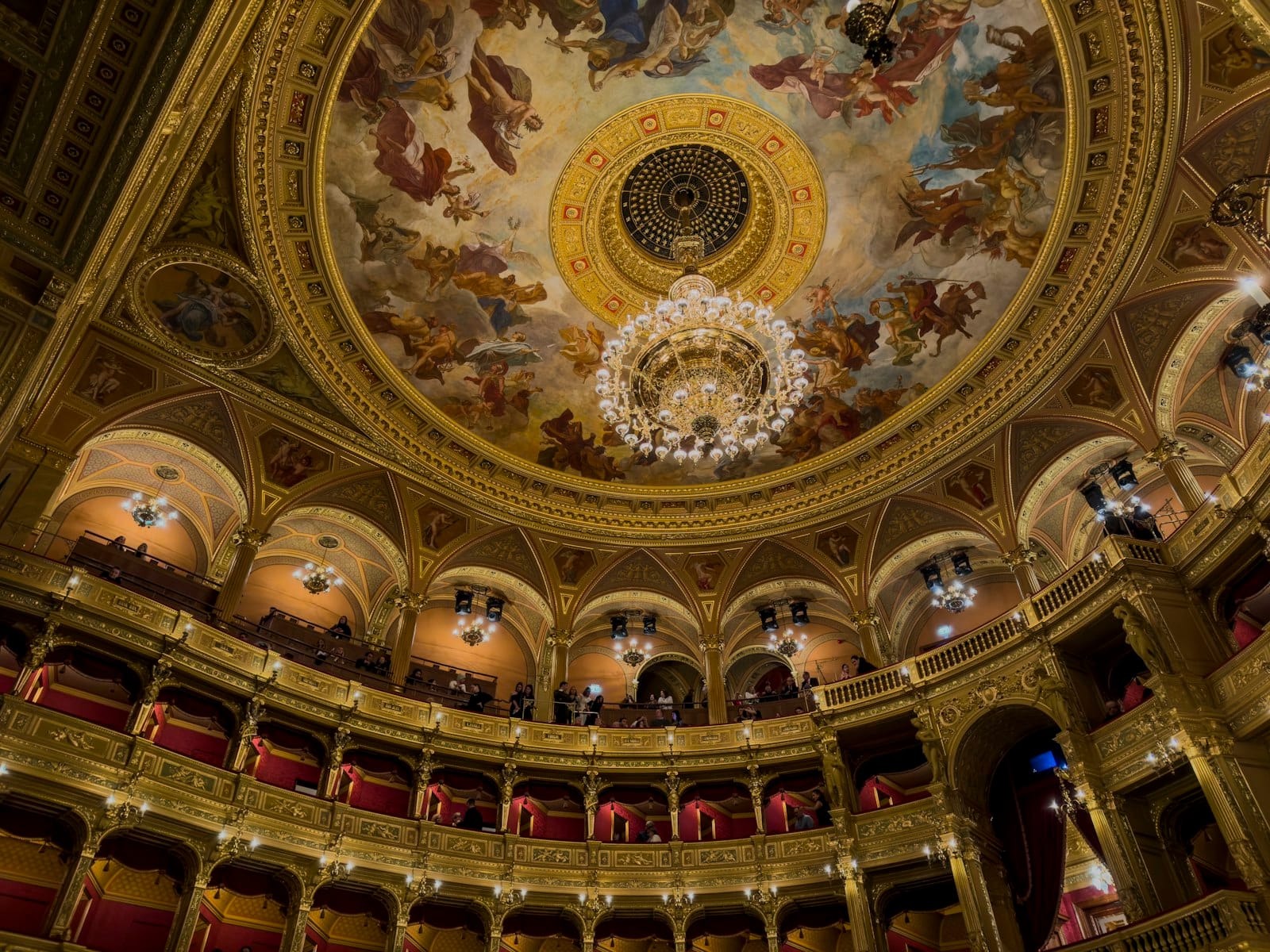
The Hungarian State Opera House sits roughly halfway along the lower section of the avenue and is the most architecturally spectacular building on the street. Designed by Miklós Ybl and completed in 1884, its neo-Renaissance facade is best seen from directly across Andrássy, where the full width of the building comes into view. Guided tours run daily and are worth taking for the interior alone: the gilded auditorium, grand staircase, and painted ceilings are among the finest examples of 19th-century theatre design in Central Europe. If you can get tickets to a performance, the experience goes considerably beyond sightseeing.
At number 60, the House of Terror is one of the most powerful historical museums in the city. The permanent exhibition moves through Hungary's experiences under both fascist and Soviet-era communist rule, using original cells, film, and documentation to create something more confrontational than a standard museum. Allow at least two hours. It is not a comfortable visit, but it provides essential context for understanding Budapest in the 20th century.
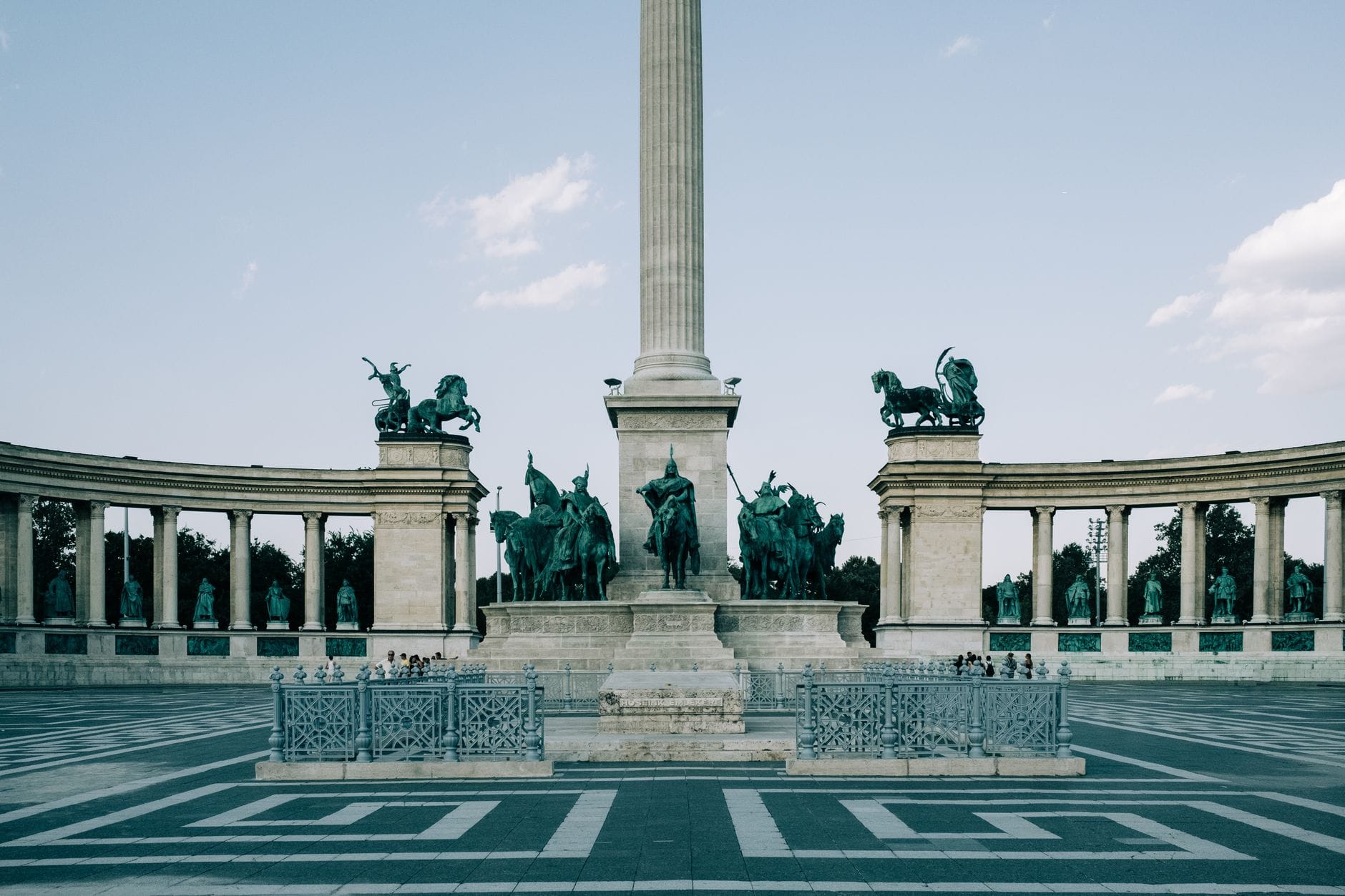
At the far end of the avenue, Heroes' Square opens up as a formal ceremonial plaza, flanked by the Museum of Fine Arts on one side and the Hall of Art (Műcsarnok) on the other. The Millennium Monument at the centre, with its colonnade of Hungarian rulers, is one of the most photographed spots in the city. Beyond it, City Park offers a different pace entirely: tree-lined paths, the Vajdahunyad Castle complex, the zoo, and the Széchenyi thermal baths.
Hungarian State Opera House: neo-Renaissance masterpiece, tours and performances daily
House of Terror Museum (Terror Háza): essential 20th-century history, Andrássy út 60
Kodály Körönd: circular plaza with matching neo-Renaissance palaces, worth pausing at
Heroes' Square (Hősök tere): monumental ceremonial space at the avenue's northeast end
Museum of Fine Arts: major European art collection adjacent to Heroes' Square
Millennium Underground (M1): the carriages and stations are themselves a historical attraction
The avenue is also a reference point for Budapest's Art Nouveau architecture. While Andrássy is primarily neo-Renaissance, the side streets immediately off the avenue, particularly between Oktogon and Kodály Körönd, contain some well-preserved Jugendstil apartment buildings that reward those willing to detour half a block.
Eating & Drinking
The food and drink offer along Andrássy covers a wide range of price points, though the most prominent spots on the avenue itself tend toward the formal and expensive end. The café terraces near the Opera House attract visitors who are paying partly for the address; coffee and pastries here cost noticeably more than in the backstreets of District VII a few minutes' walk away.
For more interesting eating, the side streets off the lower section of Andrássy between Bajcsy-Zsilinszky út and Oktogon are worth exploring. This area sits between the city's main tourist corridor and the residential interior of Terézváros, which means there is a reasonable mix of neighbourhood restaurants and cafés that are not primarily oriented toward tourists. Hungarian dishes like goulash, pörkölt, and lángos appear across the price spectrum here, from casual lunch places to more formal sit-down restaurants.
The upper section of the avenue, above Oktogon, is quieter for eating and drinking. There are neighbourhood cafés and some well-regarded restaurants in the blocks between Kodály Körönd and Heroes' Square, but the concentration of options is lower. If you are visiting City Park and Széchenyi baths after walking the full length of Andrássy, the park itself has food options, and the surrounding streets have cafés. For a broader sense of Budapest's food culture, the Budapest food guide covers the city's neighbourhoods by eating style and price range.
💡 Local tip
Café prices along the avenue near the Opera House are among the highest in the city. Walk one block east or west into the side streets of Terézváros and you will typically pay 20-30% less for the same coffee or cake in surroundings that feel considerably more local.
Getting There & Around
The most direct way to travel along Andrássy is the M1 metro line, the Millennium Underground, which runs beneath most of the avenue and stops at Bajcsy-Zsilinszky út station near the city-centre end and Hősök tere station at Heroes' Square. The stations are shallow, close together, and small by modern standards: the M1 was built in 1896 and the original scale is still evident. Journeys between stations take only a couple of minutes, which means it is often just as practical to walk the avenue and take the metro for a single hop if your feet tire.
Key M1 stations along the avenue: Bajcsy-Zsilinszky út (near the city centre end), Opera (for the Opera House and lower avenue), Oktogon (main transfer point, connections to trams on the Nagykörút), Kodály körönd, Bajza utca, and Hősök tere (for Heroes' Square). All are within the central Budapest fare zone. Tickets and passes are managed by BKK; verify current fares on the BKK website before travel.
Trams 4 and 6 run along Teréz körút and cross Andrássy at Oktogon, connecting the avenue to the broader Nagykörút ring and to Buda. Bus connections exist at various points along the avenue. Walking the full 2.4 kilometres from the city centre to Heroes' Square takes approximately 30 minutes at a steady pace, longer if you stop to look at buildings or enter the museums. For tips on navigating Budapest's public transport system more generally, see the getting around Budapest guide.
⚠️ What to skip
The M1 line is part of the standard Budapest metro network, and regular single or timed tickets and passes are valid; do not confuse it with the deeper M2, M3, or M4 lines, which have different station layouts and longer intervals between stops.
Where to Stay
Andrássy Avenue and its immediate surroundings are a legitimate base for a Budapest stay, particularly for travellers who want to prioritise architecture, culture, and the opera. Hotels on or directly adjacent to the avenue tend to be at the upper end of the price range, occupying restored neoclassical buildings that suit the streetscape. The trade-off is that you are slightly removed from the street-level intensity of the Jewish Quarter and the inner-city bar scene, though both are reachable on foot in under 15 minutes.
The lower section of the avenue, between Bajcsy-Zsilinszky út and Oktogon, puts you closest to the main attractions and the city centre. The upper section, between Oktogon and Heroes' Square, is quieter and more residential, which suits visitors who want to be within walking distance of City Park and Széchenyi baths without the noise of the tourist core. The side streets of Terézváros (District VI) offer a denser supply of mid-range hotels and apartments at more competitive prices than the avenue itself.
For a full comparison of Budapest's accommodation zones by character and price, the where to stay in Budapest guide breaks down all the main options across both Buda and Pest.
Practical Notes
Andrássy Avenue is safe at all hours and sees consistent foot traffic throughout the day. The main practical considerations are about managing your time: the avenue rewards slow walking and looking up, not rushing between endpoints. If you are covering the full length in a single visit, plan for at least half a day, more if you intend to enter the Opera House, House of Terror, and continue into City Park.
The avenue is at its most photogenic in the morning before 9am, when the light is low and the pavement is quiet, and in the early evening when the buildings catch the last sun. For visitors building a broader Budapest itinerary, the avenue fits naturally into a day that also takes in the Jewish Quarter (a short walk south of the lower avenue) and City Park at the far end. The 3-day Budapest itinerary integrates these areas into a logical daily structure.
ℹ️ Good to know
Many of the grand buildings along Andrássy contain interior courtyards (udvar) that are partially visible through street-level archways. These are private residential or commercial spaces and not always open to the public, but a brief glance through the archway on the way past is generally tolerated.
TL;DR
Andrássy Avenue is a UNESCO World Heritage boulevard running approximately 2.3 kilometres from Budapest's inner city to Heroes' Square, with the M1 metro (opened 1896) running beneath most of its length.
The lower section (city centre to Oktogon) is the most tourist-intensive, with the State Opera House and House of Terror as its anchor institutions; the upper section is quieter and more residential.
Best suited to travellers who care about architecture, history, and culture: the avenue is more of a linear sightseeing route than a neighbourhood to inhabit.
Prices on the avenue itself for food, coffee, and accommodation are among the higher in the city; the adjacent streets of Terézváros offer better value.
Allow at least half a day to walk the full length properly, more if you plan to visit both the House of Terror and City Park at either end.
Budapest punches well above its weight as a museum city. From a world-class collection of Old Masters to underground WWII hospitals and open-air Communist statues, these are the museums that make Budapest worth dedicating serious time to.
Budapest rewards visitors in every season, but the timing of your trip shapes everything from what you pay to how crowded the sights are. This guide breaks down every month so you can match your priorities, whether that's mild weather, low prices, major festivals, or the city's legendary Christmas markets.
Budapest is one of Europe's great Art Nouveau cities, with a distinct national style that sets it apart from Vienna or Paris. This guide covers the key buildings, the architects behind them, how to explore the city's Szecesszió heritage on foot, and what to watch out for along the way.
The Budapest Card bundles unlimited public transport with free museum entry, one free thermal bath visit at Lukács, and a free Danube river cruise into one pass. But at up to €129, it only pays off under specific conditions. Here's a clear breakdown of who should buy it, who should skip it, and how to activate it correctly.
Budapest food is hearty, affordable, and deeply underrated. This guide covers the essential dishes to try, where to find them, what things actually cost in 2026, and how to avoid the tourist traps that pass off mediocre goulash stew as the real thing.
Budapest rewards those who look beyond the Parliament and Chain Bridge. From ancient Roman ruins in Óbuda to a Cold War bunker beneath Castle Hill, this guide points you toward the city's most overlooked and underrated experiences.
Budapest carries more than 2,000 years of history across its two riverbanks. This guide traces the city's major eras, from Roman legions to Habsburg grandeur and Cold War upheaval, and shows you exactly where to see that history in person.
December transforms Budapest into one of Europe's most atmospheric winter destinations, with free Christmas markets, steaming thermal baths, and far fewer crowds than summer. This guide covers weather realities, the two flagship markets, pricing, crowd patterns, and practical tips for getting the most from a winter visit.
Three days is exactly enough time to get a serious handle on Budapest. This itinerary splits the city logically across both banks of the Danube, covers the unmissable sights without rushing, and leaves room for the thermal baths, Jewish Quarter, and a proper evening out.
Budapest punches well above its weight in the luxury travel market. Five-star hotels cost 40-60% less than comparable properties in Vienna or Paris, the thermal spa culture is unmatched in Europe, and the fine dining scene has quietly matured into something genuinely world-class. This guide covers where to stay, where to soak, and where to eat at the top end of the market.
Budapest after dark is one of Europe's most distinct nightlife scenes, built around crumbling courtyards, thermal bath parties, and riverfront venues that keep going until sunrise. This guide covers the key districts, best venues, realistic drink prices, and how to navigate the city's nights without the common tourist mistakes.
Budapest's ruin bars are unlike anything else in Europe: abandoned buildings transformed into labyrinthine bars, galleries, and gardens. This guide covers the best venues, realistic prices, transport logistics, and seasonal tips to help you experience them properly.
Budapest is one of Central Europe's safer capitals, but petty crime, taxi overcharging, and bar bill scams catch many visitors off guard. This guide breaks down exactly what to watch for, where the risks concentrate, and how to handle each situation confidently.
Budapest rewards shoppers across every budget, from paprika and Tokaji wine at the Great Market Hall to luxury boutiques on Andrássy Avenue and Soviet-era curiosities at Ecseri flea market. This guide covers where to go, what to buy, and how to avoid overpaying on Váci Street.
Budapest sits on top of nearly 130 natural hot springs, and its thermal baths are among the most atmospheric in Europe. This guide cuts through the hype: which baths are actually open in 2026, what you'll realistically pay, how to avoid peak crowds, and which options suit your budget and travel style.
Everything you need to plan the Budapest to Prague journey, whether you want the comfort of a direct train, the cheapest bus fare, or the fastest flight. Includes prices, schedules, booking tips, and what to expect on each route.
Budapest is one of Europe's most photogenic cities, and knowing where to look changes everything. This guide covers the best panoramic viewpoints, hilltop terraces, and elevated bars where the city reveals itself in full.
Budapest rewards families with an impressive range of kid-friendly experiences: a century-old zoo, a narrow-gauge railway run by children, interactive science centers, and a car-free island with playgrounds and bike rentals. This guide covers the best family activities in Budapest, with practical advice on what works for different ages, what to skip, and how to plan your days efficiently.
Budapest sits at the center of one of Central Europe's best rail networks, putting medieval towns, thermal lake resorts, and even Vienna within easy reach. This guide covers the top day trips from Budapest with exact transport options, realistic fares, and clear assessments of what each destination is actually worth your time.
Budapest rewards budget travelers generously. From sweeping hilltop panoramas to centuries-old bridges and grand market halls, some of the city's most memorable experiences cost absolutely nothing. This guide covers the best free things to do in Budapest, organized so you can plan a full day without opening your wallet.
Budapest has one of Central Europe's most comprehensive public transport networks, run by BKK. This guide covers every mode of transport, ticket types with current prices, how to avoid fines, and the best ways to get from the airport to the city center.
Budapest is one of Central Europe's most rewarding cities, but it's not for everyone. This guide breaks down exactly what you get: the UNESCO-listed landmarks, thermal baths, food scene, and nightlife, alongside the real drawbacks, seasonal trade-offs, and practical logistics you need to know before booking.
Budapest is one of Europe's most atmospheric cities for couples, combining grand architecture, thermal spa culture, candlelit river cruises, and sweeping hilltop views. This guide covers the best romantic experiences in Budapest, from free sunset walks to splurge-worthy dinner cruises, with practical advice on timing, cost, and what to skip.
Budapest rewards visitors with an unusually rich mix of history, architecture, and culture packed into a compact, walkable city. This guide covers the best things to do in Budapest — from iconic landmarks and thermal baths to underrated neighborhoods — with practical advice on what is worth your time and what is not.
Budapest divides naturally into distinct neighborhoods, each with its own character, price range, and practical trade-offs. This guide breaks down the best areas to stay based on what you actually want from your trip, from walkable sightseeing bases to quieter hillside retreats.