House of Terror Budapest: What to Expect at Hungary's Most Sobering Museum
The House of Terror Museum on Andrássy Avenue occupies the former headquarters of Hungary's fascist Arrow Cross and communist secret police. It is one of the most emotionally direct history museums in Central Europe, combining original architecture with immersive exhibits across two floors and a basement that once held cells.
Quick Facts
- Location
- Andrássy út 60, Budapest (District VI)
- Getting There
- Metro M1 to Vörösmarty utca (2–3 min walk) or Oktogon (4–5 min walk); Trams 4 & 6 to Oktogon
- Time Needed
- 1.5 to 2.5 hours
- Cost
- Approx. 4,000 HUF adult; reduced rates available; audio guide approx. 1,500 HUF extra (verify current prices before visiting)
- Best for
- History and politics enthusiasts, those interested in 20th-century European dictatorships, thoughtful solo travelers
- Official website
- www.terrorhaza.hu/en
What the House of Terror Actually Is
The House of Terror Museum, or Terror Háza Múzeum in Hungarian, opened in 2002 at Andrássy út 60 in Budapest. The address is not incidental. This specific building served first as the headquarters of the Arrow Cross Party, Hungary's fascist movement, during World War II, and then as the base of the ÁVH, the communist State Protection Authority that operated through much of the post-war period. Interrogations, detentions, and executions took place here. The building is the exhibit as much as anything inside it.
The museum is unambiguous in its purpose: to document and memorialize the suffering caused by both occupying ideologies. Critics have noted that the relative weight given to fascist versus communist terror is not equal, and that the museum's framing reflects particular political choices made by its founders. That context is worth knowing before you go. But the core factual material, the photographs, the objects, the testimonies, and the architecture of the building itself, make this one of the most direct confrontations with 20th-century European history you will find anywhere.
ℹ️ Good to know
The museum is closed on Mondays. The ticket desk closes at 17:30, though the museum stays open until 18:00. Check the official website for current closures around Hungarian public holidays and the annual January closure week.
The Building and Its Location on Andrássy Avenue
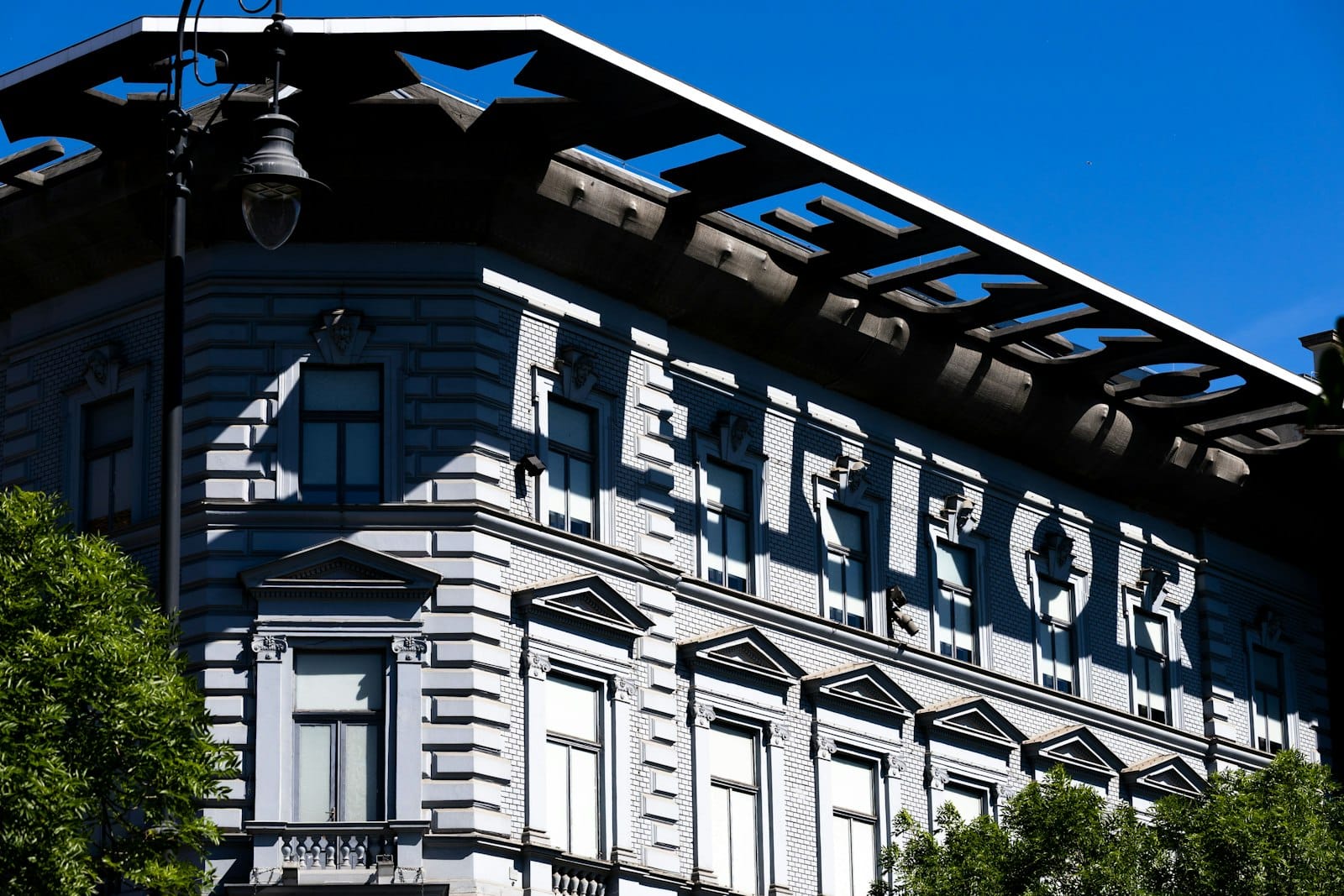
Andrássy Avenue is a UNESCO World Heritage boulevard, and number 60 sits roughly mid-way along it, between the Oktogon junction and Heroes' Square. The building's facade is austere, its cornice fitted with a metal blade-like overhang that casts the word TERROR in shadow onto the wall below when the sun hits it at the right angle. That shadow is not accidental. It is one of the most considered pieces of architectural staging in Budapest.
The avenue itself rewards a walk before or after your visit. It runs from the Pest city center to City Park, lined with late 19th-century apartment buildings, embassies, and cultural institutions. The Hungarian State Opera House is a short walk south along the same boulevard. If you are spending a morning in this part of the city, the museum fits naturally into a broader exploration of Andrássy Avenue.
The interior courtyard, visible as you enter, contains a Soviet T-54 tank. It sits in a shallow pool, lit from below. The effect is more theatrical than aggressive, but it sets the tone immediately. This is a museum that understands atmosphere as a tool of communication.
Tickets & tours
Hand-picked options from our booking partner. Prices are indicative; availability and final rates are confirmed when you complete your booking.
Budapest Guided E-Scooter Tour by Night
From 60 €Instant confirmationFree cancellationHalf-day tour to Princess Sissi's Godollő royal palace from Budapest
From 41 €Instant confirmationFree cancellationHalf-Day Countryside Wine Tour from Budapest
From 95 €Instant confirmationFree cancellation4 Course Dinner cruise with Operetta and Folk show
From 81 €Instant confirmationFree cancellation
Moving Through the Exhibits
The museum is organized roughly chronologically across two main floors, with an additional basement level. Most visitors begin on the upper floor and work their way down, which mirrors the descent from historical context into increasingly personal and harrowing material.
Early rooms deal with the Arrow Cross period: propaganda materials, uniforms, and documentation of the deportations and killings of Jewish Hungarians and others during 1944 and 1945. The material is presented straightforwardly, with photographs and explanatory text in both Hungarian and English. The lighting is kept deliberately low throughout much of the museum, which is not just atmosphere but practical: it makes the photographic displays easier to read and gives the spaces a gravity that fluorescent lighting would undercut.
The communist-era sections take up the majority of the museum and cover the ÁVH's methods in considerable detail. There are reconstructed interrogation rooms, displays on forced collectivization, documentation of the show trials of the late 1940s and early 1950s, and rooms dedicated to the 1956 uprising and its aftermath. The accounts of individual victims, presented through photographs and short biographical texts, are the most affecting parts of the museum. Abstract historical narrative becomes difficult to sustain when you are looking at a photograph of a specific person who was detained in the rooms two floors beneath you.
⚠️ What to skip
Several sections of the museum deal with execution, torture, and mass deportation in direct and graphic terms. This is not a museum for young children, and even adult visitors should be prepared for content that is genuinely disturbing rather than sanitized.
The basement is the most visceral part of the visit. The original cells, used for detention during both the Arrow Cross and ÁVH periods, have been preserved and partially restored. The spaces are small, the ceilings low, and the weight of what happened in them is harder to maintain an academic distance from than anything on the floors above. Allow extra time here; many visitors find themselves moving more slowly than they expected.
How the Experience Changes by Time of Day
The museum opens at 10:00 Tuesday through Sunday, and the first hour after opening is consistently the quietest. School groups, which can make some of the narrower corridors congested, tend to arrive between 10:30 and midday. If you are visiting during a weekday in spring or autumn, arriving at 10:00 gives you the early rooms largely to yourself, which makes a difference in a museum where quiet and space to stop and read are part of how the material lands.
Weekend afternoons between roughly 13:00 and 16:00 are the busiest periods. The basement corridor in particular becomes uncomfortably crowded when more than a dozen people are moving through it at once. If a weekend visit is your only option, aim for 10:00 or arrive after 16:30 with enough time to move through the lower floors before the 17:30 ticket desk closure.
The museum is entirely indoors, so weather has no practical effect on the visit. This makes it a genuinely good option for rainy days in Budapest, though the emotional weight means that combining it with other heavy historical sites on the same day, such as the Great Synagogue or the Shoes on the Danube memorial, can be a great deal to process at once.
Practical Information for Your Visit
Getting there is straightforward. The museum is directly served by Metro Line M1, the oldest underground railway in continental Europe, which runs beneath Andrássy Avenue. The Vörösmarty utca stop is roughly a two- to three-minute walk from the entrance. Trams 4 and 6, which run along the Grand Boulevard and stop at Oktogon, leave you about a five-minute walk along Andrássy.
If you are planning multiple museum visits during your time in Budapest, it is worth checking whether the Budapest Card covers admission, as the card offers free or discounted entry to a range of city attractions and includes unlimited public transport.
An audio guide is available for an additional fee of approximately 1,500 HUF and is worth considering. The exhibit text in English is thorough, but the audio guide provides additional context on specific objects and individuals that the wall panels do not always have space for. Bring headphones if you have a preference for your own earbuds, though the museum provides them with the rental device.
Accessibility: the building is a historic multi-storey structure. Some areas, particularly the basement level, involve stairs and narrow passages that may present difficulties for visitors with mobility impairments. Contact the museum directly before visiting if this is a concern, as specific arrangements may be available.
💡 Local tip
Photography is permitted in most areas of the museum without flash. The low lighting makes handheld shots difficult; if documentation matters to you, a phone with a good low-light camera will perform better than a basic point-and-shoot.
Is It Worth Your Time?
The House of Terror is not a comfortable museum, and it is not designed to be. If you are in Budapest for a short trip focused on architecture, food, and the thermal baths, this may not fit the tone of your visit, and that is a legitimate reason to skip it. There is no obligation to visit every historically significant site in a city.
For travelers with an interest in 20th-century European history, the Cold War period, or the specific experience of life under authoritarian rule, it is one of the most worthwhile two hours you can spend in Budapest. It is more visceral than academic, more architectural than object-based, and more personal in its focus on individual victims than comparable institutions in other European cities.
Budapest has a broader history that extends well beyond the 20th century, and the House of Terror works best when visited alongside that wider context. The Budapest history guide covers that longer arc, and combining this museum with a walk up to Heroes' Square at the end of Andrássy Avenue gives the day a natural geographic and chronological structure.
Insider Tips
- The shadow effect created by the metal cornice spelling TERROR on the facade is most visible in late morning when the sun hits the front of the building directly. If you want to photograph it, arrive around 10:30 to 11:00 rather than at opening.
- The museum's final room before the exit contains recorded video testimonies from survivors. Many visitors rush past this space, but spending fifteen minutes here provides a personal perspective that reframes much of what you saw earlier.
- If you are visiting with someone who processes difficult material differently, agree in advance that it is fine to move at different paces or wait in the courtyard. The tank installation in the central courtyard is a neutral place to regroup.
- The metro M1 running beneath Andrássy Avenue is itself historically significant, having opened in 1896. Taking it rather than a taxi or rideshare adds a small but relevant layer to the day.
- Combine the visit with the nearby Andrássy Avenue streetscape rather than rushing away immediately. The contrast between the ornate 19th-century boulevard and the museum's subject matter is part of what makes the location feel so deliberately chosen.
Who Is House of Terror (Terror Háza) For?
- Travelers with a serious interest in 20th-century European political history
- Those researching or studying Cold War Eastern Europe and communist-era Hungary
- Solo travelers who want space to move at their own pace through difficult material
- Visitors pairing the museum with a broader walk along Andrássy Avenue to Heroes' Square
- Anyone who wants to understand modern Hungary beyond its architectural beauty
Nearby Attractions
Other things to see while in Andrássy Avenue:
- Heroes' Square (Hősök tere)
At the end of Andrássy Avenue, Heroes' Square frames Hungary's founding mythology in stone and bronze. The Millennium Monument, two flanking museums, and a sweeping open plaza combine to make this one of the most visually commanding public spaces in Central Europe. Entry is free, the metro stops right here, and it rewards visitors at almost any hour.
- Hungarian State Opera House
The Hungarian State Opera House (Magyar Állami Operaház) stands on Andrássy Avenue as one of Europe's most ornate Neo-Renaissance buildings. Whether you attend a performance or join a guided tour, the gilded interior alone justifies the trip.