Hungarian State Opera House: Budapest's Most Beautiful Stage
The Hungarian State Opera House (Magyar Állami Operaház) stands on Andrássy Avenue as one of Europe's most ornate Neo-Renaissance buildings. Whether you attend a performance or join a guided tour, the gilded interior alone justifies the trip.
Quick Facts
- Location
- Andrássy út 22, Budapest District VI (Terézváros)
- Getting There
- Metro M1 – Opera station (directly opposite the building); Trams 4 & 6 – Oktogon, then 7-min walk
- Time Needed
- 1–2 hours for a guided tour; 3+ hours for an evening performance
- Cost
- Performance tickets in HUF, prices vary by date and seating; check opera.hu for current pricing
- Best for
- Architecture lovers, opera and classical music fans, cultural evenings
- Official website
- http://www.opera.hu
What the Hungarian State Opera House Actually Is
The Hungarian State Opera House, known in Hungarian as Magyar Állami Operaház, is the country's principal opera venue and one of the finest examples of Neo-Renaissance architecture anywhere in Central Europe. It sits at Andrássy út 22 in Budapest's sixth district, right in the heart of a boulevard that is itself a UNESCO World Heritage Site. The building is not just a performance venue — it is a deliberate statement of national cultural ambition, built during a period when Budapest was rapidly expanding into one of the most modern cities on the continent.
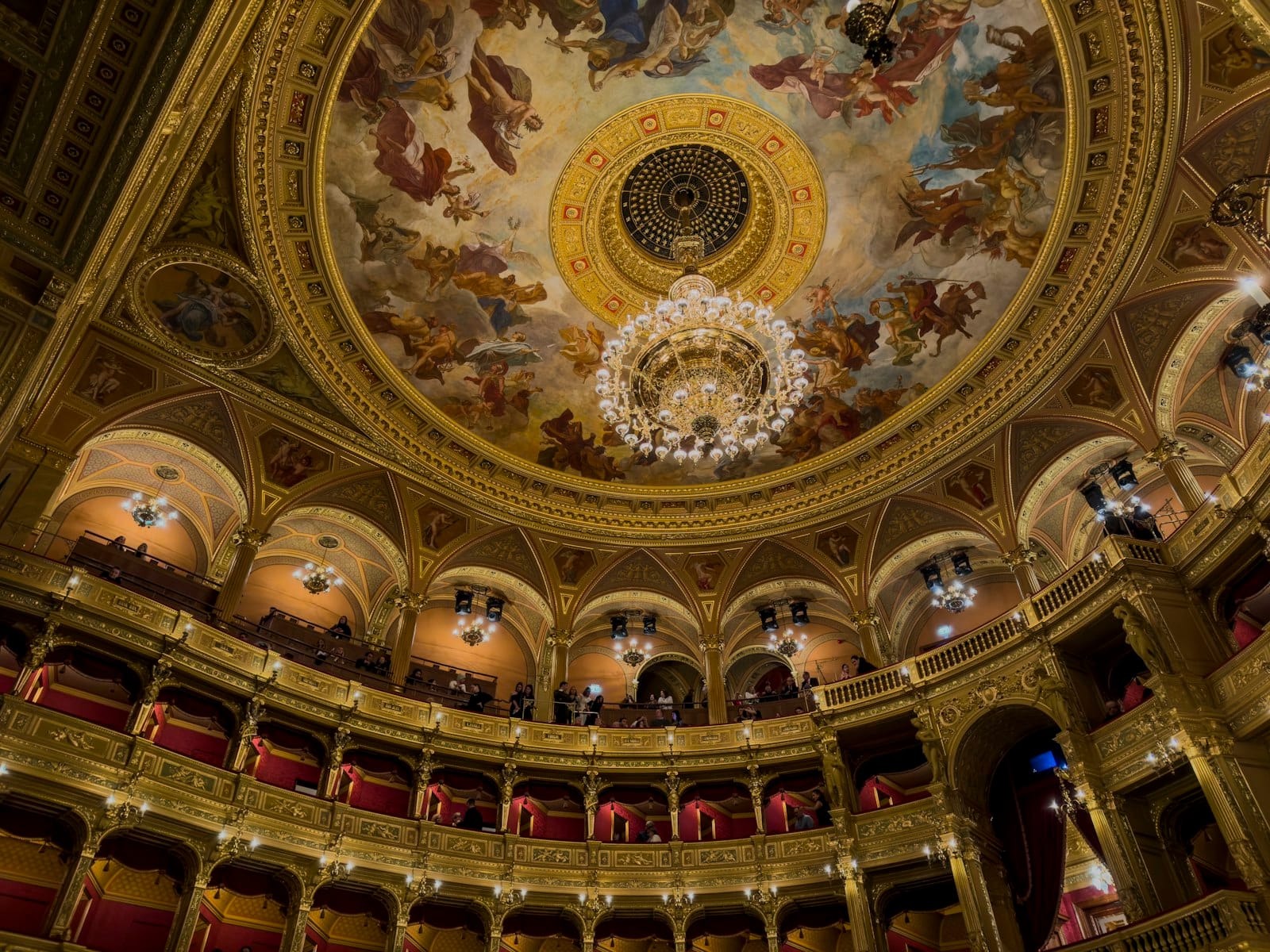
Architect Miklós Ybl won the commission and construction ran from 1875 to 1884. The Opera House opened to the public on 27 September 1884, originally as the Hungarian Royal Opera House. Ybl drew from the Italian and Viennese operatic tradition but pushed the ornamental detail further, layering the exterior with carved stone figures, arched loggias, and a facade that catches afternoon light differently at every hour. After years of gradual wear, a comprehensive restoration was completed and the building reopened in March 2022, making now an excellent time to visit — the gilded surfaces, repainted ceiling frescoes, and restored velvet seating look closer to their 1884 condition than they have in decades.
💡 Local tip
The ticket office at the Opera House is open Monday to Sunday, 10:00–19:00 (and until the end of the first interval on performance days). Arriving 30–40 minutes before a performance starts gives you time to absorb the architecture as doors generally open 30–45 minutes in advance.
The Architecture: What You Will Actually See
The exterior on Andrássy Avenue is symmetrical and confident without being overwhelming. Two tiers of arched windows frame the main facade, with full-height stone figures of composers and performers occupying the niches on either side of the central entrance. Franz Liszt and Ferenc Erkel, the Hungarian composer who wrote the national anthem, hold the most prominent positions. In the late afternoon, when low sun hits the facade from the west, the relief detail casts sharp shadows that photographs rarely capture — it is worth walking the full width of the building from pavement level before going inside.
Inside, the scale shifts. The entrance foyer is relatively restrained, which is deliberate: Ybl wanted the gradual reveal of the auditorium to feel like a climax. The grand staircase, lined with marble and topped with painted ceilings, takes you through a sequence of rooms before the main hall opens up. The auditorium seats approximately 1,260 to 1,300 people and is arranged in a traditional horseshoe configuration with four tiers of boxes and a central chandelier. After the 2022 restoration, the gold leaf details, the deep red of the seating, and the painted ceiling depicting Olympus all appear in exceptional condition.
The building carries wheelchair access, though given the age and multi-level interior, visitors with mobility needs should contact the Opera directly at tour@opera.hu before their visit to confirm specific arrangements.
Tickets & tours
Hand-picked options from our booking partner. Prices are indicative; availability and final rates are confirmed when you complete your booking.
Hungarian wine tasting tour in Budapest
From 54 €Instant confirmationFree cancellationHungarian dinner with Danube River cruise
From 55 €Instant confirmationFree cancellation4 Course Dinner cruise with Operetta and Folk show
From 81 €Instant confirmationFree cancellationBudapest Guided E-Scooter Tour by Night
From 60 €Instant confirmationFree cancellation
Guided Tours vs. Attending a Performance
These are genuinely two different experiences, and the right choice depends on what you are after. A guided tour allows you to move through areas the general public does not access during performances: backstage sections, the Royal Box, the main staircase at your own pace, and sometimes the stage itself. Tours run regularly and are conducted in English among other languages — the Opera's website lists the current schedule and booking options. If you care primarily about architecture and history, a daytime tour is the more efficient choice.
Attending a performance is a different proposition entirely. The building was designed to be experienced with the house full, the chandeliers lit, and the acoustics at work. Sound in the main auditorium is notably warm, a product of the horseshoe shape and the dense ornamental surfaces that diffuse rather than focus echoes. The Hungarian State Opera performs a broad repertoire across the season, including core Italian and German works alongside Hungarian opera and ballet. Ticket prices vary considerably by performance, date, and seating tier, and are denominated in Hungarian forints. The official site at opera.hu is the most reliable source for current pricing — do not rely on third-party resellers for accurate seat availability or price.
ℹ️ Good to know
Opera season in Budapest typically runs from September through June. Summer scheduling is reduced. If you are visiting in July or August, check the program in advance — performance frequency drops significantly during the off-season.
The Andrássy Avenue Context
The Opera House does not stand in isolation. Andrássy Avenue was conceived in the 1870s as Budapest's answer to Paris's Boulevard Haussmann-era redesign, and the Opera is positioned roughly at its midpoint. Walking from Deák Ferenc tér to the Opera and continuing toward Heroes' Square takes about 30 minutes on foot and passes some of Budapest's most impressive 19th-century architecture. The Heroes' Square at the far end is worth including if you have an afternoon free before an evening performance. The area also sits close to the Jewish Quarter, which makes for a natural combination visit.
District VI, where the Opera House sits, has a particular density of cultural institutions. The Budapest Art Nouveau guide covers several buildings within a short walk that share the same late 19th-century ambition as the Opera House itself. If architectural history is your primary interest, this stretch of the city rewards a half-day of careful walking rather than a series of quick stops.
When to Go and What to Expect at Different Times
The exterior is best seen in mid-afternoon, when the light hits the carved stone facade directly. At this hour the M1 metro station entrance — itself a heritage structure and part of the oldest underground railway on the European continent — sees a steady flow of visitors, but the pavement in front of the Opera is rarely crowded enough to make photography difficult. Mornings are quieter still, with fewer people and cooler air in summer.
Evening performances transform the atmosphere of the whole block. By 6:30 or 7:00 pm on performance nights, the front steps fill with formally dressed regulars, tourists in various degrees of preparation, and a small group of people who are there simply to watch the crowd. Budapest does not enforce a strict dress code for opera attendance in the way that some Vienna or Milan venues once did, but the audience skews formal, particularly for major productions. Smart casual is workable; jeans and trainers look out of place in the stalls.
Winter visits have their own appeal: the illuminated facade against a dark sky is striking, and a performance followed by a walk along Andrássy Avenue toward a warm restaurant is a satisfying way to spend an evening. For broader seasonal planning, the best time to visit Budapest guide covers how the city changes through the year.
⚠️ What to skip
The M1 line (Millennium Underground) can have less frequent service late at night compared to daytime hours. Check the schedule in advance if you are catching a late-night performance — the last trains can be earlier than you expect.
Photography and Practical Logistics
Photography of the exterior is unrestricted. Inside the building, photography policies depend on whether you are attending a performance (no cameras or phones during the show, in line with standard opera house practice) or on a guided tour, where photography is generally permitted in public areas — confirm with your guide on the day. The staircase and the auditorium, viewed from the upper tiers during a tour, produce the most compelling interior shots. A wide-angle lens helps with the ceiling frescoes; a long lens is useful for isolating the stone figures on the facade from the street.
The Opera is 15–20 minutes on foot from the central area around St. Stephen's Basilica and roughly the same distance from the Great Synagogue on Dohány Street. All three are substantial buildings in their own right and can be combined into a single day focused on Budapest's 19th-century civic architecture without feeling rushed.
Reaching the Opera House is straightforward. The Metro M1 Opera station exits directly opposite the main entrance — this is the simplest option from central Pest. From Buda, trams 4 and 6 run to Oktogon, which is a five-minute walk along Andrássy Avenue. Taxis and ride-hailing services can drop at the front entrance. Bolt and Uber both operate in Budapest (Uber via a licensed taxi partnership); taxis are regulated, and app booking is the simplest way to get a metered fare.
Honest Assessment: Is It Worth Your Time?
For anyone with a serious interest in opera, classical music, or 19th-century architecture, the Hungarian State Opera House ranks among the most rewarding buildings in the city — and Budapest has strong competition in that category. The post-2022 restoration has addressed years of deferred maintenance, and the result is a building that genuinely looks the way Ybl intended.
Travelers on a shorter visit who have no particular interest in opera should weigh the guided tour against other options. The Hungarian Parliament Building offers guided interior access with comparable architectural drama, and the Fisherman's Bastion in Buda covers very different architectural ground. If your Budapest itinerary is three days or fewer, the Opera House is best experienced by walking the facade and the Andrássy context, then deciding whether the guided tour or a performance fits your schedule and interest level.
Those who find formal concert settings uncomfortable, or who are traveling primarily with young children, may find a tour more practical than an evening performance. The building is not designed for restless small visitors, and the performance format requires sustained quiet attention.
Insider Tips
- The M1 metro station directly in front of the Opera House is itself part of a UNESCO-listed railway — the Millennium Underground, opened in 1896, is the second oldest electric underground railway in the world. It is worth taking a single stop ride on it just for the low-ceilinged, wood-paneled carriages.
- If you want to see the auditorium without committing to a full guided tour or a performance ticket, some Budapest city pass schemes include Opera House tour access — check the current Budapest Card benefits before booking separately.
- On performance nights, standing tickets are sometimes available at the box office shortly before curtain. These are not comfortable for a full evening but give you legitimate access to the auditorium at significantly reduced cost.
- The bar and foyer areas open to ticket holders during the interval offer a chance to see the interior from different angles than the guided tour routes. Lingering in the staircase area during the interval is more rewarding than heading straight to the bar.
- For the best exterior photograph, position yourself on the far side of Andrássy Avenue, slightly to the left of center, in the late afternoon. The facade is wide enough that a smartphone camera struggles to capture it in one frame from directly opposite — stepping back and using the boulevard's full width solves the problem.
Who Is Hungarian State Opera House For?
- Opera and classical music enthusiasts looking for a world-class venue at prices lower than Vienna or Milan
- Architecture and art history travelers interested in late 19th-century Neo-Renaissance design
- Couples planning a formal evening out as part of a cultural city break
- Visitors who want to understand Budapest's rapid transformation as a European capital during the Austro-Hungarian period
- Photographers focused on ornate interiors and monumental urban streetscapes
Nearby Attractions
Other things to see while in Andrássy Avenue:
- Heroes' Square (Hősök tere)
At the end of Andrássy Avenue, Heroes' Square frames Hungary's founding mythology in stone and bronze. The Millennium Monument, two flanking museums, and a sweeping open plaza combine to make this one of the most visually commanding public spaces in Central Europe. Entry is free, the metro stops right here, and it rewards visitors at almost any hour.
- House of Terror (Terror Háza)
The House of Terror Museum on Andrássy Avenue occupies the former headquarters of Hungary's fascist Arrow Cross and communist secret police. It is one of the most emotionally direct history museums in Central Europe, combining original architecture with immersive exhibits across two floors and a basement that once held cells.