Shopping in Budapest: Best Markets, Streets & Souvenirs
Budapest rewards shoppers across every budget, from paprika and Tokaji wine at the Great Market Hall to luxury boutiques on Andrássy Avenue and Soviet-era curiosities at Ecseri flea market. This guide covers where to go, what to buy, and how to avoid overpaying on Váci Street.
Plan and book this trip
Tools from our partner Travelpayouts help you compare flights and hotels. If you book through them, we may earn a commission at no extra cost to you.
Flights
Hotels map
TL;DR
- The Great Market Hall (Nagyvásárcsarnok) offers the best value for food souvenirs: paprika, Tokaji wine, and embroidered textiles at lower prices than Váci Street.
- Andrássy Avenue is the go-to for luxury shopping; Fashion Street (Deák Ferenc utca) covers mid-to-high-range international brands in a compact pedestrian stretch.
- Ecseri Flea Market in District XIX is the city's best source for antiques and communist-era memorabilia — plan a morning trip and take bus 9 from Deák tér or tram 28 from Blaha Lujza tér. See our guide to getting around Budapest for transit details.
- Váci Street is overpriced for souvenirs — browse it for atmosphere, but buy elsewhere.
- The Vörösmarty tér Christmas Market (typically late November to early January) is one of the best seasonal shopping events in Central Europe.
The Great Market Hall: Budapest's Essential Shopping Stop
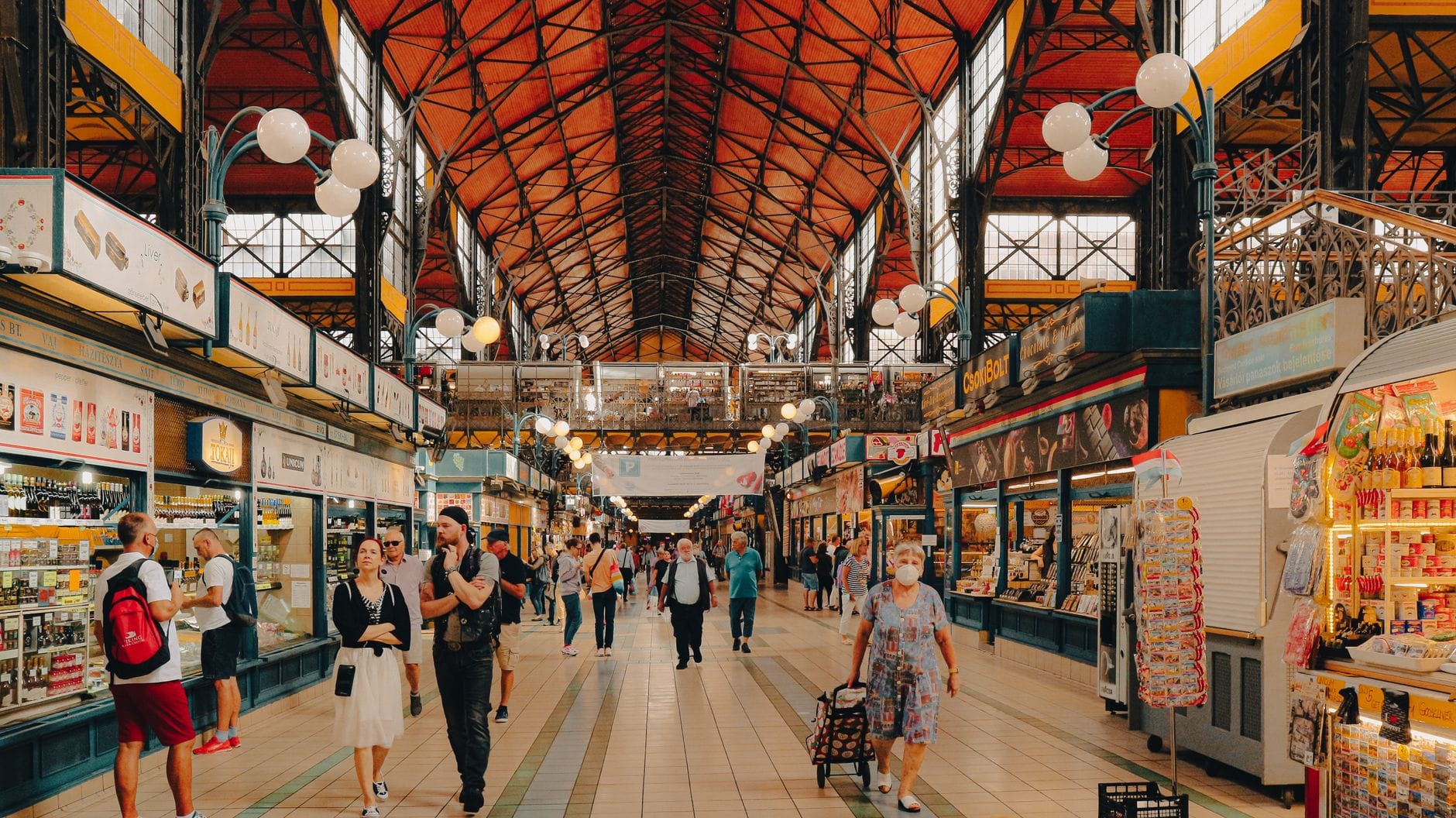
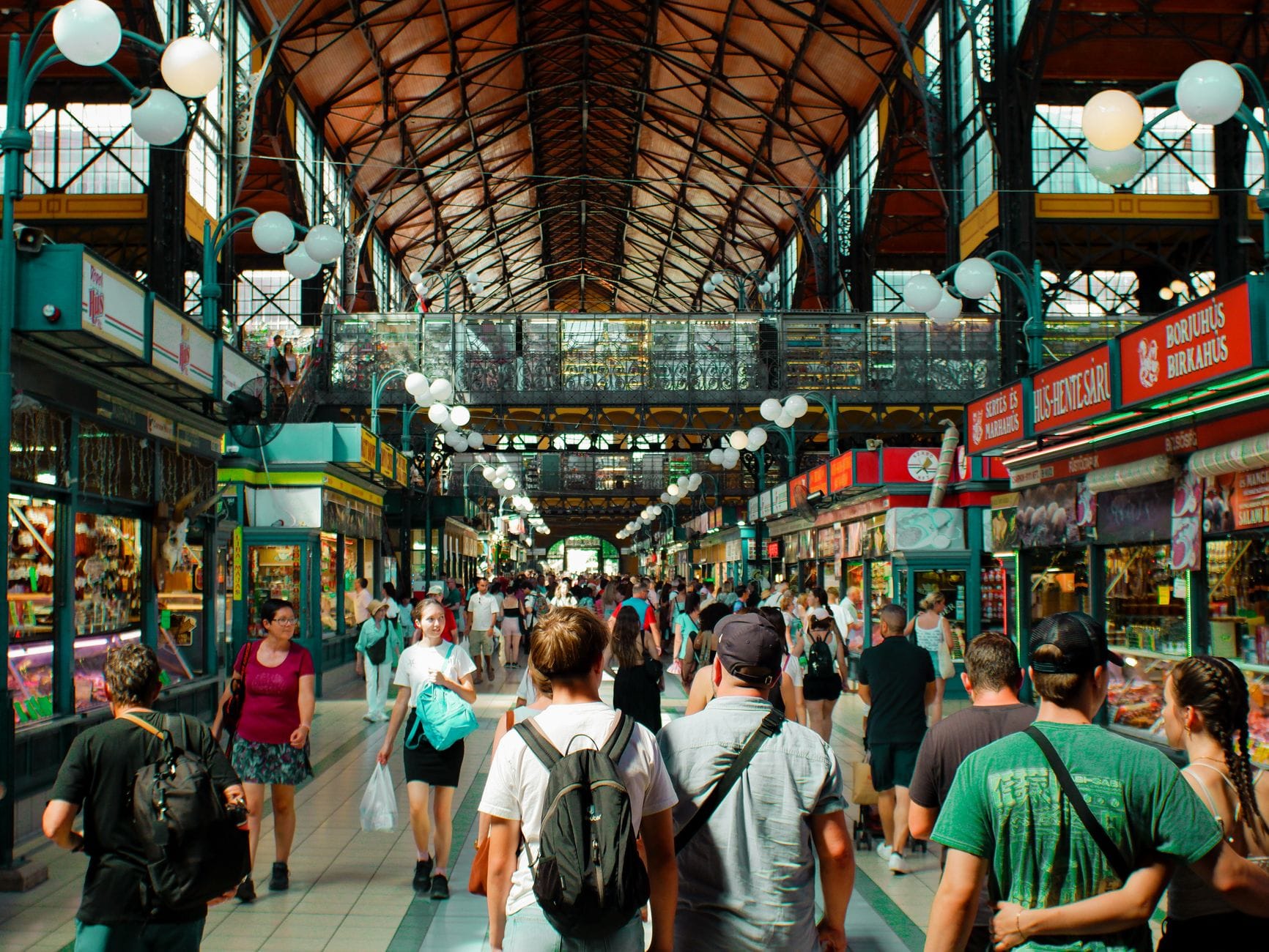
The Central Market Hall (Nagyvásárcsarnok) at Vámház körút 1–3 in District IX is the largest and most impressive of Budapest's five historic municipal market halls, all built around the turn of the 20th century. The wrought-iron and brick structure spans three floors and is genuinely useful for both locals buying produce and visitors picking up the best-value food souvenirs in the city.
The ground floor is all food: paprika in every grade and grind, Tokaji aszú wine, Hungarian salami, fresh bread, and pickled vegetables. Prices here are consistently lower than the tourist shops on Váci Street a few hundred metres away. The upper floor shifts toward embroidered tablecloths, traditional dolls, linen shirts, and folk ceramics. Quality varies, so handle items before buying. The basement level has a supermarket and a fish section that most visitors skip.
💡 Local tip
Go early on weekday mornings (before 9:00) if you want to shop alongside locals rather than tour groups. Saturday mornings are the busiest, especially between 9:00 and 12:00. The market is closed Sundays and public holidays. Typical hours: Monday 06:00–17:00, Tuesday to Friday 06:00–18:00, Saturday 06:00–15:00 — verify current hours before visiting.
Transport access is straightforward: trams 2, 47, and 49 stop at Fővám tér immediately outside, and Metro line M4 (Fővám tér station) puts it a short walk from the rest of central Pest. The market sits at the Pest end of Liberty Bridge, so combining a visit with a walk across the bridge is a natural pairing.
Shopping Streets: From Luxury Boutiques to International Brands
Andrássy Avenue is Budapest's most elegant boulevard, a UNESCO World Heritage street running from the city centre out to Heroes' Square. The stretch closest to the centre, between Deák Ferenc tér and Oktogon, is lined with high-end international labels, local designers, galleries, and upscale cafés. Window-shopping here costs nothing, and even if you are not buying, the Art Nouveau and Eclectic architecture makes it worth the walk.
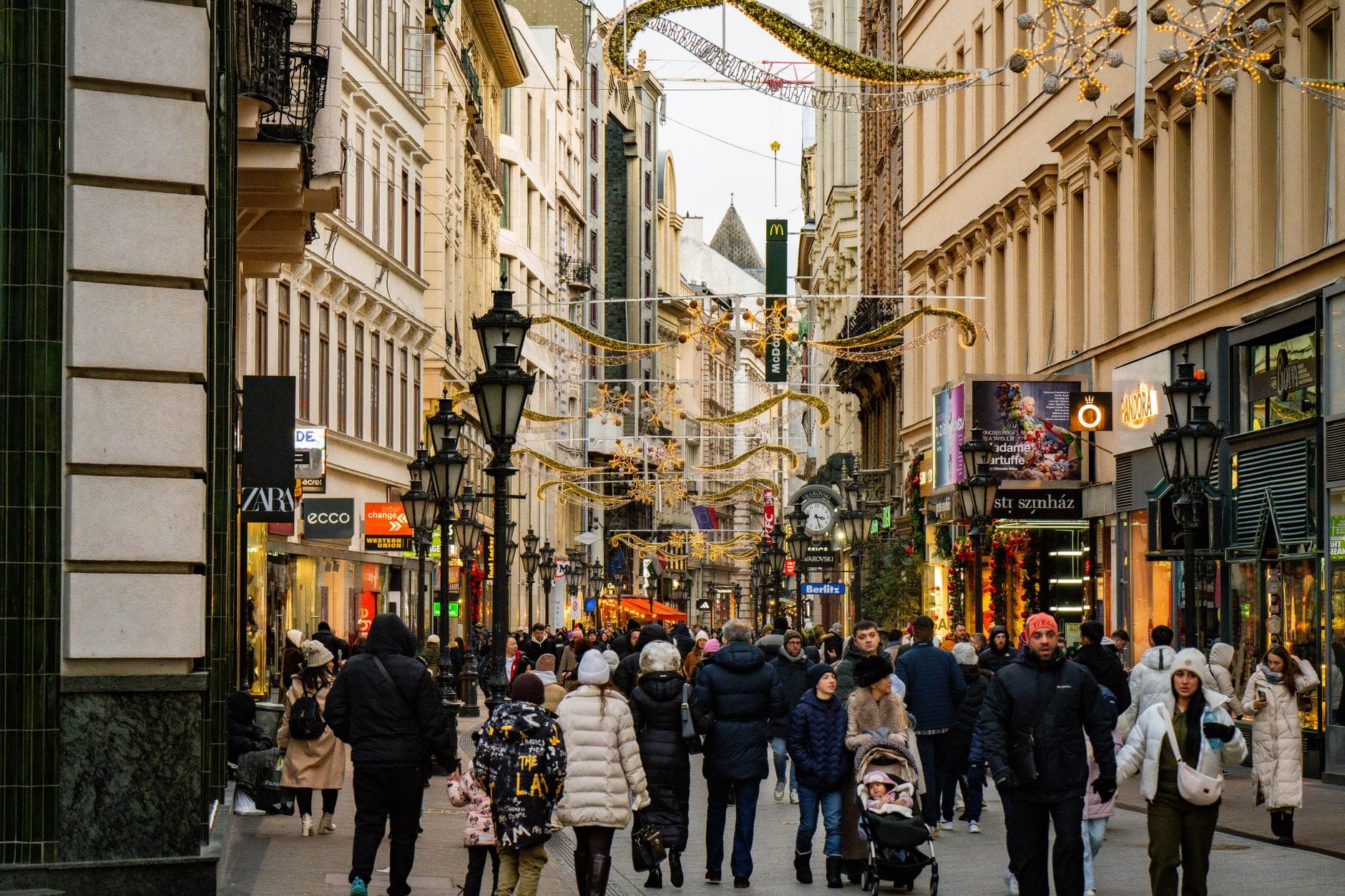
Fashion Street (the pedestrianised section of Deák Ferenc utca, between Vörösmarty tér and Deák Ferenc tér) is a compact but well-curated strip of mid-to-high-range international chains. It is more practical than Andrássy for mainstream fashion purchases and connects directly to the metro hub at Deák Ferenc tér, making it easy to combine with other parts of the city.
Váci utca (Váci Street) gets a lot of attention as Budapest's classic shopping street, and the pedestrian zone is pleasant enough for a stroll. But be realistic: most shops here sell overpriced souvenirs, international fashion chains you could find at home, and tourist-oriented restaurants. If you want paprika or Hungarian embroidery, the Central Market Hall at the southern end of Váci Street will give you better quality at lower prices. The street is genuinely worth walking for atmosphere, not for shopping value.
⚠️ What to skip
Souvenir shops along Váci Street and near the Chain Bridge routinely charge two to three times the prices you will find at the Central Market Hall or neighborhood markets for identical items. Paprika blends, wooden toys, and embroidered textiles are all significantly cheaper a five-minute tram ride away.
Markets Beyond the Great Hall: Flea Markets, Neighborhood Halls & Weekend Stalls
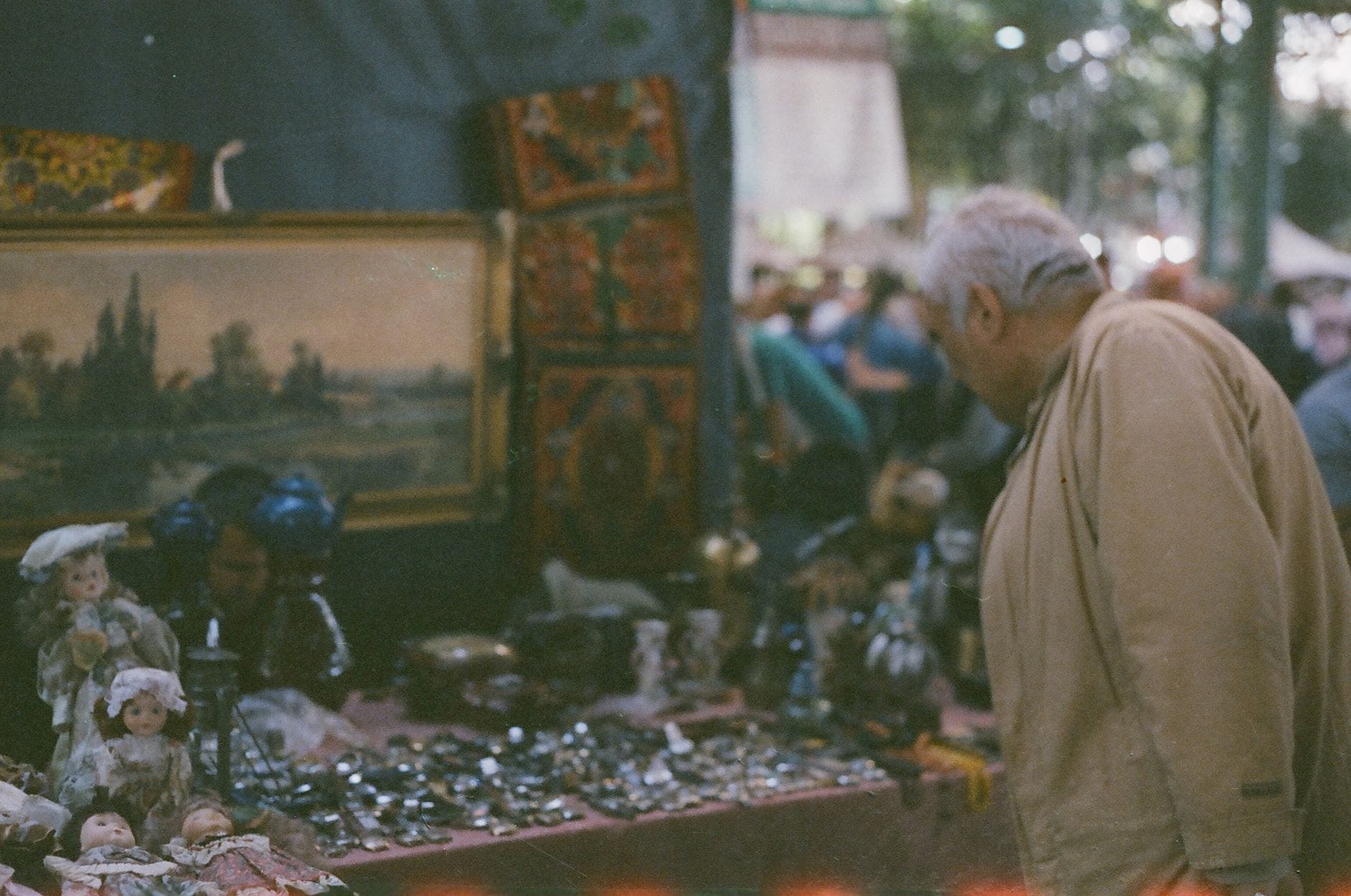
Ecseri Flea Market (Nagykőrösi út 156, District XIX) is the real destination for serious browsing. It is Budapest's largest antiques and second-hand market, with a strong focus on communist-era memorabilia, vintage clothing, silverware, porcelain, and Soviet military badges. Antique pricing is negotiable: smaller items start around €5–20, quality silverware and furniture can run €100–1,000 or more. Saturday mornings (from 06:00) are the peak time, with the widest selection and the most specialist dealers. Get there early; the best pieces go quickly. Transport: bus 9 from Deák tér or tram 28 from Blaha Lujza tér.
The Gozsdu Weekend Market in the Jewish Quarter (Király utca 13, Gozsdu Udvar) runs Friday to Sunday, roughly 10:00–17:00, with craft goods, handmade jewellery, and artisan food products. The courtyard setting is atmospheric and the market has a relaxed pace compared to the Central Market Hall. There is also a separate night market on alternating Wednesdays (approximately 18:00–24:00) that leans more toward street food and live music.
For everyday food shopping alongside locals, the Hold Street Market (Belvárosi Piac) in District V offers fresh produce, meat, honey, and bakery goods year-round. It lacks the tourist infrastructure of the Great Market Hall, which is precisely the point. Neighborhood market halls in Districts VIII, IX, and XI operate on similar principles and are worth visiting if you are staying in those areas.
- Central Market Hall (Nagyvásárcsarnok) Best for: food souvenirs, paprika, Tokaji wine, embroidered textiles. District IX, tram 2/47/49 or M4 to Fővám tér.
- Ecseri Flea Market Best for: antiques, communist memorabilia, vintage clothing, silverware. District XIX, bus 9 from Deák tér. Saturday mornings are essential.
- Gozsdu Weekend Market Best for: handmade crafts, jewellery, artisan food. Jewish Quarter, District VII. Fri–Sun 10:00–17:00.
- Hold Street Market (Belvárosi Piac) Best for: everyday fresh produce, local food, no tourist markup. District V, central Pest.
- Vörösmarty tér Christmas Market Best for: seasonal crafts, mulled wine, traditional food gifts. District V, Metro M1 to Vörösmarty tér. Typically late November to early January.
Shopping Malls: When You Want Predictable Brands Under One Roof
Budapest's shopping malls are large, well-organised, and exactly what you would expect from any major European city. They are most useful on rainy days or if you need standard international fashion, electronics, or a supermarket. Arena Mall, adjacent to Keleti railway station in District XIV, is consistently cited as the city's largest mall and the easiest to reach by public transport. WestEnd City Center near Nyugati station is similarly large and convenient. Allee in District XI and Mammut near Moszkva tér (Széll Kálmán tér) in District II serve the Buda side.
ℹ️ Good to know
Malls in Budapest typically open 10:00–21:00 on weekdays and Saturdays, with reduced hours on Sundays. Most supermarkets within malls keep longer hours. These are also among the few reliable places to shop on Sundays, when many smaller markets and specialist shops are closed.
What to Buy: The Honest Souvenir Guide
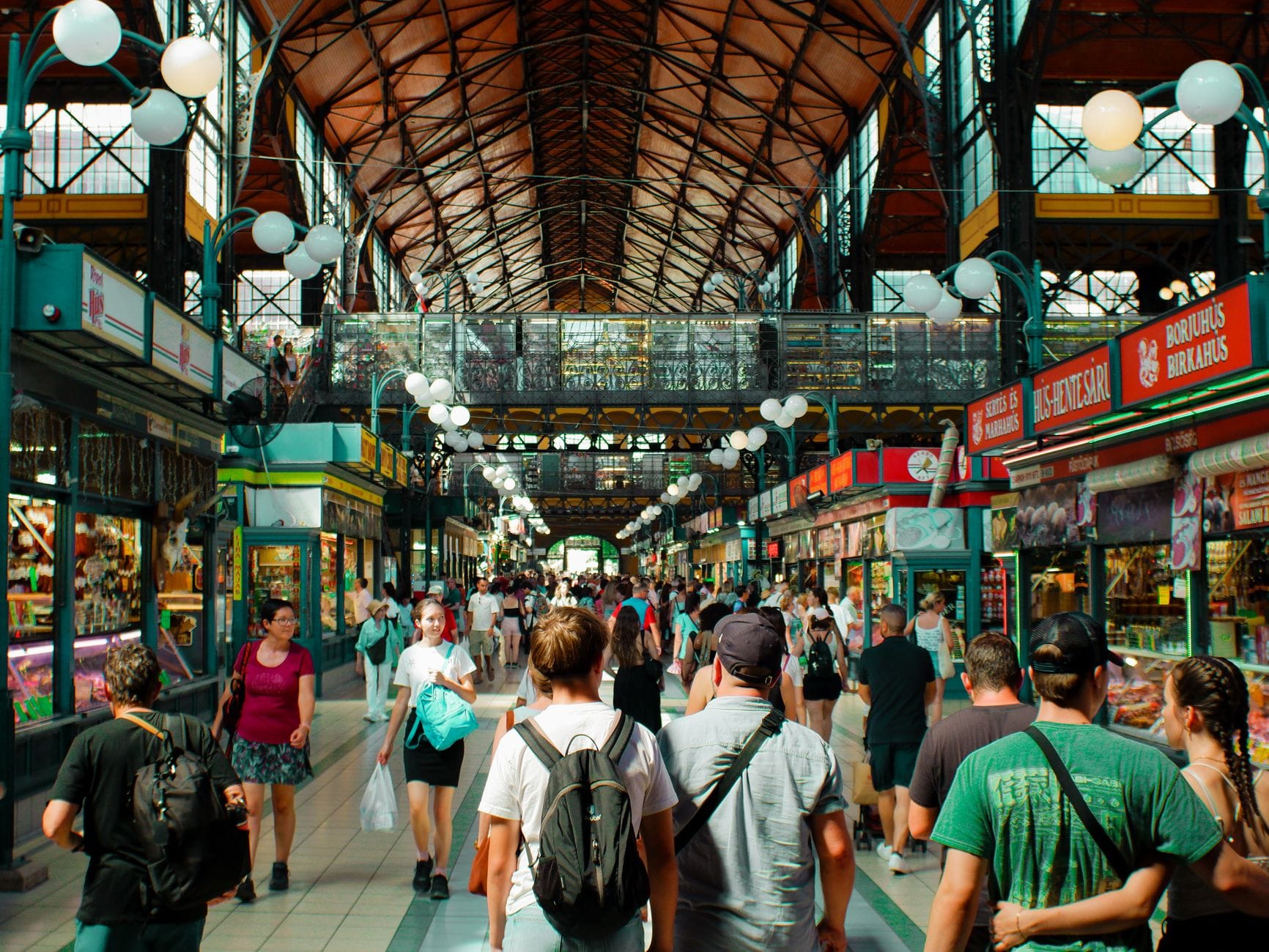
Hungarian paprika is the single most reliable souvenir: it is genuinely different from what you find in most Western European supermarkets, available in sweet, hot, and smoked varieties, and extremely good value at the Central Market Hall. Tokaji wines, particularly aszú (the late-harvest dessert wine), are another strong choice. Both travel well and represent real local production.
- Paprika: sweet (édes), hot (erős), and smoked varieties — buy at the Central Market Hall for the best prices.
- Tokaji wine: aszú and szamorodni are the classic styles; look for official regional certification on the label.
- Hungarian salami (téliszalámi): Pick brands like Pick or Herz, widely available at markets and supermarkets.
- Embroidered textiles: tablecloths, blouses, and runners from the Kalocsa and Matyó traditions. Quality varies widely — examine stitching closely.
- Porcelain: Herend and Zsolnay are Hungary's prestige porcelain brands. Expect to pay significantly for authentic pieces; fakes and lower-quality imitations are common.
- Pálinka: Hungarian fruit brandy, traditionally plum or apricot. Check that it is genuine pálinka (100% Hungarian fruit spirit) rather than cheaper spirit mixes.
- Communist-era memorabilia: medals, badges, enamel pins, and printed ephemera from Ecseri or Gozsdu market.
Herend porcelain deserves a separate note. It is expensive for a reason: pieces are hand-painted and individually signed. The brand has its own boutiques in Budapest where staff can verify authenticity. If you are buying Herend at a flea market, treat pricing accordingly. For context on Budapest's broader design heritage, the Art Nouveau architecture guide explains why applied arts have such deep roots in Hungarian culture.
Seasonal Shopping: Christmas Markets and Event-Based Retail
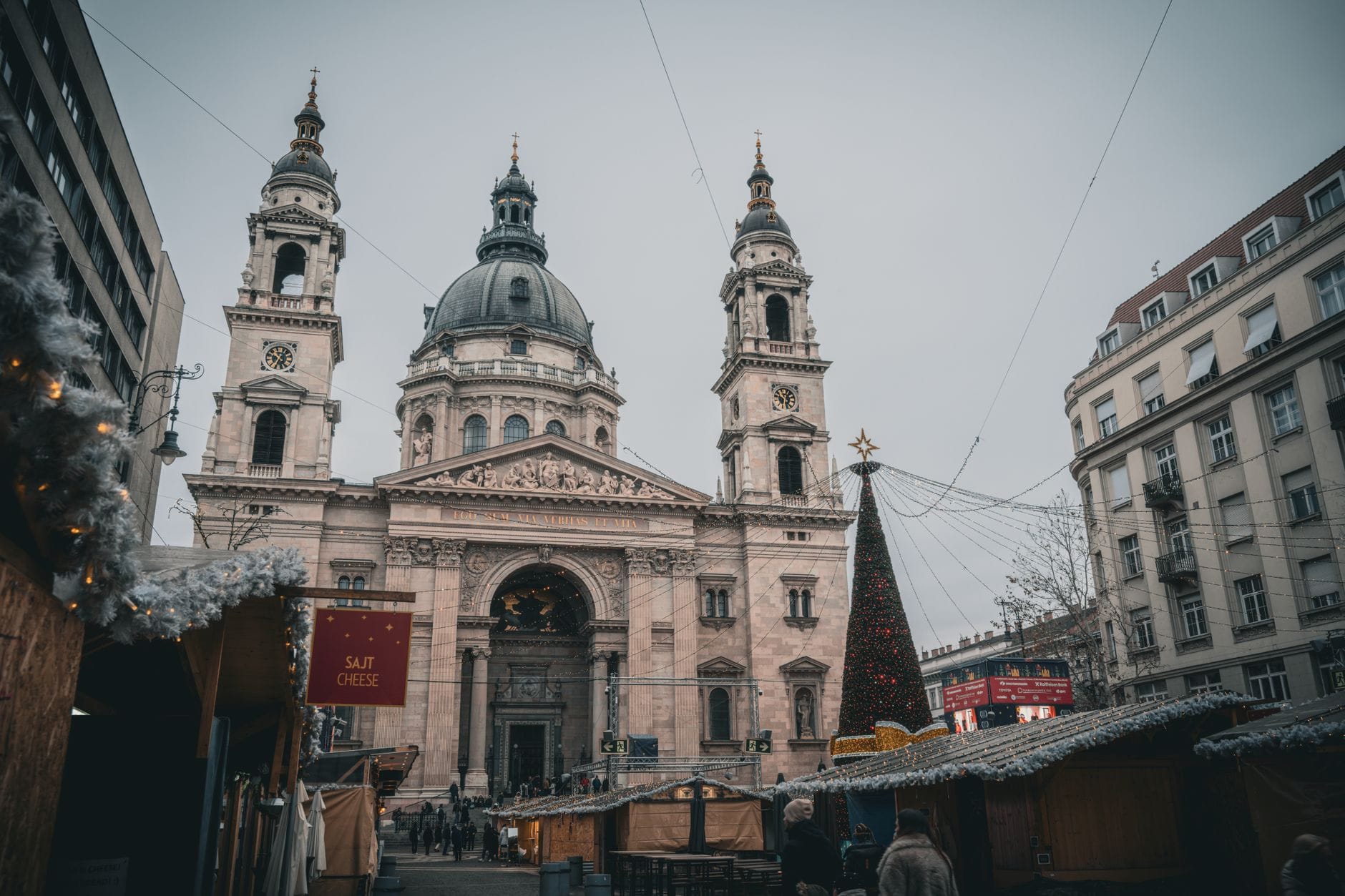
The Vörösmarty tér Christmas Market is the most prominent seasonal shopping event in Budapest, typically running from late November through early January, daily approximately 10:00–22:00. It occupies the main square at the top of Váci Street and combines craft stalls selling wooden decorations, textiles, and food gifts with mulled wine (forralt bor), chimney cakes (kürtőskalács), and seasonal Hungarian street food. The atmosphere is notably different from the summer city: quieter, more local-feeling, and genuinely festive. Prices here are not rock-bottom, but the quality of craft goods is generally higher than standard souvenir shops.
A second Christmas market at Városháza Park (City Hall Park) tends to attract fewer tourists and has a slightly broader craft focus. For shopping in December specifically, our guide to Budapest in December covers both markets in more detail alongside the rest of what the city offers in winter.
✨ Pro tip
If you are visiting Budapest in spring or early summer, the weekend market schedule expands significantly. The Gozsdu market, outdoor antique fairs, and neighbourhood flea markets all run more reliably between April and October. Winter visiting still has the Christmas market, but flea market options outside Ecseri are thinner.
For broader trip planning, the best time to visit Budapest guide covers seasonal considerations beyond shopping, including crowd levels and festival schedules.
FAQ
Where is the cheapest place to buy souvenirs in Budapest?
The Central Market Hall (Nagyvásárcsarnok) consistently offers lower prices than Váci Street or tourist shops near the major attractions. For paprika, Tokaji wine, salami, and embroidered textiles, the market's ground floor is the most competitive option. Prices drop further at neighborhood markets like Hold Street Market, though the selection of souvenir-style items is more limited.
Is Váci Street worth visiting for shopping?
For atmosphere, yes. For value, largely no. Váci Street is a pleasant pedestrian zone and makes sense as a walking route, but most of the shops sell overpriced souvenirs or international chains. The Central Market Hall at the southern end of the street is where serious food shopping happens. Fashion Street (Deák Ferenc utca) is a better option for mid-range fashion brands.
What is the best flea market in Budapest?
Ecseri Flea Market in District XIX is the best option for genuine antiques, communist-era memorabilia, vintage clothing, and silverware. Saturday mornings are peak time. It requires a bus or tram journey from the centre (bus 9 from Deák tér or tram 28 from Blaha Lujza tér), but the range far exceeds anything closer to the tourist zones.
What are the best things to buy in Budapest as gifts?
Hungarian paprika (particularly smoked or hot varieties), Tokaji aszú wine, Pick or Herz téliszalámi, and pálinka fruit brandy all travel well and represent genuine local production. Embroidered textiles (Kalocsa or Matyó styles) and Herend porcelain are stronger gifts for people interested in Hungarian craft tradition, though quality verification matters for both.
Are shops in Budapest open on Sundays?
Many smaller shops, markets, and specialty stores are closed on Sundays. The Central Market Hall is closed on Sundays and public holidays. Shopping malls (Arena Mall, WestEnd, Allee, Mammut) and their internal supermarkets generally maintain Sunday hours, typically 10:00–18:00 or similar, though hours vary. The Gozsdu Weekend Market does operate on Sundays.