Getting Around Budapest: Metro, Trams, Buses & Airport Transfers
Budapest has one of Central Europe's most comprehensive public transport networks, run by BKK. This guide covers every mode of transport, ticket types with current prices, how to avoid fines, and the best ways to get from the airport to the city center.
Plan and book this trip
Tools from our partner Travelpayouts help you compare flights and hotels. If you book through them, we may earn a commission at no extra cost to you.
Flights
Hotels map
TL;DR
- Budapest's public transport (BKK) covers the city via 4 metro lines, trams, buses, trolleybuses, and suburban HÉV trains; metros generally run roughly 04:30 to 23:10, while many tram and bus services operate later and some run through the night.
- A single ticket costs 500 HUF; a 24-hour unlimited travelcard runs around 2,500 HUF. All paper tickets must be validated before travel or face a 25,000 HUF fine.
- The 100E Airport Express bus connects the airport to Deák Ferenc tér in 35-45 minutes, but requires a special ticket. See our full breakdown in the airport section, or check the Budapest travel overview for broader city orientation.
- Bolt and Uber operate in Budapest via licensed taxi partners. Use those apps, licensed taxis, or the BudapestGO app for route planning and mobile tickets.
- Night buses (numbered 900-999) cover major corridors after 23:30 when metro and trams stop running.
How Budapest's Public Transport System Works
Getting around Budapest is straightforward once you understand the structure. All urban public transport is coordinated by BKK (Budapesti Közlekedési Központ), the Centre for Budapest Transport. A single integrated ticketing system covers every mode, from metro to suburban rail, meaning one pass works across the entire network within Budapest's administrative boundary.
The network includes four metro lines (M1, M2, M3, M4), an extensive tram network, city buses, trolleybuses, and HÉV suburban trains that extend beyond the city into surrounding towns. Metro services generally run from approximately 04:30 to 23:10, while many tram and bus lines operate later. After that, night buses numbered in the 900-999 range take over on the major corridors, running at longer intervals but covering the essential routes.
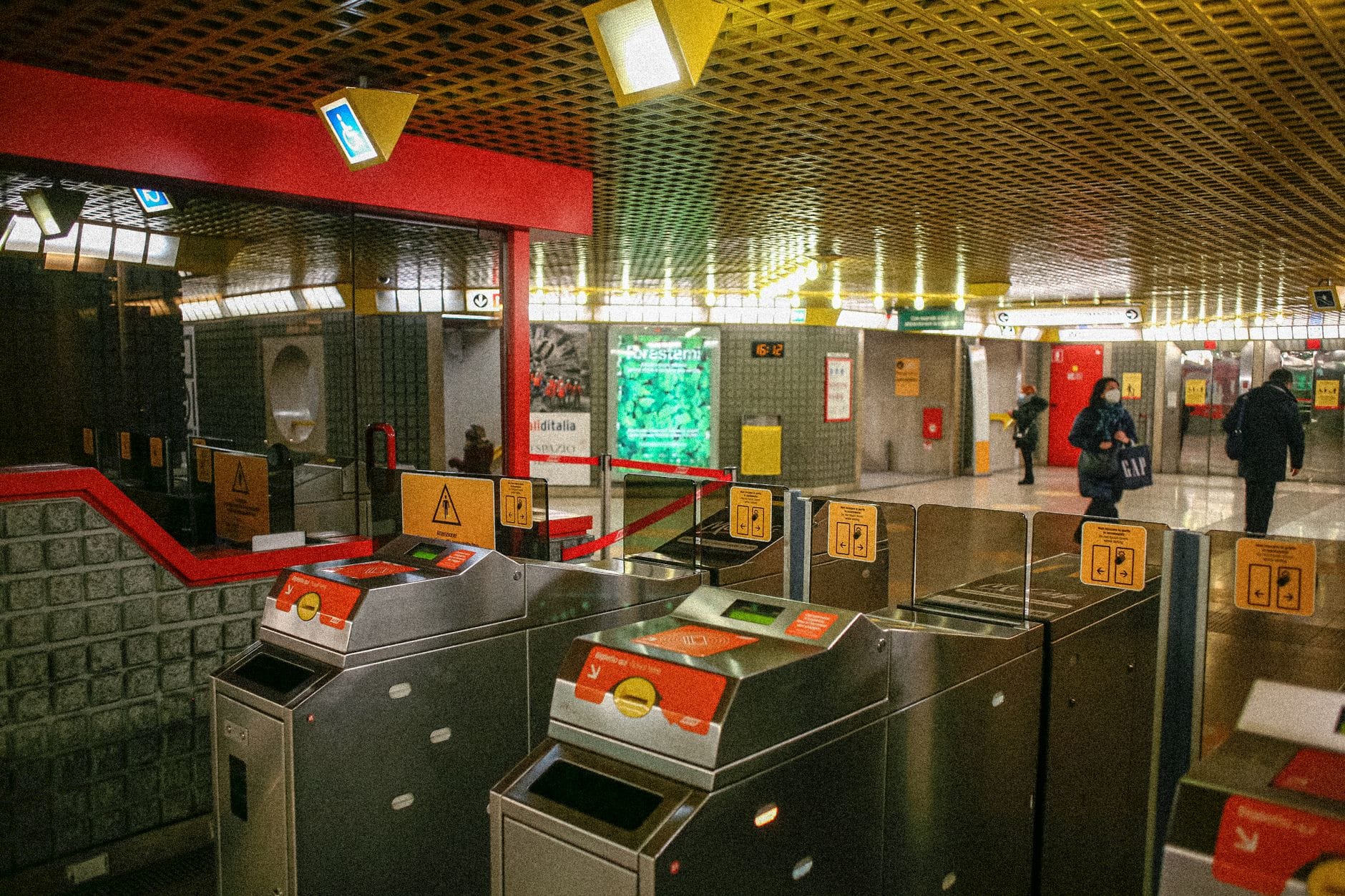
The BudapestGO app is the most practical tool for visitors. It offers real-time route planning, live departures, and mobile tickets you can activate directly from your phone. Paper tickets and passes are sold at the distinctive purple BKK vending machines found at metro stations, as well as at BKK customer service centers and some kiosks.
💡 Local tip
Download the BudapestGO app before you arrive. It works offline for route planning, supports mobile ticket purchases, and removes the need to hunt for a ticket machine at 6am after a long flight.
The Budapest Metro: Lines, Coverage & Key Stops
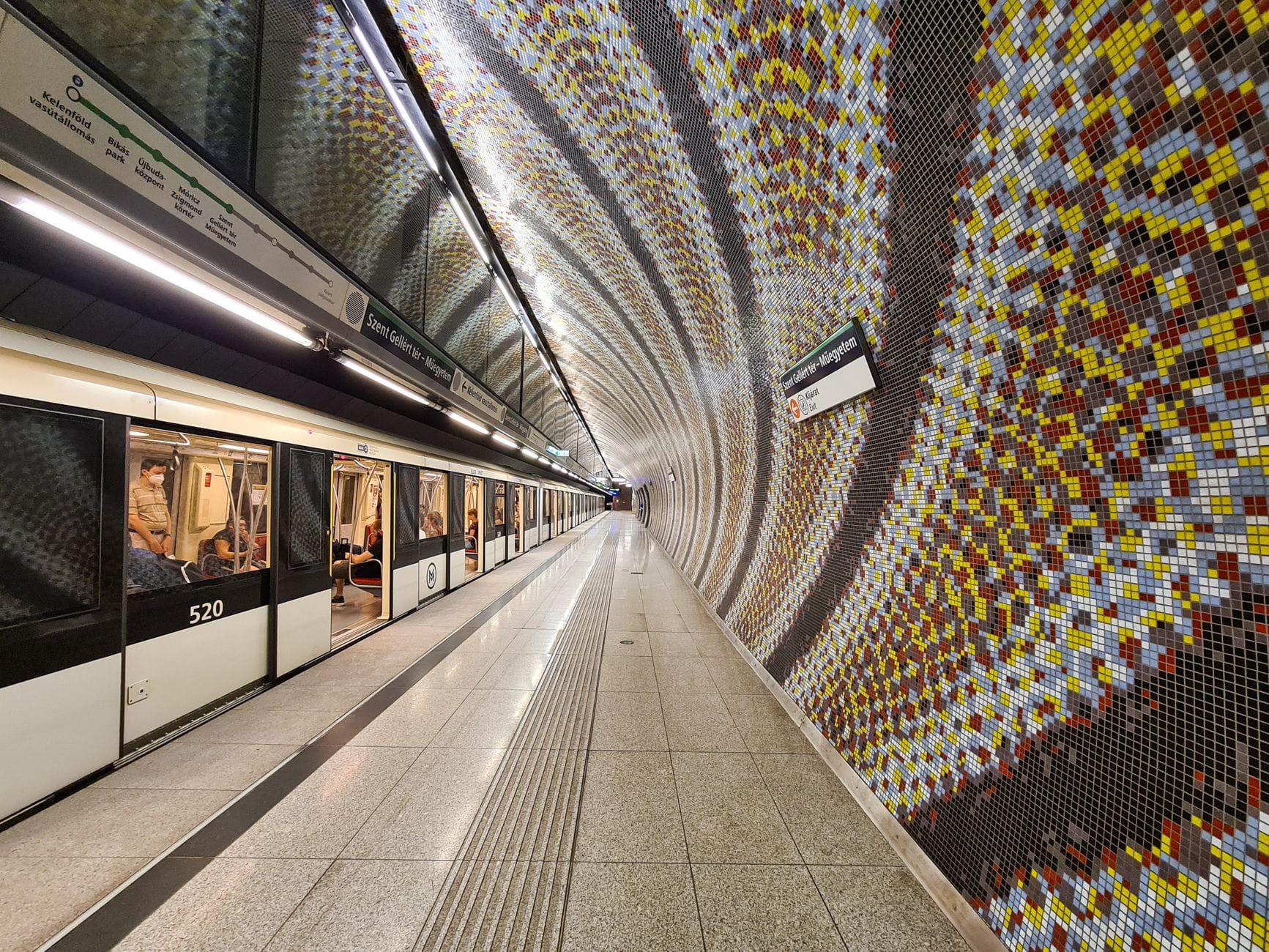
The Budapest Metro has four lines, each color-coded and serving distinct parts of the city. Line M1 (yellow) is historically significant: it was the first underground railway on the European continent, opened in 1896, and runs just beneath Andrássy Avenue from Vörösmarty tér to Mexikói út. It is short and slow by modern standards, but it passes directly under a string of culturally important stops.
Line M2 (red) runs east-west through central Pest and crosses the Danube into Buda, connecting Keleti (Eastern) Railway Station with Déli (Southern) Station. Line M3 (blue) is the longest line, running roughly north-south through Pest and connecting the airport transfer hub at Kőbánya-Kispest. Line M4 (green) is the newest line, linking Keleti Station with Kelenföld in southern Buda. Together, the four lines give you direct or one-transfer access to virtually every major area, including the Parliament, Heroes' Square, and Castle Hill.
- M1 (Yellow) Runs beneath Andrássy Avenue. Key stops: Vörösmarty tér, Opera, Hősök tere (Heroes' Square), Széchenyi fürdő.
- M2 (Red) East-west cross-city line. Key stops: Keleti pályaudvar, Deák Ferenc tér, Batthyány tér, Déli pályaudvar.
- M3 (Blue) North-south through Pest. Key stops: Kőbánya-Kispest (airport bus interchange), Kálvin tér, Deák Ferenc tér, Újpest-Városkapu.
- M4 (Green) Newest line, central Pest to southern Buda. Key stops: Keleti pályaudvar, Kálvin tér, Gellért tér, Kelenföld vasútállomás.
Trams, Buses & HÉV: When to Use Each
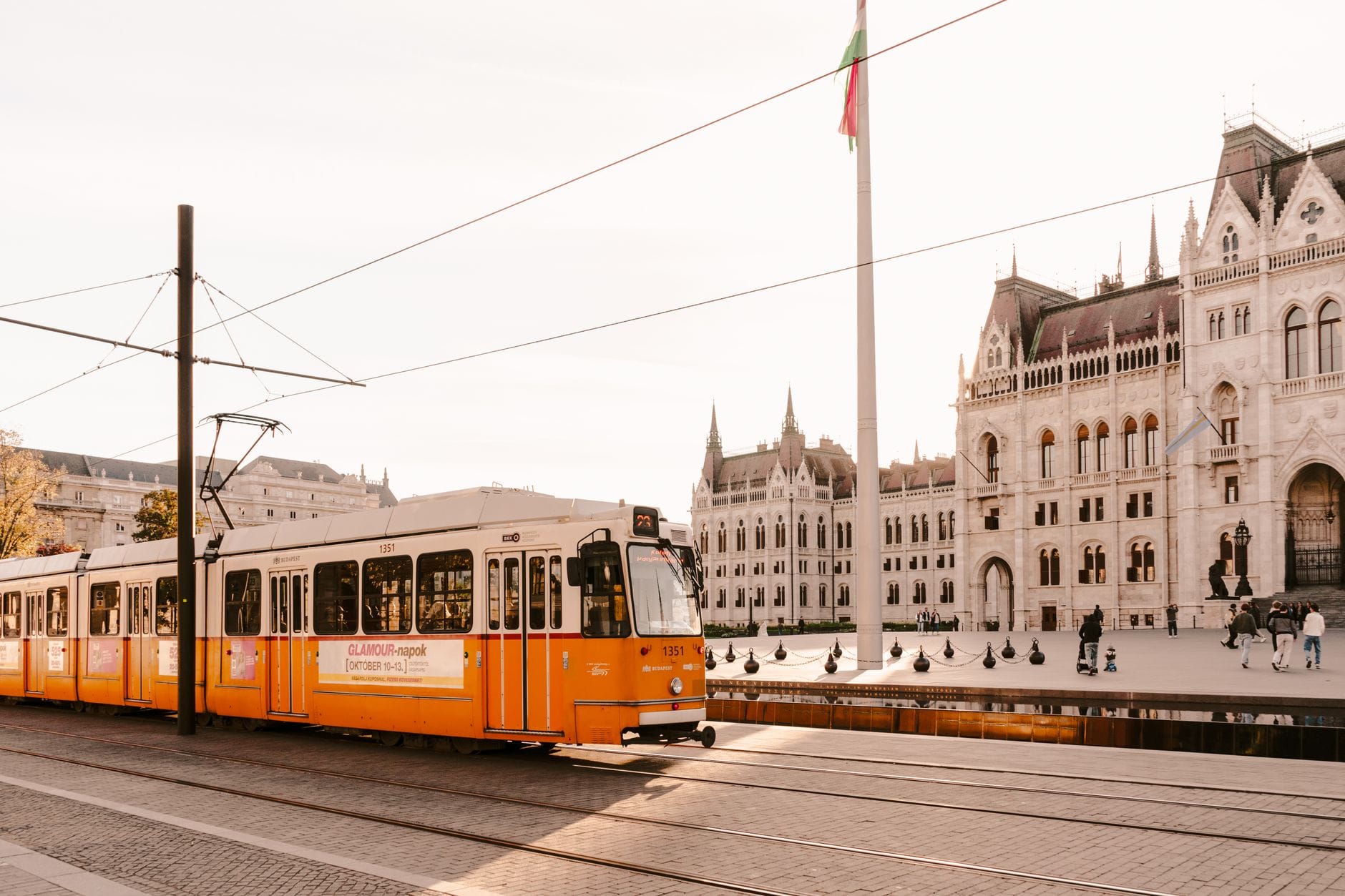
The tram network fills the gaps the metro does not cover, and for some routes it is actually faster. Tram 2, running along the Pest side of the Danube between Jászai Mari tér and Közvágóhíd, is one of the most scenic in Europe. It passes directly in front of the Parliament building and offers unobstructed river views. Tram 4 and 6 are the workhorse lines: they circle the inner boulevards of Pest continuously, running 24 hours a day. If you are staying anywhere along the Grand Boulevard (Nagykörút), these are your default option for getting across central Pest quickly.
Buses cover the areas the metro and trams cannot, including most of the Buda hills. Bus 16 and 16A connect Clark Ádám tér (at the foot of the Chain Bridge) with the Castle District. The HÉV suburban lines (H5-H9) extend beyond the city boundary to towns like Szentendre and Ráckeve. Within Budapest, they function like additional metro lines and are covered by standard BKK tickets. Outside the city boundary, you need to buy a supplementary ticket.
ℹ️ Good to know
Trams 4 and 6 run 24 hours a day, seven days a week, and together with the night buses they provide key public transport options in the early hours. They are significantly more frequent than most night bus services.
Tickets, Passes & Prices: What to Buy
Budapest's ticketing system has several layers, and choosing the wrong option is a common source of confusion and avoidable fines. The key principle: every ticket or pass must be validated at the start of your journey. Paper tickets go in the orange or red punching machines. Digital tickets in the BudapestGO app must be activated and scanned before you board. Inspectors check frequently, and the on-the-spot fine for traveling without a valid validated ticket is 25,000 HUF, no exceptions.
- Single ticket (500 HUF) Valid for one uninterrupted journey on one vehicle or one metro line. A pack of 10 costs 4,500 HUF. Not valid on the 100E airport bus.
- 30-minute transfer ticket (600 HUF) Allows transfers within 30 minutes of validation. Useful for short hops with one change.
- 90-minute transfer ticket (850 HUF) The best single-journey option if your route requires a transfer. Covers unlimited transfers within 90 minutes.
- 24-hour travelcard (approx. 2,500-2,750 HUF) Unlimited rides on all BKK services within Budapest for 24 hours. Cost-effective if you make more than 3 trips per day.
- 72-hour travelcard (approx. 5,500-5,750 HUF) Best option for a weekend trip. Covers three full days of unlimited travel.
- Budapest Card Includes unlimited public transport plus discounts on attractions. Worth comparing against a standalone travelcard depending on your itinerary.
⚠️ What to skip
The 100E airport bus requires its own dedicated ticket. Standard single tickets, travelcards, and most passes do NOT cover it. Buy the specific 100E ticket at the airport BKK machine or via BudapestGO before boarding.
Prices above reflect recent data and are subject to change. Always verify current fares at bkk.hu before travel. If you are visiting for a week or plan to cover a lot of ground, it is worth looking into the Budapest Card which bundles transport with attraction discounts. For context on how much ground you will actually be covering, see the 3-day Budapest itinerary.
Getting from Budapest Airport to the City Center
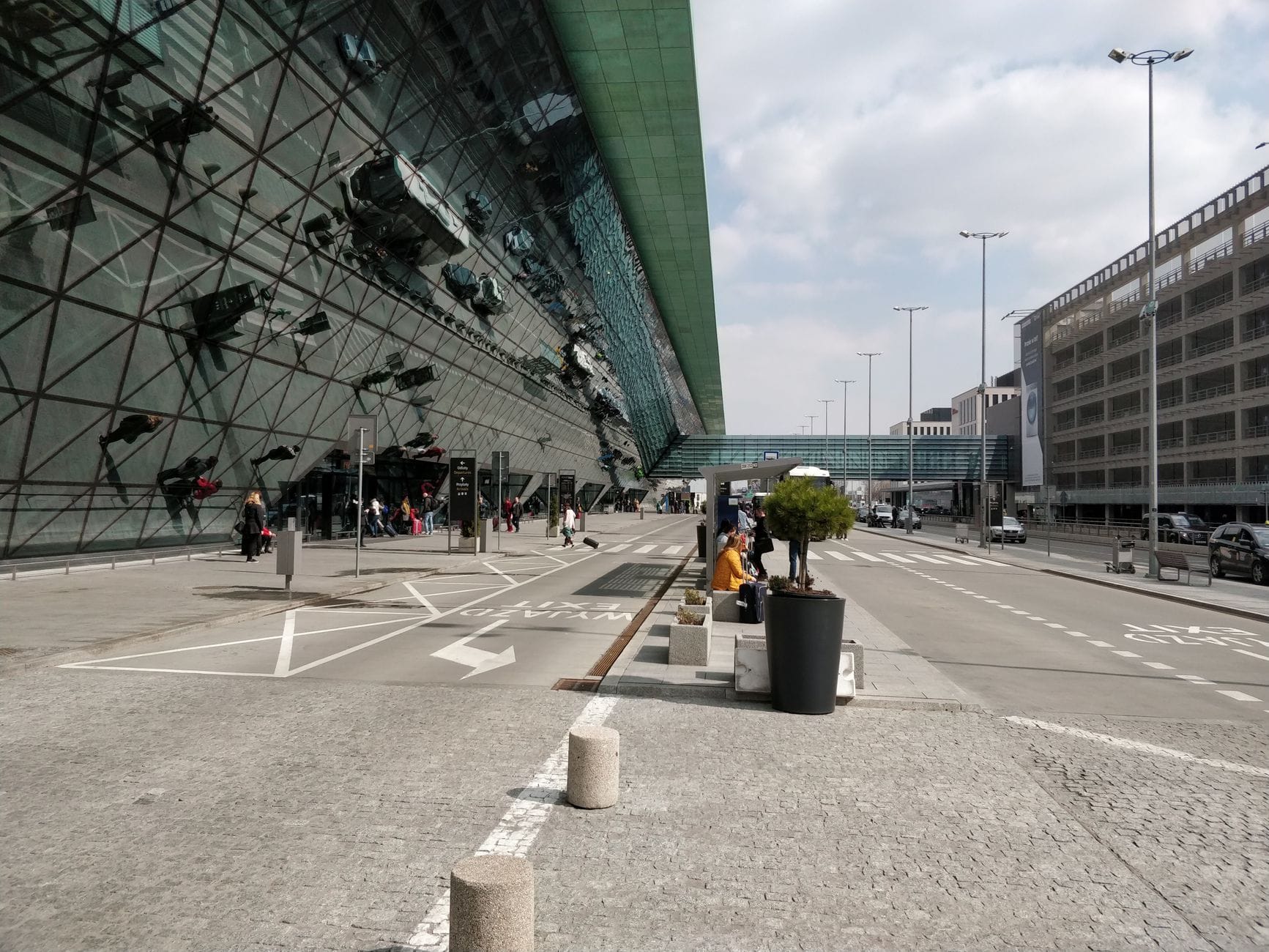
Budapest Liszt Ferenc International Airport (IATA: BUD) sits about 18 km southeast of the city center. There are four realistic options, ranging from budget to comfortable, and the right choice depends on your travel time, luggage, and group size.
- 100E Airport Express Bus (budget, direct) Runs from Terminal 2 to Deák Ferenc tér via Kálvin tér and Astoria. Journey time around 35-45 minutes depending on traffic. Requires a dedicated 100E ticket, bought at the airport BKK machine or via BudapestGO. Runs frequently during daytime hours.
- 200E Bus + M3 Metro (cheapest, more complex) Bus 200E runs from the airport to Kőbánya-Kispest, the southern terminus of metro M3. You then take the metro into the center. Total journey can be 45-60 minutes. Uses regular BKK tickets and passes, so it is free if you already have a travelcard. Suitable if you have minimal luggage.
- Licensed Airport Taxi (most convenient) Taxi stands are at the arrivals exit. Fares are meter-based and regulated. A trip to central Pest typically runs in the range of 8,000-12,000 HUF depending on destination and traffic, but verify current rates before travel. Book at the official taxi desk inside the terminal, not from touts approaching you.
- Pre-booked Private Transfer (groups and heavy luggage) Numerous operators offer fixed-price private transfers. Prices vary widely by provider; booking in advance is advisable for early morning or late-night flights. Shared shuttles are also available but involve waiting for other passengers and multiple drop-offs.
✨ Pro tip
If you arrive late at night and plan to use public transport, check the BKK website for night bus schedules from the airport. The 900E night bus serves the airport corridor, but departure times and routes change seasonally. Confirm before your travel date.
Taxis, Ride-Hailing & Cycling in Budapest
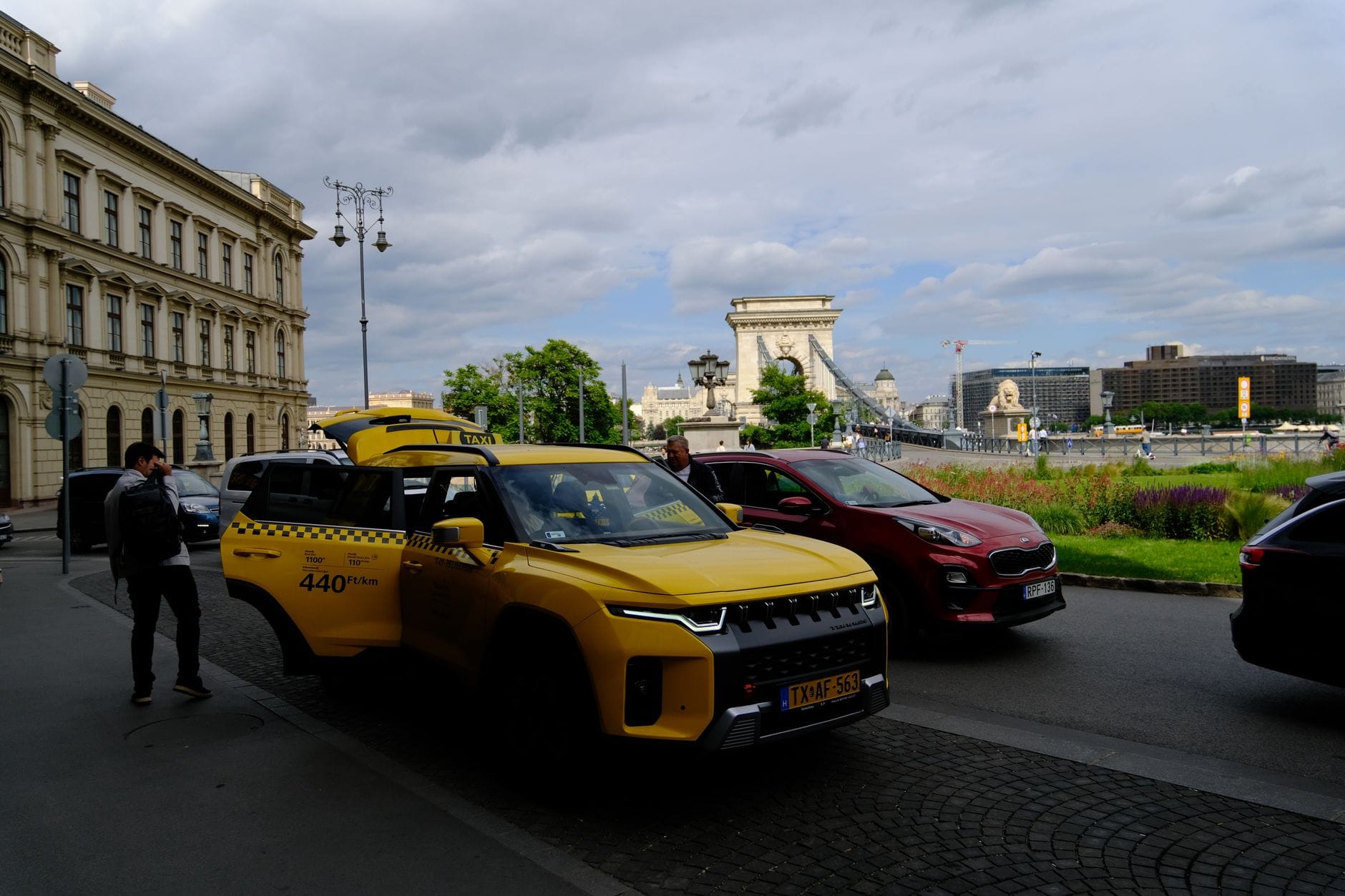
Bolt and Uber both operate in Budapest through licensed taxi partners, alongside local taxi company apps. Licensed taxis are metered and regulated; the most reliable approach is to use an app rather than hailing a cab from the street, which historically carried a higher risk of overcharging from unlicensed operators.
Cycling is a growing option. Budapest has expanded its bike lane network in recent years, and the MOL Bubi bike-share scheme covers much of inner Pest and parts of Buda. Bikes are practical for flat Pest but less so for the hills of Buda. The flat riverside promenades on both banks are excellent cycling routes. If you are considering a day trip out of the city, the cycling path to Szentendre along the Danube is a well-established route. For more ideas on reaching places outside the city, the day trips from Budapest guide covers the main options.
Walking is underrated for central Budapest. The distance from the Chain Bridge to the Great Market Hall along the Danube embankment is around 2 km. Váci Street and the parallel shopping corridors of inner Pest are compact and walkable. Castle Hill requires either the funicular from Clark Ádám tér, bus 16, or a 20-minute uphill walk from the Buda side of the Chain Bridge. The funicular is atmospheric but not a transport necessity.
Practical Tips for Navigating Budapest's Transport
A few details make a material difference to getting around smoothly. Metro Line M3 has been under partial renovation for several years, with replacement buses (marked 3M or similar) substituting for certain sections at different times. Check BKK's current service notices before planning a route that relies heavily on M3. For broader context on which neighborhoods you will be moving between, the guide to staying in Budapest and the Jewish Quarter area overview explain the geography of the main visitor neighborhoods.
- Deák Ferenc tér is the central interchange hub where metro lines M1 and M2 meet and where many tram and bus routes intersect. Nearly any cross-city journey will pass through here.
- Service frequency drops significantly after 20:00, even before the night bus period begins. Factor this into evening plans if you are visiting attractions in outer districts.
- National holidays and major events (the Hungarian Grand Prix weekend, Sziget Festival) cause schedule changes. BKK publishes notices on its website and app.
- The 72-hour travelcard activates from the time of first validation, not from midnight. Buy it when you first need it, not the night before a long day.
- Tipping is not customary for taxi drivers who use meters, but rounding up to the nearest 500 HUF is common for short trips.
- Tap water in Budapest is safe to drink, so a reusable bottle saves money and removes the need for constant convenience store stops between journeys.
If mobility or accessibility is a concern, note that Metro Line M4 (the newest line) is fully accessible with lifts at every station. Older lines, particularly M1, have very limited accessibility. Trams and buses vary. The BudapestGO app allows you to filter for accessible routes. For visitors focused on minimizing walking distances when covering major sights, the 3-day Budapest itinerary groups attractions by district to reduce unnecessary crossings.
FAQ
Can I use a contactless bank card to pay for Budapest public transport?
As of current information, Budapest's BKK system does not support direct tap-to-pay with contactless bank cards on vehicles or metro gates in the same way as London or New York. You need either a validated paper ticket or a mobile ticket activated in the BudapestGO app. Verify the latest payment options on bkk.hu before travel, as the system is developing.
Does my 24-hour or 72-hour travelcard cover the airport bus?
No. Standard BKK travelcards do not cover the 100E Airport Express bus. You need a separate 100E-specific ticket each time you use that route. The cheaper alternative, the 200E bus to Kőbánya-Kispest and then metro M3, IS covered by regular travelcards.
How frequent are metro trains in Budapest?
During peak weekday hours, trains run every 3-5 minutes on the main lines. Off-peak and on weekends, intervals stretch to 5-10 minutes. Late evening services (after 22:00) can be 10-15 minutes apart. Night buses after 23:30 run every 15-30 minutes depending on the route.
Is it safe to take a taxi from Budapest Airport?
Yes, if you use the official licensed taxi service from the designated desk inside the arrivals hall. Taxis are metered and fares are regulated. Avoid accepting rides from individuals who approach you before you reach the official taxi stand, as unofficial drivers are known to overcharge. Bolt app also works in Budapest and you can order a car from the airport.
Do children travel free on Budapest public transport?
Children under 6 travel free on BKK services. EU citizens aged 6-14 with valid documentation also qualify for free travel. Other discounts apply to students and seniors. Rules and proof requirements can change, so verify current eligibility at bkk.hu or at a BKK customer service center.