Best Things to Do in Budapest: The Definitive Guide
Budapest rewards visitors with an unusually rich mix of history, architecture, and culture packed into a compact, walkable city. This guide covers the best things to do in Budapest — from iconic landmarks and thermal baths to underrated neighborhoods — with practical advice on what is worth your time and what is not.
Tickets & tours
Live prices and dates from our booking partner. If you book, we may earn a commission at no extra cost to you.
TL;DR
- Budapest is a city that genuinely needs 3–4 days — trying to cover it in one day means skipping half of what makes it worth visiting.
- The top things to do span two very different sides: hilly, historic Buda (Castle District, Gellért Hill) and flat, dense Pest (Parliament, Jewish Quarter, ruin bars) — plan by geography to avoid unnecessary river crossings. See our 3-day Budapest itinerary for a structured route.
- Thermal baths are not a tourist gimmick — they are a genuine local institution. Book Széchenyi or Gellért online in advance, especially on weekends.
- The Hungarian Parliament building requires a timed ticket; same-day entry is rarely available in peak season. Book at least a few days ahead. More essential planning info in our best time to visit Budapest guide.
- Hungary uses the forint (HUF), not the euro. Cash is still widely expected at markets, smaller baths, and local restaurants.
Understand Budapest Before You Start
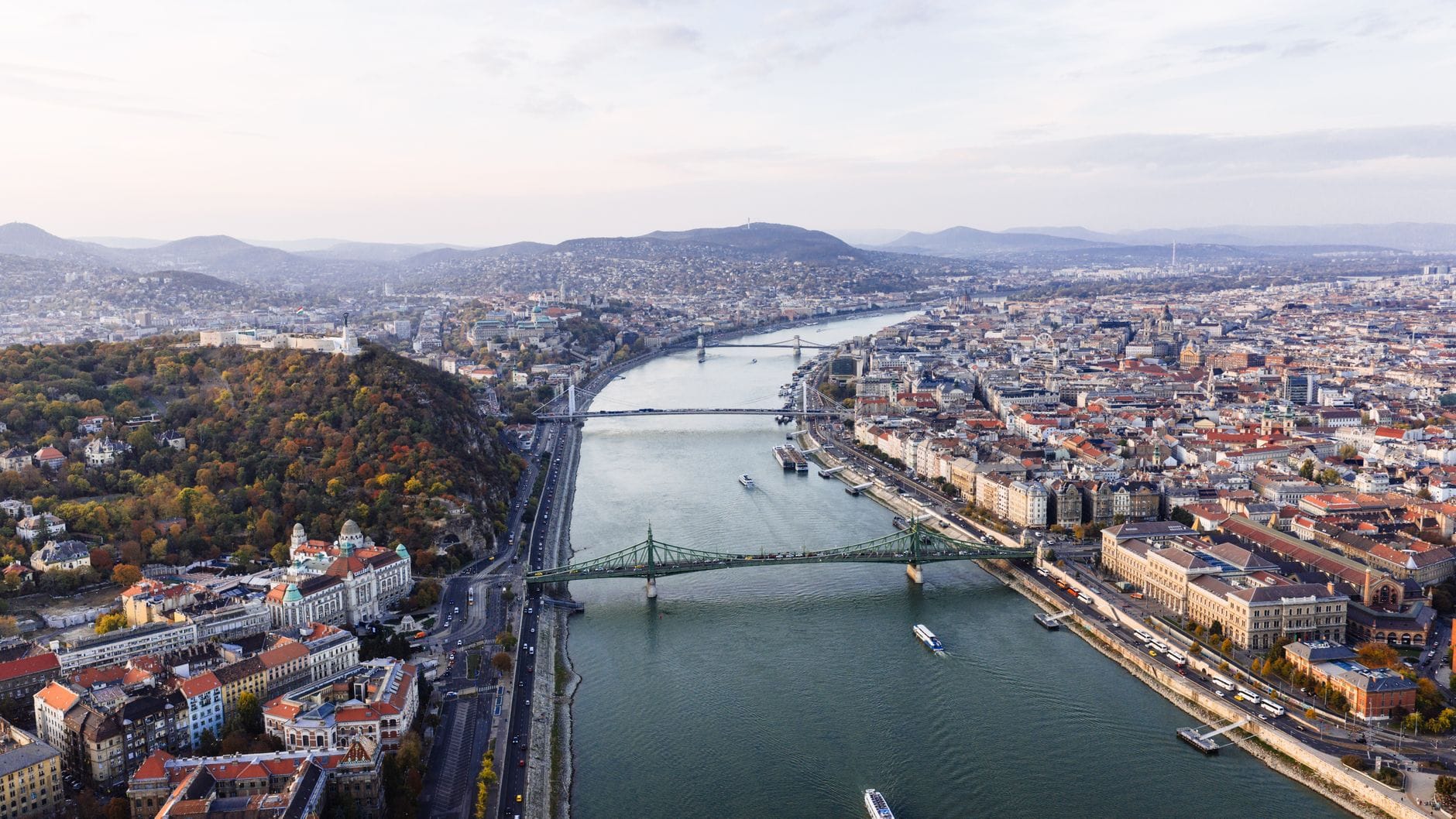
Budapest is Hungary's capital and home to around 1.7 million people, sitting at roughly 47°N on the Danube River. The city is divided into two very distinct halves: Buda on the hilly western bank, and Pest on the flat eastern bank. They were separate cities until 1873, when they unified with the smaller settlement of Óbuda to form Budapest. That history still shapes the city's character today: Buda is quieter, greener, and more residential, while Pest carries most of the commercial energy, nightlife, and cultural institutions.
The city covers 525 km² across 23 administrative districts (kerületek). For most visitors, the action concentrates in Districts I (Buda Castle), V and VI (Inner Pest, the Parliament and Andrássy Avenue), and VII (the Jewish Quarter). City Park, technically District XIV, adds another cluster of major sights at the northeast end of Andrássy Avenue. Grouping your days by area rather than by attraction type will save you significant time.
ℹ️ Good to know
Budapest operates on Central European Time (CET, UTC+1), switching to CEST (UTC+2) in summer. The city uses the Hungarian forint (HUF). As of 2024, rough exchange rates place 1 EUR at approximately 380–400 HUF, though this fluctuates. Tap water is safe to drink. Emergency services are reached at 112. Country code is +36.
Iconic Landmarks: What Is Actually Worth Your Time
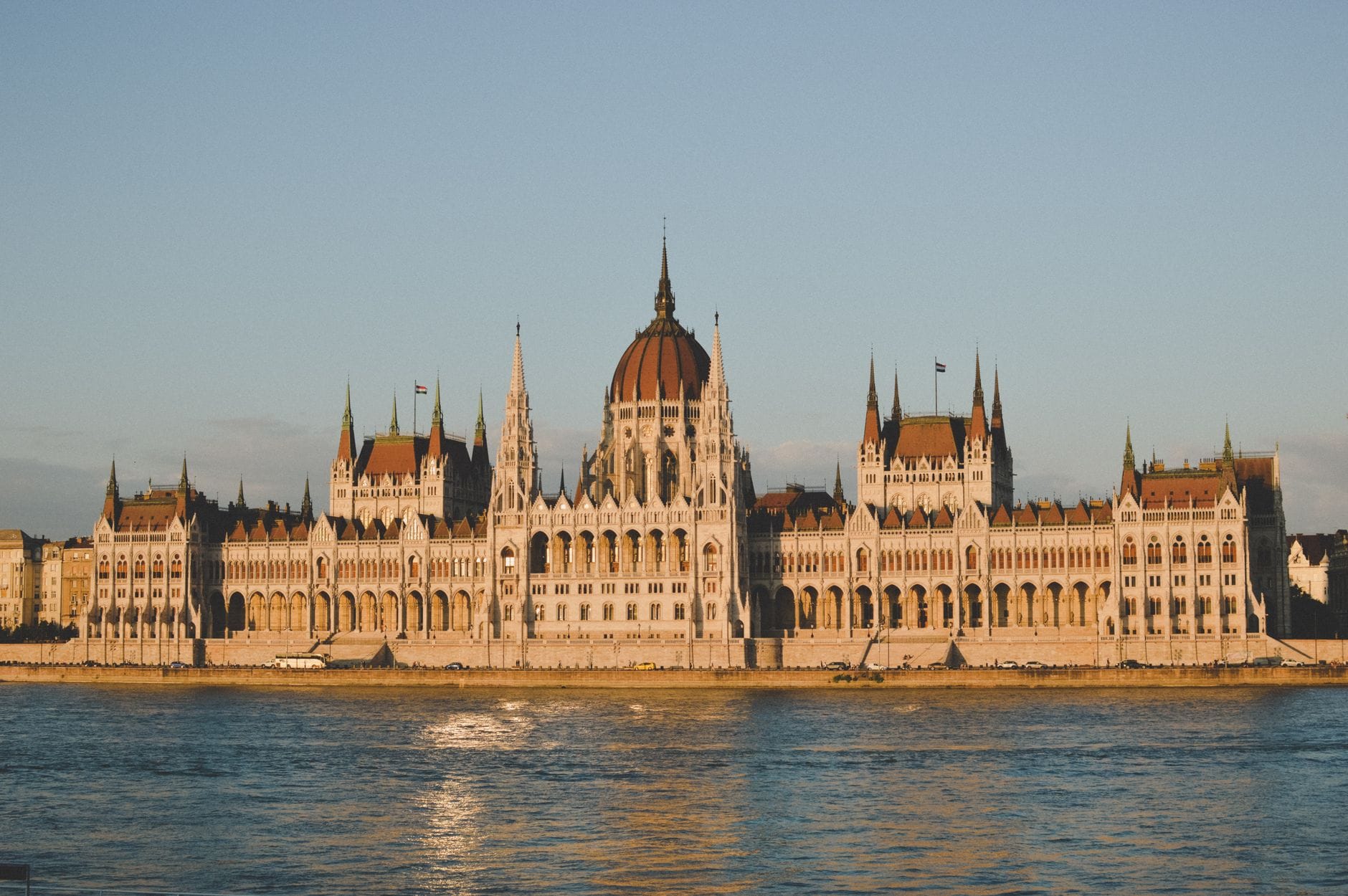
The Hungarian Parliament Building is the starting point for most first-time visitors, and it earns the attention. Completed in 1902, it is the largest building in Hungary with over 690 rooms. The exterior is best appreciated from across the Danube, either from the Castle Hill promenade or from a Danube cruise. The interior, including the central dome hall and the Holy Crown of Hungary, requires a guided tour with a timed ticket booked through the official parliament visitor center website. In summer, same-day tickets are almost impossible — book several days ahead.
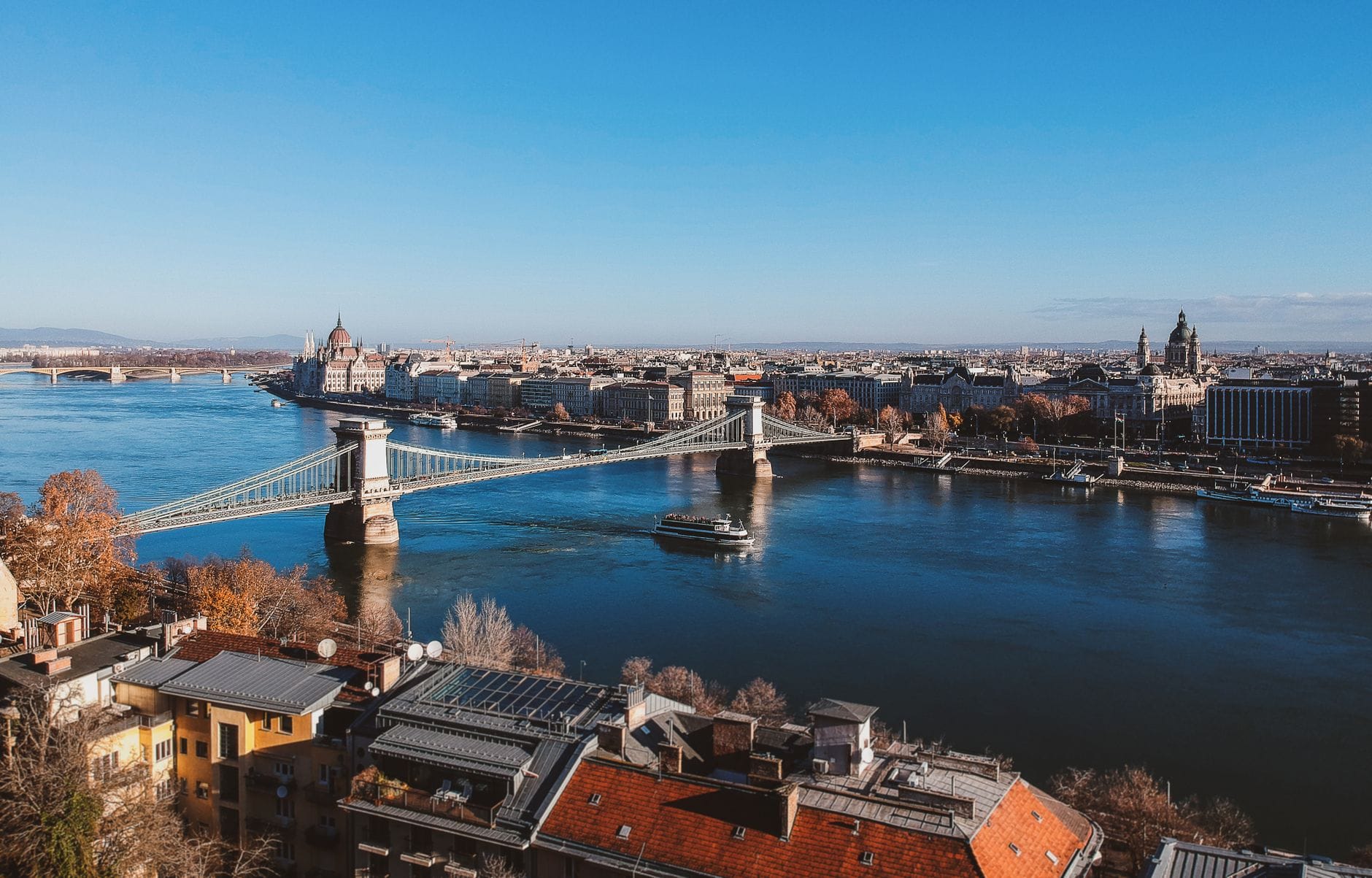
Fisherman's Bastion is one of the most photographed spots in the city, and for good reason. The seven neo-Romanesque towers offer sweeping views across the Danube to Parliament, and the terrace is genuinely spectacular at sunrise before the crowds arrive. Access to the lower terrace is free; the upper walkways carry a small admission fee. Immediately adjacent is Matthias Church, one of Central Europe's most ornate Gothic churches, with a Zsolnay tile roof that shimmers in the afternoon light.
St. Stephen's Basilica took over 50 years to build and was finally completed in 1905. The interior is impressive, but the real draw is the panoramic rooftop platform that provides one of Pest's best views. It is a reasonable alternative to the more crowded Castle Hill viewpoints. The basilica sits in District V and is walkable from most central Pest hotels. On summer evenings, the square in front hosts outdoor concerts and events.
- Hungarian Parliament Building Timed guided tours only; book online well in advance. The exterior view from the Buda bank or a Danube cruise is free and often more impressive than the interior tour for architecture enthusiasts.
- Buda Castle and the Castle District The castle courtyard and cobbled streets of District I are free to explore at any hour. The Hungarian National Gallery inside the castle is ticketed and houses a serious collection of Hungarian art from medieval times through the 20th century.
- Fisherman's Bastion and Matthias Church Go before 9am to avoid tour groups. The combination of both sites takes around 1.5–2 hours including the church interior.
- Heroes' Square and Vajdahunyad Castle The Millennium Monument at Heroes' Square is free and opens onto City Park, where you can also find the Museum of Fine Arts and Széchenyi Thermal Bath within easy walking distance.
- Great Synagogue on Dohány Street The largest synagogue in Europe, seating over 3,000 people. The complex includes a museum, memorial garden, and the Raoul Wallenberg Holocaust Memorial. Tickets required; plan 1.5–2 hours.
Thermal Baths: The Experience That Defines Budapest
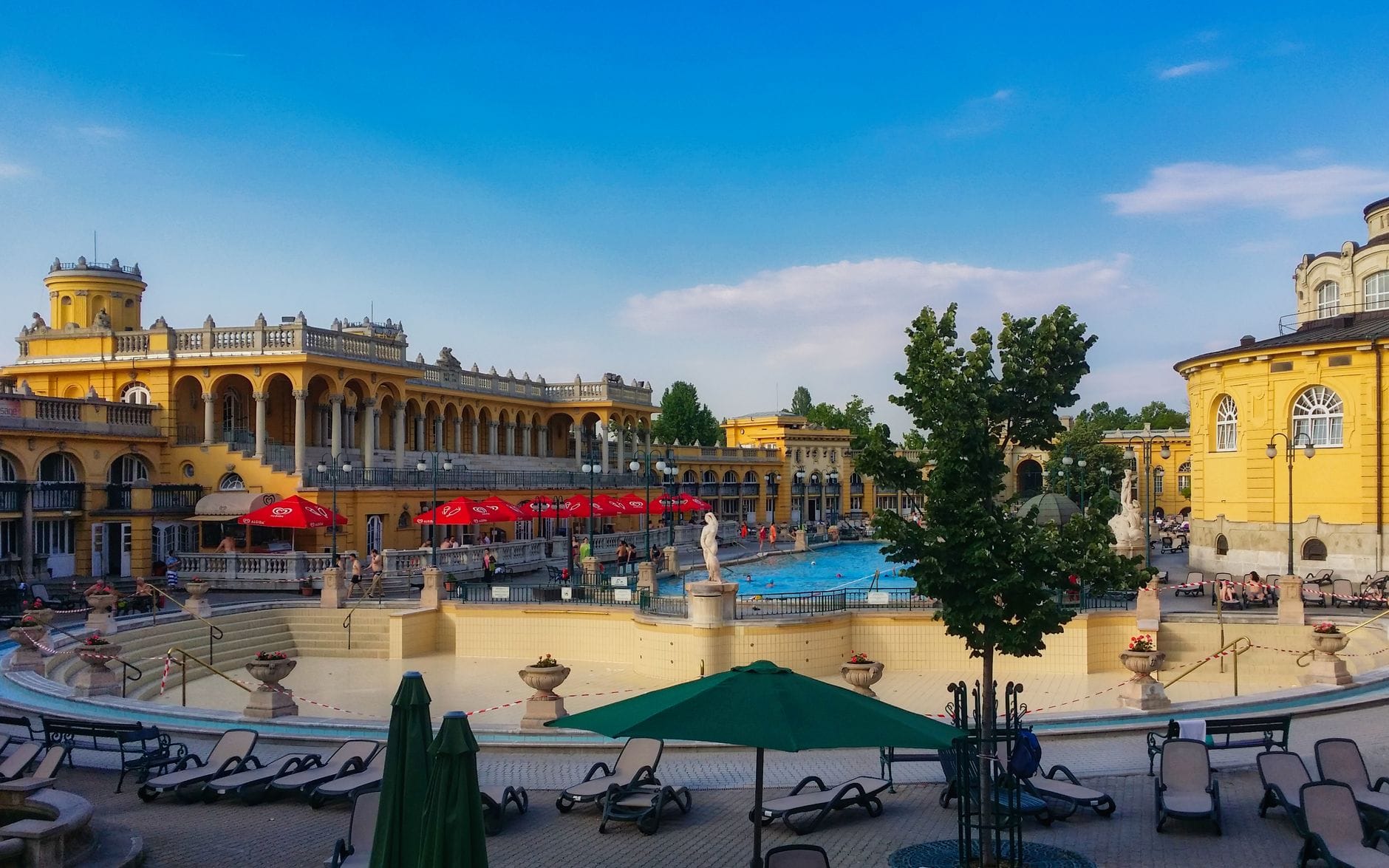
Over 60% of visitors to Budapest use at least one thermal bath during their stay, and this is not a coincidence: the city sits above a network of around 120 natural thermal springs, many of which have been channeled into bathhouses since the Ottoman occupation of the 16th and 17th centuries. The baths are not spas in the hotel-amenity sense — they are public institutions where locals swim laps, play chess in the outdoor pools, and spend entire afternoons. Our complete Budapest thermal baths guide covers all the major options in detail.
Széchenyi Thermal Bath in City Park is the most visited and for many the most satisfying: 15 indoor pools and 3 outdoor pools inside a monumental 1913 neo-Baroque building. Prices vary by time slot and day; expect to pay in the range of 10,000–14,000 HUF for basic entry (verify current prices on the official site before visiting). Book online — weekend queues without a booking can be significant.
For something more atmospheric and less touristy, Rudas Bath on the Buda bank dates to 1566 and retains its original Ottoman octagonal pool under a domed ceiling with star-shaped skylights. It is genuinely different from Széchenyi and worth considering if you want a historically authentic experience. Gellért Thermal Bath sits inside the grand Art Nouveau Gellért Hotel and is probably the most architecturally striking of all the bathhouses — the indoor main pool with its arched colonnade is extraordinary.
⚠️ What to skip
Towel and locker rental at the baths costs extra on top of entry. Bring a swimsuit and a pair of flip-flops. Cabin rental (a private changing cubicle) costs more than a standard locker. At popular baths, the 'cabin vs. locker' decision is the most common point of confusion for first-time visitors — lockers are perfectly fine.
The Jewish Quarter, Ruin Bars, and Nightlife
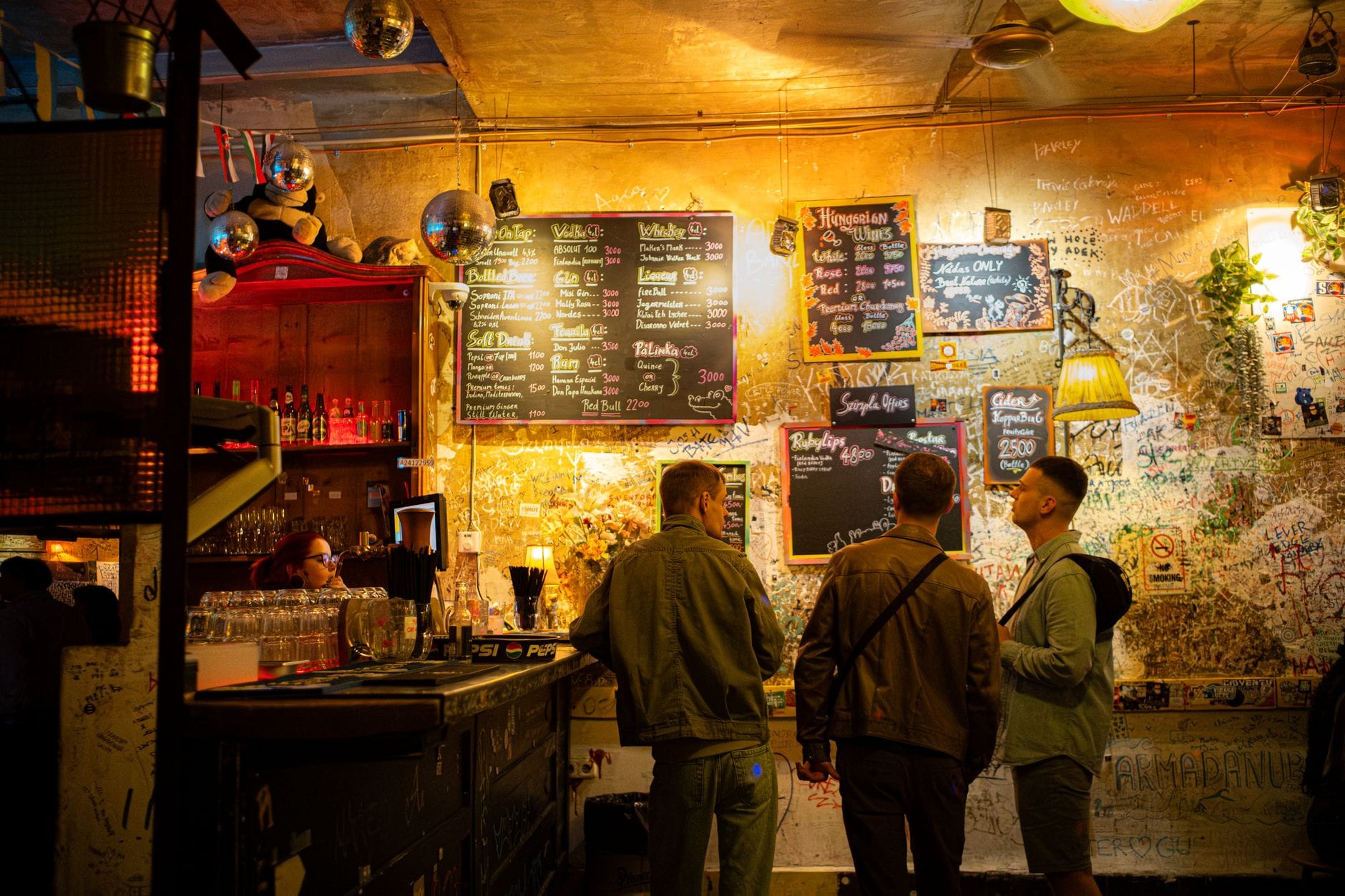
District VII, known as Erzsébetváros and historically the city's Jewish Quarter, contains one of Budapest's most layered neighborhoods. The Great Synagogue on Dohány Street anchors the area historically, but the district also contains dozens of smaller synagogues, a significant pre-war architectural fabric, and, starting in the early 2000s, a wave of creative bars and cultural spaces that repurposed abandoned courtyards and derelict buildings. These became known as ruin bars (romkocsmák), and the district is now one of Central Europe's most distinctive nightlife areas.
Szimpla Kert on Kazinczy Street is the original and still the most interesting of the ruin bars — an eclectic multi-room space that functions as a bar, flea market (Sunday mornings), and occasional cinema. It has become genuinely tourist-heavy, which changes the atmosphere, but it is still worth seeing. Our Budapest ruin bars guide covers the full landscape, including newer, less crowded alternatives.
The Jewish Quarter is also where you will find some of Budapest's best independent restaurants, kosher bakeries, and coffee shops. It connects naturally to Andrássy Avenue to the north, a UNESCO World Heritage boulevard lined with neo-Renaissance palaces, boutiques, and the Hungarian State Opera House. The Opera House runs guided tours on most days and offers affordable tickets for performances — a good option for an evening activity even if classical opera is not your usual preference.
City Park, Markets, and Things People Often Miss
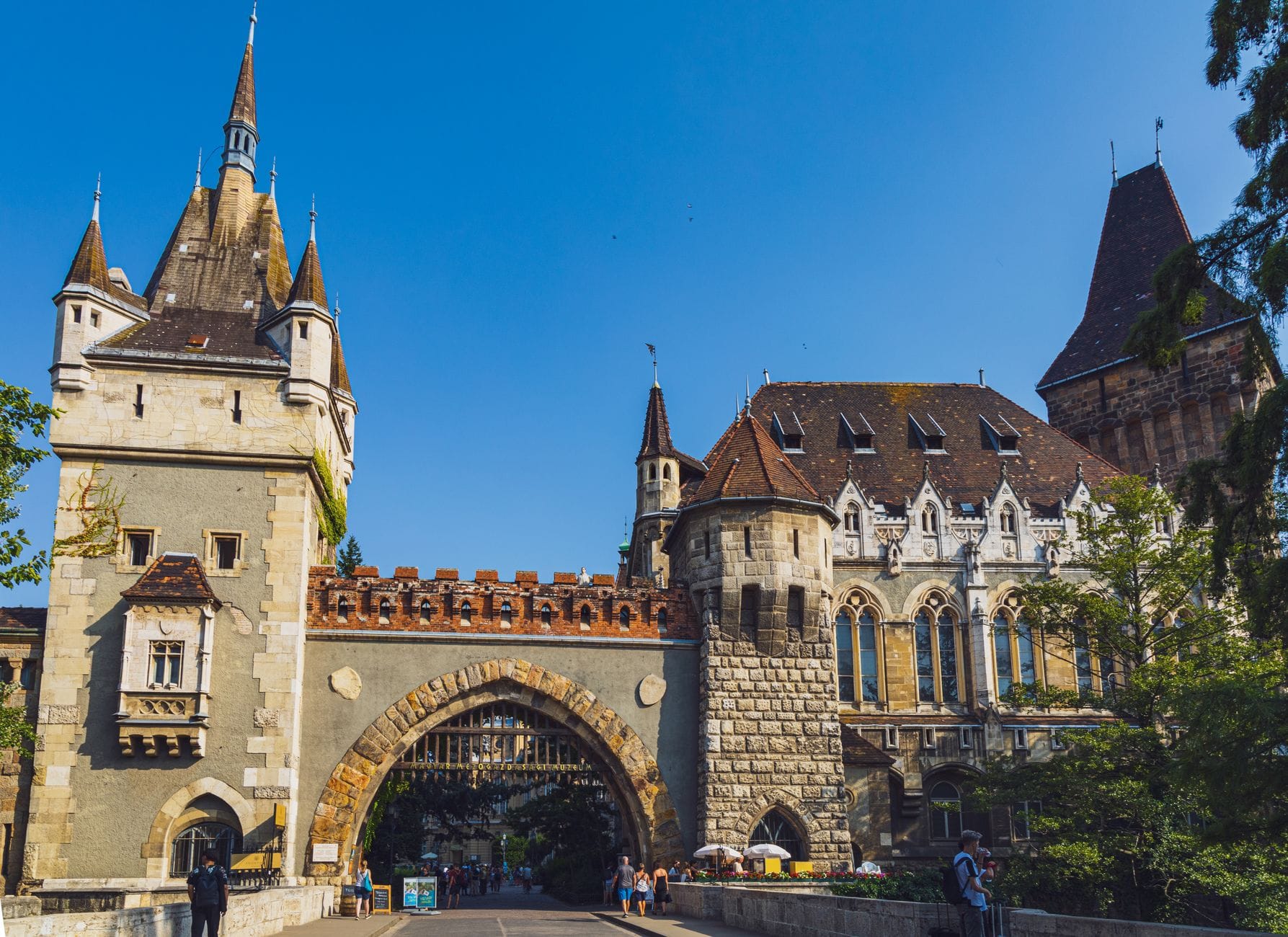
City Park (Városliget) is often treated as just the area around Széchenyi Bath, but it also contains Vajdahunyad Castle (a romantic folly built in 1896 to showcase Hungarian architectural history), the Museum of Fine Arts with its impressive European collection, and the Budapest Zoo, one of the oldest in the world. The park is free to enter and particularly pleasant in spring and early autumn.
The Central Market Hall near Liberty Bridge deserves more than a 20-minute stop. Opened in 1897, the building is a steel-framed structure with a Zsolnay tile roof, and the ground floor operates as a functioning food market selling produce, paprika, salami, and cheeses at prices that reflect local rather than tourist economics. The upper floor is more overtly aimed at visitors, with langos (fried dough), embroidered textiles, and Hungarian spirits. Go on a weekday morning to see it at its most functional.
Two sites that consistently get underestimated: the Terror Háza (House of Terror) on Andrássy Avenue is one of the most powerful and well-designed history museums in Europe, documenting Hungary's Nazi and Soviet-era occupations using the very building that served as secret police headquarters. It is not light viewing, but it provides essential context for understanding modern Hungary. The Shoes on the Danube memorial, a short walk north along the Pest riverbank, is a small but genuinely affecting monument to the Jews shot at the river's edge in 1944–45.
✨ Pro tip
Tram 2 along the Pest bank of the Danube is one of the most scenic public transport rides in any European capital — it runs between Jászai Mari tér and Közvágóhíd H, passing Parliament, Chain Bridge, and the Central Market Hall. A standard BKK ticket covers it. Do this before spending money on a Danube cruise to decide if the cruise adds enough extra to justify the cost.
Practical Planning: Seasons, Transport, and Budget
Budapest has a continental climate: winters are genuinely cold (often hovering around or below 0°C from December through February), summers are warm to hot (25–30°C in July and August). The most comfortable visiting windows are May to mid-June and September to early October — temperatures in the 15–22°C range, manageable crowds, and long daylight hours. August is peak season with higher prices and heat; December brings Christmas markets and a quieter, atmospheric version of the city.
Getting around is straightforward. Budapest has four metro lines (M1, M2, M3, M4), an extensive tram network, and buses covering most gaps. Tram 19 and 47 are particularly useful for crossing between districts along the Buda and Pest banks respectively. The BKK 24-hour or 72-hour travel cards offer good value for visitors spending several days. The getting around Budapest guide has full breakdowns of ticket types and the best routes between major sights. Bolt and Uber both operate in Budapest via licensed taxi partners; metered taxis from official stands are also fine.
Budapest remains notably affordable by Western European standards. A sit-down lunch at a non-tourist restaurant in Districts V–VII typically costs 2,500–5,000 HUF per person. Museum entry is usually in the 1,500–4,000 HUF range. The Budapest Card bundles public transport with free or discounted museum entry and is worth calculating against your itinerary — it pays off if you plan to visit several paid attractions in a short stay. For a full breakdown of free options, the free things to do in Budapest guide covers everything from hilltop walks to free museum days.
- Book Parliament tours and popular thermal bath slots at least 3–5 days ahead in peak season (June–August).
- Visit Fisherman's Bastion before 9am or after 7pm to avoid the thickest crowds.
- Carry some cash in forint — smaller vendors, market stalls, and some baths still prefer it.
- Tipping 10–15% is customary in sit-down restaurants; check whether a service charge has already been added to the bill.
- The 100E airport express bus connects Budapest Liszt Ferenc International Airport (BUD, about 17 km southeast of the center) to Deák Ferenc tér using a special ticket — cheaper than a taxi, slower but direct.
- Plug type is European standard C/F (two round pins, 230V). Travelers from North America will need an adapter and possibly a voltage converter for older devices.
- Dress modestly when entering churches and synagogues; Matthias Church and the Great Synagogue both enforce this.
💡 Local tip
If you are visiting in winter, lean into it rather than fighting it. Thermal baths are spectacular on cold days, the Christmas market on Vörösmarty Square runs through December, and indoor attractions like the Terror Háza, New York Café, and the National Gallery are uncrowded. Budapest in December is genuinely one of its best versions for a certain kind of traveler.
FAQ
How many days do you need in Budapest?
Three to four days covers the main landmarks, at least one thermal bath, and enough time to explore different neighborhoods without feeling rushed. Two days is possible but means making hard choices. Five or more days works well if you want to include day trips, deeper museum visits, or a slower pace.
What is the best thing to do in Budapest for a first-time visitor?
Start with a morning at Fisherman's Bastion and the Castle District for the views and historic context, then cross to Pest for an afternoon at the Parliament exterior and St. Stephen's Basilica, and end with dinner in the Jewish Quarter. This route covers both sides of the Danube and gives a clear sense of the city's structure.
Are thermal baths in Budapest worth it?
Yes, for most visitors. They are not just a tourist attraction — they function as public bathhouses with genuine history and local regulars. Széchenyi is the most complete experience; Rudas is the most historically authentic. If you are visiting for only a day or two and have to choose, prioritize one bath over trying to see an additional landmark.
Is Budapest expensive?
By Western European standards, no. Meals, transport, and museum entry are all notably cheaper than equivalents in Vienna, Prague, or Paris. The main costs that catch visitors off guard are guided tours (especially for Parliament), premium thermal bath packages, and evening Danube cruises. Budget travelers can cover the city's core sights for well under €50 per day.
What are the most overrated things to do in Budapest?
Váci Street, the main pedestrian shopping street, is frequently listed as a top attraction but functions primarily as a strip of overpriced tourist shops and chain restaurants. It is worth a 10-minute walk-through but not a dedicated visit. Hop-on hop-off buses are useful for orientation but not a substitute for actually walking the neighborhoods — the Castle District and Jewish Quarter reveal far more on foot.
Tickets & tours
Live prices and dates from our booking partner. If you book, we may earn a commission at no extra cost to you.
Planning a trip? Discover personalized activities with the Nomado app.