City Park (Városliget) is Budapest's largest urban green space, sitting at the end of Andrássy Avenue in District XIV. It packs an extraordinary concentration of cultural institutions, thermal baths, a zoo, and open recreation space into 247 acres, making it equally popular with families, joggers, and first-time visitors.
City Park (Városliget) is where Budapest exhales. At the grand end of Andrássy Avenue, beyond the sweep of Heroes' Square, this 247-acre park holds more concentrated attractions than almost any comparable green space in Europe: a thermal bath palace, a medieval-style castle, a zoo, world-class museums, and an ice rink that becomes a boating lake in summer. It is neither a quiet retreat nor a tourist trap but something more interesting: a living civic park that Budapestians have been using for over two centuries.
Orientation
City Park occupies the northeastern edge of central Pest, forming a rough rectangle of roughly 1.4 by 1 kilometre. It sits in District XIV (Zugló), bounded by Dózsa György út to the west, Ajtósi Dürer sor to the east, Vágány utca to the north, and the grand ceremonial plaza of Hősök tere (Heroes' Square) marking its southwestern entrance. This entrance is the one almost every visitor uses, and it is deliberately theatrical: the twin colonnades of Heroes' Square frame the transition from the city's grand boulevard into the park's green interior.
The park connects directly to central Pest via Andrássy Avenue, Budapest's answer to the Champs-Élysées, which runs in a straight line from the Opera House all the way to Heroes' Square. Walking this avenue from the Inner City takes roughly 25 to 30 minutes at a comfortable pace. If you are arriving from Buda, the journey across the Chain Bridge and up through central Pest adds another 20 minutes on foot, or you can pick up the M1 metro at several points along Andrássy Avenue.
Mentally, the park divides into a few loose zones. The western edge, nearest Heroes' Square, is the most formal: museums flanking the square, the main park entrance, and the broad Olof Palme sétány (promenade) cutting through the middle. Moving east and north, the park opens into woodland paths, the zoo perimeter, and the Széchenyi Thermal Bath complex. Vajdahunyad Castle and its surrounding lake sit roughly in the centre-south of the park, easily reachable from the main entrance in under ten minutes on foot.
Character & Atmosphere
Early on a weekday morning, City Park belongs to its regulars. Joggers circle the lake around Vajdahunyad Castle, dog walkers move through the tree-lined paths north of the main promenade, and the Széchenyi Bath sees its first swimmers well before the tourist crowds arrive. The light through the plane trees is low and golden in spring and autumn, and the air carries the mild sulphur scent that drifts from the thermal bath pavilion. It is a surprisingly unhurried hour, given what the park will become by mid-morning.
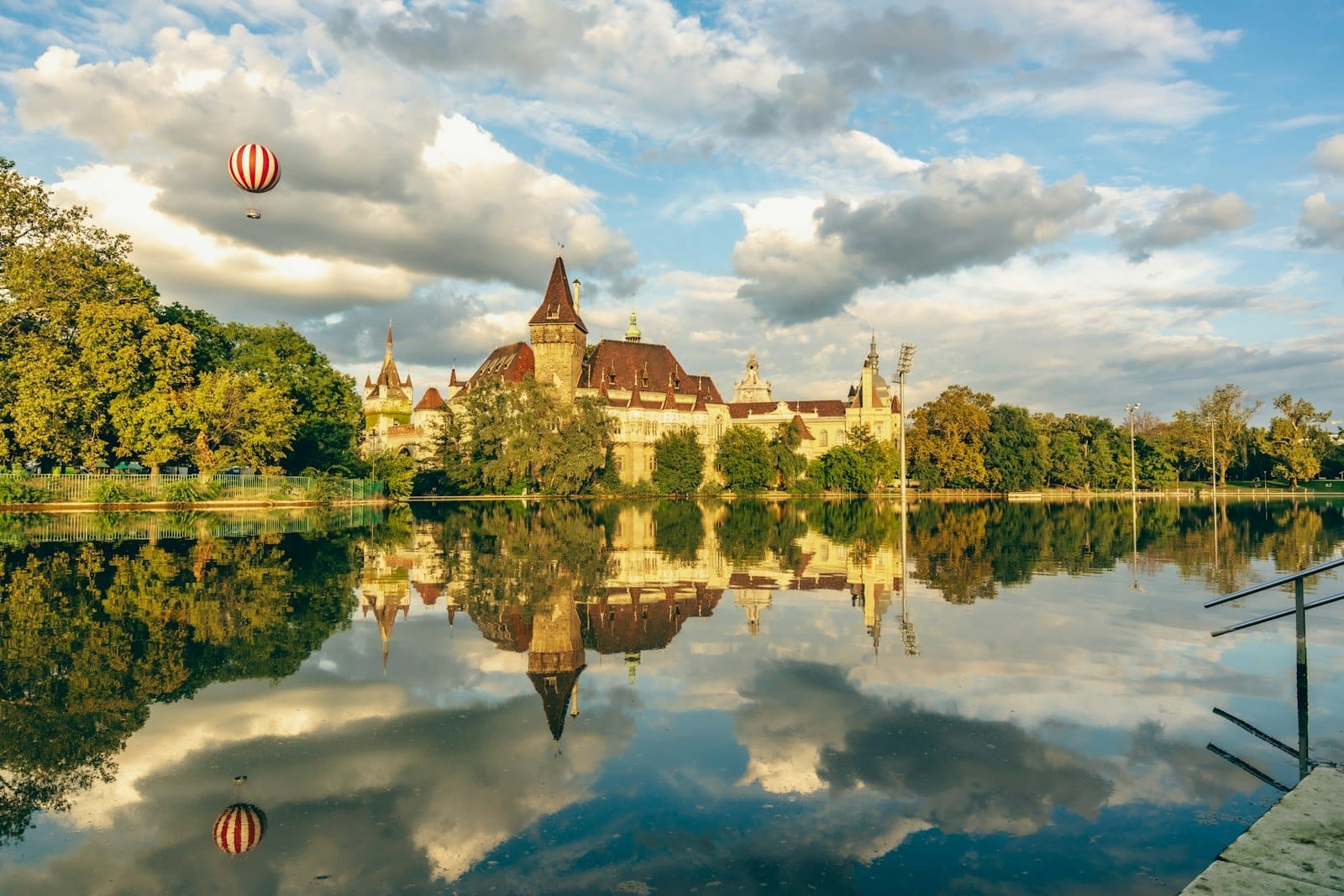
By late morning on a summer weekend, the dynamic shifts completely. Heroes' Square fills with tour groups and cyclists. The lake fills with rowing boats. Queues form at Széchenyi. The zoo entrance on Állatkerti körút sees families stacking up. This is not a complaint, just a statement of fact: Városliget is one of Budapest's most visited outdoor spaces, and it shows. If you want the park at its most atmospheric, aim for weekday mornings or come in late afternoon when the tour buses have gone and the light turns warm across the castle's reflection in the lake.
Winter changes things dramatically. The boating lake becomes Budapest's most popular outdoor ice rink, and the bare trees and neo-Romanesque towers of Vajdahunyad Castle take on a genuinely romantic quality against grey December skies. The Széchenyi Bath steams theatrically in the cold air. Crowds thin significantly on weekdays, and the park feels more like a local amenity than an international attraction. This seasonal shift is one of the best arguments for visiting Budapest outside peak summer months.
💡 Local tip
For the best version of Városliget, arrive before 10am on a weekday. You will have Vajdahunyad Castle almost to yourself and can walk the main promenade in peace before the daily crowds build.
What to See & Do
The park's anchor attraction on its southwestern edge is Heroes' Square, one of Budapest's most significant public spaces and part of the city's UNESCO World Heritage corridor along Andrássy Avenue. The Millennium Memorial at its centre commemorates the Magyar chieftains who led the Hungarian tribes into the Carpathian Basin in 895 AD, and the two curving colonnades display statues of Hungarian kings and statesmen. It is genuinely imposing at any time of day, though at dusk, when the crowds thin and the stone takes on a warm glow, it is worth lingering.
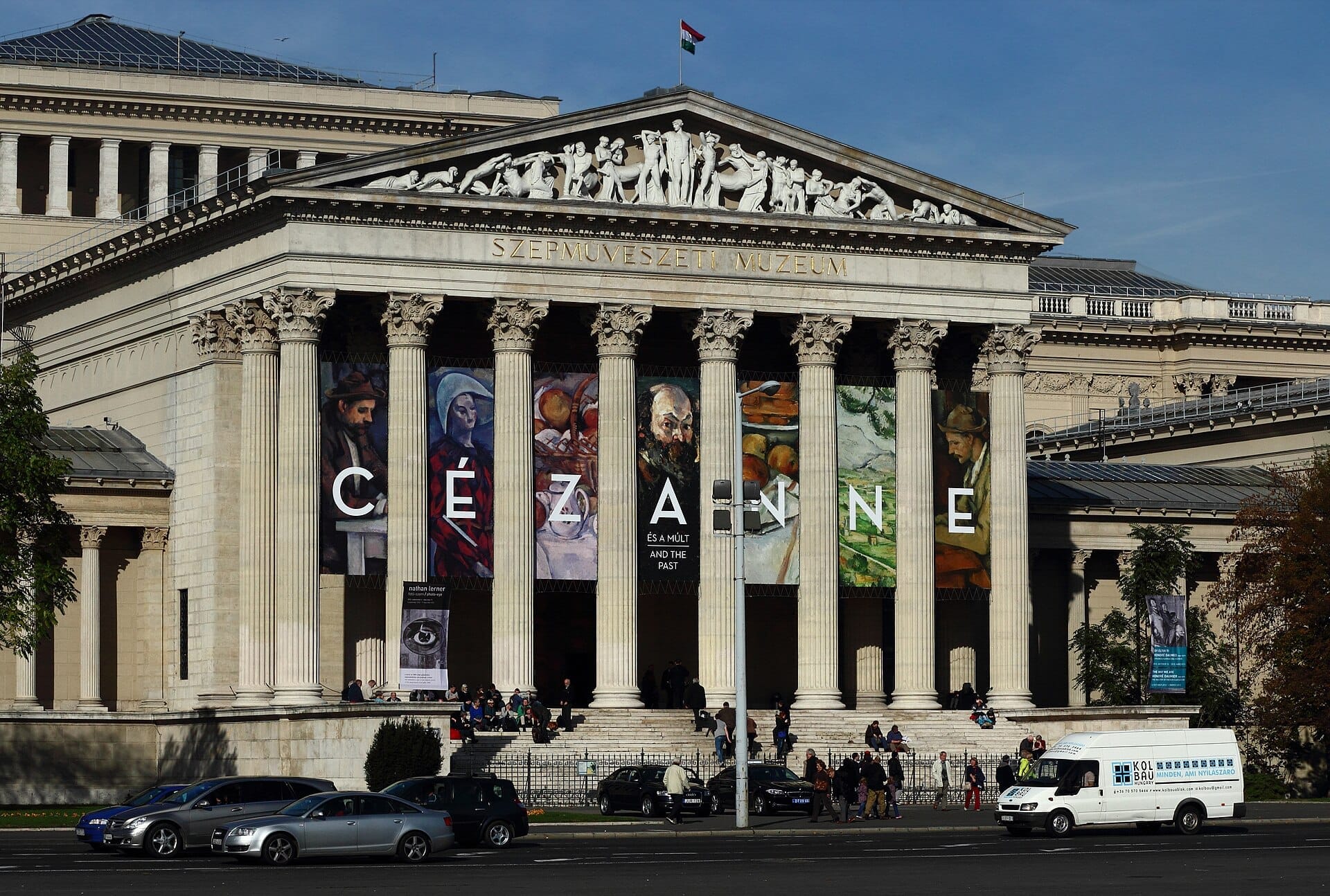
Flanking Heroes' Square are two major museums. The Museum of Fine Arts on the northern side holds one of Central Europe's most significant collections of European painting, with strong holdings in Spanish, Dutch, and Italian masters as well as Egyptian antiquities. On the southern side, the Kunsthalle (Palace of Art) focuses on contemporary and modern exhibitions. Both buildings are monumental neoclassical structures that bookend the square with impressive symmetry.
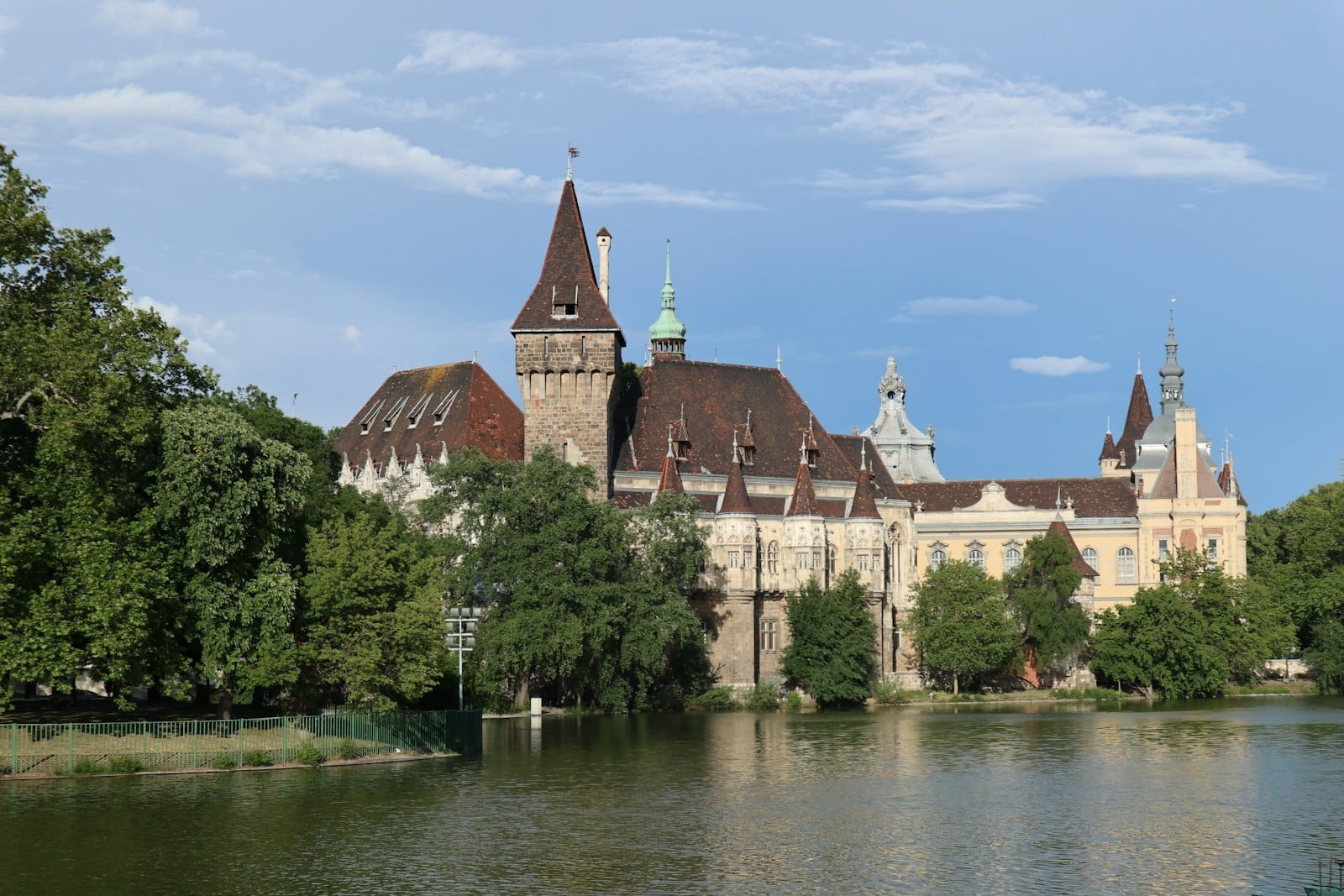
Inside the park proper, Vajdahunyad Castle is one of Budapest's more unusual architectural experiments. Built for the 1896 Millennial Exhibition celebrating a thousand years of Hungarian statehood, it was designed to showcase different architectural styles from Hungarian history in a single building: Romanesque, Gothic, Renaissance, and Baroque sections sit side by side around a central courtyard. What was originally a temporary structure proved so popular that it was rebuilt in permanent stone. Today it houses the Museum of Hungarian Agriculture and provides one of the city's most photogenic lake reflections.
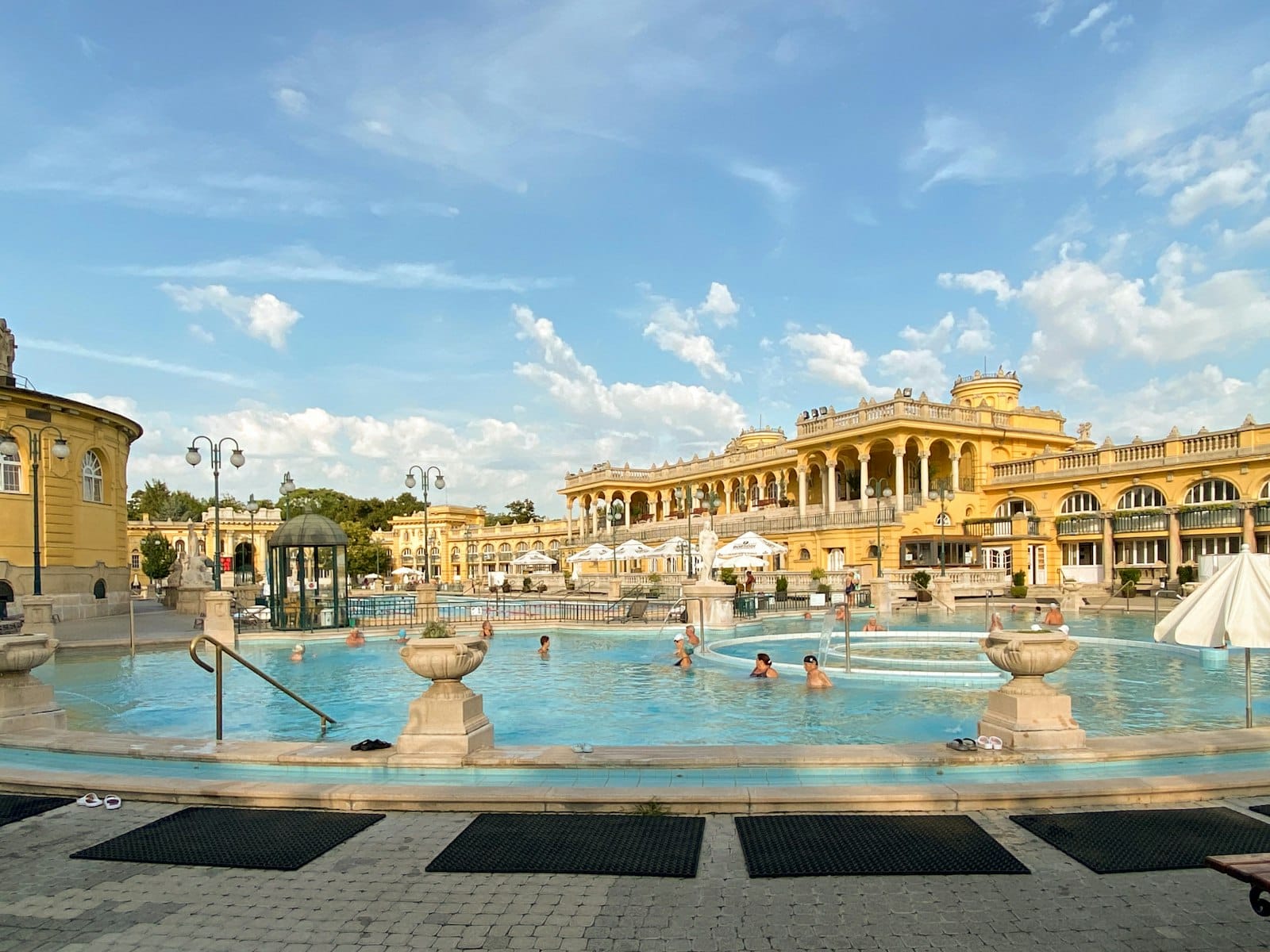
Széchenyi Thermal Bath: the largest thermal bath complex in Budapest, with outdoor pools, indoor pools, and a grand yellow neo-Baroque building
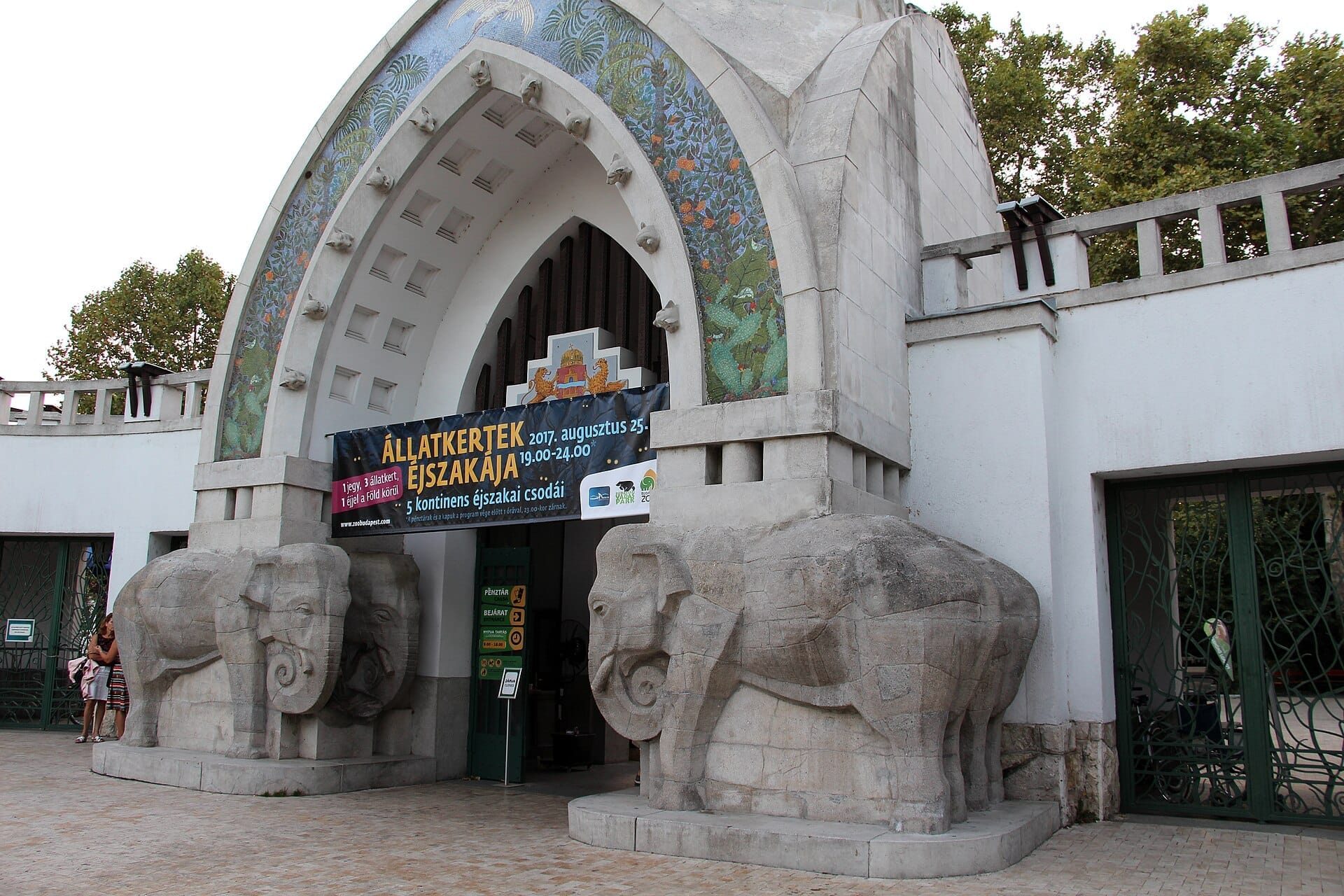
Budapest Zoo & Botanical Garden: one of the oldest zoos in the world, with Art Nouveau animal houses worth seeing even without children
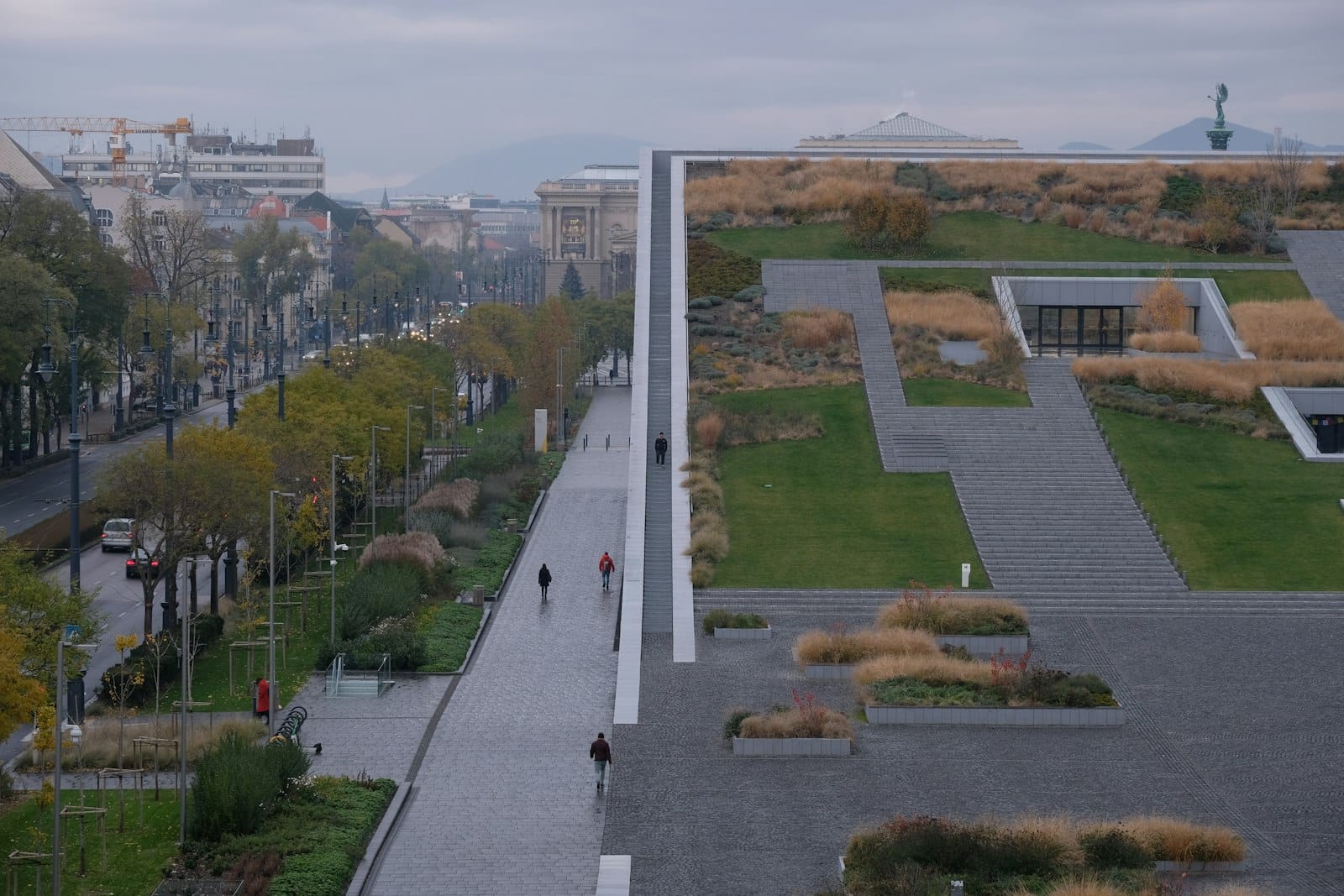
House of Music Hungary: a striking contemporary pavilion opened in 2022, dedicated to the history and experience of music
Városligeti Ice Rink: operates in winter months over the park's boating lake, one of Europe's larger outdoor rinks
Municipal Grand Circus: a permanent circus venue on Állatkerti körút, one of the few remaining in Europe
The Széchenyi Thermal Bath deserves its own mention because it is genuinely one of the more remarkable urban experiences in Budapest. The building is enormous, the outdoor pools stay warm year-round, and the chess players who set up boards on the ledges between games are a real, ongoing tradition rather than a staged photo opportunity. It gets crowded on weekends, particularly in summer. If you are planning a longer Budapest stay, see our guide to Budapest's thermal baths for a full comparison with other options across the city.
Eating & Drinking
The park itself has a handful of cafés and kiosks, particularly along Olof Palme sétány and near the lake. These are convenient for a cold drink or a langos (deep-fried dough, a Hungarian park staple) but are priced for captive tourist audiences. The Széchenyi Bath has its own café inside the complex. For serious eating, the better options are just outside the park boundaries.
Állatkerti körút, the road running along the park's northern edge between the zoo and the bath, has several restaurants ranging from mid-range Hungarian sit-down spots to casual international options. The street is oriented primarily toward visitors to the park and zoo, so menus are tourist-friendly (English translations, familiar dishes) but quality varies. Prices are slightly elevated compared to equivalent restaurants a few blocks further into District XIV.
For a more local and better-value meal, walk ten minutes east into Zugló proper along Thököly út or Stefánia út, where neighbourhood restaurants serve Hungarian and Central European food to a local clientele at noticeably lower prices. These streets have bakeries, coffee shops, and small restaurants that see almost no tourist traffic despite being a short walk from the park. If you want context on Budapest's broader food scene, the city's culinary range extends far beyond this neighbourhood.
Anyone spending time in the park area should also consider that the Central Market Hall and the wider Inner City food scene are easily reached by metro in under 15 minutes. The park neighbourhood is not Budapest's dining centre; treat it as a starting point for the day's sightseeing and plan meals elsewhere unless you are specifically staying in the area.
ℹ️ Good to know
The café inside Vajdahunyad Castle's courtyard is a reasonable mid-morning stop: reasonable coffee, courtyard seating, and far fewer people than the kiosks on the main promenade. Arrive before 11am for the best atmosphere.
Getting There & Around
The M1 metro line (the yellow line, also called the Millennium Underground) is the most direct connection. It runs beneath Andrássy Avenue and has two stops directly relevant to the park: Hősök tere (Heroes' Square, the main park entrance) and Széchenyi fürdő (one stop further, closest to the thermal bath and zoo). The M1 is one of the oldest underground railways in continental Europe, and the stations themselves are small, elegant, and worth a look. From Deák Ferenc tér in the city centre, the journey to Hősök tere takes around 8 minutes.
Trolleybus lines 70, 75, and 79 serve Olof Palme sétány, with stops near the park. These are useful if you are coming from District VII or the northern parts of central Pest rather than from Andrássy Avenue. Bus connections are also available from several directions into District XIV.
On foot from the Inner City (District V), the walk along Andrássy Avenue takes 25 to 30 minutes and is one of the more pleasant urban walks in Budapest, passing the Hungarian State Opera House and a succession of grand 19th-century apartment buildings. This is worth doing at least once, particularly in good weather. For a full orientation to Budapest's public transport options, including the Budapest Card which covers metro and trolleybus travel, see our guide to getting around Budapest.
Within the park, everything is walkable. The main sights sit within a 15-minute walk of one another, and the flat terrain makes it easy to cover ground. Bicycles are permitted on designated paths. The park is large enough that it is possible to spend a full day moving between attractions without retracing steps significantly.
⚠️ What to skip
Parking around Heroes' Square and Állatkerti körút is limited and congested on weekends. Arriving by metro is strongly recommended. If you are driving, allow extra time and consider parking further south on Dózsa György út.
Where to Stay
City Park is not Budapest's primary hotel district, but it suits specific types of travelers well. Staying near Városliget makes particular sense for families with children (given the zoo, circus, and park space), for visitors whose main priority is the thermal baths, or for those who prefer a quieter residential setting in District XIV while still being a short metro ride from central Pest. For a full breakdown of Budapest's neighbourhoods from a lodging perspective, see our guide to where to stay in Budapest.
The streets immediately adjacent to the park, particularly Állatkerti körút and the blocks between the park and Andrássy Avenue, have a range of hotels from mid-range to upper-mid. These are generally quieter than the options in District V or VII, with less nightlife noise but also less immediate access to Budapest's restaurant and bar scene. The trade-off is real: you save time getting to the park's attractions but spend more time (and metro fare) reaching the city's other major sights.
For visitors whose itinerary centres on the park itself, staying on or just off Andrássy Avenue offers a useful middle ground: walkable to the park in 20 to 25 minutes, with immediate access to the M1 metro and much closer to the nightlife, restaurants, and central sights of Districts VI and VII. This corridor is worth considering as a base for anyone splitting time between the park and the rest of the city.
Honest Assessment: Who This Neighbourhood Is For
City Park is not a neighbourhood in the lived residential sense that Districts VII or IX are. It is a destination within the city, one that rewards a focused half-day or full-day visit rather than serving as a base for exploring Budapest's cultural and social life. Its strengths are specific and significant: the concentration of Heroes' Square, Vajdahunyad Castle, and Széchenyi Thermal Bath in one walkable area is genuinely unusual, and the park provides a kind of open space that central Pest largely lacks.
The drawbacks are equally specific. The park's main tourist corridor can feel theme-park-adjacent on busy summer weekends, with tour groups, overpriced kiosks, and queues at the main attractions. The surrounding streets in District XIV are pleasant but not particularly interesting for visitors who are not specifically staying there. Anyone who arrives expecting a charming neighbourhood with independent cafés and local bars will be disappointed; this is a civic park with excellent institutions, not a bohemian quarter.
City Park makes most sense in the context of a broader Budapest itinerary. A well-planned three-day visit can comfortably include a morning at Városliget without sacrificing time at the city's other essentials. For help building that itinerary, see our Budapest 3-day itinerary or the overview of things to do in Budapest for broader context on how the park fits into the city.
TL;DR
City Park (Városliget) is one of Budapest's main urban parks, sitting in District XIV at the end of Andrássy Avenue, directly accessible by M1 metro from the city centre.
The park holds an unusually dense concentration of major attractions: Heroes' Square, Vajdahunyad Castle, Széchenyi Thermal Bath, the Budapest Zoo, and the Museum of Fine Arts all within walking distance of one another.
Best visited on weekday mornings or in winter, when crowds thin and the park's architecture and atmosphere are at their most striking.
Dining and nightlife options within the park are limited and tourist-priced; the park works best as a daytime destination rather than an evening base.
Ideal for families, thermal bath enthusiasts, and architecture lovers; less suited to travellers seeking Budapest's nightlife, independent restaurant scene, or bohemian street culture.
Budapest punches well above its weight as a museum city. From a world-class collection of Old Masters to underground WWII hospitals and open-air Communist statues, these are the museums that make Budapest worth dedicating serious time to.
Budapest rewards visitors in every season, but the timing of your trip shapes everything from what you pay to how crowded the sights are. This guide breaks down every month so you can match your priorities, whether that's mild weather, low prices, major festivals, or the city's legendary Christmas markets.
Budapest is one of Europe's great Art Nouveau cities, with a distinct national style that sets it apart from Vienna or Paris. This guide covers the key buildings, the architects behind them, how to explore the city's Szecesszió heritage on foot, and what to watch out for along the way.
The Budapest Card bundles unlimited public transport with free museum entry, one free thermal bath visit at Lukács, and a free Danube river cruise into one pass. But at up to €129, it only pays off under specific conditions. Here's a clear breakdown of who should buy it, who should skip it, and how to activate it correctly.
Budapest food is hearty, affordable, and deeply underrated. This guide covers the essential dishes to try, where to find them, what things actually cost in 2026, and how to avoid the tourist traps that pass off mediocre goulash stew as the real thing.
Budapest rewards those who look beyond the Parliament and Chain Bridge. From ancient Roman ruins in Óbuda to a Cold War bunker beneath Castle Hill, this guide points you toward the city's most overlooked and underrated experiences.
Budapest carries more than 2,000 years of history across its two riverbanks. This guide traces the city's major eras, from Roman legions to Habsburg grandeur and Cold War upheaval, and shows you exactly where to see that history in person.
December transforms Budapest into one of Europe's most atmospheric winter destinations, with free Christmas markets, steaming thermal baths, and far fewer crowds than summer. This guide covers weather realities, the two flagship markets, pricing, crowd patterns, and practical tips for getting the most from a winter visit.
Three days is exactly enough time to get a serious handle on Budapest. This itinerary splits the city logically across both banks of the Danube, covers the unmissable sights without rushing, and leaves room for the thermal baths, Jewish Quarter, and a proper evening out.
Budapest punches well above its weight in the luxury travel market. Five-star hotels cost 40-60% less than comparable properties in Vienna or Paris, the thermal spa culture is unmatched in Europe, and the fine dining scene has quietly matured into something genuinely world-class. This guide covers where to stay, where to soak, and where to eat at the top end of the market.
Budapest after dark is one of Europe's most distinct nightlife scenes, built around crumbling courtyards, thermal bath parties, and riverfront venues that keep going until sunrise. This guide covers the key districts, best venues, realistic drink prices, and how to navigate the city's nights without the common tourist mistakes.
Budapest's ruin bars are unlike anything else in Europe: abandoned buildings transformed into labyrinthine bars, galleries, and gardens. This guide covers the best venues, realistic prices, transport logistics, and seasonal tips to help you experience them properly.
Budapest is one of Central Europe's safer capitals, but petty crime, taxi overcharging, and bar bill scams catch many visitors off guard. This guide breaks down exactly what to watch for, where the risks concentrate, and how to handle each situation confidently.
Budapest rewards shoppers across every budget, from paprika and Tokaji wine at the Great Market Hall to luxury boutiques on Andrássy Avenue and Soviet-era curiosities at Ecseri flea market. This guide covers where to go, what to buy, and how to avoid overpaying on Váci Street.
Budapest sits on top of nearly 130 natural hot springs, and its thermal baths are among the most atmospheric in Europe. This guide cuts through the hype: which baths are actually open in 2026, what you'll realistically pay, how to avoid peak crowds, and which options suit your budget and travel style.
Everything you need to plan the Budapest to Prague journey, whether you want the comfort of a direct train, the cheapest bus fare, or the fastest flight. Includes prices, schedules, booking tips, and what to expect on each route.
Budapest is one of Europe's most photogenic cities, and knowing where to look changes everything. This guide covers the best panoramic viewpoints, hilltop terraces, and elevated bars where the city reveals itself in full.
Budapest rewards families with an impressive range of kid-friendly experiences: a century-old zoo, a narrow-gauge railway run by children, interactive science centers, and a car-free island with playgrounds and bike rentals. This guide covers the best family activities in Budapest, with practical advice on what works for different ages, what to skip, and how to plan your days efficiently.
Budapest sits at the center of one of Central Europe's best rail networks, putting medieval towns, thermal lake resorts, and even Vienna within easy reach. This guide covers the top day trips from Budapest with exact transport options, realistic fares, and clear assessments of what each destination is actually worth your time.
Budapest rewards budget travelers generously. From sweeping hilltop panoramas to centuries-old bridges and grand market halls, some of the city's most memorable experiences cost absolutely nothing. This guide covers the best free things to do in Budapest, organized so you can plan a full day without opening your wallet.
Budapest has one of Central Europe's most comprehensive public transport networks, run by BKK. This guide covers every mode of transport, ticket types with current prices, how to avoid fines, and the best ways to get from the airport to the city center.
Budapest is one of Central Europe's most rewarding cities, but it's not for everyone. This guide breaks down exactly what you get: the UNESCO-listed landmarks, thermal baths, food scene, and nightlife, alongside the real drawbacks, seasonal trade-offs, and practical logistics you need to know before booking.
Budapest is one of Europe's most atmospheric cities for couples, combining grand architecture, thermal spa culture, candlelit river cruises, and sweeping hilltop views. This guide covers the best romantic experiences in Budapest, from free sunset walks to splurge-worthy dinner cruises, with practical advice on timing, cost, and what to skip.
Budapest rewards visitors with an unusually rich mix of history, architecture, and culture packed into a compact, walkable city. This guide covers the best things to do in Budapest — from iconic landmarks and thermal baths to underrated neighborhoods — with practical advice on what is worth your time and what is not.
Budapest divides naturally into distinct neighborhoods, each with its own character, price range, and practical trade-offs. This guide breaks down the best areas to stay based on what you actually want from your trip, from walkable sightseeing bases to quieter hillside retreats.